
Key Takeaways
- Natural bar soap swaps a plastic bottle, pump, and cap for a paper wrapper or no wrapper at all, which is the clearest packaging win in your whole shower.
- True soap has a legal definition in the United States, and any bar sold as moisturizing or deodorizing has quietly opted out of it.
- An RSPO label on the wrapper does not always mean certified palm oil is inside the bar, because only two of the four supply chain models guarantee it.
The best natural bar soap for most people is a short ingredient list of saponified oils, wrapped in paper or nothing at all. That is the whole answer. A bar replaces a bottle, a pump, and a cap with a piece of paper you can compost, and the good ones cost less per wash than the body wash you are replacing.
What makes this confusing is the word natural, which means nothing on a label. So we went at it from a different angle. We checked what every bar is actually wrapped in, we read the federal regulation that decides what can legally be called soap, and we verified every certification against the certifier’s own registry instead of trusting the logo on the box.
Some of what we found was not what we expected, and one finding cuts against the whole premise of buying a bar. We put it in anyway, further down, because you deserve to know it before you spend money.
What Makes a Bar Soap Natural
Natural bar soap is made by saponification, where a fat or oil reacts with sodium hydroxide to produce soap and glycerin. A genuinely natural bar lists saponified oils, water, and little else, with scent from essential oils rather than the catch-all word fragrance.
Saponification sounds technical, and it is simple. Fat plus lye equals soap plus glycerin. That reaction has not changed in a few thousand years, and every real bar of soap on this page went through it.
Lye worries people, so let us settle it now. The Handcrafted Soap and Cosmetic Guild puts it plainly: once saponification finishes, “all of the lye is converted into soap; there is no lye remaining in the finished soap bar.” A bar that still had free lye in it would be harsh enough that you would know immediately.
Most makers also add a little extra oil beyond what the lye can convert, a practice called superfatting. 5% is the common figure, and it is why a handmade bar feels less stripping than a supermarket one. The leftover oil stays in the bar and goes onto your skin.
💫 Now You Know
What is a syndet bar?
A syndet bar looks like soap but is not soap. It cleans with synthetic detergents rather than saponified oils, which lets makers set the pH lower. Dove is the best known example. Syndet bars are not villains and they are not natural bar soap either, so if a bar lists sodium cocoyl isethionate near the top, you are holding a detergent bar.
The Legal Definition of Soap Almost Nobody Mentions
Under 21 CFR 701.20, a product is legally soap only if its cleaning power comes from alkali salts of fatty acids and it is labeled and sold only as soap. True soap falls under the Consumer Product Safety Commission, not the FDA, and is not required to list its ingredients at all.
This is the part that surprised us most, and it changes how you should read a soap label.
The Federal Food, Drug, and Cosmetic Act excludes soap from the definition of a cosmetic, but never defines soap. So the FDA wrote its own interpretation. To count as soap, the cleaning has to come from the alkali-fatty acid compounds, and the product has to be labeled, sold, and represented only as soap.
Here is the line worth remembering, straight from the FDA’s own soap FAQ: “If your product meets FDA’s regulatory definition of soap, it’s regulated by the Consumer Product Safety Commission (CPSC), not by FDA.”
Now look at what that does in practice. The moment a bar is marketed as moisturizing, or deodorizing, or as something that makes you smell nice, it becomes a cosmetic under FDA rules. It picks up a full ingredient declaration requirement and a net weight statement. The claim on the front of the box, not the chemistry inside it, is what moves the product.
Which means almost every bar sold as moisturizing natural soap has, by its own marketing, opted itself out of the soap exemption. It also explains something you may have noticed. When a small maker’s ingredient list leaves out sodium hydroxide, that is often not sloppiness or hiding. True soap is not legally required to list ingredients at all.
Our Top Picks at a Glance
Meliora’s Bath and Body Soap Bar is the best natural bar soap overall, because it is palm free, sold with no packaging at all if you want it that way, and it holds three certifications we verified in the certifiers’ own registries.
| Bar | Best For | Packaging | Palm Oil | 3rd Party Certs | Price |
|---|---|---|---|---|---|
| Meliora Bath & Body | Overall | None, or paperboard | Palm free | MADE SAFE, Leaping Bunny, B Corp | $$ |
| Good Earth Soap | A truly naked bar | None if unlabeled | Palm free | None At This Time | $$ |
| Chagrin Valley Castile & Shea | Sensitive skin | Recycled paper box | None in this bar | Leaping Bunny, OEFFA organic | $$$ |
| Dr. Bronner’s Pure-Castile | Easiest to find | Recycled paper | Fair trade palm | Leaping Bunny, EWG Verified | $ |
| Bend Soap Oatmeal & Honey | Supporting a small business | Paper | Palm, sourcing unverified | None At This Time | $ |
| Soap Distillery | Scent | None, or FSC carton | Palm free | Leaping Bunny | $$ |
| Kirk’s Castile | Budget | FSC paperboard carton | Palm free in the bar | Leaping Bunny | $ |
How We Vetted These Bars
We researched all seven bars against the brand’s own published information and checked each claimed certification in the certifier’s public registry. Where a brand does not state what its wrapper is made of, we say so rather than guessing from a product photo.
We did not run a lab panel or a blind test, and we are not going to pretend otherwise. What we did was read every brand’s own site, pull each ingredient list as published, and then take every certification logo and look it up in the registry that issues it. Several did not survive that step.
Packaging got the most attention, because it is the part that gets the least. Most roundups will tell you a bar is plastic free without ever saying what the wrapper is. We checked. When a brand publishes nothing about its packaging, that gap is in the review, because a company that will not tell you what its wrapper is made of has told you something.
One bar on this list was sent to us to try. It is flagged clearly in its own section.
Don’t Miss: Plastic-Free Living Swapping to a bar of soap is one of the easiest plastic swaps there is. Here is where the rest of the plastic in your home is hiding. Read more →The 7 Best Natural Bar Soaps
These seven bars are ordered by how little packaging they carry, starting with the ones you can buy with no wrapper at all. Every one is true saponified soap, not a syndet bar.
Bath & Body Soap Bar, Unscented
$$
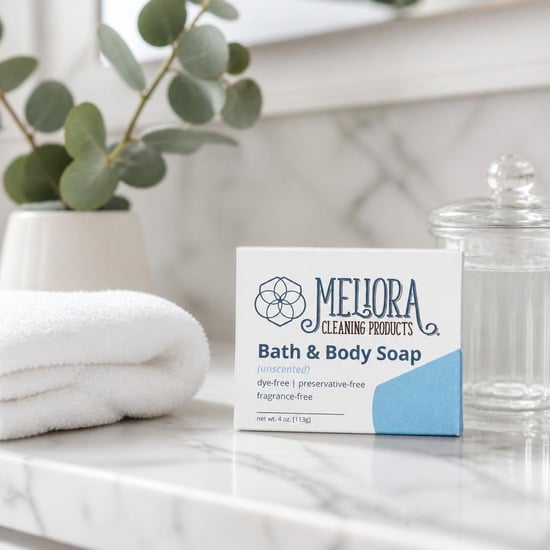
Meliora sells this bar two ways: in a paperboard box printed with vegetable inks, or completely package free. The zero-waste version arrives as a bare bar with nothing on it at all.
The unscented formula is six things: sodium cocoate, sodium sunflowerate, glycerin, water, organic coconut oil, and organic sunflower oil. It is palm free, which is rare in a bar this simple.
Meliora is also unusually honest about its limits. Their own product page notes that plastic may still appear upstream, since raw materials can arrive at the factory in plastic. Few brands volunteer that.
Wrapper
None, or Paperboard Box
✓ Plastic FreeBase Oils
Coconut, Sunflower
✓ True SoapPalm Oil
None
✓ Palm FreeScent
None Added
✓ No Added ScentPros
- Sold with no packaging at all if you want
- MADE SAFE, Leaping Bunny and B Corp, all verified in the registries
- Palm free, so no sourcing question at all
- Honest about plastic further up its own supply chain
Cons
- A 4 oz bar is smaller than most on this list
- Only five scent options
The only bar here that is palm free, package free, and carries three certifications we could verify. If you buy one bar off this page, buy this one.
Meliora wins because it removes questions rather than answering them. No palm oil means no sourcing debate. Package free means no wrapper to evaluate. Three certifications that hold up in the issuing registries means you are not taking a logo on faith.
One thing to watch when you order. Meliora also makes a dish soap bar, and the two look similar. The one you want is the Bath and Body Soap Bar.
Handmade Bars, Unlabeled Option
$$
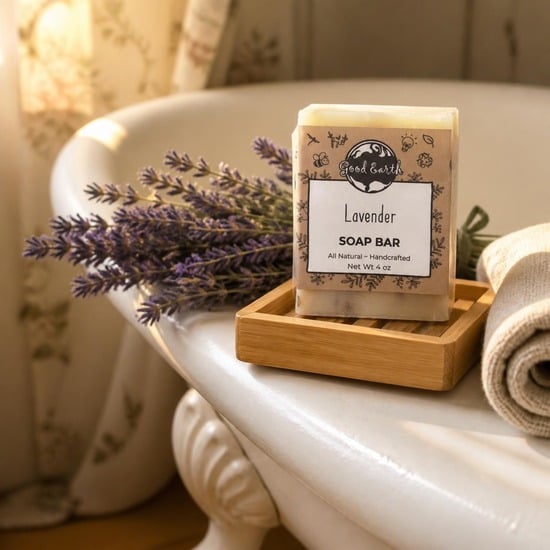
Good Earth Soap gives you a choice most makers do not. Buy the bar labeled, or buy it unlabeled for less. Choose unlabeled and you get soap and nothing else.
Their shipping is the most specific we found anywhere. They state orders ship with zero plastics, sealed with paper tape since 2020, using packing peanuts that dissolve in the sink. Even the invoice is printed on recycled paper.
This Wisconsin maker has been going since 1999, and the bars are palm free and scented with essential oils.
Wrapper
None if Unlabeled
✓ Plastic FreeBase Oils
Olive, Soy, Coconut
✓ True SoapPalm Oil
None
✓ Palm FreeScent
Essential Oils Only
✓ Essential OilsPros
- You can buy it with no label at all, for less
- The clearest published shipping-material policy of any brand here
- Palm free and essential oil scented
- Independent since 1999
Cons
- No third party certifications at all
- Their ingredient list leaves out the lye
- Their FAQ and sustainability page describe the packing peanuts differently
As close to buying soap with no packaging as you can get by mail. Order the unlabeled version.
One honest note on that missing lye. Good Earth’s list reads water, olive oil, soybean oil, coconut oil, essential oils, and clay, with no sodium hydroxide. Every cold-process bar needs lye, so it is not that the bar was made without it. As we covered above, true soap is not legally required to declare ingredients, so the omission is allowed. We would still rather see it listed.
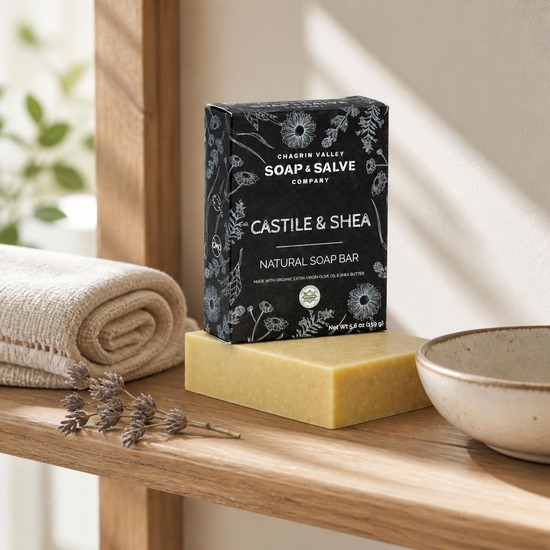
Castile & Shea, Unscented
$$$
Chagrin Valley publishes more about its packaging than any brand we researched. Bars ship in recycled paper boxes, sealed with water-activated paper tape, cushioned with shredded office paper or FSC honeycomb kraft instead of bubble wrap.
This particular bar has no added fragrance and no essential oils, which makes it the right pick if scent is what bothers your skin. It is olive oil, sunflower, shea butter, castor, goat milk, and lye.
Their palm oil, used in other bars but not this one, is sourced through Palm Done Right, which reports RSPO Identity Preserved sourcing.
Wrapper
Recycled Paper Box
✓ Plastic FreeBase Oils
Olive, Sunflower, Shea + Goat Milk
✓ True SoapPalm Oil
None in This Bar
✓ Palm FreeScent
None Added
✓ No Added ScentPros
- Packaging documented down to the tape and the void fill
- No added fragrance or essential oils
- Leaping Bunny verified, certified since 2013
- Organic certified by OEFFA, which we confirmed in their registry
Cons
- Contains goat milk, so it is not vegan
- Has organic lavender flower, so not strictly aroma free
The bar to pick when fragrance is the thing your skin reacts to. Worth the price for the transparency alone.
A note on the organic claim, because this trips up a lot of writing about soap. Chagrin Valley carries “Made with Organic Ingredients,” not the USDA Organic seal, and their own FAQ explains why. Lye is a non-agricultural ingredient making up more than 5% of the formula, so a cold-process bar mathematically cannot reach the 95% threshold the full seal requires. Any brand claiming USDA Organic soap is worth a second look.
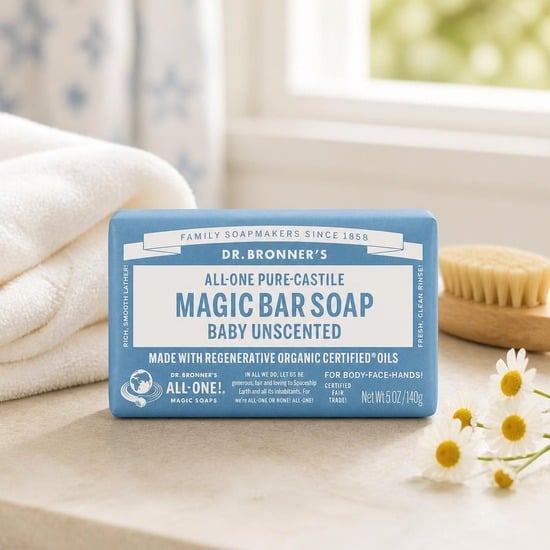
Pure-Castile Bar Soap
$
Dr. Bronner’s is the bar you can buy almost anywhere, and it holds up. The wrapper is 100% recycled paper, the formula is organic oils saponified with sodium hydroxide, and the label says outright that none of the lye remains.
It is also the only bar here with EWG Verified status that we could confirm in the EWG database, alongside Leaping Bunny certification going back to 1999.
Their palm oil comes from Serendipalm in Ghana, a fair trade and organic project they have supported for years.
Wrapper
100% Recycled Paper
✓ Plastic FreeBase Oils
Coconut, Olive, Palm, Jojoba
✓ True SoapPalm Oil
Fair Trade, Ghana
⚠ Contains PalmScent
None Added
✓ No Added ScentPros
- Sold in most grocery stores, no ordering required
- EWG Verified, which we confirmed in EWG’s own database
- Leaping Bunny certified since 1999
- Eight scents plus a genuinely unscented Baby version
Cons
- Contains palm oil, unlike three bars on this list
- The wrapper material appears only in a press release, not on a product page
- Peppermint and eucalyptus versions are strong on sensitive skin
The default answer, and there is nothing wrong with the default. Reach for the Baby Unscented.
Multi-packs are the better value here, and the Baby Unscented version is the one to reach for if your skin is at all reactive. The peppermint is lovely and it is not gentle.
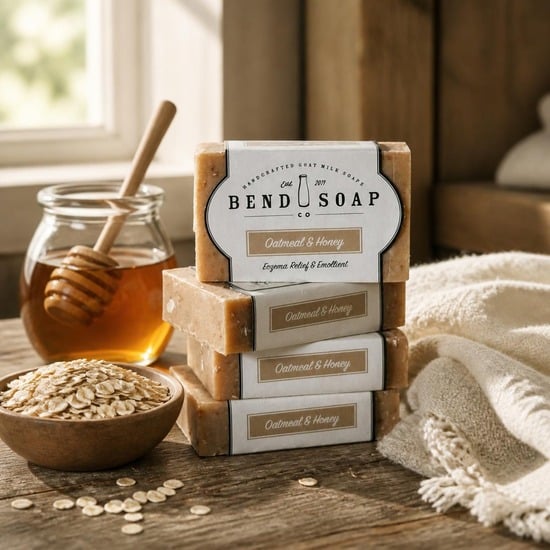
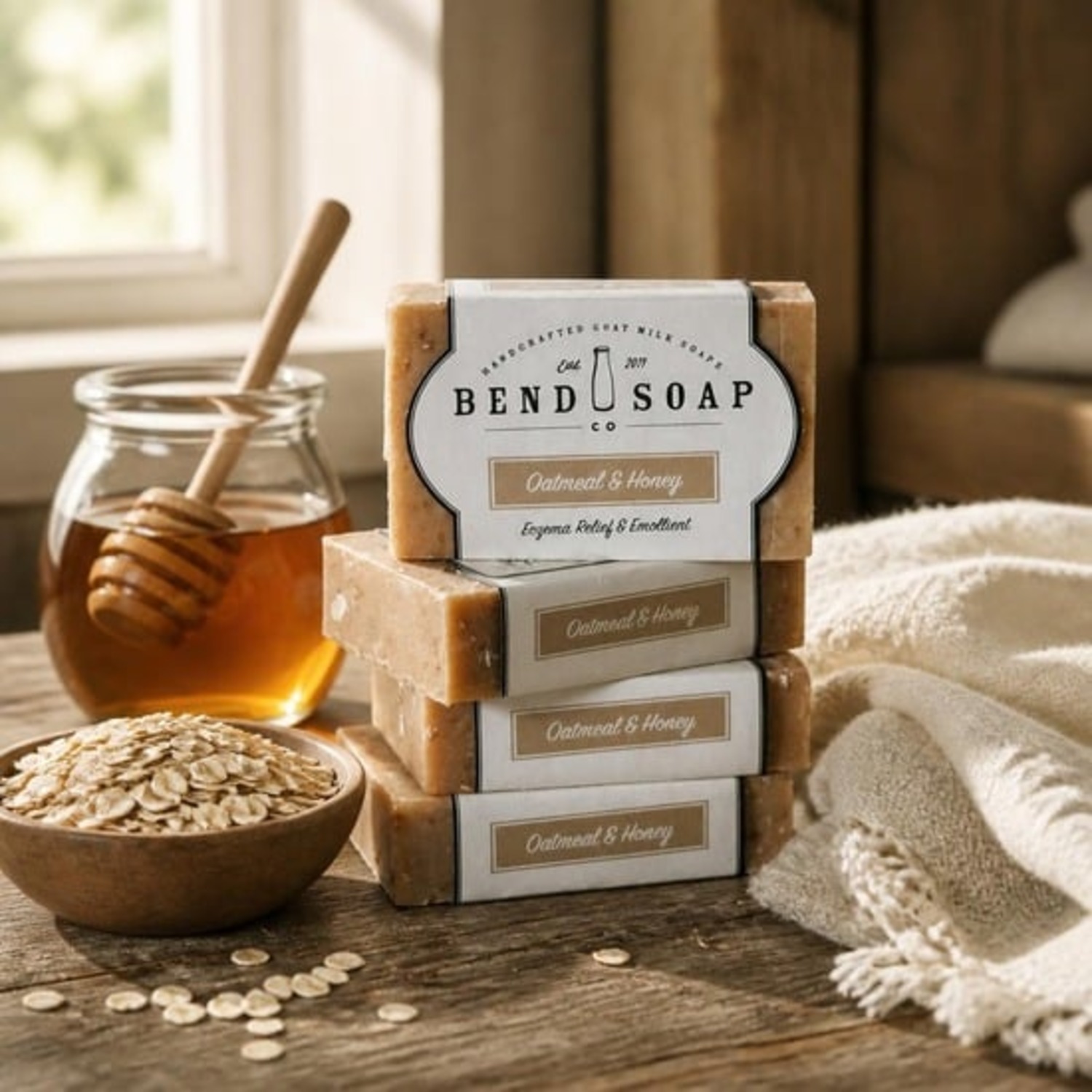
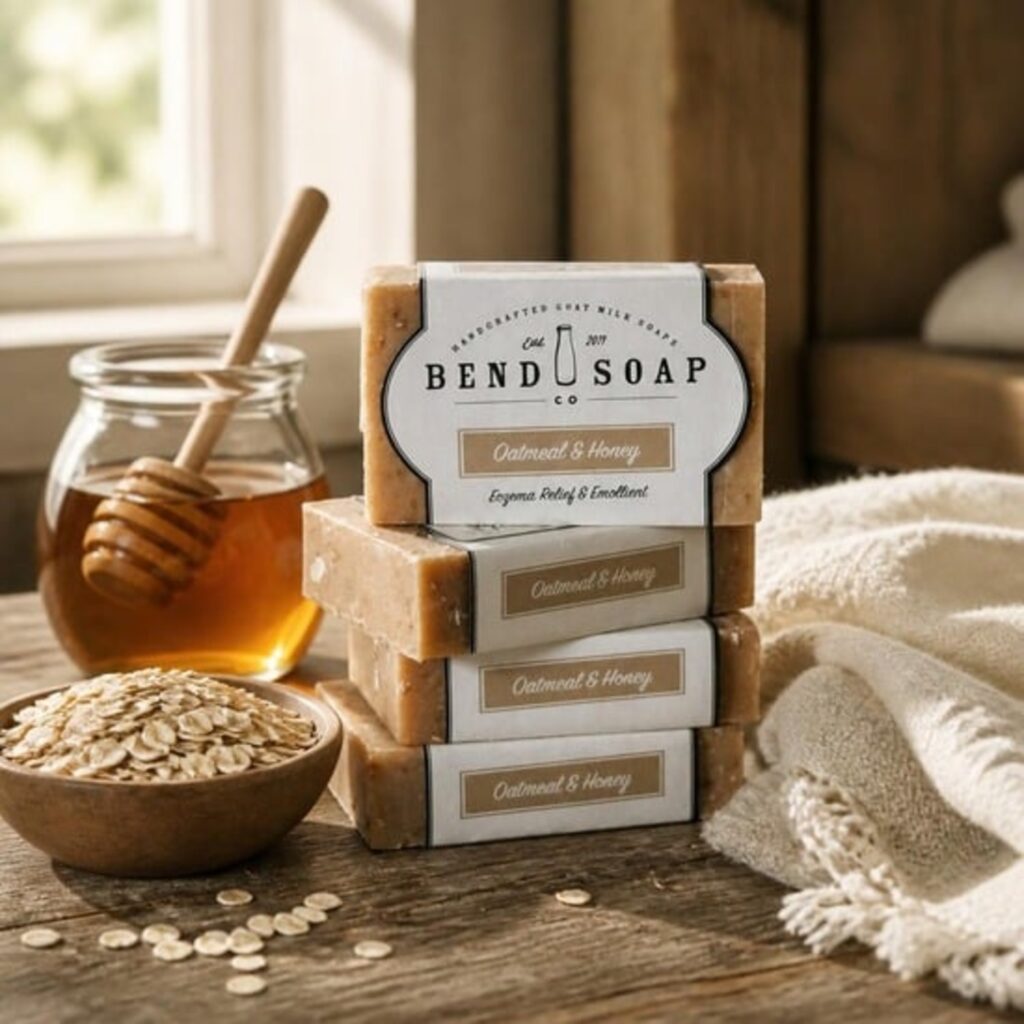
Oatmeal & Honey Goat Milk Soap
$
Bend Soap Company is a family operation that started in 2011 when the Johnsons were trying to help their son’s skin. They still raise their own goats, and more than a quarter of every bar is fresh goat milk.
The ingredient list is six things: goat milk, saponified coconut oil, olive oil, palm oil, oats, and honey. Bars cure for six to eight weeks before they ship.
Bend Soap sent me this bar to try. I tested it on one arm only for a few weeks so I could actually compare, and that arm came out noticeably softer and less dry than the other. The scent is clean but light, which is my one complaint, though what is there does last. The bar comes wrapped in paper, which I checked myself because Bend does not publish it anywhere.
Wrapper
Paper, Checked in Hand
✓ Plastic FreeBase Oils
Coconut, Olive, Palm + Goat Milk
✓ True SoapPalm Oil
Sourcing Not Verified
⚠ Contains PalmScent
None Added, Oats + Honey
✓ No Added ScentPros
- Six ingredients, all of them recognizable
- Among the lowest priced bars here
- Genuinely family run, and they raise their own goats
- Paper wrapper, confirmed by hand
Cons
- Scent is faint if you want a strong bar
- No third party certifications
- Palm oil called sustainable with no verifiable sourcing
A short, honest ingredient list from a real family farm. A lot of soap for the money.
Two things to be straight about. Bend sent this bar to us, and it did not change the scoring, but you should know. And Bend publishes nothing about packaging anywhere on their site, no packaging page, no sustainability page, no material named. The paper wrapper above is from holding the product, not from their marketing. That is a gap worth closing on their end.
Their palm oil has the same problem. The label says sustainable palm oil, and the only RSPO mention on their whole site sits inside a general blog post about goat milk soaps rather than a statement about their own supply. Compare that to Chagrin Valley, who names the tier.
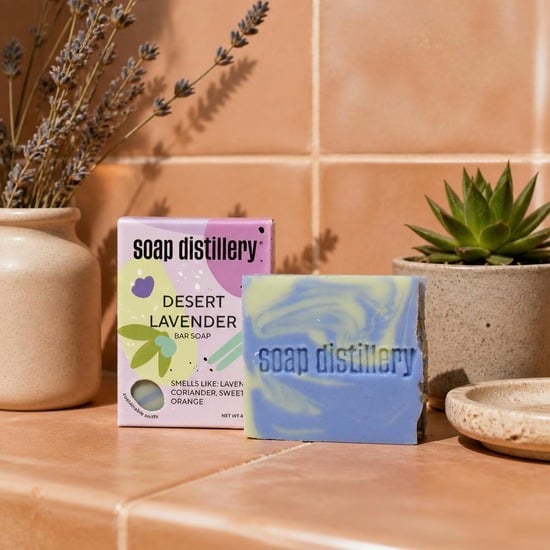
Cold Process Bar Soap
$$
Soap Distillery does something we have not seen anywhere else. Every bar is sold two ways, in an FSC certified recycled carton or completely naked, and the naked version costs less. You are not paying for packaging you did not want.
This Chicago maker started in 2012 naming scents after cocktails, and Beer + Cigarettes is still their best seller. The range has since grown well past the bar cart into things like Hinoki + Fern and Desert Lavender.
They are palm free down to the details most brands never mention, including palm derivatives and even the stearic acid. They have published their reasoning, and it is a rejection of RSPO rather than a claim about it.
Wrapper
None, or FSC Carton
✓ Plastic FreeBase Oils
Sunflower, Coconut, Olive
✓ True SoapPalm Oil
None, Derivatives Too
✓ Palm FreeScent
Phthalate-Free Fragrance + Essential Oil
⚠ Has FragrancePros
- The naked version costs less than the boxed one
- Palm free including derivatives and stearic acid
- Leaping Bunny certified, verified in the registry
- By far the most interesting scents on this list
Cons
- Most bars use a fragrance blend, not essential oils alone
- The FSC carton claim comes from their supplier, not their own audit
- Nothing published about shipping or void fill materials
The only maker here who charges you less for skipping the box. Order the zero waste version.
The fragrance question is worth being straight about, because they are. Most Soap Distillery bars list Fragrance (Parfum) rather than named essential oils, and their FAQ explains the reasoning: some essential oils, like rose and sandalwood, are resource intensive or over harvested. They do run a smaller natural fragrance line if you want to avoid the blends, which includes Desert Lavender, Limoncello and Earl Grey.
Their palm position is unusually blunt. Rather than buying certified palm and calling it sustainable, they cut it out entirely, and they have written publicly that they consider RSPO certification too weak to rely on. Whether you agree or not, it is a real position rather than a logo.
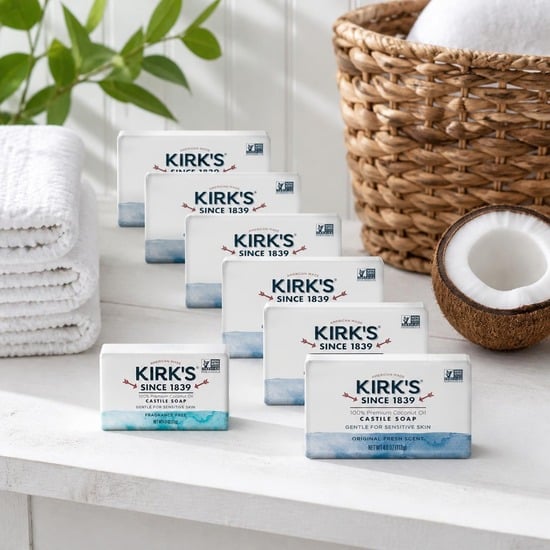
Castile Bar Soap
$
Kirk’s costs a fraction of what most handmade bars here do, and it is still true saponified soap with a six-ingredient list.
The bar is palm free, which surprised us at this price. Kirk’s uses coconut oil as its base and derives its glycerin from coconut rather than palm.
Cartons are FSC certified paperboard, and the company has held Leaping Bunny certification since 2003.
Wrapper
FSC Paperboard Carton
✓ Plastic FreeBase Oils
Coconut Only
✓ True SoapPalm Oil
None, Coconut Glycerin
✓ Palm FreeScent
Synthetic Fragrance + Essential Oils
⚠ Partly SyntheticPros
- The lowest price of any bar here
- Palm free bar, which is rare at this price
- Leaping Bunny certified since 2003
- FSC paperboard carton, no film
Cons
- Original Fresh Scent uses synthetic fragrance, per their own glossary
- Their FAQ and glossary contradict each other on that point
- Smallest ingredient transparency of the group
The honest budget answer, with one caveat about the scent. Skip it if synthetic fragrance is your dealbreaker.
That fragrance note deserves the space. Kirk’s FAQ describes their fragrances as blends of essential oils and natural scent materials, while their own ingredient glossary says the Original Fresh Scent is a combination of synthetic fragrance and essential oils from the pine and citrus family. Both pages are theirs. We are going with the more specific one.
Kirk’s does make a fragrance-free version, and it is the one to look for if scent is a concern. It is stocked less widely than the Original, so you may have to hunt a little.
Bar Soap vs Body Wash, Honestly
The strongest case for a bar is packaging, not carbon. A paper-wrapped bar removes a bottle, a pump, and a cap entirely, while life cycle studies comparing bar and liquid soap on climate impact reach conflicting conclusions.
You have probably read that bar soap has a much smaller carbon footprint than body wash. We went looking for the study behind that, and what we found was messier than the headline.
Koehler and Wildbolz published the most cited comparison in 2009 in Environmental Science and Technology. Their figures, repeated in two independent sources, are 0.35 g of bar soap and 0.91 L of water per hand wash, against 2.3 g of liquid soap and 0.64 L of water. So a bar uses roughly six times less product by weight, and about 42% more water.
A separate Swiss case study from 2015 went the other way on climate, finding bar soap’s production impact higher per kilogram because it needs more raw material. That one is grey literature rather than peer reviewed, so weigh it accordingly, but it is the only full comparison anyone has published openly.
Both studies agree on something more useful than either headline: the consumer use phase dominates. How hot your water is and how much soap you use matter more than which format you bought.
Packaging is where the bar wins cleanly, and it is not close. A bottle of body wash is a plastic bottle, a plastic pump with a metal spring inside it, and a plastic cap. Compare that to a bar, which is a piece of paper, or nothing at all. The Ellen MacArthur Foundation reported that 62% of cosmetics signatories’ plastic packaging remains non-recyclable, and reusable plastic packaging in the sector actually fell between 2020 and 2021.
UNEP’s 2023 roadmap puts numbers on why this matters. Plastic pollution could fall 80% by 2040, and reuse alone accounts for 30% of that reduction, making it the single largest lever available. Choosing a format that never needed a bottle is a small version of the same move.
What to Look For and What to Skip
A good natural bar soap lists saponified oils, water, and a short tail of butters, clays, or essential oils. The ingredient most worth avoiding is the single word fragrance, because United States labeling rules let it stand in for a mixture the maker never has to disclose.
✅ Ingredients worth looking for
- Saponified oils, listed as sodium cocoate, sodium olivate, or as the oil plus sodium hydroxide. Either style is fine.
- Glycerin, which forms naturally during saponification. Big manufacturers often strip it out to sell separately, small makers leave it in.
- Shea or cocoa butter, which add the extra fat that keeps a bar from feeling stripping.
- Named essential oils, like lavender or tea tree, rather than the umbrella word fragrance.
- Oats, clay, or coffee grounds, if you want gentle texture without plastic microbeads.
❌ Ingredients worth skipping
- Fragrance or parfum, the one that actually matters. Under 21 CFR 701.3, fragrance may be listed as just fragrance, so a single word can cover dozens of undisclosed ingredients.
- Triclosan, which the FDA barred from over-the-counter antibacterial hand and body washes in September 2017 because makers never showed it was safe for daily long-term use or better than plain soap.
- Sodium lauryl sulfate in a bar sold as gentle. It is a well documented irritant, so much so that dermatologists use it as the positive control in patch testing. It does not cause cancer, whatever you have read.
- Anything marketed as antibacterial for everyday washing. The FDA’s own guidance is that plain soap and water works.
Two corrections to claims you will see everywhere. Parabens are not banned in Europe as a class. Five were prohibited in 2014 because industry never submitted safety data for them, and the EU’s own scientific committee affirmatively confirmed that methylparaben and ethylparaben are safe at authorized levels. And the phthalate still commonly used in cosmetics, DEP, is used as a fragrance solvent, which is one more reason to care about that single word on the label.
✨ Tip: Fragrance-free and unscented are not the same thing
The American Academy of Dermatology draws the line clearly: unscented means a fragrance is masked so you cannot smell it, while fragrance-free means the product has no fragrances at all, even ones you cannot detect. Neither term has a legal definition in the United States, so the ingredient list is the only place to check.
What RSPO Certified Palm Oil Actually Guarantees
RSPO has four supply chain models, and only two of them put certified palm oil physically in your bar. Mass Balance permits mixing with non-certified oil, and Book and Claim has no physical link to the product at all.
This is the detail almost nobody explains, and it changes how much an RSPO logo is worth.
| Model | Certified oil physically in the bar? | Traceable to |
|---|---|---|
| Identity Preserved | Yes, kept separate from all other oil | One named mill |
| Segregated | Yes, blended with other certified oil | A list of certified mills |
| Mass Balance | Not necessarily, mixing is permitted | Accounting only |
| Book and Claim | No physical link at all | A credit purchase |
RSPO’s own supply chain standard says Mass Balance allows mixing of certified and non-certified palm products at any stage, without requiring a physical or chemical link between what was bought and what is sold. That is not fraud, it is how the system is designed, but it means the logo alone tells you less than you would think.
So when Chagrin Valley names Identity Preserved, they are telling you something specific and checkable. When a brand’s label just says sustainable palm oil with no tier and no certificate, there is nothing to check. Bend Soap falls in that second group, and we said so in their section.
Three of the bars here dodge the question entirely by using no palm at all: Meliora, Good Earth, and Soap Distillery. Kirk’s is palm free in the bar itself, and so is the Chagrin Valley bar we picked.
What Dermatologists Actually Say About Bar Soap
The American Academy of Dermatology advises skipping bar soap for eczema-prone skin, recommending a fragrance-free mild cleanser instead. For skin without a barrier condition, a well made bar is a reasonable choice, and fragrance-free matters more than bar versus bottle.
We could have left this section out. Most roundups do.
The AAD’s guidance on eczema-friendly products says it plainly: skip bar soaps, which can dry and irritate your child’s skin, and use a fragrance-free mild cleanser. That is the opposite of what a page selling bar soap wants to tell you, and you should know it before you buy.
The chemistry behind that advice is real. True soap is alkaline, with a published range of 8.5 to 11.0, while healthy skin measures around 4.9 to 5.1 and is estimated at about 4.7 once you strip out the effect of soap and tap water. Controlled testing has found a significant correlation between cleanser pH and irritation.
Where it gets more interesting is that the story does not end there. A 2021 study found that cleansers formulated mainly with anionic surfactants at skin pH can produce more dryness and irritation than the same systems at neutral pH. The authors put it directly: a product having the same pH as skin does not guarantee it will be good for skin. Surfactant type matters at least as much as the number does.
So here is the honest position. If you have eczema, atopic dermatitis, or a skin barrier that is already struggling, follow the AAD and use a gentle fragrance-free cleanser rather than a bar. For skin with no barrier condition to manage, a well made superfatted bar is a perfectly reasonable thing to wash with, and choosing fragrance-free will do more for your skin than choosing a bar over a bottle ever will.
How to Make Your Own Natural Soap
Cold-process soap needs oils, sodium hydroxide, and distilled water, combined at 95°F to 105°F and cured for four to six weeks. Always run your own oils through a lye calculator, because saponification values vary and a fixed recipe is only ever approximately right.
Making soap at home is genuinely satisfying, and it involves handling a caustic chemical, so we are going to be careful about how we write this.
One thing to know before you start. No trade body publishes a fixed beginner recipe, and that is on purpose. Saponification values vary by oil and by batch, so any printed recipe with fixed lye weights is an approximation. The Handcrafted Soap and Cosmetic Guild tells beginners to pick a few simple oils, keep the batch to one to three pounds, and run the numbers through a lye calculator. Do that, and treat what follows as a starting point rather than gospel.
Safety first, and this part is not optional
- Wear gloves, long sleeves, and eye protection. Goggles or a face shield, not glasses.
- Always add lye to water, never water to lye. Reversing it can cause a violent reaction.
- Work with ventilation. The solution gives off fumes as it heats.
- Never use aluminum. Lye is corrosive to aluminum, zinc, tin, and lead. Stainless steel or heavy plastic only.
- If lye touches skin, flush with water immediately and remove contaminated clothing. Do not try to neutralize a lye burn with vinegar, which is old advice with no support behind it.
- Keep children and pets out of the room from the moment you open the lye container.
A palm-free beginner recipe
This blend is 60% olive, 25% coconut, and 15% shea, at a 5% superfat. It yields roughly three pounds of soap, or about ten to twelve 4 oz bars.
| Ingredient | Metric | US |
|---|---|---|
| Olive oil | 600 g | 19.2 oz |
| Coconut oil | 250 g | 8.0 oz |
| Shea butter | 150 g | 4.8 oz |
| Sodium hydroxide (lye) | 139 g | 4.45 oz |
| Distilled water | 279 g | 8.9 oz |
Weigh everything. Soap making is measured by weight, never by volume, and a kitchen scale that reads to the gram is the one tool you cannot skip.
The steps
- Mix the lye solution. Add the lye to the distilled water, stirring as you go. It will heat to near boiling on its own and give off fumes. Set it somewhere safe to cool.
- Melt the oils. Warm the coconut oil and shea butter until liquid, then stir in the olive oil.
- Match the temperatures. Bring both the lye solution and the oils to somewhere between 95°F and 105°F.
- Combine and blend to trace. Pour the lye solution into the oils and blend. Trace is when the mixture is still thin enough to pour off a spoon but thick enough to leave a visible mark on the surface, about the consistency of cake batter.
- Pour and rest. Pour into your mold, tap it lightly on the counter to release trapped air, then cover with a towel or blanket and leave it 12 to 24 hours.
- Cut. Once the block has firmed up, usually one to three days, turn it out and cut your bars.
- Cure. Set the bars somewhere cool with good airflow for four to six weeks, until they are fully hard.
💫 Now You Know: What curing actually does
Curing is about water evaporating so the bar gets hard and lasts longer in the shower. It is not about the lye becoming safe, which is a common misunderstanding. Saponification finishes on its own within the first day or two. Hot-process soap proves the point, since it is fully saponified the moment it goes into the mold and needs no extra waiting time at all.
Cure time is one place sources genuinely disagree. The Handcrafted Soap and Cosmetic Guild gives four to six weeks in one place and three to eight weeks in another, both on their own site. Small makers often go longer, and Bend Soap cures for six to eight weeks. Longer generally means a harder, longer-lasting bar.
Should You Make It or Buy It?
Making your own natural soap costs a little less per bar than buying one, plus a few hours of work and a month of waiting. The case for making it is about control of the ingredients, not about saving money.
Once you price the oils, a batch like the one above works out cheaper per bar than anything on this list, though not by much against the budget picks. Against the pricier handmade bars, the saving is real.
Make your own if you want total control of the ingredients, if you enjoy the process, or if you are giving bars away. Buy if you need soap this week, if handling lye is not something you want in your kitchen, or if you would rather put your money toward a small maker who already does it well.
Worth saying plainly: neither choice is better for the planet by much. Both skip the bottle, which is the whole point.
Don’t Miss: Non-Toxic Living Reading soap labels is one small piece of a much bigger picture. Here is how to work through the rest of your home. Read more →FAQs on Natural Bar Soap
Yes. Dr. Bronner’s Pure-Castile bars are true saponified soap made from organic oils, with no synthetic detergents or foaming agents. The bars are Leaping Bunny certified and several carry EWG Verified status, which we confirmed in EWG’s own database. They do contain palm oil, sourced from a fair trade and organic project in Ghana.
You can, though facial skin is more reactive than the skin on your body. Choose a fragrance-free bar with a high superfat, patch test first, and stop if your face feels tight afterward. If you have eczema or rosacea, the American Academy of Dermatology recommends a gentle fragrance-free cleanser rather than a bar.
Because it is sitting in water. Handmade bars hold onto their glycerin, which attracts moisture, so a bar left in a puddle will dissolve fast. Use a dish that drains and lets air reach all sides, keep it out of the direct spray, and cut large bars in half so only one piece gets wet at a time.
Not quite. Castile originally meant soap made purely from olive oil, and today the word is used loosely for vegetable-oil soaps generally. All true castile soap is natural soap, but plenty of natural soap is not castile, since it may be built on coconut, shea, or tallow instead.
Small batches, better oils, and time. A cold-process bar sits curing for four to six weeks before it can be sold, which is inventory a maker cannot touch. Handmade bars also keep their glycerin, which large manufacturers often strip out and sell separately to bring their own costs down.
No. Saponification converts all of the lye into soap and glycerin, and the Handcrafted Soap and Cosmetic Guild states plainly that no lye remains in the finished bar. Most makers also superfat, adding about 5% more oil than the lye can convert, which guarantees oil is left over rather than alkali.
Not automatically. Handmade bars usually retain their glycerin and use shorter ingredient lists, which many people prefer. Store-bought brands are more likely to hold verified third party certifications and publish consistent information. The best bar is the one with a short ingredient list, no undisclosed fragrance, and packaging you can compost.
Final Thoughts About Natural Bar Soap
A good natural bar soap is a short list of saponified oils in a paper wrapper. Everything past that is marketing, and the word natural on the front of the box is doing none of the work you think it is.
If you want one answer, buy the Meliora bar package free. It is palm free, it carries three certifications that hold up when you check them, and it arrives with nothing to throw away.
If you would rather pick something up at the store this afternoon, Dr. Bronner’s is a genuinely good bar in recycled paper. If money is the constraint, Kirk’s is honest soap, as long as you know the Original scent is not all essential oil. And if you want your money going to a family farm, Bend Soap is the one to buy.
The one thing we would not want you to miss is the dermatology guidance. If your skin is already struggling, a bar is not the right starting point no matter how good the packaging is. Fragrance-free matters more than format, every time.
Every bar on this page is scored in our Plastic Footprint Directory or is being added to it, on the same rubric as everything else on the site.
📚 References
- American Academy of Dermatology. (n.d.). How can I find eczema friendly products? American Academy of Dermatology Association. https://www.aad.org/public/diseases/eczema/childhood/triggers/friendly-products
- Baranda, L., González-Amaro, R., Torres-Alvarez, B., Alvarez, C., & Ramírez, V. (2002). Correlation between pH and irritant effect of cleansers marketed for dry skin. International Journal of Dermatology, 41(8), 494-499. https://doi.org/10.1046/j.1365-4362.2002.01555.x
- Cosmetic Ingredient Review. (n.d.). Final report on the safety assessment of sodium lauryl sulfate and ammonium lauryl sulfate. CIR. https://www.cir-safety.org/sites/default/files/imports/alerts.pdf
- Ellen MacArthur Foundation. (2022). Global Commitment 2022: Cosmetics insights. https://www.ellenmacarthurfoundation.org/global-commitment-2022-cosmetics-insights
- European Commission. (2014). Commission Regulation (EU) No 358/2014 amending Annexes II and V to Regulation (EC) No 1223/2009 on cosmetic products. EUR-Lex. https://eur-lex.europa.eu/legal-content/EN/TXT/?uri=CELEX%3A32014R0358
- Handcrafted Soap & Cosmetic Guild. (n.d.). How to make cold process soap. HSCG. https://www.soapguild.org/tools-and-resources/resource-center/42/make-cp-soap/
- Handcrafted Soap & Cosmetic Guild. (n.d.). Lye safety. HSCG. https://www.soapguild.org/tools-and-resources/resource-center/202/lye-safety/
- Handcrafted Soap & Cosmetic Guild. (n.d.). Superfatting and lye discount. HSCG. https://www.soapguild.org/tools-and-resources/resource-center/166/superfatting-lye-discount/
- Hawkins, S., Dasgupta, B. R., & Ananthapadmanabhan, K. P. (2021). Role of pH in skin cleansing. International Journal of Cosmetic Science, 43(4), 474-483. https://doi.org/10.1111/ics.12721
- Koehler, A., & Wildbolz, C. (2009). Comparing the environmental footprints of home-care and personal-hygiene products. Environmental Science & Technology, 43(22), 8643-8651. https://doi.org/10.1021/es901236f
- Lambers, H., Piessens, S., Bloem, A., Pronk, H., & Finkel, P. (2006). Natural skin surface pH is on average below 5. International Journal of Cosmetic Science, 28(5), 359-370. https://doi.org/10.1111/j.1467-2494.2006.00344.x
- Mijaljica, D., Spada, F., & Harrison, I. P. (2022). Skin cleansing without or with compromise: Soaps and syndets. Molecules, 27(6), 2010. https://doi.org/10.3390/molecules27062010
- Roundtable on Sustainable Palm Oil. (2020). RSPO Supply Chain Certification Standard. RSPO. https://rspo.org/wp-content/uploads/RSPO_Supply_Chain_Certification_Standard_2020-English.pdf
- U.S. Environmental Protection Agency. (2025). Containers and packaging: Product-specific data. EPA. https://www.epa.gov/facts-and-figures-about-materials-waste-and-recycling/containers-and-packaging-product-specific-data
- U.S. Food and Drug Administration. (2016). Safety and effectiveness of consumer antiseptics. Federal Register, 81, 61106. https://www.federalregister.gov/documents/2016/09/06/2016-21337/safety-and-effectiveness-of-consumer-antiseptics-topical-antimicrobial-drug-products-for-over-the
- U.S. Food and Drug Administration. (2024). Frequently asked questions on soap. FDA. https://www.fda.gov/cosmetics/cosmetic-products/frequently-asked-questions-soap
- U.S. Food and Drug Administration. (2022). Fragrances in cosmetics. FDA. https://www.fda.gov/cosmetics/cosmetic-ingredients/fragrances-cosmetics
- U.S. Government Publishing Office. (n.d.). 21 CFR 701.20: Detergent substances, other than soap, intended for use in cleansing the body. eCFR. https://www.ecfr.gov/current/title-21/section-701.20
- United Nations Environment Programme. (2023). UN roadmap outlines solutions to cut global plastic pollution. UNEP. https://www.unep.org/news-and-stories/press-release/un-roadmap-outlines-solutions-cut-global-plastic-pollution