
Key Takeaways
- One bottle of liquid Castile soap covers 25+ Castile soap uses, from face wash to laundry, replacing five plastic bottles under your sink.
- Every use comes down to dilution: 2 to 3 drops for your face, a quarter cup per quart of water for all-purpose spray, and a third of a cup per load of laundry.
- Never mix Castile soap with vinegar in the same bottle, since the acid breaks it into a curdled, oily mess that cannot clean.
Castile soap is a plant-oil soap you dilute for almost any cleaning job, from washing your face to mopping the floor. The most common Castile soap uses are a 2-to-3-drop face wash, a quarter-cup all-purpose spray in a quart of water, and a third-cup laundry dose per large load. Get the dilution right and one $16 bottle handles jobs that would otherwise sit in five separate plastic containers under your sink.
Below are more than 25 tested uses, each with the exact ratio, organized by room and task so you can jump straight to what you need. Print the cheat sheet, keep it on the fridge, and stop guessing.
What Is Castile Soap?
Castile soap is a concentrated soap saponified from plant oils like olive and coconut, with a pH around 9 to 10. Liquid Castile is made with potassium hydroxide and bar Castile with sodium hydroxide, and neither contains synthetic detergents or petroleum surfactants.
Castile soap is a concentrated soap made by saponifying plant oils, usually olive, coconut, and hemp, with an alkali. Liquid Castile soap uses potassium hydroxide, and bar Castile uses sodium hydroxide, which is the only real chemical difference between the two forms. It contains no synthetic detergents, no petroleum surfactants, and no added fragrance in its unscented version.
Because it is a true soap rather than a detergent, Castile soap is alkaline, sitting around a pH of 9 to 10. That matters for two reasons you will see throughout this guide: it cleans grease well, and it reacts badly with acids like vinegar.
Master Dilution Cheat Sheet
The core Castile soap dilutions are 2 to 3 drops for your face, 1/4 cup (60 mL) per quart of water for an all-purpose spray, and 1/3 to 1/2 cup (80 to 120 mL) per large load of laundry. A little goes a long way because the soap is concentrated.
The whole skill of using Castile soap is knowing how much to add. Too little and it will not clean; too much and you get a filmy residue that has to be rinsed twice. Here are the ratios straight from Dr. Bronner’s own dilution guide, in one place.
| Use | Castile soap | Diluted in |
|---|---|---|
| Face wash | 2 to 3 drops | Wet hands, then wet face |
| Body wash | 1 small squirt | A wet washcloth |
| Foaming hand soap | 1 part soap | 3 parts water |
| Bath soak | 2 Tbsp (30 mL) | An average tub of water |
| Shaving (legs) | 1/2 tsp (2.5 mL) | Lather in wet hands |
| Hair | A few drops to 1/2 Tbsp (7.5 mL) | Very wet hair, ACV rinse after |
| Handwashing dishes | 1 part soap | 10 parts water (spray bottle) |
| Laundry (regular washer) | 1/3 to 1/2 cup (80 to 120 mL) | Per large load |
| Mopping | 1/2 cup (120 mL) | 3 gallons (12 L) hot water |
| All-purpose spray | 1/4 cup (60 mL) | 1 quart (1 L) water |
| Windows | 1 Tbsp (15 mL) | 1 quart (1 L) water |
| Toilet | 1 part soap | 4 parts water (squirt bottle) |
| Produce rinse | 1/4 tsp (1.25 mL) | A bowl of water |
| Plant bug spray | 1 Tbsp (15 mL) | 1 quart (1 L) water |
ℹ️ None of these are meant to be exact to the drop. If your water is hard or the job is filthy, use a little more. Take a screenshot of this table before you scroll on.
Mix and store your dilutions in reusable glass bottles, not plastic. A glass spray bottle for your all-purpose cleaner, a glass squirt bottle for dishes, and a glass foaming pump for hand soap keep the whole system plastic-free from bottle to sink. Glass also will not cloud or hold onto scent the way plastic does over time, and an amber or cobalt glass bottle protects any essential oils you add from light.
Castile Soap Uses for Personal Care
For personal care, dilute Castile soap heavily: 2 to 3 drops for washing your face, one small squirt for body wash, and 1 part soap to 3 parts water for foaming hand soap. It lifts oil and dirt without the synthetic surfactants that strip skin.
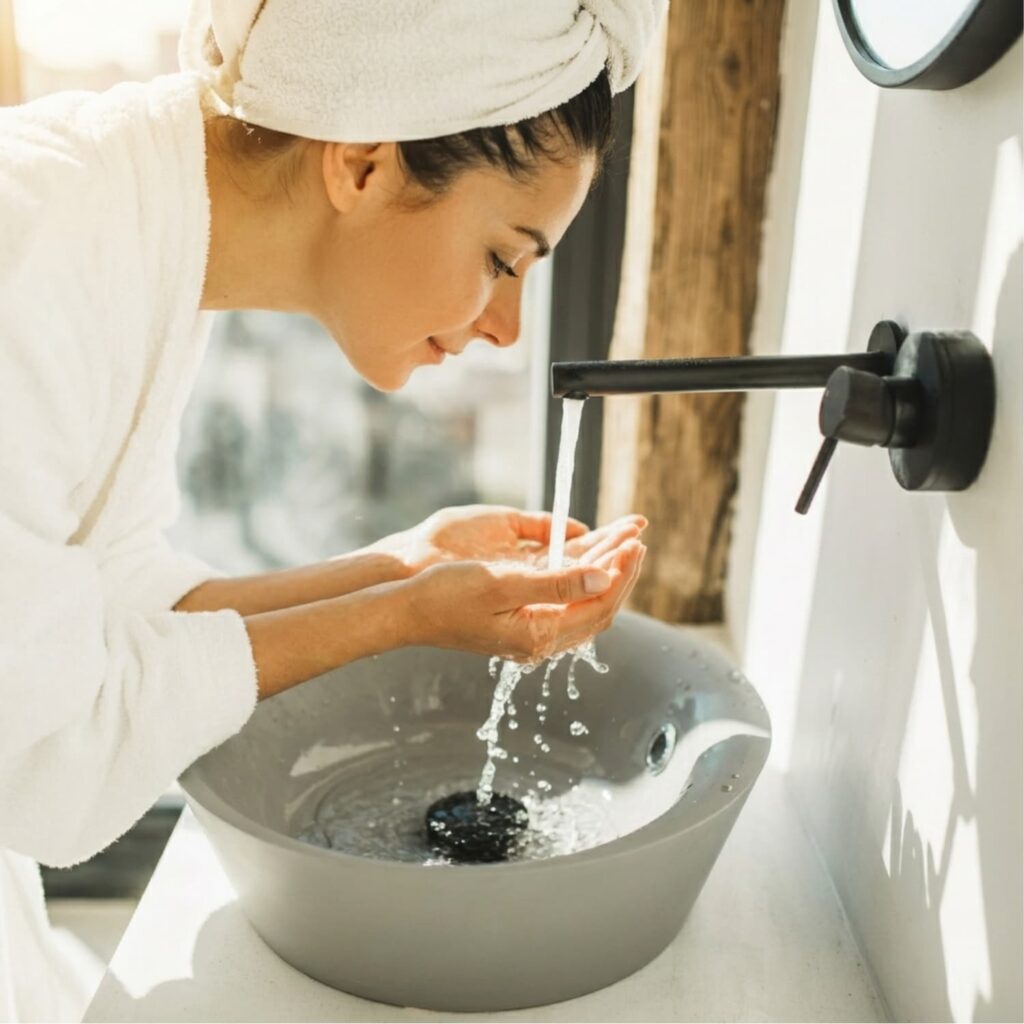
Castile soap works on skin because it lifts oil and dirt without the synthetic surfactants that strip and irritate. The key is going lighter than you think.
Face wash
Wash your face with 2 to 3 drops of liquid Castile soap worked into wet hands, then massaged onto a wet face and rinsed. That is the entire recipe.
Two or three drops sound like nothing, but Castile soap is concentrated, and a face only needs a whisper of it. Because it is alkaline, follow with a splash of cool water and your usual moisturizer so your skin’s slightly acidic barrier rebounds.
Body wash and bath soak
For a shower, put one small squirt of Castile soap on a wet washcloth or loofah. For a bath, add about 2 tablespoons (30 mL) to an average-sized tub.
It will not produce a mountain of bubbles in the tub, and that is normal. Castile cleans by lifting oils, not by foaming. A drop of a skin-safe carrier oil in the bath afterward offsets any tightness.
Shampoo (with ACV rinse)
Use a few drops of Castile soap for short hair or up to 1/2 tablespoon (7.5 mL) for long hair, worked into very wet hair, then always follow with a diluted apple cider vinegar rinse.
The vinegar rinse is not optional. Castile is alkaline, which leaves hair cuticles rough and squeaky, and the acidic rinse (1 to 2 tablespoons of ACV in a cup of water, poured over and rinsed) smooths them back down. Skip the rinse and most people find their hair feels waxy.
Shaving lather
Work 10 drops for your face, 3 drops for underarms, or 1/2 teaspoon (2.5 mL) for legs into a lather in wet hands, then spread on the area before shaving.
It gives a thin, slick layer that lets the razor glide without the foam-in-a-can propellants. Rinse the razor often, since Castile lather is lighter than commercial shaving cream.
Hand soap
Mix 1 part Castile soap with 3 parts water in a foaming pump dispenser to make hand soap that lasts for weeks at pennies per fill.
This is the single best starter use. Buy one refillable glass foaming pump, fill it three-quarters with water, add a splash of Castile, and you never buy plastic-bottled hand soap again. Do not use a regular pump, since the soap is too thin and will squirt out. The foaming pump is what makes it work.
Makeup brush cleaner
Add 1 to 2 drops of Castile soap to wet makeup brush bristles, massage for 10 seconds, and rinse until the water runs clear. For makeup removal, lather several drops in your hands and massage onto a wet face.
Castile gently breaks down the oils that hold makeup and product on brushes without leaving a coating that could irritate skin the next time you use them.
Castile Soap Uses for Household Cleaning
For cleaning, mix 1/4 cup (60 mL) Castile soap per quart (1 L) of water for an all-purpose spray, and 1/2 cup (120 mL) per 3 gallons (12 L) of hot water for mopping. One bottle quietly retires a shelf of single-purpose sprays.
This is where one bottle quietly retires a shelf of single-purpose sprays.
All-purpose spray
Combine 1/4 cup (60 mL) Castile soap with 1 quart (1 L) of water in a spray bottle for an all-purpose cleaner that handles counters, appliances, and sealed surfaces. Add 1/4 teaspoon (1.25 mL) tea tree oil for extra microbial punch.
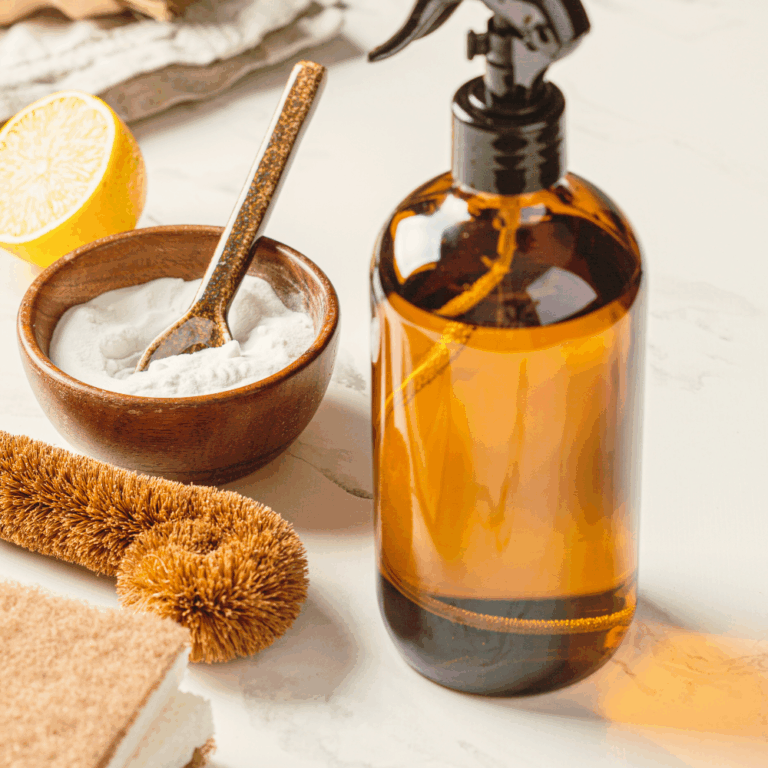
Decant it into a glass spray bottle so nothing leaches and the bottle lasts for years. This one spray covers most of the kitchen and bathroom. Do not add vinegar to it, no matter what an old blog recipe tells you, for the reason explained further down.
Floor mopping solution
Add 1/2 cup (120 mL) Castile soap to 3 gallons (12 L) of hot water, dunk a microfiber mop, and wring it out well before mopping wood, laminate, stone, or tile.
Wring the mop thoroughly so you are not leaving standing water on wood or laminate. For the full mopping method and a sealed-floor-safe variation, see our DIY floor cleaner guide.
Window and mirror cleaner
Use 1 tablespoon (15 mL) Castile soap in 1 quart (1 L) of water, spray, and squeegee. Follow with a spray of half water, half vinegar, applied separately after the soap, and squeegee again.
Notice the vinegar comes second, as a separate rinse, never premixed into the soap bottle. That two-step sequence is what leaves glass streak-free. For more glass and specialty recipes, see our homemade window cleaner guide.
Dish soap for handwashing dishes
Pre-dilute 1 part Castile soap with 10 parts water in a squirt bottle and apply directly to a scrub brush, or add 1 to 2 tablespoons (15 to 30 mL) to a full sink.
In hard water, dry dishes by hand to avoid the white spots that Castile can leave. It cuts grease well but rinses cleaner when it is pre-diluted rather than squirted on straight.
Toilet bowl scrub
Pre-dilute Castile soap 1 part to 4 parts water in a squirt bottle, add 1/4 teaspoon (1.25 mL) tea tree oil, squirt the bowl, sprinkle baking soda on the brush, scrub, and let it sit 10 minutes before flushing.
The baking soda gives grit, the tea tree adds a disinfecting edge, and the Castile lifts the grime.
Tub and tile scrub
Make a soft scrub by sprinkling baking soda in the tub, then spraying or drizzling Castile all-purpose solution over it to form a paste. Scrub and rinse.
Castile plus baking soda is the workhorse combo for soap scum and grime, since the soda scours while the soap dissolves the oily film. See more of these pairings in our baking soda cleaning hacks.
Castile Soap Uses for Laundry
For laundry, use 1/3 to 1/2 cup (80 to 120 mL) Castile soap per large load in a regular washer, halved for a high-efficiency machine, with 1 cup (240 mL) of vinegar added to the rinse cycle rather than the wash.
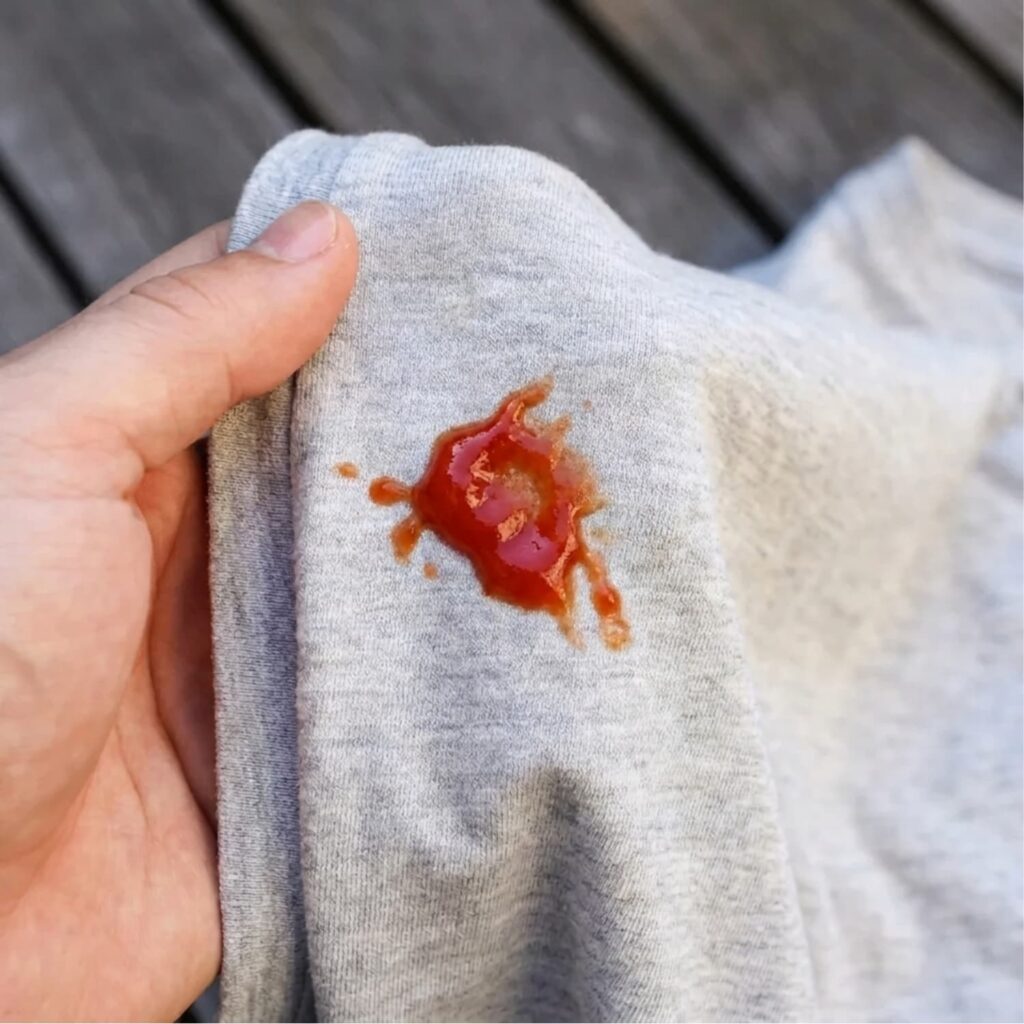
Castile makes a genuinely functional laundry soap, though it behaves differently from commercial detergent.
Liquid laundry detergent recipe
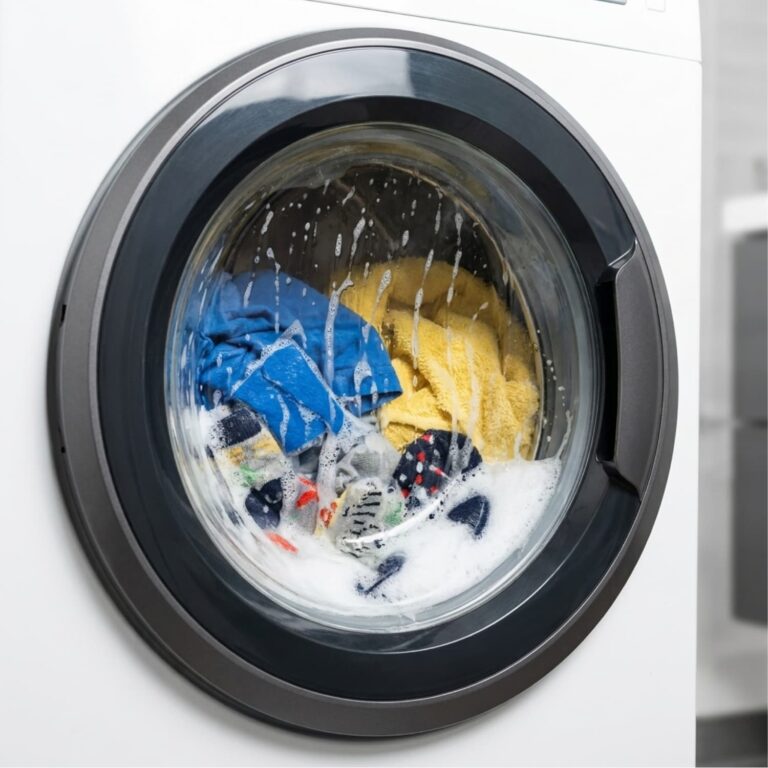
Use 1/3 to 1/2 cup (80 to 120 mL) Castile soap for a large load in a regular washer, and halve that for a high-efficiency machine. Add 1 cup (240 mL) of vinegar to the rinse cycle, never the wash.
The vinegar goes in the rinse compartment, where it never touches the soap directly, and it acts as a fabric softener and residue remover. Optionally add 1/2 cup (120 mL) baking soda to the wash for whitening. For the full recipe and hard-water notes, see our homemade laundry detergent guide.
Stain pre-treat
Dab a few drops of undiluted Castile soap directly onto a fresh stain, work it in with your fingers, let it sit a few minutes, then wash as usual.
It works best on oil-based and food stains. Test colored fabrics first, since concentrated soap on one spot can lighten some dyes.
Handwashing delicates
Swish 1 tablespoon (15 mL) Castile soap into about 1 gallon (4 L) of cool water, soak delicates for 10 minutes, swish again, and rinse with clean water.
Press the water out with a towel and lay flat to dry. Gentle enough for wool and lingerie that would pill or stretch in the machine.
Castile Soap Uses for Kids, Pets, and Plants
Use unscented Castile soap for babies and dogs, and about 1/4 teaspoon (1.25 mL) in a bowl of water to wash produce. Do not use Castile soap on cats, since they cannot safely metabolize the essential oils in scented versions.

Its mild, additive-free formula is why Castile shows up in nurseries and dog baths, but a couple of rules matter here.
Baby wash and bath
Use the unscented (Baby) Castile soap for infants: a drop or two on a wet washcloth for the body, or a small squirt in the bath water.
Choose the unscented version for babies, since even natural essential oils are unnecessary on infant skin. Rinse well, and keep it out of the eyes, as any true soap will sting.
Dog shampoo
Wet your dog thoroughly, massage in enough Castile soap to work up a lather down to the skin, then rinse completely. Do not use Castile soap on cats.
The amount depends on your dog’s size and coat, so there is no fixed ratio here. Cats are the exception: they groom constantly and cannot safely metabolize the essential oils in scented Castile soaps, so leave cat bathing to a vet-recommended product. When in doubt, unscented and a careful rinse is the safest route even for dogs.
Produce wash
Add about 1/4 teaspoon (1.25 mL) Castile soap to a bowl of water, dunk and swish your fruits and vegetables, then rinse them in clean water.
A light dilution lifts waxy residue and dirt from produce. Use a small amount and rinse well, since you do not want a soapy aftertaste on your apples.
Plant and aphid spray
Mix 1 tablespoon (15 mL) Castile soap into 1 quart (1 L) of water and spray infested plants twice a day, in the cool part of the day, until the aphids clear.
The soap coats and smothers soft-bodied pests. Do not confuse this with the ant spray recipe, which uses a much stronger 1/4 cup of tea tree Castile per quart and will burn any plant it touches, so keep that one for baseboards and trails, not leaves.
Castile Soap Uses for the Outdoors and Car
Castile soap is 100% biodegradable, so one small bottle covers camp dishes, hands, and body, always used at least 200 feet from any water source. It also makes a gentle car wash that will not strip wax.

Camp dish and body wash
Carry one small bottle of Castile soap to cover dishes, hands, and body at camp, always used at least 200 feet from any water source.
It is biodegradable, but biodegradable does not mean you rinse it into a stream. Broadcast greywater onto soil well away from lakes and rivers so the soil bacteria can break it down.
Car wash
Add a couple of tablespoons of Castile soap to a bucket of water for a gentle car wash that will not strip wax the way harsh detergents can.
Rinse the car before it dries in the sun to avoid spotting, especially in hard water. Wash in the shade when you can.
More Quick Castile Soap Uses
To round out the list past 25, a few more that use the same dilute-and-go logic: a foot soak (1/2 tablespoon in a small tub of hot water), a congestion steam (1 tablespoon of peppermint or eucalyptus Castile in a bowl of steamy water, towel over the head), a jewelry and eyeglass cleaner (a drop in warm water, swish, rinse), and a garbage-can and diaper-pail wash (all-purpose spray, left to sit before rinsing).
❌ What NOT to Mix With Castile Soap
Never mix Castile soap with vinegar, lemon juice, or any acid in the same container. Castile is an alkaline true soap, and the acid “unsaponifies” it, breaking the soap back into a whitish, curdled, oily mess with no cleaning ability.
This is the number one Castile soap mistake, and most guides skip it. Lisa Bronner explains the chemistry plainly: vinegar is dilute acetic acid, Castile soap is a base, and when you combine an acid and a base they cancel each other out and form something new and useless. Citric acid and lemon juice do the same thing. The confusion comes from recipes that pair the two, which is fine as a sequence (soap first, rinse with diluted vinegar second) but ruinous in one bottle.
Hard water causes a milder version of the same problem. The minerals in hard water react with soap to form the white film people call soap scum, which is why hard-water households sometimes see residue on dishes and shower doors. The fix is not more soap; it is a little less soap, a vinegar rinse used separately, and drying by hand.
Bar vs Liquid: Which to Choose for Each Use
Liquid Castile soap is the more versatile pick and covers every use in this guide, while bar Castile is best for basic washing and for travel where it will not leak. Both are real Castile soap; the difference is the alkali used to make them.
Both are real Castile soap; the difference is the alkali used to make them and, in practice, how you dose them.
| Use | Better form | Why |
|---|---|---|
| Hand and body washing | Either | Bar for the sink, liquid for a foaming pump |
| Face | Liquid | Easier to control 2 to 3 drops |
| Laundry and mopping | Liquid | Measures and dissolves cleanly in water |
| All-purpose spray | Liquid | Pours and dilutes without grating |
| Travel and camping | Bar | No leaks, TSA-friendly, lasts long |
| Dishes | Liquid | Pre-dilutes into a squirt bottle |
If you are only buying one, buy the liquid. It covers every use in this guide, while the bar shines mainly for washing and travel.
FAQs on Castile Soap Uses
No. Castile soap is alkaline and vinegar is acidic, so combining them in one container makes the acid pull the soap back apart into its oils, leaving a curdled, greasy liquid that cannot clean. Use them separately instead: wash with the soap first, then rinse with diluted vinegar if you want its scum-cutting benefit.
Plain Castile soap is not registered as antibacterial; it cleans by lifting dirt and oils off surfaces and skin so they rinse away, which removes many germs mechanically.
Some people can, but because Castile is alkaline it can be stripping for dry or sensitive skin with daily use. Start a few times a week, always follow with moisturizer, and cut back if your skin feels tight.
Castile soap is a cleaner, not a disinfectant. It removes germs by washing them away rather than killing them on contact. Adding tea tree oil gives some antimicrobial benefit, but for true disinfection, you need a registered disinfectant.
That film is a hard-water reaction. Minerals in hard water bind with the soap to form soap scum. Use less soap, dry dishes and surfaces by hand, and follow with a separate diluted vinegar rinse.
Yes. Castile soap is 100% biodegradable and breaks down as it passes through septic and greywater systems. For camping greywater, disperse it onto soil well away from any water source.
Yes, and it is one of the best uses. Dilute 1 part Castile soap to 3 parts water in a foaming pump dispenser for long-lasting hand soap.
Concentrated Castile soap keeps for 2 to 3 years when unopened. Once you pre-dilute it with water, the preservative is diluted too, so mix small batches, store them in a clean glass bottle, and use pre-mixed solutions within a couple of weeks.
Liquid is more versatile and covers every use in this guide, so it is the better single purchase. Bar Castile is best for basic washing and travel, as it will not leak.
Final Thoughts About Castile Soap Uses
The entire Castile soap system comes down to one habit: dilute for the job, and never bottle it with an acid. Learn the three ratios you use most, a foaming-pump hand soap, a quarter-cup all-purpose spray, and a third-cup laundry dose, and the rest of the cheat sheet falls into place.
Start with one foaming pump of hand soap this week. It is the fastest way to see how far a single bottle stretches, and it is the first plastic bottle you will stop rebuying. From there, the same $16 bottle quietly clears your sink of everything else.
📚 References
- Bronner, L. (2026). A word of caution about vinegar and Castile soap. Going Green with Lisa Bronner. https://www.lisabronner.com/a-word-of-caution-about-vinegar-and-castile-soap/
- Dr. Bronner’s. (n.d.-a). Dilutions cheat sheet for Dr. Bronner’s pure-castile magic soap. https://www.drbronner.com/pages/dilutions-cheat-sheet-for-castile-soap
- Dr. Bronner’s. (n.d.-b). Pure-castile liquid soap dilutions cheat sheet [PDF]. https://info.drbronner.com/wp-content/uploads/2023/02/Castile-Dilution-Cheat-Sheet-52022.pdf
- Dr. Bronner’s. (n.d.-c). What is Castile soap? What are its uses and benefits? https://www.drbronner.com/pages/what-is-castile-soap
- Bronner, L. (2026). A word of caution about vinegar and Castile soap. Going Green with Lisa Bronner. https://www.lisabronner.com/a-word-of-caution-about-vinegar-and-castile-soap/
- Dr. Bronner’s. (n.d.-a). Dilutions cheat sheet for Dr. Bronner’s pure-castile magic soap. https://www.drbronner.com/pages/dilutions-cheat-sheet-for-castile-soap
- Dr. Bronner’s. (n.d.-b). Pure-castile liquid soap dilutions cheat sheet [PDF]. https://info.drbronner.com/wp-content/uploads/2023/02/Castile-Dilution-Cheat-Sheet-52022.pdf
- Dr. Bronner’s. (n.d.-c). What is Castile soap? What are its uses and benefits? https://www.drbronner.com/pages/what-is-castile-soap
More Non-Toxic Cleaning Reads
We’ve scored every cleaning product on plastic — see them in the Cleaning directory.