
Key Takeaways
- Truly non-toxic, plastic-free laundry detergent means no harsh chemicals (1,4-dioxane, optical brighteners, synthetic fragrance) AND no plastic in the formula or packaging, including PVA film.
- Most “plastic-free” sheets and pods still contain PVA, a synthetic polymer that a 2021 ASU study found leaks into waterways largely intact. Powders, tablets, and bars are the cleanest formats.
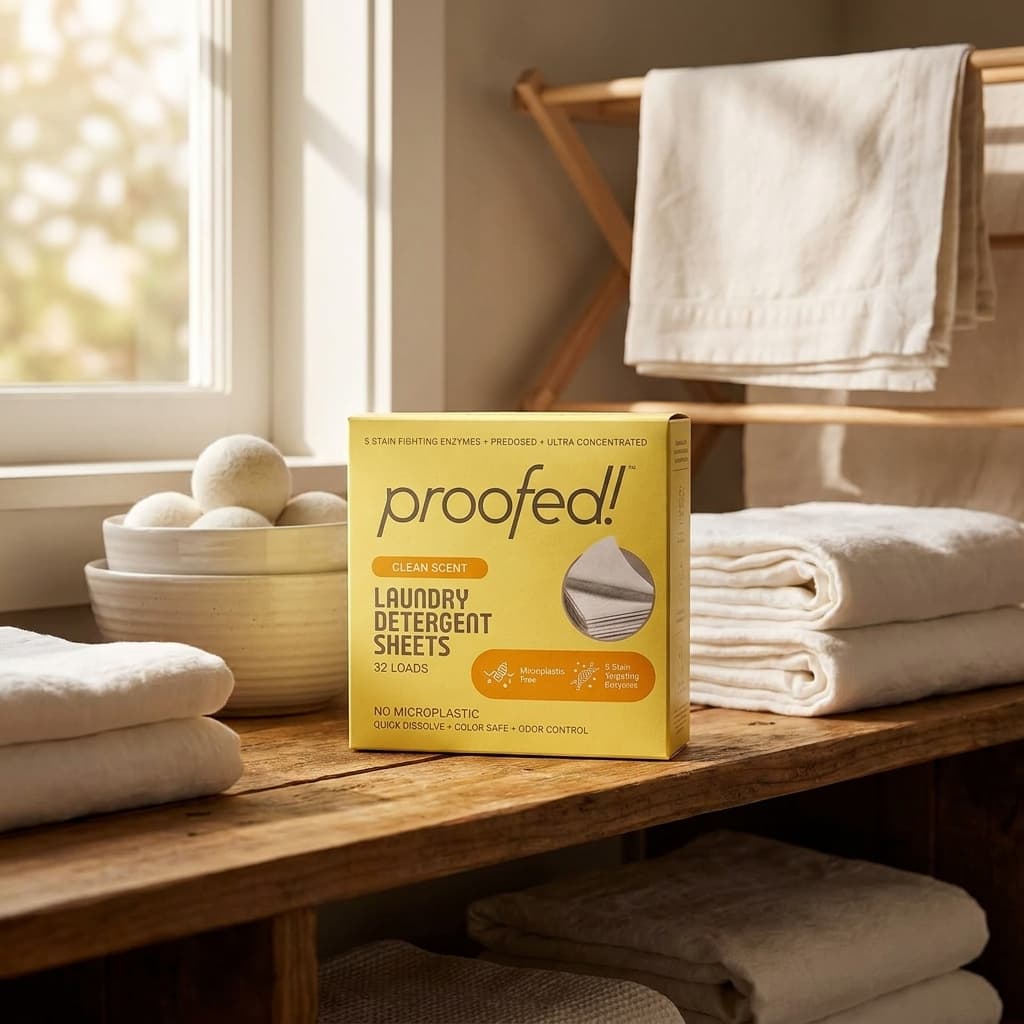
- Top picks for 2026: Meliora powder (best overall), Blueland tablets (only PVA-free pod), Proofed! sheets (only PVA-free sheet), and Dirty Labs liquid concentrate.
Most “non-toxic” laundry detergents on the shelf today aren’t quite either. The Environmental Working Group reviewed 434 general-purpose laundry detergents and found that 65% scored a D or an F on its Healthy Cleaning Scale. And even the brands that pass the non-toxic test often hide a different problem in plain sight: polyvinyl alcohol (PVA) film, the plastic that holds pods and most detergent sheets together.
If you’re trying to clean up your laundry routine for both your family’s health and the planet, you need a detergent that’s truly non-toxic AND truly plastic-free. That’s a smaller club than the marketing makes it look. This guide walks through which ingredients matter, why the “plastic-free” claim is often half-true, and the brands actually doing both right in 2026.
What Makes Laundry Detergent “Non-Toxic”?
A non-toxic laundry detergent skips known irritants and probable carcinogens, such as 1,4-dioxane, optical brighteners, synthetic fragrance, phosphates, and quaternary ammonium compounds, and relies instead on plant- and mineral-based cleaning agents.
“Non-toxic” isn’t a regulated label, which is why the term gets thrown around so loosely. Brands can market themselves as “clean” or “natural” while still using ingredients that appear on the Environmental Working Group’s hazard lists. Here’s what to actually watch for on the back of the bottle (or the box).
❌ Ingredients to Avoid in Laundry Detergent
If you see any of these on a label, put the bottle or box back on the shelf:
- 1,4-dioxane: A probable human carcinogen per the EPA, present as a contaminant from the manufacturing process of surfactants like SLES. Almost never listed on the label because it’s a byproduct, not an added ingredient. The state of New York banned products containing more than 1 part per million of 1,4-dioxane in 2023, and California is following suit.
- Optical brighteners: Synthetic chemicals that coat fibers and fluoresce under UV light to make whites look whiter. They don’t actually clean anything. They cause skin irritation in sensitive people, don’t biodegrade, and persist in waterways indefinitely.
- Synthetic fragrance: A single “fragrance” listing can hide dozens of undisclosed chemicals, including phthalates and known asthma triggers. If a product says “fragrance” without specifying the source, assume the worst.
- Sodium lauryl sulfate (SLS) and sodium laureth sulfate (SLES): Skin irritants that also serve as the main route for 1,4-dioxane contamination during manufacturing.
- Quaternary ammonium compounds (quats): Common in fabric softeners and some detergents. Linked to asthma flares and antimicrobial resistance.
- Phosphates: Banned in most US laundry detergents since 1994 for environmental reasons (they cause algae blooms in waterways), but still appear in some imported and industrial products.
- Chlorine bleach, formaldehyde releasers, ethanolamines (DEA, MEA, TEA), and synthetic dyes: Round out the avoid list. Most “clean” brands skip all of these. Conventional supermarket brands often use most of them.
✅ Safer Ingredients to Look For
Clean laundry brands rely on plant- and mineral-based ingredients that clean clothes without the trade-offs. These are the good ones:
- Sodium carbonate (washing soda): Mineral-derived. Lifts dirt and softens water naturally.
- Sodium bicarbonate (baking soda): Neutralizes odors and balances pH.
- Sodium percarbonate: Oxygen-based bleach alternative that brightens whites without chlorine.
- Plant-based surfactants: Like decyl glucoside, lauryl glucoside, and cocamidopropyl betaine, derived from coconut or corn.
- Plant-based enzymes: Protease, amylase, lipase, and cellulase break down protein, starch, fat, and cotton stains.
- Organic essential oils: When you want scent, oils like lavender, lemon, and peppermint provide it without phthalates or undisclosed fragrance compounds.
- Citric acid: Natural water softener and pH adjuster, often used as the dissolving agent in tablet detergents.
What Does “Plastic-Free” Really Mean for Laundry Detergent?
Truly plastic-free laundry detergent has no plastic in the packaging AND no synthetic polymers in the formula, which rules out PVA and PVOH film used in most pods and sheets.
The “plastic-free” claim usually refers to packaging. No plastic jugs, cardboard, or paper boxes are recyclable. That’s a real win compared to a single-use HDPE bottle. But it skips half the question.
The other half is what’s in the formula. Many laundry products use synthetic polymers as binders, thickeners, or dissolvable films. Polyvinyl alcohol (PVA, also called PVOH) is the most common, used in detergent pods and laundry sheets to keep the formula in a solid form until it hits water. Polyacrylates show up in some powders as anti-redeposition agents. These are plastics, and they end up in the same waterways as the jug they replaced.
A truly plastic-free laundry detergent has both boxes checked: no plastic in the packaging, no synthetic polymers in the formula. That’s the bar this guide uses.
The PVA Problem: Why Most “Plastic-Free” Sheets and Pods Aren’t
PVA (polyvinyl alcohol) film dissolves in water but doesn’t fully biodegrade in real wastewater systems. A 2021 Arizona State University study found that about 75% of PVA from US laundry and dish products escapes treatment intact and reaches the environment.
This is the biggest gap between “plastic-free” marketing and reality. PVA is the thin film that dissolves when laundry sheets and pods hit your washing water. Brands describe it as biodegradable, water-soluble, and harmless. There’s a real debate about how true that is.
A 2021 study from the Biodesign Center for Environmental Health Engineering at Arizona State University, led by researchers Charles Rolsky and Varun Kelkar, estimated that around 17,200 metric tons of PVA enter the US waste stream every year from laundry and dish detergent pods and sheets. About 75% of that PVA passes through US wastewater treatment plants without fully breaking down. About 61% ends up in sewage sludge (which is often spread on farmland), and 15.7% flows into treated wastewater that is discharged into rivers, lakes, and oceans. That works out to roughly 8,000 tons of PVA released into the environment every year, just from US laundry and dish products.
PVA can biodegrade, but only in specific conditions with the right microbes and enough time. Most US wastewater plants aren’t set up for that. The American Cleaning Institute and several brands argue that detergent-grade PVA is engineered to break down faster, citing industry-funded studies. Independent researchers and groups like MADE SAFE counter that real-world conditions aren’t the same as lab conditions.
The takeaway: if you want to skip the PVA debate entirely, choose detergent formats that don’t use PVA. That means powders, most tablets and bars, and a small handful of sheet brands that have figured out plant-based alternatives.
Don’t Miss: How to Avoid Microplastics in Your Home, Food, and Body Worried about microplastics in your laundry? Our full guide covers the swaps that cut your exposure the fastest, including the laundry routine changes that matter most. Read more →Types of Plastic-Free, Non-Toxic Laundry Detergent
The cleanest plastic-free, non-toxic laundry detergent formats are powder in cardboard, dissolving tablets without PVA, plant-based bars, and a small number of PVA-free sheets. Each has different strengths.
There’s no single best format. The right one depends on your budget, your machine, your skin sensitivities, and how much you care about the PVA question. Here’s how each format compares at a glance.
10 Best Plastic-Free, Non-Toxic Laundry Detergent Brands in 2026
The best plastic-free, non-toxic laundry detergents in 2026 are Meliora powder, Blueland tablets, Proofed! sheets, Dirty Labs liquid concentrate, Nellie’s powder, and Tangie laundry bars.
These ten brands made the cut because each one clears both bars: clean ingredients (no 1,4-dioxane, optical brighteners, synthetic fragrance, or other red flags) AND no plastic in formula or packaging (with a few budget-pick exceptions called out below).
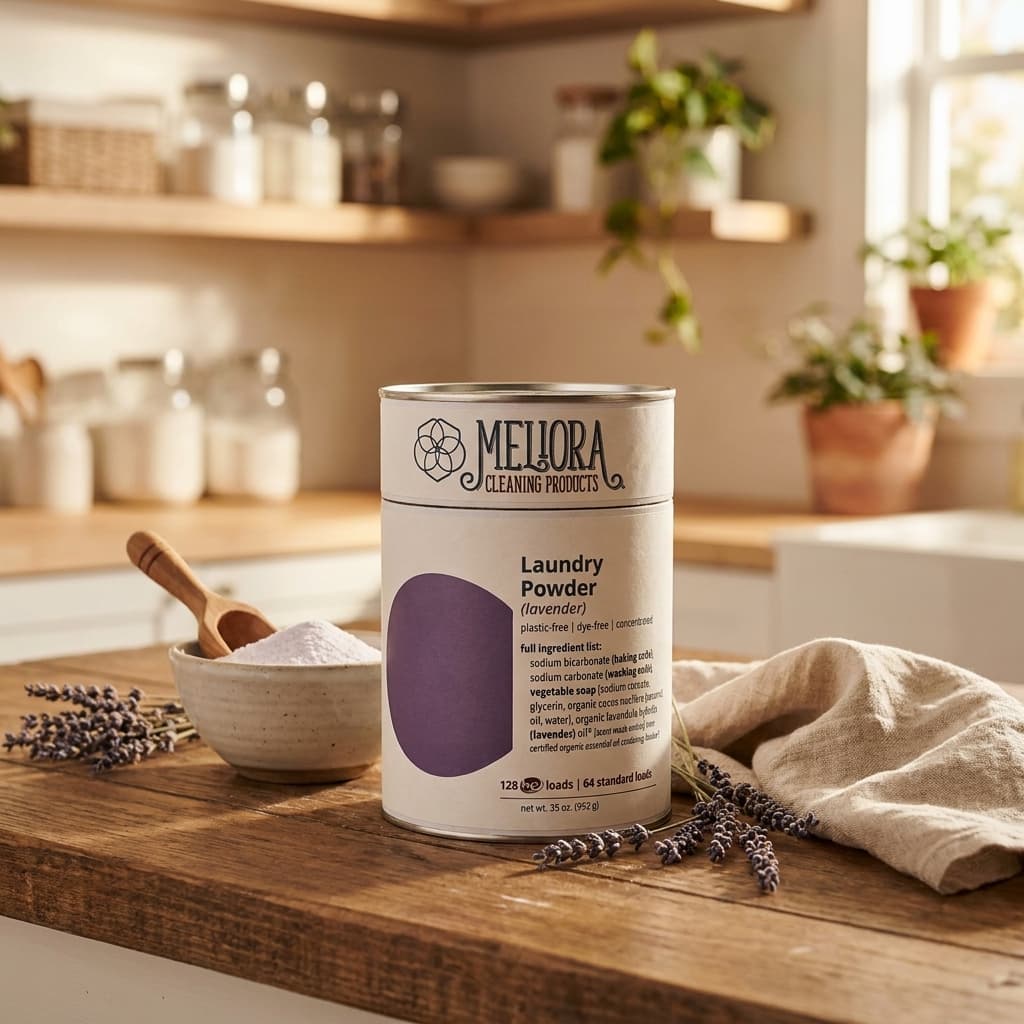
The cleanest powder you can find at this price
$25.44 starting price
Meliora is the cleanest widely available laundry powder you can buy. The ingredient list fits in a single sentence: baking soda, washing soda, vegetable soap, sodium percarbonate, and (in scented versions) organic essential oils. No mystery surfactants, no synthetic fragrance, no optical brighteners.
It is MADE SAFE certified, which is the strictest ingredient screen in the industry, plus EWG “A” rated and B Corp certified. The cardboard box is fully recyclable, and refill bags are available if you want to keep using the same container year after year. Made in Chicago by a woman-owned company.
I really enjoyed using this powder. The scent is light and clean (not perfumey), and a single box stretched much further than I expected for daily loads. My one small frustration was the lid, which took some real effort to pop open every time. That said, the same tight seal is exactly why it never spilled in my laundry cabinet, so it is a trade-off I came around on.
Format
Powder
✓ Plastic FreePackaging
Cardboard Box
✓ RecyclableLoads
128 HE Loads
✓ RefillablePrice/Load
~$0.20
✓ BudgetPros
- 5-ingredient formula, MADE SAFE certified
- EWG “A” rated, Leaping Bunny, Certified B Corp
- Refill bags available, fully recyclable cardboard
- Made in USA by a woman-owned company
Cons
- Lid takes some effort to pop open
- Powder can clump in humid bathrooms
- Higher per-load cost than supermarket powder
If you want one detergent that nails ingredients, packaging, and certifications without compromise, this is the place to start. The cleanest powder detergent you can buy.
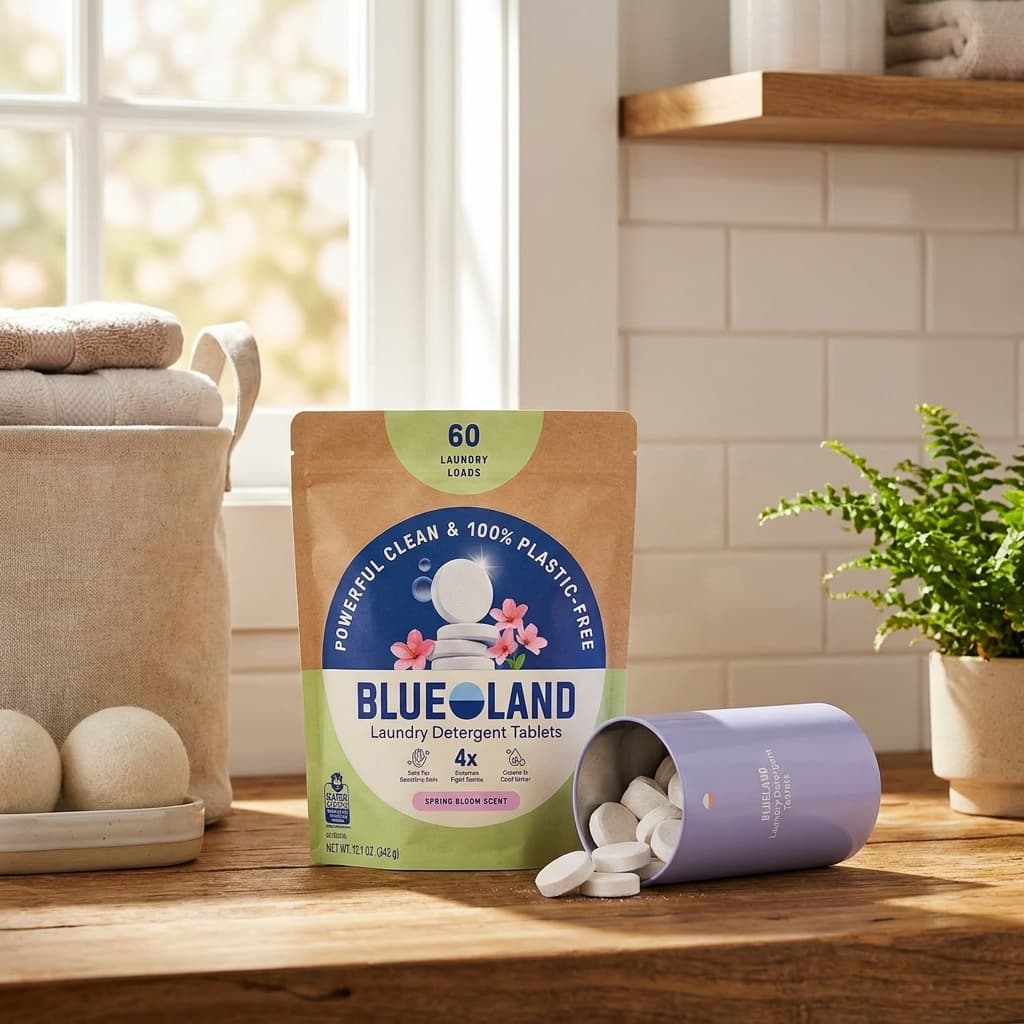
The only mainstream tablet brand that skips PVA
$16.80 autoship price
Blueland is the only mainstream tablet brand that explicitly skips PVA. Their tablets fizz apart in water using citric acid and sodium carbonate as the carrier instead of synthetic film, and they specifically tested for biodegradability standards before launching the formula.
EPA Safer Choice certified, Certified B Corp, Leaping Bunny, Climate Neutral, and USDA Bio-Preferred. The Forever Tin is reusable, and refills come in compostable paper that goes back into the same tin. The cabinet-friendly footprint makes a real difference in small homes.
Blueland is one of my favorite clean brands across categories, not just laundry. Living in a townhouse means cabinet space is tight, so having compact tablets stored in a small reusable tin is perfect.
Format
Tablet
✓ PVA FreePackaging
Forever Tin
✓ ReusableLoads
60 Tablets
✓ RefillablePrice/Load
~$0.28
✓ Mid RangePros
- Only mainstream tablet without PVA film
- EPA Safer Choice, B Corp, USDA Bio-Preferred
- Compostable paper refills, reusable Forever Tin
- Apartment- and small-space friendly
Cons
- Spring Bloom scent leans floral
- Higher cost per load than powder
- Direct-to-consumer pricing, not on Amazon
If you want pod convenience without the PVA caveat, this is the only widely available answer worth buying. The best PVA-free tablet detergent on the market.
The only laundry sheet that actually skips PVA film
$12.99 starting price
Proofed! is the only widely available laundry sheet that uses no PVA or PVOH at all. Their patented NanoPress film is made from organic plant-based binders that fully biodegrade in water, and the formula is USDA Certified Biobased, meaning every ingredient is independently verified as plant-derived.
In Sterling Laboratories testing, Proofed! ranked first against leading sheet competitors for cleaning power. The sheets are also smaller than most competing brands, so a 32-count box takes up far less cabinet space than you would expect. Dermatologist tested, made in the USA.
This is hands-down my favorite laundry detergent I have tried. What really won me over was the PVA‑free formula. These are the only sheets I’ve found that truly skip PVA, the dissolvable plastic used in most sheets and in the film around pods. Their Clean scent is subtle but still gives everything a fresh, just-washed smell.
Format
Sheet
✓ PVA FreePackaging
Cardboard Box
✓ RecyclableLoads
32 Sheets
✓ CompactPrice/Load
~$0.41
✓ PremiumPros
- Only widely available sheet without PVA
- USDA Certified Biobased, dermatologist tested
- Smaller sheets, fit well in tight spaces
- Made in USA
Cons
- Higher per-load cost than competing sheet brands
- Smaller sheets may need two for very large loads
- Newer brand, less established review history
The only laundry sheet that finally answers the PVA question with no PVA at all. The best plastic-free laundry sheet you can buy.
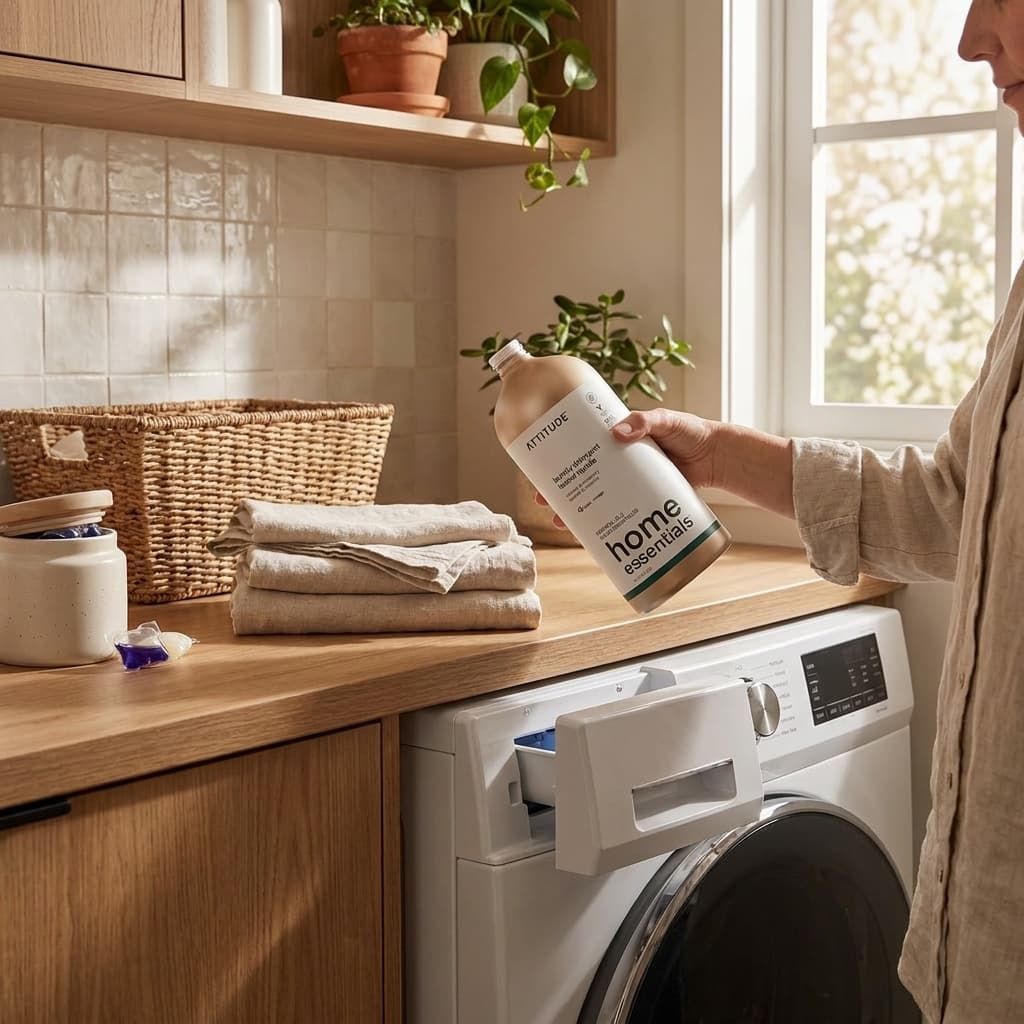
Plant-based liquid in a refillable aluminum bottle
$23.99 starting price
Attitude‘s Home Essentials Laundry Detergent is the pick for households that want a familiar liquid format with real essential oil scents instead of synthetic fragrance. The formula is 98% natural origin, EWG Verified, vegan, and the aluminum bottle is fully refillable.
Three scent options: Lavender and Rosemary, Geranium and Lemongrass, and Lemon and Rosewood. Every scent comes from essential oils, never synthetic fragrance. HE compatible, plant- and mineral-based throughout. Made by a Canadian company that has been in the clean home space since 2006.
Attitude has been one of my go-to clean brands for years across cleaning, body care, and laundry. The detergent is impressively compact (the bottle is noticeably smaller than most liquid detergents I have used), and the essential oil scents smell beautiful without overpowering the room. The Lavender and Rosemary version in particular is one I keep coming back to.
Format
Liquid
✓ Plastic FreePackaging
Aluminum Bottle
✓ RefillableLoads
40 Loads
✓ 33.8 fl ozPrice/Load
~$0.60
✓ PremiumPros
- EWG Verified, vegan, plant- and mineral-based
- Real essential oil scents, no synthetic fragrance
- Refillable aluminum bottle
- Three scent options, all from real oils
Cons
- 40 loads per bottle, refills needed often
- Aluminum can dent if dropped
If you love essential oil scents and a familiar liquid format, this is the cleanest way to get both in one bottle. The best plant-based liquid detergent for scent lovers.
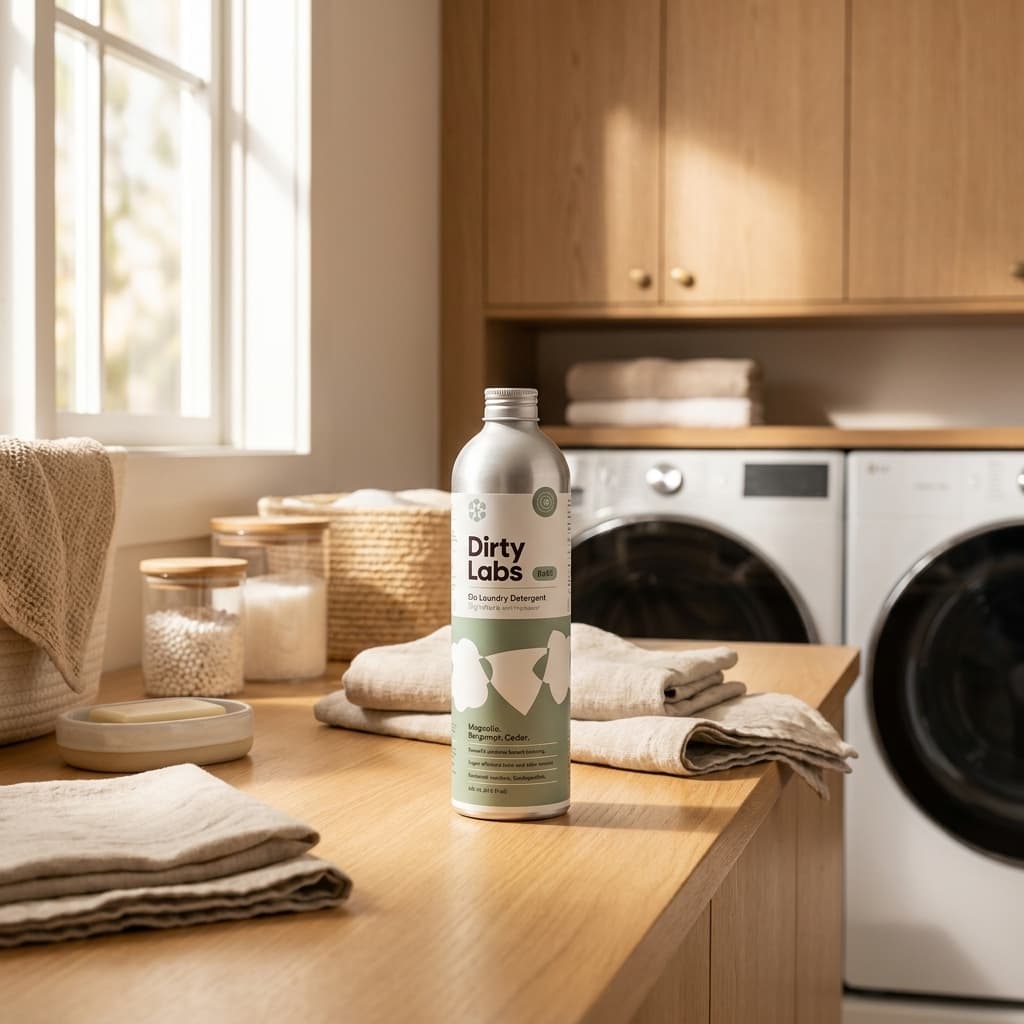
Hyper-concentrated bio-liquid in a refillable aluminum bottle
$29 starting price
Dirty Labs is the science-forward pick. Their bio-liquid is hyper-concentrated, biobased, and uses Phytolase enzyme technology to handle stains without bleach or optical brighteners. 80 loads per bottle is the highest load count of any liquid on this list, which softens the upfront price tag considerably.
The aluminum bottle is fully refillable, and the formula is rated nontoxic and biodegradable by independent testing. Multiple scent options including Signature, Murasaki, and Free and Clear for sensitive skin. Made in the USA.
I love this one. The bottle is compact for an 80-load size (which surprised me the first time I picked it up), and the Magnolia, Bergamot, and Cedar scent is one of the best laundry smells I have come across, soft and almost spa-like.
Format
Bio-Liquid
✓ Plastic FreePackaging
Aluminum Bottle
✓ RefillableLoads
80 Loads
✓ ConcentratedPrice/Load
~$0.36
✓ Mid RangePros
- Hyper-concentrated, 80 loads per bottle
- Biobased, nontoxic, biodegradable formula
- Phytolase enzyme technology for stain power
- Multiple sophisticated scents plus scent-free
Cons
- Higher upfront cost than supermarket brands
- Aluminum bottle can dent if dropped
- Concentrate strength means careful dosing matters
The premium liquid pick. Worth the price tag if you want the highest load count and most sophisticated scent profile. The best concentrated liquid detergent for serious clean.
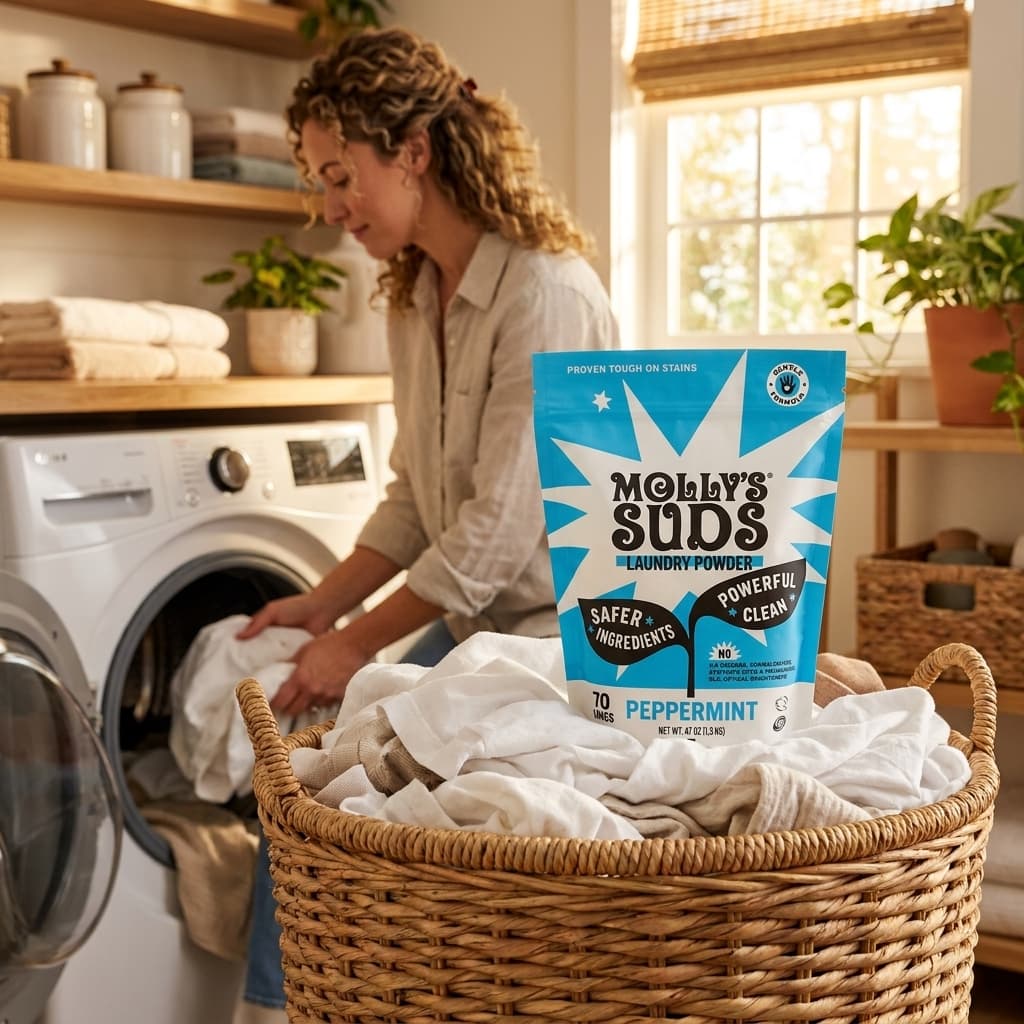
Four-ingredient powder for the most sensitive skin
$14.99 starting price
Molly’s Suds Original Powder is the gentlest formula on this list. Just four ingredients: sodium carbonate, sodium bicarbonate, magnesium sulfate, and (in scented versions) plant-derived essential oils. That short list makes it one of the safest detergents for eczema, baby skin, fragrance allergies, and cloth diapers.
EPA Safer Choice certified, EWG “A” rated, cruelty-free, vegan, and hypoallergenic. Honest note on packaging: the powder ships in a #7 plastic resealable stand-up pouch, which Molly’s Suds chose for moisture protection. The brand is upfront about it on their sustainability page. If you want fully plastic-free packaging instead, Meliora or Nellie’s are the closest substitutes for the same kind of clean powder.
Format
Powder
✓ Clean FormulaPackaging
#7 Plastic Pouch
⚠ Recyclable PlasticLoads
70 Loads
✓ Resealable PouchPrice/Load
~$0.21
✓ BudgetPros
- Just 4 ingredients, gentle for eczema and baby skin
- EPA Safer Choice certified, EWG “A” rated
- Cruelty-free, vegan, hypoallergenic
- Strong per-load value at high volume
Cons
- Packaging is #7 plastic, not cardboard or paper
- Stick with the powder, their sheets and pods contain PVA
- Very short ingredient list may struggle with heavy stains
The gentlest formula on this list, with a packaging trade-off worth knowing about. If your priority is sensitive-skin safety, this is still a strong pick. The safest formula for sensitive skin, with a #7 plastic pouch.
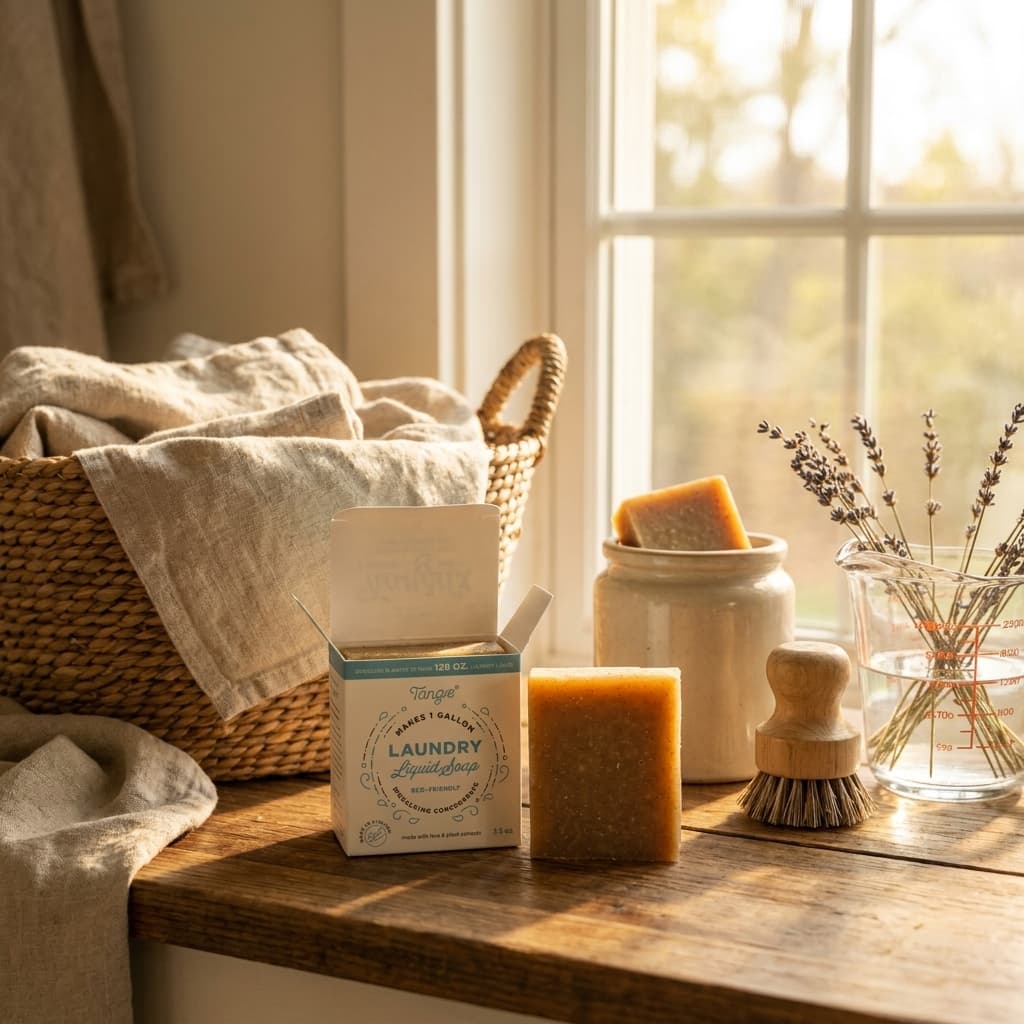
Solid concentrate bar that makes a gallon of liquid detergent
$22.10 starting price
Tangie‘s laundry bar dissolves into a full gallon of liquid detergent at home, scaling to 128 to 256 loads per bar depending on how you dilute it. Ingredients are coconut oil, olive oil, soap nuts, baking soda, sodium carbonate, salt, and rosemary oleoresin. The wrapper is paper. That is the entire packaging story.
EWG “A” rated, plant-based, and gentle enough for cloth diapers and intimates. Made by a small woman-owned business in Florida. The catch: you will need to dissolve the bar before first use, but that is a one-time prep step for hundreds of loads of detergent.
Format
Solid Bar
✓ Zero WastePackaging
Paper Wrap
✓ CompostableLoads
128+ Loads
✓ High VolumePrice/Load
~$0.08
✓ CheapestPros
- Lowest cost per load on this list
- Truly zero-waste packaging
- EWG “A” rated, plant-based
- Gentle enough for cloth diapers and intimates
Cons
- Requires prep time to dissolve into liquid
- Less convenient than ready-to-use formats
- Fragrance-free only, no scent options
If you will do the prep work, this is the cleanest, cheapest, and most zero-waste detergent you can buy. The best zero-waste detergent for budget-conscious buyers.
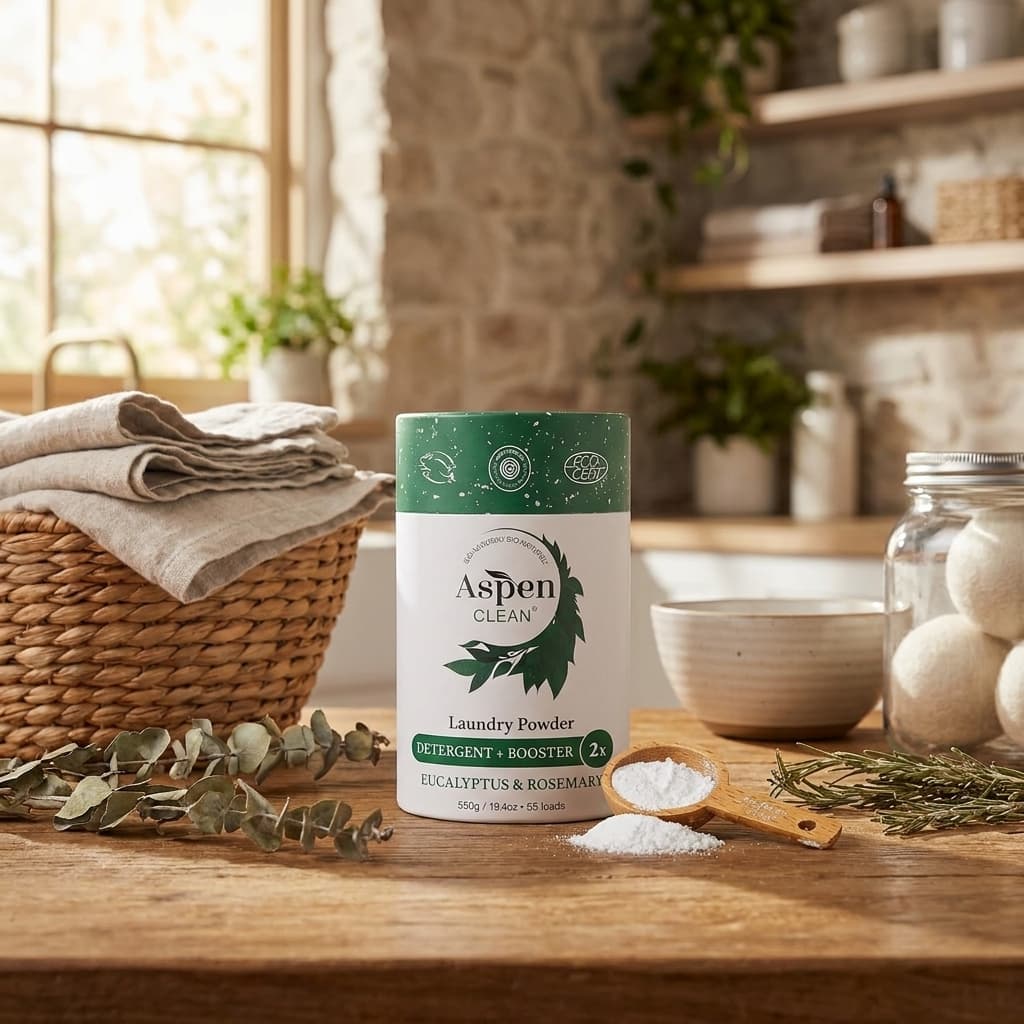
Triple-certified plant-based powder with built-in stain booster
$24.99 starting price
AspenClean‘s 2-in-1 Laundry Powder + Booster is hyper-concentrated and triple-certified: EWG Verified, EcoCert, and Leaping Bunny. The built-in enzyme stain booster handles tough loads without bleach or optical brighteners, which is rare in a single-product formula.
Three scent options: Eucalyptus, Lavender, or Unscented. All scents come from real essential oils. Plant- and mineral-based, 100% natural, and made in Canada. The cardboard tin is fully recyclable.
Format
Powder + Booster
✓ Plastic FreePackaging
Cardboard Tin
✓ RecyclableLoads
55 Loads
✓ ConcentratedPrice/Load
~$0.45
✓ PremiumPros
- Triple certified: EWG Verified, EcoCert, Leaping Bunny
- Built-in enzyme booster for tough stains
- Plant- and mineral-based, 100% natural
- Three scent options including unscented
Cons
- Higher cost per load than other powders
- Smaller load count than Meliora or Nellie’s
- Less name recognition in the US
A strong second-choice powder if Meliora is not available, with the most certifications stacked on a single product. The most certified clean powder detergent in the lineup.
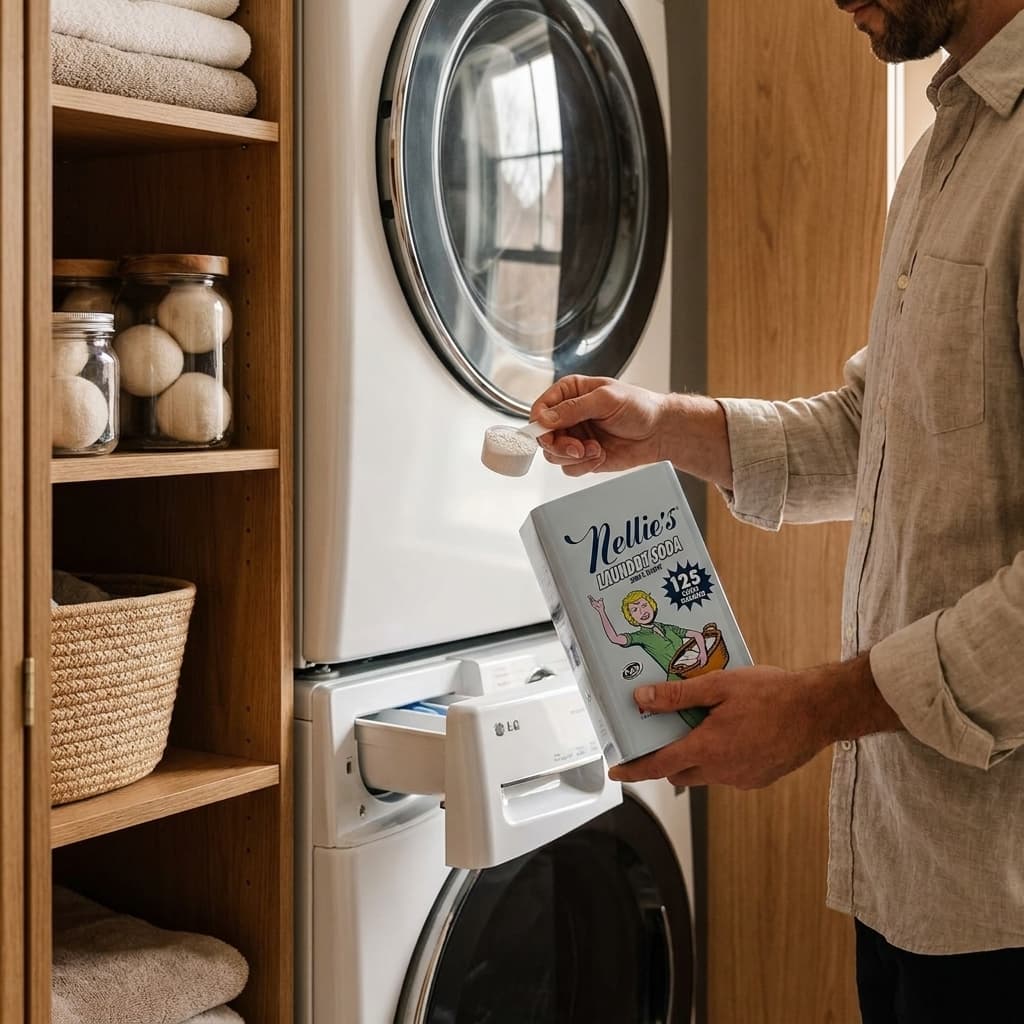
Four-ingredient laundry soda in a vintage steel tin
$27 starting price
Nellie’s Laundry Soda is the legacy pick on this list. A four-ingredient formula in a vintage-styled steel tin that has been around for decades. The 125-load size delivers one of the best per-load values in the clean detergent category.
Septic-safe, HE-compatible, made in Canada. The steel tin is fully reusable, and refill bags are widely available. Fragrance-free only, which makes it a safe choice for sensitive skin and a workhorse for everyday wash.
Format
Powder
✓ Plastic FreePackaging
Steel Tin
✓ ReusableLoads
125 Loads
✓ BulkPrice/Load
~$0.22
✓ BudgetPros
- Just 4 ingredients, no fragrance or dyes
- Reusable steel tin, refill bags available
- Strong per-load value at high volume
- Decades of trust, well-reviewed legacy brand
Cons
- Fragrance-free only, no scent options
- Soda ash base less effective on heavy oily stains
- Tin can rust if stored in damp areas
The wallet-friendly, no-frills choice. If you want clean and cheap and do not care about scent, this is it. The best budget powder detergent for families.
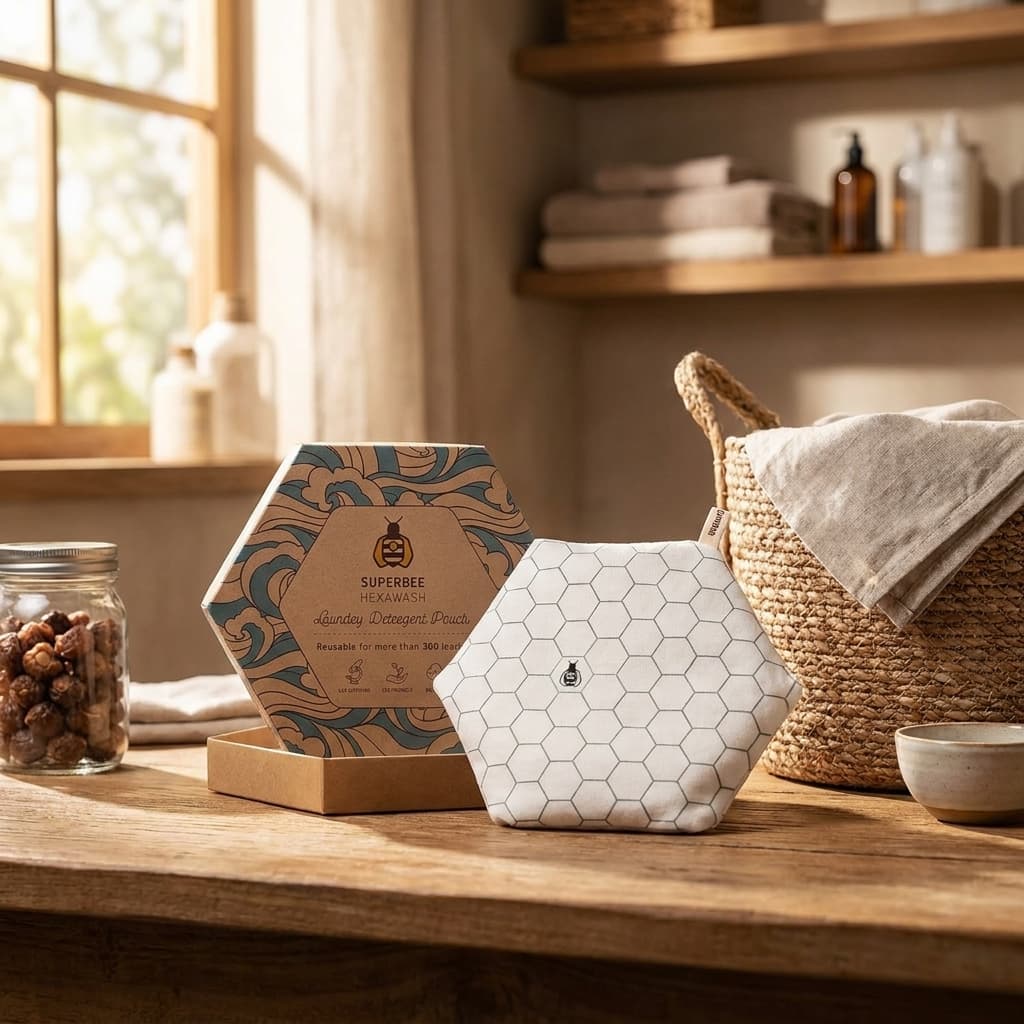
Reusable magnesium pouch that replaces traditional detergent
$34.98 starting price
SuperBee Hexawash is not a detergent at all. It is a reusable magnesium-filled pouch that ionizes wash water to lift dirt and odor without any traditional detergent ingredients. One pouch lasts 300 washes, which works out to the lowest cost per load in this entire lineup at about 12 cents.
Lab certified, eco-friendly, and organic. The hexagonal cardboard packaging is fully plastic-free. Best fit: lightly soiled loads (kids’ play clothes, sheets, towels, daily wear), paired with a stain stick when needed. Not meant to handle heavy industrial soils on its own.
Format
Magnesium Pouch
✓ No DetergentPackaging
Hex Cardboard
✓ Plastic FreeWashes
300 Washes
✓ ReusablePrice/Load
~$0.12
✓ Lowest CostPros
- No detergent at all, zero ingredient concerns
- One pouch lasts 300 washes
- Lowest cost per load on this list
- Lab certified, organic, eco-friendly
Cons
- Limited cleaning power on heavy or set-in stains
- Best for lightly soiled loads only
- Pair with a stain stick for harder loads
A different category entirely. Best for households with mostly light loads who want zero ongoing detergent waste. The most innovative detergent-free option you can buy.
How to Make the Switch
Switching to non-toxic, plastic-free laundry detergent works best when you finish (or donate) what you have, do a clothing reset wash, then start your new detergent on a normal cycle.
You don’t need to dump your existing detergent down the drain. A cleaner (pun intended) approach:
- Finish what you have, or donate the unopened portion to a shelter or food bank.
- Optional reset wash. Run your darkest or dirtiest items through one cycle on hot with just a cup of white vinegar (no detergent). This strips residue from previous detergents, fabric softeners, and dryer sheets. Some clothes will smell truly clean for the first time.
- Start your new detergent on a normal cycle. Use the recommended dose for your load size.
- Adjust if you see residue. Cold water plus very concentrated formulas occasionally leave residue. Place the powder, tablet, or sheet in the empty drum first (not the dispenser) to fix this.
- Wait two to three weeks before judging. Some people notice clothes feel slightly “different” without optical brighteners. That’s because the brighteners were creating an illusion of brightness. After a few washes, your eyes adjust, and the clothes look (actually) clean.
Sustainable Laundry Routine Tips
A sustainable laundry routine pairs plastic-free, non-toxic detergent with cold-water washes, full loads, microfiber filters, and air-drying.
The detergent is one piece. These habits stretch the impact further:
- Wash on cold. About 90% of a washing machine’s energy use is for heating water. Cold cycles work well with most cleaning detergents.
- Wait for full loads. A half-empty machine uses nearly the same water and energy as a full one.
- Use a microfiber filter. Synthetic clothes shed microfibers every wash. A Guppyfriend bag, Cora Ball, or in-line filter (PlanetCare, Filtrol) catches a real share.
- Skip dryer sheets and fabric softeners. Most contain quaternary ammonium compounds and synthetic fragrance. Wool dryer balls do the same job for years. Half a cup of white vinegar in the rinse softens fabric naturally.
- Air dry when you can. Dryers are energy hogs and shed microfibers. Hanging clothes saves energy and extends garment life.
- Pre-treat stains naturally. White vinegar, baking soda paste, hydrogen peroxide, and lemon juice handle most stains without commercial pre-treaters.
- Recycle or compost packaging. Cardboard boxes are curbside-recyclable in most areas. Tear off any tape first.
Love These Picks? Pin It! 📌
FAQs on Non-toxic Laundry Detergent
For everyday loads, yes. Independent testing consistently shows that the better non-toxic brands clean as well as mainstream detergents on dirt, sweat, and food stains. For very heavy stains or industrial soils, you may need pre-treatment regardless of which detergent you use.
Sometimes, but not always. Powder detergents like Meliora and Tangie’s bars cost less per load than mid-tier conventional liquid detergents. Sheets and tablets tend to cost more upfront. Subscription pricing closes most of the gap.
Yes, the brands in this guide are formulated to be septic-safe. They’re biodegradable, low-foaming, and phosphate-free, which is what septic systems need. Confirm with the specific brand if your system is older or sensitive.
Yes, with a small assist. Hard water can blunt cleaning power across all detergent types, conventional included. Adding a tablespoon of washing soda or a quarter cup of white vinegar to hard-water loads sharpens results without adding chemicals. Some brands, like Meliora and Molly’s Suds, already include water softeners in their formulas.
Final Thoughts on Non-toxic Laundry Detergent
Truly non-toxic, plastic-free laundry detergent is rarer than the marketing suggests, but it exists. The cleanest format is powder in a cardboard container, with PVA-free tablets, sheets, and bars filling specific niches.
If you’ve been on the fence about overhauling your laundry routine, here’s the short version: yes, it’s worth doing. Conventional detergents carry real ingredient concerns (the EWG’s 65% D-or-F rate isn’t a small data point), and even the brands marketed as “clean” or “plastic-free” often hide PVA in pods and sheets.
🗨️ Which non-toxic detergent are you trying first… Drop a comment below
📚 References
- American Cleaning Institute. (2023). Get the facts about PVA and detergent pods. https://www.cleaninginstitute.org/debunking-myths-about-pva-and-detergent-pods
- Branch Basics. (n.d.). Breaking down the ingredients in our human-safe laundry detergent. https://branchbasics.com/blogs/blog/ingredients-laundry-detergent
- Blueland. (n.d.). Our ingredients. https://help.blueland.com/en-US/articles/our-ingredients-92410
- Environmental Protection Agency. (2013). Toxicological review of 1,4-dioxane (with inhalation update). Integrated Risk Information System. https://iris.epa.gov/ChemicalLanding/&substance_nmbr=326
- Energy Star. (2024). Clothes washers: Energy and water savings. U.S. Department of Energy. https://www.energystar.gov/products/clothes_washers
- Environmental Working Group. (n.d.). EWG’s guide to healthy cleaning. https://www.ewg.org/cleaners/
- MADE SAFE. (2023). The problem with “disappearing” plastics. https://madesafe.org/blogs/viewpoint/problem-disappearing-plastics
- New York State Department of Environmental Conservation. (2023). 1,4-dioxane in household products. https://dec.ny.gov/environmental-protection/hazardous-substances/14-dioxane
- Rolsky, C., & Kelkar, V. (2021). Degradation of polyvinyl alcohol in US wastewater treatment plants and subsequent nationwide emission estimate. International Journal of Environmental Research and Public Health, 18(11), 6027. https://www.mdpi.com/1660-4601/18/11/6027
- Arizona State University News. (2021, July 26). Are laundry and dish pods biodegradable? Not exactly, ASU study shows. https://news.asu.edu/20210726-discoveries-are-laundry-and-dish-pods-biodegradable-not-exactly-asu-study-shows
More Plastic-Free Living Guides You’ll Want to Read
- How to Avoid Microplastics in Your Home, Food, and Body
- Microplastics in Cosmetics: How to Spot and Avoid Them
- The Non-Toxic Makeup Checklist
- Zero Waste Lifestyle: Easy Steps to Get Started
- How to Remove Microplastics From Your Body and Home
- Say No to Plastic: A Beginner’s Guide to Cutting Plastic Waste
We’ve scored every cleaning product on plastic — see them in the Cleaning directory.