

Key Takeaways
- The average American throws away 4.9 pounds of trash every single day, and half of everything the country discards goes straight to a landfill.
- A zero waste lifestyle is a direction, not a jar of trash. Cutting your household waste by a third puts you ahead of the national recycling rate.
- Start by auditing one week of your own garbage. What you actually throw away rarely matches what you assume you throw away.
A zero waste lifestyle means reducing what you send to landfill by refusing, reducing, reusing, and composting before you ever reach for the recycling bin. It does not mean fitting a year of garbage into a mason jar. The EPA puts average daily trash at 4.9 pounds per person, with 50% of all municipal waste landfilled. Trimming your own share of that number is the whole goal, and you can do it without buying a single new thing.
Most guides on this topic skip the part where it gets hard. This one does not. You will find the honest costs, the situations where going low-waste is genuinely difficult, and a seven-step order of operations that starts with the cheapest possible move.
What a Zero Waste Lifestyle Actually Means
A zero waste lifestyle is the practice of designing waste out of daily life by refusing, reducing, reusing, and composting, so that landfill and incineration become the last resort rather than the default. The Zero Waste International Alliance frames it as conserving resources with no discharges that threaten the environment or human health.
The phrase sounds absolute, and that is the problem with it. Nobody living in a modern economy produces literally nothing. Prescriptions come in plastic. Bread comes in a bag. Medical supplies are single-use by design and should stay that way.
Treat the word as a compass heading instead of a scoreboard. Someone who halves their household trash has done more measurable good than someone who quits in month two because they could not hit an impossible standard.
Zero Waste vs. Low Waste vs. Plastic-Free
These three terms overlap heavily and get used interchangeably, which causes real confusion when you are trying to decide what to actually do.
| Term | What it targets | Best for |
|---|---|---|
| Zero waste | Everything headed to landfill, including food scraps and paper | People who want one framework covering the whole house |
| Low waste | The same goal with the perfectionism removed | Anyone who has already burned out on the strict version |
| Plastic-free | One material, chosen because it sheds microplastics and never breaks down | People motivated by what plastic does inside the body |
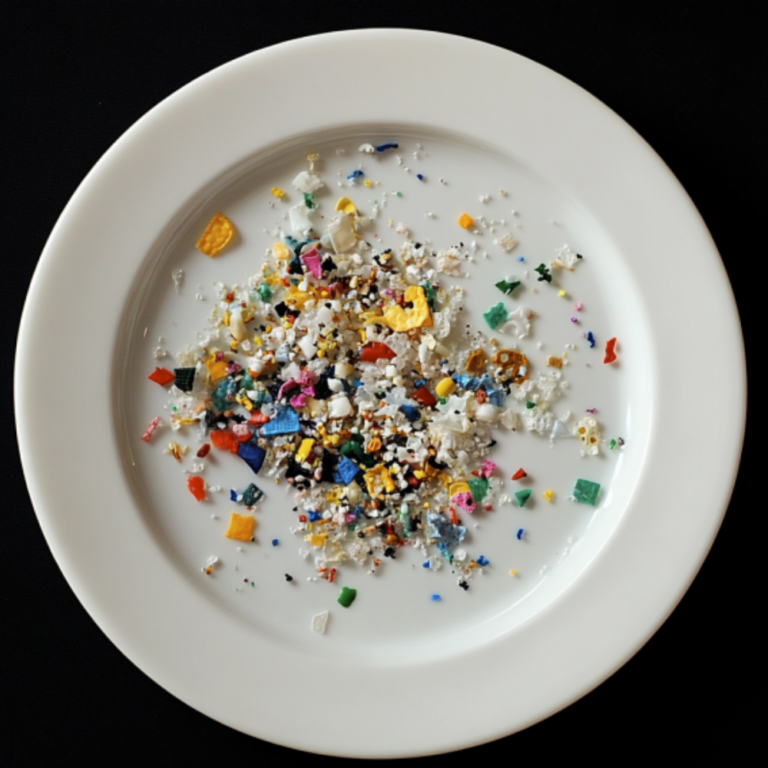
The plastic-free lens is the one worth understanding, because plastic is the only common household material that fragments into particles small enough to end up in your bloodstream. Cutting plastic packaging shrinks your trash and your exposure at the same time. Our guide on how to avoid microplastics covers where those particles come from in a normal home, and if the term is new, our explainer on what microplastics are breaks down the basics first.
The 5 Rs Framework
Bea Johnson popularized this order in her book Zero Waste Home, and the sequence is the useful part. Each step only happens if the one above it failed.
- Refuse what you do not need, before it enters the house. Freebies, flyers, party bags, extra napkins.
- Reduce what you do need. Fewer items, bought less often, chosen to last.
- Reuse what you already own. Repair it, repurpose it, or buy it secondhand.
- Recycle what is left, correctly, and only what your local facility genuinely accepts.
- Rot the rest. Food scraps and yard trimmings compost instead of rotting in a sealed landfill.
Notice where recycling sits. Fourth. Most people start there because it requires no behavior change, which is exactly why it does the least.
Don’t Miss: Plastic-Free Living: Where to Actually Start, Room by Room The companion guide that walks your whole house and names the swap that matters most in each room. Read more →Why Household Waste Matters
The United States generated 292.4 million tons of municipal solid waste in 2018, and 146 million tons of that, exactly 50%, was landfilled. Only 32.1% was recycled or composted.
Those EPA figures are worth sitting with, because they reframe the problem. Recycling is not failing at the margins. It handles roughly a third of the stream while half goes underground.
Food is the piece most people overlook. EPA estimates 66 million tons of wasted food came out of homes, restaurants, and food retail in 2019, and about 60% of it was landfilled. Buried food cannot break down properly. It generates methane instead, which is why composting is treated as its own step in the 5 Rs rather than folded into recycling.
The Honest Downsides Nobody Talks About
A zero waste lifestyle costs time before it saves money, and the upfront spend on reusables lands all at once. Bulk stores, farmers markets, and package-free shopping also assume a level of access that plenty of households simply do not have.
Nine of the ten best-ranked guides on this topic skip this section entirely. That omission is why so many people try zero waste for six weeks and quietly stop.
The time cost is real. Making your own cleaner, hauling jars to a refill shop, and washing cloth instead of tossing paper all add minutes to a week that may not have spare minutes in it. The mental load is real too, and it falls unevenly, usually on whoever already manages the household.
When Zero Waste Is Not Accessible
Several situations make the standard advice unworkable, and none of them are a personal failure:
- Food deserts. Bulk bins and farmers markets are not evenly distributed. When the nearest grocery store is a convenience store, packaged food is the only food.
- Disability. Pre-cut produce, straws, and single-use medical supplies are accessibility tools. Shaming them is not sustainability.
- Budget. A stainless bottle and a set of cloth bags cost money now to save money later. Later does not help this month.
- Renting. No yard means no compost pile, and not every city runs organics pickup.
Work with the constraints you have. Someone in an apartment with no compost access who switches to a reusable bottle and stops buying paper towels has made a genuine dent.
How to Start a Zero Waste Lifestyle in 7 Steps
Start a zero waste lifestyle by auditing one week of your trash, refusing your top five single-use items, then replacing consumables only as they run out. This order costs nothing for the first three steps and prevents the most common beginner mistake, which is throwing away usable things to buy eco versions.
Step 1: Audit Your Trash for One Week
Keep a note on your phone and log what goes in the bin for seven days. No changes yet, just observation. Nearly everyone discovers one or two categories dominating the volume, and it is almost never what they guessed. Coffee pods, produce bags, and takeout containers are frequent culprits.
Step 2: Refuse Your Top Five Single-Use Offenders
Your audit just handed you the list. Refusing costs nothing and removes the item before it becomes your problem. Decline the receipt, skip the plastic cutlery in the takeout bag, say no to the conference tote.
Step 3: Swap Consumables Only as They Run Out
Finish the plastic shampoo bottle before buying a bar. Use the last of the sponges. Replacing usable items early creates waste, which is the exact opposite of the point, and it front-loads a cost you do not need to pay.
✨ tip
Shop Your House First
Before buying any reusable, check what you own. Glass pasta sauce jars work as bulk storage. Old t-shirts become cleaning rags. A tote from a past event carries groceries just as well as one marketed for the job.
Step 4: Build a Basic Reusable Kit
Five items cover the majority of on-the-go waste: a water bottle, a coffee cup, a tote, a food container, and a set of cutlery. Keep the kit in your car or by the door, because a reusable left in a cupboard prevents nothing.
Step 5: Learn Package-Free Shopping
Bulk bins, refill shops, and farmers markets remove packaging at the source rather than dealing with it afterward. Weigh your jars first and note the tare so the cashier deducts it. Our zero waste grocery shopping guide walks through the whole trip.
Step 6: Start Composting
Food is the heaviest thing in most bins and the easiest to divert. Municipal pickup is simplest where it exists. Renters without outdoor space can use a countertop bokashi bucket or a worm bin under the sink, and many farmers markets accept scrap drop-offs. Our composting for beginners guide covers each method, and what not to compost saves you from ruining a batch.
Step 7: Tackle the Bathroom and Laundry
These two rooms come last because they are the hardest. Bathroom products are almost universally packaged in plastic, and synthetic clothing sheds microfibers every wash. Save them for when the easier habits are automatic.
Room-by-Room Zero Waste Swaps
The kitchen and laundry room generate the largest share of household waste, so both deserve attention before the bedroom or office. Work one room at a time and finish it before moving on.
| Room | Swap this | For this |
|---|---|---|
| Kitchen | Plastic wrap and zip bags | Beeswax wraps, glass jars, silicone bags |
| Kitchen | Paper towels | Cut-up cotton tees or cloth napkins |
| Bathroom | Bottled shampoo and body wash | Bar formats or refill programs |
| Bathroom | Disposable razors | Safety razor with recyclable steel blades |
| Laundry | Dryer sheets | Wool dryer balls |
| Laundry | Jugged liquid detergent | Powder in cardboard or a refillable concentrate |
| Bedroom | Fast-fashion polyester | Secondhand natural fibers |
| Office | Disposable pens | Refillable pen with replacement cartridges |
For a longer list organized the same way, our roundup of eco swaps covers 23 switches and flags which ones actually save money.
What a Zero Waste Lifestyle Actually Costs
A complete starter kit runs roughly $150 if you buy everything new at once, though most of it replaces something you were already repurchasing. Spread over a year and bought only as items run out, the real added cost is close to zero.
| Item | Typical upfront | What it replaces |
|---|---|---|
| Stainless water bottle | $25 to $40 | Years of bottled water |
| Safety razor | $25 to $35 | Cartridge refills, roughly $2 each |
| Cloth napkins and rags | $0 to $20 | Paper towels, ongoing |
| Wool dryer balls | $15 to $20 | Dryer sheets for several years |
| Produce and bulk bags | $15 to $25 | Store plastic bags |
| Countertop compost bin | $20 to $35 | Trash bags, partially |
The savings arrive later and quietly. Buying rice from a bin instead of a box, skipping bottled water, and cooking what you already bought are where the money actually comes back.
Common Zero Waste Mistakes
The three mistakes that derail beginners are panic-buying eco products, wishcycling items the local facility cannot process, and ignoring food waste while focusing on packaging.
❌ What Sets People Back
- Buying a whole kit on day one. Replacing working items with eco versions generates waste immediately and costs the most.
- Trusting green packaging. Bamboo lids, leaf logos, and vague words like “natural” carry no verification behind them.
- Focusing only on plastic. Food is heavier than packaging and easier to divert, yet it gets far less attention.
✅ What Works Instead
- Use it up first. Every item you finish is one you did not waste.
- Check your local rules. Recycling acceptance varies by facility, so verify with your hauler rather than the symbol on the package.
- Plan meals loosely. A rough week of dinners cuts food waste faster than any container swap.
💫 now you know
What is wishcycling?
Wishcycling is tossing something into the recycling bin hoping it qualifies. It backfires. Non-recyclable items contaminate the batch, and a contaminated load can be sent to landfill in full. When you are unsure, the trash is the safer choice.
Greenwashed labeling is the trap underneath the second mistake. Learning to read a claim is a skill, and our guide on how to spot greenwashing breaks down the specific tricks that show up on packaging.
Don’t Miss: Ways to Be Zero Waste: 101 Easy Swaps You Can Start Today Once the framework makes sense, this is the running list of specific switches to pull from. Read more →FAQs About the Zero Waste Lifestyle
Not literally, and treating it as a pass or fail test is the fastest way to quit. Medical supplies, prescriptions, and many staple foods have no unpackaged option. Aim for steady reduction instead. Cutting household trash by a third already outperforms the national recycling and composting rate of 32.1%.
A full starter kit bought new in one go runs about $150. Bought gradually as existing items run out, the added cost is close to nothing, because most reusables replace something you were repurchasing anyway. Bulk staples and skipping bottled water usually turn it net positive within a year.
Begin with the three free steps: audit your trash, refuse single-use items, and stop replacing things early. Then shop your own house before buying anything. Jars, old t-shirts, and tote bags you already own cover most of a starter kit at no cost.
Yes. Bokashi buckets ferment scraps in a sealed container with no smell, and worm bins fit under a sink. Many cities run curbside organics collection, and farmers markets frequently accept scrap drop-offs. Check your municipal waste site first, since a free pickup program beats any at-home setup.
Zero waste targets everything headed to landfill, including food scraps, paper, and glass. Plastic-free targets one material specifically, because plastic fragments into microplastics and never fully breaks down. The two overlap heavily, and plastic-free is often the more motivating starting point.
Expect a few months for the easy habits and a year or more for the harder rooms. Kitchen changes stick fastest because you repeat them daily. Bathroom and laundry take longest, since those products get replaced only every few months and the alternatives require more research.
Final Thoughts About the Zero Waste Lifestyle
The goal was never an empty trash can. It is fewer things bought, fewer things thrown out, and fewer plastic particles moving through your home.
Pick one step from the seven above and do only that this week. Auditing your trash costs nothing and tells you more about your household than any list someone else wrote. Everything after that is just following what the audit showed you. Small changes, big impact.
📚 References
- Johnson, B. (2013). Zero waste home: The ultimate guide to simplifying your life by reducing your waste. Scribner. https://zerowastehome.com/book/
- U.S. Environmental Protection Agency. (n.d.). Food: Material-specific data. https://www.epa.gov/facts-and-figures-about-materials-waste-and-recycling/food-material-specific-data
- U.S. Environmental Protection Agency. (n.d.). National overview: Facts and figures on materials, wastes and recycling. https://www.epa.gov/facts-and-figures-about-materials-waste-and-recycling/national-overview-facts-and-figures-materials
- Zero Waste International Alliance. (2018). Zero waste definition. https://zwia.org/zero-waste-definition/
More Zero Waste Living Reads
- Ways to Be Zero Waste: 101 Easy Swaps You Can Start Today
- Zero Waste Grocery Shopping Guide: How to Cut Waste and Save Money
- Composting for Beginners: Turn Kitchen Scraps Into Garden Gold
- Eco Swaps: 23 Easy Home Switches That Save Money
- How to Reduce Plastic Use: 21 Easy Ways That Actually Work
- Biodegradable vs. Compostable: Key Differences Explained
We’ve scored every product we recommend on plastic — browse them all in the Plastic Footprint Directory.