
Key Takeaways
- A 72-hour emergency kit starts with one gallon of water per person per day, plus no-cook food your family already eats.
- Your water heater, a few glass jars, and a stovetop coffee maker cover a surprising amount of your kit without buying cases of plastic.
- Three days is the floor. In earthquake country, Washington State asks households to work toward two weeks, one small step a month.
This fall, governments from the UK to Japan started asking the same thing of their citizens: keep enough supplies at home to get through a few days on your own. If you have been watching the headlines and wondering whether you should be doing something too, the answer is yes, and it is a lot calmer and cheaper than the news makes it sound.
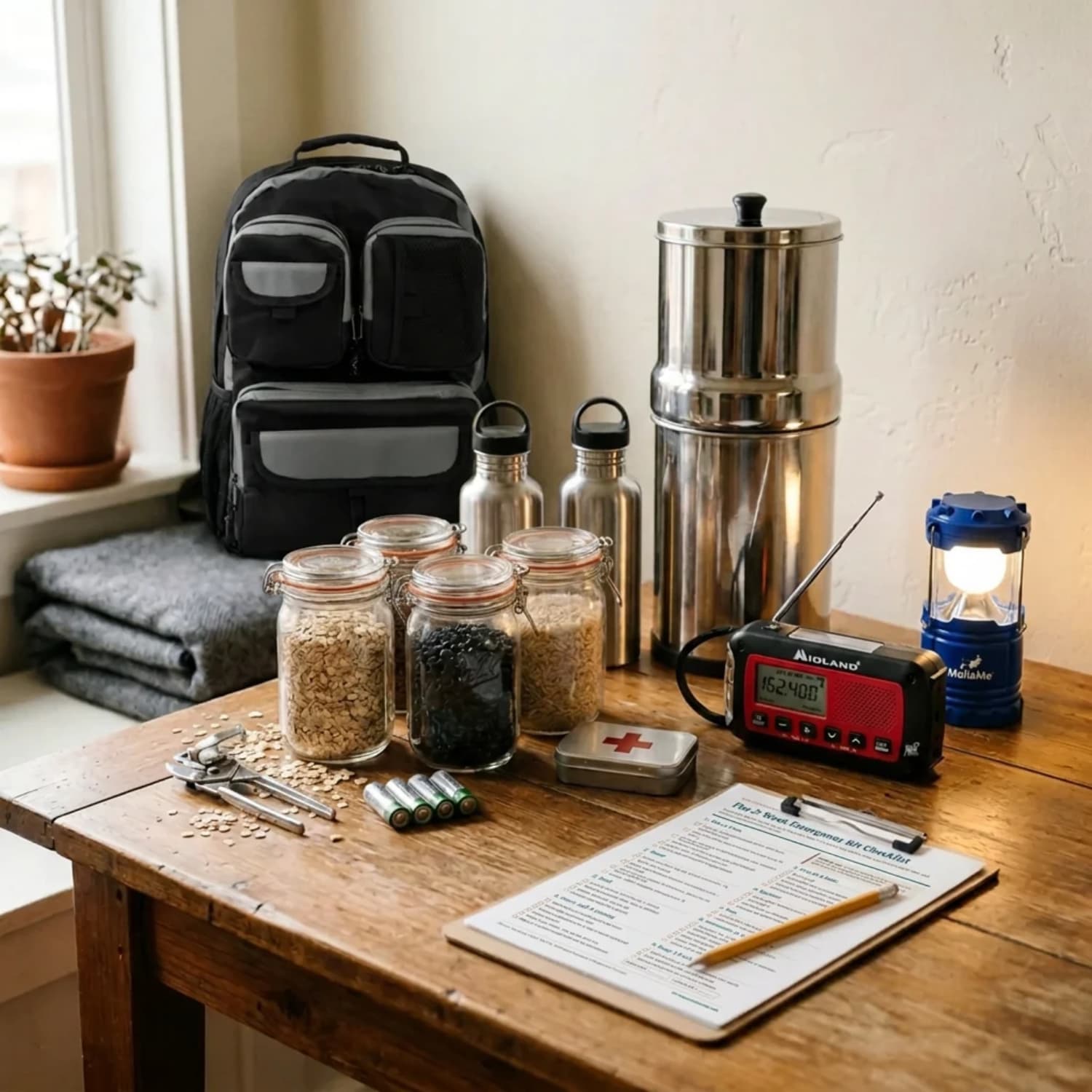
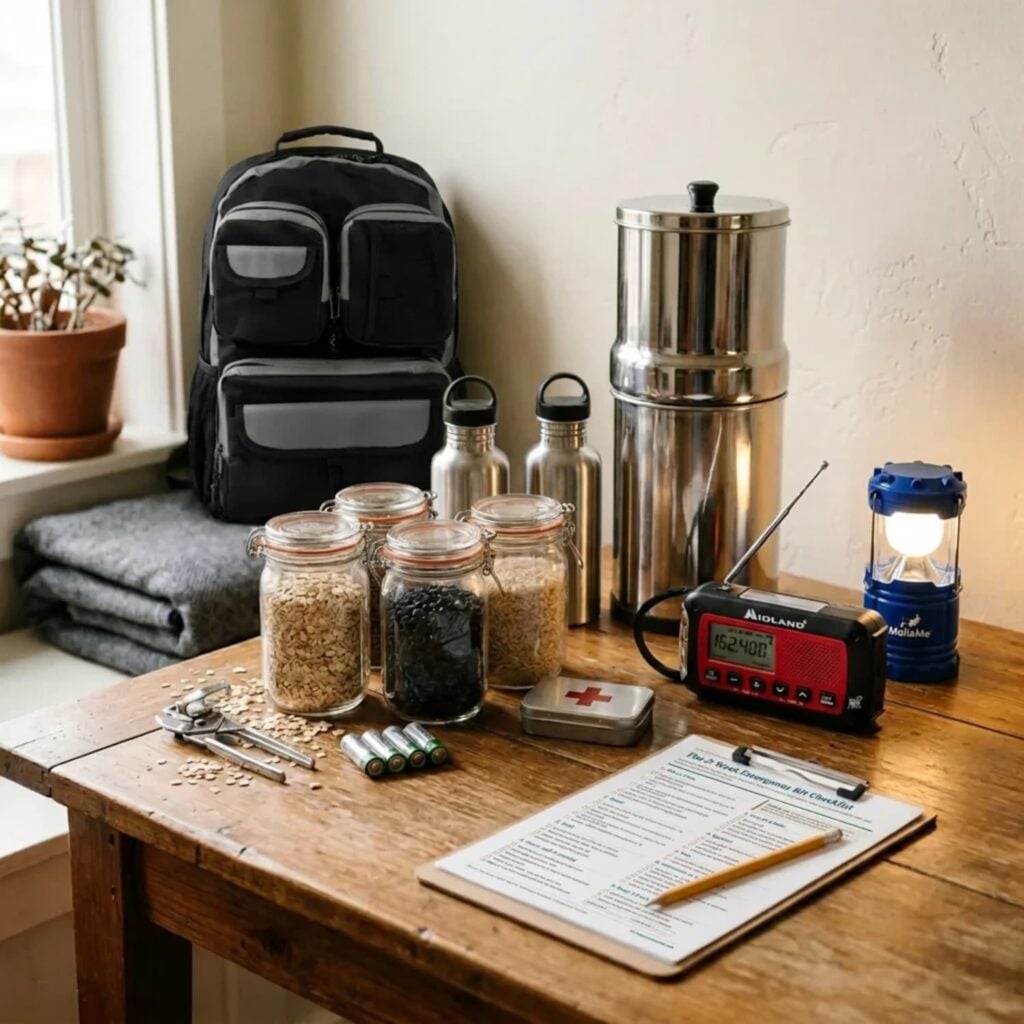
A 72-hour emergency kit is simply enough water, food, light, medicine, and basic supplies to take care of your household for three days if the power, water, or stores go down. You do not need a bunker, a survival backpack, or a garage stacked with bottled water. Most of what you need is already in your kitchen, and the rest can be built slowly with glass, metal, and reusable picks that will serve you every single day, emergency or not.
Below is the plan I am following for my own home, with every tip pulled from official emergency guidance, plus a free printable checklist so you can tick things off as you go.
Why Governments Are Asking Everyone to Build a Kit
Governments are asking households to keep 3 days to 2 weeks of supplies because storms, power outages, cyberattacks, and earthquakes can disrupt services faster than help can arrive. The advice is about preparation, not an imminent threat.
This October, the UK government launched its Be Ready campaign, asking households to keep enough supplies to manage for three days if severe weather or a cyberattack disrupts the services they rely on. Days later, Japan’s disaster management minister urged people to stock at least three days of supplies, and ideally a week. The European Commission set the tone back in March 2025, when its Preparedness Union Strategy set a goal of helping people across the EU be self-sufficient for at least 72 hours.
Here in the US, the advice is not new. FEMA’s Ready.gov has recommended a basic supply kit for years, and the American Red Cross publishes its own list. What is new is how many countries are saying it at once. The reasons they give are everyday ones: winter storms, wildfires, long power outages, and cyberattacks that can knock out services you rely on.
The goal is not panic. When most households can take care of themselves for a few days, emergency crews can focus on the people who need them most.
Don’t Miss: Plastic-Free Living, Where to Actually Start, Room by Room Building your kit with glass and metal is a great first step. Here’s the room-by-room guide to cutting plastic everywhere else. Read more →Start With a Plan Before You Buy Anything
The first step in any emergency kit is free: a family communication plan with an out-of-area contact, a meeting place, and everyone’s phone numbers written on paper, not just saved in a phone.
It is tempting to start with a shopping cart, but the most useful thing in your kit costs nothing. During an earthquake or a big storm, your family might be at work, school, and on the road when it hits. Deciding now how you will find each other means everyone knows what to do instead of guessing.
FEMA has a free family emergency communication plan you can fill in as a family. These are the pieces worth deciding together:
- An out-of-area contact everyone checks in with, since long-distance lines often work when local ones are jammed
- A meeting spot near home and a second one outside your neighborhood
- A written list of phone numbers, medications, and doses
- Where your water, gas, and electricity shutoffs are and how to turn them off
- Phone numbers for two neighbors you could check on, or who could check on you
✨ TIP
Text, Don’t Call
When networks are overloaded after a disaster, a text message needs far less bandwidth than a phone call and can send on its own once a signal frees up. Agree as a family that texting is the first way you check in.
How Much Water You Need in a 72-Hour Emergency Kit
Store at least 1 gallon of water per person per day, for drinking and hygiene. A family of four needs 12 gallons for 3 days, plus extra for pets, children, nursing mothers, and anyone who is sick.
Water is the one part of your kit you cannot skip. The standard from Ready.gov is at least one gallon of water per person per day, and kids, nursing mothers, sick people, and hot weather can all push that number higher. There is also a reassuring rule worth remembering from the same page: never ration drinking water unless authorities tell you to. Drink what you need today and look for more tomorrow.
The easy answer is cases of bottled water, but that means a pile of single-use plastic sitting in a warm garage for months. We have covered what researchers found in nanoplastics in bottled water, and it is the reason I would rather store water another way. Here are the options that work.
Your Water Heater Is Already a Backup Tank
Most homes are already holding dozens of gallons of fresh water inside the water heater, refreshed every day without any effort from you. Washington State Department of Health lists it as a safe source: turn off the electricity or gas to the heater first, then open the drain at the bottom and drain the water into a clean container. Take a few minutes this week to find that drain valve and your home’s main water shutoff, so you are not hunting for them in the dark.
Store the Rest in Glass or Steel
For water you fill yourself, Ready.gov recommends food-grade containers washed with dish soap and sanitized with a teaspoon of unscented bleach per quart of water. Home-filled water should be replaced every six months, which makes a great twice-a-year habit.
Large glass jars work well on a cool pantry shelf, and an insulated steel bottle like the Klean Kanteen Classic (a 2 in our directory) gives everyone a refillable bottle to grab and go.
How to Make Questionable Water Safe
Boiling is the safest way to treat water. If you cannot boil, the EPA’s emergency disinfection guide says to add 8 drops of plain, unscented 6% bleach per gallon of clear water, stir, and wait 30 minutes. Double the drops if the water is cloudy, colored, or very cold. Keep a small bottle of unscented bleach and a dropper with your kit, and tape the EPA chart inside the lid.
A Stainless Gravity Filter for Every Day
If you want one piece of water gear that earns its counter space every day and still works when the power is out, a gravity filter is it. You pour water in the top, and it drips through ceramic filters into the bottom chamber with no electricity or water pressure needed. The one I recommend is the British Berkefeld stainless steel system, because its Doulton Ultra Sterasyl filters are tested and certified by NSF to NSF/ANSI 401 for 99.9% reduction of microplastics. The body is stainless steel, though the filter candles do include some plastic parts. It is not a substitute for boiling water from a stream or a flooded well, so treat anything questionable first.
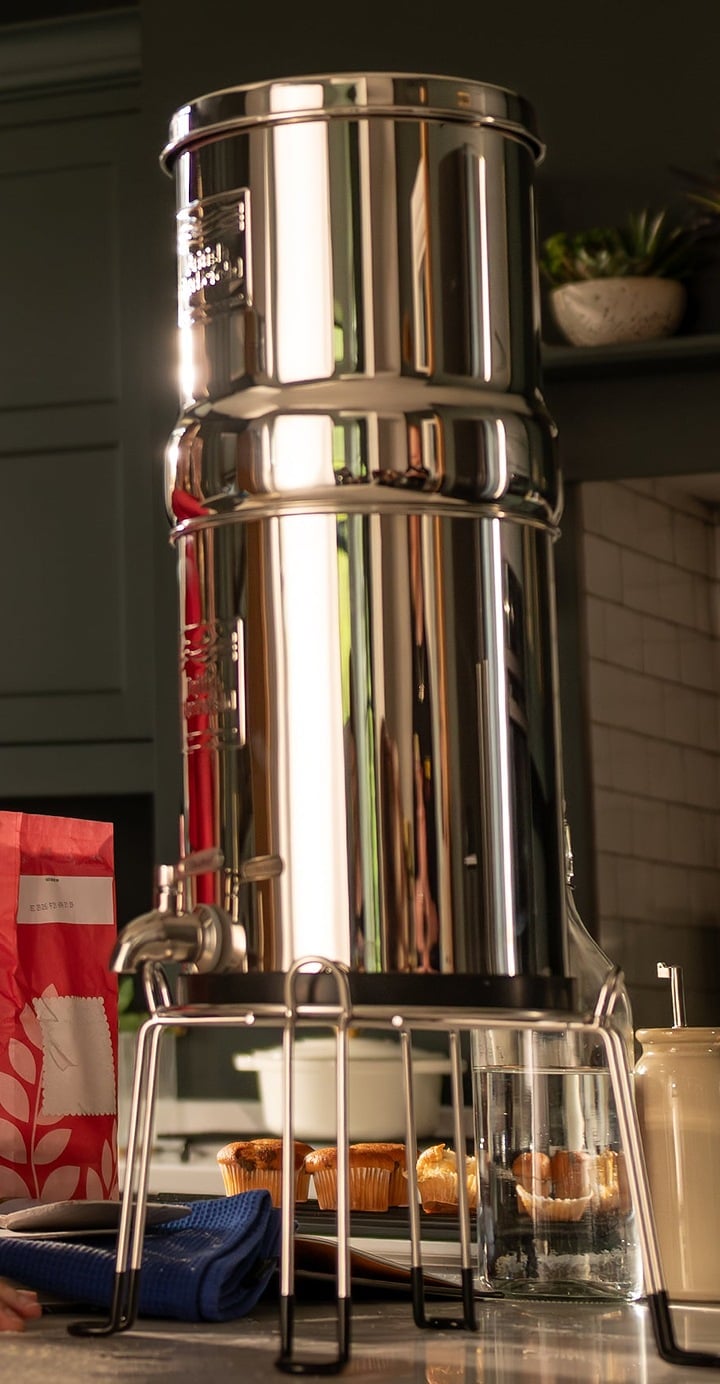
Best for Everyday and Emergency Water
$$$ stainless gravity system
British Berkefeld is the gravity filter from Doulton, a British water filter maker. Its Ultra Sterasyl filters are certified by NSF to reduce 99.9% of microplastics, and your water sits in stainless steel instead of a plastic pitcher.
It needs no plumbing and no electricity, so it earns its place on the counter every day and keeps working when the power goes out.
Body
Stainless Steel
✓ Plastic FreeFilter
Ceramic Candle
✓ Plastic FreeFilter Fittings
Polypropylene
⚠ BPA-Free PlasticTap
Not Stated
⚠ Not DisclosedPros
- NSF certified to reduce microplastics
- No power or plumbing needed
- Stainless steel body built to last
- Sizes from 1 to 12 liters
Cons
- Filter fittings include some plastic
- Not certified for lead reduction
- Higher upfront cost than a pitcher
The filter that keeps working when the power doesn’t. Your water stays in steel and ceramic, not a plastic jug.
The Best Emergency Food Is Food You Already Eat
Stock at least 3 days of no-cook, shelf-stable food your family already eats, such as canned fish, beans, soup, nut butter, and dried fruit, plus a manual can opener. Rotate it into regular meals so nothing expires.
One of the most practical lines on Ready.gov’s food page is also the simplest: choose foods your family will eat. A bucket of freeze-dried meals nobody likes is not a plan, but a stocked pantry of the things you already buy is.
Think canned fish, beans, soups, fruit and vegetables, peanut butter, dried fruit, nuts, granola, and shelf-stable milk. Commercially canned food can be eaten straight from the can, so it works even if you cannot cook. Add a manual can opener, and tuck in a few comfort foods, because a hard few days go easier with something you enjoy.
The trick that keeps this from becoming a chore is rotation. Buy one extra of the shelf-stable things you already use, put the newest in the back, and cook from the front. Your emergency supply quietly refreshes itself.
For dry goods like oats, rice, and beans, glass jars keep out moisture and pests far better than the bags they come in, and the classic canning jar is the easiest place to start.

Best for Dry Goods and Water
$ 2-pack, 32 oz
Ball has been making glass canning jars since 1884, and they are still the simplest way to keep pantry staples dry, sealed, and visible. Glass is inert, so nothing leaches into your food, and the jars last for decades.
They pull double duty in an emergency kit, holding oats and beans on one shelf and filled drinking water on another.
Jar
Soda-Lime Glass
✓ Plastic FreeBand
Metal
✓ Plastic FreeLid Seal
Plastisol
⚠ BPA-Free PlasticEnd of Life
Recyclable Glass
✓ RecyclablePros
- Inert glass with no microplastic shedding
- Inexpensive and made in the USA
- Replacement lids sold everywhere
Cons
- The lid’s seal is plastisol, a BPA-free plastic
- Heavier and more breakable than steel
The cheapest, most versatile container in your kit. Scores a 1 in our Plastic Footprint Directory.
The one catch with Ball jars is the lid. The sealing ring under each one is plastisol, a soft plastic, so if you want to skip plastic entirely, Weck jars are the swap. They seal with glass lids and natural rubber rings instead.
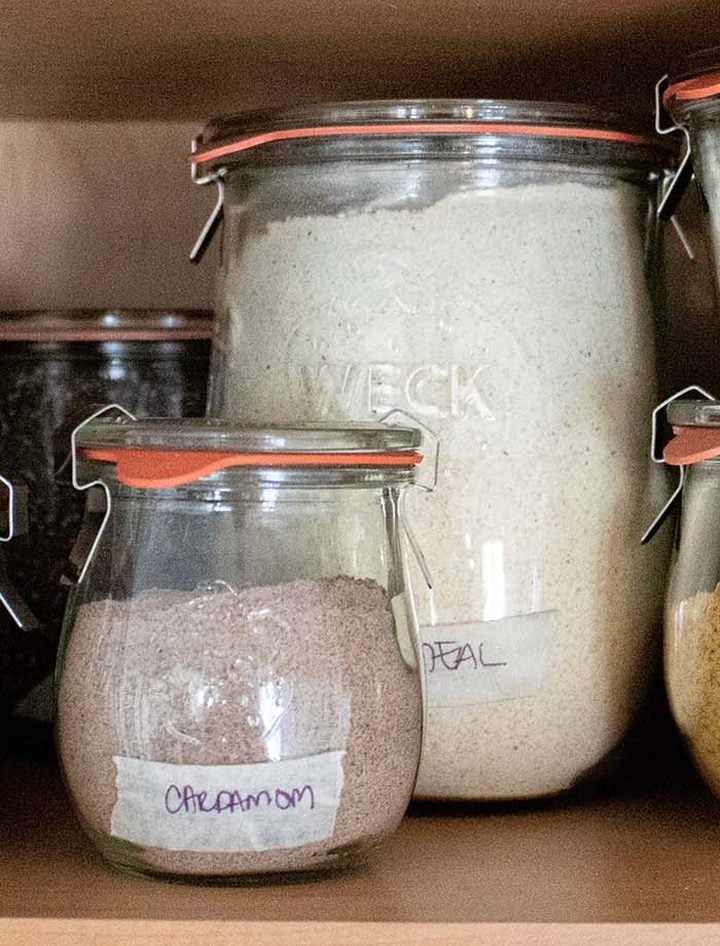
Best Fully Plastic-Free Jar
$$ 3-jar combo pack
Weck jars seal with a glass lid, a natural rubber ring, and two metal clamps, so there is no plastic anywhere, not even under the lid. They work for canning as well as storing oats, beans, and spices.
This combo pack comes with three tulip-shaped jars in different sizes, each with its own glass lid, rubber ring, and pair of clamps.
Jar
Glass
✓ Plastic FreeLid
Glass
✓ Plastic FreeLid Seal
Natural Rubber
✓ Plastic FreeClamps
Metal
✓ Plastic FreePros
- No plastic in any part, including the seal
- Works for canning and dry storage
- Jars, lids, and clamps are reusable
Cons
- Not for anyone with a latex allergy
- Weck advises a new ring each time you can
- Costs more than Ball jars
The jar to choose when you want zero plastic touching your food. Glass, rubber, and metal, nothing else.
What to Do With the Fridge When the Power Goes Out
Keep the doors closed. According to FoodSafety.gov, an unopened refrigerator keeps food cold for about 4 hours, while a full freezer holds its temperature for about 48 hours, or 24 hours if it is half full. Eat from the fridge first, then the freezer, then the pantry. Toss anything with an unusual odor, color, or texture, and when in doubt, throw it out.
Cooking and Coffee When the Power Is Out
Canned food can be eaten cold, but a cast iron pan and a stovetop coffee maker let you cook on a gas stove, fireplace, or outdoor grill. Never use a grill or camp stove indoors or in a garage.
This is the part of emergency prep nobody talks about, and it matters more than you would think. A warm meal and a cup of coffee make a long, dark day feel manageable. The good news is that the best no-power cookware is also the lowest-plastic cookware you can own.
A bare cast iron skillet like the Field Company No. 8 works on any heat source, from a gas burner to a campfire grate. For coffee, a stovetop brewer needs nothing but heat. The Bialetti Moka Express is the classic, and the percolator below is the one built for rough conditions.
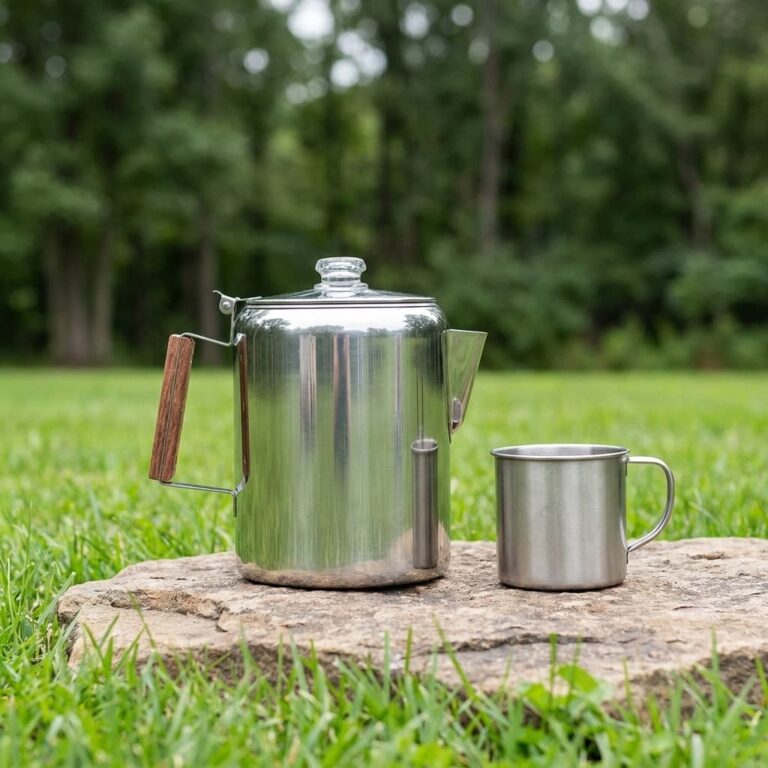
Best for Stove, Grill, or Campfire
$$ 9 cup
COLETTI builds its Bozeman percolator from thick 18/8 stainless steel with a rosewood handle and a glass viewing knob. Coffee only ever touches steel and glass, and there are no electronics or gaskets to wear out.
It brews on a gas stove, a camp grate, or an outdoor grill, which makes it the coffee maker I would want on the first morning without power.
Body and Basket
18/8 Stainless Steel
✓ Plastic FreeViewing Knob
Annealed Glass
✓ Plastic FreeHandle
Natural Rosewood
✓ Plastic FreeFilters
Paper Discs, Optional
✓ Plastic FreePros
- Nothing plastic or aluminum touches the coffee
- Works on any heat source, no electricity needed
- No gasket to age and spare parts available
Cons
- Percolated coffee can taste stronger than drip
- Metal gets hot, so keep a towel nearby
Hot coffee on any flame, with zero plastic in the brew path. Scores a 1 in our Plastic Footprint Directory.
A quick word on where you cook. Ready.gov is clear that charcoal grills and camp stoves are for outdoor use only. A fireplace or gas range inside works for cooking, but anything that burns fuel needs to stay out of closed rooms and garages, which brings us to the most important safety rule in this whole guide.
Power, Light, and the Safety Rule That Saves Lives
Pack a flashlight for each person, a battery or hand-crank radio, extra batteries, and a charged power bank. Never run a generator, grill, or other fuel-burning device indoors, and keep generators at least 20 feet from doors, windows, and vents.
Ready.gov’s basic kit includes a battery-powered or hand-crank radio, a flashlight, extra batteries, a whistle, and a cell phone with chargers and a backup battery. Choose rechargeable batteries where you can, and give everyone their own light so nobody is fumbling in the dark. A headlamp is the most useful version, since it leaves both hands free.
For the radio, choose one that runs on a hand crank or solar power, so it never depends on a stash of spare batteries.
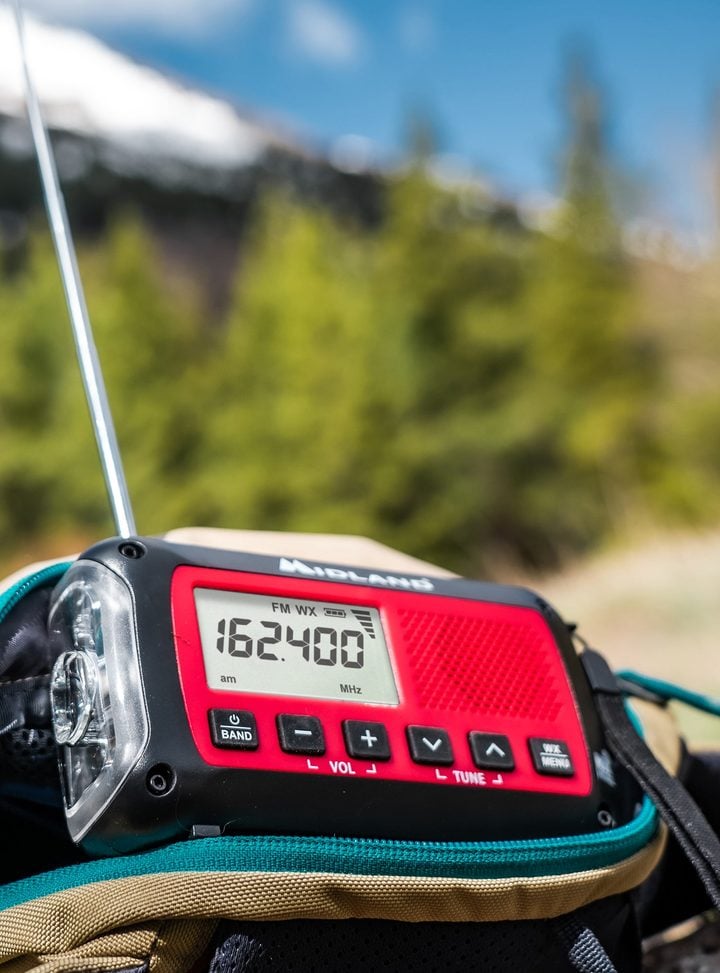
Best for Weather Alerts
$$ hand crank and solar
The Midland ER40 brings NOAA weather alerts straight from the National Weather Service, along with AM/FM radio, a flashlight with an SOS strobe, and a USB port to top up your phone.
Its 2,600 mAh rechargeable battery charges from the hand crank or the built-in solar panel, so it keeps working long after the power goes out and never needs a drawer full of spare batteries.
Housing
Not Stated
⚠ Not DisclosedBattery
2,600 mAh Li-ion
✓ RechargeablePower
Crank + Solar
✓ Off GridAlerts
NOAA Weather
✓ Life SavingPros
- Hand crank and solar keep it running
- NOAA alerts plus AM/FM radio
- Flashlight with an SOS strobe
- Small enough for a go-bag
Cons
- Plastic housing
- Midland does not list its materials
- Costs more than a basic radio
Weather alerts that work without the grid. Crank it, charge it in the sun, and keep it with your kit.
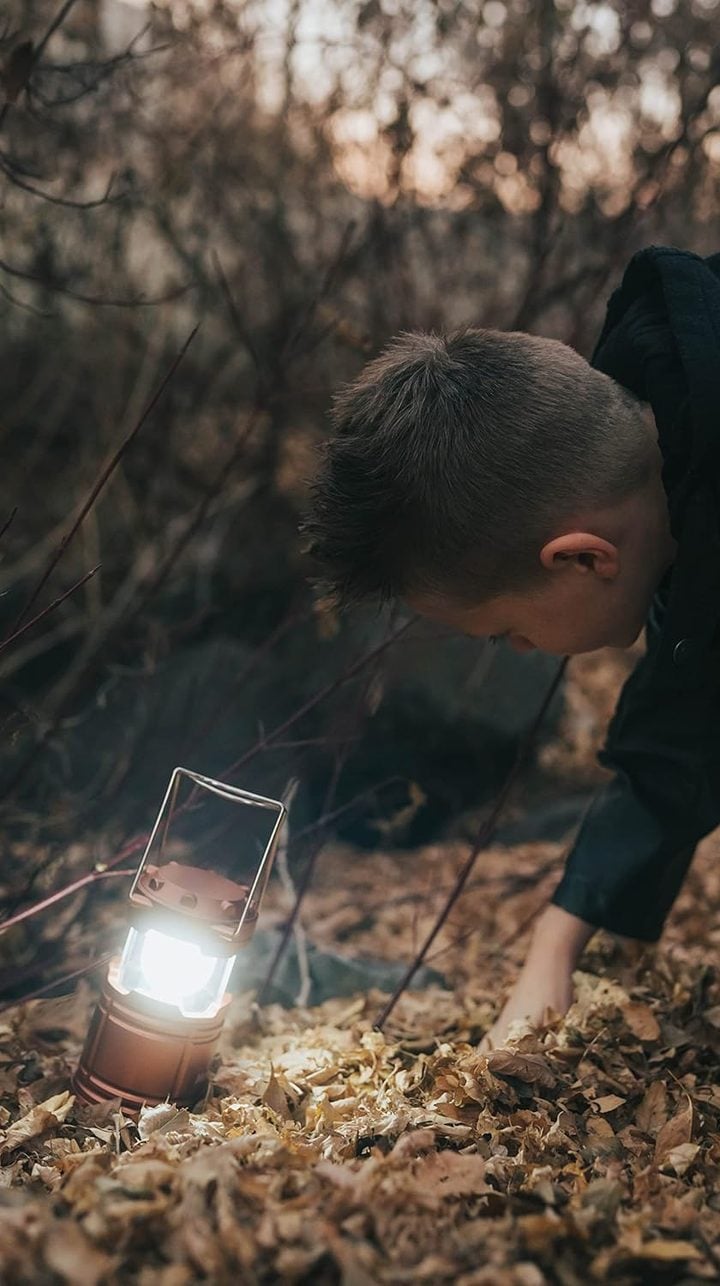
For lighting a whole room, a collapsible lantern is the simplest answer, and these are the ones I keep in my own kit.
Best for Lighting a Room
$ 4-pack, AA batteries not included
These collapsible MalloMe lanterns switch on when you pull them open and give off 146 lumens of light in every direction. With four in a pack, every bedroom can have its own.
The body is plastic, so this is not a low-plastic swap, but gear that lasts this many years is the next best thing.
I have had my MalloMe lanterns since 2017, and every one of them still works. They fold down small enough to tuck into a drawer, but once you pull them open they are bright enough to light up the whole room.
Body
ABS Plastic
⚠ PlasticBulbs
LED
✓ Long LifePower
3 AA Each
⚠ Use RechargeablesLifespan
Since 2017
✓ Still WorkingPros
- Folds down small for easy storage
- Bright enough to light a whole room
- Four lanterns in one pack
- Still working after years of use
Cons
- Plastic body
- Each takes 3 AA batteries, not included
- Water resistant, not waterproof
Small, bright, and built to last. Load them with rechargeable batteries and keep one in every room.
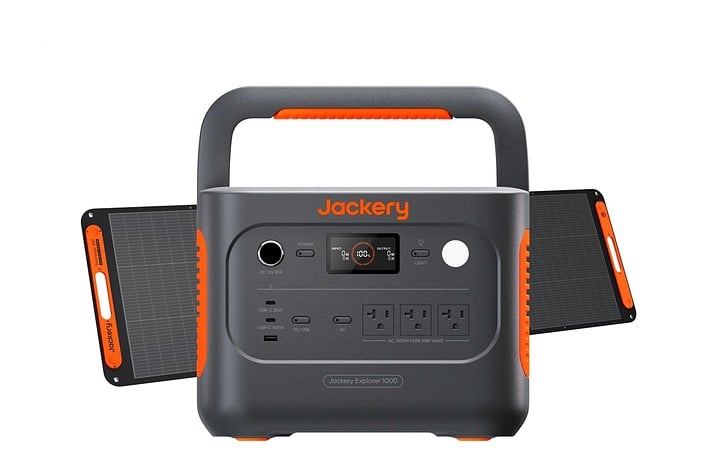
For longer outages, I am planning to add the Jackery Solar Generator 1000 v2 to my own kit. It pairs a rechargeable battery station with a folding 200W solar panel, so it can keep phones, lights, a fan, or a fridge going for short stretches and recharge from the sun when the grid is down. It is not a low-plastic product, and I see it as a buy-once piece of gear rather than a swap. The big advantage is safety: a battery station burns no fuel, so unlike a gas generator, it can run indoors.
Best for Long Power Outages
$$$$ with 200W solar panel
The Jackery Solar Generator 1000 v2 pairs a 1070Wh battery station with a folding 200W solar panel, so you can charge phones, run lights and a fan, or keep a fridge cold for short stretches, then recharge from the sun.
It burns no fuel, so it is safe to use indoors, and its LiFePO4 battery is rated for 4,000 charge cycles, which makes it a buy-once piece of gear rather than a low-plastic swap.
Housing
Not Stated
⚠ Not DisclosedBattery
LiFePO4 Cells
⚠ ElectronicsSolar Panel
Not Stated
⚠ Not DisclosedLifespan
4,000 Cycles
✓ Buy OncePros
- Burns no fuel, safe to run indoors
- Recharges from the sun when the grid is down
- Long-life LiFePO4 battery
Cons
- Jackery does not disclose its materials
- A big purchase, so watch for sales
- Solar charging depends on the weather
Quiet, fuel-free backup power you can use inside. Buy it once and keep it charged.
That leads to the rule worth repeating to everyone in your home. The CDC warns never to use generators, grills, or other gasoline, propane, or charcoal-burning devices inside your home, and to keep generators at least 20 feet from doors, windows, and vents. Carbon monoxide has no smell and no color, and people are hurt by it every year after storms.
✨ TIP
Add a Battery Carbon Monoxide Detector
A plug-in detector goes silent the moment the power goes out, which is exactly when the risk goes up. Put a battery-powered or battery backup carbon monoxide detector near every sleeping area, and test it when you check the rest of your kit.
Hygiene, First Aid, and Pets
Pack a first aid kit, a refill buffer of prescription medications, soap, toothpaste, toilet paper, and trash bags for sanitation. Add 2 weeks of pet food, pet medications, and extra water for each animal.
Medication is the item people most often forget. Ready.gov points out that about half of all Americans take a prescription medicine every day, and pharmacies may be closed or hard to reach after a disaster. Ask your doctor or pharmacist how to keep a small buffer on hand, and write down every medication and dose on paper.
Hygiene is where low-plastic swaps shine, because solid products last longer and take up less space than liquids. A bar like Dr. Bronner’s Pure-Castile Bar Soap handles hands, body, and even dishes in a pinch, and Bite Toothpaste Bits come in a glass jar that will not leak in a go-bag. For toilet paper, a box of Who Gives A Crap bamboo toilet paper is an easy thing to keep on hand. Each roll is wrapped in paper instead of plastic, the rolls are extra long so a box lasts, and the company donates half of its profits to clean water and sanitation projects.
Pets need their own kit, with two weeks of food, extra water, a leash, a bowl, any medications, and a copy of vaccination records. If your dog takes a daily supplement, pack that too. Finn’s Multivitamin chews come in a recyclable tin instead of a plastic tub, so they stack neatly on a shelf, and you can find them on Grove or Amazon. Washington’s Emergency Management Division also has a helpful pet preparedness page worth a look.
Documents, Cash, and Comfort Items
Keep copies of ID and insurance in a waterproof pouch, cash in small bills, a warm blanket and change of clothes for each person, sturdy shoes, and a few games or books.
When the power is out, card readers and ATMs often are too, which is why cash in small bills belongs in every kit. Copies of your ID, insurance policies, and other key papers should go in a waterproof pouch, ideally with a digital copy saved somewhere you can reach from another device.
Add a warm blanket and a full change of clothes for each person, sturdy shoes, and work gloves. Then pack something for morale. A deck of cards, a few books, or a puzzle can turn a stressful evening into a story your family tells later.
Why 72 Hours May Not Be Enough in Earthquake Country
Washington State asks residents to be “2 Weeks Ready,” because a major Cascadia earthquake could cut off roads, water, and power for far longer than 3 days. Treat 72 hours as the starting point and build from there.
I live in the Seattle area, and our state stopped using the three-day message years ago. After a large earthquake exercise in 2016, the Washington Emergency Management Division changed its guidance and now asks people to be 2 Weeks Ready, with enough supplies to get by on their own for two weeks. If you live anywhere with major earthquake, hurricane, or wildfire risk, that longer goal is worth considering too.
Two weeks sounds like a lot, and that is exactly why the state’s Prepare in a Year guide is my favorite resource in this whole article. It breaks preparedness into one small task a month for twelve months, and the very first task is free: sit down with your family and make a communication plan. Spread the shopping out and it barely touches your budget.
If you live on the West Coast, also download the free MyShake app, which delivers ShakeAlert earthquake warnings across California, Oregon, and Washington. Even a few seconds of warning is enough time to drop, cover, and hold on.
Pre-Packed Kit or Build Your Own
Building your own 72-hour emergency kit costs less over time, uses food you will actually eat, and avoids most of the single-use plastic packed into store-bought survival kits.
Pre-packed survival backpacks are everywhere right now, and they are convenient. They are also usually a bag full of plastic pouches, foil packets, and gear you will never use otherwise. Here is how the two approaches compare.
| What Matters | Pre-Packed Kit | Build Your Own |
|---|---|---|
| Food | Ration bars and pouches | Food your family already eats |
| Water | Small plastic pouches | Water heater, glass, and steel |
| Plastic | Mostly single-use | Mostly reusable |
| Everyday use | Sits in a closet | Used and rotated weekly |
| Cost | One large purchase | Spread out month by month |
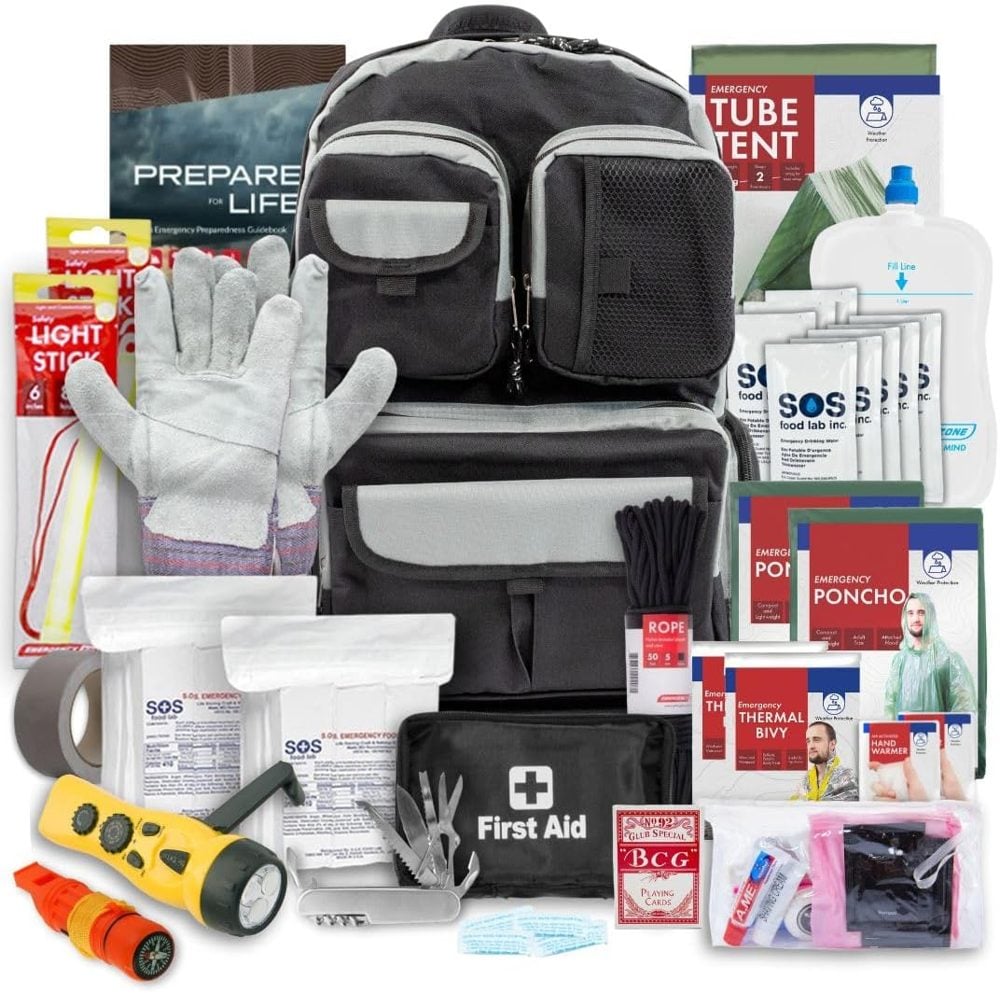
If you would rather start with a ready-made bag, here is the one I have at home. It covers the first 72 hours while you build the rest of your kit at your own pace.
Best Ready-Made Kit for Two
$$$ 2-person, 72 hours
The Emergency Zone Urban Survival Bug-Out Bag packs 72 hours of supplies for two people into one plain black backpack, including food ration bars and water pouches with a 5-year shelf life, a tube tent, emergency bivvies, ponchos, a crank radio flashlight, and a 121-piece first aid kit.
Like every ready-made kit, it comes with plenty of single-use plastic packaging. What it gives you is a complete starting point in one step, with room left in the bag for your own medications and important papers.
I have had this bag since 2017, and it is small enough to tuck away in a closet until we need it. So far the only thing I have replaced is the water purification tablets, so I have some work to do checking the dates on everything else inside.
Backpack
Not Stated
⚠ Not DisclosedWater
Sealed Pouches
⚠ Plastic PouchesFood
Ration Bars
⚠ Plastic WrappedShelf Life
5 Years
✓ Long LastingPros
- A full 72-hour kit for two in one step
- Food and water last 5 years
- 121-piece first aid kit included
- Room left for personal items
Cons
- Lots of single-use plastic packaging
- Ration bars, not real meals
- About 15 pounds when packed
The fastest way to get covered. Grab it if you leave, and build your low-plastic kit at home over time.
✨ TIP
Keep a Ready-Made Kit Fresh
A pre-packed bag is not a buy-it-and-forget-it item, because several things inside have a shelf life. Check the dates once a year and replace these as they expire:
- Food ration bars and water pouches, which typically carry a 5-year shelf life from the date they were made
- Water purification tablets, which also last about 5 years
- Light sticks and hand warmers, which last about 4 years
- First aid ointments and alcohol wipes, which the American Red Cross says last about 2 years, plus bandages and tape, which lose their stick after about 5
While you are at it, crank the radio flashlight to make sure it still works, and unfold the ponchos and emergency blankets to check for tears.
Build Your 72-Hour Emergency Kit in 5 Steps
Make a plan, secure water, stock no-cook food, add light and first aid, then set a twice-a-year reminder to rotate food and water.
Save This Checklist for Your Next Store Run 📌
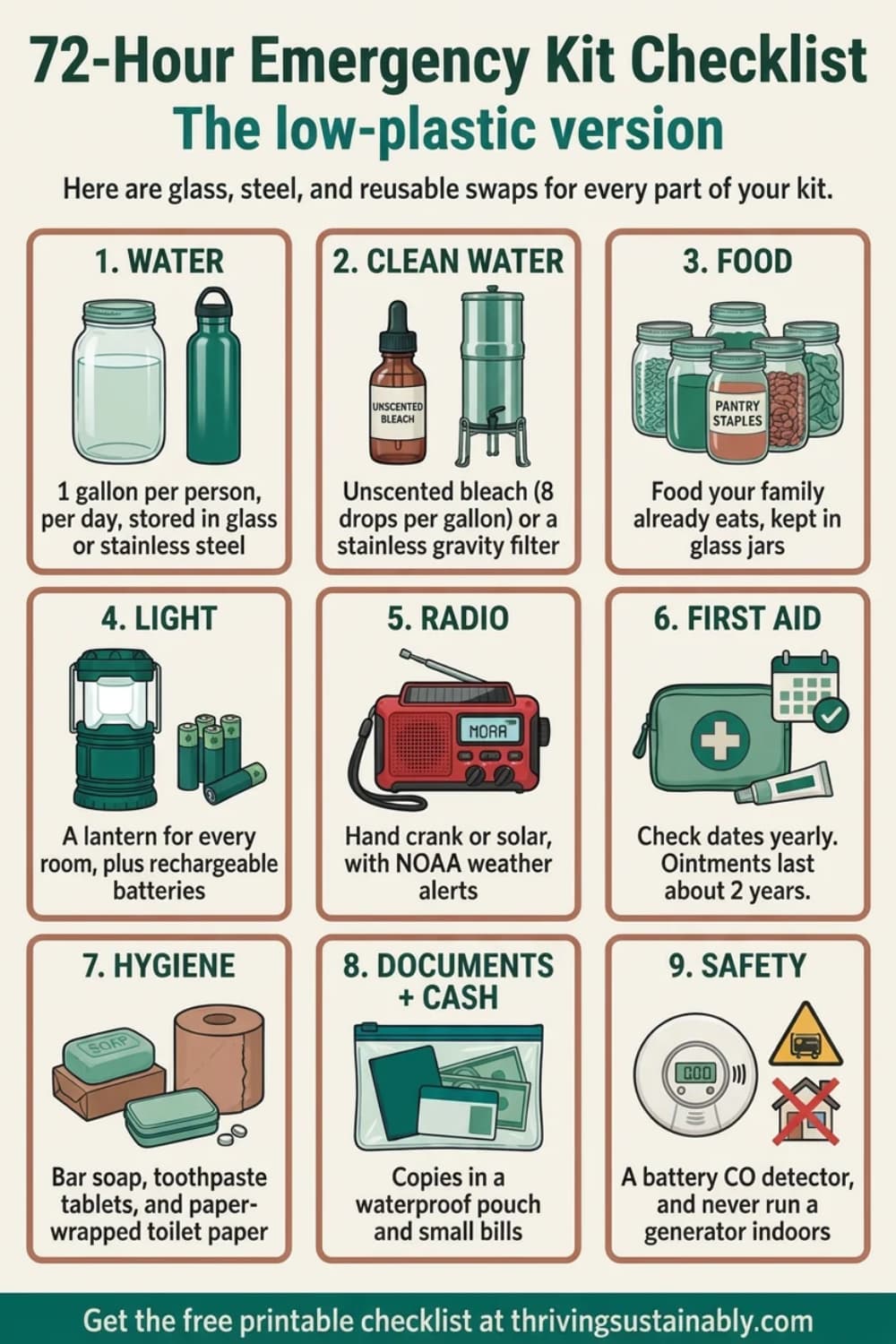
- Make your family communication plan this week. It is free and it is the foundation of everything else.
- Find your water heater drain and main water shutoff, then fill a few clean glass jars for drinking water.
- Buy one extra of the shelf-stable foods you already eat each time you shop, plus a manual can opener.
- Gather flashlights, a radio, batteries, a first aid kit, medications, and pet supplies into one spot everyone knows.
- Put two kit checks on your calendar each year, and eat or replace anything close to expiring.
Free Printable
The 2-Week Emergency Kit Checklist
Every item in this guide on one page, grouped by category with check boxes and rotation dates. Print it, stick it on the fridge, and tick things off as you go.
Get the Free Checklist →Free Resources to Help You Prepare
The best free emergency preparedness resources come from FEMA, the American Red Cross, the EPA, the CDC, and your state and county emergency management offices.
You do not have to figure this out alone. These are the official, free resources I used to build this guide, and they are worth bookmarking.
- Ready.gov Build a Kit has FEMA’s full supply list and a printable version for the store.
- FEMA’s Family Emergency Communication Plan walks you through contacts and meeting places.
- The American Red Cross survival kit page covers home kits and go-bags.
- The EPA’s emergency disinfection chart shows how to treat water with bleach or boiling.
- FoodSafety.gov explains what to keep and what to toss after an outage.
- Washington’s Prepare in a Year guide spreads preparedness across 12 easy months, and it works no matter where you live.
- The MyShake app sends free earthquake warnings on the West Coast.
- Your county emergency management office can sign you up for local alerts and connect you with Community Emergency Response Team (CERT) training, which many local programs offer free. Washington residents can start at mil.wa.gov/alerts.
FAQs About 72-Hour Emergency Kits
Water, non-perishable food, a manual can opener, a flashlight, a battery or hand-crank radio, extra batteries, a first aid kit, prescription medications, cash in small bills, and copies of important documents. Add pet supplies and a phone backup battery if they apply to your household.
Keep it in a cool, dry place everyone in the house can reach quickly, such as a hall closet or pantry. Ready.gov also suggests smaller kits for your car and workplace, since you may not be home when an emergency happens.
Check it at least twice a year. Replace home-filled water every six months, eat or replace food before it expires, test batteries and detectors, and rethink your needs every year as your family changes.
In an emergency, yes. Turn off the gas or electricity to the heater first, then drain it into a clean container. If the water looks cloudy or you are unsure of it, boil it or treat it with unscented bleach before drinking.
Much less than you might think when you build it over time. Most of the food and supplies are things you already buy, so adding one extra item per shopping trip spreads the cost across months instead of one big purchase.
Ideally, yes. A home kit helps you shelter in place for days or weeks, while a lighter go-bag holds the essentials you would grab if you had to leave quickly, such as water, snacks, medications, documents, a flashlight, and a change of clothes.
Final Thoughts About 72-Hour Emergency Kits
A 72-hour emergency kit is a plan, a gallon of water per person per day, and food your family already eats. Start there, then build toward 2 weeks one small step at a time.
All the talk about stockpiling can make preparedness feel like fear, but it really comes down to taking care of the people you love. Begin with the free step this week, fill a few jars, and buy one extra can the next time you shop. When you choose glass jars, a steel water filter, and other reusable gear, you end up using your kit every day instead of letting it sit in a closet, so it is ready when an emergency comes.
📚 References
- American Red Cross. (n.d.). Is your first aid kit expired? https://www.redcross.org/take-a-class/resources/articles/do-first-aid-kits-expire
- American Red Cross. (n.d.). Survival kit supplies. https://www.redcross.org/get-help/how-to-prepare-for-emergencies/survival-kit-supplies.html
- Business Today. (2026, October 27). From food to medicines: Japan and UK urge citizens to keep emergency supplies ready for at least 3 days. https://www.businesstoday.in/world/story/japan-and-uk-urge-citizens-to-keep-emergency-supplies-ready-for-3-days-to-a-week-563963-2026-10-27
- Centers for Disease Control and Prevention. (n.d.). Avoiding carbon monoxide poisoning. https://www.cdc.gov/natural-disasters/psa-toolkit/avoiding-carbon-monoxide-poisoning.html
- Doulton. (n.d.). British Berkefeld stainless steel gravity systems. https://doulton.com/product-category/gravity-fed-filter
- Doulton. (n.d.). British Berkefeld Ultra Sterasyl (8674). https://doulton.com/ultra-sterasyl
- European Commission. (2025, March 26). EU Preparedness Union Strategy to prevent and react to emerging threats and crises. https://ec.europa.eu/commission/presscorner/api/files/document/print/en/ip_25_856/IP_25_856_EN.pdf
- Federal Emergency Management Agency. (n.d.). Build a kit. Ready.gov. https://www.ready.gov/kit
- Federal Emergency Management Agency. (n.d.). Create your family emergency communication plan. Ready.gov. https://www.ready.gov/sites/default/files/2020-03/family-emergency-communication-planning-document.pdf
- Federal Emergency Management Agency. (2022). Food. Ready.gov. https://www.ready.gov/food
- Federal Emergency Management Agency. (n.d.). Water. Ready.gov. https://www.ready.gov/water
- FoodSafety.gov. (n.d.). Food safety in a disaster or emergency. U.S. Department of Health and Human Services. https://www.foodsafety.gov/keep-food-safe/food-safety-in-disaster-or-emergency
- UC Berkeley Seismology Lab. (n.d.). MyShake. https://myshake.berkeley.edu
- UK Government. (2026). Be Ready: Are you emergency ready? GOV.UK. https://beready.campaign.gov.uk/
- U.S. Environmental Protection Agency. (n.d.). Emergency disinfection of drinking water. https://www.epa.gov/ground-water-and-drinking-water/emergency-disinfection-drinking-water
- Washington Military Department, Emergency Management Division. (n.d.). Prepare in a year. https://mil.wa.gov/prepare-in-a-year
- Washington Military Department. (n.d.). State Guard helps make Washington 2 Weeks Ready. https://mil.wa.gov/news/state-guard-helps-make-washington-2-weeks-ready
- Washington State Department of Health. (n.d.). Water sources. https://doh.wa.gov/emergencies/be-prepared-be-safe/severe-weather-and-natural-disasters/water-sources
- Who Gives A Crap. (n.d.). Premium 100% bamboo toilet paper. https://us.whogivesacrap.org/products/premium-100-bamboo-toilet-paper-double-length-rolls
More Low-Plastic Living Reads
We’ve scored every kitchen product on plastic. See them in the Kitchen directory.