

The safest cookware is the kind that does not put anything into your food while you cook. No coating that can flake off, no chemicals that seep out when the pan gets hot, no metal leaching into your dinner. A handful of materials do this well, and have for generations: 100% ceramic, enameled cast iron, stainless steel, carbon steel, bare cast iron, and glass. Each one beats a scratched nonstick pan, and none uses the coating chemistry that turned older Teflon pans into a health worry in the first place.
Want the short version? Skip straight to the comparison chart. But here is why this is worth a few minutes of your time. Researchers found that a single scratch in a nonstick coating can release about 9,100 microplastic particles into your food, and a badly worn pan up to 2.3 million. Most Teflon-style coatings also belong to the PFAS family, the “forever chemicals” the CDC has found in the blood of nearly every American it has tested. Once you know that, cooking on uncoated materials just makes sense. This guide ranks cookware by material first, then walks you through the nine specific pans we tested and scored, so you can match a safe material to the way you actually cook.
Our Top Safest Cookware Picks at a Glance
Our safest overall pick is the Xtrema Pure Ceramic Skillet, a one-piece ceramic pan with no coating and no metal core, scoring a 1 out of 10 for plastic. Seven of our nine picks score a 1, and the two ceramic-coated nonstick pans score a 2.
| Pick | Material | Price | Best For |
|---|---|---|---|
| Xtrema Pure Ceramic Skillet | 100% ceramic, one piece | $$$ | Safest overall, high heat |
| Le Creuset Dutch Oven | Enameled cast iron | $$$$ | Braising, acidic foods |
| Made In Stainless Clad | 5-ply 18/10 stainless | $$$ | Everyday, searing sauces |
| Field Cast Iron Skillet | Bare cast iron | $$$ | Searing, everyday cast iron |
| Made In Carbon Steel | Bare carbon steel | $$$ | High-heat searing |
| Lodge Cast Iron Skillet | Bare cast iron | $ | Best budget |
| Nordic Ware Half Sheet | Bare aluminum | $$ | Baking and roasting |
| Caraway Ceramic-Coated Set | Ceramic coating over aluminum | $$$ | Best nonstick set |
| Our Place Always Pan | Ceramic coating over aluminum | $$$ | Nonstick, one-pan cooking |
What Makes Cookware “Safe”? The 4 Things That Actually Matter
Cookware safety comes down to four things: whether the surface leaches chemicals, whether a coating breaks down under heat, whether the raw material carries contaminants like lead, and how long the pan lasts before it degrades.
What actually matters is the material and what it does when it meets heat, oil, and acid. It comes down to four things:
- Does the surface leach into food? Inert materials like 100% ceramic, glass, stainless, and cast iron leach nothing, while reactive metals and worn coatings can.
- Does a coating break down under heat? Traditional nonstick can release particles and fumes when it overheats or gets scratched. A pan with no coating removes the question entirely.
- Does the raw material carry contaminants? Low-grade imported ceramic can hold lead or cadmium in the glaze, which is why third-party testing matters.
- Will it last, or is it built to be replaced? A pan that degrades in a year sheds more and gets tossed sooner, while an inert pan that lasts decades is both safer and cheaper over its life.
The three sections below go deeper on the chemistry, the metals, and how to read a label.
PFAS, PTFE, and PFOA: What They Are and Why They Matter
Here is the plain-language version. PFAS stands for per- and polyfluoroalkyl substances, a large family of human-made chemicals that the U.S. Environmental Protection Agency describes as thousands strong. Their carbon-fluorine bonds are extremely stable, which is why they resist heat, water, and oil, and also why they linger in the environment and in our bodies for years. That persistence is where the nickname forever chemicals comes from.
Traditional nonstick pans are coated in PTFE, a specific PFAS better known by the brand name Teflon. PFOA was a separate chemical used in older manufacturing, and it was phased out of U.S. nonstick production by 2015, so a new Teflon pan today is made without it. The catch is that PTFE itself is still a PFAS, and an overheated or scratched PTFE pan can release particles and fumes. Choosing cookware with no fluorinated coating at all sidesteps the whole debate.
💫 now you know
Is a “PFAS-free” ceramic pan really PFAS-free?
Ceramic-coated pans use a mineral, silica-based coating instead of PTFE, so they are made without the fluorinated chemistry. The honest caveat is that any coating is a layer that wears, and most brands keep the exact recipe proprietary. A one-piece ceramic or bare metal pan removes the coating question entirely.
Heavy Metals: Lead, Cadmium, and Aluminum Leaching
Not every safety question is about coatings. Cheap imported ceramic and enamel can carry lead or cadmium in the glaze, which is why third-party leaching tests matter more than a “ceramic” label. The Ecology Center’s Healthy Stuff Lab has run independent metal testing on cookware in its What’s Cooking? report, a useful check beyond a brand’s own claims.
Bare aluminum is a different case. On its own, it is soft and reactive, and cooking something very acidic like a long tomato sauce in an uncoated aluminum pan can move a small amount of the metal into food. For baking sheets that mostly touch dry or fatty foods, that risk is minimal, which is why a bare aluminum sheet pan still scores well. For a daily sauté pan, a clad or inert surface is the safer call.
How to Read a Cookware Safety Label (and What’s Marketing BS)
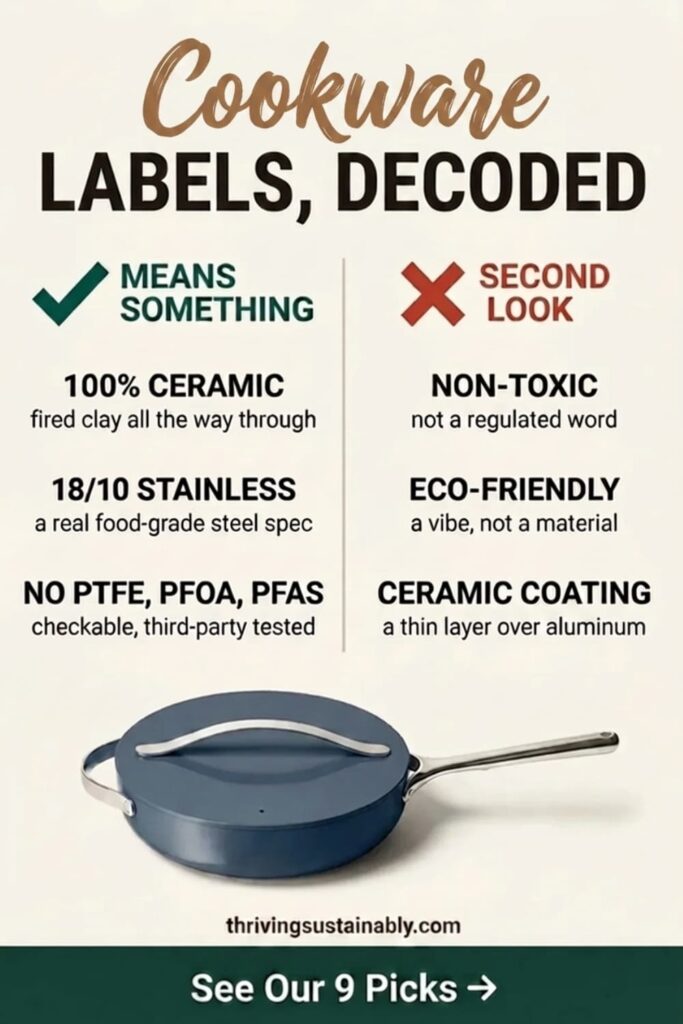
The most useful words on a cookware label name the material itself, like “100% ceramic,” “18/10 stainless,” or “enameled cast iron.” Those tell you what the pan is made of, which is what safety comes down to. Everything else is worth a second look.
❌ Terms That Need a Second Look
- Non-toxic: not a regulated term, so use it as a starting point and check the material.
- Green or eco-friendly: describes a vibe more than a material, so look for what the pan is actually made of.
- Ceramic (coating): often a thin mineral coating over aluminum, not solid ceramic. Both are fine choices, but they are not the same thing.
✅ Label Words That Mean Something
- 100% ceramic or pure ceramic: the pan is fired clay all the way through, with no coating to wear off.
- 18/10 or 18/8 stainless: the chromium and nickel content, a real spec for food-grade steel.
- Made without PTFE, PFOA, and PFAS: a specific, checkable claim, especially when the brand publishes third-party testing.
Safest Cookware Materials, Ranked
Ranked by how little they leach or shed, the safest cookware materials start with 100% ceramic, then stainless steel, enameled cast iron, bare cast iron, carbon steel, and glass, with PFAS-free ceramic-coated nonstick just behind because a coating wears.
Get the material right and the specific pan almost picks itself. Here is how the common options rank for safety, from most inert to the ones that need a small caveat.
1. 100% Ceramic (Xtrema-style), the Safest Overall
Pure ceramic is fired clay with no coating and no metal core. Nothing flakes and nothing leaches, even at high heat. It is the safest material we score, and the reason our top pick is a one-piece ceramic pan. The trade is technique, since ceramic heats slowly and wants lower settings.
2. Stainless Steel (18/10 or 18/8)
Quality stainless is durable, non-reactive, and dishwasher safe, the everyday workhorse of professional kitchens. A tiny amount of nickel can migrate into very acidic food cooked for a long time, but for most cooking it is one of the safest and toughest options you can buy.
3. Enameled Cast Iron
A porcelain enamel surface over iron gives you an inert, non-reactive pot that shines for braising, soups, and acidic dishes. It is heavy and it is not cheap, and both are the flip side of cookware that lasts for decades.
4. Bare Cast Iron
Seasoned cast iron is naturally nonstick once you build up the seasoning, and it even adds a little dietary iron. It reacts with acidic foods and needs to stay dry and oiled, but a good cast iron pan outlives almost everything else in the kitchen.
5. Carbon Steel
Carbon steel is the restaurant favorite: it seasons up to a slick surface like cast iron, heats fast, and takes very high temperatures for searing. It asks for the same seasoning care, and in return it gives you a lighter, more responsive version of the cast iron experience.
6. Glass, Completely Inert
Glass is chemically inert, which makes it excellent for baking, storage, and reheating. Its only real limit is that it is not built for stovetop searing, so it complements a metal or ceramic pan rather than replacing it.
7. Ceramic-Coated Nonstick (Thermolon and similar)
A PFAS-free mineral coating gives you easy release without Teflon chemistry, which makes it the best of the coated options. The honest asterisk is that any coating eventually wears, so a coated pan is a consumable you will replace in a way the inert materials above never require.
❌ Materials to Avoid (and Why)
- PTFE nonstick (traditional Teflon): a fluorinated coating that can release particles and fumes when overheated or scratched.
- Uncoated aluminum for daily cooking: fine for baking sheets, less ideal as a reactive everyday sauté surface.
- Unlined copper and low-grade imported ceramic: copper needs a food-safe lining, and cheap ceramic can carry lead or cadmium in the glaze.
We are building a deep-dive guide for each of these materials. In the meantime, you can filter every cookware pick we have scored in the Plastic Footprint Directory cookware archive.
The 9 Safest Cookware Sets and Pans of 2026
These nine picks each earned a low-plastic score in our directory. They are listed safest first, so the seven inert pans that score a 1 lead, and the two PFAS-free ceramic-coated pans that score a 2 come last.
Best Overall Safest Cookware: Xtrema Pure Ceramic Skillet

Best for the safest possible surface
$$$
The Xtrema Pure Ceramic Skillet is about as simple as cookware gets: one piece of fired ceramic, no coating, no metal core, nothing to scratch off. The brand states it has passed California Proposition 65 lead and cadmium leaching tests for 15 years running through the third-party lab SGS.
Because the material is inert, nothing releases when it gets hot and nothing flakes into food. It goes from stovetop to oven to broiler, and there is no coating waiting to fail.
The Xtrema piece in my kitchen is their pure ceramic wok, the same one-piece ceramic as this skillet. It cooks beautifully once you settle into the low-and-slow heat it wants. The honest catch is weight: my wok runs about 7.7 pounds, so I wash it slowly and keep a firm grip.
Body
100% Ceramic
✓ Plastic FreeSurface
Silica Glaze
✓ No CoatingHandle
Integral Ceramic
✓ Plastic FreeCore
No Metal
✓ VerifiedPros
- One-piece ceramic with no coating to wear off
- Inert surface leaches nothing under high heat
- SGS-tested to Prop 65 for lead and cadmium
- Oven, broiler, and dishwasher friendly
Cons
- Learning curve: heats slowly, needs lower settings
- Can crack if dropped or thermal-shocked
- Not naturally nonstick, so use a little oil
The most inert pan we have scored, with a real learning curve as the price of admission. If you want zero coating questions, this is the one.
Why Pure Ceramic Tops This List
Pure ceramic removes every coating question at once, which is why the Xtrema skillet sits at the top of this list. The trade you make is technique. It heats slowly and holds that heat, so you cook at lower settings than you would on a thin metal pan, and a splash of oil keeps food moving. Treat it like the ceramic it is, and it outlasts anything with a coating.
Best Safest Enameled Dutch Oven: Le Creuset Signature
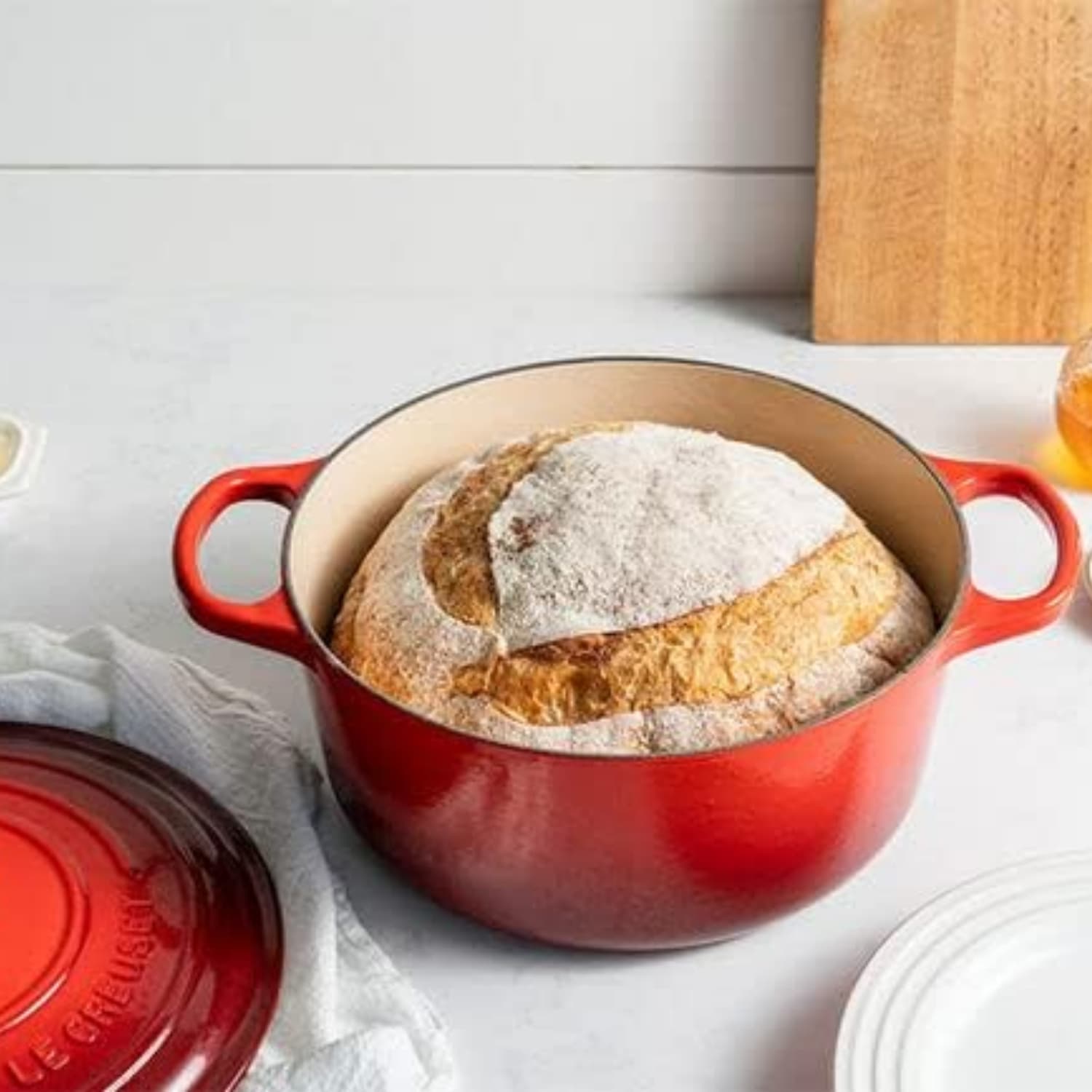
Best for braising and acidic foods
$$$$
The Le Creuset Signature 5.5 qt Round Dutch Oven pairs a cast iron body with a porcelain enamel cooking surface, so food only ever touches inert, non-reactive enamel. That makes it the safe choice for the long tomato sauces and citrus braises that would react in a bare metal pan.
It scores a 1 out of 10 for plastic in our directory, with a stainless steel knob rated for high oven heat. Buy it once and it becomes the pot you hand down.
Body
Cast Iron
✓ Plastic FreeSurface
Porcelain Enamel
✓ InertKnob
Stainless Steel
✓ Plastic FreeHandles
Cast Iron
✓ Plastic FreePros
- Inert porcelain enamel, safe for acidic cooking
- No plastic anywhere, stainless knob included
- Holds low, even heat for braises and bread
- A genuine buy-it-for-life pot
Cons
- Premium price
- Heavy to lift when full
- Enamel can chip if banged or dropped
The safest way to cook anything low, slow, or acidic, in a pot that lasts decades. The one splurge that pays for itself.
Enameled cast iron solves the one weakness of bare metal for acidic cooking. The porcelain enamel is inert, so a two-hour tomato sauce or a lemony braise never touches reactive metal. It is heavy and it is expensive, and both are the flip side of a pot you will likely still use in twenty years.
Best Safest Stainless Steel: Made In Stainless Clad
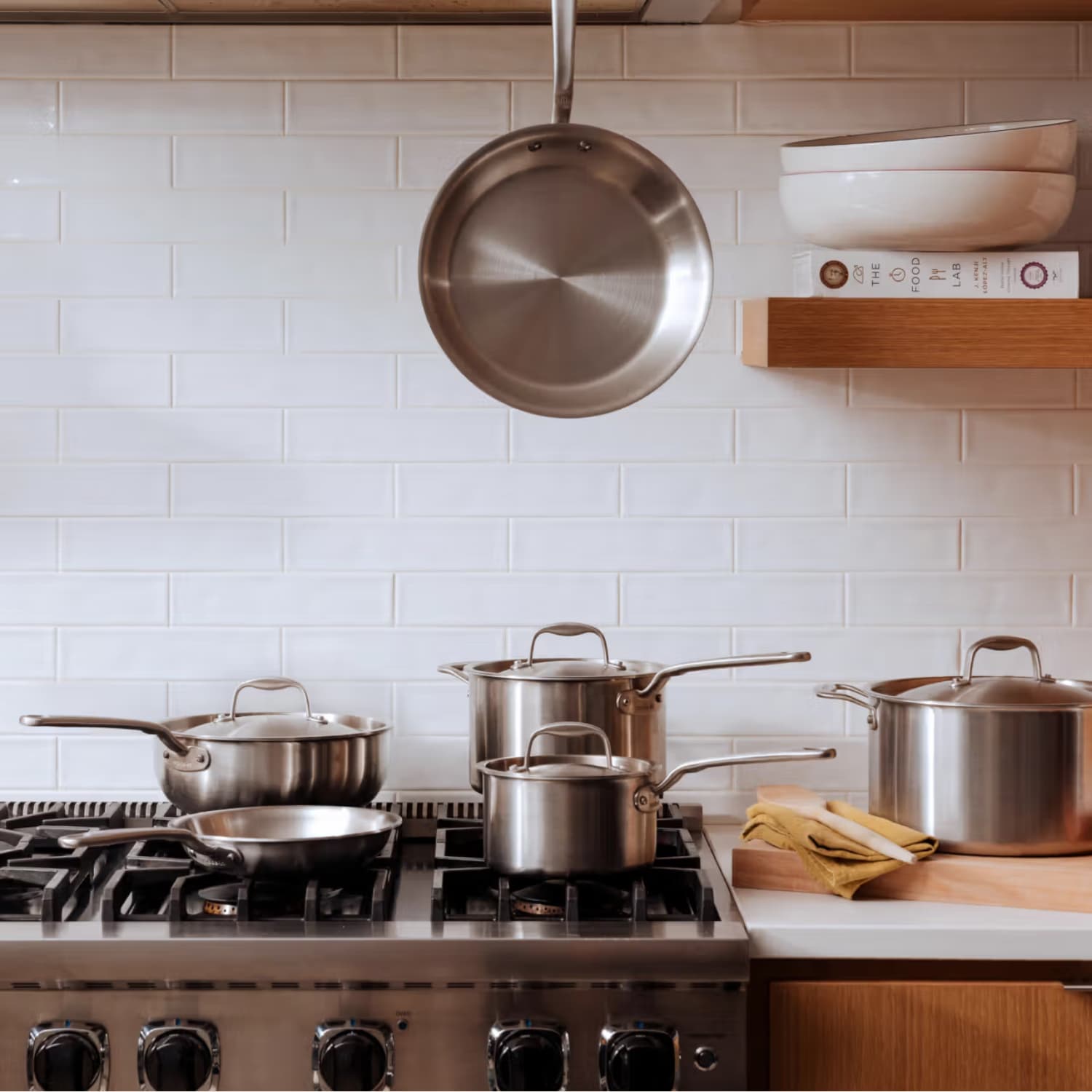
Best stainless steel
$$$
The Made In Stainless Clad Frying Pan is professional-grade stainless with a 304-grade 18/10 cooking surface, built from five bonded layers of metal. The food only touches inert stainless steel, and there is no coating anywhere to wear out.
Stainless is not naturally nonstick, so this is a searing and sauce pan rather than an egg pan. Give it heat and a little fat and it becomes the pan you use most, backed by a 1 out of 10 plastic score.
Surface
304 18/10 Stainless
✓ InertCore
Clad Aluminum
✓ No ContactCoating
None
✓ UncoatedHandle
Stainless Steel
✓ Plastic FreePros
- Inert 18/10 stainless, nothing to leach or shed
- 5-ply clad build heats evenly
- No coating to ever wear out
- Oven, broiler, induction, and dishwasher safe
Cons
- Not naturally nonstick, needs fat and heat control
- A little nickel can migrate into long acidic cooking
- Premium price
The inert everyday pan done at a professional level. Learn the heat and it does almost everything but eggs.
Stainless steel is the pan most professional kitchens reach for, and for good reason. It is inert, nearly indestructible, and has no coating that can ever fail. The one skill it asks for is heat control, since food sticks to a cold stainless pan and releases from a properly preheated one. Master that and a good stainless pan handles almost everything except delicate eggs and fish.
Best Safest Cast Iron Skillet: Field No.8
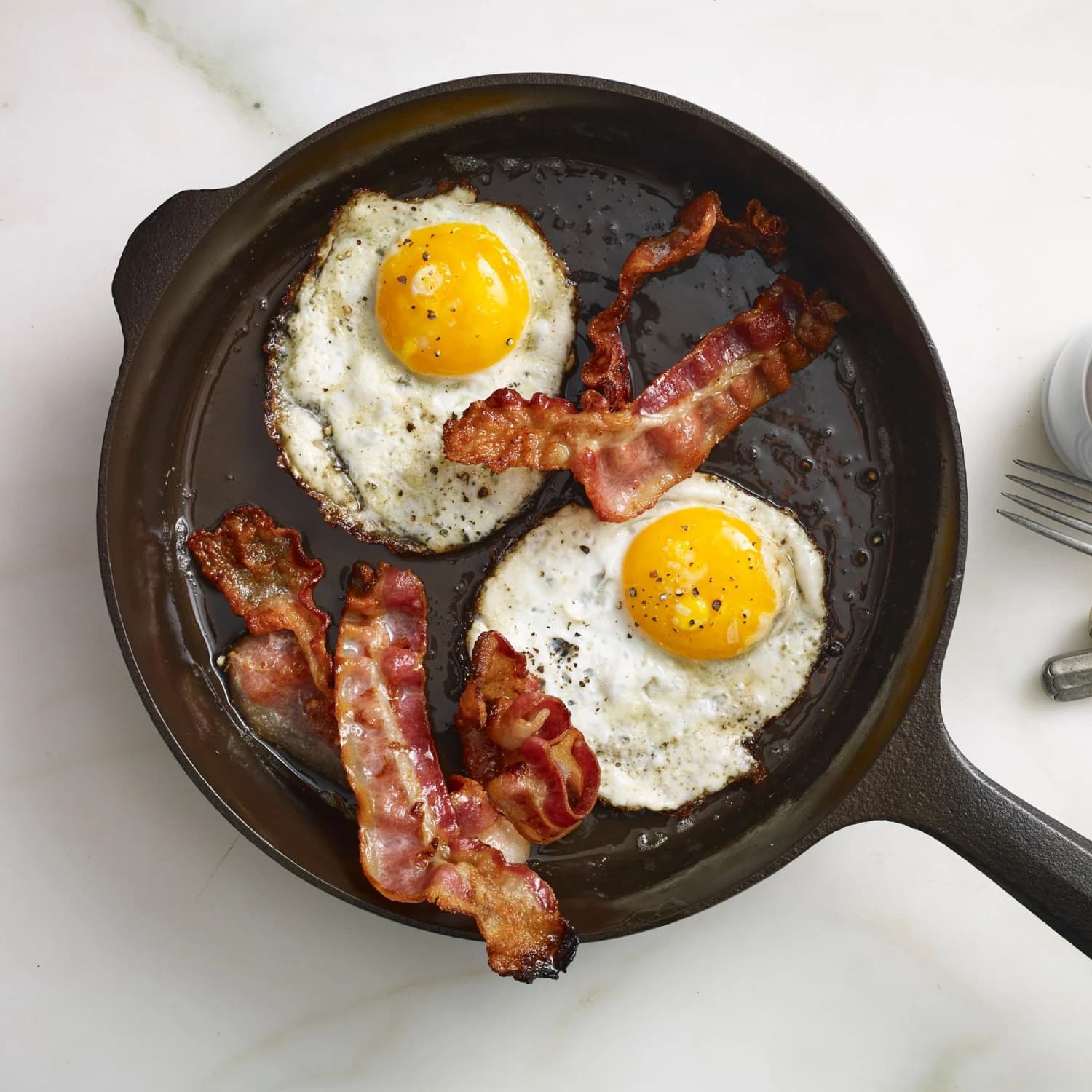
Best cast iron skillet
$$$
The Field Company No.8 Cast Iron Skillet is bare seasoned cast iron milled smoother and cast lighter than the hardware-store version. Field finishes each pan with grapeseed oil and sums it up plainly: no Teflon, no questionable chemicals.
Cast iron is inert and gets more nonstick the more you cook on it, and Field states all of its cookware is made in the USA. It is the premium pick for anyone who wants cast iron that feels closer to a vintage pan.
Body
Cast Iron
✓ Plastic FreeNonstick
Grapeseed Seasoning
✓ No CoatingHandle
Integral Cast Iron
✓ Plastic FreeOrigin
Made in USA
✓ VerifiedPros
- Inert cast iron, nothing to leach or shed
- Machined-smooth surface seasons to nonstick
- Lighter than typical cast iron
- Made in the USA, built to last generations
Cons
- Premium price for cast iron
- Needs seasoning and hand washing
- Reacts with very acidic foods
The premium cast iron for cooks who want a smoother, lighter pan. Inert, seasons beautifully, lasts a lifetime.
If you love cast iron but not the rough, heavy feel of the basic version, Field is the upgrade. The machined surface starts smoother, so it seasons faster and releases food sooner, and the lighter body is easier to lift. It costs several times what a starter pan does, which is the honest trade for a made-in-USA skillet you can hand down.
Best Safest Carbon Steel Pan: Made In Carbon Steel
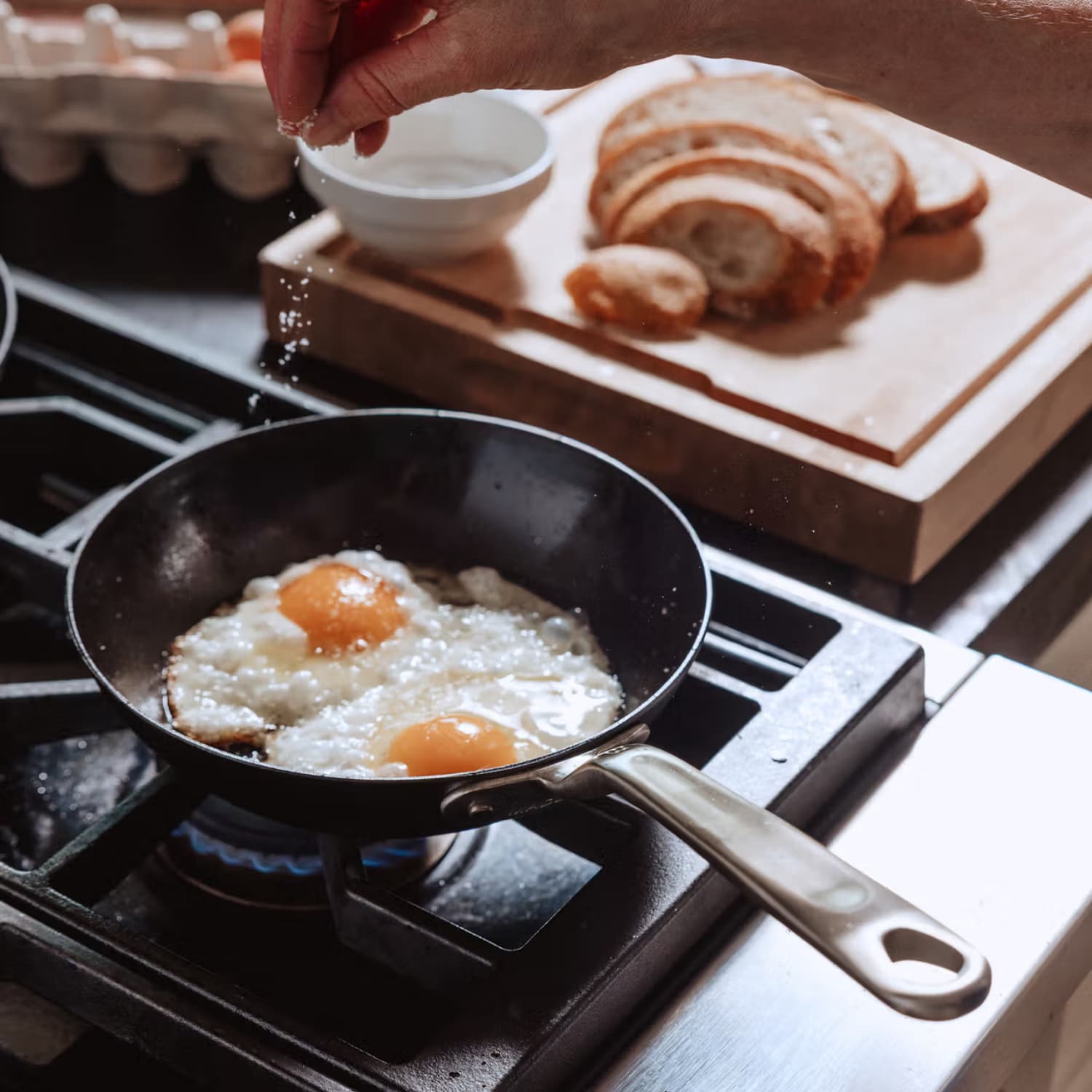
Best for high-heat searing
$$$
The Made In Carbon Steel Frying Pan is the pan restaurants reach for when they want cast-iron safety in a lighter, faster body. It is bare carbon steel with no coating, pre-seasoned with shea nut and coconut oil, and the brand states it is made without PFAS, PTFE, lead, cadmium, aluminum, and BPA.
Seasoning gives it a naturally nonstick surface, and it takes the very high heat that stresses a coating. For searing steak or finishing in the oven, it earns its 1 out of 10.
Body
Carbon Steel
✓ Plastic FreeNonstick
Seasoning Only
✓ No CoatingHandle
Stainless Steel
✓ Plastic FreeMade Without
PFAS / PTFE
✓ Brand-StatedPros
- Inert carbon steel, nothing to leach or shed
- Seasons up to a natural nonstick surface
- Takes very high heat for searing
- Made without PFAS and heavy metals (brand-stated)
Cons
- Needs seasoning and hand washing
- Reacts with acidic foods until well seasoned
- Heavier and less forgiving than nonstick
The chef pan for searing, with cast-iron safety in a lighter body. Worth the seasoning routine if you sear often.
Carbon steel is what many chefs actually cook on, and it is worth understanding why. It behaves like a lighter, more responsive cast iron: it seasons to a slick surface, heats quickly, and shrugs off the high temperatures that would ruin a coated pan. If you sear a lot and do not mind a seasoning routine, it is one of the most satisfying safe pans to own.
Best Safest Budget Pick: Lodge Cast Iron
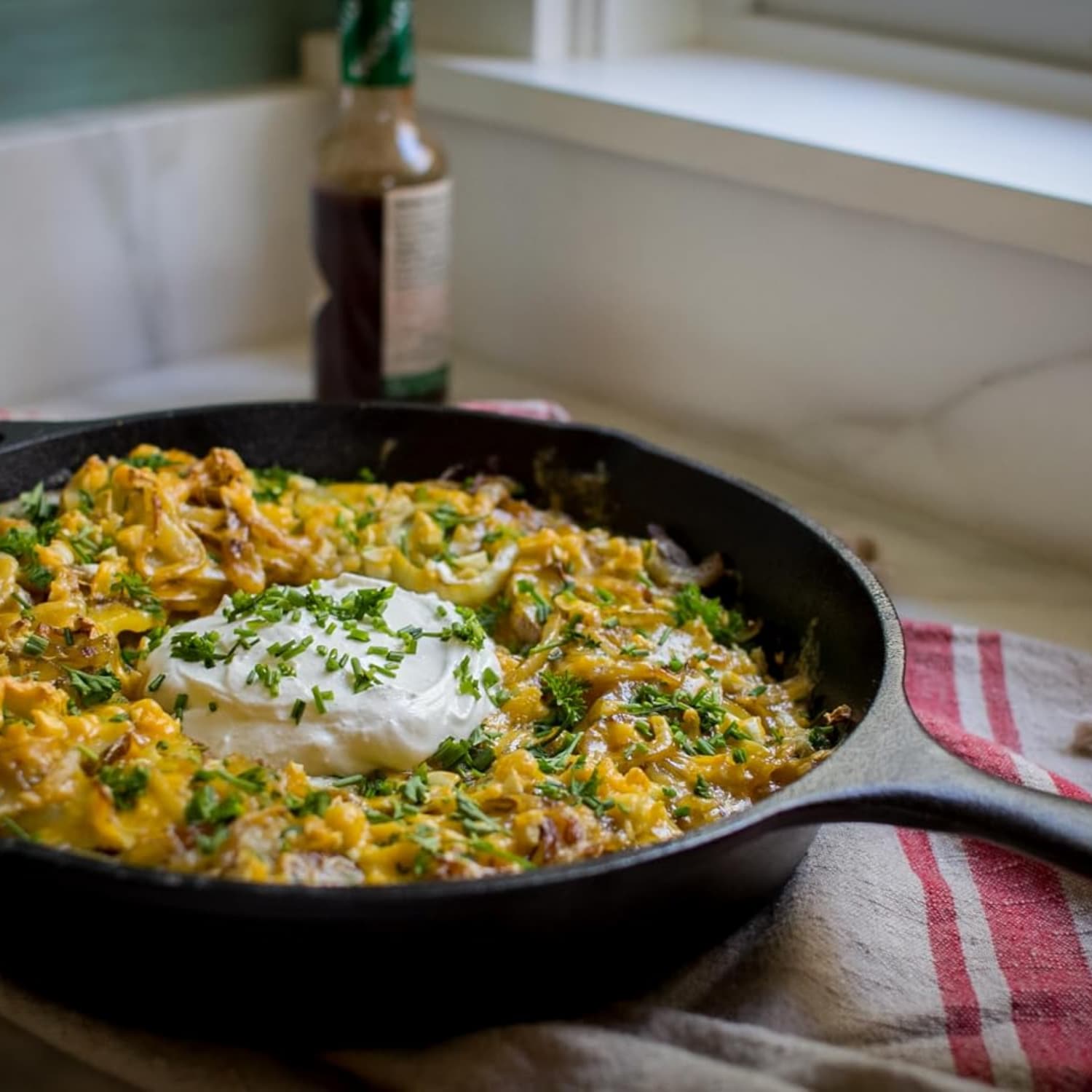
Best budget pick
$
The Lodge Seasoned Cast Iron Skillet is the easiest, cheapest way into safe cookware. It is bare cast iron, pre-seasoned with 100% natural vegetable oil, and the brand states its cast iron has always been made without PFAS.
For the price of a couple of takeout meals, you get an inert pan that adds a little dietary iron and lasts for generations. It is the first swap to make away from a scratched nonstick.
Body
Cast Iron
✓ Plastic FreeNonstick
Veg Oil Seasoning
✓ No CoatingHandle
Integral Cast Iron
✓ Plastic FreeMade Without
PFAS
✓ Brand-StatedPros
- Inert cast iron, nothing to leach or shed
- Made without PFAS, veg-oil seasoned (brand-stated)
- Adds a little dietary iron to food
- Very affordable and widely available
Cons
- Rougher and heavier than premium cast iron
- Needs seasoning and hand washing
- Reacts with very acidic foods
The best budget entry into safe, inert cookware. Season it, keep it dry, and it outlives everything else.
If money is the thing that has stopped you from switching, Lodge is the answer. It does everything the premium cast iron does, just in a rougher and heavier body, for a fraction of the price. Season it once, keep it dry, and this is the pan that quietly outlasts every trendy set you could buy instead.
Best Safest Bakeware: Nordic Ware Half Sheet
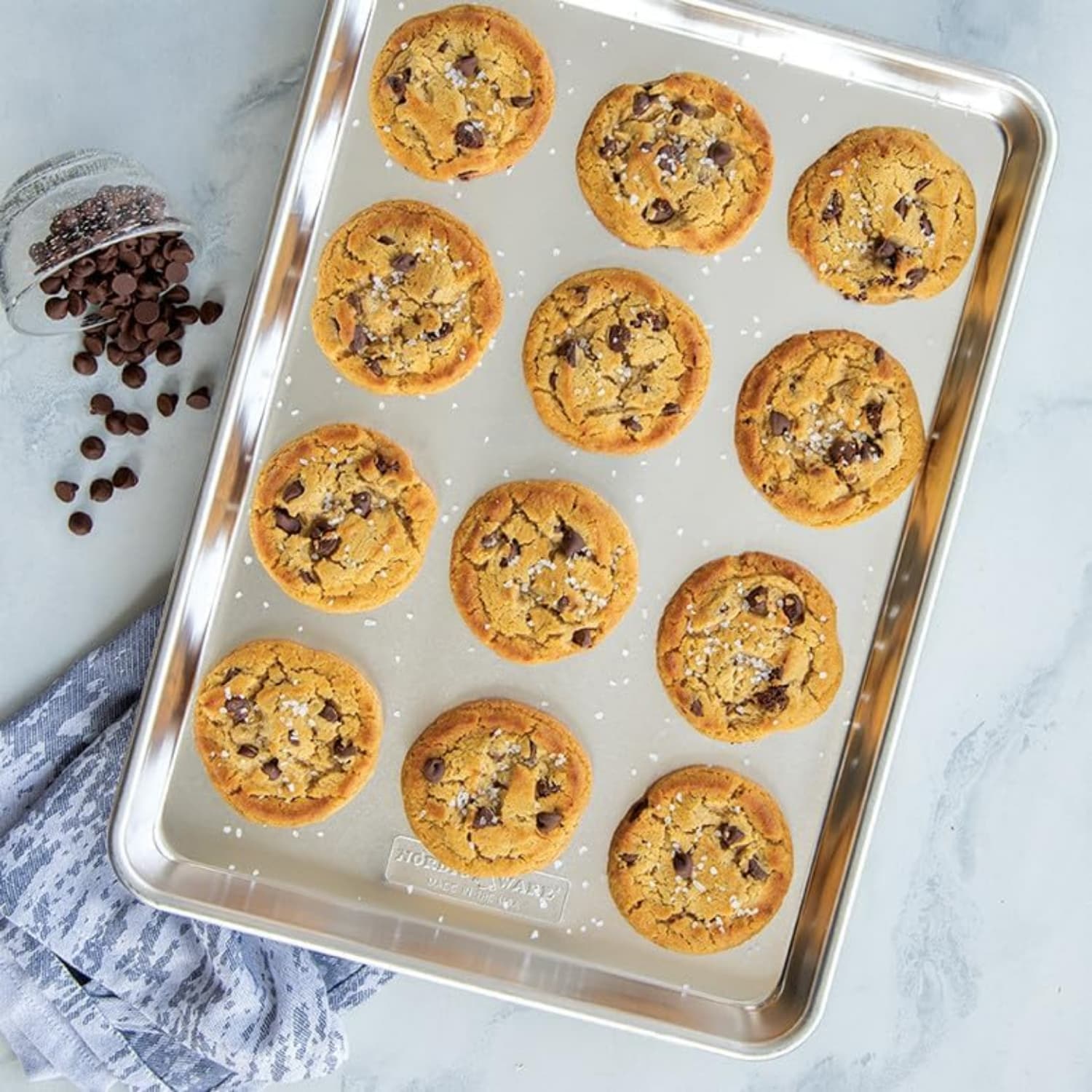
Best for baking and roasting
$$
The Nordic Ware Natural Aluminum Half Sheet is the uncoated commercial baking pan you will see in professional kitchens. No nonstick layer means nothing to scratch or release, and an encapsulated steel rim keeps it from warping in a hot oven.
Bare aluminum is reactive with very acidic foods, so line it with parchment for a lemon bar or tomato roast. For cookies, vegetables, and everyday sheet-pan dinners, it is the affordable, honest choice at a 1 out of 10.
Body
Bare Aluminum
✓ Plastic FreeCoating
None
✓ UncoatedRim
Encapsulated Steel
✓ Plastic FreeNote
Reactive w/ Acid
⚠ Line ItPros
- No coating to scratch, flake, or release
- Steel rim resists warping at high heat
- Commercial-grade and inexpensive
- Lasts for years with basic care
Cons
- Bare aluminum reacts with acidic foods
- Darkens and shows use over time
- Hand wash to keep it looking its best
The uncoated workhorse pan that skips the nonstick question for a few dollars. Line it with parchment and it does almost everything.
Bakeware is where the safest choice is also the cheapest. A bare aluminum sheet pan has no coating to fail, and the only caveat is acidity, which parchment paper handles in the rare cases it matters. For the price of one coated baking tray, this is the pan that keeps performing after the coated one has started to peel.
Best Safest Nonstick Set: Caraway Ceramic-Coated
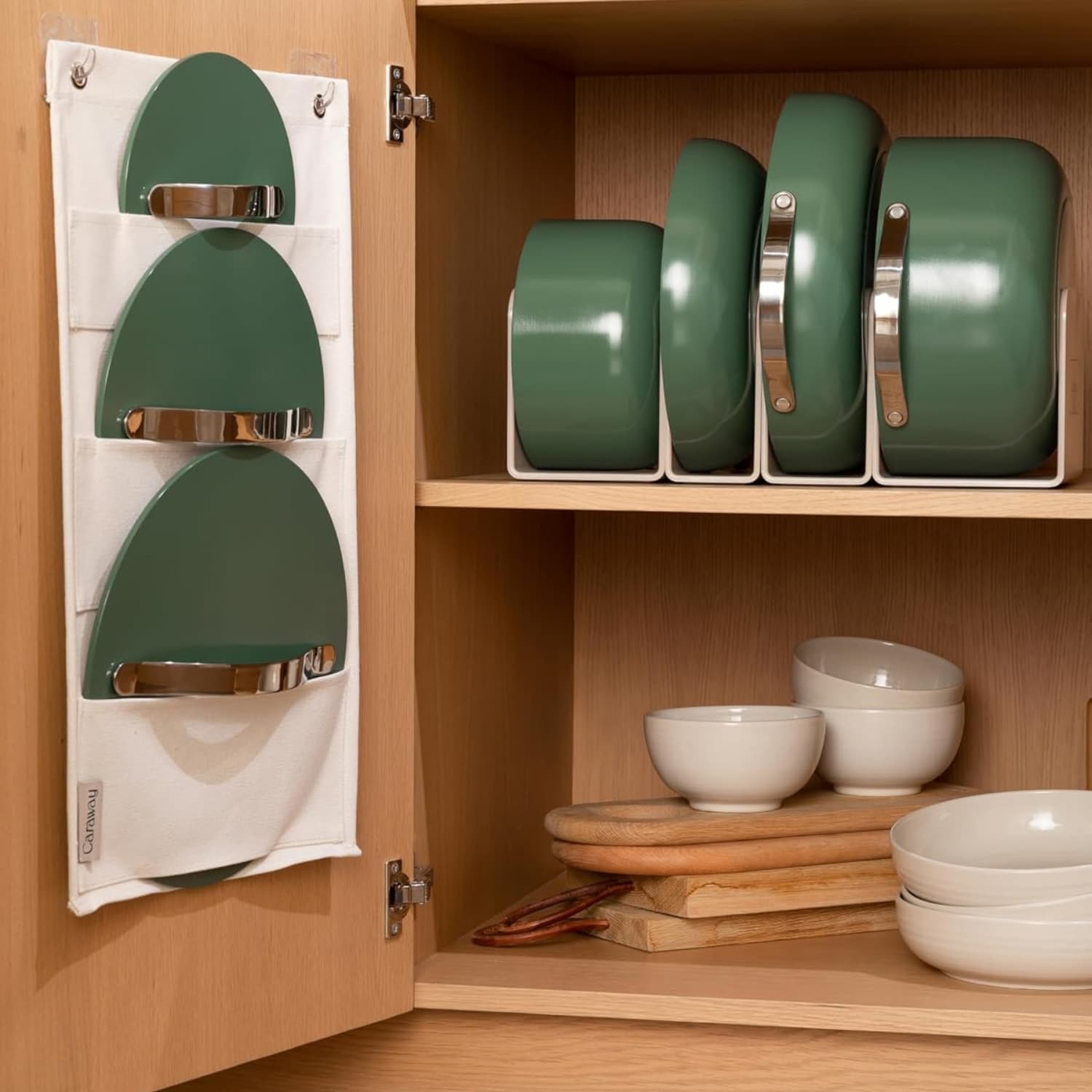
Best nonstick set without Teflon
$$$
The Caraway Ceramic-Coated Cookware Set is the pick for anyone who wants easy nonstick release without Teflon chemistry, in a coordinated set. The brand states its mineral coating is made without PTFE, PFOA, or PFAS, and that it is third-party tested for more than 600 forever chemicals.
Underneath the coating is an aluminum body with stainless steel handles, and it ships plastic-free in recycled cardboard. It scores a 2 rather than a 1 for one honest reason: it is still a coating over metal, and every coating wears eventually.
I cook with the full Caraway set plus two of their baking pans, so this coating gets a real workout in my kitchen. The interior still releases food the way it should. My one genuine gripe is cosmetic: on some of the blue pans, the colored exterior finish has chipped. It does not touch the cooking surface, but it is a good reminder that the outside color is a coating too.
Body
Aluminum
✓ Plastic FreeCoating
Mineral Ceramic
⚠ Wears Over TimeHandles
Stainless Steel
✓ Plastic FreePackaging
Recycled Cardboard
✓ No FoamPros
- Easy nonstick release without PTFE or PFAS
- Third-party tested for 600+ forever chemicals
- No plastic in the pan, stainless handles
- Ships plastic-free in recycled cardboard
Cons
- It is a coating, so it wears and needs replacing
- Exact coating recipe is proprietary
- Colored exterior finish can chip
The best coated nonstick set if you want Teflon-style release without the Teflon chemistry. Just know a coating is a consumable, not forever.
Who the Caraway Set Is Right For
If you are not ready to give up easy egg release, a PFAS-free ceramic coating is the honest middle ground, and Caraway is the version I vetted and cook with. Treat it gently, keep the heat at low to medium, and skip metal utensils, and it earns its place. Just go in knowing that a coated pan is a consumable: it will need replacing in a way the inert pans above never will, which is exactly why it scores a 2 and they score a 1.
Best Safest Nonstick Pan: Our Place Always Pan
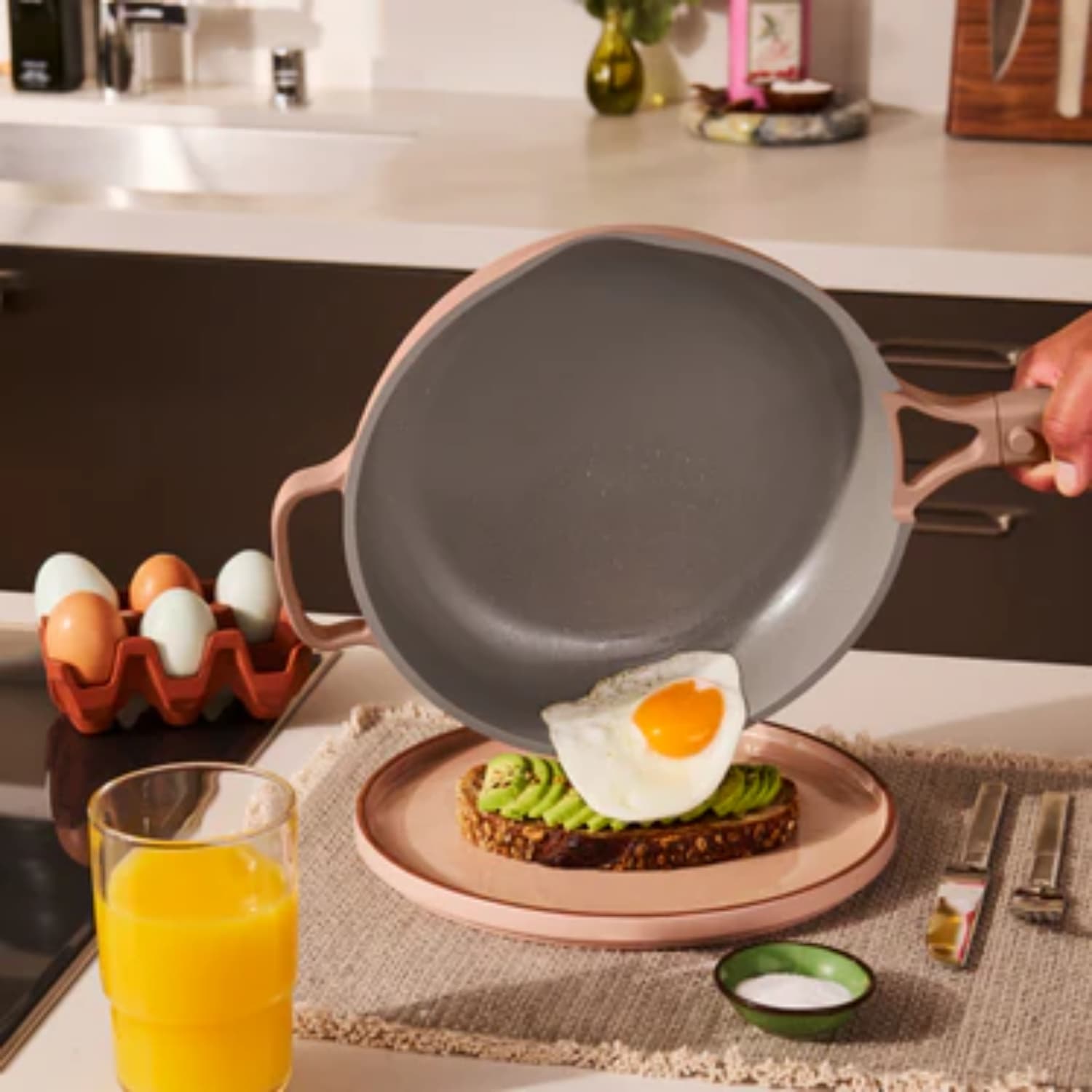
Best nonstick for one-pan cooking
$$$
The Our Place Always Pan is a ceramic-coated cast aluminum pan designed to replace several pieces at once. Our Place states its Thermakind coating is made without PFAS, PTFE, or PFOA, and openly describes it as mainly a sand derivative, water, and alcohol.
It is a strong PFAS-free nonstick with a lot of design appeal. It scores a 2, the same as Caraway, because it is a coating over aluminum and the brand does not publish independent third-party test results.
Body
Cast Aluminum
✓ Plastic FreeCoating
Thermakind Ceramic
⚠ Wears Over TimeLid
Aluminum
✓ Plastic FreeSpatula
Beechwood
✓ Plastic FreePros
- Nonstick release without PTFE or PFAS (brand-stated)
- Coating composition openly disclosed
- Replaces several pieces of cookware
- No plastic on the pan itself
Cons
- It is a coating, so it wears and needs replacing
- No published independent third-party testing
- Needs low-to-medium heat and gentle utensils
A capable PFAS-free nonstick that trades a shelf of pans for one. Great design, same coating caveat as any coated pan.
Our Place and Caraway sit in the same tier for a reason: both are PFAS-free ceramic coatings over aluminum, and both wear the way any coating does. The Always Pan leans harder into the one-pan, replace-your-whole-rack idea, and it discloses its coating makeup openly, which we like. The mark against it is the missing third-party testing that Caraway publishes, which is why we point coating-shoppers to either one honestly, then remind them the inert pans above never need replacing.
How We Tested and Scored These Picks
Every pick here was scored in our Plastic Footprint Directory on a durables rubric that weighs what a material leaches, what it sheds, and how much plastic is in the item, checked against the brand’s own primary sources. Two of the picks are pans we cook with at home.
Each pan runs through our Plastic Footprint Directory rubric for durable goods, which weighs chemical leaching most heavily, then how much plastic sits in the item, then shedding in normal use, with smaller weights for end of life and transparency. Every score is built from primary sources: the brand’s own materials pages and published third-party lab reports. That is how the seven inert pans land at a 1, and the two ceramic-coated pans land at a 2.
Two of these are pans I live with. I cook on the full Caraway set and two of their baking pans regularly, and I keep an Xtrema pure ceramic wok in the rotation for anything that needs high, even heat. Between them they cover the two families this guide cares about most: a PFAS-free coating and a fully inert ceramic.
What I’ve learned is the exact trade-off the scores describe. The Caraway coating still releases food well, and my only complaint is cosmetic, since some of the blue exterior color has chipped over time, a reminder that the outside finish is a coating too. My Xtrema ceramic has nothing to wear off, but at about 7.7 pounds, the wok is heavy enough that I wash it slowly and carefully so it never slips. Neither pan is flawless, and knowing where each one gives is the whole reason to choose by material.
Safest Cookware by Use Case
Match the material to the job: pure ceramic or stainless for everyday cooking, carbon steel or cast iron for high-heat searing, enameled cast iron for acidic foods, any magnetic-base pan for induction, and bare aluminum for baking.
Safe cookware is not one pan, it is the right safe material for each task. Here is how the picks in this guide line up with how you actually cook.
| For This Job | Best Material | Why It Works |
|---|---|---|
| Everyday cooking | Pure ceramic or stainless steel | Handles most weeknight tasks, with no coating to baby. |
| High-heat searing | Carbon steel or bare cast iron | Takes the high heat that would stress a coating, and improves with seasoning. |
| Acidic foods (tomatoes, citrus) | Enameled cast iron or glass | Inert surface, so a long tomato sauce never touches reactive metal. |
| Induction stovetops | Stainless steel or cast iron | A magnetic base is required, which rules out pure aluminum and most solid ceramic. |
| Baking | Bare aluminum, or glass | No coating to fail; line with parchment for anything very acidic. |
How to Use and Care for Non-Toxic Cookware Safely
Non-toxic cookware lasts longest when you preheat gently, use wood or silicone utensils on coated and enamel surfaces, follow each material’s dishwasher rule, and store pans so nothing scratches the cooking surface.
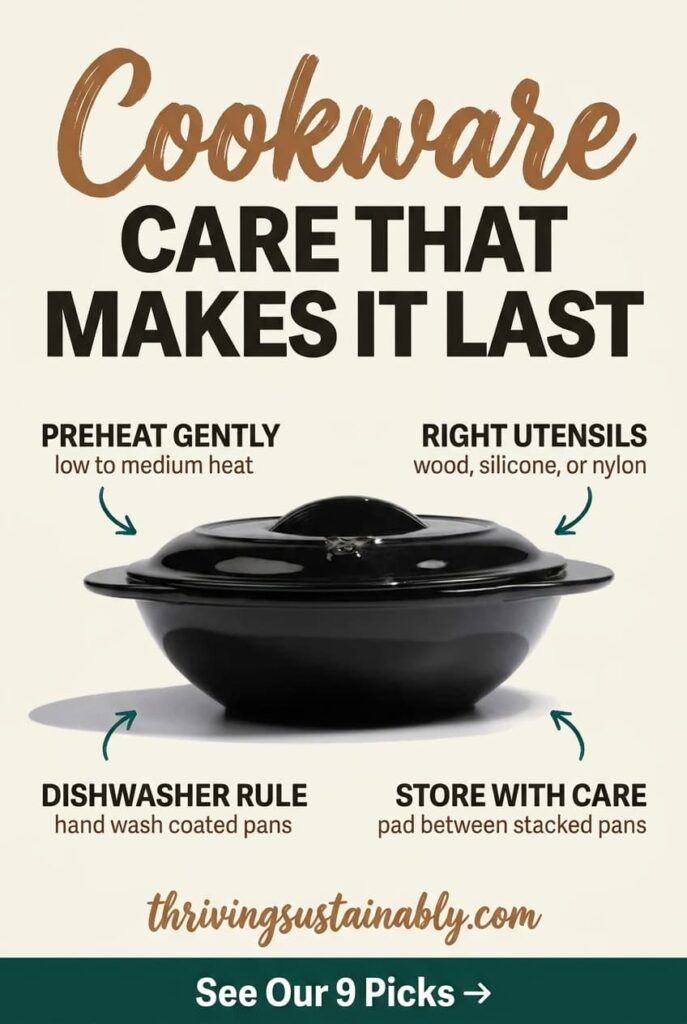
A safe pan only stays safe if you treat it right. A few simple habits keep every material in this guide performing for years instead of ending up in the donate pile.
- Preheat gently. Bring pans up to temperature on low to medium heat. High, empty preheating is hardest on coatings and can warp thin metal.
- Use the right utensils. Wood, silicone, and nylon protect coated and enamel surfaces. Metal is fine on bare stainless, cast iron, and carbon steel.
- Follow the dishwasher rule. Stainless, pure ceramic, and enameled cast iron are dishwasher safe. Hand wash and dry cast iron and carbon steel to protect the seasoning, and hand wash coated pans to make them last.
- Store them carefully. Slip a felt pad, towel, or pan protector between stacked pans so nothing scratches, and keep cast iron and carbon steel dry so they do not rust.
FAQs About the Safest Cookware
One-piece 100% ceramic is the most inert cookware material, because it has no coating to wear off and no metal core to leach. Glass and enameled cast iron are close behind. The safest material for you also depends on how you cook, since ceramic and glass are not built for high-heat searing.
Yes, quality 18/10 or 18/8 stainless steel is safe and non-reactive for everyday cooking. A very small amount of nickel can migrate into highly acidic foods cooked for a long time, but for most meals stainless is one of the most durable safe options you can buy.
Both exist, and they are not the same. Pure 100% ceramic is fired clay with no coating and is genuinely inert. Ceramic-coated pans use a thin mineral coating over metal that is PFAS-free but still wears over time. Read the label for “100% ceramic” versus “ceramic-coated.”
HexClad uses a laser-etched stainless surface with a PTFE nonstick set into the valleys, so despite the steel it still relies on a PFAS coating. Caraway is different: its coating is a PFAS-free mineral ceramic, which is why we score Caraway a 2 and treat any PTFE-coated pan as a material to avoid.
Yes. Le Creuset enameled cast iron has a porcelain-enamel cooking surface that is inert and non-reactive, so food touches only glassy enamel, not bare metal or any coating. It scores a 1 out of 10 for plastic in our directory.
PFOA, the chemical behind the original Teflon health concerns, was phased out of U.S. nonstick production by 2015. Today’s Teflon is PTFE, which is still a PFAS and can release particles and fumes if overheated or scratched. Choosing cookware with no fluorinated coating avoids the question entirely.
It depends on the material. Stainless steel, pure ceramic like Xtrema, and enameled cast iron are dishwasher safe. Bare cast iron and carbon steel should be hand washed and dried to protect their seasoning, and most ceramic-coated pans last longer with gentle hand washing.
Most professional cooks lean on stainless steel, carbon steel, and cast iron, the same inert materials at the top of this guide. They favor pans that take high heat and last for years over coated nonstick, which they treat as a limited-life tool for eggs and delicate fish.
A scratched PTFE nonstick pan is worth replacing, because scratching can release coating particles into food and expose the metal beneath. With a PFAS-free ceramic-coated pan, a badly worn surface means it has reached the end of its life. Inert pans like ceramic, stainless, and cast iron never have this problem.
The Verdict: Our #1 Safest Cookware Pick
Our number one safest cookware pick is the Xtrema pure ceramic skillet, a one-piece ceramic pan with no coating and no metal core. Pick the material first, and an inert surface like ceramic, stainless, or enameled cast iron gives you a pan that leaches nothing and lasts for years, which beats any coating over the long run.
You do not need to replace your whole kitchen this weekend. Start with the pan you use every day, choose a safe material that fits how you cook, and let the rest follow over time. If you want the lowest-plastic surface with no coating questions, the Xtrema pure ceramic skillet is the pick. For one pot that does braises, soups, and bread for decades, the Le Creuset Dutch oven earns its price. When money is tight, a Lodge cast iron skillet is the easiest first swap you can make. And if you are not ready to give up nonstick, the PFAS-free Caraway is the honest coated option, as long as you treat it as the consumable it is.
📚 References
- Agency for Toxic Substances and Disease Registry. (2024). PFAS in the U.S. population. U.S. Centers for Disease Control and Prevention. https://www.atsdr.cdc.gov/pfas/data-research/facts-stats/index.html
- Caraway Home. (n.d.). Our materials. https://www.carawayhome.com/our-materials
- Ecology Center. (n.d.). What’s cooking? Healthy Stuff Lab report. https://www.ecocenter.org/our-work/healthy-stuff-lab/reports/whats-cooking
- Field Company. (n.d.). How Field skillets are made. https://fieldcompany.com/pages/how-field-skillets-are-made
- Lodge Cast Iron. (n.d.). Nontoxic cookware: cast iron made without PFAS. https://www.lodgecastiron.com/blogs/story/non-toxic-cookware-cast-iron-made-without-pfas
- Fang, C., & Tang, Y. (2022). Microplastics and nanoplastics released from scratched non-stick cookware. Science of the Total Environment (University of Newcastle and Flinders University). Reported by ScienceAlert. https://www.sciencealert.com/one-small-crack-on-a-teflon-pan-can-release-thousands-of-plastic-particles
- Made In Cookware. (n.d.). Stainless Clad frying pan. https://madeincookware.com/products/stainless-steel-frying-pan/10-inch
- Our Place. (n.d.). Always Pan. https://fromourplace.com/products/always-essential-cooking-pan
- U.S. Environmental Protection Agency. (2024). PFAS explained. https://www.epa.gov/pfas/pfas-explained
- Xtrema. (2026). Product testing on ceramic cookware. Ceramcor. https://xtrema.com/pages/product-testing
More Non-Toxic Kitchen Reads
- Is Silicone Safe to Cook With? What to Know Before You Buy
- Are Plastic Cutting Boards Safe? What You Need to Know Before You Chop
- Does Silicone Have Microplastics? What the Science Actually Shows
- How to Avoid Microplastics: 15 Simple Everyday Tips
- How to Tell If Plastic Is BPA-Free: Your 2026 Cheat Sheet