
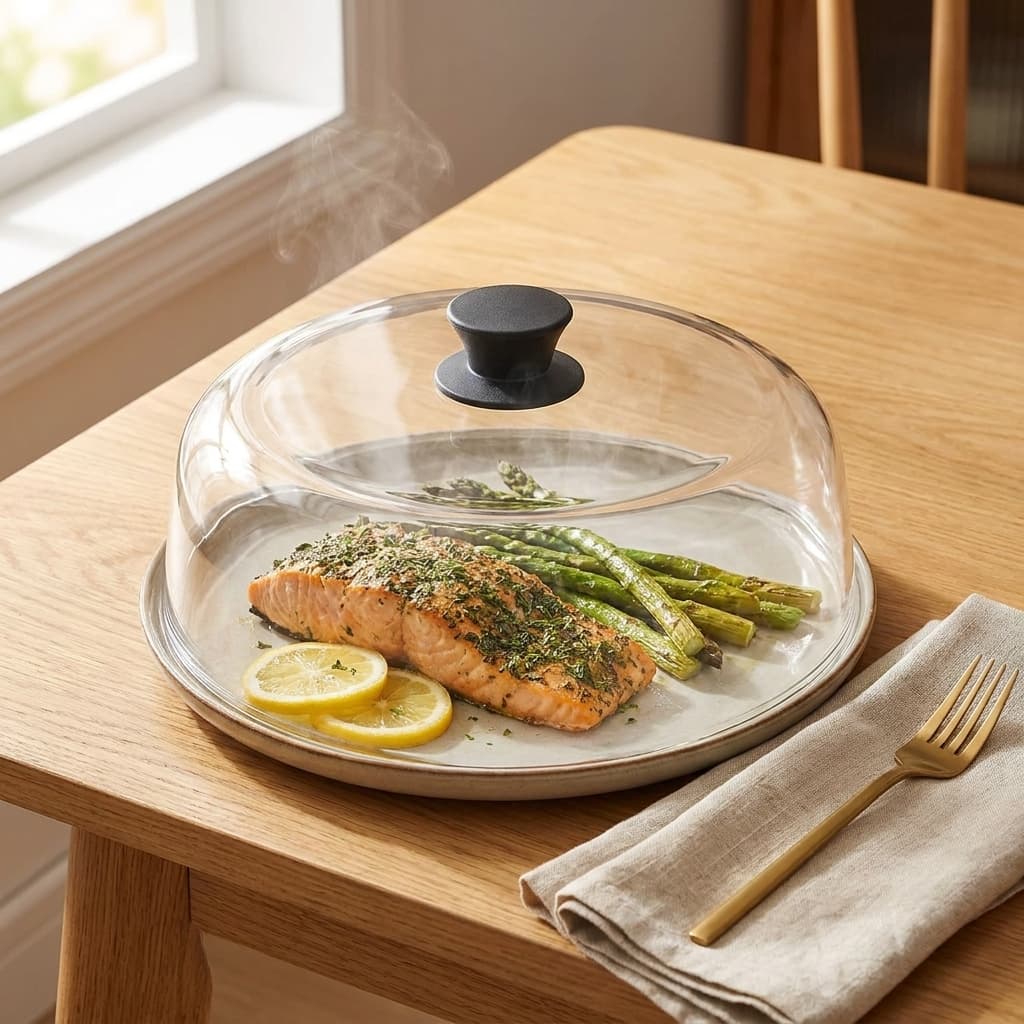
If you’ve been microwaving leftovers under a plastic splatter cover for years, here’s a stat that might ruin your lunch: heating plastic in the microwave can release up to 4.22 million microplastic particles per square centimeter into your food. That’s not a typo. The same convenience that’s made plastic microwave covers a kitchen staple for decades is also leaching BPA, phthalates, and microplastics straight onto your dinner.
The good news? Switching is easy. A plastic-free microwave cover is any reusable cover made from non-toxic materials like borosilicate glass, tempered glass, ceramic, or food-grade silicone. They keep your microwave splatter-free, heat your food more evenly, and won’t leach a single chemical, no matter how often you reheat.
Below, you’ll find the seven best plastic-free, non-toxic microwave covers for 2026, ranked by safety, durability, and real-world performance. I’ll also walk you through what to look for, what to avoid, and which materials actually live up to the marketing.
Reasons for Using Microwave Food Covers
We usually remember microwave covers only when we’re cleaning up stubborn spaghetti sauce splatters. But a good cover does more than just keep your microwave clean. It can actually affect how your food cooks. Here are four reasons why a quality microwave cover deserves a place in your kitchen.
Splatter Protection
Microwave covers prevent food splatters from coating the interior of your microwave, reducing cleanup time and maintaining appliance hygiene. Without proper coverage, oils and sauces can splatter onto microwave walls, creating an environment that fosters bacterial growth and unpleasant odors.
Even Heating
Microwave-safe covers help lock in natural moisture, preventing food from drying out and maintaining its texture. This is especially useful when reheating leftovers, which can easily become tough or unappetizing if not properly rehydrated.
Moisture Retention
Microwave-safe covers help retain natural food moisture, preventing dehydration and maintaining texture. This is especially important for reheating leftovers, where moisture loss can make food tough and unappetizing.
Ventilation System Benefits
Quality covers feature strategic vents that allow steam to escape while maintaining optimal moisture levels. This ventilation system prevents pressure buildup that can cause food to explode or become overcooked.
What’s the Best Material for Microwave Covers?
The best microwave cover materials prioritize safety, durability, and performance. Glass options offer the highest safety standards, while quality silicone provides flexibility and convenience.
Borosilicate Glass – Top Choice
Borosilicate glass represents the gold standard for microwave covers. This laboratory-grade material withstands extreme temperature changes, is completely non-reactive, and offers lifetime durability. It won’t absorb odors or stains and won’t release any harmful substances.
Tempered Glass – Excellent Safety
Tempered glass provides exceptional durability and safety features. If broken, it shatters into small, less dangerous pieces rather than sharp shards. This makes it ideal for busy households with children while maintaining all the safety benefits of glass.
Food-Grade Silicone – Convenient Option
Platinum-grade silicone offers flexibility and space-saving storage through collapsible designs. Look for silicone rated for temperatures above 450°F with FDA and LFGB certifications. Avoid cheap silicone that may contain fillers or toxic additives.
Materials to Avoid
Never use regular plastic covers, melamine-based products, or untested silicone. These materials can leach harmful chemicals, release microplastics, or contain toxic additives that compromise food safety.
Health and Safety Concerns of Microwave Covers
Plastic microwave covers don’t just sit on top of your food. They actively shed chemicals into it, especially when the microwave heats them up. Here’s a quick look at the four worst offenders to know about, what they do to your body, and where they hide.
Environmental Impact of Plastic Microwave Covers
The damage doesn’t stop at your dinner plate. Plastic microwave covers are part of a much bigger pollution story that affects oceans, soil, and the food chain we all rely on.
🌊 Plastic Pollution and Ecosystem Harm
Millions of plastic microwave covers get tossed every year, and most end up in landfills, rivers, or oceans. Over time, they break apart into smaller fragments that release microplastics into soil and water. Wildlife ingests these particles, ecosystems get disrupted, and the plastic eventually loops right back into our food chain.
🏭 Carbon Footprint of Production
Making plastic covers takes petroleum, heavy machinery, and a lot of energy from start to finish. That means a hefty carbon footprint for a product that often lasts only a few months. Multiply that across millions of covers, and the climate impact adds up fast.
🐠 Microplastics in the Food Chain
Discarded plastic covers fragment into microplastics that enter food chains. Marine animals eat the particles, which can cause digestive blockages, malnutrition, and even death. Those same microplastics make their way back to humans through the seafood we eat.
🌱 Sustainable Alternatives
Switching to glass, ceramic, or high-quality silicone covers dramatically shrinks your plastic footprint. These materials are recyclable, biodegradable, or infinitely reusable, which means they actually align with how a healthy circular economy is supposed to work.
How to Choose a Safe Microwave Cover
Not every “non-toxic” cover on the market is actually safe. Use this quick yes/no checklist to spot the real thing and skip the greenwashed marketing.
✅ What to Look For
- Borosilicate or tempered glass that’s chemically inert and won’t leach anything into your food, no matter how hot
- Platinum-grade silicone with FDA approval and LFGB certification (BPA-free is a given, not a bonus)
- Food-grade ceramic that’s microwave-safe and free from lead glazes
- Universal-fit designs with wide rims that cover your most-used bowls and plates
- A multi-year warranty showing the brand stands behind its product
- Third-party safety certifications and lab testing results published right on the brand’s site
- Thermal shock resistance in glass covers (so they don’t crack during use)
- Long-lasting flexibility in silicone covers (no warping or stiffening over time)
❌ What to Avoid
- Any regular plastic cover, even ones labeled “microwave-safe” (the label doesn’t mean what you think it means)
- Melamine-based products, which can leach formaldehyde when heated
- Cheap or no-name silicone that smells off, feels sticky, or leaves a film on your food
- Ceramic with lead glazes or unmarked decorative coatings (especially imported novelty pieces)
- Brands that won’t tell you what their cover is made of (if the material list is vague, walk away)
- “BPA-free” claims with no backup certifications to prove it
- Covers that don’t fit your bowls (if it’s annoying to use, you won’t use it, and you’re back to plastic wrap)
- Anything that warps, stains, or smells after a few uses, that’s a sign the material is breaking down
7 Best Plastic-Free Microwave Covers
The covers below are organized by material type, starting with the most plastic-free options and working toward hybrid designs. Each one has been researched for exact materials, so you know precisely what contacts your food and what doesn’t. Fully plastic-free covers carry a teal band. Covers with food-safe silicone components carry a terracotta band and are labeled accordingly in the material breakdown.
No traditional plastic appears in any product on this list.
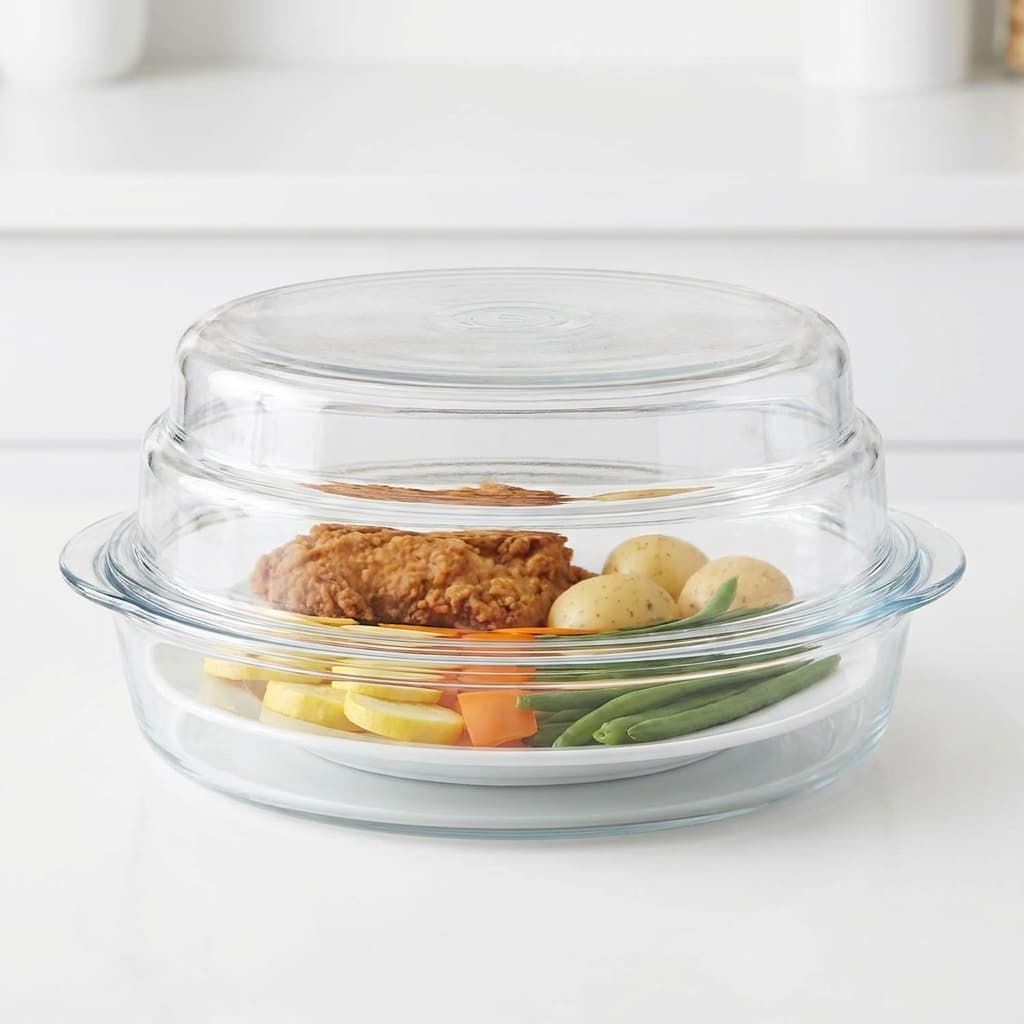
2-in-1 borosilicate glass cover and baking dish
$37
The Cuchina Safe is the only cover on this list made entirely from borosilicate glass. No silicone knob, no plastic anywhere. Flip it over and it becomes a 2-quart baking dish, oven-safe to 450°F. The concentric rings help it stay seated on most standard plates, and the scalloped edges let steam escape during heating.
At 2.65 lbs, it is heavier than every other option here, and the flat design means it only works on plates, not bowls. You will need an oven mitt to lift it since there is no separate handle. For anyone who wants zero compromise on materials, this is the one.
Body
Borosilicate Glass
✓ Plastic FreeVenting Edges
Borosilicate Glass
✓ Plastic FreeGrip Rim
Borosilicate Glass
✓ Plastic FreeBaking Dish Side
Borosilicate Glass
✓ Plastic FreePros
- Zero silicone or plastic anywhere in the product
- 2-in-1 doubles as a 2-quart baking dish
- Oven-safe to 450°F and freezer-safe
- Won’t absorb odors or stain like plastic
Cons
- Heavy at 2.65 lbs
- Flat design works on plates only, not bowls
- No knob, so an oven mitt is needed to handle it
The only cover here with zero silicone anywhere. If fully plastic-free means every single material, not just most of them, this is the one to get. The most uncompromising plastic-free microwave cover on this list.
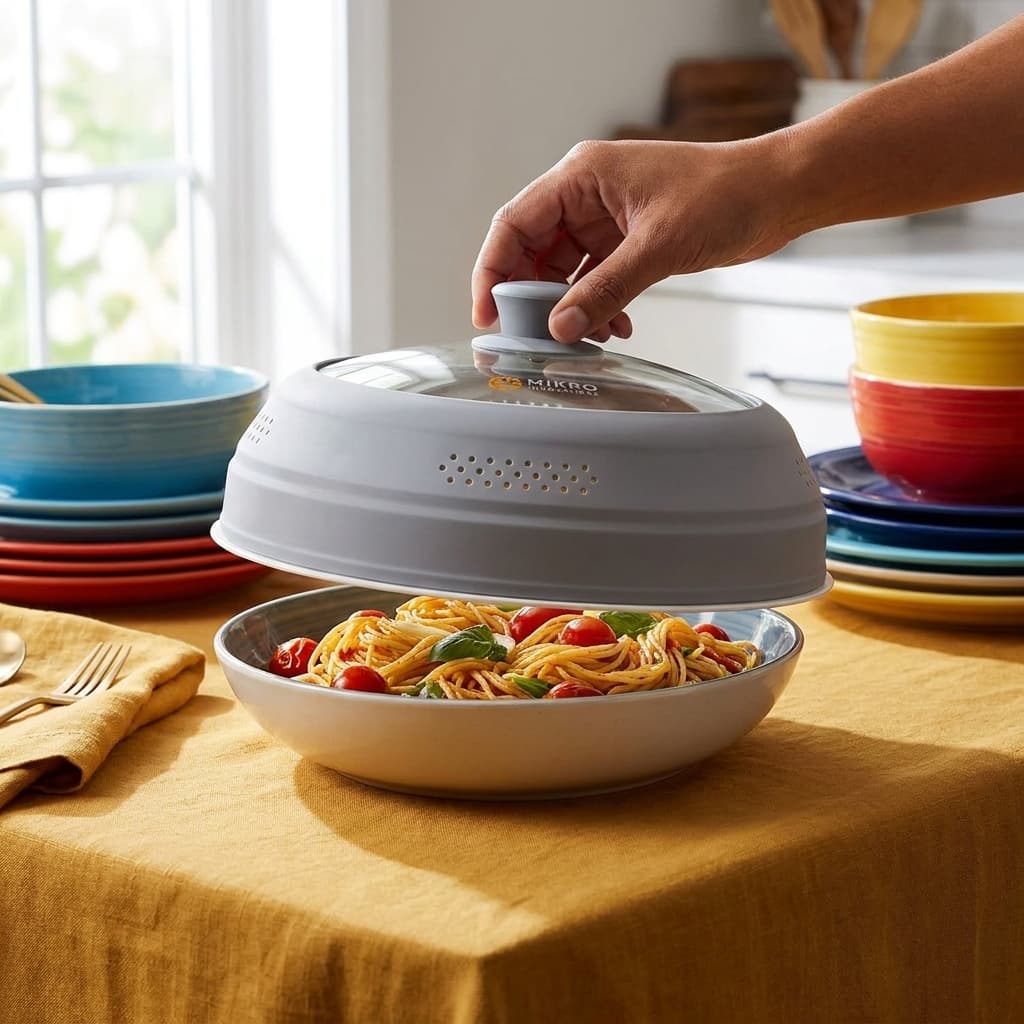
Borosilicate glass cover, designed in the USA
$26
The Mikro Innovations cover is a clean, no-frills borosilicate glass cover at 10.5 inches. The food-safe silicone knob stays cool and grips easily, and the vent hole at the top keeps food from drying out. Designed in the USA in a facility that specializes in high-performance glass.
Borosilicate glass is more resistant to thermal stress than tempered glass, and the surface stays clear without clouding or discoloring over time, which is a common complaint with cheaper glass covers. A simple, reliable option with good material quality.
Body
Borosilicate Glass
✓ Plastic FreeKnob
Food-Safe Silicone
◎ Food-Safe SiliconeVent Hole
Borosilicate Glass
✓ Plastic FreeBase
Borosilicate Glass
✓ Plastic FreePros
- Borosilicate glass stays clear, resists thermal stress
- Designed in the USA
- Simple, minimal design with no extra components
- Dishwasher safe, won’t cloud over time
Cons
- One size only (10.5″)
- Single vent hole vs. dual on some competitors
- Silicone knob
Clean borosilicate glass that holds up well over time. A solid, straightforward option if you want good material quality without a lot of extras. A dependable everyday cover that keeps things simple.
Borosilicate glass cover, made in the USA
$30 confirm before publishing
The Le’raze cover is made from borosilicate glass, designed and produced in the USA in a facility that specializes in high-performance glass. The dual vent holes provide more balanced steam release than single-hole covers, which helps food heat more evenly without getting soggy.
The food-safe silicone knob stays cool throughout heating, and the glass surface stays clear after repeated dishwasher cycles without clouding or staining. BPA-free and lead-free throughout. A strong choice if US manufacturing matters to you.
Body
Borosilicate Glass
✓ Plastic FreeKnob
Food-Safe Silicone
◎ Food-Safe SiliconeDual Vent Holes
Borosilicate Glass
✓ Plastic FreeBase
Borosilicate Glass
✓ Plastic FreePros
- Borosilicate glass designed and made in the USA
- Dual vent holes for more even steam release
- BPA-free and lead-free
- Stays clear after repeated dishwasher cycles
Cons
- Silicone knob
- Primarily one size (10.5″)
- Very similar to Mikro Innovations, choice comes down to price
Strong borosilicate glass made in the USA with dual venting as a practical bonus. The best pick if US manufacturing is a priority for you.
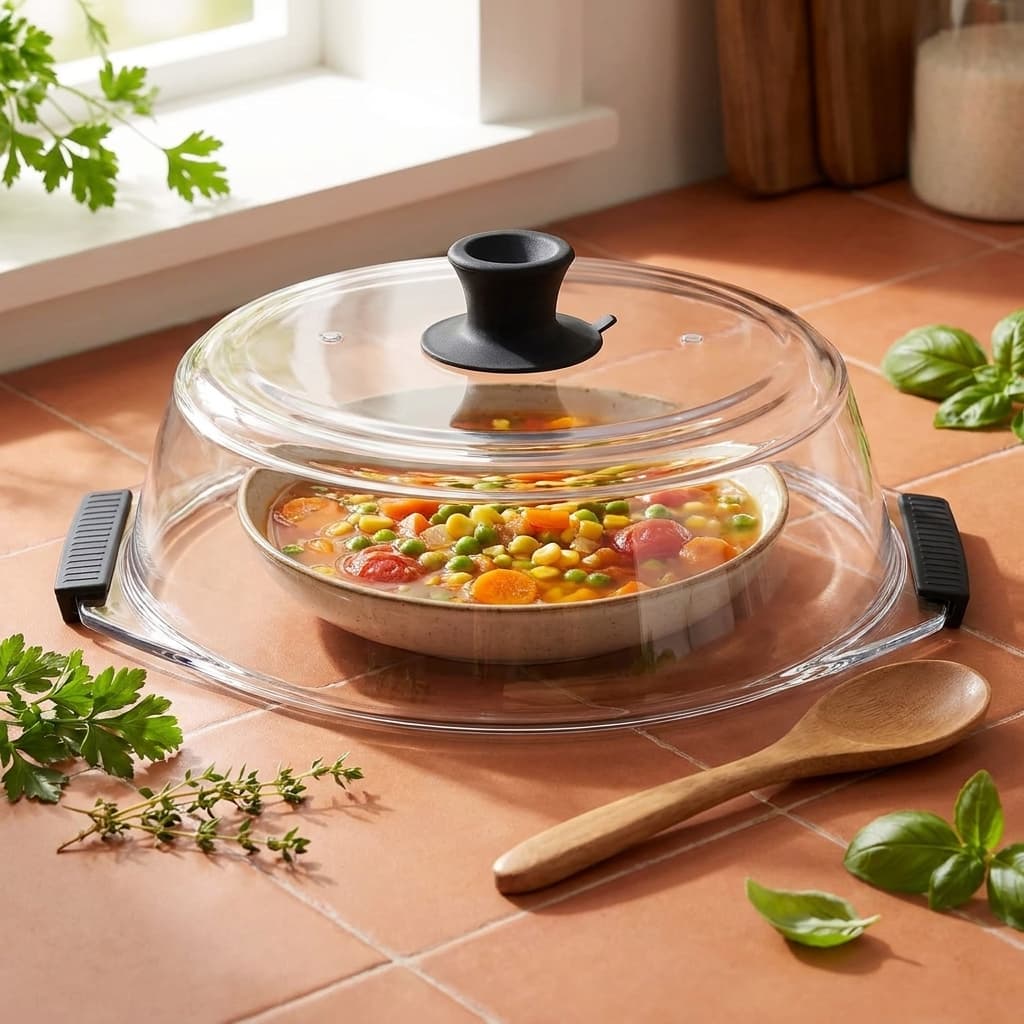
Tempered glass cover with the best size range on this list
$40
The Bezrat offers the widest size range of any cover here, from 9.5 to 12 inches, so you are not stuck guessing whether it will fit your plates. The dome is tall enough that it won’t press into heaped food. Select models collapse flat for storage, which is practical in smaller kitchens.
The food-safe silicone knob stays cool throughout heating and gives a firm grip on removal. With over 5,000 customer reviews, it has a solid track record that most newer covers on this list cannot match.
Body
Tempered Glass
✓ Plastic FreeKnob
Food-Safe Silicone
◎ Food-Safe SiliconeVent Holes
Tempered Glass
✓ Plastic FreeBase
Tempered Glass
✓ Plastic FreePros
- Four sizes available (9.5″, 10.5″, 11.5″, 12″)
- Collapsible models store flat
- Tall dome clears heaped food without touching it
- Strong customer record with 5,000+ reviews
Cons
- Silicone knob means not fully plastic-free
- Heavier than plastic alternatives
- Not oven-safe
A reliable everyday cover with the best size range on this list. The silicone knob is food-safe and stays well clear of your food. The best all-around choice for most households.
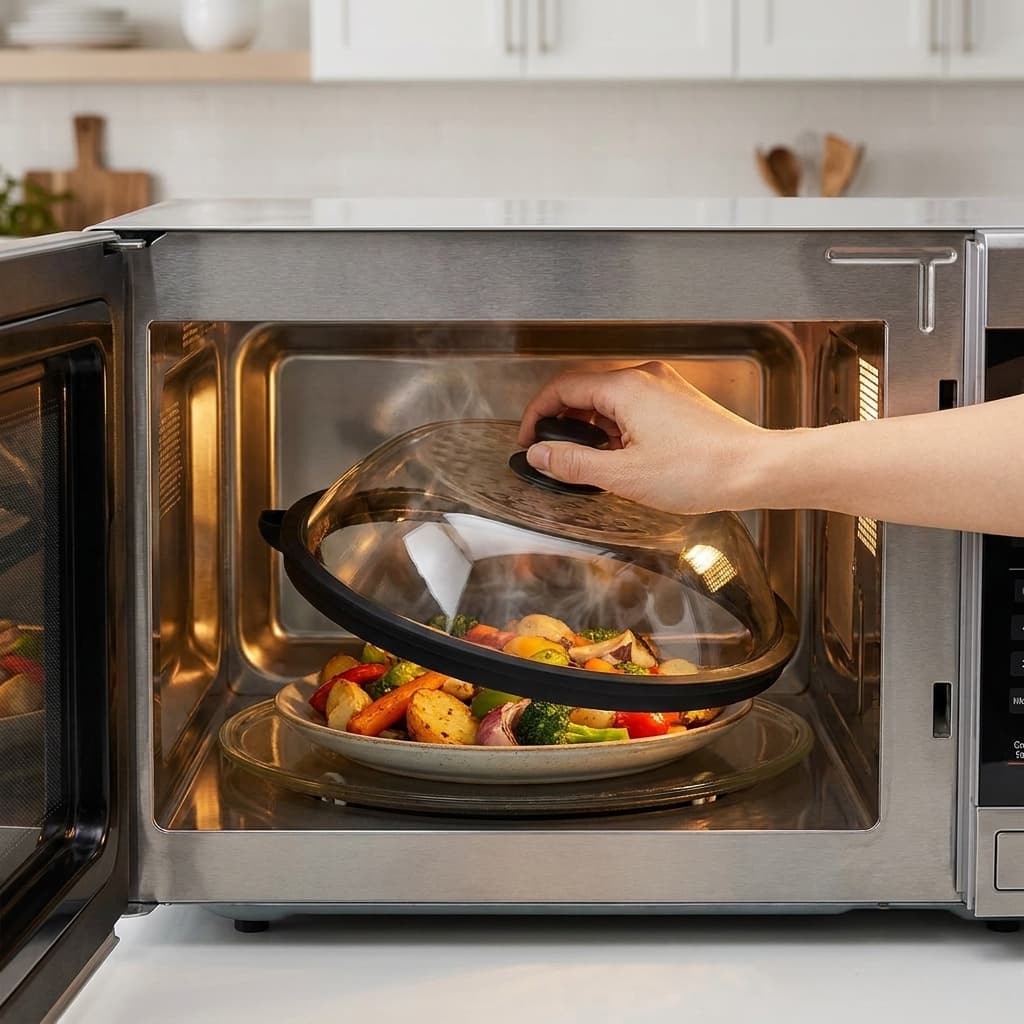
Tempered glass with a removable silicone rim
$41
The OEC stands out for its removable silicone rim, a detail you won’t find on most covers. Pull it off for cleaning and you can wash the glass top and the silicone rim separately. Three sizes are available at 9, 11, and 12.5 inches.
It doubles as a pot lid on the stovetop, which makes it more versatile than most options here. The easy-grip silicone handle stays cool throughout heating. Worth noting: with a rim and a handle, this cover has more silicone contact overall than the others in this section.
Body
Tempered Glass
✓ Plastic FreeRim (Removable)
Food-Safe Silicone
◎ Food-Safe SiliconeHandle
Food-Safe Silicone
◎ Food-Safe SiliconeVent Holes
Tempered Glass
✓ Plastic FreePros
- Removable silicone rim for easy separate cleaning
- Three sizes (9″, 11″, 12.5″) for different needs
- Works as a pot lid on the stovetop
- Easy-grip handle stays cool during heating
Cons
- More silicone than most glass covers (rim and handle)
- Most expensive at the large end ($70 for 12.5″)
- Silicone rim needs to be fully dry before storing
Worth it if you want one cover that also works on the stovetop. The removable rim is a practical detail you won’t find on anything else here. The most versatile glass cover on this list.
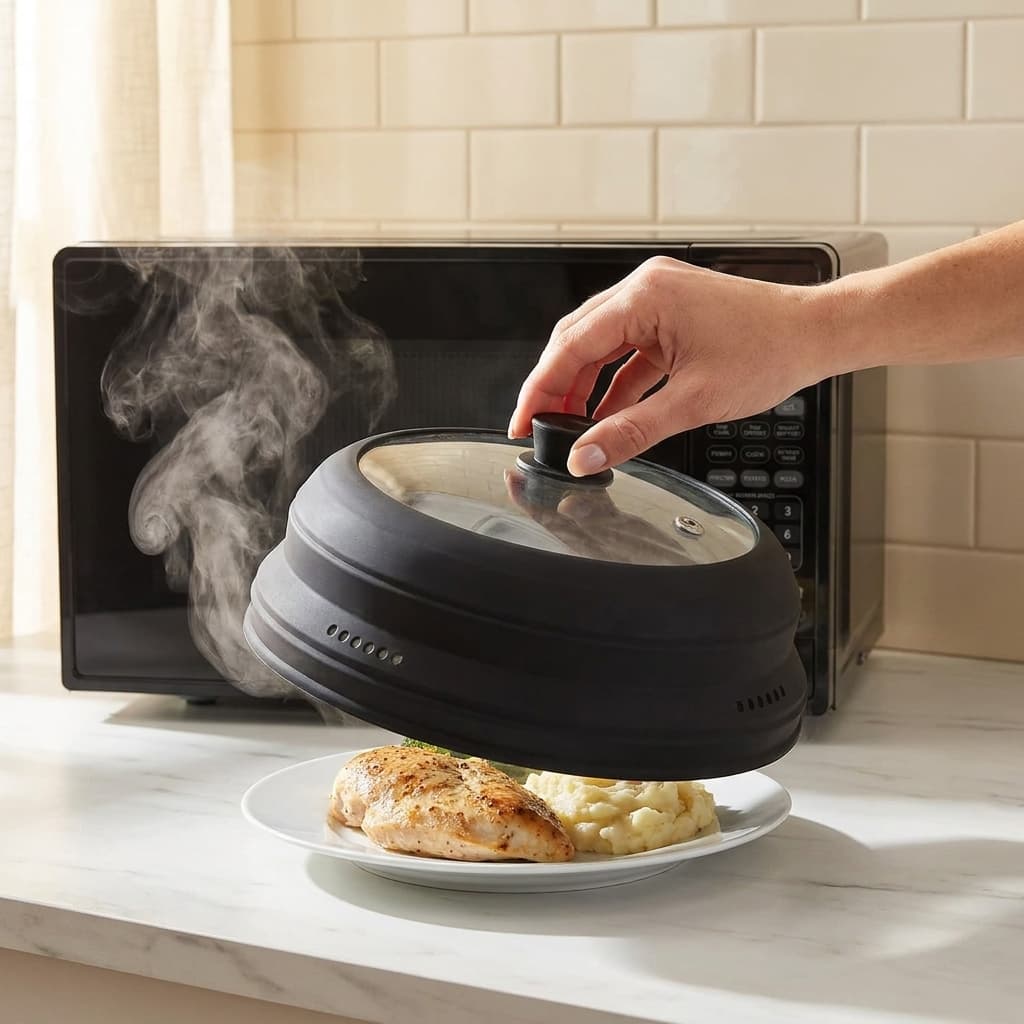
Tempered glass cover, best value on this list
$29
The Godinger is the most affordable glass cover here at $28. Tempered glass body, a heat-resistant silicone knob, and a smart vent design for steam release. The silicone knob means you can lift it right after heating without waiting for it to cool.
It works as a pot lid on the stovetop as well as in the microwave, and collapsible models are available for tighter storage situations. A straightforward cover that does what it needs to do without overcomplicating things.
Body
Tempered Glass
✓ Plastic FreeKnob
Food-Safe Silicone
◎ Food-Safe SiliconeVent System
Tempered Glass
✓ Plastic FreeBase
Tempered Glass
✓ Plastic FreePros
- Most affordable glass cover on this list ($28)
- Works as a pot lid on the stovetop
- Silicone knob allows immediate safe handling after heating
- Collapsible options available
Cons
- Tempered glass, not borosilicate
- Lighter construction than premium options
- Silicone knob
The best value glass cover on this list. A good entry point for replacing plastic covers without spending much. A smart, practical choice for budget-conscious households.
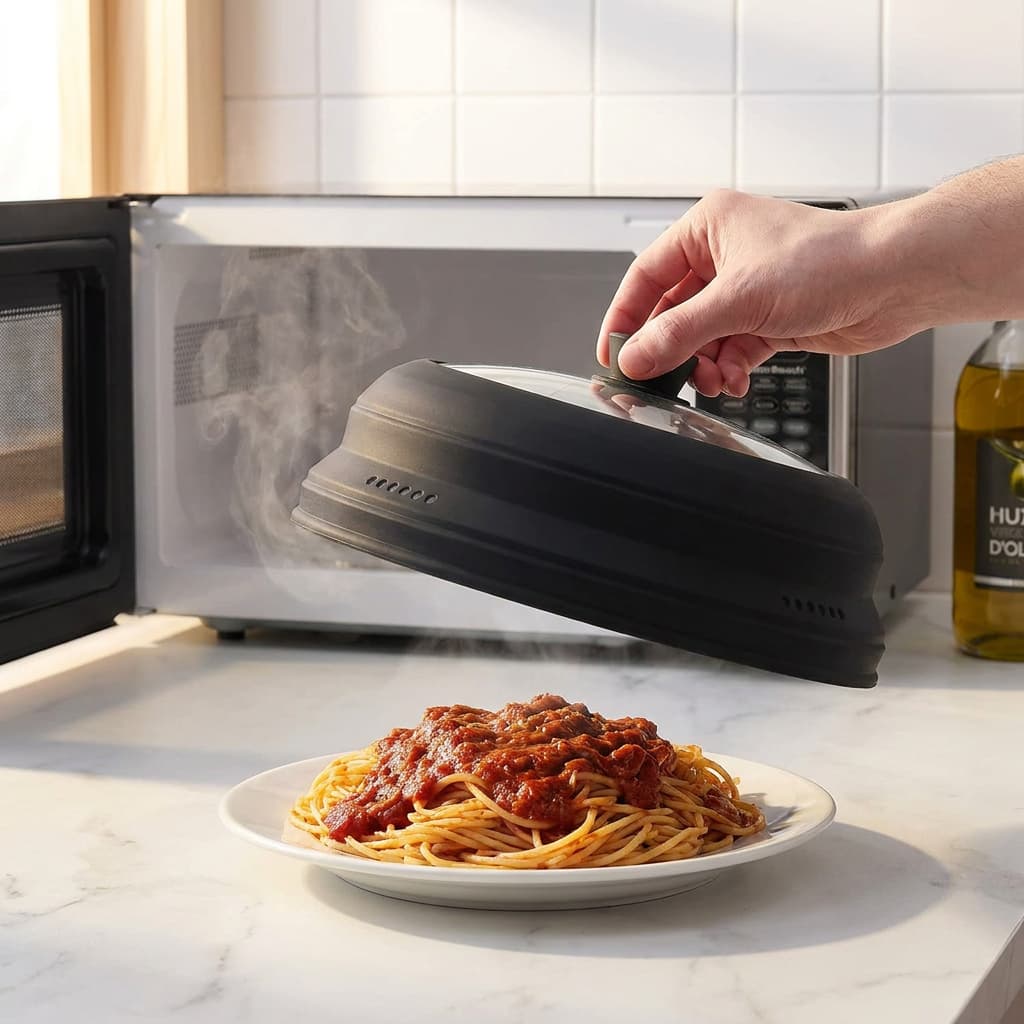
Tempered glass top with a collapsible food-grade silicone body
$36
The EZY ACTIVE takes a different approach: a tempered glass top sits on a food-grade silicone body that collapses flat when not in use. The ventilation system has 98 holes total, 2 on top and 96 along the sides on the gray model, specifically designed to prevent condensation and keep food from coming out soggy.
It fits plates and bowls from 6 to 12 inches and comes with a 5-year warranty. The silicone body is more substantial than just a knob, so this cover has more silicone presence overall than the glass covers above. Worth knowing before you buy.
Glass Top
Tempered Glass
✓ Plastic FreeCollapsible Body
Food-Safe Silicone
◎ Food-Safe SiliconeHandle
Food-Safe Silicone
◎ Food-Safe SiliconeVent Holes
Tempered Glass
✓ Plastic FreePros
- 98-hole venting system prevents soggy food
- Collapses flat for compact storage
- Fits 6–12″ plates and bowls
- 5-year warranty, heat resistant to 450°F
Cons
- Silicone makes up the full collapsible body, not just a knob
- Must be completely dry before collapsing to prevent mold
The best choice if food coming out watery or soggy is a recurring problem. The venting system is genuinely different from anything else on this list. Pick this one if you microwave a lot of soups, stews, or high-moisture foods.
Maintenance and Care for Long-Term Use
Glass Cover Care
Clean glass covers with warm, soapy water immediately after use to prevent food buildup. For stubborn stains, soak the area in a baking soda solution before scrubbing with non-abrasive sponges. Avoid extreme temperature changes that could cause thermal shock.
Silicone Cover Maintenance
Wash silicone covers by hand or in the dishwasher using mild detergent. To remove odors, soak in white vinegar solution overnight. Inspect regularly for tears or degradation that could compromise safety.
Storage Best Practices
Store covers in dry, well-ventilated areas to prevent moisture accumulation. Stack glass covers with protective padding to avoid scratches. Collapsible covers should be completely dry before folding to prevent mold growth.
When to Replace
Replace glass covers if they develop chips, cracks, or stress marks. Silicone covers should be replaced if they become sticky, discolored, or produce tears. Quality covers should last 5-10 years with proper care and maintenance.
Are Microwave Covers Safe?
The safety of microwave covers depends entirely on the material used. Traditional plastic microwave covers pose significant health risks due to chemical leaching and microplastic contamination when heated. However, covers made from safe materials, such as borosilicate glass, tempered glass, and food-grade silicone, are entirely safe for use in the microwave.
Plastic Cover Safety Concerns
Plastic covers contain harmful chemicals, including BPA, phthalates, and PFAS, that leach into food when heated. Even “microwave-safe” plastic covers can release microplastic particles; studies show that some containers release up to 4.22 million microplastic particles per square centimeter when heated.
Safe Material Options
Glass and ceramic covers are chemically inert, meaning they won’t release any harmful substances into your food regardless of temperature. Quality food-grade silicone is also safe; however, some inexpensive silicone products may contain fillers or additives.
FAQs on Plastic-Free Microwave Covers
Yes, you can use a plate as a microwave cover, as long as it’s microwave-safe. Avoid plates with metallic rims or gold trim, since metal can spark inside the microwave. A plain ceramic or glass plate flipped upside down over your bowl works just like a real splatter cover.
Food-grade silicone microwave covers are generally safe when they’re made from 100% pure platinum-cured silicone (not the cheap filler-blended kind). Look for FDA-approved or LFGB-certified covers, and skip silicone that smells off, feels sticky, or leaves a film on your food. Quality silicone can handle high heat without breaking down or leaching chemicals.
Most non-toxic microwave covers (glass, silicone, ceramic) are dishwasher safe, but a quick rinse with warm soapy water works just as well. Skip abrasive scrubbers, which can scratch glass and leave grooves in silicone where food gets stuck. For stuck-on splatters, soak the cover in warm water for a few minutes before wiping clean.
The healthiest way to cover food in the microwave is with a borosilicate or tempered glass cover. Glass doesn’t leach chemicals, doesn’t absorb odors, and handles high heat without warping. Ceramic plates and food-grade silicone covers are great backup options. Skip plastic wrap and plastic covers, which can release BPA and microplastics into your food.
Plastic microwave covers aren’t the safest choice. Even covers labeled “microwave-safe” can release BPA, phthalates, and microplastics when heated, especially with fatty or acidic foods. The FDA and EWG both recommend switching to glass, ceramic, or food-grade silicone alternatives to cut down on chemical exposure
This Has Been About Plastic-Free Microwave Covers
Choosing a safe, plastic-free microwave cover is crucial for protecting your family’s health while reducing environmental impact. Whether you select borosilicate glass for maximum safety, tempered glass for durability, or food-grade silicone for convenience, these alternatives eliminate exposure to BPA, microplastics, and toxic chemicals.
The evidence is clear: plastic microwave covers pose significant health risks through chemical leaching and microplastic contamination. By investing in quality, BPA-free alternatives, you’re making a smart choice for both immediate food safety and long-term health protection. These covers offer superior performance, durability, and peace of mind that plastic cannot match.
📚 References
- U.S. Food and Drug Administration. (2024). Bisphenol A (BPA): Use in food contact application. https://www.fda.gov/food/food-packaging-other-substances-come-contact-food-information-consumers/bisphenol-bpa-use-food-contact-application
- Environmental Working Group. (2024). BPA and other endocrine-disrupting chemicals. https://www.ewg.org/areas-focus/toxic-chemicals/bpa
- Hussain, K. A., et al. (2023). Assessing the release of microplastics and nanoplastics from plastic containers and reusable food pouches: Implications for human health. Environmental Science & Technology, 57(26), 9782–9792. https://pubs.acs.org/doi/10.1021/acs.est.3c01942
- U.S. Environmental Protection Agency. (2024). Per- and polyfluoroalkyl substances (PFAS). https://www.epa.gov/pfas
- Centers for Disease Control and Prevention. (2024). Phthalates factsheet. https://www.cdc.gov/biomonitoring/Phthalates_FactSheet.html
- Eriksen, M., et al. (2023). A growing plastic smog, now estimated to be over 170 trillion plastic particles afloat in the world’s oceans. PLOS ONE. https://journals.plos.org/plosone/article?id=10.1371/journal.pone.0281596
More Non-Toxic Kitchen Guides You’ll Love
- Microplastics in Food: What’s Really on Your Plate
- How to Avoid Microplastics in Food
- Are Plastic Cutting Boards Safe?
- Best Plastic-Free Water Bottles
- Plastic-Free Coffee Makers Worth the Switch
- Sustainable Food Packaging: A Guide for Home Use
- Plastic-Free Living: A Beginner’s Guide
- Eco Swaps to Reduce Plastic in Your Home
We’ve scored every kitchen product on plastic — see them in the Kitchen directory.