
Key Takeaways
- A plastic-free coffee maker helps you avoid exposure to chemicals like BPA and microplastics in your daily brew.
- Choosing stainless steel, glass, or ceramic designs ensures your coffee stays pure and flavorful.
- Making the switch to a plastic-free coffee maker also reduces single-use waste and supports a more sustainable lifestyle.
I used to love my old coffee maker—the satisfying click of the plastic pod snapping into place, the quick buzz, and that instant cup of coffee. That convenient plastic machine was one of the first things to go when I started paying attention to what was touching my coffee, and it set me on the path to finding a plastic-free coffee maker.
And it turns out I wasn’t wrong to ditch it. The fix is a brewer whose whole hot-water path is stainless steel, glass, or ceramic, because heated plastic parts shed microplastic particles into every cup.
When hot water passes through plastic components, it can release hundreds to thousands of microplastic particles per liter, including coffee brewed in machines with plastic reservoirs, tubing, or pods. Even more concerning, BPA leaches 55 times faster into hot, acidic coffee than into cool water, meaning your morning brew could be delivering a concentrated dose of hormone-disrupting chemicals along with your caffeine.
Since I drink coffee every day, I decided it was time to upgrade not just for flavor but also for my health. In this guide, we’ll take a closer look at plastic-free coffee makers, what to look for (and avoid), and why material matters in your morning brew.
Why Choose a Plastic-Free Coffee Maker?
A plastic-free coffee maker removes the plastic reservoirs, tubing, and pod holders that shed microplastics into hot water, and it cuts the single-use pod waste that recycling rarely captures.
It’s easy to overlook what your coffee maker is made of—until you realize it could be dosing your daily cup with microplastics. Most conventional brewers rely on plastic components in places that heat up or come into direct contact with water: the reservoir, internal tubing, pod holders, or even the brewing chamber itself.
And that’s where the problem starts.
Microplastics + Heat = Daily Exposure
Exposure to high temperatures, such as boiling water or steam, can release microplastics and other chemical additives into whatever it touches, including your coffee. These particles are small enough to slip through water filters, pass into your cup, and be swallowed with every sip. Over time, this exposure accumulates, especially if you use the same plastic-based coffee maker on a daily basis.
While we’re still learning about the full health implications, early research has linked microplastics to potential inflammation, hormone disruption, and organ accumulation. It’s not exactly the kind of pick-me-up most of us want in the morning.
Beyond the Mug: The Environmental Impact
Even if you’re not worried about personal exposure, there’s the broader issue of waste. Most traditional coffee machines are composed of plastic parts that aren’t recyclable, and single-use pods exacerbate the problem. Globally, less than 9% of plastic waste is recycled, and a significant portion of what we discard ends up in landfills, incinerators, or ecosystems.
By choosing a coffee maker made from plastic-free materials like stainless steel, Glass, or ceramic, you’re not just protecting your health. You’re also reducing the demand for fossil fuel-based plastics and cutting off one more waste stream before it starts.
Health Concerns and Microplastic Exposure
Plastic coffee maker parts can release microplastics, nanoplastics, and chemical additives like BPA, phthalates, and PFAS into hot, acidic coffee. Early research links that exposure to inflammation, oxidative stress, and hormonal disruption.
When you’re brewing coffee, you’re not just heating water; you’re heating everything it comes into contact with. And if your coffee maker has plastic components, that includes materials that can release microplastics, nanoplastics, and a range of chemical additives into your drink.
What’s Actually in Plastic Coffee Makers
Many plastics used in coffee makers, especially those in cheaper models, contain chemicals such as BPA, phthalates, and other plasticizers that help make the material flexible or heat-resistant. Others may use PVC (polyvinyl chloride) or contain PFAS, sometimes referred to as “forever chemicals,” which don’t break down easily and have been linked to long-term health effects.
Even products labeled “food-safe plastic” aren’t always safe. Heat, pressure, and acidity (hello, coffee!) can all accelerate chemical leaching, meaning you could get trace amounts of these substances in every brew. Some machines have even been found to release heavy metals, such as lead or antimony, when tested under high temperatures.
Microplastics and Nanoplastics in Your Coffee
Recent studies have shown that microplastics and nanoplastics, even smaller plastic particles, can shed from heated plastic parts and migrate into water. Once ingested, these tiny particles may pass through the gut barrier and enter the bloodstream, where they can build up in organs over time. While research is still evolving, preliminary findings suggest connections to inflammation, oxidative stress, and hormonal disruption.
Choosing Safer Alternatives
Swapping out your plastic-based coffee maker for one made of stainless steel, Glass, or ceramic helps eliminate many risks. These materials don’t rely on chemical additives to withstand heat and won’t degrade into microparticles after months or years of use.
If you want a safer, cleaner, and more mindful brew, avoiding plastic where heat and water meet is a strong place to start.
Types of Plastic-Free Coffee Makers
Plastic-free coffee makers come in six main styles: French press, pour-over, drip machine, Moka pot, percolator, and manual espresso, with stainless steel, glass, and ceramic models that keep hot water away from plastic.
Whether you’re brewing for one or the whole household, there’s a plastic-free coffee maker to match your method. The goal is simple: choose a brewing style you love, made from materials that won’t break down under heat or expose you to microplastics.
| Brewing Method | Brewing Difficulty | Cleanup Level | Best For | Price Range |
|---|---|---|---|---|
| French Press | Easy | Moderate | Rich, full-bodied coffee | $–$$ |
| Pour-Over | Moderate | Easy | Clean, bright flavor | $–$$ |
| Drip Coffee Maker | Easy | Easy | Daily, hands-off brewing | $$–$$$ |
| Moka Pot | Moderate | Easy | Espresso-style coffee | $–$$ |
| Percolator | Moderate | Easy | Strong, classic coffee | $–$$ |
| Manual Espresso Machine | Advanced | Moderate | Espresso enthusiasts | $$–$$$$ |
French Press
The French press uses immersion brewing as a reliable and low-waste option to extract rich, full-bodied flavor. Look for versions made from stainless steel, ceramic, or borosilicate glass. Avoid models with plastic plungers, lids, or mesh frames, as these parts often come into contact with hot water.
Pour-Over Coffee
Clean, bright, and ideal for control freaks (in the best way), pour-over brewers are typically made from Glass, ceramic, or stainless steel. These materials withstand heat and don’t introduce unwanted flavors. Just keep an eye on filter holders or bases, as some include hidden plastic that comes into contact with hot water or the filter.
Drip Coffee Makers
Most standard drip machines are loaded with plastic from the water tank to the brew basket. However, some higher-end models utilize glass carafes, metal housing, and internal components to prevent plastic from entering the water path. It’s worth checking the technical specs to confirm which materials come into contact with water and steam.
Moka Pot (Stovetop Espresso)
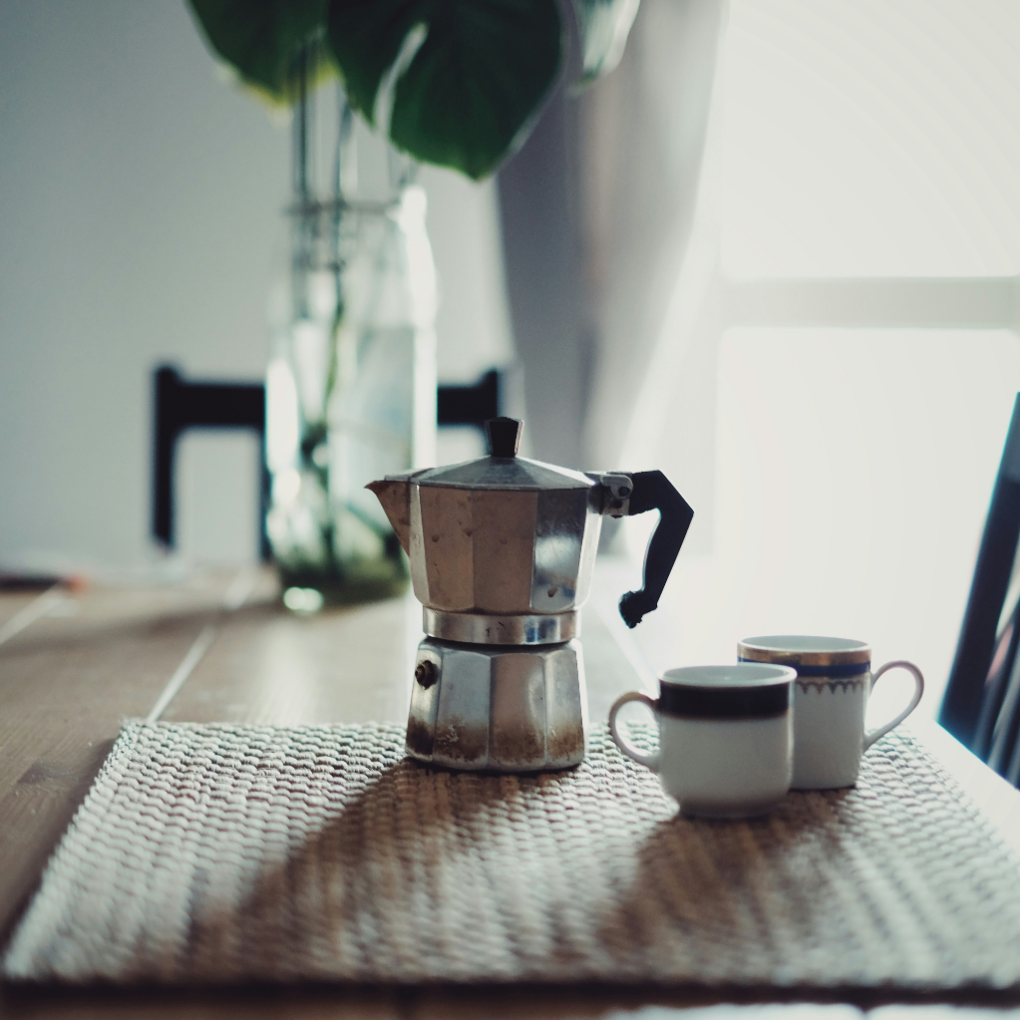
This stovetop classic creates strong, espresso-like coffee using pressure. Stainless steel models are the safest bet if you’re aiming to avoid plastic entirely, especially those without rubber or plastic handles, gaskets, or internal seals.
Percolator
An older brewing method gaining traction again, percolators cycle boiling water through coffee grounds using gravity and pressure. When thoughtfully designed, stainless steel versions, electric or stovetop, offer a completely plastic-free experience.
Manual Espresso Machines
Manual lever machines and press-style espresso makers offer complete control over pressure and temperature, and many are constructed entirely from stainless steel, chrome, or brass. Since they don’t rely on plastic pods or internal reservoirs, they’re an excellent option for plastic-free brewing, especially if you prefer a stronger cup.
Don’t Miss: Plastic-Free Living Once you’ve found the perfect plastic-free coffee maker below, read this to learn why choosing plastic-free alternatives matters for your health and the planet. Read more →Materials Matter: What to Look When Buying a Plastic-Free Coffee Maker
The best materials for a plastic-free coffee maker are food-grade 304 stainless steel, borosilicate glass, and ceramic with a food-safe glaze. Aluminum and hidden plastic parts in lids, valves, and filter holders deserve a closer look before you buy.
Not all coffee makers are created equal—and when you’re trying to avoid plastic, the materials used make all the difference. Even machines with a sleek metal or glass exterior can hide plastic components inside, especially in valves, filter baskets, and water tanks.
If your goal is durability, safety, and a clean-tasting brew, here’s what to look for—and what to avoid.
Stainless Steel (Especially Food-Grade 304)
Stainless steel is one of the best choices for a plastic-free coffee maker. It’s non-reactive, long-lasting, and won’t absorb or transfer flavors. Models labeled food-grade 304 stainless steel (also known as 18/8) are exceptionally corrosion-resistant and safe for repeated exposure to heat and moisture. Some premium machines also feature double-wall insulation, which helps maintain brewing temperature without the need for plastic insulation layers.
Glass (Preferably Borosilicate)
Glass brewers, especially those made from borosilicate glass, are heat-resistant, easy to clean, and completely non-toxic. They won’t release chemicals or retain odors, making them a favorite for pour-over systems and French presses. The downside? They’re more fragile, so they may not be ideal if you’re looking for something travel-friendly or durable in the long term.
Ceramic
Ceramic is another excellent option for avoiding plastic altogether. It retains heat well and won’t affect the flavor of your coffee. It’s also non-toxic and doesn’t require linings or coatings. Just ensure the glaze is food-safe and free from heavy metals or lead.
Aluminum (Use with Caution)
Some stovetop brewers use die-cast aluminum, which is lightweight and affordable but more prone to wear and corrosion over time especially with acidic liquids like coffee. Unlike stainless steel or Glass, aluminum may also affect taste and is more reactive. While it’s technically plastic-free, it may not be the best long-term choice for health-conscious brewing.
Chrome-plated or Brass Components
Manual espresso machines often feature chrome-plated brass or metal filter baskets, which provide both durability and optimal performance. These metals are generally safe in high-quality machines but vary depending on the manufacturer’s plating processes. Look for brands that disclose their materials and avoid those with hidden BPA-free liners or plastic seals, which may still come into contact with heat or water.
Watch Out for Hidden Plastic Components
Even in so-called “metal” or “glass” brewers, it’s common to find plastic components used for filter holders, lids, reservoirs, or tubing. And while some companies advertise BPA-free parts, that doesn’t mean they’re free of all concerning additives. For true peace of mind, choose brewers where all components that come into contact with hot water are made from non-toxic materials—no plastic, period.
Are Plastic-Free Coffee Makers Durable?
Yes, in most cases. Stainless steel and borosilicate glass survive thousands of heating cycles without warping, and brands like La Pavoni and Bialetti sell replacement parts for decades after purchase.
In most cases, yes! Metal and glass parts tend to hold up longer than plastic under heat stress. Some models are designed for longevity and easy part replacement, so you’re not forced to discard the entire unit if a filter lid cracks.
🛡️ Why They Last Longer: Stainless steel and borosilicate glass don’t degrade from repeated heating and cooling cycles like plastic can. They resist staining, odor absorption, and the brittleness that develops in plastic over time.
🔧 Built for Repair, Not Replacement: Many premium plastic-free coffee makers are designed with serviceability in mind. Brands like La Pavoni, and Bialetti offer replacement parts for decades after purchase. A broken gasket or cracked carafe doesn’t mean you have to buy a new machine.
🔥 Heat Stress Resistance: While plastic components can warp, crack, or develop stress fractures from thermal cycling, metal and glass components maintain their structural integrity through thousands of heating cycles.
⚖️ The Trade-offs: Glass components can break if dropped, and some metal parts may develop mineral buildup over time. However, these issues are typically repairable rather than requiring full replacement.
💎 Investment Quality: While most plastic-free coffee makers are initially more expensive, they often prove more economical in the long run. A well-maintained Chemex, Moccamaster, or quality French press can last decades with proper care.
14 Plastic-Free Coffee Makers Worth Buying
Finding a truly plastic-free coffee maker requires looking beyond “BPA-free” labels. Many brands still use plastic in critical areas, such as water reservoirs, brew baskets, or internal tubing, despite the exterior appearing to be all-metal. The recommendations below prioritize brewers that eliminate plastic from water and coffee contact points. However, some may include minimal plastic components, such as handles or exterior housing, that never come into contact with your brew.
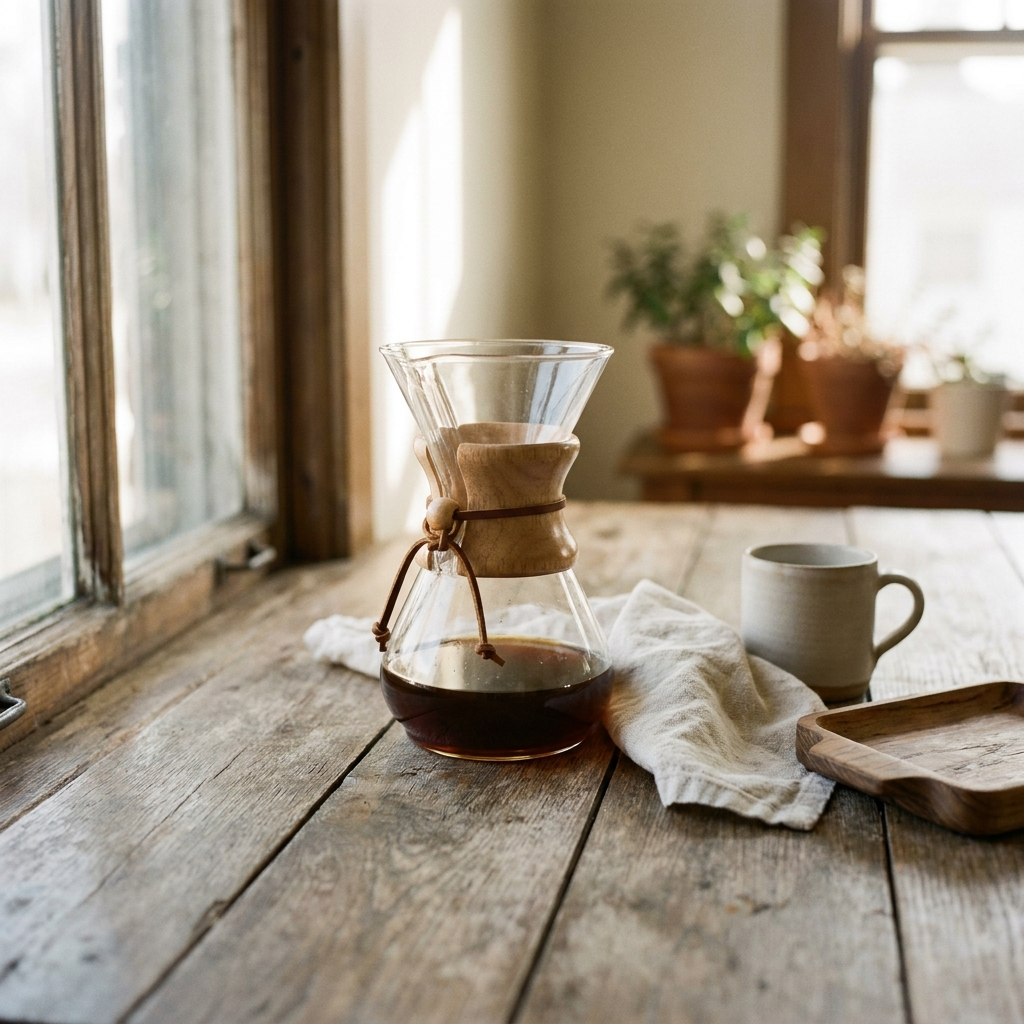
The iconic hourglass brewer, in production since 1941
$49 starting price
The Chemex is one of the most beautiful ways to brew coffee and one of the few brewers where nothing plastic ever touches your drink. The non-porous borosilicate glass keeps flavors completely pure, and the thick bonded filters do something most brewers cannot: they remove oils and sediment without removing character.
The result is a noticeably clean, bright cup that is easy to drink black. The pour-over process asks for a little more attention than pressing a button, but that is part of the appeal. Note that Chemex bonded filters use a small amount of food-safe polymer adhesive to bond the paper layers. The amount is minimal and the filter is compostable, but if you want a fully fiber-only filter, unbleached cone filters are available as an alternative.
I used a smaller Chemex for a while and it consistently delivered a smooth, clean cup. The secret is in the thick bonded filter, which removes a lot of the oils and sediment you get with other methods. The pour-over process does require a little more attention, but that is part of the appeal.
Body
Borosilicate Glass
✓ Plastic FreeCollar
North American Wood
✓ Plastic FreeTie
Hand-Tied Leather
✓ Plastic FreeFilters
Bonded Paper
✓ Plastic FreePros
- Non-porous glass body keeps coffee flavors pure
- Delivers a clean, bright, easy-drinking cup
- A design classic that looks beautiful on any counter
Cons
- Takes around 10 minutes, not ideal for rushed mornings
- Bonded paper filters use trace polymer adhesive
- Glass feels delicate, handle with care
If you have 10 minutes and want the cleanest, most beautiful cup of plastic-free coffee possible, this is the one. One of the best plastic-free brewers you can buy.
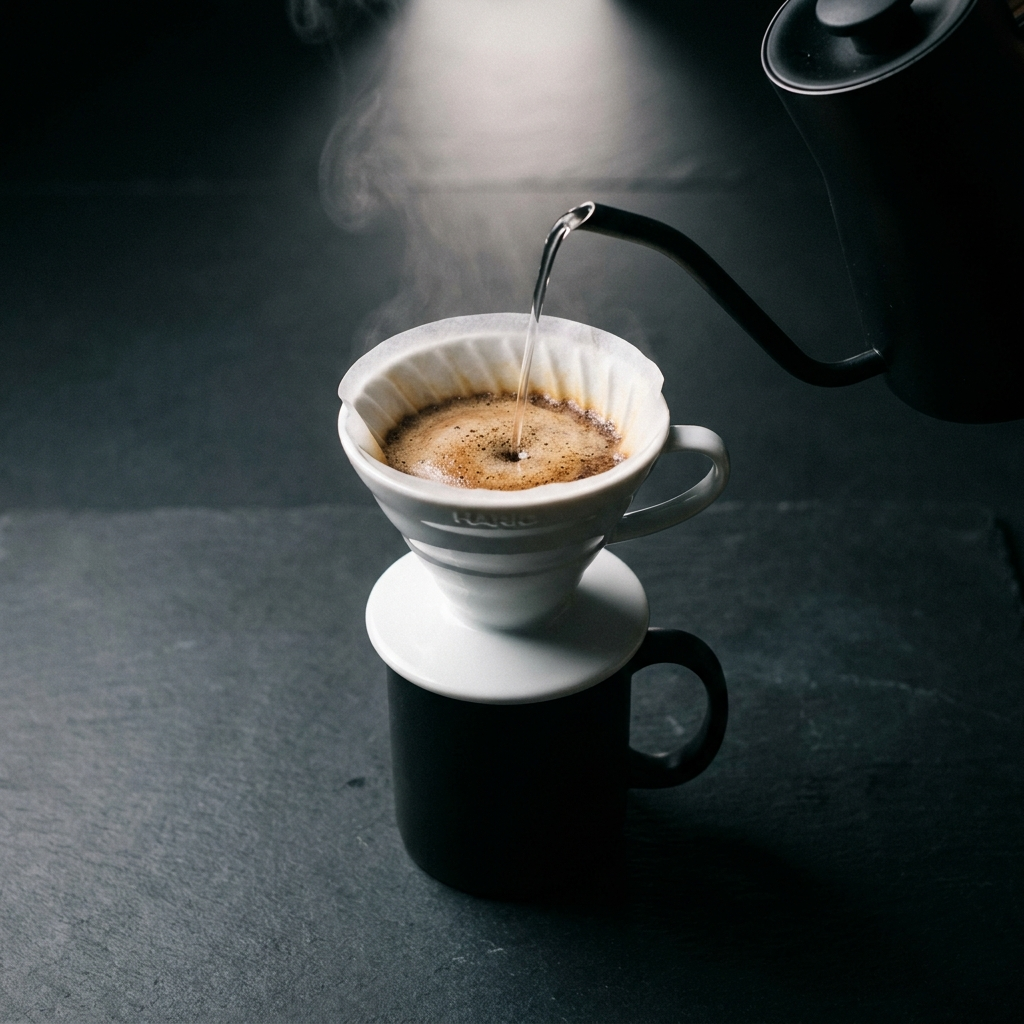
Handcrafted Arita-yaki porcelain from Japan
$29 starting price
The Hario V60 is the pour-over dripper that baristas and home brewers swear by. The ceramic version is made from Arita-yaki, a style of Japanese porcelain with over 400 years of history. Each one is handcrafted by a local artisan in Arita. There is no plastic in the dripper itself.
The 60-degree cone and spiral ribs give you complete control over extraction speed and flavor. Pour slowly for bold depth, or pour quickly for something lighter and more delicate. It sits directly on your mug, so no separate server is required unless you want one.
Note: if you purchase the V60 as a set, the glass server lid and handle are polypropylene. The dripper itself remains fully plastic-free.
Dripper
Arita-yaki Porcelain
✓ Plastic FreeGlaze
Lead-Free Food Safe
✓ Plastic FreeFilters
Paper (V60-specific)
✓ Plastic FreeSet Server
Glass + PP Lid/Handle
⚠ Set OnlyPros
- Pure ceramic dripper, zero plastic in the brew path
- Total control over flavor and brew speed
- Beautiful handcrafted design at an affordable price
Cons
- Requires technique, there is a learning curve for beginners
- Needs V60-specific paper filters
- Dripper only, you will need a separate mug or server
An artisan piece of Japanese craftsmanship that brews an exceptional cup. The best value plastic-free pour-over dripper you can buy.
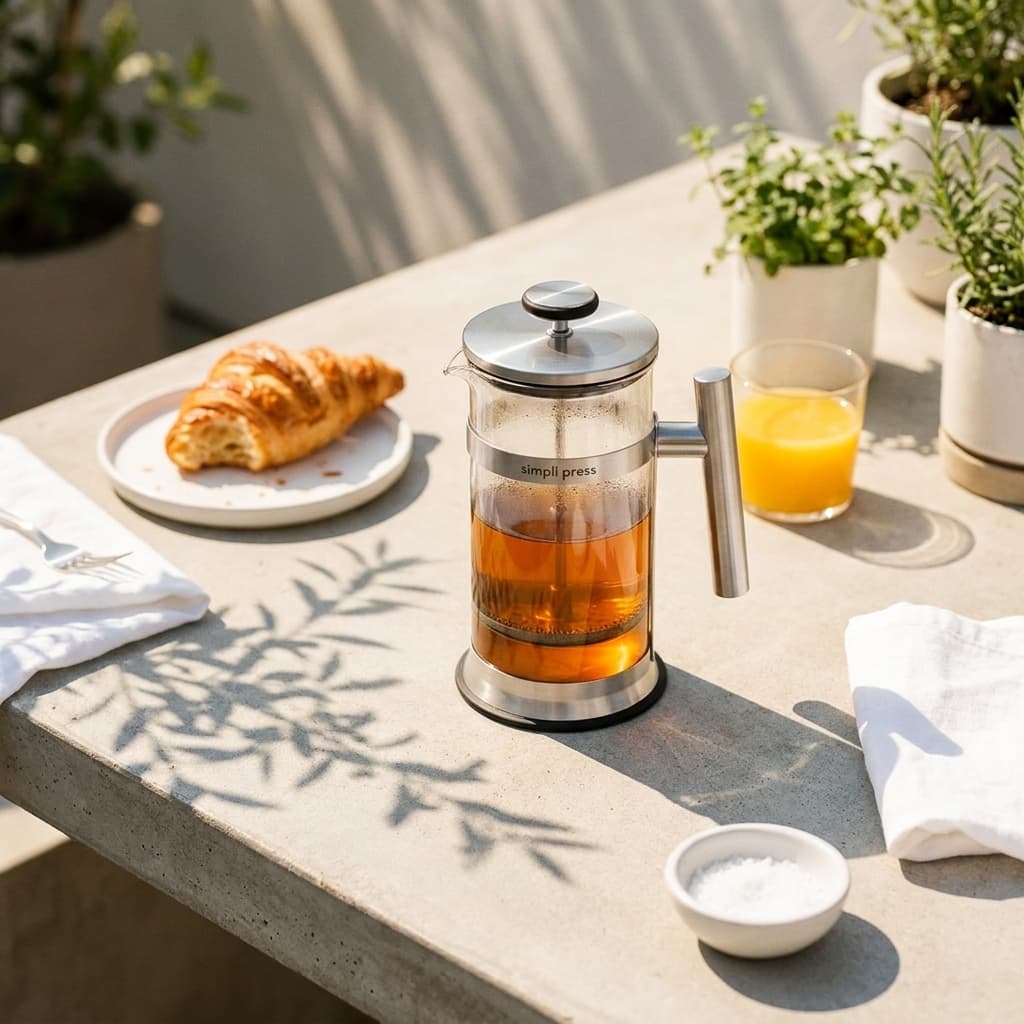
The French press reinvented for easy cleanup
$75 starting price
The Simpli Press solves the biggest frustration with French press coffee: the messy cleanup. A patented lift-out coffee basket removes the grounds in one clean motion. No scooping, no clogged drains, no digging around in the carafe.
The 34oz model is built from borosilicate glass, stainless steel, and food-grade silicone perimeter seals on the basket. The silicone sits in the brew path during extraction. The double laser-etched stainless filter delivers a smooth, grit-free cup. Small business brand with a cause: 10% of profits support women and children in coffee and STEM.
Carafe
Borosilicate Glass
✓ Plastic FreeFilter
Double Stainless Mesh
✓ Plastic FreeBasket
Stainless Steel
✓ Plastic FreeBasket Seal
Food-Grade Silicone
◎ Food-Safe ElastomerPros
- No traditional plastic anywhere in the brew path
- Lift-out basket makes cleanup fast
- Rich, smooth cup with minimal grit
Cons
- Higher price point than standard French presses
- Food-grade silicone basket seal sits in brew path
- Borosilicate glass carafe needs careful handling
The French press for people who love the brew but have always hated the cleanup. Worth every penny if you use a French press every day.
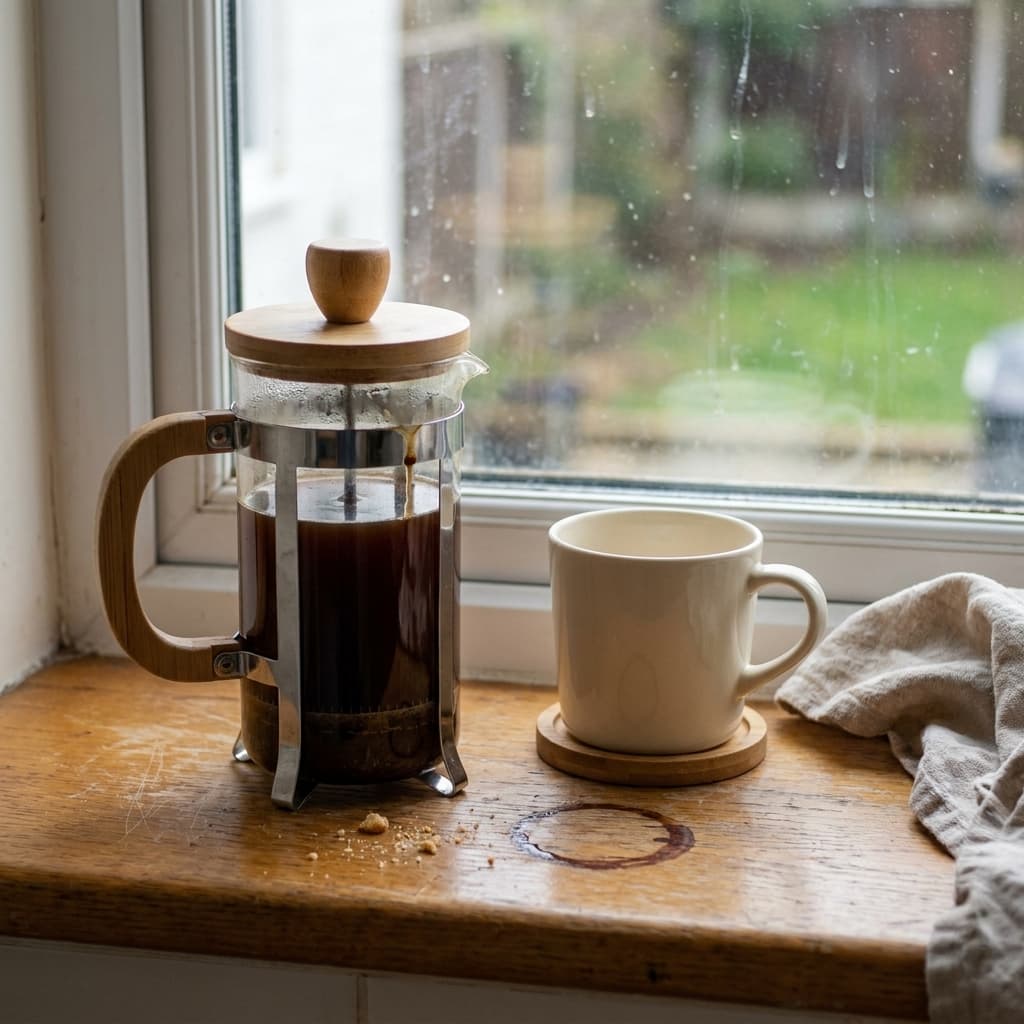
Bamboo and glass French press for one
$20 starting price
The Sivaphe is a single-serve French press that keeps things simple. The borosilicate glass carafe sits in a stainless steel frame with a natural bamboo handle. The plunger assembly is stainless steel mesh with a spiral disk. Sivaphe’s parts listings for this model do not include a silicone or rubber gasket, which suggests the perimeter seal is metal against glass.
At 12oz it brews one generous cup at a time. A clean, affordable plastic-free brewer for solo coffee drinkers who do not want to commit to something larger.
Carafe
Borosilicate Glass
✓ Plastic FreeFrame
Stainless Steel
✓ Plastic FreeHandle
Natural Bamboo
✓ Plastic FreePlunger
Stainless Mesh + Coil
✓ Plastic FreePros
- Completely plastic-free at a very affordable price
- Bamboo handle gives it a beautiful natural look
- Ideal size for a single fresh cup
Cons
- 12oz only, not suitable for brewing multiple cups
- Bamboo handle must be hand washed only
- Glass carafe is fragile if dropped
The most affordable fully plastic-free French press on this list, and lovely to look at. A great starting point for solo coffee drinkers.
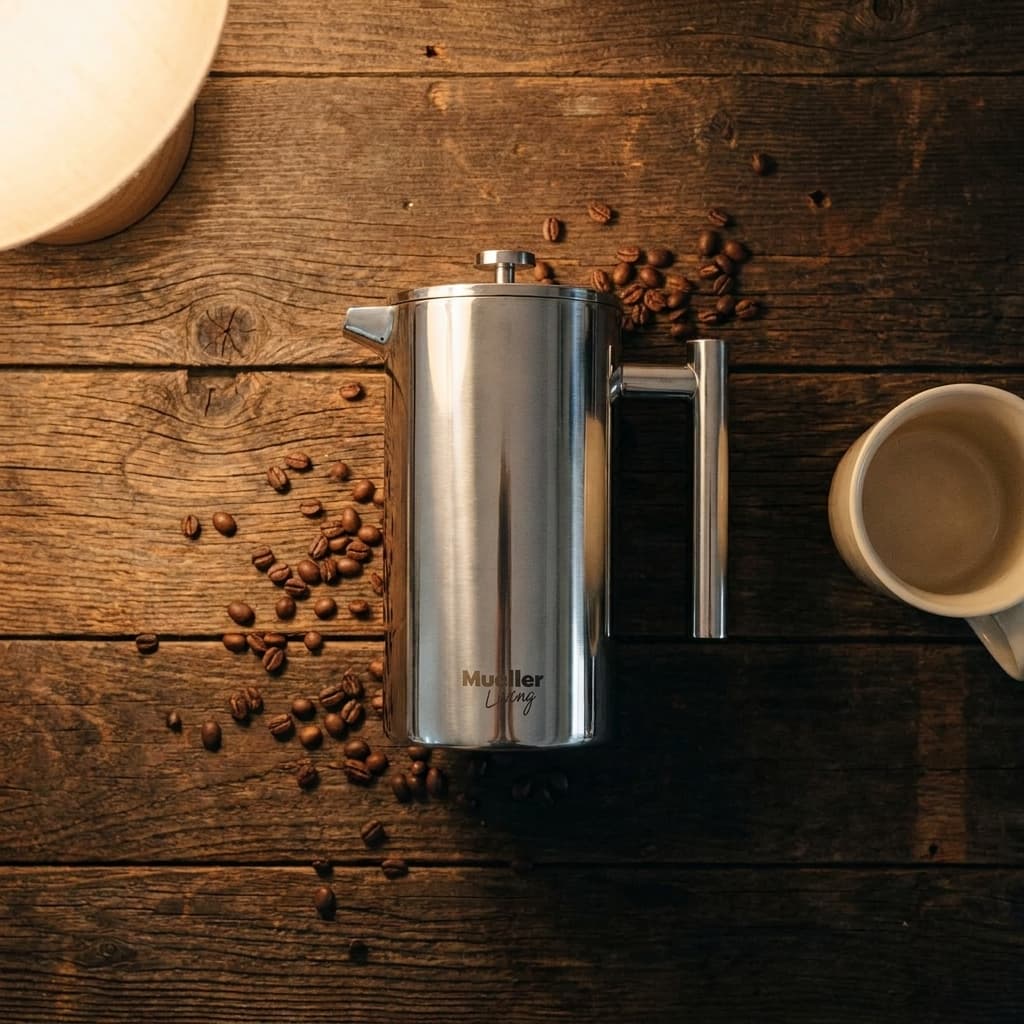
All stainless steel, double-walled and insulated
$55 starting price
The MuellerLiving is a fully stainless steel French press built for people who want a durable, plastic-free brewer that also keeps coffee hot longer. Double-wall insulation does the work of a thermal carafe without any extra cost.
The 4-level filtration system includes a coiled stainless filter, two stainless mesh screens, and a metal cross plate. Lid, handle, body, and every filter screen are food-grade stainless. MuellerLiving’s parts listings do not show any silicone or rubber components. Dishwasher safe, which makes cleanup faster than most French presses.
Body
Double-Wall Steel
✓ Plastic FreeLid
Stainless Steel
✓ Plastic FreeHandle
Stainless Steel
✓ Plastic FreeFilters
4-Level Stainless
✓ Plastic FreePros
- All food-grade stainless steel, no plastic anywhere
- No silicone or rubber components per parts listing
- Double-wall insulation keeps coffee hotter for longer
Cons
- Cannot see coffee level inside the brewer
- Heavier than glass French press options
- Some sediment may still pass through the filter
A practical, no-nonsense plastic-free French press that keeps coffee hot and cleanup fast. Ideal for busy mornings when you want great coffee without any fuss.
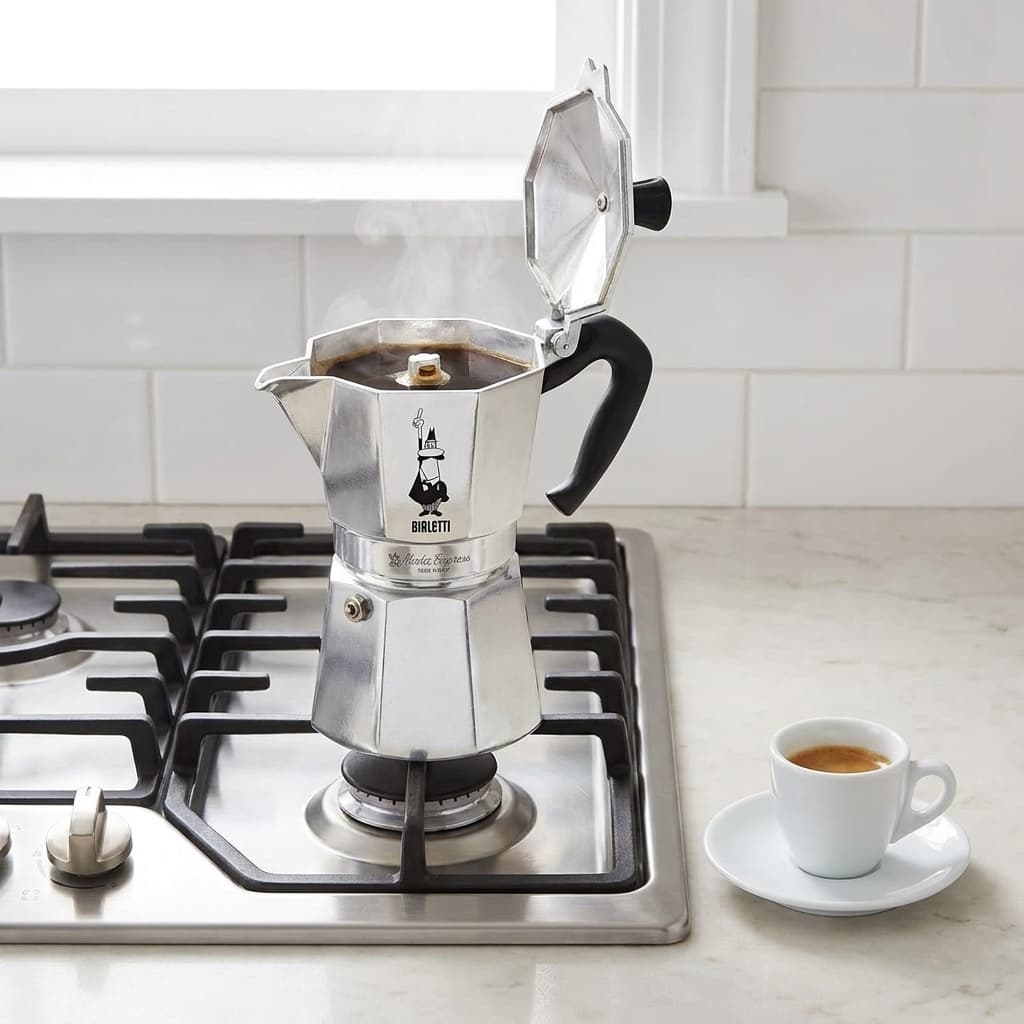
The original stovetop espresso maker since 1933
$60 starting price
The Bialetti Moka Express has been brewing strong, rich stovetop coffee the same way since 1933. Fill the bottom chamber with water, add your grounds, screw it together and set it on the stove. A few minutes later you have a bold, concentrated cup that tastes far more impressive than the effort involved.
The food-grade aluminum body keeps plastic out of the cup itself. The handle is thermoplastic and the seal between chambers is a food-grade synthetic rubber (NBR) gasket. Pressurized water passes the gasket as it travels up through the grounds, so the seal sits in the brew path. Replacement gaskets are inexpensive and easy to swap out, which means this brewer can last for decades.
I picked up my first Moka Express in Rome on a trip with my son, and it has been making my morning coffee ever since. It does exactly what it promises, every single time. Cleanup takes about a minute. There are very few products I can say that about.
Body
Food-Grade Aluminum
✓ Plastic FreeFilter Funnel
Aluminum
✓ Plastic FreeHandle
Thermoplastic
⚠ No Coffee ContactSeal
Synthetic Rubber (NBR)
◎ Food-Safe ElastomerPros
- Rich, bold stovetop espresso in under 5 minutes
- Made in Italy, built to last for decades
- Replacement gaskets are cheap and widely available
Cons
- Thermoplastic handle and synthetic rubber gasket present
- Aluminum body, not stainless steel
- Not compatible with induction cooktops without an adapter
A stovetop legend that has earned its place in millions of kitchens for good reason. If a small synthetic rubber gasket and thermoplastic handle do not put you off, this is one of the most satisfying brewers on this list.
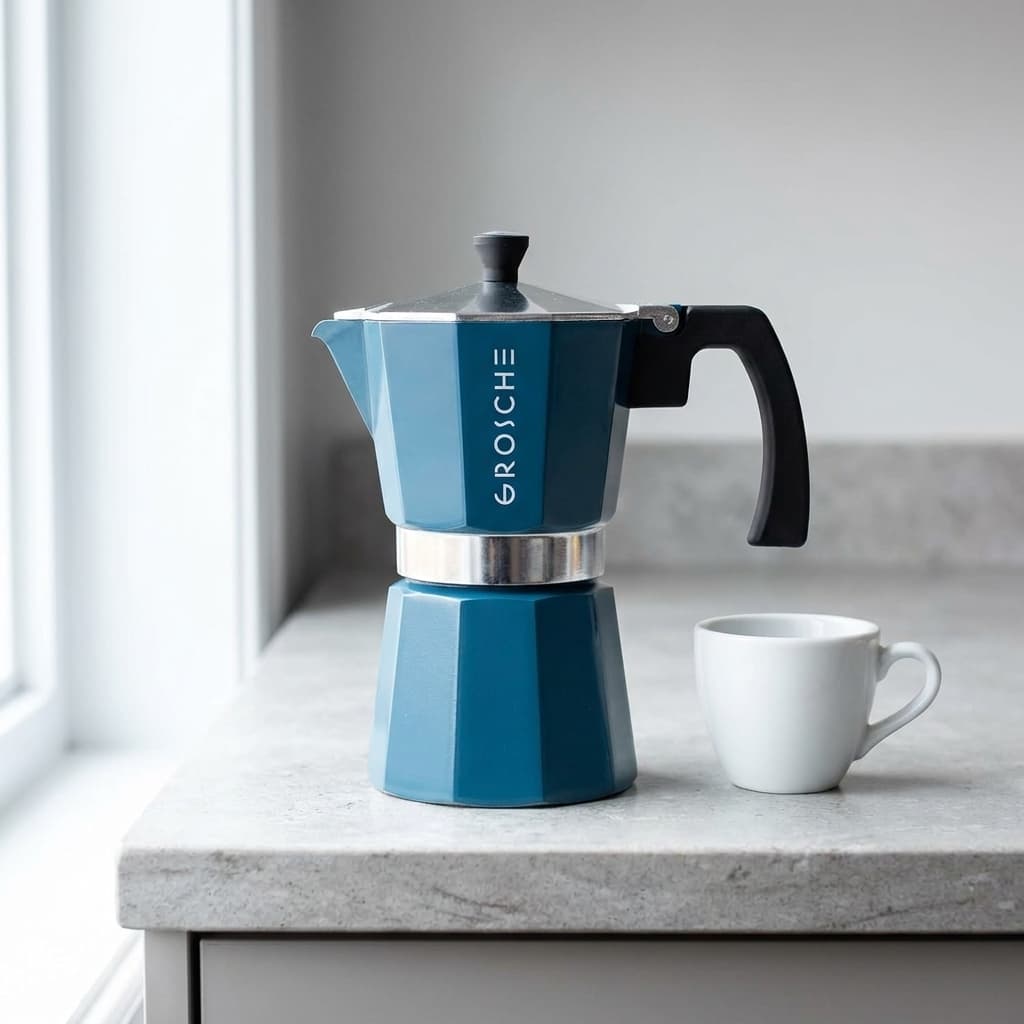
Social enterprise moka pot with an Italian-certified brass safety valve
$45 starting price
The GROSCHE Milano is a moka pot from a Canadian social enterprise that donates a portion of every sale to clean water projects worldwide. The anodized aluminum body brews a smooth, full-bodied cup, and the Italian-certified safety valve is brass.
Like all moka pots, this design has a synthetic rubber gasket and a heat-resistant handle. The handle does not contact the coffee, but the gasket sits in the brew path where pressurized water passes through. The gasket is replaceable, which extends the life of the brewer significantly.
Body
Anodized Aluminum
✓ Plastic FreeFilter Funnel
Aluminum
✓ Plastic FreeSafety Valve
Brass
✓ Plastic FreeSeal
Synthetic Rubber
◎ Food-Safe ElastomerPros
- Smooth, full-bodied brew at a very accessible price
- Purchase supports clean water projects globally
- Italian-certified brass safety valve for added security
Cons
- Aluminum body, not stainless steel
- Synthetic rubber gasket in brew path, plastic handle
- Not compatible with induction cooktops without an adapter
A great value moka pot from a brand that gives back. Choose this over the Bialetti if price matters and supporting a social enterprise is important to you.
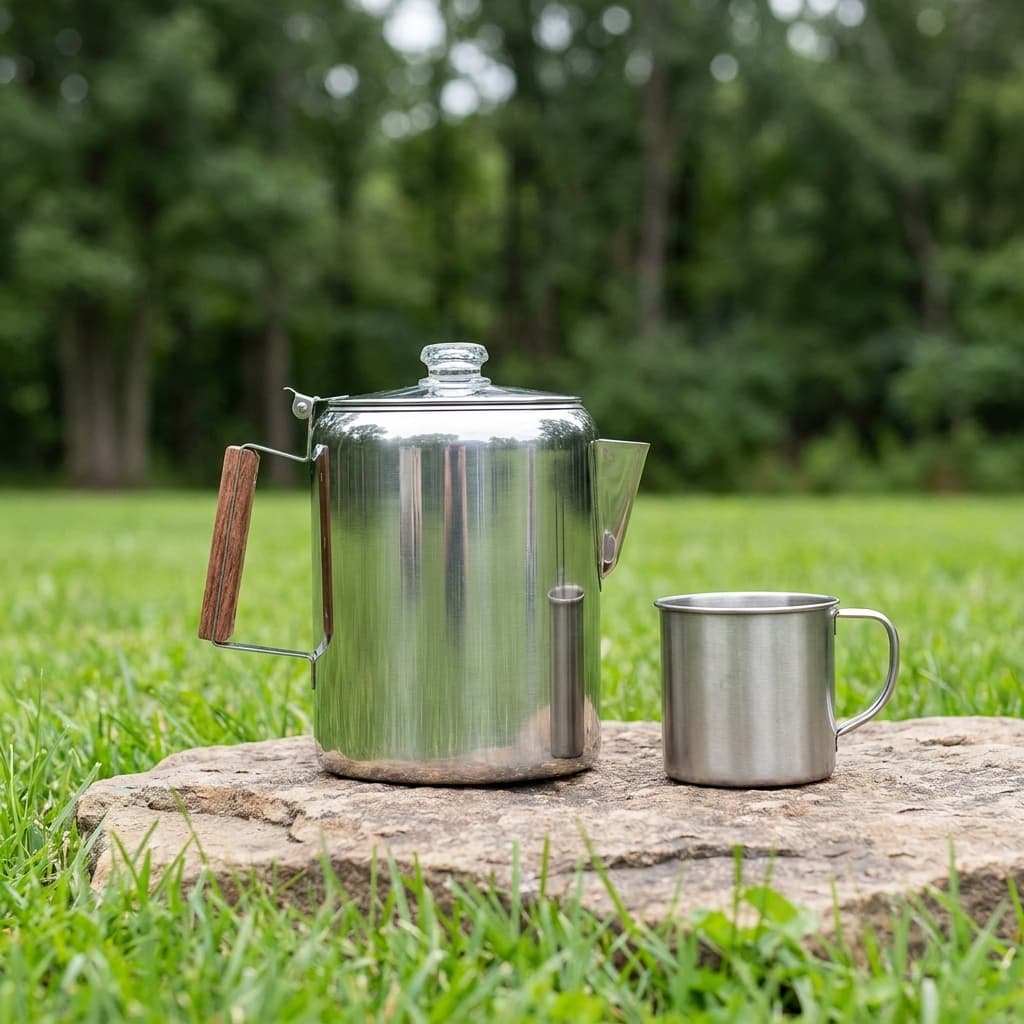
Veteran-owned, pure stainless steel percolator
$39 starting price
The COLETTI Bozeman is built from pure stainless steel with no plastic or aluminum anywhere in the construction. It works on any heat source including open campfire, which makes it a versatile brewer for home and outdoor use alike.
The glass view top lets you watch the brew cycle, and rosewood handles stay cool to the touch. Veteran-owned and built with no shortcuts. Dishwasher safe at home, easy to rinse on the trail.
Body
Pure Stainless Steel
✓ Plastic FreeBasket
Stainless Steel
✓ Plastic FreeView Top
Heat-Tough Glass
✓ Plastic FreeHandles
Rosewood
✓ Plastic FreePros
- Pure stainless steel, no plastic or aluminum anywhere
- Works on any heat source including open campfire
- Brews bold, strong coffee with great flavor
Cons
- Not compatible with induction cooktops
- Coffee can over-extract if left on heat too long
- Produces a stronger, more rustic cup than pour-over
The most rugged fully plastic-free brewer on this list. Ideal for campers, outdoor brewers, or anyone who wants bold coffee with zero plastic and no compromises.
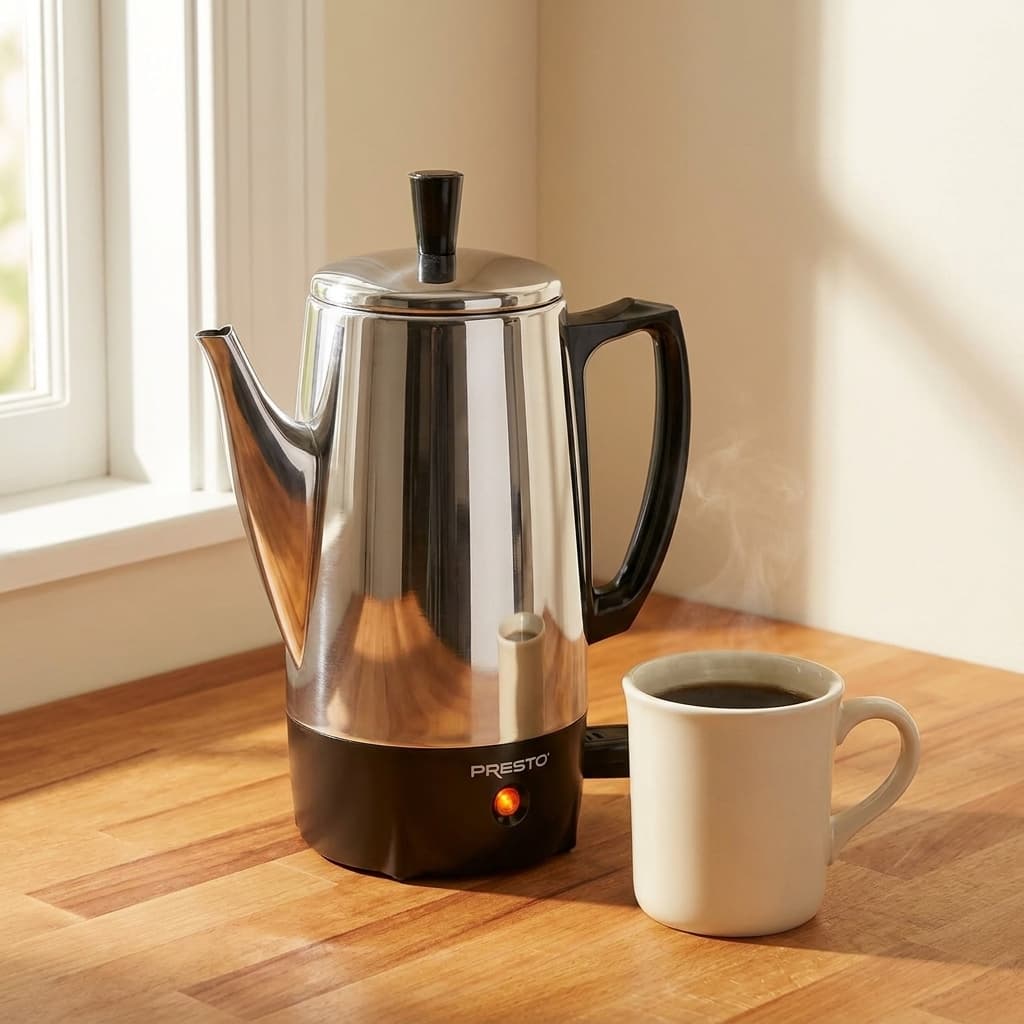
Hands-free stainless steel electric brewing for up to 12 cups
$60 starting price
The Presto 02811 is the most convenient option on this list for everyday home use. The stainless steel body, filter basket, and perk tube brew up to 12 cups automatically then hold them at serving temperature without any input from you.
The stay-cool handle is heat-resistant plastic, and the base houses the cord and heating element behind a plastic shell. Neither contacts the water or the coffee during brewing. The entire brew path is stainless steel. A signal light tells you when the pot is ready.
Body
Stainless Steel
✓ Plastic FreeFilter Basket
Stainless Steel
✓ Plastic FreePerk Tube
Stainless Steel
✓ Plastic FreeHandle & Base
Heat-Resistant Plastic
⚠ No Coffee ContactPros
- Fully automated, no technique or attention required
- Stainless brew path, no plastic contacts the coffee
- Keeps coffee hot automatically after brewing
Cons
- Handle and base housing are heat-resistant plastic
- Percolator style brews stronger than typical drip coffee
- Requires electricity, not suitable for outdoor use
The easiest daily brewing experience on this list, with a clean stainless steel brew path. Best for households that want hands-off brewing without plastic touching their coffee.
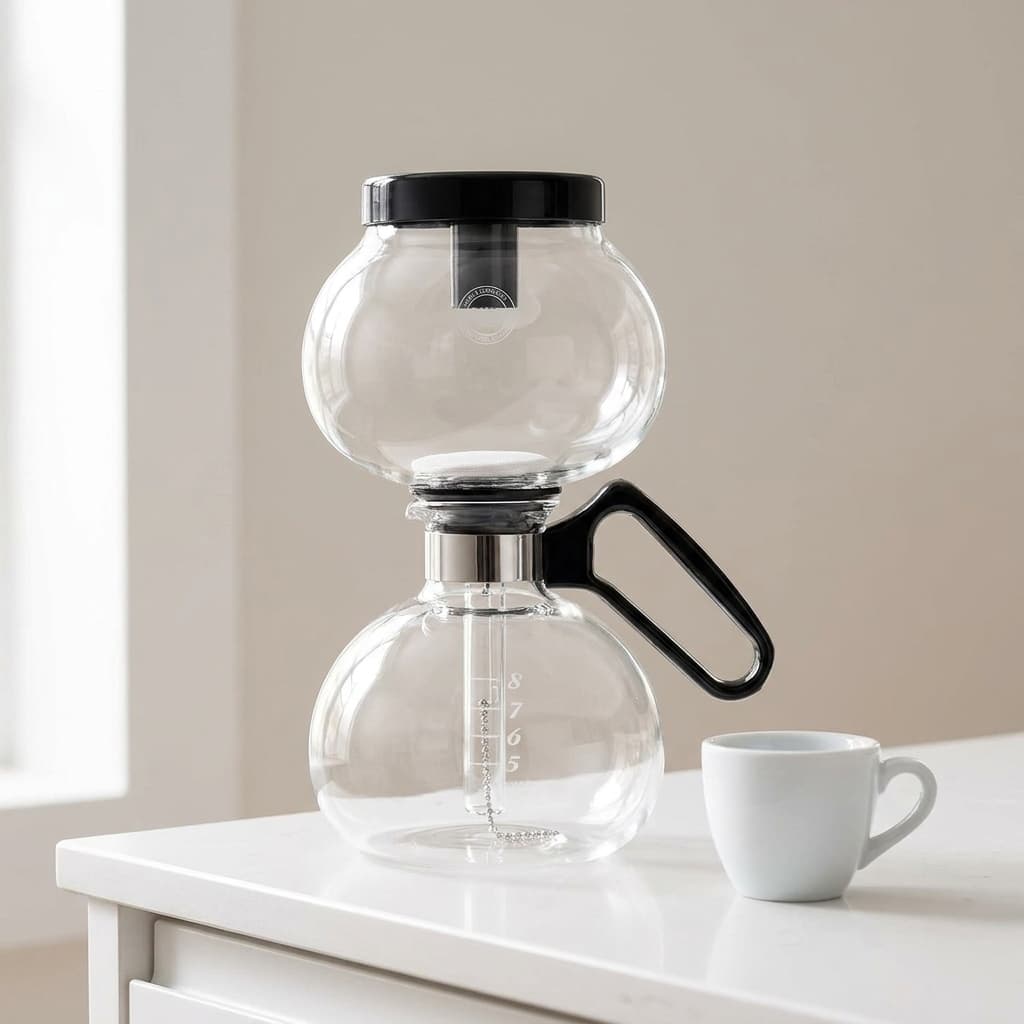
Hand-blown borosilicate glass vacuum brewer
$63 starting price
The Yama Glass siphon is as much a conversation piece as it is a coffee maker. Hand-blown borosilicate glass chambers, a cloth or metal filter, and a metal stand. Watch as water rises through the bottom chamber, infuses with coffee grounds, then siphons back down as it cools.
Like every vacuum siphon, this design uses a packing gasket between the upper and lower chambers. Yama’s gasket is silicone rubber and sits directly in the brew path, where water passes during the siphon cycle. The chambers and stand are otherwise plastic-free, and the gasket is replaceable for long machine life.
Chambers
Borosilicate Glass
✓ Plastic FreeFilter
Cloth or Metal
✓ Plastic FreeStand
Metal Frame
✓ Plastic FreePacking Gasket
Silicone Rubber
◎ Food-Safe ElastomerPros
- Hand-blown borosilicate glass chambers
- Produces an exceptionally clean, nuanced cup
- A stunning showpiece for any kitchen
Cons
- Silicone packing gasket sits in the brew path
- Does not work on induction cooktops
- Requires attention during brewing, not hands-free
A theatrical brewing experience that produces an exceptionally pure cup, with a small silicone seal as the only non-inert material in the brew. For the coffee lover who wants something truly special on their countertop.
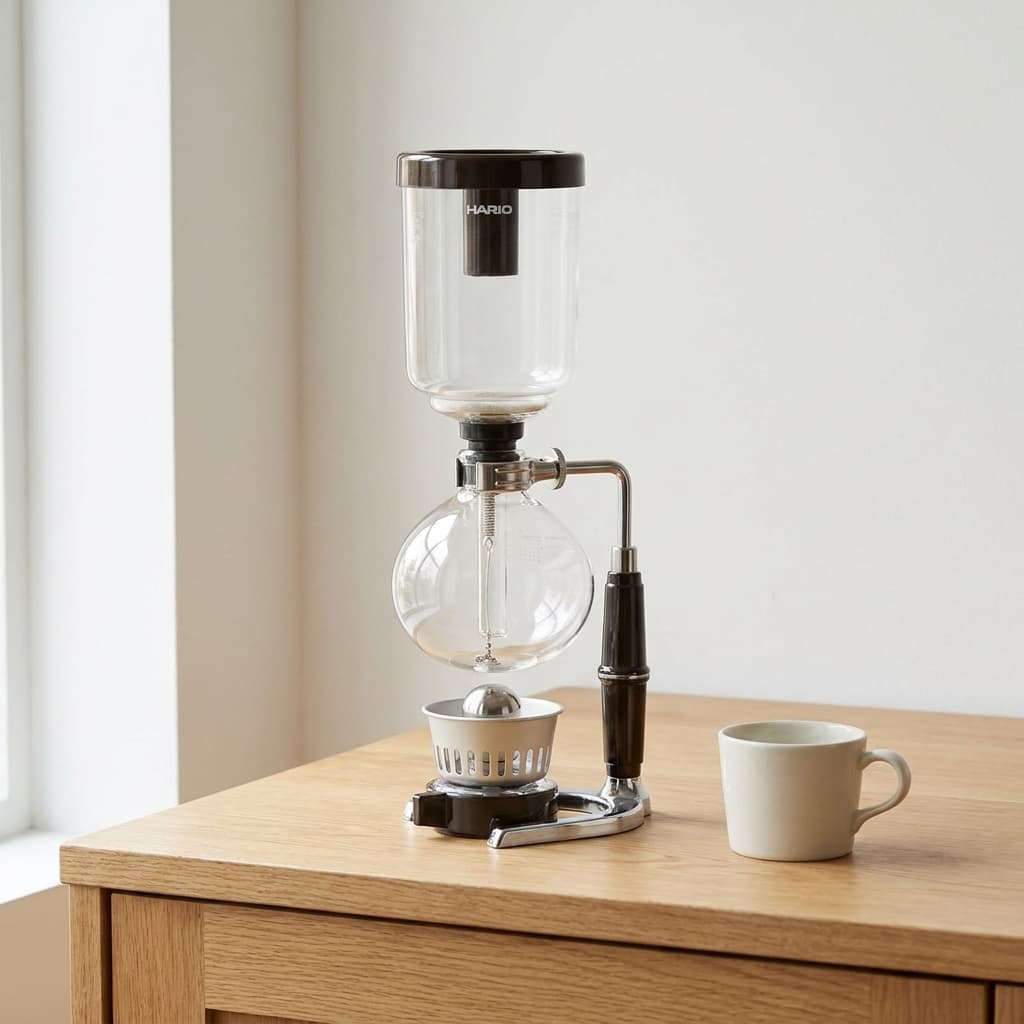
Japanese precision siphon brewing at its finest
$97 starting price
The Hario Technica is the most refined siphon brewer Hario makes. The upper and lower chambers are heat-resistant borosilicate glass, the windbreak is aluminum, and the included alcohol burner means it works anywhere without a stovetop.
Hario’s own spec sheet lists a silicone rubber packing gasket between the chambers (water passes through it during the siphon cycle), phenol resin in the stand base, and polypropylene in the alcohol lamp holder, cover, upper bowl stand, and measuring spoon. None of the polypropylene accessories contact the brew, but they are present in the kit. The brewer is beautiful and the cup it produces is exceptional.
Chambers
Borosilicate Glass
✓ Plastic FreePacking Gasket
Silicone Rubber
◎ Food-Safe ElastomerStand Base
Phenol Resin
⚠ No Brew ContactLamp & Cover
Polypropylene
⚠ No Brew ContactPros
- Brews an incredibly clean, complex cup
- Alcohol burner means no stovetop required
- Heritage Japanese craftsmanship
Cons
- Silicone gasket in the brew path, phenol resin and polypropylene accessories
- Requires alcohol burner fuel as an ongoing cost
- Delicate glass components require careful storage
A theatrical Japanese siphon that produces a stunning cup. The brew path has a silicone gasket and the kit ships with polypropylene accessories. The most beautiful mostly-plastic-free siphon experience you can buy.
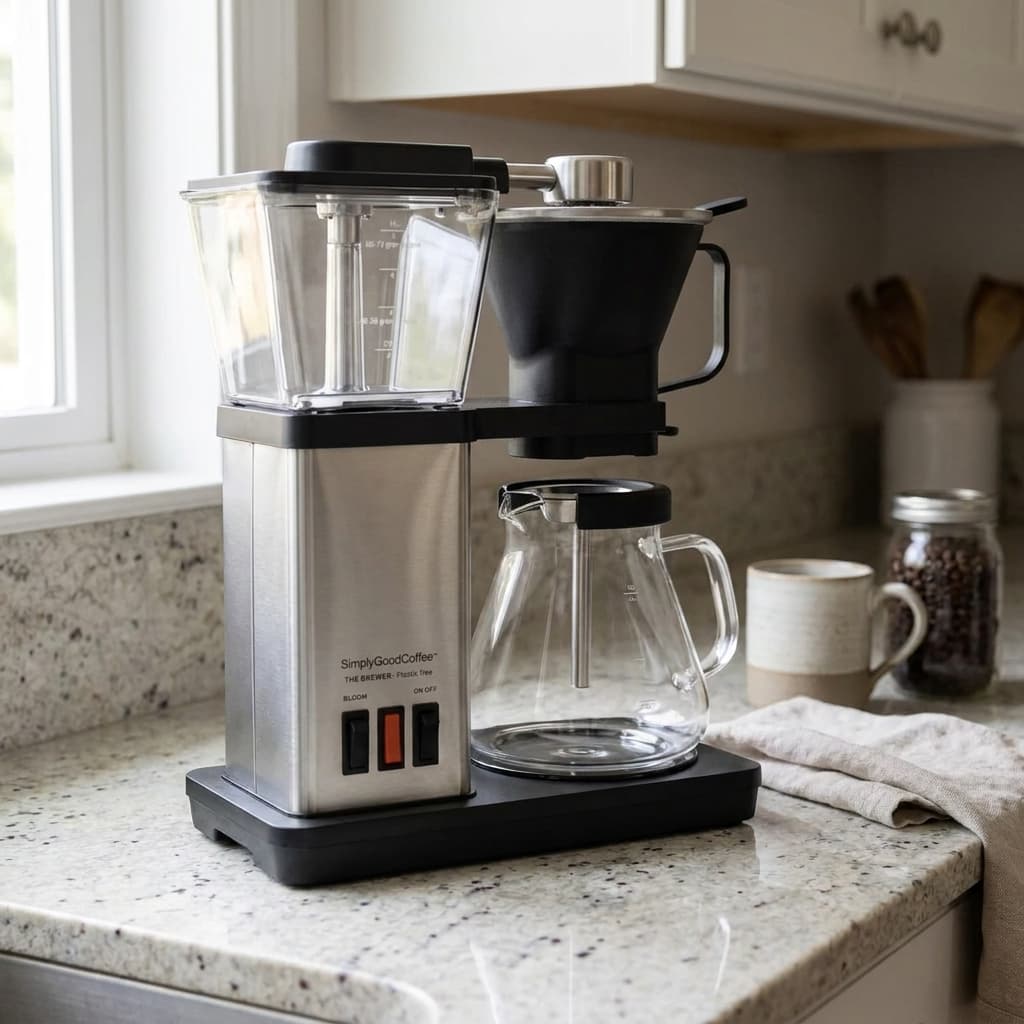
The first truly plastic-free brew path drip coffee maker
$480 starting price
The Simply Good Brewer is the first automatic drip coffee maker where water and coffee never touch plastic during the entire brewing process. The water reservoir, internal water delivery channels, filter basket, and drip-stop are all surgical-grade stainless steel. No plastic tubing, no silicone hoses. It brews at a steady 195 to 205 degrees and meets SCA Gold Cup standards.
An automatic bloom phase saturates the grounds and pauses the brew so trapped gases escape before extraction continues. The outer housing is BPA and phthalate-free plastic but does not contact water or coffee at any point. For anyone serious about avoiding plastic in a hot brew path, this is the cleanest automatic option on the market.
Water Reservoir
Stainless Steel
✓ Plastic FreeHeating Element
Stainless Steel
✓ Plastic FreeBrew Basket
Stainless Steel
✓ Plastic FreeHousing
BPA-Free Plastic
⚠ No Coffee ContactPros
- Only drip brewer where water and coffee never contact plastic
- Automatic bloom phase for richer, less bitter extraction
- Brews at SCA Gold Cup standard 195 to 205 degrees
Cons
- Premium price at $480 is the highest in this category
- Outer housing is BPA-free plastic, not stainless or metal
- Requires #4 paper filters as an ongoing purchase
The only automatic drip coffee maker where hot water and coffee never touch plastic. If you want hands-off brewing without compromising on what touches your coffee, this is the one worth saving up for.
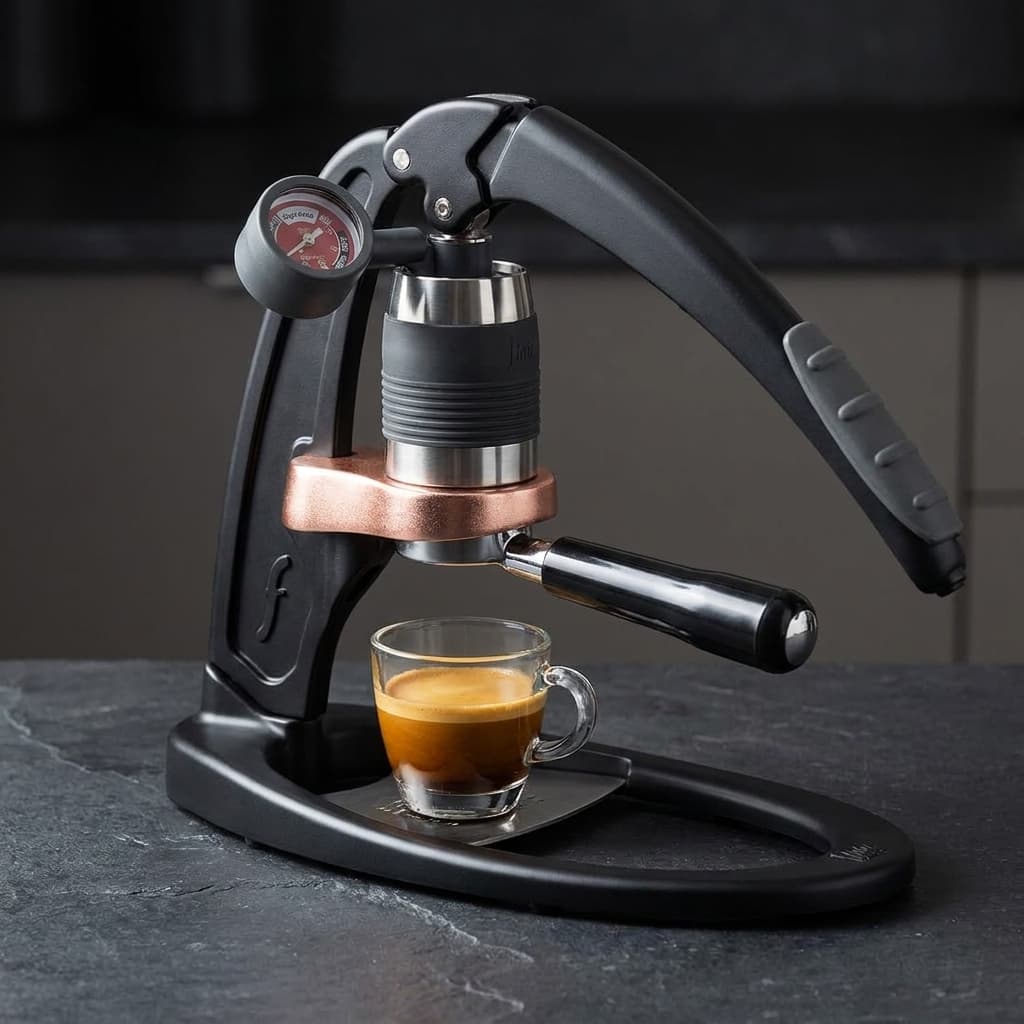
100% manual lever espresso, no electricity required
$325 starting price
The Flair PRO 3 is a fully manual lever espresso maker with a stainless steel brew head, cast aluminum stand and lever, and an integrated pressure gauge for precise extractions. No electricity, no pumps, and no traditional plastic in the brew path.
Worth knowing: the lever grip is silicone, and the internal O-rings are also silicone. The cylinder O-ring seals against the portafilter during extraction, and the plunger O-rings seal the piston against the cylinder wall as brew water is pushed through. That means the O-rings sit in the brew path, even though they are food-grade silicone wear parts. The entire machine folds into a carrying case, and a 5-year warranty covers the stand and brew head.
Brew Head
Stainless Steel
✓ Plastic FreeStand and Lever
Cast Aluminum
✓ Plastic FreeLever Grip
Silicone
◎ Food-Safe ElastomerO-Rings
Silicone (Wear Parts)
◎ Food-Safe ElastomerPros
- Cafe-quality espresso with no electricity required
- Compact, folds into a carrying case for travel
- 5-year warranty on the stand and brew head
Cons
- Silicone O-rings sit in the brew path
- Requires a quality burr grinder for best results
- Learning curve to dial in the right shot
Cafe-quality espresso with no electricity and only food-safe silicone in the brew path. The best option for serious home baristas who want to get as close to plastic-free espresso as possible.
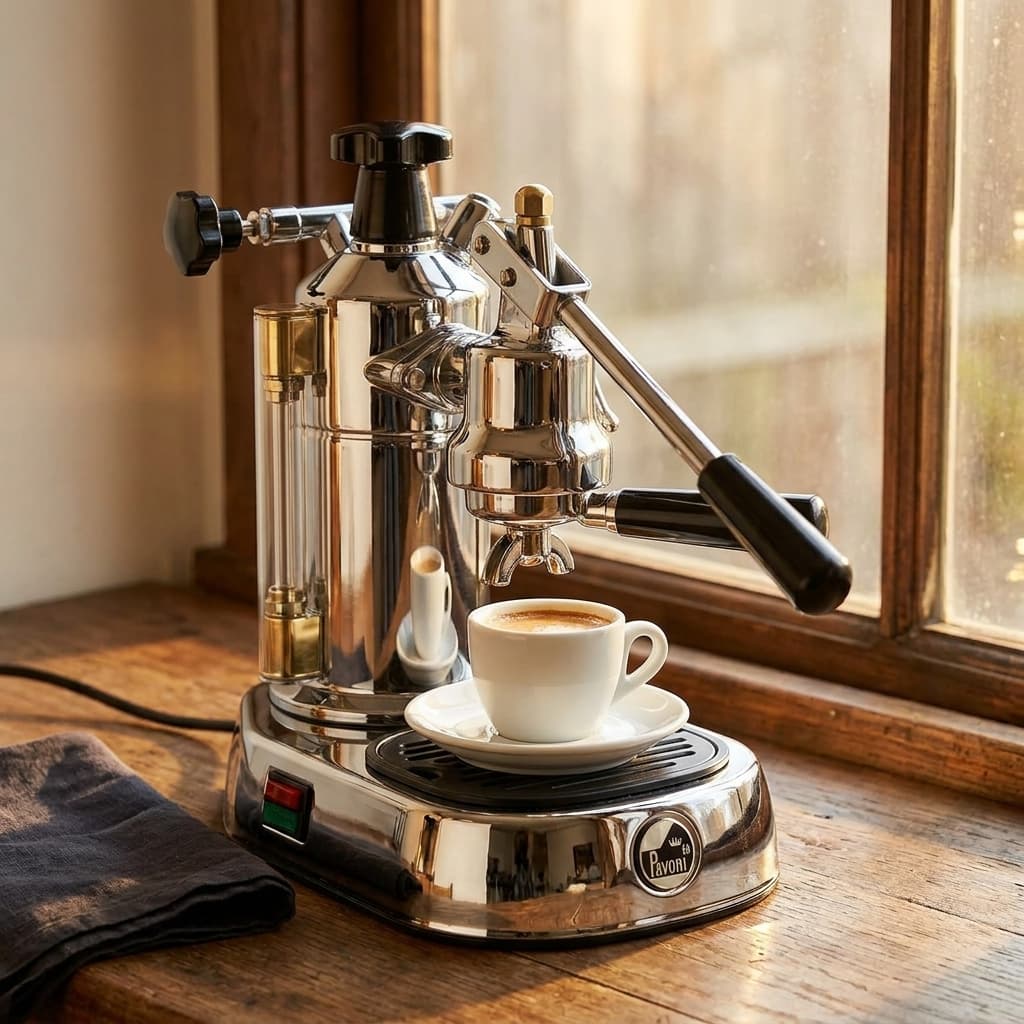
Nearly a century of Italian espresso tradition
$1,194 starting price
The La Pavoni Europiccola is a handcrafted Italian lever espresso machine made with the same attention to detail since 1961. The chrome-plated brass boiler, stainless steel group head, brass body, and all-metal lever make it one of the most metal-forward espresso machines you can buy.
The group head uses a silicone or rubber gasket where hot water and coffee flow through during extraction. The steam wand insert is bakelite (a phenolic plastic) and depending on the year of manufacture, the pressurestat housing and steam knob may also be bakelite or plastic. Everything is fully serviceable with parts available for decades, so with proper care this machine will outlast almost everything else on this list.
Boiler
Chrome-Plated Brass
✓ Plastic FreeGroup Head
Stainless Steel
✓ Plastic FreeGroup Gasket
Silicone Rubber
◎ Food-Safe ElastomerSteam Wand
Bakelite Insert
⚠ No Coffee ContactPros
- Chrome-plated brass and stainless steel throughout the brew path
- Handmade in Italy, built to last a lifetime
- Fully repairable with parts available for decades
Cons
- Silicone group gasket in brew path, bakelite steam wand insert
- Significant investment at over $1,000
- Steep learning curve, requires practice to master
A heritage Italian lever espresso machine with a brew path of brass and stainless, a silicone group gasket, and a bakelite steam wand insert. For the dedicated espresso lover who wants a serviceable, mostly-metal heirloom piece.
Want to compare beyond coffee makers? See how these brewers stack up against every kitchen product we’ve scored 1–10 on plastic in our Plastic Footprint Directory.
Brewing Quality and Performance
Plastic-free coffee makers match or beat plastic machines on flavor because stainless steel and ceramic hold brew temperature more consistently, which means better extraction and fewer bitter or sour notes.
Let’s get one thing out of the way: going plastic-free doesn’t mean settling for a weaker cup. In fact, many plastic-free coffee makers outperform their conventional counterparts in flavor, temperature consistency, and overall brewing control.
It comes down to choosing the right design and understanding what makes a better brew.
🔥Brew Temperature and Heat Retention
Brew temperature is one of the most significant factors in coffee quality, and materials like stainless steel cast aluminum, and ceramic retains heat far more consistently than plastic. That means more stable brewing conditions, better extraction, and fewer bitter or sour notes.
Some drip and pour-over systems even feature shower head designs or intelligent brewing algorithms that optimize how water flows over the grounds, ensuring even saturation and balanced flavor.
⏰Saturation and Bloom Control
Great coffee isn’t just about water and grounds; it’s also about timing. A proper bloom (that quick puff of carbon dioxide released when hot water hits fresh coffee) is key to unlocking flavor. Many pour-over systems and manual espresso machines offer full control over timing and water flow, allowing you to perfect the bloom phase and extract the most from your beans.
The basket shape in drip brewers also plays a role here. Flat-bottom baskets promote more even extraction, while cone-shaped baskets focus on the water flow and may highlight certain flavors. In plastic-free models, these baskets are often made of metal or ceramic, preserving taste without introducing contaminants.
🌡️Espresso Performance and Crema Quality
If you’re going the manual espresso route, look for a stainless steel brewing head and solid internal construction. These elements help maintain pressure and temperature stability, both of which are critical for producing rich, velvety crema. Some machines, such as lever-style or press-based espresso makers, offer this option without a single plastic component.
❄️Cold Brew and No-Heat Options
Cold brew fans, don’t worry you’re covered, too. Glass and stainless steel brewers are ideal for steeping coffee slowly without leaching chemicals. Since no heat is involved, you avoid the primary risk of microplastic release while still enjoying a smooth, low-acid cup.
🤌Ease of Use Without Sacrificing Flavor
Plastic-free doesn’t have to mean complicated. While some manual methods without relying on plastic parts in the brew path.
So, if you’re wondering whether going plastic-free means giving up your favorite brew style—the answer is no. If anything, it’s a chance to upgrade your coffee routine in every sense: better materials, cleaner flavor, and much more peace of mind.
How Do I Clean and Maintain My Coffee Maker?
Rinse the carafe and filter basket with warm water and mild dish soap after each use, deep-clean the removable parts weekly, and descale monthly with an equal mix of white vinegar and water.
Daily Cleaning
After each use, rinse the carafe and filter basket with warm water and mild dish soap. Wipe down the exterior with a damp cloth, paying particular attention to the hot plate and any areas where coffee has been spilled. Empty and rinse the water reservoir if you won’t be using the machine for several hours.
Weekly Deep Clean
Remove all removable parts, including the carafe, lid, filter basket, and water reservoir. Wash these components in warm, soapy water or place them in the dishwasher if they’re dishwasher-safe. Use a soft brush or cloth to scrub away coffee oils and residue. Clean the hot plate with a damp cloth when the machine is cool, and wipe down the entire exterior.
Monthly Descaling
Mineral buildup from water can clog your coffee maker and affect taste. Fill the water reservoir with an equal mixture of white vinegar and water. Run a brew cycle without coffee, then let the solution sit in the carafe for 15-30 minutes. Run 2-3 cycles of plain water to remove any vinegar residue. For machines with heavy mineral buildup, you may need to repeat this process or use a commercial descaling solution.
FAQs About Plastic-Free Coffee Makers
When hot water passes through plastic reservoirs, tubing, or pods, it can release microplastics and chemicals like BPA and phthalates. Over time, these can contribute to hormone disruption, inflammation, and potential long-term health effects.
A coffee maker is only truly plastic-free if every part that touches hot water or coffee, including the reservoir, tubing, filter basket, and carafe, is made from stainless steel, glass, or ceramic. Handles or knobs can be plastic as long as they never contact the brew.
Plastic-free brewers reduce reliance on fossil fuel–based plastics, cut waste from non-recyclable components, and avoid single-use pods that often end up in landfills or oceans. Materials like stainless steel and glass are far more sustainable and recyclable.
Yes. “BPA-free” only means that one chemical — bisphenol A — has been removed, but other bisphenols (like BPS and BPF) or additives such as phthalates can still be present. Under heat and acidity, these chemicals may leach into your coffee just like BPA. Want to learn more about BPA? Check out our complete guide: How to Tell If Plastic Is BPA-Free.
Final Thoughts on Plastic-Free Coffee Makers
Switching to plastic-free coffee brewing is one of those simple changes that makes a real difference for your health and your daily ritual. These aren’t trendy gadgets that’ll break in two years; they’re investments that get better with time. Whether you fall for the elegance of a Chemex or the hands-on satisfaction of a manual espresso machine, you’re choosing quality materials that won’t leach anything unwanted into your morning cup.
The best part? Most of these brewers will outlast any plastic machine by decades. You can start with one method that excites you, perfect your technique, and enjoy knowing exactly what goes into every cup. Your coffee and your peace of mind deserve nothing less.
📚References
- Akbulut, S., et al. (2024). Microplastic release from single-use plastic beverage cups: Temperature and duration effects. Environmental Pollution. https://pmc.ncbi.nlm.nih.gov/articles/PMC11121293/
- Al-Mansoori, M., Harrad, S., & Abdallah, M. A.-E.-E. (2025). Synthetic microplastics in hot and cold beverages from the United Arab Emirates. Science of the Total Environment. https://www.sciencedirect.com/science/article/pii/S0048969725018285
- Hananeh, W., Zaiton, F., Al-Dmoor, H., Al-Qudah, M., Al-Shunnaq, A., & Tanuwidjaya, F. (2021). Exposure assessment of bisphenol A by drinking coffee from plastic cups. Food and Chemical Toxicology, 149, 112007. https://doi.org/10.1016/j.fct.2021.112007