

Key Takeaways
- A plastic-free water bottle keeps your drink away from the microplastics and chemicals that leach out of plastic, with no taste transfer and no leaching in heat.
- Watch the cap. Many bottles marketed as plastic-free use a polypropylene or Tritan lid, sometimes hidden under a bamboo cover. Silicone and natural rubber are fine, they are elastomers, not plastic.
- Only about 30% of plastic bottles in the US get recycled, so one reusable bottle keeps real waste out of landfills. Our top fully plastic-free picks for 2026: Soulbottle, Pura, and Klean Kanteen with the steel Loop Cap.
Shopping for a plastic-free water bottle should feel simple. Pick steel or glass, skip the plastic, done. The catch is that many bottles sold as plastic-free still hide a plastic cap under a bamboo lid, or a plastic spout you sip through every single day.
Glass and 18/8 stainless steel bottles with a verified non-plastic cap are the best water bottles without microplastics. Our top fully plastic-free picks for 2026 are Soulbottle, Pura, and Klean Kanteen fitted with the steel Loop Cap, each vetted part by part below.
Here’s why it’s worth getting right. One 2024 study from Columbia University tested popular bottled water brands and found an average of about 240,000 plastic particles in a single liter, and roughly 90% of them were nanoplastics, small enough to slip into your cells. A reusable bottle takes that exposure off the table, but only if the bottle itself is truly plastic-free.
This guide vets 8 plastic-free water bottles the way you’d want a friend to: part by part, cap included. Five of them are fully plastic-free, top to bottom. Three are close, with stainless-steel bodies, but a plastic cap is worth noting before you buy. You’ll also get a plain-English look at the three main materials, what to check on any label, and why “reusable” and “plastic-free” are not the same thing.
Why Choose a Plastic-Free Water Bottle?
A plastic-free water bottle keeps microplastics, BPA, and other plastic chemicals out of your drinking water, outlasts disposable bottles by years, and cuts the single-use plastic waste that recycling rarely catches.
Most of us didn’t grow up thinking about what our water bottles were made of. It held water; it didn’t leak, that was the job. Then the research caught up. The case for switching comes down to three things: your health, the planet, and your wallet.
🩺 Your Health
Plastic doesn’t stay put. Tiny particles and chemical additives migrate out of plastic bottles into whatever they’re holding, and heat speeds it up, so a bottle left in a hot car leaches faster, including chemicals like antimony. The amounts add up. That 2024 Columbia University study found about 240,000 plastic particles per liter in popular bottled water brands, far more than older testing could even detect.
Researchers have since found microplastics in human blood, lung tissue, and even placentas. These are early studies, so nobody knows the full health story yet. But the simple move is to stop drinking from the one source you can control. Glass and stainless steel are inert, so they don’t shed particles or trade flavors with your water. For the deeper science, our guide to nanoplastics in bottled water breaks it down.
🌍 The Planet
Walk past any checkout counter, and you see the scale of it. Earth Day’s single-use plastics fact sheet estimates Americans buy about 50 billion plastic water bottles a year, and one reusable bottle saves an average of 156 of them per person. As far back as 2017, people worldwide were buying around a million plastic bottles a minute, per The Guardian.
Recycling doesn’t rescue most of it. Only about 30% of US plastic bottles get recycled, according to NAPCOR, the PET recycling trade group. The rest are landfilled, burned, or lost, and a study led by Jambeck estimated about 8 million metric tons of plastic reach the oceans every year. One good bottle, used for years, quietly opts you out of that stream.
👛 Your Wallet
A reusable bottle costs more on day one and less every day after. A $30 to $50 bottle replaces a daily habit of store-bought water within a couple of months. There’s an environmental version of the same math, too. A reusable bottle takes more energy to make than a single disposable, but life cycle research from the United Nations Environment Programme shows it makes up that difference after roughly 10 to 50 uses. After that, every refill is a clean win.
✨ Tip
Save a Little Money
If the upfront price is the sticking point, a single-wall stainless steel bottle is the lowest-cost way in. You lose the insulation, but you still get a fully plastic-free, decade-lasting bottle for around $20.
What “Plastic-Free” Really Means (and the Hidden Cap Problem)
A truly plastic-free water bottle has no plastic anywhere in the unit, including the cap. Silicone and natural rubber seals are elastomers, not plastic, so they’re fine. The most common hidden plastic is a polypropylene or Tritan cap, sometimes disguised under a bamboo cover.
Here’s where a lot of shoppers get tripped up, and it’s not their fault. A bottle can have a gleaming stainless-steel body, a clean label, and a price that says “premium,” yet still have a plastic cap you sip through every day. The body is the easy part. The cap is where brands cut corners.
Plastic vs. Elastomers: The Distinction That Matters
Not every soft, bendy material is plastic. Silicone and natural rubber are elastomers, a different family from thermoplastics (like polypropylene) and thermosets, which we mean when we say “plastic.” A silicone gasket or a silicone sleeve doesn’t shed microplastics into your water the way a polypropylene cap can. So when you’re checking a bottle, a silicone seal is not a red flag. A plastic cap, lid, or spout is.
That distinction is why a couple of bottles on our list have silicone parts and still count as fully plastic-free. If you want the longer version, we cover it in does silicone have microplastics.
The Bamboo Cap Trick
This is the one to watch. Several popular bottles top a glass or steel body with a “bamboo cap.” It looks natural, it photographs beautifully, and underneath the thin bamboo shell is a regular plastic twist cap doing all the actual work. The bamboo is decorative. The plastic is structural.
It’s not always deliberate deception, but the effect is the same: you think you bought plastic-free, and you didn’t. The fix is simple. Ask what the cap is made of under any wood or bamboo trim. If the brand can’t answer plainly, treat that as your answer. For more on spotting this kind of thing, see how to spot greenwashing.
What to Actually Check on a Label
Run any bottle through these four questions before you buy: What is the body made of? What is the cap or lid made of, all the way through? Are the seals silicone, rubber, or plastic? And can the brand tell you, specifically, without marketing fog? A bottle that passes all four is the real thing.
Plastic-Free vs. Reusable Water Bottles: What’s the Difference?
A reusable water bottle is any bottle built to be refilled, including plastic ones. A plastic-free water bottle is a narrower category: only reusable bottles made entirely from non-plastic materials, such as stainless steel, glass, or both. Every plastic-free bottle is reusable, but not every reusable bottle is plastic-free.
People use “reusable” and “plastic-free” like they mean the same thing, and shopping gets confusing fast because of it. They overlap, but they’re not the same circle.
A reusable water bottle is one you refill rather than toss. Plenty of reusable bottles are made of plastic, including the popular Tritan and BPA-free sport bottles. They cut down on waste compared to single-use, which is a real benefit, but the water still comes into contact with plastic every time you drink.
A plastic-free water bottle is the tighter group inside that circle. It’s reusable and made without plastic anywhere it counts. That’s the version that protects your water itself, not just your trash output. So if your goal is to keep microplastics out of your body, not just out of the landfill, “reusable” isn’t enough of a filter. “Plastic-free” is the search term that actually gets you there, and it’s the standard every bottle in this guide had to clear.
The 3 Types of Plastic-Free Water Bottles
The three main types of plastic-free water bottles are stainless steel, glass, and alternative materials like ceramic or bamboo-wrapped designs. Stainless steel is the most durable and travel-friendly, glass gives the purest taste, and alternatives trade some practicality for unique style.
Once you’ve ruled out plastic, you’ve really got two materials doing the heavy lifting, plus a third category that’s more of a style choice than a daily driver. Knowing the trade-offs upfront saves you from buying the wrong one twice.
8 Best Plastic-Free Water Bottles in 2026
The best plastic-free water bottles in 2026 are Soulbottle, Pura, Stasher, Klean Kanteen, and Bambaw for fully plastic-free construction, plus Hydro Flask, and S’well, as stainless steel picks, with one plastic cap component to note.
These eight bottles cleared the four-question label test from earlier: verified body, verified cap, silicone or rubber seals rather than plastic ones, and a brand willing to say so plainly. The first five are fully plastic-free, top to bottom. The last three have inert stainless steel bodies but a plastic cap, so they’re marked “Mostly Plastic Free,” and the card tells you exactly which part to know about.
One note on how we read the materials: silicone and food-grade rubber are elastomers, not plastic, so a silicone seal or sleeve does not count against a bottle’s plastic-free status. A polypropylene or Tritan cap does. Each card breaks down every part so you can see the call for yourself.
Already in our directory: Three of these bottles (Klean Kanteen, Hydro Flask, and Stasher) are also scored in our Plastic Footprint Directory, where we rate brands part by part against public certification databases. No brand pays to be listed.
German-made glass, four plastic-free parts and nothing else
$25 starting price
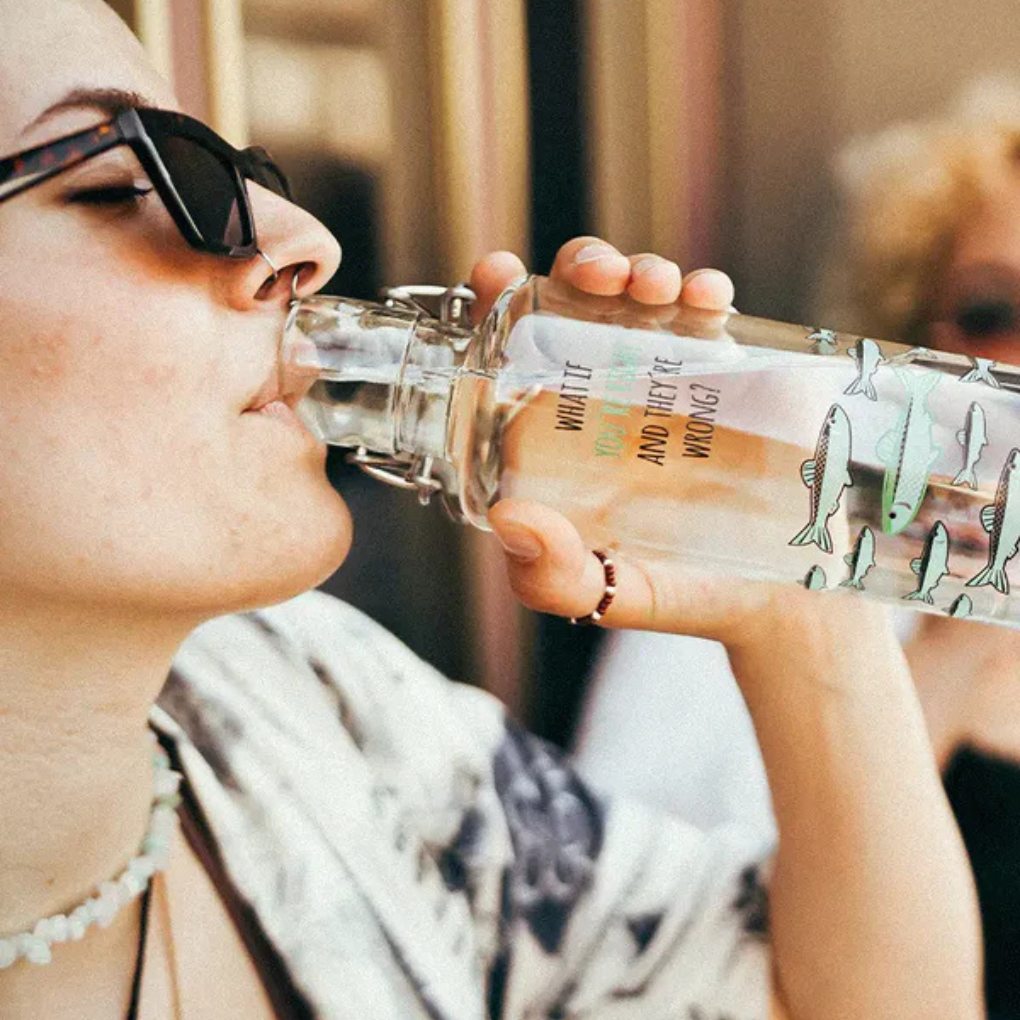
The Soulbottle is about as honest as a plastic-free bottle gets. The whole thing is four parts: a glass body, a glazed ceramic lid, a stainless steel clasp, and a natural rubber gasket. No plastic, no hidden cap, nothing to second-guess.
It is made climate-neutrally in Germany, the brand is a certified B Corp, and each bottle sold funds clean water access through the company’s WASH project. The glass gives you the purest taste of anything on this list. The trade-off is the usual one for glass: it is heavier, it can break, and there is no insulation. As a home or desk bottle, it is hard to beat.
Body
Recyclable Glass
✓ Plastic FreeLid
Glazed Ceramic
✓ Plastic FreeClasp
Stainless Steel
✓ Plastic FreeGasket
Natural Rubber
◎ Food-Safe ElastomerPros
- Truly plastic-free, every part verified
- Purest taste of any bottle on this list
- B Corp, climate-neutral, funds clean water projects
Cons
- Glass body needs careful handling
- No temperature insulation
- Heavier than steel for all-day carry
If you want the cleanest, most transparent plastic-free bottle and you will mostly use it at home or a desk, this is the one. Our best overall plastic-free pick for 2026.
The only MADE SAFE certified bottle line
$35 starting price
The Pura bottle solved the cap problem most brands skip. Instead of a polypropylene lid, the cap and sip spout are 100% medical-grade silicone, and the collar is stainless steel. The body is 18/8 food-grade steel. There is no plastic anywhere in the bottle.
It is also the only water bottle line carrying MADE SAFE certification, which screens products against thousands of known harmful substances. Pura’s adaptable design means one bottle can shift from a sippy top to a straw top to a sport cap as your needs change. It costs more than a basic steel bottle, but you are paying for a verified, plastic-free system.
Body
18/8 Stainless Steel
✓ Plastic FreeCap
Medical-Grade Silicone
◎ Food-Safe ElastomerCollar
Stainless Steel
✓ Plastic FreeSip Spout
Medical-Grade Silicone
◎ Food-Safe ElastomerPros
- Steel and silicone only, no plastic cap
- MADE SAFE certified, the only bottle line that is
- Interchangeable silicone tops grow with kids
Cons
- Higher price than a basic steel bottle
- Silicone spouts need regular deep cleaning
- Fewer color and size options than big brands
The bottle to buy when you want a third party, not a marketing team, vouching for what is inside. Best pick for certified peace of mind.
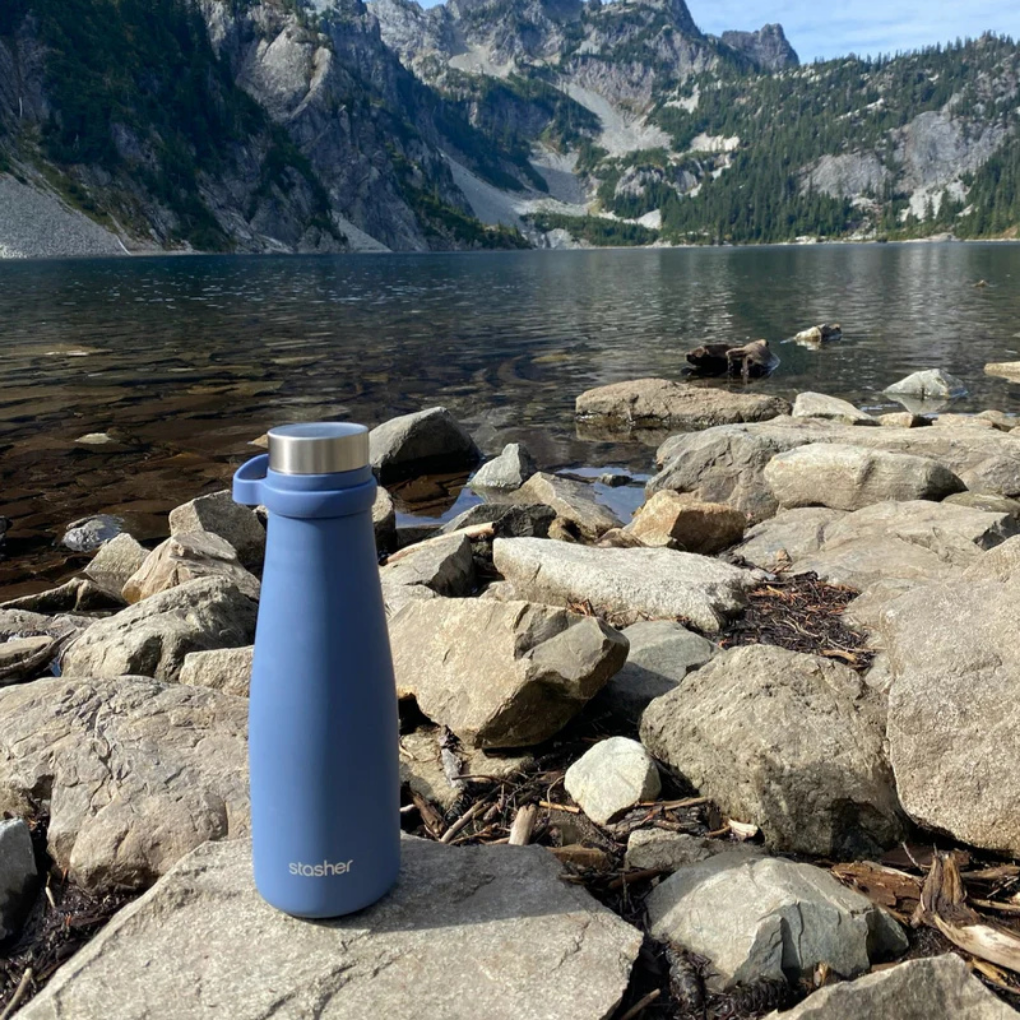
Stainless steel inside, food-grade silicone outside
$30 starting price
The Stasher water bottle is built the way the brand builds its famous storage bags: a stainless steel core wrapped in food-grade silicone, with a screw lid that is 100% stainless steel. Both the body and the lid are plastic-free, and the silicone exterior gives you grip without the slip of bare steel.
It is a newer release from a certified B Corp, and the silicone wrap doubles as light drop protection. The double-wall steel interior keeps drinks cold for hours. If you like the look and feel of silicone but want a cap you do not have to question, this is a clean, modern option.
Body
Stainless Steel Core
✓ Plastic FreeExterior
Food-Grade Silicone
◎ Food-Safe ElastomerLid
Stainless Steel
✓ Plastic FreeGasket
Food-Grade Silicone
◎ Food-Safe ElastomerPros
- All-stainless lid, no plastic components
- Silicone wrap adds grip and drop protection
- B Corp brand with a strong reuse mission
Cons
- Silicone exterior can attract lint and dust
- Heavier than a bare steel bottle
- Newer release with fewer long-term reviews
A truly plastic-free bottle that feels modern in the hand and skips the plastic cap entirely. Best pick for steel safety with a softer grip.
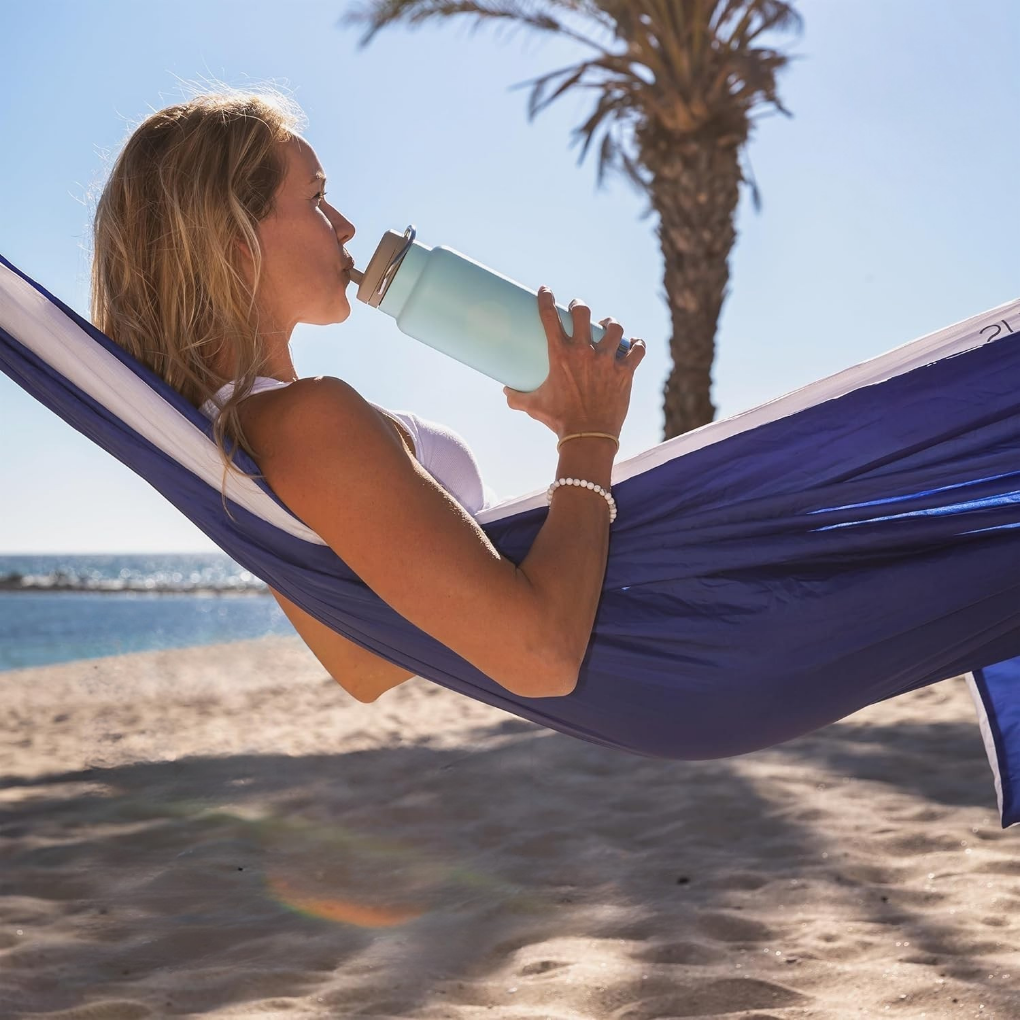
A household name, plastic-free with the right cap
$47 starting price
The Klean Kanteen Classic pioneered the BPA-free stainless steel bottle back in 2004, and it is still one of the most trusted everyday bottles you can buy. The body is 18/8 steel made with 90% post-consumer recycled content, the interior is unlined, and the brand is both a certified B Corp and Climate Neutral certified.
Here is the one thing that matters for a plastic-free build: the cap. Order it with the stainless steel Loop Cap and the whole bottle is plastic-free. The popular Sport Cap and Chug Cap are polypropylene, so skip those if plastic-free is the goal. With the Loop Cap on, this is the easiest household-name bottle to recommend.
Body
Recycled 18/8 Steel
✓ Plastic FreeLoop Cap
Stainless Steel
✓ Plastic FreeCap Gasket
Food-Grade Silicone
◎ Food-Safe ElastomerInterior
Unlined Steel
✓ Plastic FreePros
- Stainless Loop Cap makes it fully plastic-free
- 90% recycled steel with an unlined interior
- B Corp and Climate Neutral certified
Cons
- Sport and Chug caps are plastic, choose carefully
- Loop Cap is not leak-proof inside a bag
- Single-wall Classic offers no insulation
Buy it with the steel Loop Cap and you have a trusted, plastic-free everyday bottle from a brand that has done this for two decades. Best everyday pick, just mind the cap.
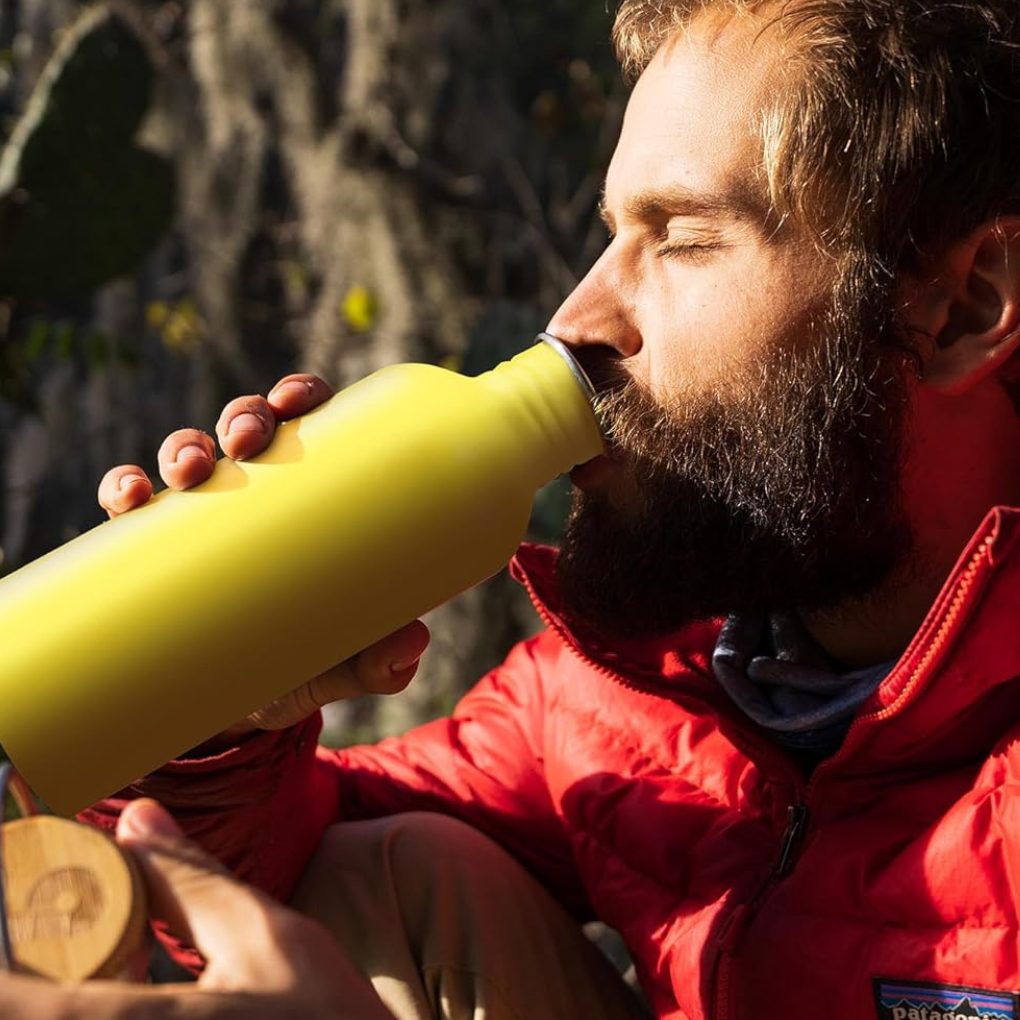
Fully plastic-free for around twenty dollars
$18 starting price
The Bambaw stainless steel bottle proves a plastic-free bottle does not have to be expensive. The body is 304 food-grade stainless steel, the lid pairs a steel body with a real bamboo top, and the gasket is food-grade silicone. No plastic, around $18.
It is a single-wall bottle, so it will not hold temperature the way an insulated one does, and that is the trade-off for the price. Bambaw is an EU-based zero-waste brand, and the bottle is food-contact compliant and heavy-metal tested. If you want to make the switch without overthinking the budget, start here.
Body
304 Stainless Steel
✓ Plastic FreeLid
Steel + Bamboo Top
✓ Plastic FreeGasket
Food-Grade Silicone
◎ Food-Safe ElastomerInterior
Unlined Steel
✓ Plastic FreePros
- Fully plastic-free at the lowest price on this list
- Real bamboo and steel lid, no plastic underneath
- Food-contact compliant and heavy-metal tested
Cons
- Single-wall, so no hot or cold insulation
- Bamboo lid is hand-wash only
- Fewer sizes than premium brands
The easiest, cheapest way to own a truly plastic-free bottle. Best budget pick, and a great first switch.
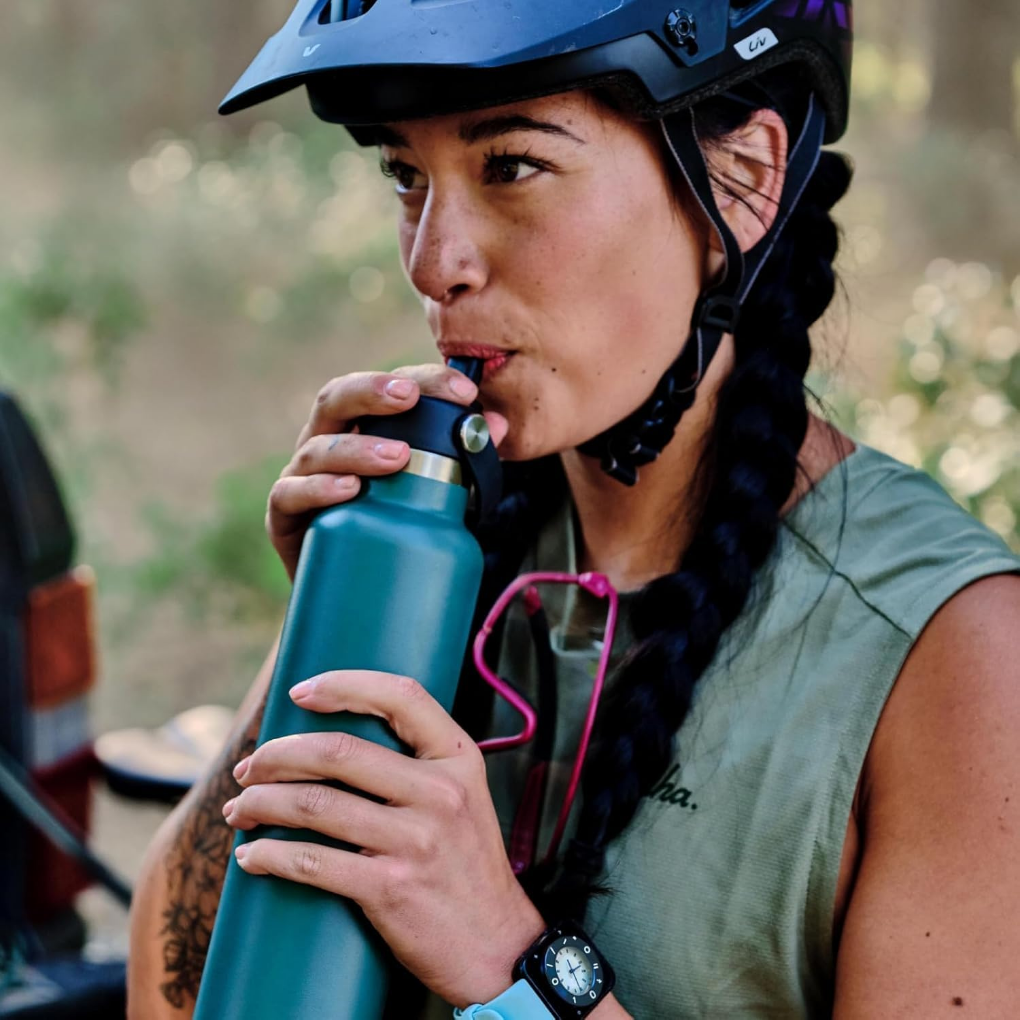
Best-in-class insulation, with a plastic Flex Cap
$25 starting price
The Hydro Flask earns its reputation on insulation. The 18/8 stainless steel body, double-wall vacuum sealed, keeps water cold through a long hot day better than almost anything. The body is fully inert, so your water never touches plastic while it sits in the bottle.
The honest catch is the cap. The standard Flex Cap is polypropylene, and the carry strap is a thermoplastic urethane. Neither is in constant contact with your water the way a sip spout would be, but they are plastic, which is why this bottle is marked Mostly Plastic Free. If you want this level of insulation, just know what the cap is, and weigh whether a steel-capped bottle would serve you better.
Body
18/8 Stainless Steel
✓ Plastic FreeFlex Cap
Polypropylene
⚠ Water ContactCap Strap
Thermoplastic Urethane
⚠ No Water ContactGasket
Food-Grade Silicone
◎ Food-Safe ElastomerPros
- Outstanding cold and hot retention
- Inert 18/8 steel body, no plastic touches stored water
- Extremely durable and widely available
Cons
- Flex Cap is polypropylene plastic
- Carry strap is thermoplastic urethane
- Pricier than plainer steel bottles
The pick when insulation is your top priority and you have accepted the plastic cap as the trade-off. Best insulation, but not a fully plastic-free bottle.
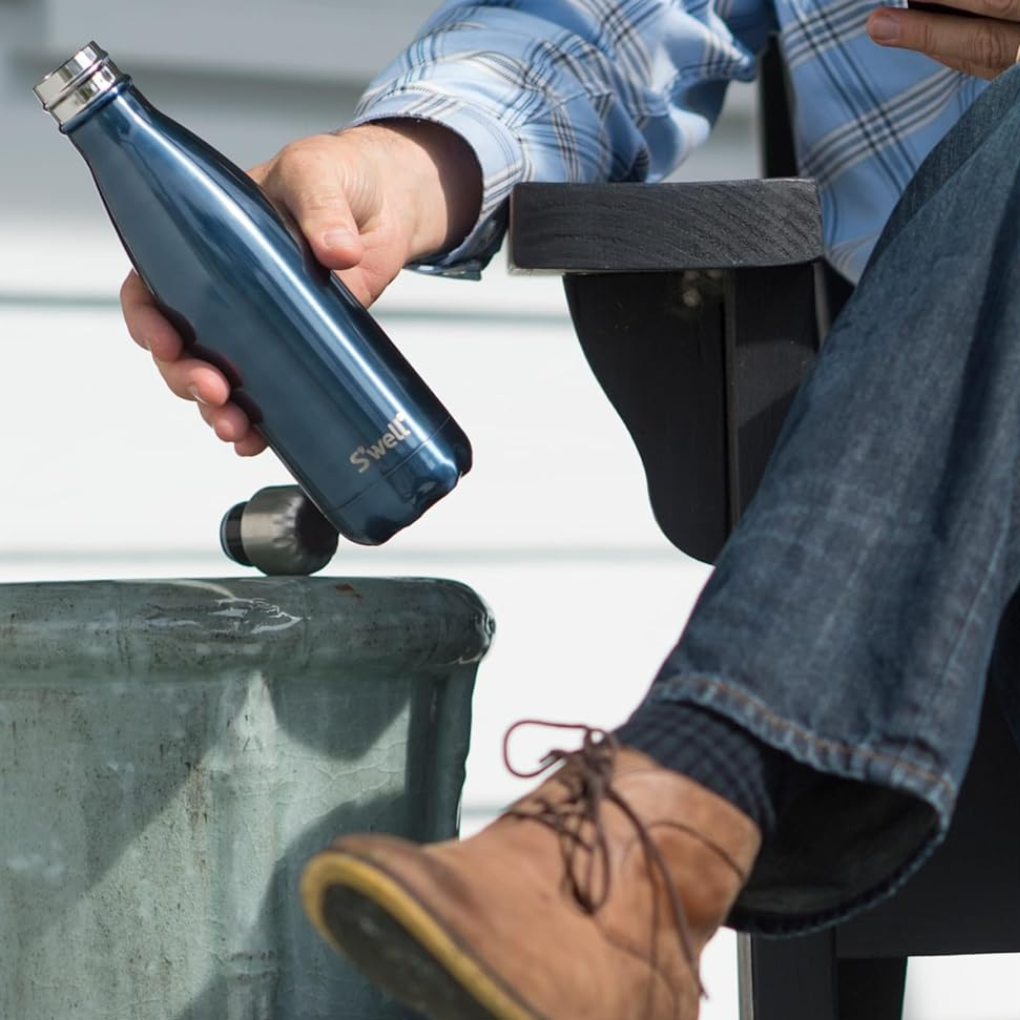
Triple-wall steel with a plastic-cored cap
$24 starting price
The S’well bottle made stainless steel a design object, and the triple-wall vacuum insulation really performs. The 18/8 steel body keeps drinks cold for many hours and looks good doing it. Like Hydro Flask, the body itself keeps plastic away from your stored water.
The cap is where it lands in the Mostly Plastic Free group. S’well’s own materials listing describes a plastic cap body beneath the stainless steel shell. The steel you see and touch is real, but there is plastic inside the cap. It is a beautiful bottle, just not a fully plastic-free one.
Body
18/8 Stainless Steel
✓ Plastic FreeCap Shell
Stainless Steel
✓ Plastic FreeCap Body
Plastic Interior
⚠ Water ContactGasket
Food-Grade Silicone
◎ Food-Safe ElastomerPros
- Triple-wall insulation with a strong temperature hold
- Inert steel body in stylish finishes
- Widely sold and well supported
Cons
- Cap has a plastic interior body under the steel shell
- Narrow mouth is harder to deep clean
- Premium price for the design
A great-looking, well-insulated steel bottle, as long as you know the cap is not fully plastic-free. Best design, with one plastic component to know about.
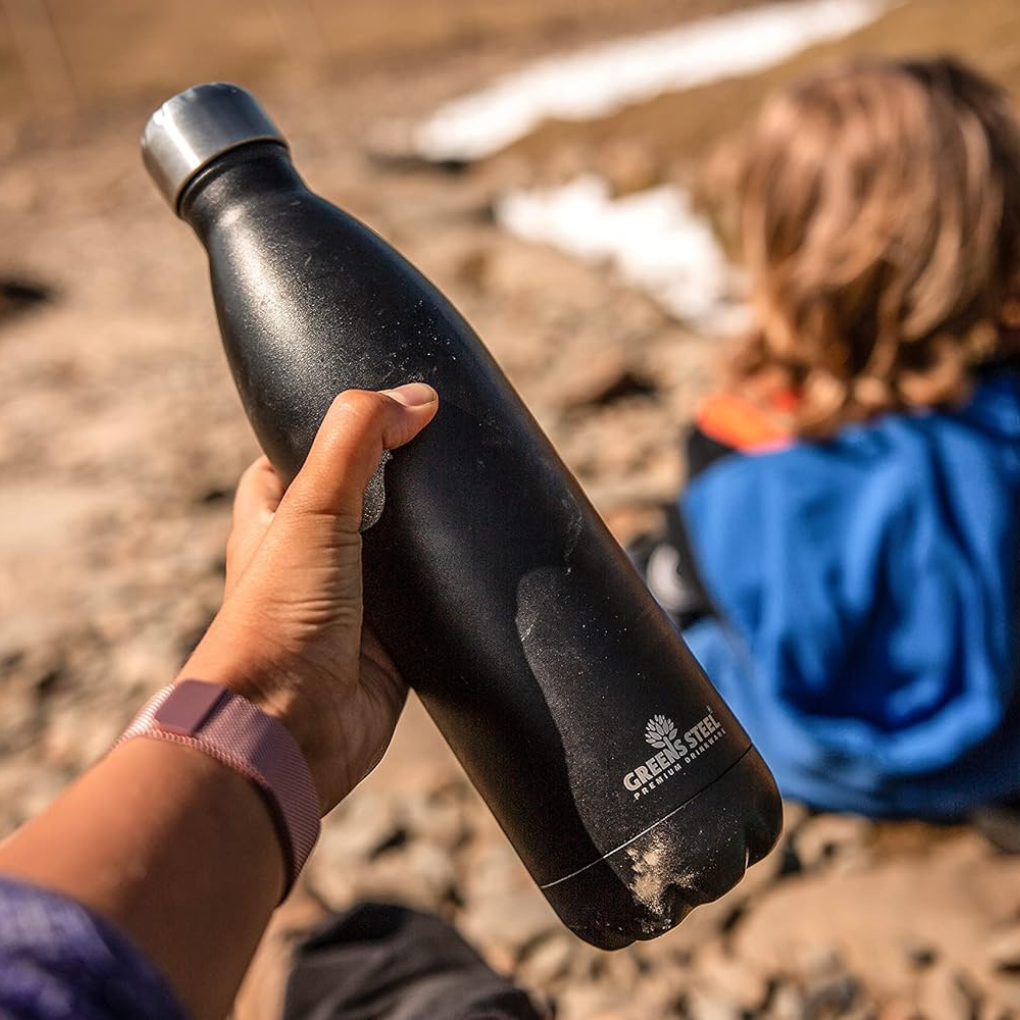
Insulated steel on a budget, with a Tritan lid
$15 starting price
The Greens Steel bottle packs double-wall vacuum insulation into one of the lowest prices on this list. The 304 food-grade stainless steel body has no plastic liner inside, and the brand backs it with a lifetime guarantee. For around $15, that is a lot of bottle.
The screw lid is Tritan, a plastic. Tritan is BPA-free and tough, but it is still a thermoplastic, and on a screw lid the water does contact it. That is why this one sits in the Mostly Plastic Free group. If your budget is tight and you want insulation, it is a solid buy with eyes open about the lid.
Body
304 Stainless Steel
✓ Plastic FreeScrew Lid
Tritan Plastic
⚠ Water ContactGasket
Food-Grade Silicone
◎ Food-Safe ElastomerInterior
Unlined Steel
✓ Plastic FreePros
- Double-wall insulation at a budget price
- 304 steel body with no plastic interior liner
- Lifetime guarantee from the brand
Cons
- Screw lid is Tritan plastic
- Optional straw lid is also plastic
- Finish can scratch with heavy use
The most affordable insulated bottle here, with the Tritan lid as the trade-off for the price. Best value insulated pick, lid caveat included.
What to Look for When Choosing a Plastic-Free Water Bottle
Choosing a plastic-free water bottle comes down to two checks: look for a food-grade steel or glass body with a fully non-plastic cap, and avoid the polypropylene or Tritan lids that hide under bamboo covers and “BPA-free” labels.
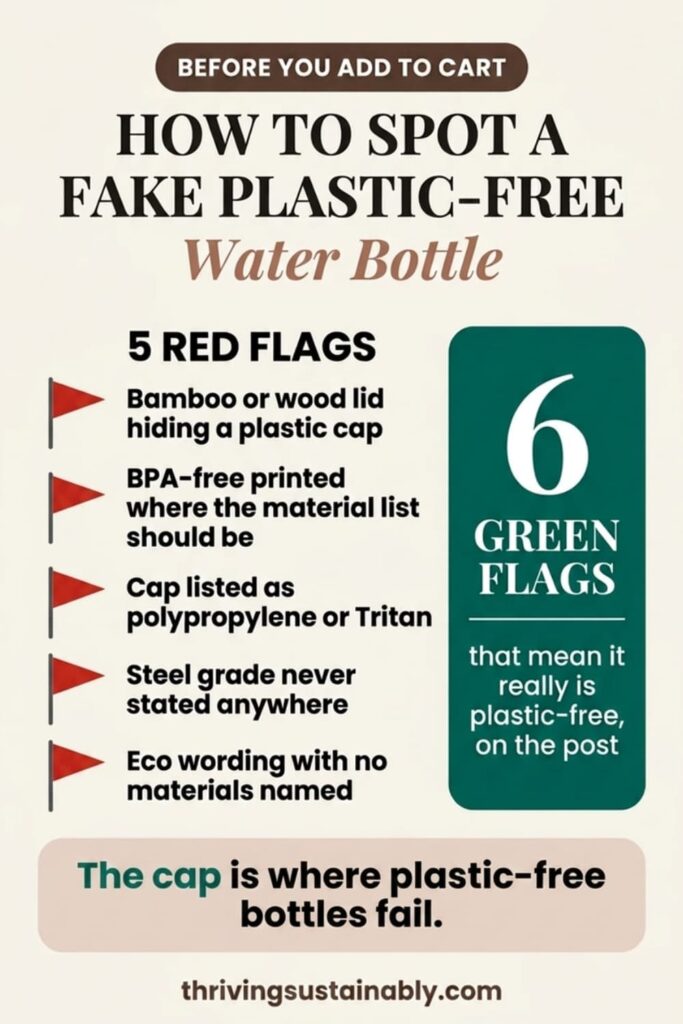
Once you’ve decided to skip plastic, a few practical details separate a bottle you’ll love from one that ends up in a cabinet. Here’s what to reach for, and what to put back on the shelf.
✅ What to Look For
These are the green flags. A bottle that hits most of them is the real thing.
- A food-grade steel or glass body. Look for “18/8” or “304” on stainless steel, or borosilicate glass. Both are inert, so they won’t leach chemicals or trade flavors with your water.
- A fully non-plastic cap. The cap should be stainless steel, silicone, ceramic, or bamboo over steel, all the way through. This is the part most bottles get wrong, so it’s the one worth checking first.
- Silicone or natural rubber seals. These are elastomers, not plastic, so a silicone gasket is a green flag. It won’t shed microplastics the way a plastic part can.
- A leak-proof or wide-mouth lid. A true leak-proof lid can ride upside down in a bag. A wide mouth is easier to clean and fits ice cubes. Pick the one that matches how you actually drink.
- The right insulation for your day. Double-wall vacuum insulation holds temperature for hours but adds weight and cost. Single-wall is lighter and cheaper. Neither is safer; it is a lifestyle call.
- A brand that names every material. If a company tells you plainly what each part is made of and sells replacement gaskets and lids, it expects the bottle to last for years.
❌ What to Avoid
These are the red flags. One alone doesn’t make a bottle terrible, but they’re worth catching before you pay.
- Vague eco-language with no material list. “Natural” and “eco-friendly” are not materials. If the brand won’t name the parts, move on.
- A plastic cap, lid, or spout. Polypropylene and Tritan are still plastic. This is the single most common way a “plastic-free” bottle quietly isn’t.
- Bamboo or wood trim over a plastic cap. The natural-looking shell is decorative. Always check what the cap is actually made of underneath it.
- “BPA-free” is treated like “safe.” BPA-free plastic often substitutes other chemicals, and it still sheds microplastics as it ages and heats up.
- Lower-grade or unlabeled steel. Cheap steel can leach a metallic taste. If the brand doesn’t state the grade, don’t assume it’s food-grade 18/8.
- A plastic liner or interior coating. Some metal bottles are lined with plastic or epoxy. That puts plastic right back against your water.
How to Clean and Care for Your Plastic-Free Water Bottle
Cleaning a plastic-free water bottle involves a daily rinse with warm, soapy water, a weekly scrub with a bottle brush, and an occasional baking soda soak to remove odors. Steel and glass both handle deep cleaning that would warp or stain a plastic bottle.
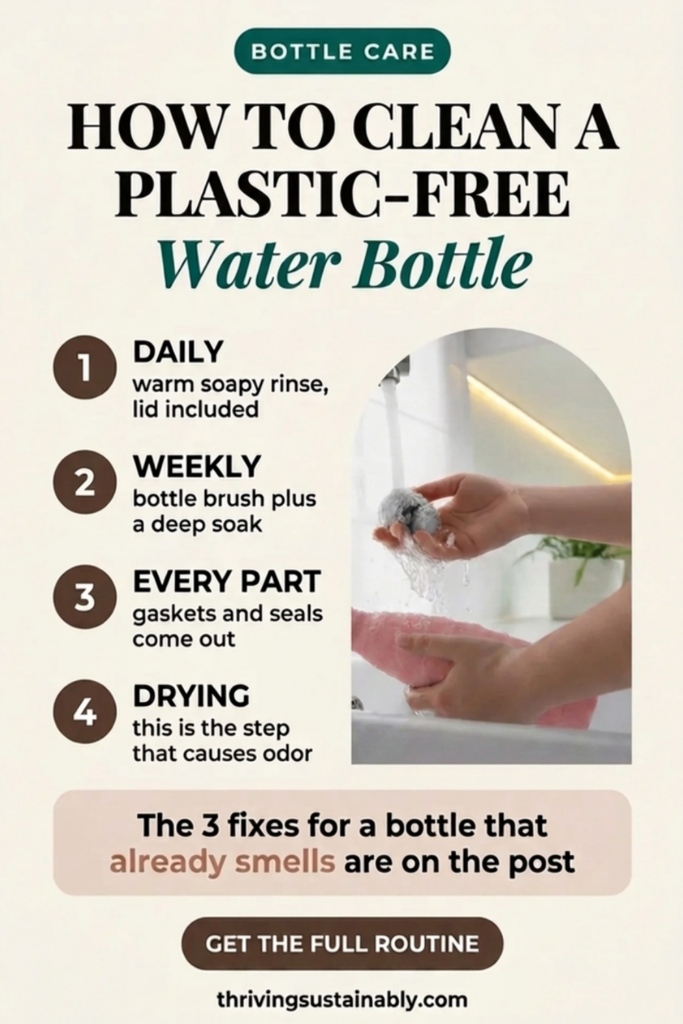
One of the quiet perks of leaving plastic behind: your bottle is actually easier to keep clean. Plastic holds onto smells and stains. Steel and glass don’t, as long as you give them a little routine attention.
Daily Cleaning
Rinse the bottle with warm water after every use, especially if you used anything other than water. A drop of dish soap and a quick swish is enough most days. Don’t forget the lid and any silicone parts, since that’s where film and odor tend to start.
Deep Cleaning for Odors and Stains
Once a week, run a bottle brush around the inside with warm, soapy water. For a lingering smell, fill the bottle with warm water and a tablespoon or two of baking soda, let it sit overnight, then scrub and rinse well. For coffee or tea stains, a little white vinegar does the job. Skip bleach on stainless steel, since it can pit and damage the finish.
Caring for Lids and Seals
Silicone gaskets and seals come out for a reason. Pop them off and wash them separately every week or so, because trapped moisture behind a seal is the most common cause of a funky-smelling bottle. Bamboo lids should be hand-washed and never soaked to prevent cracking or warping.
Storage
Let the bottle and all its parts air dry completely before putting the lid on and storing it. Sealing a damp bottle is how you get that musty smell. If you’ve found a bottle you love, buy a spare gasket or two, since a fresh seal can add years to its life.
FAQs on Best Plastic Free Water Bottles
It depends on the parts. Most stainless steel bottle bodies are dishwasher safe, though hand washing keeps an insulated bottle’s finish looking new longer. Glass bodies are usually dishwasher safe, too. The parts to keep out of the dishwasher are bamboo lids, which can crack or warp, and you should check the brand’s guidance on silicone seals. When in doubt, hand-wash the lid and run the body through the machine.
A good stainless steel or glass bottle can last a decade or more with basic care. Steel is nearly indestructible, shrugging off drops and dents. Glass lasts a long time, too, especially with a silicone sleeve for protection. The part that wears out first is usually the silicone gasket, and that’s a cheap, easy replacement. Compare that to a plastic bottle, which often warps, cracks, or starts holding odors within a year or two.
Yes. Food-grade 18/8 stainless steel is inert and stable at high temperatures, so hot coffee or tea won’t leach anything into your drink. That’s actually a key advantage over plastic, which releases more chemicals as it heats up. If you want your hot drink to stay hot, choose a double-wall vacuum-insulated steel bottle. Just be careful with the exterior of a single-wall steel bottle, since it can get hot to the touch.
A metallic taste usually points to lower-grade steel or a bottle that needs a deeper clean. First, try a baking soda soak overnight, then a thorough scrub and rinse. If the taste sticks around, the bottle may be made from a steel grade below food-grade 18/8 or 304, which is why that grade is worth looking for when you buy. A quality steel bottle should taste like nothing.
“BPA-free” is not the same as safe. When manufacturers removed BPA, many replaced it with related chemicals like BPS and BPF, and research suggests some of those substitutes behave similarly in the body. A “BPA-free” plastic bottle can still shed microplastics, especially as it ages or heats up. If avoiding plastic chemicals is your goal, a steel or glass bottle skips the question entirely. Our guide on how to tell if plastic is BPA-free covers the labels in detail.
It removes one major, controllable source, but it can’t make your water perfectly particle-free. Microplastics are in tap water, dust, food, and the air, so no single swap solves everything. What a plastic-free bottle does is stop your own bottle from being part of the problem, no shedding from the container, no chemicals leaching in the heat. It’s one of the highest-impact swaps precisely because you use it every day. Pairing it with a good water filter goes even further.
Final Thoughts About Plastic-Free Water Bottles
Making the switch to a reusable water bottle represents one of the simplest yet most impactful changes you can make for both your health and the environment. Americans use approximately 50 billion plastic water bottles each year, with less than 25% being recycled; as a result, billions end up in landfills and oceans, where they take hundreds of years to decompose.
By choosing a durable, reusable option, you’re directly reducing demand for single-use plastics while ensuring your water tastes pure and clean every time. Beyond environmental benefits, reusable bottles save money long-term and eliminate exposure to potentially harmful chemicals that can leach from plastic containers. Once your bottle is sorted, our room-by-room non-toxic living guide shows where to make the same kind of swap in the kitchen, bathroom, and laundry room.
📚References
- EarthDay.org. (2023). Fact sheet: Single-use plastics. https://www.earthday.org/fact-sheet-single-use-plastics/
- Container Recycling Institute. (n.d.). Down the drain: Plastic water bottles. https://www.container-recycling.org/index.php/issues/…/275-down-the-drain
- EarthDay.org. (2023). Money in a bottle: How bottled water is costing us the planet. https://www.earthday.org/money-in-a-bottle/
- National Geographic. (n.d.). Reusable plastic water bottles: Are they sustainable? https://www.nationalgeographic.com/environment/article/reusable-plastic-water-bottles-sustainable
- World Economic Forum. (2022). Recycling and plastic facts. https://www.weforum.org/stories/2022/06/recycling-global-statistics-facts-plastic-paper/