
Key Takeaways
- Eating fish is one of the main ways microplastics can enter the human body.
- Contaminated seafood may expose people to tiny plastic fragments and their chemical additives.
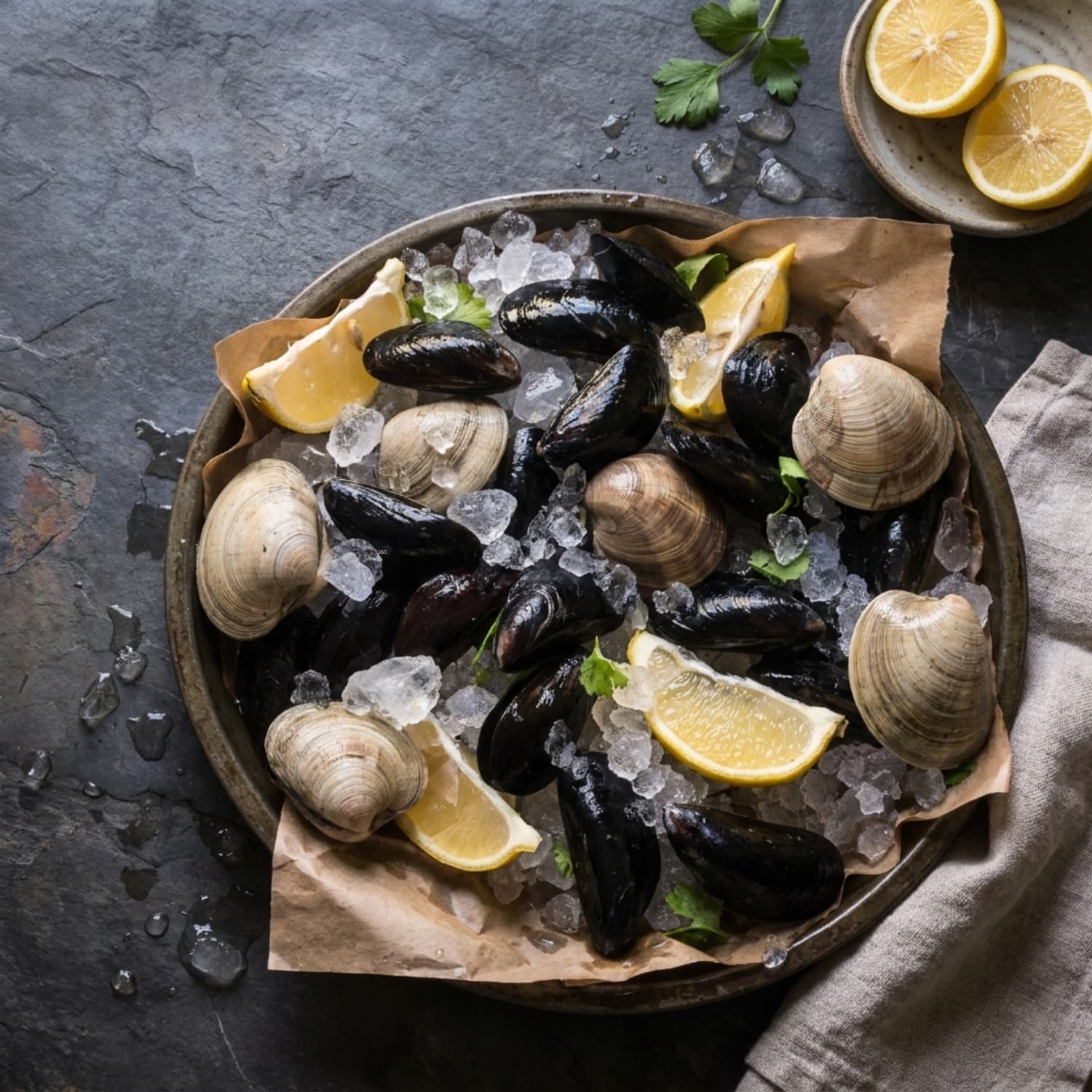
- Shellfish like mussels and oysters carry the highest risk since we consume them whole, including their digestive tracts.
Fish earns its health-food reputation: lean, full of omega-3s, the centerpiece of nearly every “good for your heart” list. So it’s a little jarring to learn that the same fillet may come with a side of plastic.
When researchers at Portland State University tested 182 samples of common seafood, they found microplastics in all but 2. That’s what the science keeps confirming: plastic has worked its way deep into the food chain, and fish are among the main ways it enters our bodies.
This guide breaks down how microplastics get into fish, how much is really in the seafood we eat, what it might mean for your health, and the choices that lower your exposure, without asking you to give up fish.
How Do Microplastics End Up in Fish?
Microplastics enter fish in three main ways: fish swallow the particles directly, eat smaller animals that have already ingested plastic, or take in fibers from the water and sediment around them.
Microplastics don’t just appear in fish; they arrive through a chain of pollution that starts with us. Every time plastic breaks down, whether from a tossed water bottle or microfibers shed during laundry, tiny fragments escape into rivers, lakes, and oceans. Add in plastic pellets, the raw beads factories melt into products and spill by the billions, and there’s a steady supply entering the water. Once there, these particles quickly become part of the aquatic food system.
Fish encounter microplastics in several ways:
- Direct ingestion: Floating fragments resemble fish eggs or plankton, so species near the surface often mistake them for food.
- Trophic transfer: Even fish that don’t eat plastic directly can ingest it by eating prey that already has.
- Sediment and filter feeding: Bottom-dwellers like flounder encounter plastics in contaminated sediments, while mussels and oysters filter particles straight from the water.
Researchers point to human activity as the root cause. Wastewater plants can’t catch every microfiber from synthetic clothing, and lost fishing gear, packaging waste, tire dust, and old cosmetic microbeads all add to the load.
Once these plastics reach our waterways, fish have little chance of avoiding them. The pace depends on us: the faster we slow plastic production and waste, the sooner the supply to our rivers and oceans starts to shrink.
Prevalence of Microplastics in Fish and Seafood
Microplastics now show up in nearly all common seafood. When Portland State researchers tested 182 samples, 180 contained plastic particles or fibers, though levels vary by species, habitat, and which part you eat.
Microplastics have spread through seafood at an unsettling scale, turning up in everything from shrimp and herring to deep-dwelling fish like lingcod. And we’re not talking about trace amounts.
A 2024 study in Frontiers in Toxicology analyzed 182 seafood samples from the U.S. West Coast, including black rockfish, lingcod, Chinook salmon, Pacific herring, Pacific lamprey, and pink shrimp. 180 of the 182 samples contained microplastics or microfibers. The contamination was found in both wild-caught and store-bought seafood, and cleaning or preparing it didn’t eliminate it.
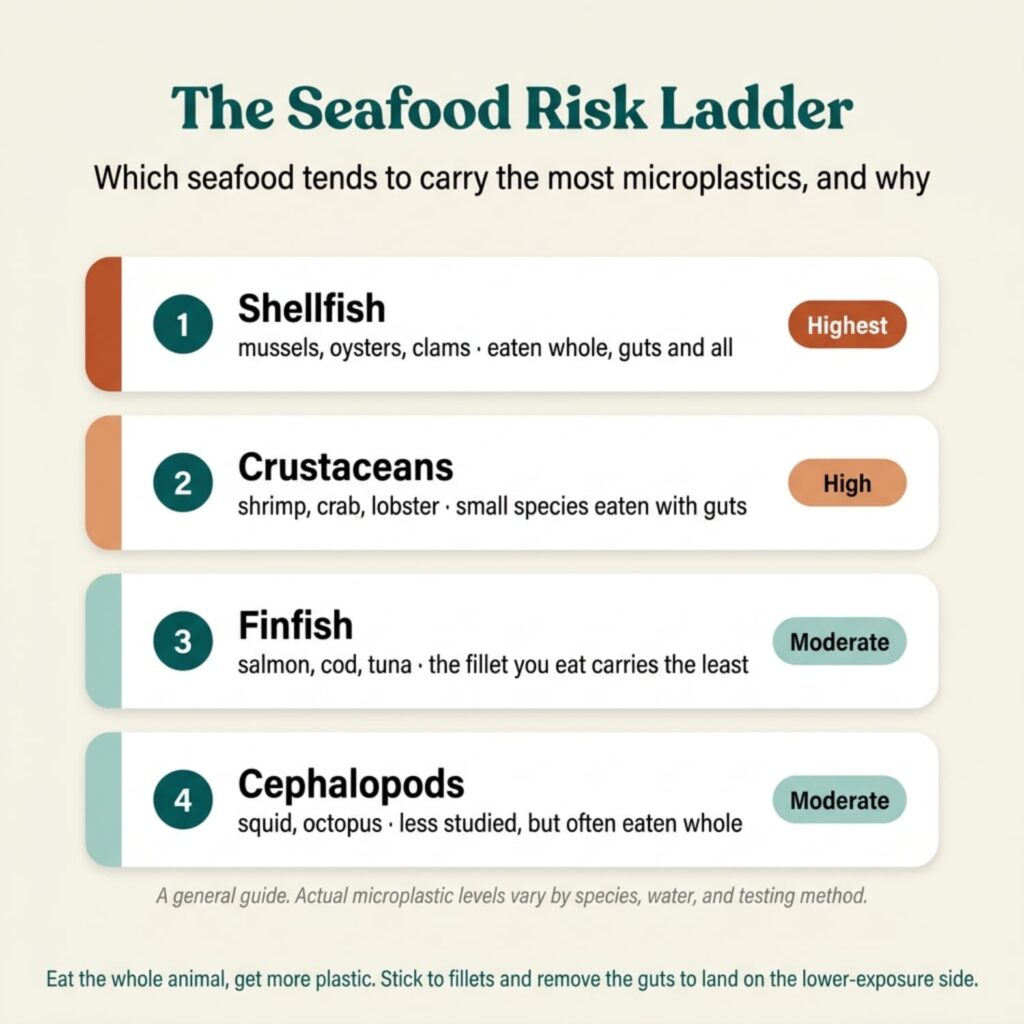
How much a fish carries depends on its species, habitat, feeding behavior, and size. Plankton feeders are especially vulnerable because they often mistake plastic fragments for food. Where the plastic ends up inside the fish matters too: particles concentrate in the stomach, gut, and liver, and are present in far less in the muscle, which is the fillet most people actually eat. That’s why removing the guts when you clean a whole fish and leaning toward fillets puts you on the lower-exposure side.
The bottom line: seafood is one of the most consistent pathways for microplastics to reach our bodies. Whether wild-caught or farmed, very few marine species are escaping it entirely.
Don’t Miss: Microplastics in Food: Sources, Health Risks & How to Avoid Microplastics don’t stop at fish — see how they sneak into other foods and what you can do to reduce exposure. Read more →What Happens When We Eat Contaminated Fish?
Eating contaminated fish exposes us to plastic particles and the chemicals they carry. Most pass through the gut, but tinier nanoplastics have been found in human blood and organs, and the long-term effects are still being studied.
So if fish eat plastic… what happens when we eat the fish?
Researchers around the world are still working on that answer. The honest picture right now is that scientists have detected microplastics in people, but they’re still studying what that means for our health over the long term. So far, the evidence points to reasons for caution rather than firm conclusions.
When we eat seafood that contains microplastics, we’re not just swallowing plastic fragments. We may also take in:
- Chemical additives used to make plastic, like bisphenols and phthalates, can interfere with the body’s hormone signals.
- Pollutants that plastics soak up from the environment, including pesticides, heavy metals, and industrial chemicals like PCBs.
Some studies suggest that many microplastics pass through the gut without being absorbed. But nanoplastics, the even smaller particles, have been found in human tissue such as the liver, spleen, and bloodstream. A 2025 report from Stanford Medicine notes that plastics have now turned up in places like blood and the placenta, though what that does to us long-term is still under investigation.
Risk also depends on the type of seafood. Whole animals like mussels and oysters tend to carry more because we eat them whole, while filleted fish usually contain less unless particles have moved into the flesh.
In lab and animal studies, plastic exposure has been associated with several possible health concerns:
- Hormone disruption.
- Oxidative stress and inflammation.
- Changes to gut bacteria.
- Possible links to cancer and reproductive issues, so far seen in animal studies.
It’s worth being clear about what those studies do and don’t show: most used higher doses or animal models, so they signal what to watch for rather than proving harm in people. Eating contaminated fish probably won’t have any immediate effects, but it may increase our overall exposure to plastics and their chemicals over time. That’s a bigger question for communities that rely on seafood as a daily staple.
What We Still Don’t Know
Scientists still have no standard test for microplastics, struggle to detect nanoplastics, and don’t yet know what decades of low-level exposure do. The uncertainty is real, but it isn’t a reason to wait.
Research on microplastics in fish is growing rapidly, but real gaps remain, and it’s worth being honest about them.
There’s still no standard way to test for microplastics, so results vary from study to study and are hard to compare. Nanoplastics are an even bigger blind spot. They’re so small they may slip across biological barriers inside the body, yet they’re tough to detect and often go entirely uncounted.
The long-term picture is the biggest unknown. One serving of fish is unlikely to harm you, but scientists can’t yet say what decades of regular seafood eating add up to. That answer simply isn’t in yet.
None of this is a reason to panic, nor is it a reason to wait. The most sensible move while the science catches up is to reduce the amount of plastic that ends up in the water in the first place.
Don’t Miss: Microplastics: Health Risks, Sources, and How to Reduce Exposure Want the bigger picture beyond seafood? Learn where microplastics are showing up and ways to cut exposure. Read more →Can We Still Eat Fish Safely?
Yes. Fish can be part of a healthy diet. Choosing smaller, shorter-lived species, eating fillets rather than whole shellfish, and varying your protein intake all reduce the amount of plastic associated with them.
Short answer: yes, with a little awareness. Fish can remain part of a healthy diet, and a few simple choices can reduce the amount of plastic that comes with it.
Not all seafood carries the same risk, and how it’s prepared matters too. Whole fish and shellfish, like mussels, clams, sardines, and anchovies, are more likely to hold microplastics in the parts we actually eat because the digestive tract, where most particles collect, gets eaten along with the meat.
Filleted fish are usually sold with the stomach and intestines removed, which reduces the risk of exposure. It’s not a guarantee, though, especially with long-lived top predators like tuna or halibut, where particles can build up in the muscle over time.
If you want to keep your exposure low, a few things help:
- Choose smaller, shorter-lived fish, which accumulate fewer plastics and pollutants.
- Vary your protein sources, especially if you eat seafood often.
- Notice how your seafood is sourced. Some fish farms are working to cut plastic exposure, while others lean heavily on plastic gear.
In the end, it’s less about labeling seafood “safe” or “unsafe” and more about the bigger picture: the more plastic we put into the environment, the more it comes back through the food chain. Choosing carefully helps you, but cutting plastic pollution at the source is what protects the seafood supply long-term.
What You Can Do
You can lower your own exposure with smarter seafood choices and less plastic use, but the bigger fix is cutting plastic at the source: pellet spills, laundry microfibers, and larger plastic waste breaking down.
You can’t filter the ocean yourself, but your choices still matter, on two levels. The first is lowering your own exposure. The second, and bigger, is shrinking the plastic pollution that feeds the problem in the first place. Most of the plastic in our water traces back to a few sources: spilled plastic pellets (the raw material factories melt into products), synthetic fibers shedding off our clothes in the wash, and larger plastic waste slowly breaking apart. The steps below chip away at both levels.
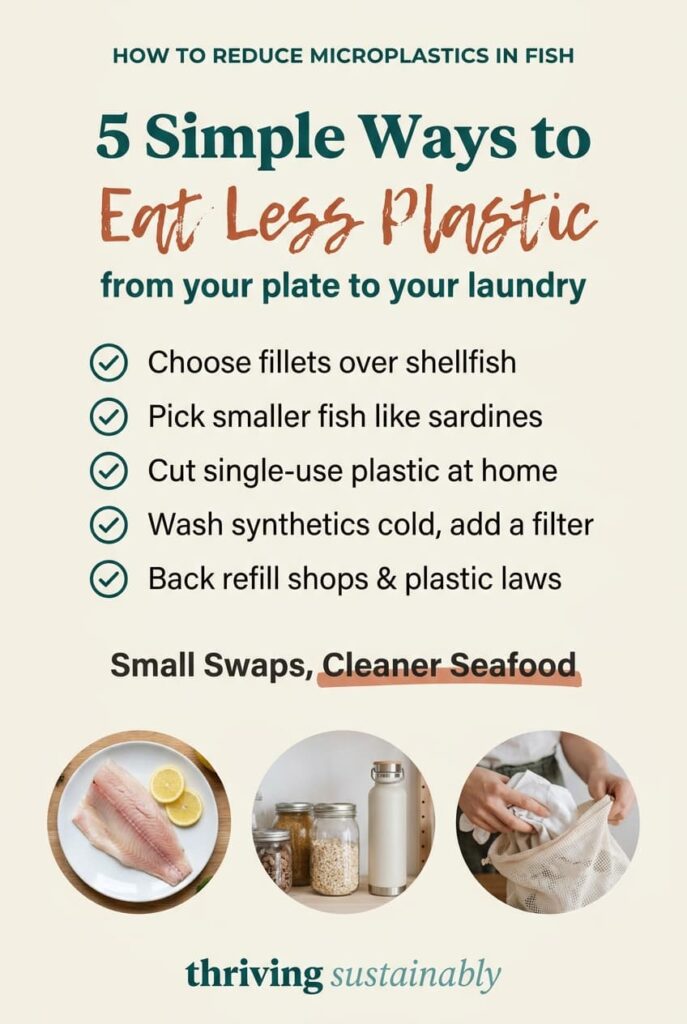
Save This Plate-to-Laundry Plastic Checklist 📌
🐟 Make Informed Seafood Choices
Opt for filleted fish rather than whole shellfish when possible, since shellfish contain more microplastics in their edible parts. Choosing smaller, short-lived species like sardines or anchovies often means fewer accumulated pollutants compared to large predators such as tuna or swordfish. Adding more plant proteins, such as beans, lentils, or tofu, not only lowers your exposure but also reduces demand on overfished species.
♻️ Reduce Plastic in Your Life
Every piece of plastic you skip is one less that can break down into the environment. Swap single-use packaging for reusable containers, carry your own water bottle or coffee cup, and choose natural fibers over synthetics like polyester or nylon. Even small switches, like bar soap instead of bottled body wash, cut down on hidden plastic.
🤝 Support Systems That Make Better Choices Easier
The biggest changes happen when systems shift. Look for grocery stores that offer refill stations, shop from companies working to phase out plastic packaging, and support policies that hold manufacturers responsible for plastic waste. Collective action, such as supporting extended producer responsibility (EPR) laws, helps shift the burden away from consumers and onto polluters.
👕 Wash Your Clothes More Mindfully
To cut the fibers your laundry sheds, run full loads on cold, add a microfiber-catching laundry bag or install a filter, and line-dry when you can. Small changes in how you wash can keep thousands of fibers out of waterways each year. Buying fewer, higher-quality garments made from natural fibers reduces the shedding at the source.
📢 Stay Informed and Speak Up
Policy change accelerates when more people understand the risks. Stay updated on new microplastics research, share what you learn with friends and family, and engage with local leaders who influence environmental policies. Supporting clean-up efforts or joining campaigns for plastic reduction amplifies your impact beyond personal choices.
Don’t Miss: How to Remove Microplastics from Your Home and Transform Your Environment Everyday choices at home make a big difference. Learn practical steps to reduce microplastics — from cleaning habits to safer materials. Read more →FAQs About Microplastics in Fish
Not every fish has been studied, but research shows microplastics are widespread. A 2024 study on U.S. West Coast seafood found 180 of 182 samples contained microplastics. That means it’s very likely that most fish, especially those near coasts or in heavily fished waters, contain some level of contamination.
Removing the stomach and intestines during cleaning can reduce microplastic content in filleted fish. However, plastics that migrate into tissue or muscle aren’t removed by cooking. Choosing the type of seafood you eat is a more effective way to limit exposure.
Not necessarily. Farmed fish aren’t swimming in open oceans where plastic pollution is heaviest, but that doesn’t mean they’re free from contamination. They can still ingest microplastics through:
Commercial feed made with fishmeal or other ingredients that already contain plastic particles.
Tank or pond water may contain fibers and fragments from surrounding runoff or farm equipment.
Plastic infrastructure, such as nets, ropes, and liners, degrades over time.
Studies have detected microplastics in both farmed and wild seafood, though the sources may differ. The key takeaway is that aquaculture doesn’t guarantee lower exposure — and choosing smaller, short-lived species (whether farmed or wild) is still one of the most effective ways to reduce risk.
There’s no proven way to flush microplastics out of your body, and you should be cautious about any product or routine that promises to. The research on how microplastics move through us is still young, so the honest answer is that science doesn’t yet have a cleanse for this. What you can control is how much you take in going forward. Choosing lower-exposure seafood, filtering your tap water, and cutting back on plastic food packaging all reduce the amount that reaches your plate in the first place. Reducing exposure is the evidence-based move, not detoxing after the fact.
Final Thoughts About Microplastics in Fish
Microplastics in fish aren’t just an environmental issue, they’re a food issue, a health issue, and a systems issue. The research is still unfolding, but the message is already clear: plastic is showing up where it doesn’t belong, including in the seafood many of us eat.
While we can’t eliminate microplastics overnight, we can make choices that reduce exposure and push for change. Choosing seafood more carefully, cutting back on single-use plastic, and supporting policies that reduce plastic emissions all move us in the right direction.
Even small shifts, such as choosing a plastic-free dish soap or using a microfiber filter in your laundry, can make a significant difference when we’re all working in the same direction. It’s not about perfection. It’s about pressure, and enough of it in the right places can lead to real change.
The more we understand how microplastics affect our health and the environment, the stronger the case becomes for rethinking how we use plastic and how it shapes our future.
📚References
- Kacapyr, S. (2024, May 22). Study maps human uptake of microplastics across 109 countries. Cornell Chronicle. https://news.cornell.edu/stories/2024/05/study-maps-human-uptake-microplastics-across-109-countries
- Perkins, T. (2025, February 3). Study finds microplastic contamination in 99% of seafood samples. The Guardian. https://www.theguardian.com/us-news/2025/feb/03/seafood-microplastic-contamination-study
- Portland State University. (2024, April 25). Microplastics widespread in seafood Oregonians eat, PSU study finds. Portland State University News. https://www.pdx.edu/news/microplastics-widespread-seafood-oregonians-eat-psu-study-finds
- Stanford Medicine. (2025, January). Microplastics and our health: What the science says. Stanford Insights. https://med.stanford.edu/news/insights/2025/01/microplastics-in-body-polluted-tiny-plastic-fragments.html
- Times of India. (2025, June 5). Study reveals widespread microplastic presence in seafood along Vizag coast. The Times of India. https://timesofindia.indiatimes.com/city/vijayawada/study-reveals-widespread-microplastic-presence-in-seafood-along-vizag-coast/articleshow/121629222.cms
- Traylor, S. D., Granek, E. F., Duncan, M., & Brander, S. M. (2024). From the ocean to our kitchen table: Anthropogenic particles in the edible tissue of U.S. West Coast seafood species. Frontiers in Toxicology, 6, 1469995. https://doi.org/10.3389/ftox.2024.1469995
- United Nations Environment Programme. (2025, June 2). Everything you should know about microplastics. UNEP. https://www.unep.org/news-and-stories/story/everything-you-should-know-about-microplastics