
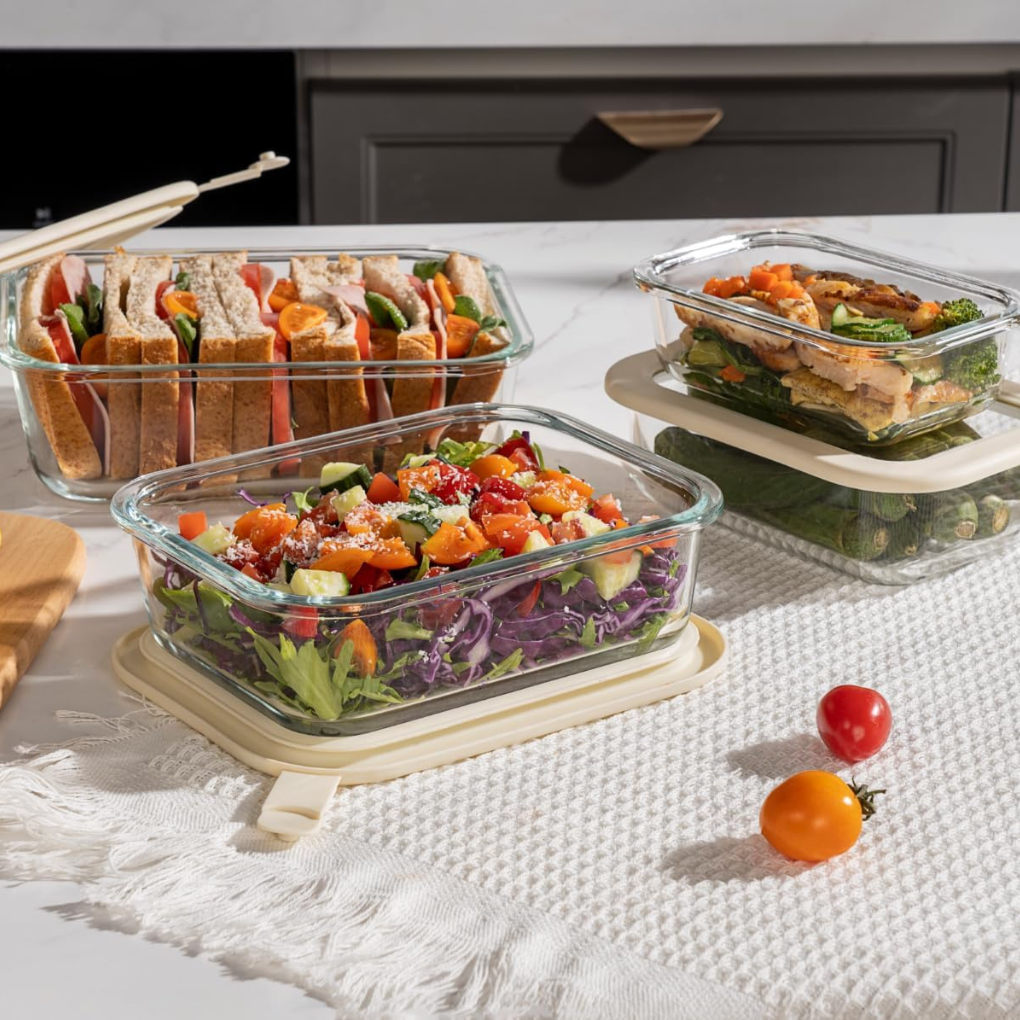
Key Takeaways
- The best glass food storage containers don’t shed microplastics into your food the way plastic does, even when you reheat or freeze them.
- Most “glass” sets still come with plastic lids or plastic gaskets that touch your food. Truly plastic-free picks use glass lids with silicone seals, bamboo lids, or stainless rims instead.
- Borosilicate glass handles freezer-to-oven moves without cracking. The cheaper soda-lime kind doesn’t, so check the label before you buy.
The best glass food storage containers are the easiest way to stop reheating last night’s pasta in plastic. Every time you microwave a plastic container, tiny bits of plastic end up in your food. We’re talking microscopic, but real. Scientists are now finding those same plastic bits in human blood, in lungs, and even in placentas.
Switching to glass cuts that out. Glass doesn’t shed plastic into your food. It doesn’t soak up tomato sauce stains. It doesn’t warp after a year in the dishwasher. And the right ones can move from the freezer to the oven without cracking.
Here’s the catch most articles skip. Many so-called glass containers still have plastic lids, gaskets, or rims that come into contact with your food. I went through more than 30 sets to find the ones that are actually plastic-free, top to bottom. Eight made the cut, and I’ll tell you exactly why each one earned a spot.
Why Choose Glass Over Plastic?
Glass food storage containers don’t shed chemicals or microplastics into your food, don’t warp or stain like plastic, and last for years instead of months.
Glass containers handle the same jobs as plastic ones, just without the parts that worry you. Leftovers, packed lunches, meal prep, freezer storage. The real difference shows up in three places: what’s getting into your food, what’s happening to the container itself over time, and what happens to it after you’re done with it. Each one is worth a closer look.
Health & Safety Benefits
The big reason most people switch to glass is what plastic does when it gets hot. BPA and phthalates are the two chemicals you’ve probably heard of, both linked to hormone disruption. BPA-free plastic isn’t actually a clean swap either, since the replacements can still break down and end up in your food over time.
Glass doesn’t have that problem. It doesn’t leach anything, even when you microwave a hot tomato sauce or freeze a casserole. It’s also non-porous, so it shrugs off the orange stains and lingering smells that plastic picks up after a few uses.
Environmental Impact
Glass is one of the few materials that can be recycled forever without losing quality. A glass jar today can become a new glass jar next year, and again the year after that. Plastic mostly can’t do that. Even when it’s recyclable on paper, most of it gets downcycled into something lower-quality or ends up in a landfill or the ocean.
Glass containers also stick around. They don’t warp in the dishwasher, they don’t get cloudy from oil, and you won’t have to replace them every six months as you do with plastic. One good set can last a decade.
Performance Advantages
Glass does a few things plastic just can’t. Borosilicate sets can move from the freezer to a 425°F oven without cracking, so leftover lasagna heats up in the same dish it lived in all week. Salads stay crisp longer because glass seals in moisture better. And cleanup is easy: a quick rinse handles tomato sauce, garlic, and curry, where plastic would hold onto the stain and the smell.
What to Look for in Glass Food Storage Containers
The best glass food storage containers use borosilicate glass for thermal shock resistance, glass or silicone-sealed lids instead of plastic, and stack flat to save fridge space.
Not all glass containers are the same. The label, the lid, and the size mix matter. Here’s the short list of what to actually check before you buy.
Glass Types Explained
There are three kinds of glass you’ll see on storage containers, and they’re not interchangeable.
Borosilicate is the one you want. It handles large temperature swings without cracking, so you can take it from the freezer to the oven without a second thought. Most borosilicate sets are oven-safe up to 500-600°F. It’s a little more expensive, but it lasts.
Tempered glass is regular glass that’s been heated and cooled to make it stronger. It’s tougher against drops than borosilicate, but doesn’t handle thermal shock as well. Fine for the fridge and microwave, less reliable for the oven.
Soda-lime glass is the cheap option. It’s fine for cold storage and pantry use, but it cracks if you move it between hot and cold too fast. Skip it if you plan to reheat or bake.
Lid Features That Matter
This is where most “glass” sets sneak plastic back in. Plastic lids touch your food every time you press them on. The same goes for plastic-coated rims and removable plastic gaskets.
The lids you actually want are glass with a silicone seal, bamboo with a silicone ring, or a stainless steel clamp with a rubber gasket. Each one keeps plastic out of the food-contact path. If a brand calls a set “plastic-free” but the lid is plastic with a silicone seal, that’s not actually plastic-free.
Size and Capacity Considerations
A useful set has a range of sizes, not eight of the same. You want small ones for sauces, dips, and snacks. Medium ones for sandwiches, salads, and single meals. Large ones for batch cooking and family-size leftovers.
Look for flat lids that stack. Domed lids waste fridge space and tip over if you put something on top. Sets that nest when they’re empty save cabinet space, too.
How We Picked These Containers
Every pick in this guide was checked against the manufacturer’s spec sheet for the lid, gasket, glass type, and oven temperature ceiling, with fully plastic-free construction as the disqualifying criterion.
We started with the most recognizable glass storage brands and the sustainable kitchen brands that come up in plastic-free communities. From there, we checked manufacturer spec sheets to see what’s actually in each set, especially in the food-contact path. Plastic lids, plastic-coated rims, and removable plastic gaskets all knocked sets out, even when the marketing said “glass storage.”
We considered glass type, lid construction, gasket material, and oven temperature ceiling. Borosilicate beats soda-lime for thermal shock. Glass, bamboo, or stainless steel rims beat plastic. Silicone or natural rubber gaskets beat removable plastic or no gasket at all. Brands that publish clear spec sheets and sell replacement gaskets and lids got priority, since the whole point of switching to glass is buying a set you don’t have to replace.
A few well-known sets didn’t make the cut. Pyrex’s modern US line uses plastic lids. OXO Smart Seal uses plastic lids and stiff latches. Anything marketed as “BPA-free plastic-free glass” but shipping with a plastic lid frame was cut by definition, because BPA-free plastic still sheds particles and breaks down over time.
Pin It for Later, Save the Glass Container Picks 📌

10 Best Glass Food Storage Containers
The best glass food storage containers for 2026 are Urban Green for overall value, Weck jars for fully plastic-free design, EcoEvo for budget, Frego for grippy meal prep, and seven more picks for specific kitchens.
| Pick | Glass Type | Lid | Oven Safe | Price |
|---|---|---|---|---|
| Urban Green | Borosilicate | Glass + silicone frame | Container 600°F (lid off) | from $40 |
| Weck Jars | Tempered glass | Glass + rubber + steel | Yes, with slow transitions | from $24 |
| EcoEvo | Borosilicate | Glass + silicone frame | Container 600°F (lid off) | from $36 |
| Frego | Borosilicate | Silicone (FDA-grade) | 464°F (silicone lid limit) | from $17 |
| Urban Green Bamboo | Borosilicate | Bamboo + silicone | Container 600°F (lid off) | from $43 |
| Anyday | Borosilicate | Glass + steel rim + silicone | Yes (microwave + oven safe) | from $160 |
| Bentgo Signature | Borosilicate | Tempered glass + silicone frame | Container 950°F (lid off) | from $40 |
| Le Parfait | French soda-lime | Glass + rubber + wire bail | 300°F (oven safe) | from $17 |
| Caraway 3-Piece | Ceramic-coated borosilicate | BPA-free plastic | Container 450°F (lid off) | from $155 |
| Caraway Mini | Ceramic-coated borosilicate | Glass + BPA-free plastic hardware | Container 450°F (lid off) | from $155 |
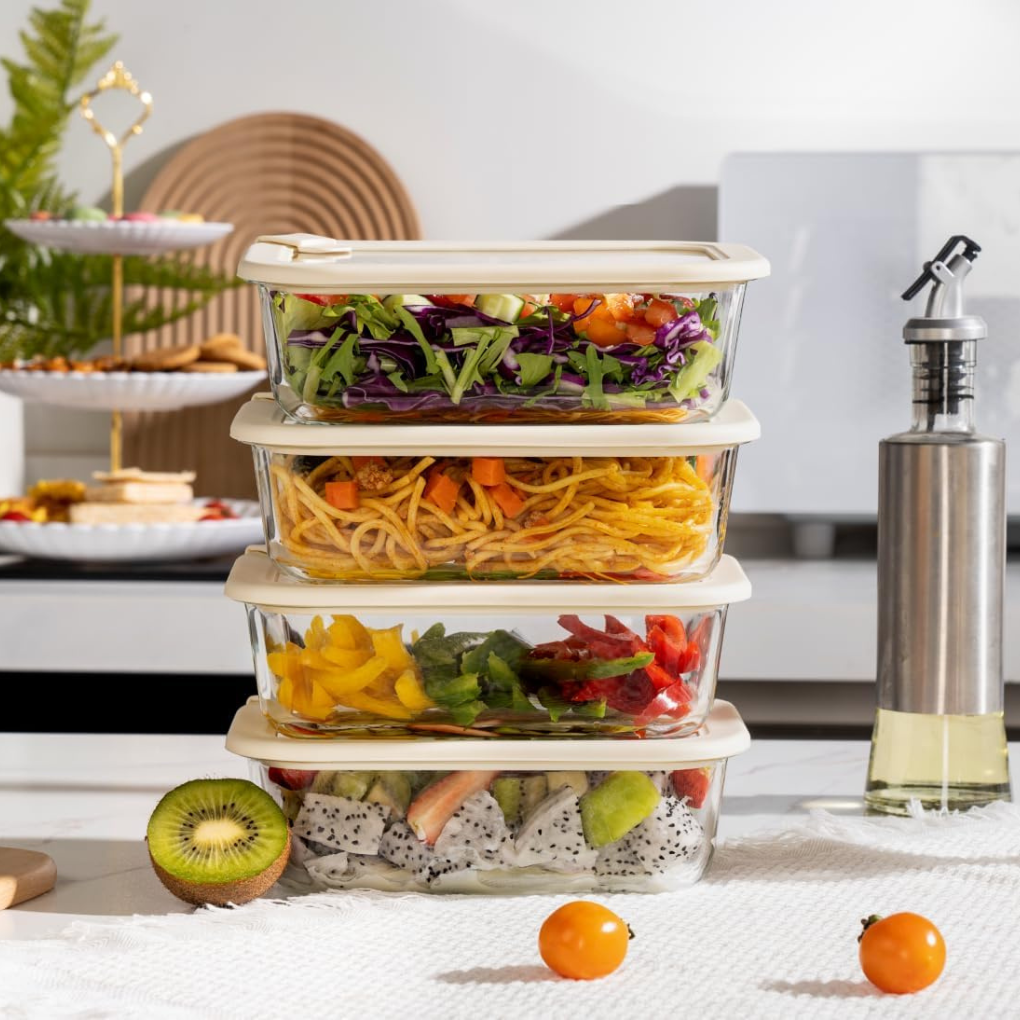
Best overall, the everyday workhorse for meal prep
$40 starting price
The Urban Green set is what most kitchens actually need. The lids are glass with a silicone frame instead of plastic, and the whole set is oven-safe up to 600°F. So you can bake a casserole in one, pop the lid on, and store the leftovers in the same dish without dirtying a second pan.
The seal is airtight thanks to the silicone gasket, so soups and sauces don’t leak in a lunch bag. Borosilicate handles freezer-to-oven moves without cracking, which most sets in this price range can’t do.
Container
Premium Borosilicate
✓ Plastic-FreeLid
Glass + Silicone Frame
✓ Plastic-FreeOven Safe
Up to 600°F
✓ Freezer to OvenSeal
Silicone Gasket
✓ Leak-ProofPros
- Glass lids instead of plastic, no compromise
- Container oven-safe up to 600°F (lid removed)
- Airtight silicone seal for soups and sauces
- Affordable for a full borosilicate set
Cons
- Heavier than plastic sets to carry
- Silicone gaskets pick up garlic smells over time
- Glass lids cost more to replace if dropped
The most well-rounded pick on this list, ideal for everyday meal prep with no plastic compromise.Best for: Weekly meal prep, freezer-to-oven cooking, anyone replacing a plastic set for the first time
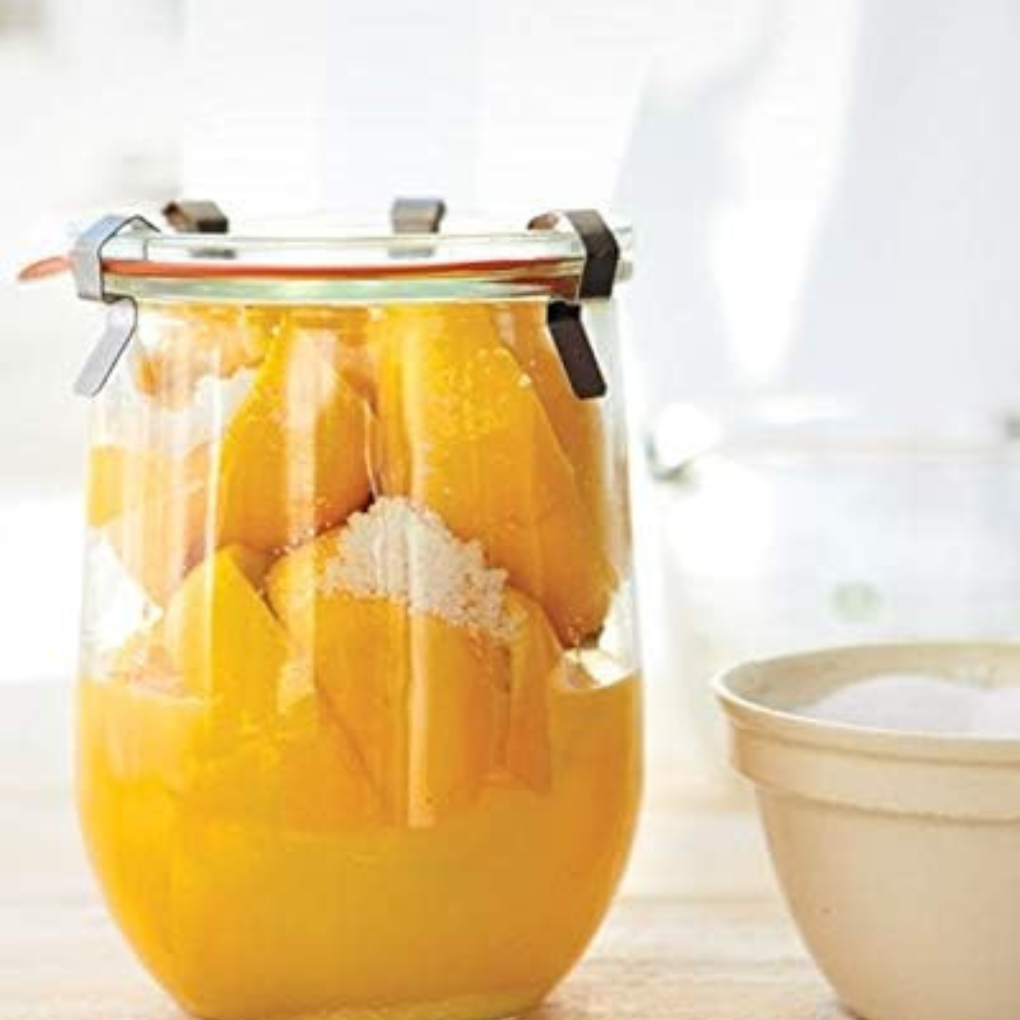
Best fully plastic-free pick, German-engineered for life
$24 starting price
I’ve used Weck jars for years for overnight oats and meal-prep parfaits. They’re as close to a perfect plastic-free design as exists: thick German glass jars, glass lids, natural rubber gaskets, and stainless steel clamps. No plastic. Anywhere. Not in the lid, not in the seal, not in the clamps.
Unlike mason jars with their metal lids that rust and need replacing, every part of a Weck jar is reusable and replaceable forever. Pour a smoothie in one and the seal holds upside down. The aesthetic is also clean enough that they double as pantry containers on open shelving.
Jar
Tempered German Glass
✓ Plastic-FreeLid
100% Glass
✓ Plastic-FreeGasket
Natural Rubber
✓ Plastic-FreeClamps
Stainless Steel
✓ Plastic-FreePros
- Truly 100% plastic-free, every part
- Every component is replaceable forever
- Seal holds upside down for liquids
- Beautiful enough for open shelving
Cons
- Round jars don’t stack as efficiently as rectangles
- Clamps take a second to learn
- Thermal shock limit means slow temperature transitions
My Experience
Weck jars have lived on my counter for years and I think they look better than mason jars. The all-glass design is a step up from the mismatched metal lids that rust and pile up in a drawer. I use them for overnight oats and they’re sturdy enough to throw in a tote bag without worrying about leaks.
The replacement gaskets cost a couple of dollars when they wear out, and I’ve never had to replace anything else. That’s the part that sold me. A mason jar’s metal lid rusts in a year. A Weck setup lasts a decade or longer.
The closest thing to a forever container, ideal for breakfast prep and pantry storage in a fully plastic-free kitchen.Best for: Overnight oats, smoothies, pantry storage, anyone who wants zero plastic in contact with food
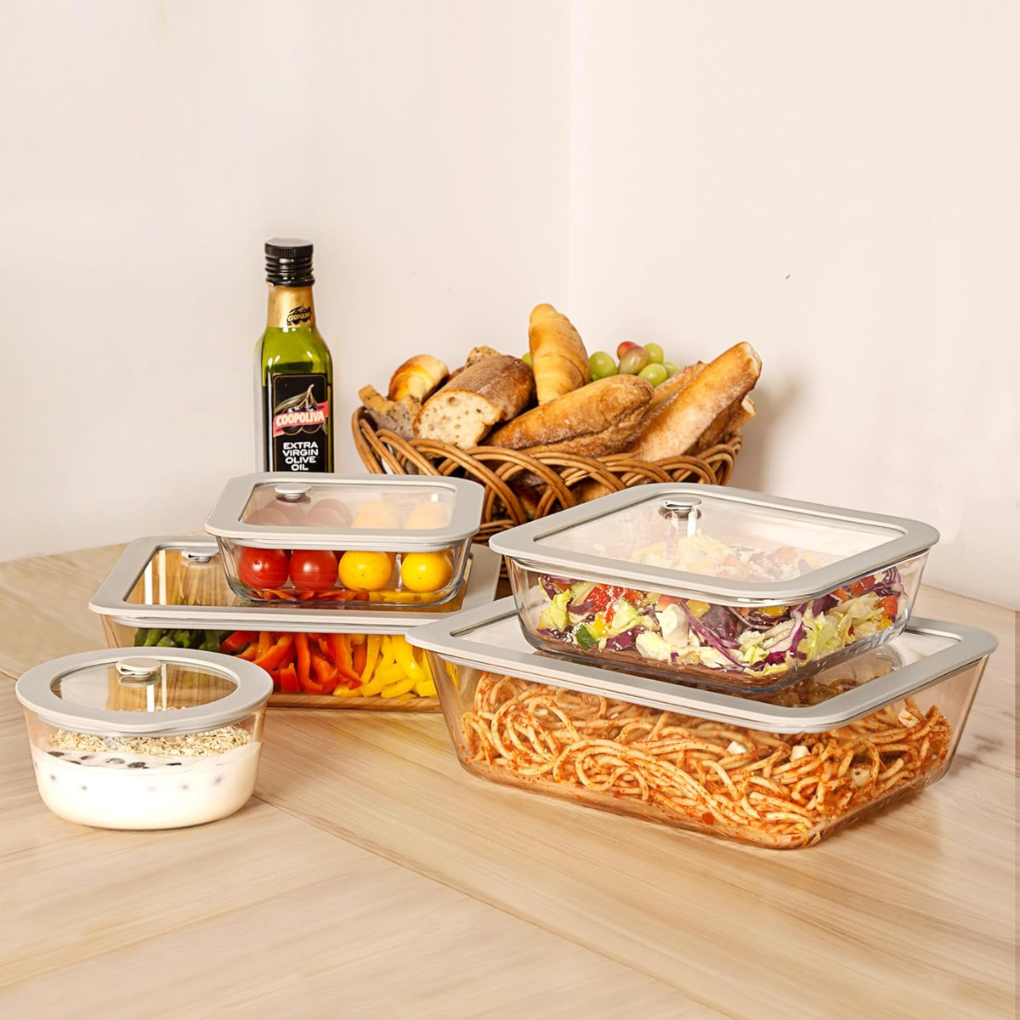
Best budget, woman-owned with no compromise on materials
$36 starting price
The EcoEvo set hits a sweet spot most “affordable” glass sets miss. Borosilicate glass, glass lids with silicone frames, and a vented seal you can leave on while microwaving. The set comes in a range of sizes that nest when empty, which matters in a small kitchen.
EcoEvo is woman-owned and built around replacing single-use plastics. The vent in the lid pops open so you can reheat without taking the lid off, which is a small thing that ends up mattering every day.
Container
High Borosilicate
✓ Plastic-FreeLid
Glass + Silicone Frame
✓ Plastic-FreeOven Safe
Up to 600°F
✓ Freezer to OvenMicrowave
Vent-Open Lid
✓ Safe with Lid OnPros
- Lowest-cost full borosilicate plastic-free set
- Vent-open lid for microwave use
- Nesting design saves cabinet space
- Woman-owned brand
Cons
- Smaller brand, fewer color and size options
- Vent mechanism takes a moment to learn
- Set sizes skew small to medium
The right pick when you want a plastic-free borosilicate set without the premium price tag.Best for: First-time plastic-free kitchens, small apartments, anyone trying glass without committing $80+
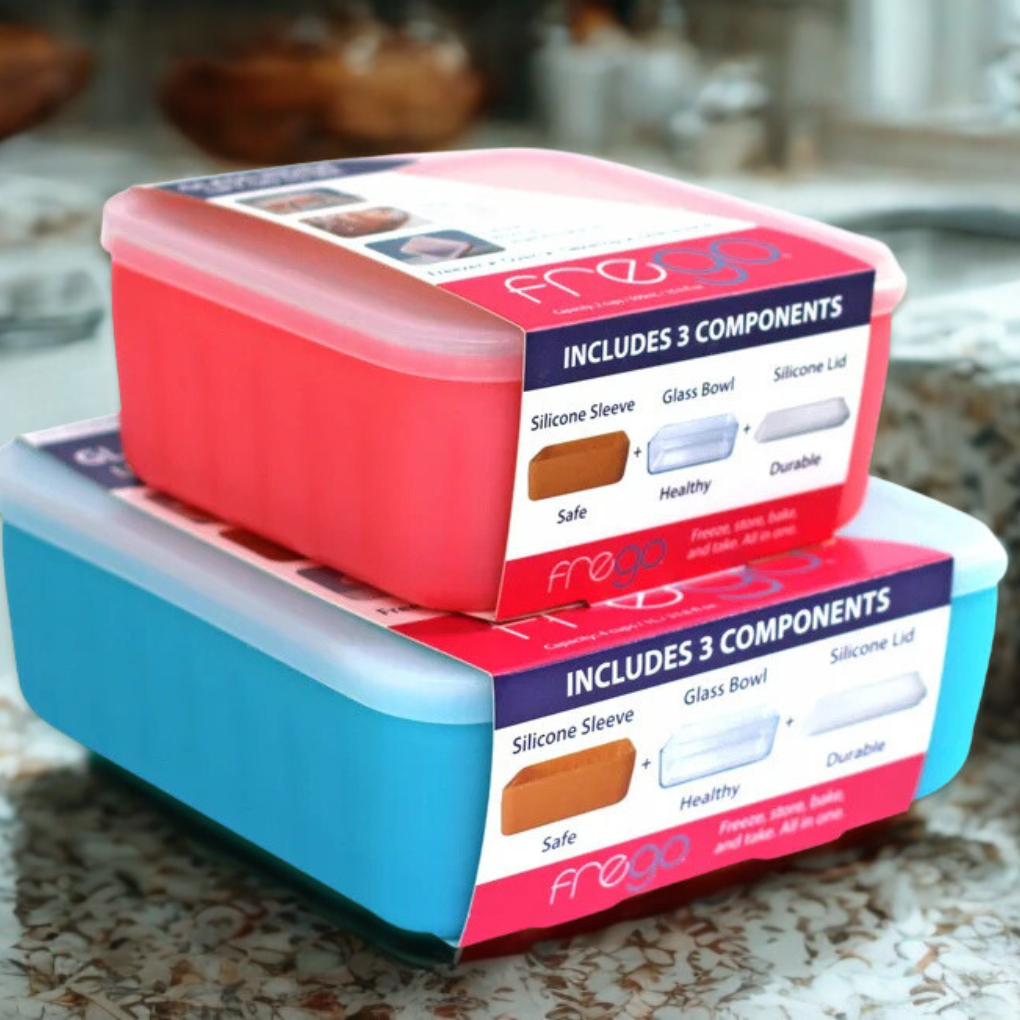
Best for school lunches, grippy silicone sleeve protects against drops
$17 starting price
Frego takes a different approach to the drop problem. The glass bowl sits inside a grippy food-grade silicone sleeve, and the lid is a double-seal SoftSnap design. The silicone sleeve adds shock resistance so it survives a counter drop that would break a bare glass container.
The other detail that matters: there’s an air-space cushion between the glass and the silicone sleeve, so the container stays cool to the touch even right out of the microwave. That makes Frego the most kid- and school-friendly pick on this list.
Bowl
Borosilicate Glass
✓ Plastic-FreeSleeve
Food-Grade Silicone
✓ ElastomerLid
FDA-Grade Silicone
✓ Heat-Safe to 464°FHeat
Stays Cool to Touch
✓ Kid-SafePros
- Silicone sleeve survives counter drops
- Stays cool even straight out of the microwave
- Double-seal lid is leak-proof for liquids
- Best on this list for school lunches
Cons
- Silicone sleeve adds bulk in the lunch bag
- Sleeve picks up stains over time
- Higher price per piece than basic sets
The most travel- and kid-friendly glass pick, ideal for school lunches and hot leftovers on the go.Best for: School lunches, work lunches, families with kids, anyone packing hot food
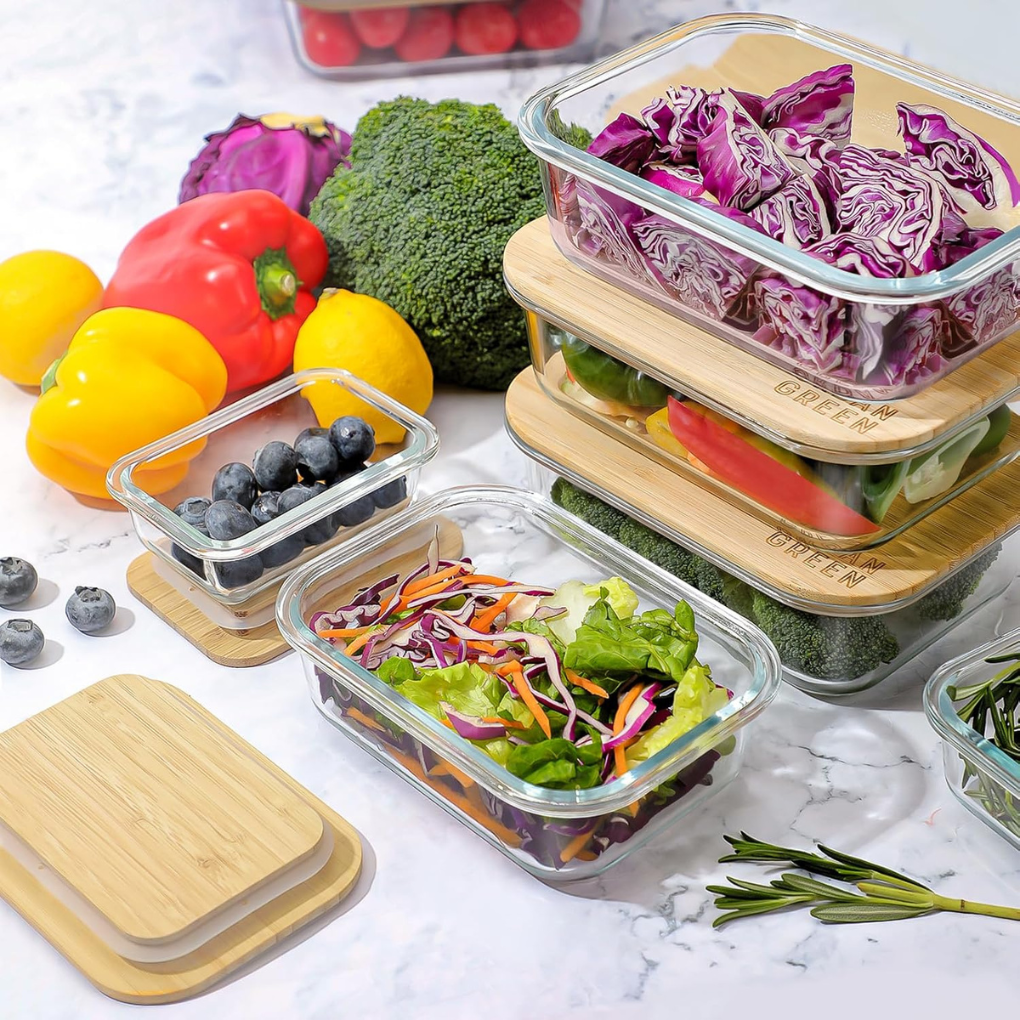
Best aesthetic, looks beautiful enough to leave on the counter
$43 starting price
If you want glass containers that double as something nice to look at, this Urban Green Bamboo set is the pick. Borosilicate bases with polished bamboo lids and silicone sealing rings. They’re oven-safe up to 600°F like the standard Urban Green line, and the bamboo lid is naturally antimicrobial.
The aesthetic upgrade matters more than it sounds. If a set looks beautiful on the counter, it gets used more often, and plastic stays in the cabinet collecting dust. The bamboo lid does need to stay out of the dishwasher (hand-wash only), which is the one trade-off.
Container
Premium Borosilicate
✓ Plastic-FreeLid
Polished Bamboo
✓ Plastic-FreeOven Safe
Container 600°F (Lid Off)
✓ Bake & StoreSeal Ring
Silicone
✓ ElastomerPros
- Bamboo lids are naturally antimicrobial
- Oven-safe up to 600°F
- Beautiful enough for open-shelf display
- Polished bamboo finish ages well
Cons
- Bamboo lids hand-wash only
- Smaller set sizes than the standard line
- Bamboo can darken if it stays wet too long
My Experience
I’ve been using the Urban Green Bamboo set and the stacking is what keeps me reaching for it. The flat bamboo lids stack flush in the fridge, so containers don’t slide around or tip over when I add a new one to the pile.
It’s a small thing that ends up mattering every time I open the fridge. No reshuffling to fit a new container, no Jenga game when I reach for one at the bottom. Just clean, stable stacks.
The pick when looks matter as much as function, ideal for open-shelf kitchens and gift-giving.Best for: Open-shelf storage, gifting, anyone who keeps containers on the counter not in the cabinet
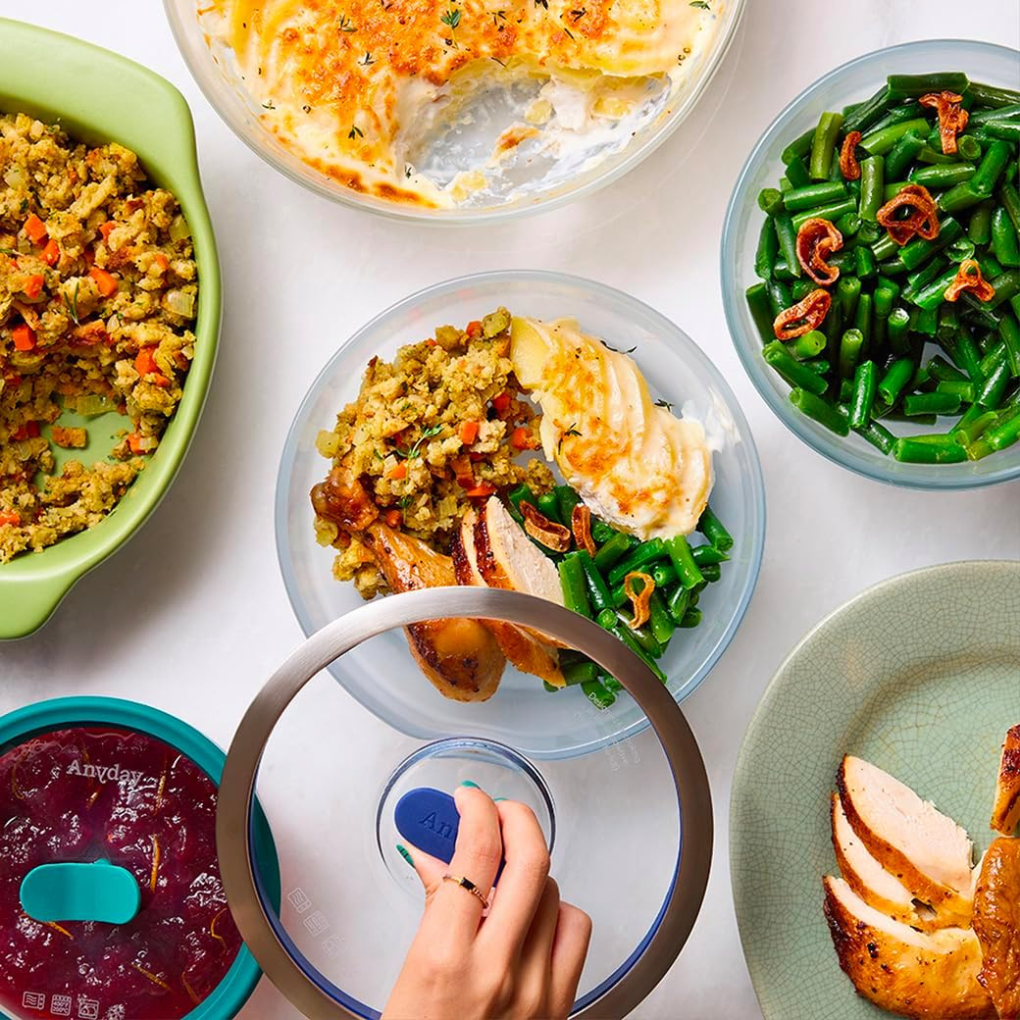
Best for microwave cooking, cook and store in the same dish
$160 starting price
Anyday isn’t just a storage set. It’s designed for cooking full meals in the microwave, then sealing the same dish to store leftovers. Frosted borosilicate body, glass lid with a microwave-safe stainless steel rim and a steam vent built into the knob.
The vent traps steam during cooking, so food cooks more evenly and stays moist. After eating, the same vent closes for storage. It cuts down on dirty dishes in a real way, especially for one-person households where dirtying a pot, a plate, and a storage container for one meal feels excessive.
One thing to watch while shopping: Anyday also sells a less expensive set made of glass, silicone, and stainless steel (still plastic-free, just a different design). If you want the cookware-and-storage version we picked, make sure you’re on the 8-piece set page linked here.
Body
Frosted Borosilicate
✓ Plastic-FreeLid
Glass + Steel Rim
✓ Plastic-FreeVent Gasket
Food-Grade Silicone
✓ ElastomerUse
Cook + Store
✓ One-Dish MealPros
- Cook and store in the same dish
- Steam vent built into the lid knob
- Stainless steel rim, not plastic
- Reduces dishes per meal
Cons
- Premium price for the full set
- Vent mechanism needs careful cleaning
- Cooking-focused, less suited to dry pantry use
The microwave-first pick that doubles as storage, ideal for small kitchens cooking single servings.Best for: One-person households, microwave cooks, dorms, anyone tired of dirtying three dishes per meal

Best mid-range plastic-free, America’s Test Kitchen’s almost-all-glass pick
$40 starting price
The Bentgo Signature is what happens when a household brand decides to do plastic-free properly. Borosilicate body, tempered glass lid panel framed in silicone, and a silicone steam valve built into the knob. No plastic in the food-contact path. Marketed explicitly as PFAS-free and plastic-free.
In December 2025, America’s Test Kitchen ranked the Bentgo Signature as their “Best (Almost) All-Glass Option,” which is the strongest third-party endorsement on this list. The lid press-down vents pop open for microwave reheating without taking the lid off, and the borosilicate body handles oven use up to 950°F (lid off). Available in 4, 8, 10, 12, and 18-piece sets.
One thing to watch while shopping: Bentgo sells two glass storage lines that look similar but aren’t the same. The Signature line is the one linked here, with tempered glass lid panels and silicone frames (no plastic in the lid). Bentgo’s regular Glass Leak-Proof line uses plastic lids. Make sure the product page says “Signature” before you check out.
Container
Premium Borosilicate
✓ Plastic-FreeLid Panel
Tempered Glass + Silicone Frame
✓ Plastic-FreeOven Safe
Container to 950°F (Lid Off)
✓ Freezer to OvenEndorsement
ATK 2025 Top Plastic-Free
✓ Third-Party PickPros
- America’s Test Kitchen’s plastic-free pick for 2025
- Borosilicate body, oven-safe to 950°F (lid off)
- Vent-open lid for microwave use without removing
- Available in five set sizes (4 to 18 pieces)
Cons
- Silicone gasket retains odor slightly per ATK testing
- Glass lids are heavier than plastic-lidded sets
- Press-down lid lacks side latches (relies on gasket seal)
The strongest third-party-endorsed plastic-free pick on this list, ideal for meal preppers who want a brand with independent testing behind it.Best for: Meal prep at scale, microwave reheating, anyone who wants ATK-tested plastic-free design

Best for batch cooking, French wire-bail jars since 1930
$17 starting price
The Le Parfait Super Jar is the French answer to Weck. Glass jar, glass lid, natural rubber gasket, and a built-in stainless steel wire bail that snaps closed. Made in France since 1930, BPA-free and lead-free across the line.
The main difference from Weck is the closure: Le Parfait uses a permanent wire bail attached to the jar instead of Weck’s separate metal clamps. That means one fewer piece to lose. Sizes range from 8oz up to a 3-liter (96oz) jar that’s ideal for batch cooking, fermenting, or pantry storage of grains, beans, and pasta. Oven safe to 300°F, plus dishwasher, microwave, and freezer safe.
Jar
French Soda-Lime Glass
✓ Plastic-FreeLid
100% Glass
✓ Plastic-FreeGasket
Natural Rubber
✓ Plastic-FreeClosure
Stainless Wire Bail
✓ Built-InPros
- Truly 100% plastic-free, every part
- Sizes up to 3L for batch cooking and pantry storage
- Wire bail attached so no separate clamps to lose
- Replaceable rubber rings for decades of use
Cons
- Oven safe only to 300°F (lower than Weck or borosilicate)
- Round shape stacks less efficiently than rectangles
- Wire bail aesthetic isn’t for everyone
The fully plastic-free choice for batch cooking and bulk pantry storage, with a 95-year track record.Best for: Batch cooks, fermenters, anyone storing grains/beans/pasta in glass, lovers of the French wire-bail aesthetic
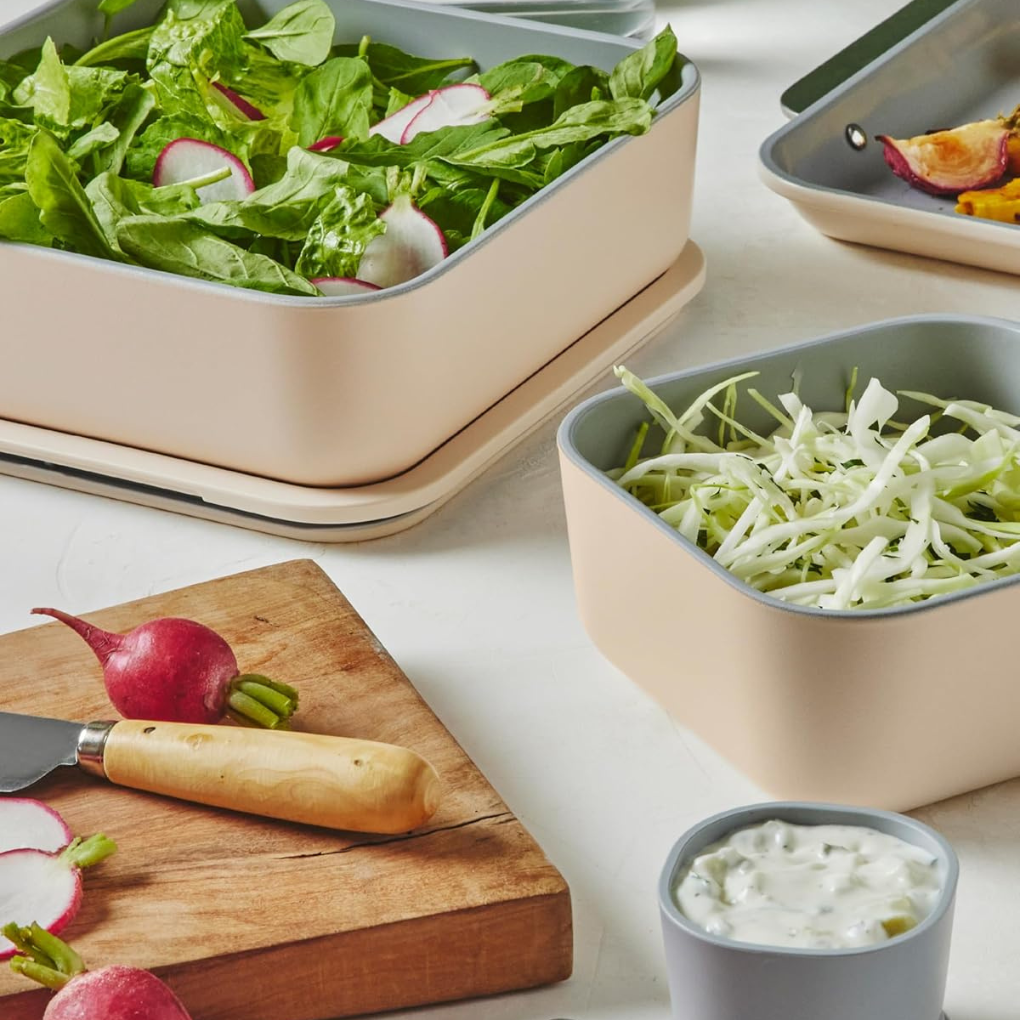
Best premium aesthetic, ceramic-coated body with BPA-free plastic lids
$155 starting price
Caraway‘s glass storage set uses ceramic-coated borosilicate glass with Air Release Technology to keep odors out. The mineral-based ceramic coating is free of PTFE, PFOA, PFAS, BPA, and BPS, and the body matches Caraway’s cookware aesthetic exactly.
Honest note before you click buy: the lids on this set are BPA-free plastic, not glass. Caraway calls this out on their own product page (the lids are not microwave, oven, or dishwasher safe). The body is plastic-free, but the lid presses against the food when sealed. If a fully plastic-free pick matters to you, the Urban Green or Weck sets above keep that promise for a fraction of the price.
Body
Ceramic-Coated Borosilicate
✓ Plastic-FreeCoating
Mineral, No PFAS/BPA
✓ Non-LeachingLid
BPA-Free Plastic
⚠ Contains PlasticOven Safe
Container to 450°F (Lid Off)
✓ Bake & StorePros
- Ceramic coating free of PTFE, PFOA, PFAS, BPA, and BPS
- Matches Caraway’s cookware aesthetic
- Air Release Technology blocks odor transfer
- Premium build on the glass body
Cons
- Lids are BPA-free plastic, not glass
- Lids not microwave, oven, or dishwasher safe
- Three times the Urban Green price for less plastic-free coverage
The aesthetic upgrade for Caraway loyalists willing to accept BPA-free plastic in the lid.Best for: Existing Caraway cookware owners who prioritize matching design over a fully plastic-free build
Best for portion control, snack and lunch sizing
$155 starting price
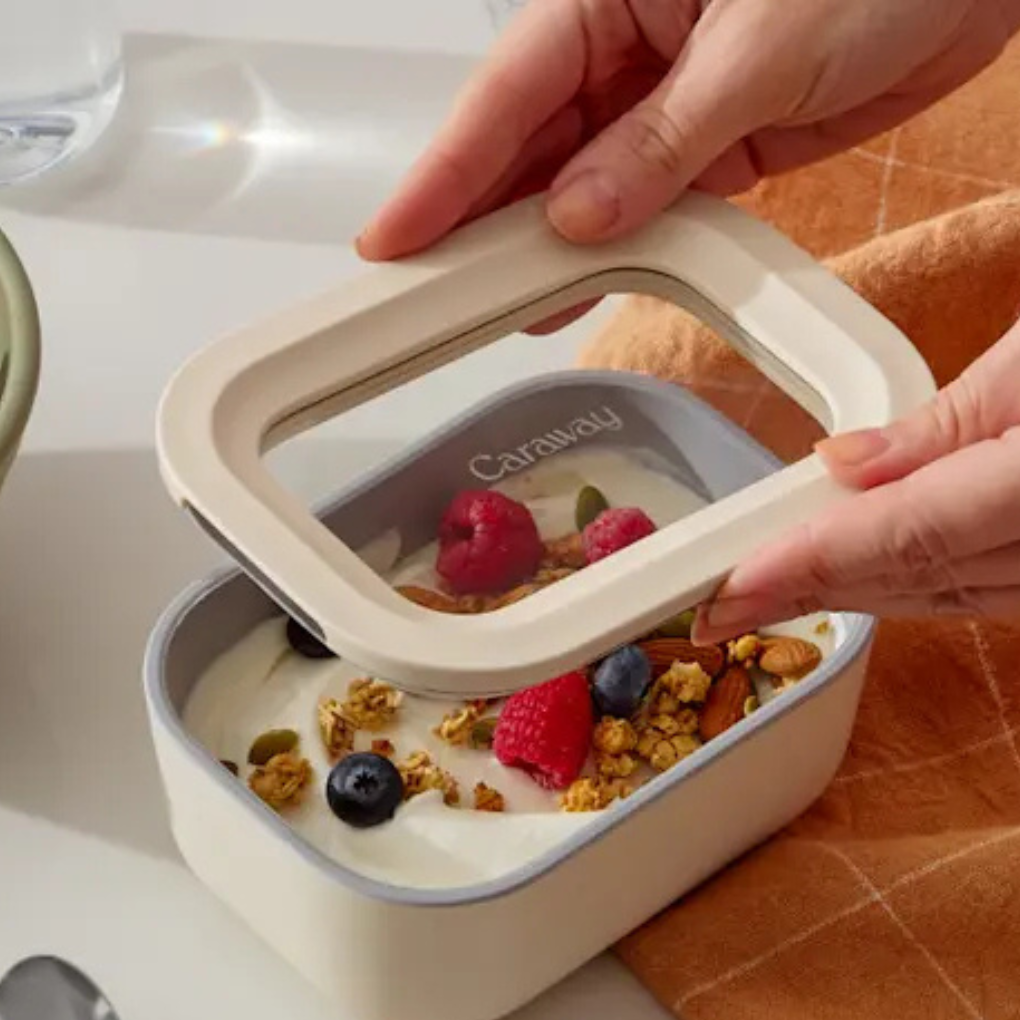
The Caraway Mini set is built around portion-controlled meal prep. Smaller borosilicate bases with ceramic coating, clear glass lids, and a magnetic storage organizer that keeps them stacked neatly. Same Air Release Technology as the full-size line.
One honest note: the lid components are described as “BPA-free,” which means there’s BPA-free plastic somewhere in the lid hardware. The food-contact path is glass and ceramic, but if you’re going for zero plastic anywhere in the unit, this isn’t fully plastic-free. The premium picks above (Weck, Urban Green) hit that bar more cleanly.
Body
Ceramic-Coated Borosilicate
✓ Plastic-FreeLid Glass
Clear Borosilicate
✓ Plastic-FreeLid Hardware
BPA-Free Plastic
⚠ Contains PlasticOrganizer
Magnetic Stack
✓ Space-SavingPros
- Perfect sizing for portion control
- 11 pieces in the set
- Magnetic stack organizer is genuinely useful
- Air Release Technology for fresher meal prep
Cons
- Lid hardware contains BPA-free plastic
- Not fully plastic-free like the picks above
- Premium price for smaller portion sizes
The right pick for snack-sized portion control if you can accept BPA-free plastic in the lid hardware.Best for: Portion-controlled meal prep, packed snacks, anyone who values the magnetic organizer
Glass vs Plastic Food Storage: Differences
There’s a reason more people are rethinking plastic in the kitchen. Whether you’re storing leftovers or prepping meals for the week, your containers come into direct contact with your food.
That means materials matter. While plastic may seem like the easier or cheaper option, the long-term trade-offs for your health, wallet, and the environment are worth examining more closely. Here’s how glass and plastic food storage containers compare.
| Factor | Plastic Containers | Glass Containers |
|---|---|---|
| Durability |
• Lightweight, won’t shatter • Warps and stains over time • Cracks with microwave/dishwasher use • Lids often lose fit quickly |
• Breakable if dropped • Resists stains and odors • Handles hot/cold shifts if borosilicate • Long lifespan, fewer replacements |
| Safety & Health |
• Can leach BPA or phthalates • Heat increases chemical release • May shed microplastics • Even “BPA-free” plastics raise concerns |
• Non-toxic, non-reactive • Safe in ovens, microwaves, dishwashers • Doesn’t absorb oils or smells • Keeps food fresh-tasting |
| Environmental Impact |
• Made from petroleum • Short usable life • Hard to recycle once stained/cracked • Sits in landfills for centuries |
• Fully recyclable • Can be reused endlessly • Long lifespan reduces waste • Some brands use recycled glass |
| Cost & Longevity |
• Lower upfront cost • Needs frequent replacing • Costs add up long-term |
• Higher upfront cost • Lasts for years • Saves money over time |
How to Use Glass Food Storage Containers Safely
Glass containers are a great addition to any kitchen, but like any material, they work best when used correctly. With a little care and the right techniques, you can keep your containers in top shape while making meal prep, storage, and cleanup a whole lot easier.
🌡️ Temperature Guidelines
- Glass can crack if exposed to sudden temperature changes (thermal shock).
- Don’t move containers directly from the freezer into a hot oven. Let them warm to room temperature first.
- Most quality glass holds up to 400–425°F, but lids usually can’t. Always remove plastic or silicone lids before baking.
- When freezing, leave extra space for food expansion and only use freezer-safe glass. Thaw slowly in the fridge or in cool water for best results.
🧽 Proper Care & Maintenance
- Most containers are dishwasher-safe, but for optimal protection, use the top rack to prevent chips and scratches.
- If hand washing, stick to soft sponges and mild soap.
- Avoid stacking heavy pots or other containers on top of glass in the refrigerator or freezer.
- For silicone-seal lids, remove the gasket periodically, wash thoroughly, and dry completely before reassembling. This prevents mold and keeps the seal tight.
🍲 Best Practices for Different Foods
- Soups & sauces: store in leak-resistant containers with tight lids. Vented lids make microwaving easier.
- Casseroles & baked dishes can go straight from the oven to the fridge — just let them cool a little first.
- Meal prep: choose divided containers or a mix of sizes to keep snacks, mains, and sides organized and ready to grab all week.
FAQs on the Best Glass Food Storage Containers
A good borosilicate set can last 10 years or more if you handle it carefully. The glass itself never wears out. The parts that do wear out (silicone gaskets, rubber rings) are replaceable for a few dollars, so a set you bought today can stay in service for a decade or longer.
Yes, if you keep them for more than 2-3 years. A plastic set runs $20-40 and needs replacing every 6-18 months as it warps and stains. A $50 borosilicate set lasts 10 years. Over a decade, glass costs less per year than plastic.
Borosilicate sets, yes, with a small warning: let the container come up to room temperature for about 10 minutes before transferring to a hot oven. Soda-lime sets need a longer warm-up, or they can crack. The label should specify the maximum oven temperature and any thermal shock warnings.
Older Pyrex (pre-1998) was borosilicate. Modern Pyrex sold in the US is mostly tempered soda-lime glass, which is more drop-resistant but less heat-shock-resistant than true borosilicate. If you want borosilicate, check the label specifically. Many of the picks on this list (Urban Green, EcoEvo, Frego, Anyday) are explicit borosilicate.
Food-grade silicone is generally considered safe and stable. It doesn’t leach as plastic does, and it withstands dishwasher heat without breaking down. The one thing to watch for is wear: replace gaskets every few years if you use them daily, since worn silicone can harbor bacteria.
This Has Been About The Best Glass Food Storage Containers
At the end of the day, glass makes life easier. The best glass food storage containers don’t warp, don’t leach chemicals, and won’t leave your leftovers tasting like last night’s spaghetti. They might cost a little more upfront, but they’ll last for years, and that means fewer replacements, less plastic waste, and a healthier way to store your food.
If you’re still using a drawer full of mismatched plastic tubs, consider swapping them out for a few glass containers. Once you see how sturdy, safe, and versatile they are, chances are you’ll never go back.
📚 References
- Hussain, K. A., Romanova, S., Okur, I., Zhang, D., Kuebler, J., Huang, X., Wang, B., Fernandez-Ballester, L., Lu, Y., Schubert, M., & Li, Y. (2023). Assessing the release of microplastics and nanoplastics from plastic containers and reusable food pouches: Implications for human health. Environmental Science & Technology, 57(26), 9782–9792. https://pubs.acs.org/doi/10.1021/acs.est.3c01942
- Jenner, L. C., Rotchell, J. M., Bennett, R. T., Cowen, M., Tentzeris, V., & Sadofsky, L. R. (2022). Detection of microplastics in human lung tissue using μFTIR spectroscopy. Science of the Total Environment, 831, 154907. https://doi.org/10.1016/j.scitotenv.2022.154907
- Leslie, H. A., van Velzen, M. J. M., Brandsma, S. H., Vethaak, A. D., Garcia-Vallejo, J. J., & Lamoree, M. H. (2022). Discovery and quantification of plastic particle pollution in human blood. Environment International, 163, 107199. https://doi.org/10.1016/j.envint.2022.107199
- Li, V. S. (2025, December 10). The best glass food storage containers of 2026. America’s Test Kitchen. https://www.americastestkitchen.com/equipment_reviews/1876-glass-food-storage-containers
- National Institute of Environmental Health Sciences. (2024). Endocrine disruptors. NIEHS.nih.gov. https://www.niehs.nih.gov/health/topics/agents/endocrine
- Ragusa, A., Svelato, A., Santacroce, C., Catalano, P., Notarstefano, V., Carnevali, O., Papa, F., Rongioletti, M. C. A., Baiocco, F., Draghi, S., D’Amore, E., Rinaldo, D., Matta, M., & Giorgini, E. (2021). Plasticenta: First evidence of microplastics in human placenta. Environment International, 146, 106274. https://doi.org/10.1016/j.envint.2020.106274
More Kitchen & Plastic-Free Living Reads
- Best Plastic-Free Microwave Covers
- How to Tell If Plastic Is Really BPA-Free
- Plastic-Free Water Bottles: 8 Picks Without the Hidden Plastic
- What Most Spring Cleaning Checklists Miss: A Non-Toxic Kitchen Guide
- How to Clean Wooden Cooking Utensils
- How to Reduce Plastic Use: 21 Easy Ways That Actually Work
- Plastic Free Tea Bags: 9 Brands That Pass the Test
We’ve scored every kitchen product on plastic — see them in the Kitchen directory.