
Key Takeaways
- In a randomized crossover trial, a 10% hydroxyapatite toothpaste remineralized enamel 55.8% against 56.9% for a fluoride toothpaste, a gap the researchers found statistically insignificant.
- The best hydroxyapatite toothpaste is one that publishes its concentration and its full ingredient list, because no rule forces a brand to disclose either.
- Almost every mineral toothpaste still ships in a plastic tube, so glass-jar tablets and recyclable metal tubes are the only genuinely low-plastic picks.
Hydroxyapatite is the mineral your enamel is already built from, roughly 97% of it by weight, which is why a toothpaste made of the same stuff sounds almost too tidy to be true. It is not hype. Researchers put a 10% hydroxyapatite paste head to head with a fluoride paste in a double-blind crossover trial and measured 55.8% remineralization against 56.9%, a difference small enough that the study concluded the two were equal.
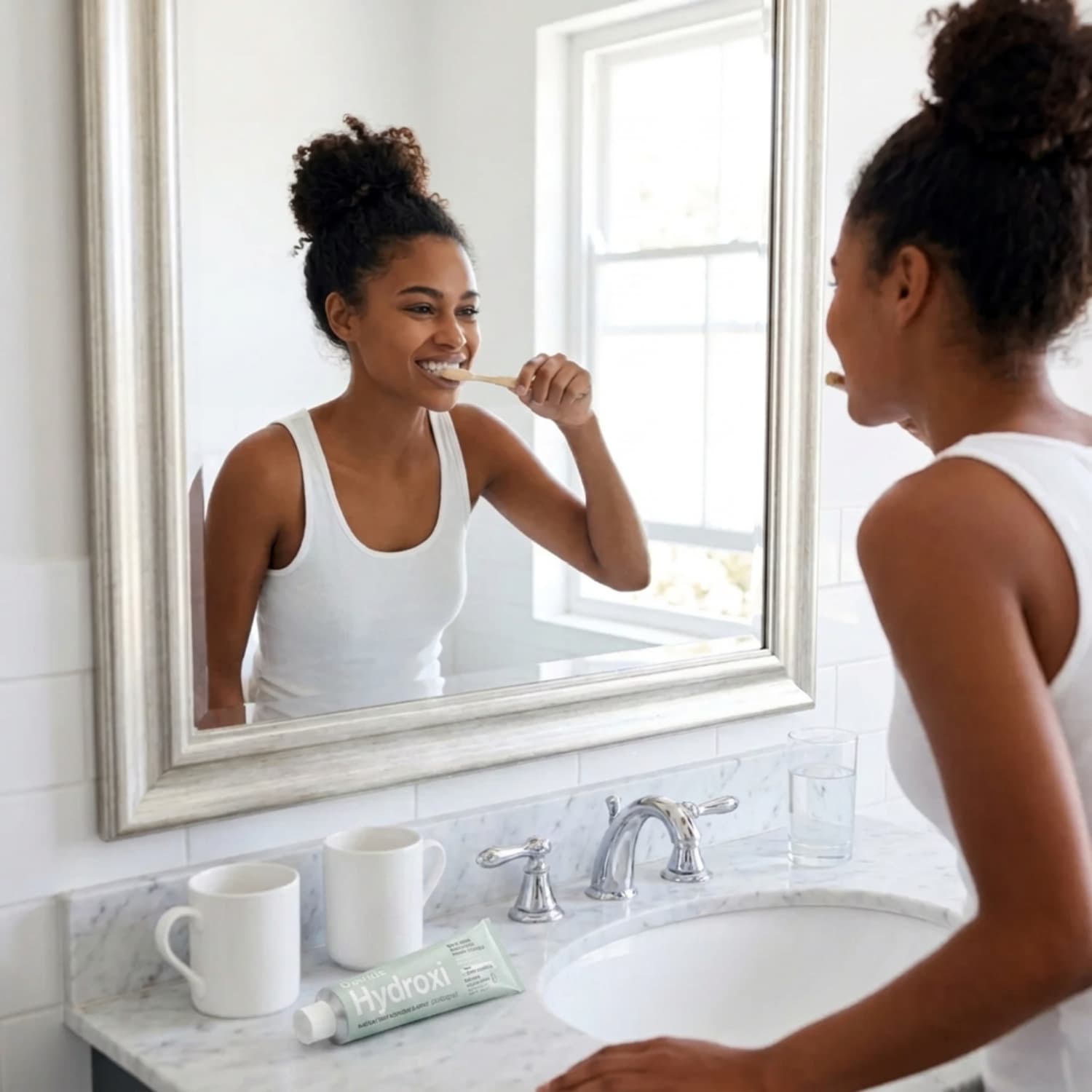
So which tube should you actually buy? For most people the best hydroxyapatite toothpaste is Davids Hydroxi Sensitive + Whitening. You get rod-shaped nano-hydroxyapatite, a 16-ingredient formula with no SLS or artificial sweeteners, an EWG VERIFIED mark you can look up in a public registry, and a recyclable metal tube instead of the usual plastic one, all at about $2.74 an ounce.
The Right Pick Depends on Your Priorities
That said, the right pick shifts depending on whether you want zero plastic, the lowest price, something safe for a toddler who swallows everything, or the formula with the longest clinical history. Below are ten researched picks, plus the ingredient and concentration details most roundups quietly leave out.
The Experts Behind the Research
- Bennett T. Amaechi, BDS, PhD, cariology researcher at UT Health San Antonio, lead author of the 2019 BDJ Open crossover trial comparing hydroxyapatite with fluoride that this guide cites throughout.
- Elzbieta Paszynska, DDS, PhD, Poznan University of Medical Sciences, first author of the 336-day pediatric trial and the 18-month adult trial that moved hydroxyapatite from lab results to real cavity outcomes.
- Matthias Epple, PhD, inorganic chemist at the University of Duisburg-Essen, whose 2018 review in Acta Biomaterialia assessed the swallowing and absorption risk of nanoscale calcium phosphate.
- Ellie Phillips, DDS, dentist and author who publicly declines to recommend hydroxyapatite toothpaste, quoted directly in the risks section so you get the skeptical view too.
Our Top Picks at a Glance
Davids Hydroxi Sensitive + Whitening is the best hydroxyapatite toothpaste overall at about $2.74 per ounce in a recyclable metal tube. Bite Toothpaste Bits win on packaging with a refillable glass jar, and Mouthology is the cheapest at roughly $2.50 per ounce with a stated 10% nano-hydroxyapatite.
Picks are listed plastic-free first, then the rest. Tap any name to jump to its full review.
| Toothpaste | Hydroxyapatite | Packaging | Price | 3rd Party Certs | Best For |
|---|---|---|---|---|---|
| Bite Toothpaste Bits | Nano, % not stated | Refillable glass jar, compostable refills | About $8 to $12 a month | Certified B Corporation | Zero waste |
| NOBS Toothpaste Tablets | 5% nano | Glass jar | About $15 a month | None At This Time | Plastic-free families |
| Davids Hydroxi Sensitive + Whitening | Rod-shaped nano, % not stated | Recyclable metal tube, FSC carton | $2.74 per oz | EWG VERIFIED | Best overall |
| Georganics | Type and % not stated | Recycled aluminium tube, HDPE lid, cardboard box | From £4.90 per 75 ml | COSMOS Natural, brand stated | Keeping fluoride |
| Mouthology 10% Nano-Hydroxyapatite | 10% rod-shaped nano | Plastic tube, tablet version sold separately | $2.50 per oz | None At This Time | Best budget |
| RiseWell Mineral Toothpaste | 10% micro, not nano | LDPE #4 tube, PP #5 cap | $3.53 per oz | None At This Time | Skipping nanoparticles |
| Boka Ela Mint | Nano, % not stated | Plastic tube, material not disclosed | $2.91 per oz | None At This Time | Flavor range |
| Fygg Nano-Hydroxyapatite | 3.1% nano | LDPE #4 tube, PP #5 cap | $3.50 per oz | None At This Time | Shortest ingredient list |
| RiseWell Kids Cake Batter | 10% micro, same as adult (per FAQ) | LDPE #4 tube, PP #5 cap | $3.53 per oz | None At This Time | Kids |
| Apagard Premio | Nano, % deliberately not disclosed | Plastic laminate tube | Varies by importer | None At This Time | Longest clinical history |
What Is Hydroxyapatite Toothpaste?
Hydroxyapatite toothpaste uses a calcium phosphate mineral, the same one that makes up about 97% of tooth enamel by weight, to fill in microscopic surface damage. It works as a fluoride-free way to rebuild early enamel loss and reduce sensitivity.
Enamel is not a solid sheet. Under a microscope it looks like a dense forest of tiny mineral rods, and every acidic meal, coffee, or soda strips a thin layer of minerals from the surface. Saliva slowly puts some of those minerals back. Hydroxyapatite toothpaste speeds that up by delivering the exact mineral your enamel is losing, so the particles settle into the gaps rather than sitting on top like a coating.
The idea started with NASA. According to the agency’s own Spinoff program, 1960s research on growing chemically perfect crystals for semiconductors was adapted to grow crystals that could repair teeth. Japanese company Sangi acquired that patent in the mid-1970s and launched the first hydroxyapatite toothpaste, Apadent, in 1980. Japan’s Ministry of Health approved Sangi’s hydroxyapatite as an anticaries ingredient in 1993, and it has been a mainstream option there ever since.
Hydroxyapatite vs Nano-Hydroxyapatite
Size is the only real difference, and it changes how the mineral behaves. Nano-hydroxyapatite particles measure roughly 20 to 120 nanometers, close to the size of the natural crystals in your enamel, which lets them slip into microscopic surface defects. Micro-hydroxyapatite particles are larger, so they tend to work more like a polish and a surface deposit than a filler.
Neither version is the automatic winner. Nano has the deeper research base for sensitivity relief, while micro appeals to shoppers who would rather avoid nanoparticles entirely. RiseWell built its whole pitch on that preference and uses 10% micro-hydroxyapatite on purpose.
💫 now you know
What is particle shape, and why does it matter?
Shape is the safety question, not size. The EU’s Scientific Committee on Consumer Safety approved hydroxyapatite (nano) for toothpaste in June 2025 only for rod-shaped particles, with at least 87% of them having an aspect ratio of 3 or less. Needle-shaped particles are excluded from that opinion entirely. It is the reason Davids and Mouthology both advertise rod-shaped particles on the label.
Is Hydroxyapatite Better Than Fluoride?
Comparable, not better. That is the honest read of the evidence, and it is worth knowing exactly which studies say what before you switch a cavity-prone mouth off fluoride.
The most-quoted study is Amaechi and colleagues in 2019. Thirty adults wore intraoral appliances holding enamel blocks for 14 days per arm, brushing with either a 10% hydroxyapatite paste or a 500 ppm fluoride paste. Remineralization came in at 55.8% for hydroxyapatite and 56.9% for fluoride, with a p-value of 0.81. The authors concluded the hydroxyapatite paste was equal to the fluoride paste.
Longer trials back that up. Paszynska and colleagues followed 207 children aged 3 to 7 for 336 days and found new lesions in 72.7% of the hydroxyapatite group against 74.2% of the fluoride group, meeting their non-inferiority threshold. An 18-month adult trial published in 2023 landed in the same place, with 89.3% of the hydroxyapatite group showing no increase in decayed or filled surfaces against 87.4% for fluoride.
A 2025 systematic review in the Journal of Dentistry, written by university researchers with no manufacturer ties, pooled the available trials and found no significant difference between the two. Its caution is the part to hold onto: only four studies qualified. The evidence points to parity, but the pile of evidence is still small compared with the decades behind fluoride.
How We Researched and Ranked These Picks
Every pick was scored on 6 criteria: stated hydroxyapatite concentration, full ingredient audit, packaging material, price per ounce, registry-verified certification, and how much the brand actually discloses. Claims came from brand-owned pages and public certifier registries, never from retailer listings.
We did not run a lab test, and no roundup you read online did either. What we did do is check every claim against the source that would have to answer for it, then say plainly when a brand refuses to answer. Here is the scoring:
- Stated concentration. Brands that publish a number scored higher than brands that stay vague. Research clusters around 5% to 10%, so a paste hiding its percentage is asking for trust it has not earned.
- Ingredient audit. Every full ingredient list was read for SLS, PEGs, titanium dioxide, artificial dyes, and artificial sweeteners like saccharin and sucralose.
- Packaging material. Glass, aluminum, and compostable refills beat plastic tubes. Where a brand publishes the resin code, we list it.
- Price per ounce. Calculated from the brand’s own one-time purchase price, not the subscription discount.
- Registry-verified certification. A cert only counts if we found the product in the certifier’s public database. Two of ten picks cleared that bar.
- Transparency. How easy is it to find the tube material, the particle size, and the concentration without emailing the company?
That last criterion reshuffled the list more than anything else. Several popular brands publish beautiful photography and almost no specifications.
Don’t Miss: Non-Toxic Living, Where to Actually Start Your toothpaste is one shelf of one room. Here is the full room-by-room order of operations. Read more →The 10 Best Hydroxyapatite Toothpastes
These 10 hydroxyapatite toothpastes are ordered plastic-free first, then by overall value. Only Davids and Bite carry a certification we could confirm in a public registry, and just 4 of the 10 publish their hydroxyapatite concentration.
Each card lists what the product is actually made of, including the tube. Where a brand does not publish a material or a percentage, the card says so rather than filling the gap with a guess.
Bite Toothpaste Bits
Fluoride-Free Formula With Nano-Hydroxyapatite
$$
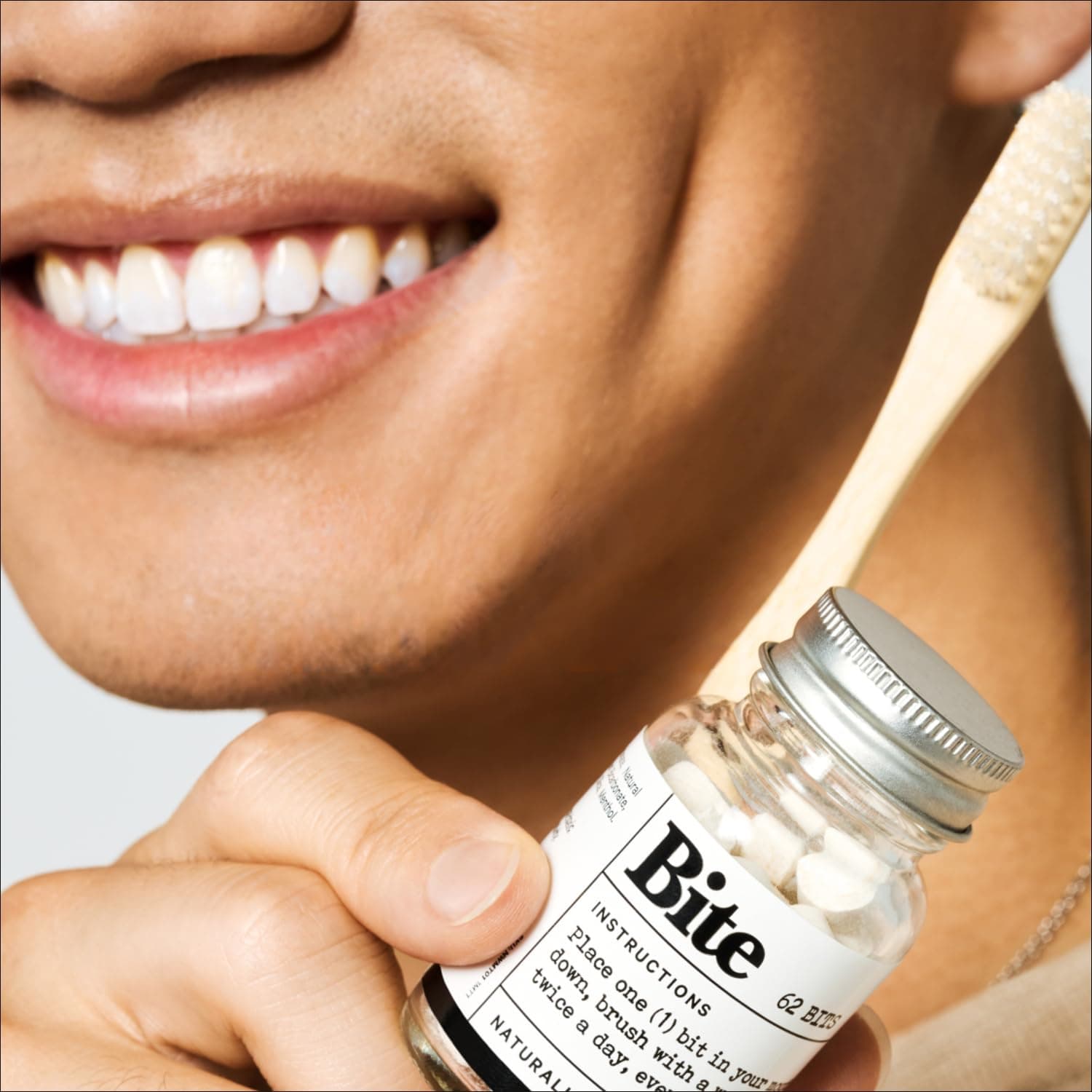
Bite replaced the tube entirely. You get a refillable glass jar with an aluminum lid, and every refill arrives in a home-compostable pouch, so a year of brushing leaves behind no plastic at all.
Only the fluoride-free bits contain nano-hydroxyapatite. Bite’s fluoride version uses sodium monofluorophosphate instead, so check the label before you order. Eleven ingredients, sweetened with erythritol and xylitol, in Mint, Mint Charcoal, or Berry Twist.
I use Bite when I travel. Tablets are easier to pack, and there is far less chance of a mess than with a tube.
Jar
Refillable Glass
✓ Plastic FreeLid
Aluminum
✓ Plastic FreeRefill Pouch
Home Compostable
✓ Plastic FreeFormat
Dry Tablet, No Tube
✓ Plastic FreePros
- The only pick with zero plastic anywhere in the system
- Certified B Corporation, score 87.8, verified in B Lab’s registry
- Dry format means no preservatives and a long shelf life
- Travels without leaking or counting as a liquid
Cons
- Hydroxyapatite concentration is not published
- Not recommended under age 3 because of choking risk
- Chewing then brushing takes getting used to
- Priciest way to buy hydroxyapatite by volume
If cutting plastic is the whole point of the switch, nothing else comes close. Buy this one if the tube bothers you more than the price.
Why Bite Solves the Tube Problem
Bite is the pick that actually solves the problem most mineral toothpastes ignore. A tube is a laminate of plastic and often aluminum foil that essentially no curbside program accepts, so switching to a cleaner formula in the same tube still sends the same waste to landfill. Bite’s glass jar stays on your counter for years and the refills arrive in pouches you can compost at home.
The tradeoff is transparency. Bite confirms nano-hydroxyapatite is in the fluoride-free bits, and lists it fifth on the ingredient deck, but will not say at what percentage. For a brand that discloses everything about its packaging, that gap stands out.
NOBS Toothpaste Tablets
5% Nano-Hydroxyapatite in Glass
$
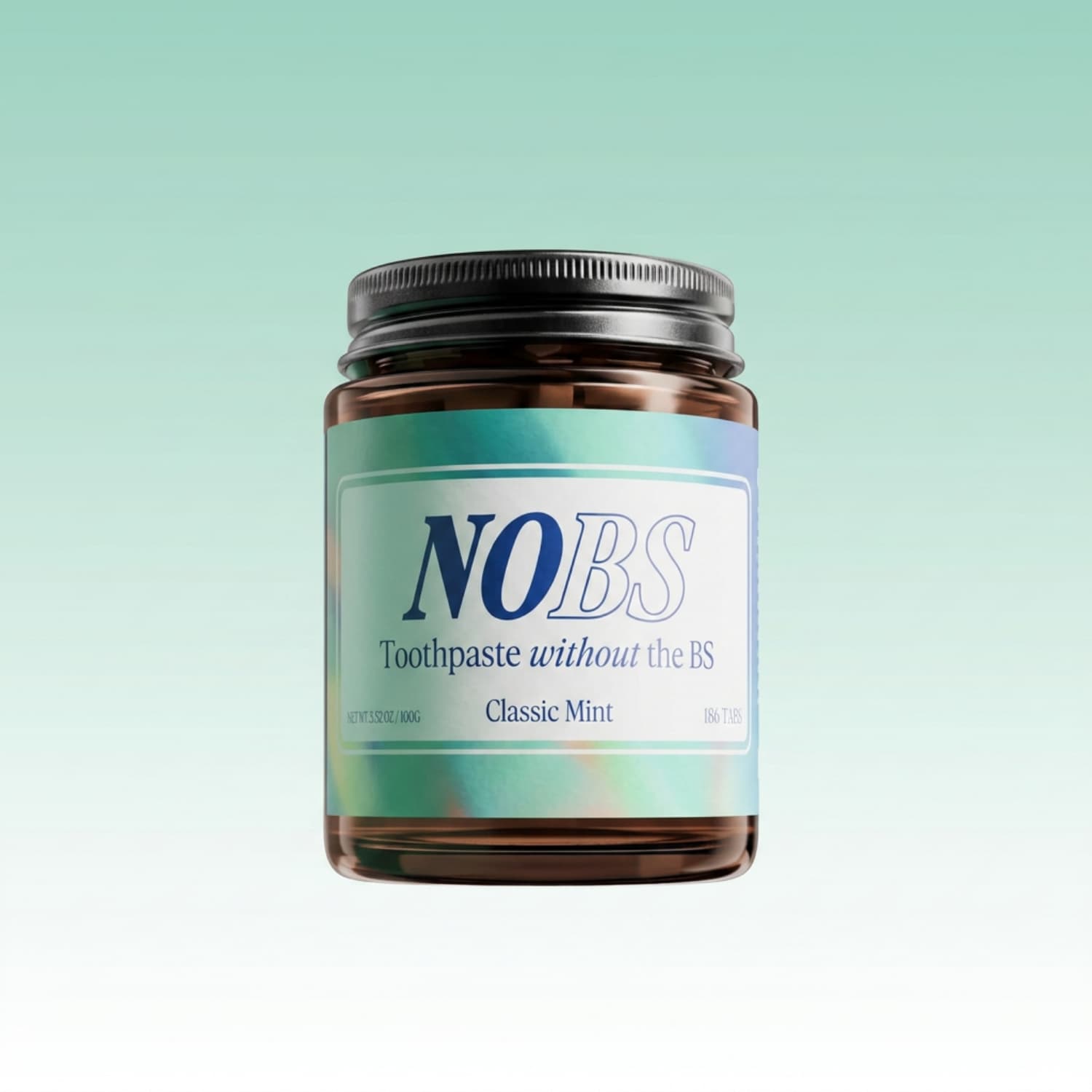
NOBS publishes its number, 5% nano-hydroxyapatite, and ships in a glass jar. That combination is rare enough to matter.
Six flavors cover picky palates, from Original peppermint to Cinnamon Craze and Blueberry Bliss, and a NOBS Jr version in Berry Bubblegum means one plastic-free system works for the whole house.
Container
Glass
✓ Plastic FreeRefills
Not Stated By Brand
⚠ UnverifiedFormat
Dry Tablet, No Tube
✓ Plastic FreeLid
Not Stated By Brand
⚠ UnverifiedPros
- Publishes its 5% nano-hydroxyapatite concentration
- Glass jar instead of a plastic bottle
- Six flavors plus a kids version, so one system covers everyone
- Cheaper per month than Bite
Cons
- No registry-verified third-party certification
- 5% sits at the low end of the researched range
- Tablets are a choking risk for very young children
- Supporting 2025 study is lab-based, not a clinical trial
The plastic-free option that tells you what is actually in it. Best plastic-free pick for a household with kids old enough to chew a tablet.
NOBS earns its spot on one thing Bite will not do, which is publish the concentration. Knowing you are getting 5% lets you compare it against the trials, where 10% is the usual test dose. Lower is not useless, it just means slower results, and NOBS is honest enough to let you make that call.
The company’s comparison claim now has published evidence behind it: a 2025 University of Texas lab study found NOBS inhibited demineralization comparably to an 1,100 ppm fluoride toothpaste. That is in-vitro evidence, not a clinical trial in real mouths, so treat it as promising rather than proven.
Davids Hydroxi Sensitive + Whitening
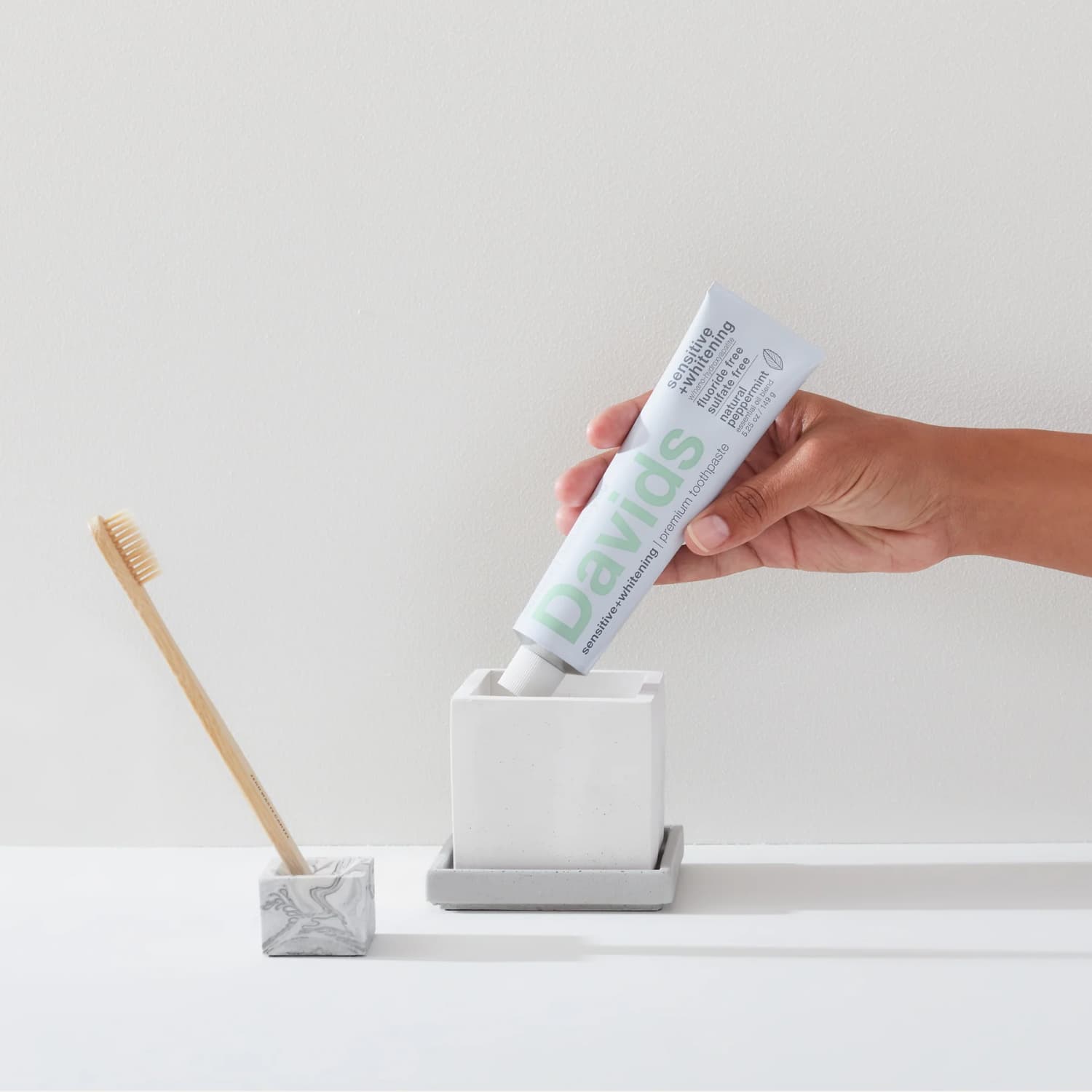
Sensitive + Whitening, Rod-Shaped Nano-Hydroxyapatite
$
Davids is the only pick here that pairs a recyclable metal tube with a certification you can verify yourself. Search EWG’s Skin Deep database and the Sensitive + Whitening peppermint formula comes back EWG VERIFIED.
Sixteen ingredients, no SLS, no PEGs, no titanium dioxide, no artificial sweeteners. The brand also specifies rod-shaped particles, the shape European regulators singled out as the safe one, which almost no competitor bothers to state.
Davids is my morning toothpaste, and I have reached for it every morning for the past year. I am a two-toothpaste person, Weleda Natural Salt at night and Davids in the morning.
Tube
Recyclable Metal
✓ Plastic FreeCarton
FSC-Certified Paper
✓ Plastic FreeTube Key
Metal Roller
✓ Plastic FreeCap
Plastic
⚠ PlasticPros
- EWG VERIFIED, confirmed in EWG’s own public database
- Recyclable metal tube instead of plastic laminate
- States rod-shaped particles, the shape regulators approved
- Cheapest per ounce of any non-plastic tube here
Cons
- Concentration is not published
- Cap is still plastic
- Metal tubes crease and can tear if you squeeze the middle
- Metal roller key that empties the tube is sold separately
The best balance of clean formula, verifiable certification, low-plastic packaging, and price. The one to buy if you only read this far.
What Puts Davids on Top
Two things put Davids on top. First, the certification is real. Anyone can type “EWG Verified” on a label, but Davids shows up in EWG’s Skin Deep database, assessed and listed. Only one other pick in this roundup, Bite, cleared that bar.
Second, the metal tube. It creases as you empty it, which some people find annoying, and Davids sells a small metal roller key, about a dollar, to squeeze out the last of it. Roll from the bottom instead of squeezing the middle and a tube lasts the full four ounces without splitting.
Georganics Hydroxyapatite Toothpaste
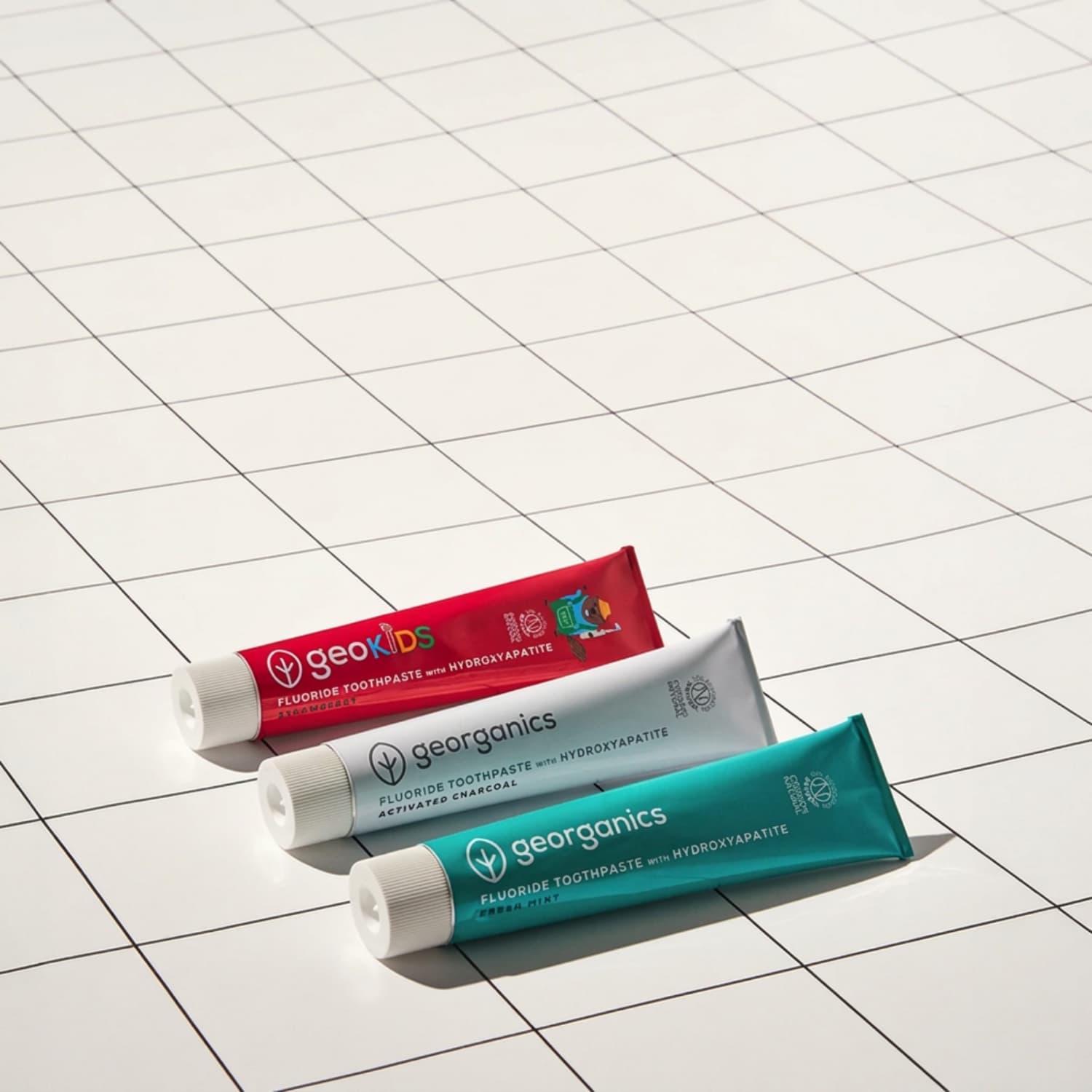
The Only Pick Sold With and Without Fluoride
$
Georganics solves the argument this whole category is stuck in. The same hydroxyapatite formula comes in a fluoride-free version and a fluoride version with 1350 ppm sodium fluoride, so you do not have to pick a side to try the mineral.
Thirteen ingredients, sweetened with erythritol, in a recycled and recyclable aluminium tube with a cardboard box. The prebiotic version adds inulin and Lactobacillus reuteri, which nothing else in this roundup does, and there are kids versions in both fluoride and fluoride-free.
Tube
Recycled Aluminium
✓ Plastic FreeBox
Recyclable Cardboard
✓ Plastic FreeLid
HDPE Plastic, #2
⚠ PlasticConcentration
Not Stated By Brand
⚠ UnverifiedPros
- Same formula sold with and without fluoride, unique here
- Recycled aluminium tube and a cardboard box, no plastic tube
- Thirteen ingredients, no SLS, PEGs, titanium dioxide, or artificial sweeteners
- Prebiotic version adds live Lactobacillus reuteri
Cons
- Concentration is not published
- Never confirms whether the particles are nano or micro
- Fluoride and fluoride-free versions come in different flavor lineups
- UK brand, so US pricing depends on the retailer
The only pick that lets you add hydroxyapatite without giving up fluoride. Best for anyone who does not want to choose sides.
Where Georganics Wins
Most of this category asks you to make a decision you may not want to make. Nearly every hydroxyapatite toothpaste is fluoride-free by design, which means trying the mineral usually means dropping fluoride at the same time. Georganics is the exception, and for a reader whose dentist wants them on fluoride, that is the difference between switching and not switching.
Two gaps keep it out of the top slot. Georganics does not publish a concentration, and its own pages describe “an optimised particle size, in line with current EU cosmetics regulations” without ever saying nano or micro. On certifications it does better than most here: Georganics names the Soil Association as its COSMOS Natural certifier on its certifications page, alongside Leaping Bunny.
Mouthology 10% Hydroxyapatite Toothpaste
Highest Stated Concentration, Lowest Price
$
Mouthology lists 10% rod-shaped nano-hydroxyapatite as its first ingredient, which matches the dose used in the clinical trials, and still comes in at the lowest price per ounce here.
Thirteen ingredients, no SLS, no PEGs, no artificial sweeteners. A tablet version exists for $19.99 if you want to skip the tube, though the brand does not state what the tablet container is made of.
Tube
Plastic
⚠ PlasticCap
Plastic
⚠ PlasticTablet Option
Sold Separately
⚠ UnverifiedMaterials Info
Not Stated By Brand
⚠ UnverifiedPros
- 10% nano-hydroxyapatite, matching the clinical trial dose
- Rod-shaped particles, stated on the label
- Lowest price per ounce in this roundup
- Carried by Benco Dental, a professional supplier
Cons
- Plastic tube with no packaging information published
- No third-party certification of any kind
- Labels foaming agent as “SMC Taurate” instead of the full INCI (Sodium Methyl Cocoyl Taurate)
- Tube size only appears on retailer listings, not the brand site
The most hydroxyapatite for the money, in the least impressive packaging. Buy it for the formula, not the tube.
Concentration is where most brands go quiet, so a paste that leads with 10% and names the particle shape deserves attention. Mouthology does both, and undercuts everything else on price. Distribution through Benco Dental, which sells to dental practices rather than to shoppers, is a modest credibility signal on top.
Packaging is the weak spot. No tube material, no recyclability guidance, no certifications. If you care about the formula first and the container second, this is the value buy.
RiseWell Mineral Toothpaste
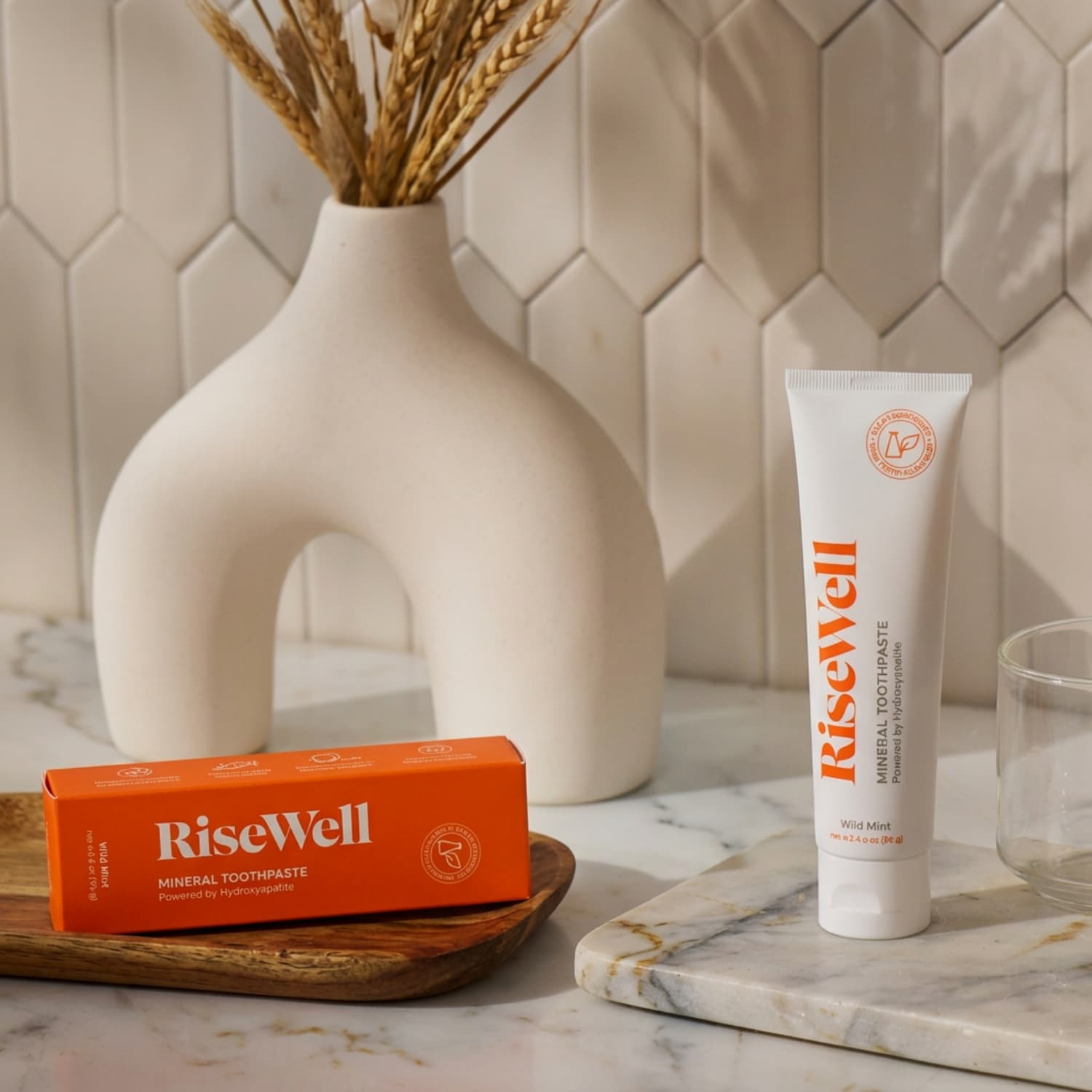
10% Micro-Hydroxyapatite, Not Nano
$$$
RiseWell uses 10% micro-hydroxyapatite sourced from France, and treats non-nano as the selling point rather than an omission. If nanoparticles are the thing giving you pause, this is your answer.
The formula is safe to swallow with no age restriction, which makes it a practical family tube. Two options only, Wild Mint and Flavorless, and it does contain propanediol if that is on your avoid list.
Tube
LDPE Plastic, #4
⚠ PlasticCap
Polypropylene, #5
⚠ PlasticRecycling
Cut, Rinse, Curbside
⚠ Varies LocallyMineral
Micro, Not Nano
✓ Non-NanoPros
- Publishes its 10% concentration and its particle class
- Micro-hydroxyapatite sidesteps the nanoparticle debate
- Safe to swallow, usable from the first tooth
- Tube and cap resin codes are published, which is rare
Cons
- LDPE #4 is accepted by very few curbside programs
- No registry-verified certification
- Only two flavor options
- Among the priciest per ounce
The clearest answer for anyone who wants the mineral without the nanoparticles. Choose it on particle size, not on packaging.
RiseWell gets misdescribed as a nano toothpaste constantly, including by other roundups. It is not. The consumer Mineral Toothpaste is 10% micro-hydroxyapatite, and the brand says so plainly. That distinction is the entire reason to buy it, so it is worth getting right.
Credit where it is due on packaging honesty too. RiseWell publishes the exact resin codes for the tube and cap, then tells you to cut the tube, rinse it, and recycle. Whether your local program actually takes LDPE is another matter, and in most of the US it does not.
Boka Ela Mint
The One Everyone Has Heard Of
$$
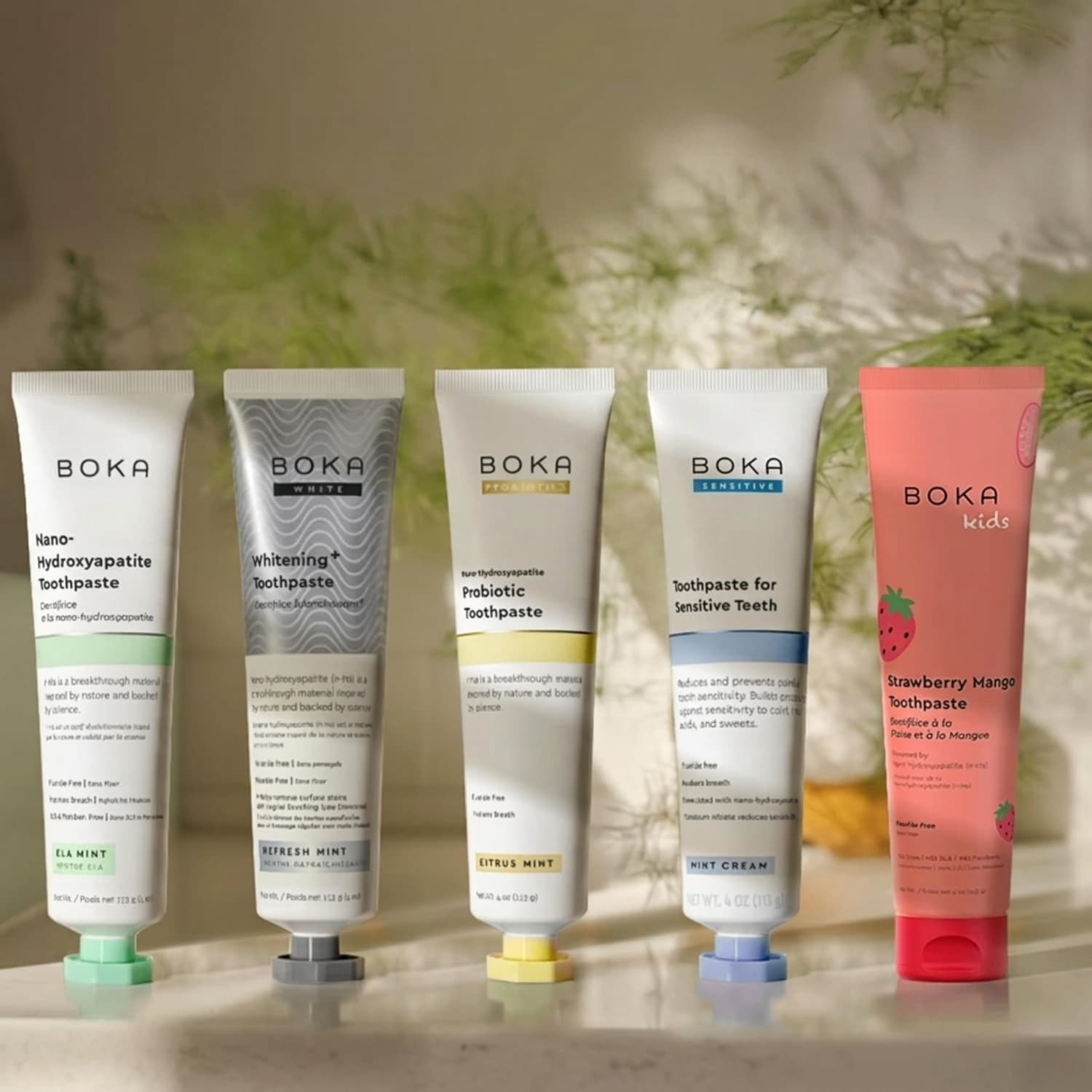
Boka did more than anyone to put hydroxyapatite on American shelves, and the cardamom-and-mint flavor is the reason people stay. Seven adult flavors, five kids flavors, plus a separate sensitivity formula.
No SLS here, despite what the label looks like at a glance. Boka uses sodium lauroyl sarcosinate, a milder surfactant with a confusingly similar name. No PEGs, no titanium dioxide, no artificial sweeteners.
Tube
Plastic Squeeze Tube
⚠ PlasticCap
Plastic Flip Top
⚠ PlasticTube Spec
Not Stated By Brand
⚠ UnverifiedConcentration
Not Stated By Brand
⚠ UnverifiedPros
- Best flavor range, including five kids options
- No SLS, PEGs, titanium dioxide, or artificial sweeteners
- Separate sensitivity formula with 5% potassium nitrate
- Easy to find in stores, not just online
Cons
- Publishes neither tube material nor hydroxyapatite percentage
- Recycling page exists but never names the tube material
- No registry-verified certification
- Tube size is not shown on the brand’s own product page
A genuinely good formula from a brand that will not tell you much about it. Buy it for the flavors, not the disclosure.
Boka is the brand most people mean when they say hydroxyapatite toothpaste, and the formula holds up to scrutiny. Nothing on the ingredient list raises a flag, and the sodium lauroyl sarcosinate confusion trips up a lot of reviewers who assume any long surfactant name means SLS.
What is missing is everything around the paste. No published concentration, no tube material, no certification you can look up. There is a recycling page, but it never says what the tube is actually made of. For a brand this large that is a choice, not an oversight.
Fygg Prebiotic Toothpaste
Eleven Ingredients, Safe From Age Zero
$$$
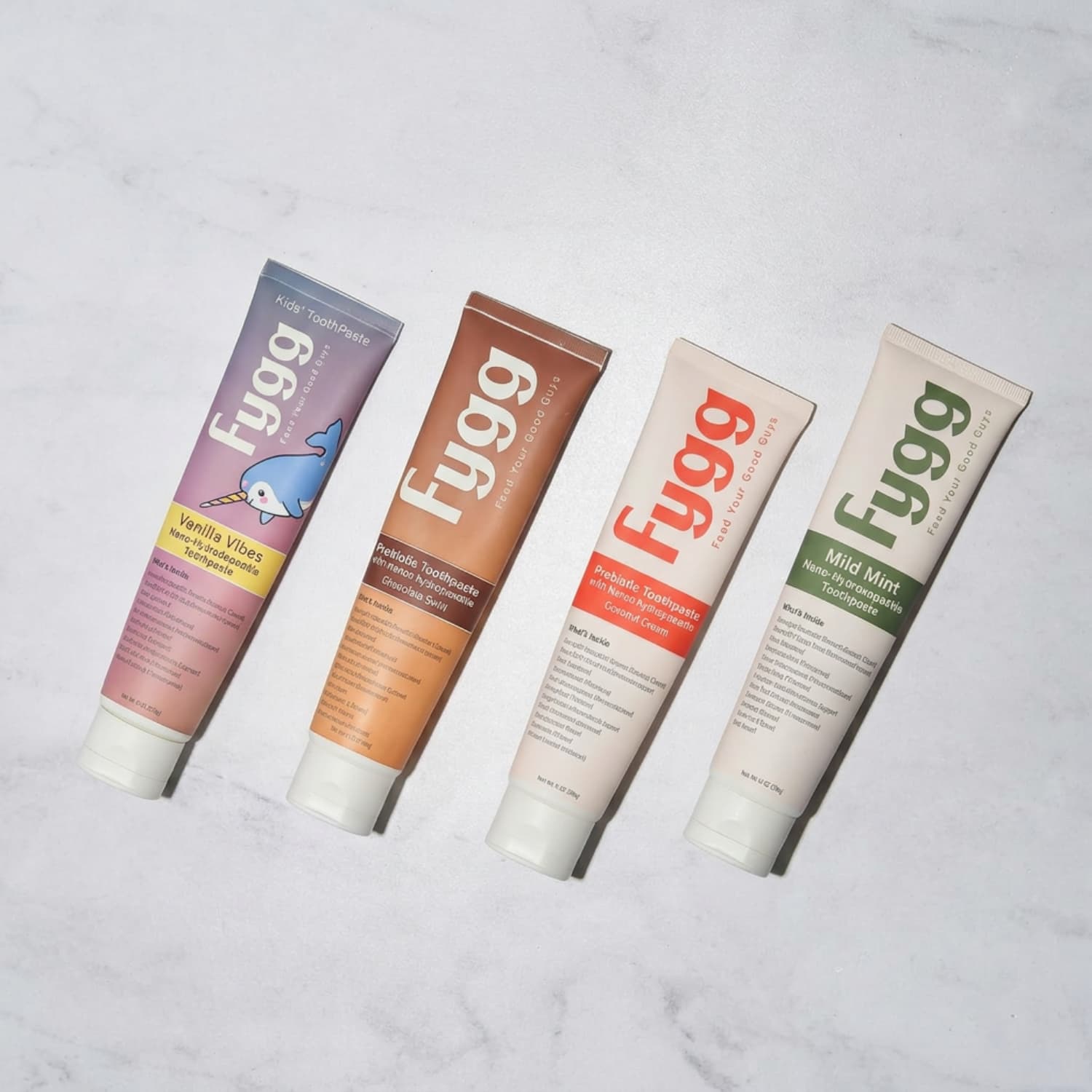
Fygg runs the shortest ingredient list here at eleven items, adds chicory root as a prebiotic, and sweetens with monk fruit instead of the usual stevia.
Be clear-eyed on the number though. Fygg states 3.1% nano-hydroxyapatite, the lowest in this roundup, and argues particle quality matters more than raw percentage. Marked safe from age zero, with a smear-size dose for pre-spitters.
Tube
LDPE Plastic, #4
⚠ PlasticCap
Polypropylene, #5
⚠ PlasticAdditives
BPA, PFAS, Phthalate Free
⚠ Brand StatedFormula
11 Ingredients
✓ Shortest ListPros
- Eleven ingredients, the shortest list in this roundup
- Publishes its exact 3.1% concentration
- Safe from age zero with clear dosing guidance
- Four flavors including chocolate and coconut for kids
Cons
- 3.1% is well below the 10% used in most trials
- Plastic tube with no zero-waste alternative
- No registry-verified certification
- Expensive per ounce for the concentration you get
Honest about a number most brands would rather hide. Best pick for a sensitive mouth that reacts to long ingredient lists.
There is something to respect in a brand that publishes 3.1% when competitors just say “contains nano-hydroxyapatite” and let you assume. Fygg’s argument is that its raw material, a pharmaceutical-grade paste from a European supplier, delivers better particles than a higher percentage of cheaper powder. That may well be true, and it is also unproven.
Where Fygg genuinely wins is simplicity. Eleven ingredients, no preservative system beyond potassium sorbate, and nothing that commonly triggers mouth irritation. For anyone who reacts to conventional toothpaste, that short list is the whole appeal.
RiseWell Kids Cake Batter
Cake Batter, Flavored With Real Vanilla
$$$
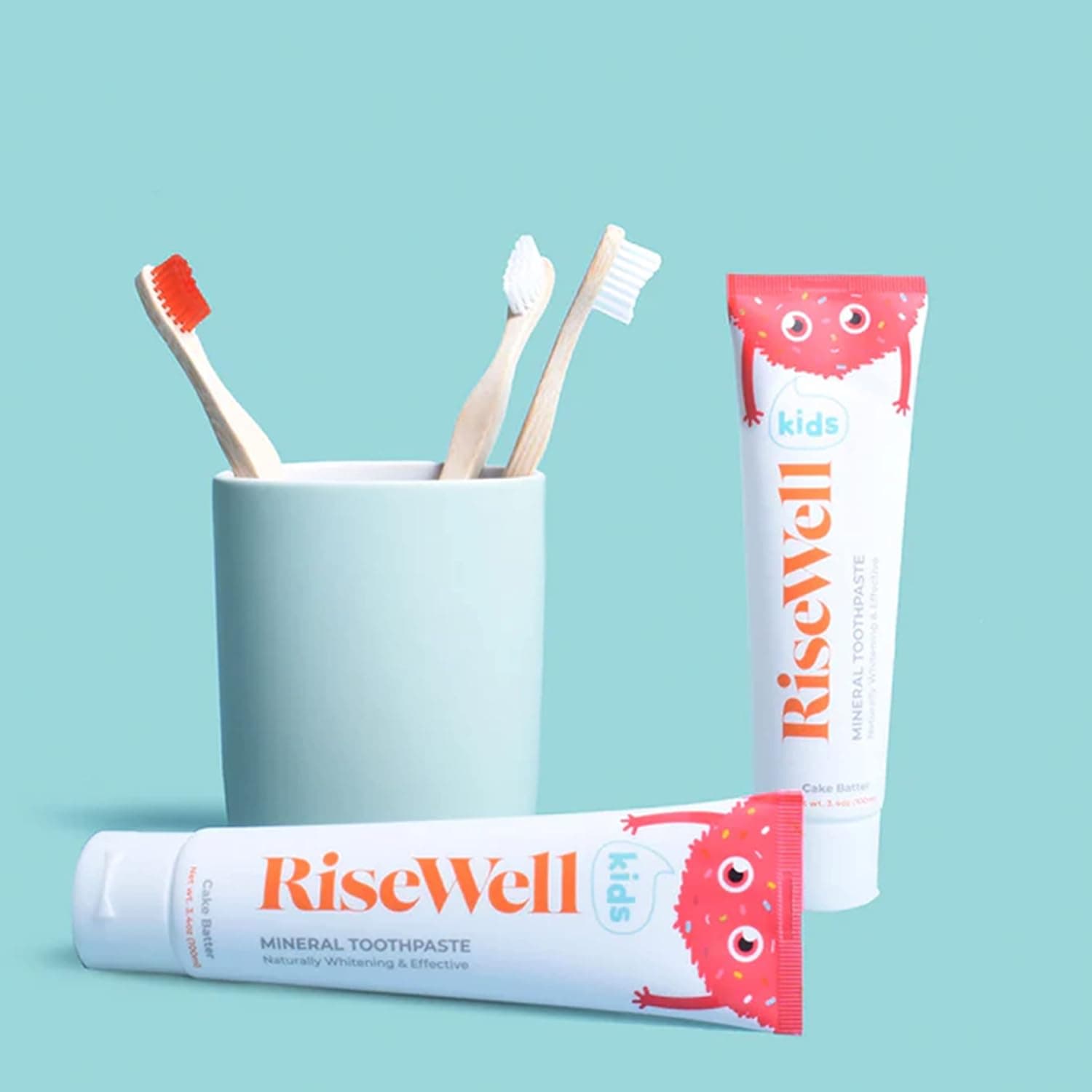
RiseWell Kids wins the flavor argument without cheating. The Cake Batter taste comes from real vanilla fruit extract, not an artificial flavor, on a fourteen-ingredient list with no dyes and no fluoride.
Safe to swallow with no age minimum, so it works from the first tooth. RiseWell’s FAQ confirms the kids paste is the same formula as the adult tube, 10% micro-hydroxyapatite, just flavored differently.
Tube
LDPE Plastic, #4
⚠ PlasticCap
Polypropylene, #5
⚠ PlasticFlavor
Real Vanilla Extract
✓ No DyesMineral
10% Micro, Per FAQ
✓ Non-NanoPros
- Flavor kids actually ask for, from real vanilla extract
- Safe to swallow, usable from the first tooth
- Fourteen ingredients, no dyes and no artificial sweeteners
- Fluoride-free, so no fluorosis worry with swallowing
Cons
- Concentration lives in the FAQ, not on the kids product page
- Plastic tube and cap
- Only one flavor
- Costs the same as the adult tube in a smaller niche
The kids’ paste most likely to get used twice a day without a fight. Best for children too young to chew a tablet safely.
How the Kids Formula Compares
Getting a five-year-old to brush is a behavior problem before it is a chemistry problem, and flavor solves more of it than any ingredient list. Cake Batter works, and it works without dyes or artificial flavor, which is genuinely hard to pull off.
Where children are concerned we hold claims to a stricter standard, so here is the fine print: the kids product page itself does not list a concentration. You have to dig into RiseWell’s FAQ, which states the kids paste is the same formula as the adult Mineral Toothpaste, 10% micro-hydroxyapatite, in a different flavor. The number is published, just not where most shoppers will look.
Apagard Premio
The Original, With the Messiest Ingredient List
$$$
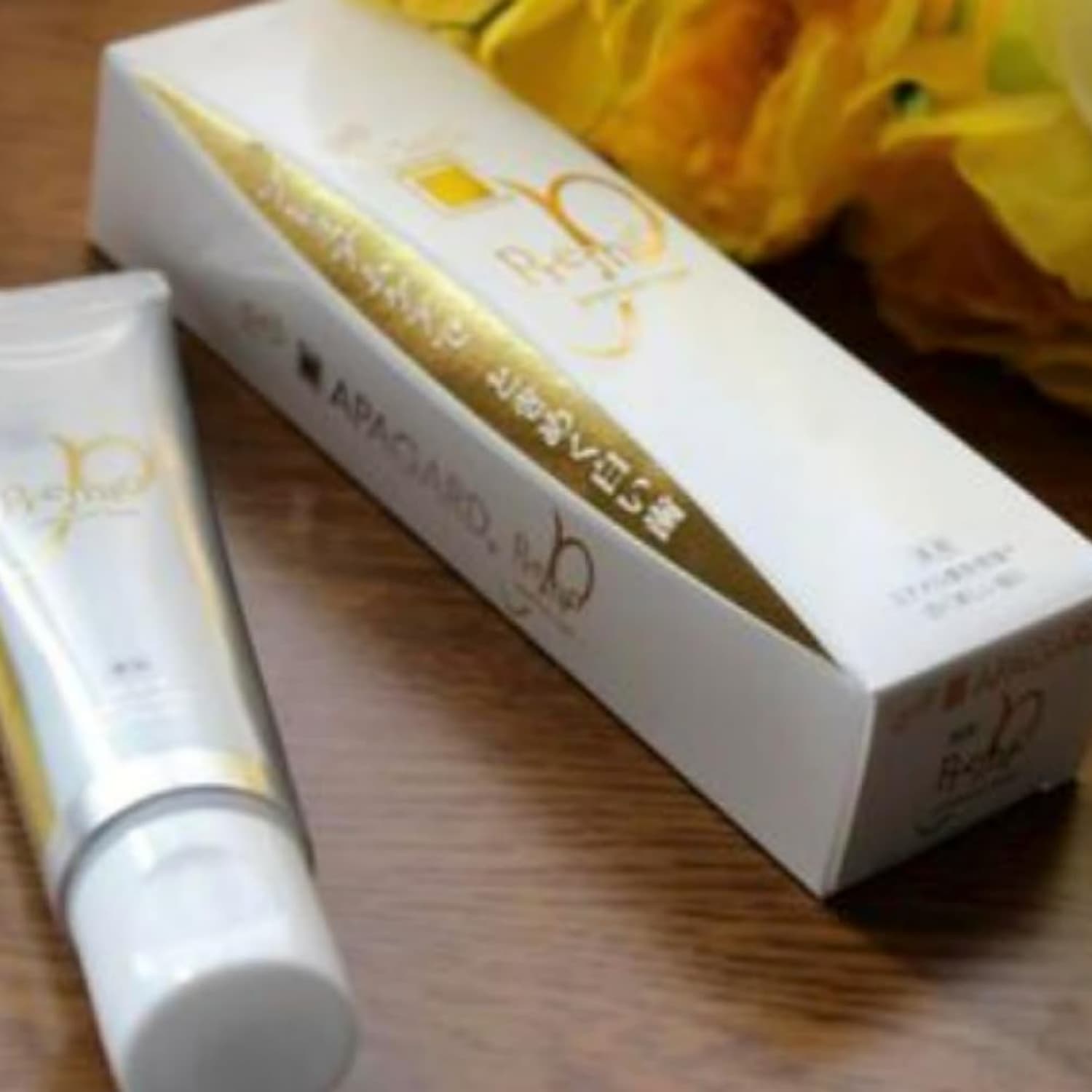
Apagard comes from Sangi, the company that started all of this. Japan’s Ministry of Health approved Sangi’s hydroxyapatite as an anticaries ingredient back in 1993, decades before American brands existed.
Here is the honest catch. Premio contains sodium lauryl sulfate, PEG-8, and sodium saccharin, and includes conchiolin pearl protein so it is not vegan. Sangi also declines to publish the concentration, saying only that Premio has 1.4 times the amount in its other pastes.
Tube
Plastic Laminate
⚠ PlasticCap
Plastic
⚠ PlasticSurfactant
Sodium Lauryl Sulfate
⚠ Contains SLSConcentration
Withheld By Brand
⚠ UnverifiedPros
- The original hydroxyapatite paste, on shelves since the 1980s
- Government-approved as an anticaries ingredient in Japan since 1993
- Highest hydroxyapatite level in Sangi’s own lineup
- Distinctive double-mint flavor with real staying power
Cons
- Contains SLS, PEG-8, and sodium saccharin
- Not vegan, because of the pearl protein
- No official US store, so pricing swings by importer
- Not one we would hand to a child
Decades of regulatory history wrapped around a formula the clean-beauty crowd would reject on sight. Buy it for the track record, and only if SLS does not bother you.
Apagard is the strangest entry on this list, and the most instructive. Sangi has the longest track record and a government approval no American brand can claim, yet its ingredient deck reads like a 1990s drugstore tube. Anyone who switched to hydroxyapatite specifically to escape SLS will want to skip it.
Keep that contrast in mind whenever a brand implies hydroxyapatite and “clean” are the same thing. They are separate decisions, and Premio is the proof.
What to Look For in a Hydroxyapatite Toothpaste
Look for a stated concentration between 5% and 10%, rod-shaped particles, and an ingredient list with no SLS, PEGs, titanium dioxide, or artificial sweeteners. A brand that publishes all three is telling you something before you even open the tube.
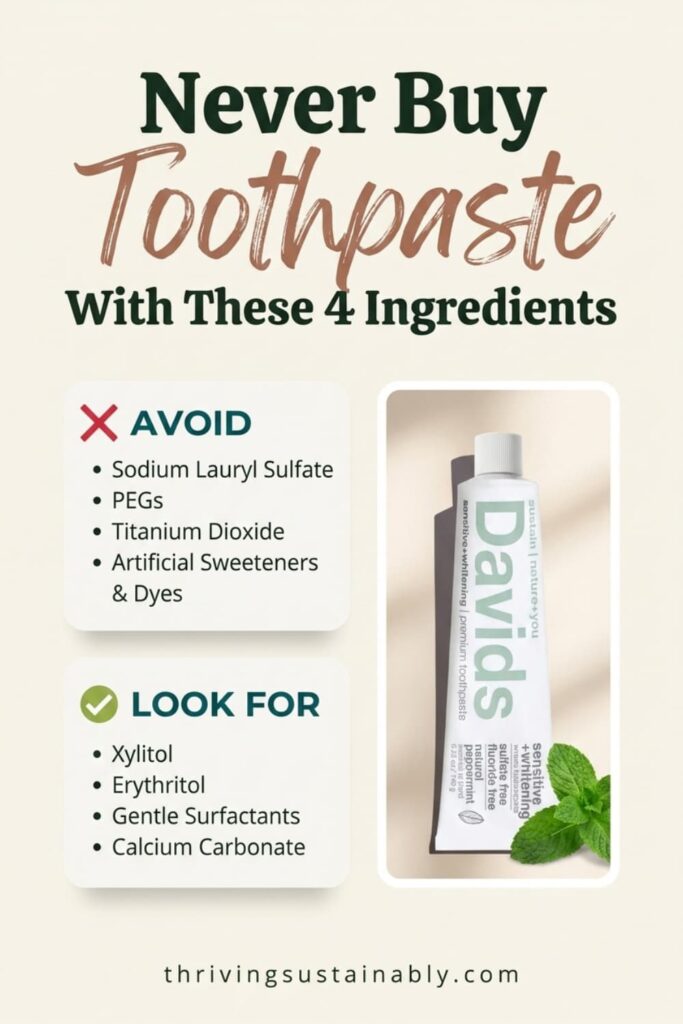
Shopping this category is harder than it should be, because the label rarely gives you the two numbers that matter. Here is what to check, in order of how much it affects the result.
Concentration: Aim for 5% to 10%
Nearly every clinical trial worth citing used a 10% formula. Studies at 5% exist and show benefit, and below that the research thins out fast. Of the ten picks here, only four publish a number at all: Mouthology at 10%, RiseWell at 10% micro, NOBS at 5%, and Fygg at 3.1%. When a brand will not say, you are trusting a marketing department rather than a spec.
Particle Size and Shape
Nano particles are small enough to settle into microscopic enamel defects, while micro particles behave more like a polish. Shape carries the safety question. Europe’s Scientific Committee on Consumer Safety cleared hydroxyapatite (nano) in June 2025 for use in toothpaste up to 29.5%, but only for rod-shaped particles, uncoated, with particles around 122 nanometers long. Needle-shaped particles sit outside that opinion entirely.
❌ Red-Flag Ingredients to Skip
- Sodium lauryl sulfate. A harsh foaming agent linked to canker sores in people prone to them. Only Apagard Premio contains it here.
- PEGs. Polyethylene glycol compounds can carry manufacturing impurities and add nothing you need in a paste.
- Titanium dioxide. A whitening pigment banned as a food additive in the EU. None of the published ingredient lists here include it.
- Artificial sweeteners and dyes. Saccharin and sucralose do nothing for your teeth, and dyes are pure decoration.
✅ Ingredients Worth Looking For
- Xylitol. A sugar alcohol that decay-causing bacteria cannot ferment, so it works with the hydroxyapatite rather than against it.
- Erythritol. Another non-fermentable sweetener, common in tablet formulas like Bite.
- Gentle surfactants. Sodium cocoyl glutamate, potassium cocoate, and sodium lauroyl sarcosinate all foam without the irritation.
- Calcium carbonate or hydrated silica. Mild abrasives that clean without scratching enamel.
The Ingredient Audit, Side by Side
Here is every pick run against the same four red flags, plus the foaming agent each one actually uses. One brand fails, and it is not the one most people would guess.
| Toothpaste | SLS | PEGs | Titanium Dioxide | Artificial Sweetener | Foaming Agent Used |
|---|---|---|---|---|---|
| Bite Toothpaste Bits | No | No | No | No | Sodium cocoyl glutamate |
| NOBS Tablets | No | No | No | No | Sodium lauroyl sulfoacetate, sodium cocoyl isethionate |
| Davids Hydroxi | No | No | No | No | Sodium cocoyl glutamate |
| Georganics | No | No | No | No | Glycolipids (specific INCI not disclosed) |
| Mouthology 10% | No | No | No | No | Sodium methyl cocoyl taurate |
| RiseWell Mineral | No | No | No | No | Potassium cocoate |
| Boka Ela Mint | No | No | No | No | Sodium lauroyl sarcosinate |
| Fygg Prebiotic | No | No | No | No | None, no added surfactant |
| RiseWell Kids | No | No | No | No | Potassium cocoate |
| Apagard Premio | Yes | Yes, PEG-8 | No | Yes, sodium saccharin | Sodium lauryl sulfate |
Apagard Premio is the only failure, and it fails on three of the four. The brand with the longest scientific history has the ingredient deck the clean-beauty crowd would reject fastest, which is a useful reminder that hydroxyapatite and clean formulation are two separate purchases. NOBS publishes its full 13-ingredient list, though two of its surfactants are milder cousins of SLS rather than the flagged compound itself. Georganics passes all four but will not say how much hydroxyapatite is in the tube.
Certifications and Third-Party Testing
Treat any badge as a claim until you find it in the certifier’s public database. Working through all ten picks, two brands survived that check: Davids appears in EWG’s Skin Deep registry as EWG VERIFIED and in the Leaping Bunny registry, certified since 2013, and Bite is listed by B Lab as a Certified B Corporation with a score of 87.8. Georganics names the Soil Association as its COSMOS Natural certifier on its certifications page. The rest either carry no third-party certification or make claims we could not confirm in a registry.
Are There Any Downsides or Risks?
The main risks are cost, a thinner evidence base than fluoride, and no ADA Seal. Safety reviews find no meaningful hazard from swallowing hydroxyapatite, because the particles dissolve in stomach acid within minutes.
Plenty of dentists are cautious about this category, and their reasons are worth hearing rather than waving off.
Start with the skeptic most people have seen. Dr. Ellie Phillips writes on her own site that “although tooth enamel is primarily composed of hydroxyapatite crystals, that does not mean I recommend applying hydroxyapatite particles to your teeth,” and adds, “for that reason, I do not recommend hydroxyapatite toothpastes or powders.” Her objection is not that the mineral is dangerous. She questions whether we have enough long-term data on applying these particles for decades, and prefers to support the saliva that delivers calcium and phosphate naturally.
Is Nano-Hydroxyapatite Safe to Swallow?
On swallowing, the research is more settled than the internet suggests. Matthias Epple’s 2018 review in Acta Biomaterialia concluded there is “no risk from an oral uptake of calcium phosphate nanoparticles due to their rapid dissolution in the stomach,” and that shape, spherical or rod-like, did not change the biological response. That is reassuring for households with kids who swallow toothpaste.
The Practical Downsides: Cost and No ADA Seal
The real downsides are practical. Hydroxyapatite toothpaste costs two to four times what a drugstore tube costs. No hydroxyapatite product carries the ADA Seal of Acceptance, because the ADA requires fluoride in any toothpaste making a cavity-protection claim with the Seal. And the evidence base, while consistent, is small. If you are cavity-prone, have a history of decay, or your dentist has flagged active demineralization, that is a conversation to have with them rather than a switch to make on your own.
How to Use Hydroxyapatite Toothpaste for Best Results
Brush for 2 minutes twice a day, spit without rinsing, and give it 4 weeks before judging. Rinsing with water washes away the mineral before it can settle into the enamel surface.
The technique is simple, and one habit matters more than all the others.
- Use a pea-sized amount on a soft-bristled brush, or a smear the size of a grain of rice for a child under three.
- Brush for a full two minutes, twice daily, with gentle circles rather than hard scrubbing.
- Spit out the excess and stop there. Skip the water rinse so the mineral stays on your teeth.
- Save the last brush for after your final food or drink of the night, so the mineral has undisturbed hours to work.
- Pair it with xylitol gum or mints between meals if you snack often.
✨ tip
Do not rinse, and give it a month
The single biggest mistake is rinsing your mouth with water after brushing. It washes the hydroxyapatite straight down the drain. Spit, then leave it. On timing, a meta-analysis of six randomized trials found sensitivity relief measured at the 4-week mark, so give a new tube at least that long before deciding it is not working.
Switching is easy on your routine. Hydroxyapatite works alongside flossing, tongue scraping, and a water flosser with no conflicts, and you do not need to change brushes.
Don’t Miss: Does Toothpaste Expire? Mineral pastes hold up longer than most, but the date on the crimp still matters. Here is how to read it. Read more →FAQs About Hydroxyapatite Toothpaste
Current evidence says yes. A 2018 review in Acta Biomaterialia found no risk from oral uptake of calcium phosphate nanoparticles because they dissolve rapidly in stomach acid, and no meaningful difference based on particle shape. Because hydroxyapatite contains no fluoride, there is also no fluorosis risk if a young child swallows some.
For sensitivity, about 2 to 4 weeks. A meta-analysis of six randomized trials measured relief at the 4-week mark. For enamel, in-mouth studies detected measurable remineralization within 14 days, while clinical trials tracking real cavity outcomes ran 6 to 18 months.
It can remineralize early enamel lesions, the chalky white spots that come before a hole forms. Once decay has broken through into a true cavity, no toothpaste repairs that. Only a dentist can, so hydroxyapatite is a prevention and early-stage tool rather than a fix.
Particle size and disclosure. RiseWell states 10% micro-hydroxyapatite, which is not nano. Boka uses nano-hydroxyapatite but does not publish the percentage. Boka has far more flavors, RiseWell tells you more about what is in the tube, and both ship in plastic.
No, and it has not been rejected either. Federal regulations recognize only three anticavity actives, all of them fluorides, so hydroxyapatite toothpaste is sold in the US as a cosmetic rather than an over-the-counter drug. That means it cannot legally make a cavity-prevention claim on the label. Worth noting that fluoride toothpaste is not FDA-approved in the way a prescription drug is either.
Yes. The two work through different mechanisms and do not cancel each other out. If you want both, use them at separate times rather than back to back, so each one gets undisturbed contact with your enamel. Brush with hydroxyapatite at night and rinse with fluoride at another point in the day.
Mildly, and not the way a bleaching strip does. Hydroxyapatite fills in microscopic surface irregularities, which makes enamel reflect light more evenly and look brighter. There is no peroxide involved, so it will not lift deep staining, and no study gives a reliable timeline for visible whitening.
Final Thoughts About Hydroxyapatite Toothpaste
Buy Davids Hydroxi Sensitive + Whitening if you want one answer. It is the only pick that combines a verifiable certification, a metal tube instead of plastic, a clean 16-ingredient formula, and a price under $3 an ounce.
Here is the quick sort if your priorities differ. Choose Bite when eliminating plastic matters more than anything else, or NOBS if you want plastic-free with a published concentration. Reach for Mouthology to get the clinical-trial dose at the lowest price, and RiseWell if nanoparticles are the sticking point. Pick Georganics if you want the mineral without giving up fluoride, since it is the only one sold both ways. Boka wins on flavor, Fygg on a short ingredient list, RiseWell Kids for young children, and Apagard Premio only if decades of history outweigh an SLS-containing formula.
The bigger takeaway from working through all ten is how little most brands disclose. Six of ten will not publish a concentration, and only two carry a certification that survives a registry check. That is the real filter. A brand willing to print its number and its tube material is a brand that expects you to check.
📚 References
- Amaechi, B. T., AbdulAzees, P. A., Alshareif, D. O., Shehata, M. A., Lima, P. P. C. S., Abdollahi, A., Kalkhorani, P. S., & Evans, V. (2019). Comparative efficacy of a hydroxyapatite and a fluoride toothpaste for prevention and remineralization of dental caries in children. BDJ Open, 5, 18. https://doi.org/10.1038/s41405-019-0026-8
- American Dental Association. (2026). Toothpastes. ADA Oral Health Topics. https://www.ada.org/resources/ada-library/oral-health-topics/toothpastes
- Chatzidimitriou, K., Theodorou, K., Seremidi, K., Kloukos, D., Gizani, S., & Papaioannou, W. (2025). The role of hydroxyapatite-based, fluoride-free toothpastes on the prevention and the remineralization of initial caries lesions: A systematic review and meta-analysis. Journal of Dentistry, 156, 105691. https://doi.org/10.1016/j.jdent.2025.105691
- de Melo Alencar, C., de Paula, B. L. F., Guanipa Ortiz, M. I., Baraúna Magno, M., Martins Silva, C., & Cople Maia, L. (2019). Clinical efficacy of nano-hydroxyapatite in dentin hypersensitivity: A systematic review and meta-analysis. Journal of Dentistry, 82, 11-21. https://doi.org/10.1016/j.jdent.2018.12.014
- Epple, M. (2018). Review of potential health risks associated with nanoscopic calcium phosphate. Acta Biomaterialia, 77, 1-14. https://doi.org/10.1016/j.actbio.2018.07.036
- Paszynska, E., Pawinska, M., Gawriolek, M., Kaminska, I., Otulakowska-Skrzynska, J., Marczuk-Kolada, G., Rzatowski, S., Sokolowska, K., Olszewska, A., Schlagenhauf, U., May, T. W., Amaechi, B. T., & Luczaj-Cepowicz, E. (2021). Impact of a toothpaste with microcrystalline hydroxyapatite on the occurrence of early childhood caries: A 1-year randomized clinical trial. Scientific Reports, 11, 2650. https://doi.org/10.1038/s41598-021-81112-y
Additional Sources
- Paszynska, E., Pawinska, M., Enax, J., Meyer, F., Schulze zur Wiesche, E., May, T. W., Amaechi, B. T., Limeback, H., Hernik, A., Otulakowska-Skrzynska, J., Krahel, A., Kaminska, I., Lapinska-Antonczuk, J., Stokowska, E., & Gawriolek, M. (2023). Caries-preventing effect of a hydroxyapatite-toothpaste in adults: An 18-month double-blinded randomized clinical trial. Frontiers in Public Health, 11, 1199728. https://doi.org/10.3389/fpubh.2023.1199728
- Phillips, E. (2026, July 20). What is a tooth made of? DrEllie.com. https://drellie.com/2026/07/20/tooth-enamel/
- Sangi Co., Ltd. (n.d.). Medical hydroxyapatite (mHAP). https://www.sangi-co.com/en/mhap/index.html
- Scientific Committee on Consumer Safety. (2025). Opinion on hydroxyapatite (nano), submission IV (SCCS/1677/25). European Commission. https://health.ec.europa.eu/publications/sccs-scientific-opinion-hydroxyapatite-nano-submission-iv_en
- U.S. Food and Drug Administration. (n.d.). 21 CFR Part 355: Anticaries drug products for over-the-counter human use. Electronic Code of Federal Regulations. https://www.ecfr.gov/current/title-21/chapter-I/subchapter-D/part-355
- Vano, M., Derchi, G., Barone, A., Pinna, R., Usai, P., & Covani, U. (2018). Reducing dentine hypersensitivity with nano-hydroxyapatite toothpaste: A double-blind randomized controlled trial. Clinical Oral Investigations, 22(1), 313-320. https://doi.org/10.1007/s00784-017-2113-3