
Key Takeaways
- The best period underwear in 2026 is PFAS-free, uses organic or OEKO-TEX certified cotton against the skin, and pairs that with a TPU or PUL barrier (not a PFAS-coated one) for leak protection.
- No period underwear is fully plastic-free yet, since the leak-proof layer is almost always plastic. You can still cut your plastic footprint by choosing organic cotton gussets and washing your pairs on cold in a microfiber-catching wash bag.
- Top picks for 2026: Saalt (best overall, publishes its PFAS test results), Aisle (best for heavy flow), The Period Company (best budget), Modibodi (best for swim and sizes), and WUKA (best GOTS organic cotton).
In 2021, Mamavation sent 17 pairs of period underwear to a lab and found signs of PFAS “forever chemicals” in 65% of them. Two years later, Thinx settled a class-action lawsuit for up to $5 million over PFAS in underwear it had sold as non-toxic. If you’ve felt a little suspicious of the marketing on these things, you weren’t being paranoid.
Period underwear is a really good idea. It can cut your menstrual waste to almost nothing over a few years, save you hundreds of dollars, and skip the bleached cotton, synthetic fragrance, and plastic applicators in most tampons and pads. The catch is that not every pair is clean, and the chemicals some brands have used for stain and leak resistance end up sitting against your skin and washing out into your laundry water.
This guide walks through how to find the best period underwear in 2026 without trading one problem for another, with a clear focus on PFAS-free fabrics and the lowest-microplastic options available.
Don’t Miss: What Is PFAS? Health Risks, Sources & How to Avoid Forever Chemicals PFAS show up in far more than period underwear. Find out what forever chemicals are, where they hide in your home, and the easiest ways to cut back. Read more →What Is Period Underwear and How Does It Work?
Period underwear is reusable absorbent underwear that replaces or supplements pads and tampons. Built-in layers wick fluid away from the body, lock it into a hidden core, and stop leaks for 8 to 12 hours, depending on the flow rate.
The Layers Inside the Crotch Panel
Period underwear looks like regular underwear on the outside, but the crotch panel is doing a lot of work. Most pairs have three or four layers stacked together: a moisture-wicking top layer that sits against your skin and keeps you feeling dry, an absorbent core that pulls fluid in and traps it, a leak-proof barrier that stops anything from coming through the back, and an outer shell that looks and feels like a normal pair of undies.
How to Wear and Change Them
You wear them like you would any pair of underwear. Put them on at the start of your day, change them when they reach capacity (usually every 8 to 12 hours), rinse, and toss them in the wash. Some people use period underwear as their only menstrual product. Others use them as backup with a tampon, menstrual cup, or disc on heavy days, and both approaches work well.
Absorbency Ratings and Style Options
Each brand rates absorbency a little differently, usually in “tampons’ worth” or milliliters. Saalt’s range runs from about 1 to 10 tampons’ worth, and Aisle’s heaviest pairs hold up to 8 with a booster insert. Styles range from thongs and bikinis to high-waist briefs, boxers, shorts, and period swimwear. Sizing has come a long way too, with Saalt running XXS to 4XL and The Period Company going up to 6X.
Why Period Underwear Has Gotten So Popular
Period underwear has surged in popularity because it cuts menstrual waste to near zero, costs less over time than disposables, and removes the daily chemical exposure from bleached pads, tampons, and plastic applicators.
More Than 11,000 Pads and Tampons in a Lifetime
The numbers behind the shift are pretty stark. Researchers at George Mason University put the lifetime total at more than 11,000 tampons or pads per person, and every one of them is used once and thrown away. Some wash up on beaches, too, since the European Commission lists sanitary items among the 10 single-use plastic items most often found on Europe’s shores. Friends of the Earth estimates a pad can be up to 90% plastic, and that’s before you count the wrapper or the applicator.
Cost Per Wear Drops Fast
Reusable period underwear flips that math. An ob/gyn interviewed by Cleveland Clinic says most pairs last 2 to 5 years, which adds up to a lot of skipped disposables. Cost per wear drops fast, too: a $30 pair worn 50 times works out to about 60 cents a wear, and less if it lasts longer.
What’s Hiding in Disposable Pads
The health side matters just as much. Many disposable pads are scented, held together with adhesives, and wrapped in plastic, and many tampons add a plastic applicator on top. A clean pair of period underwear sidesteps most of that, as long as you pick one that hasn’t traded one chemical problem for another. That brings us to the PFAS question.
The PFAS Problem in Period Underwear
A 2020 Sierra magazine investigation and 2021 testing by Mamavation both found PFAS, or “forever chemicals,” in popular period underwear, including pairs sold as non-toxic. In Mamavation’s test, 65% of pairs had detectable fluorine, a marker for PFAS.
What PFAS Are and Why They Matter
PFAS (per- and polyfluoroalkyl substances) are a family of thousands of synthetic chemicals, and some of them are used to make fabric water-, stain-, and oil-resistant. They’re nicknamed “forever chemicals” because they break down so slowly that they build up in the environment and in our bodies. The EPA and the CDC’s toxic substances agency link some PFAS to kidney cancer, a weaker response to vaccines, lower birth weight, and interference with the body’s natural hormones.
How the Period Underwear PFAS Story Broke
The story that started the period underwear PFAS conversation ran in Sierra magazine in January 2020. Writer Jessian Choy mailed pairs of Thinx underwear to Dr. Graham Peaslee, a physicist at the University of Notre Dame, and his lab found PFAS that was especially concentrated in the inside layers of the crotch, the part that sits against your body.
Thinx Class-Action Settlement
Shoppers then sued, and Thinx agreed to settle the class action for up to $5 million. NPR reported that buyers from November 2016 to November 2022 could claim $7 a pair for up to three pairs, and that Thinx agreed to make sure PFAS isn’t intentionally added to its underwear and to disclose any antimicrobial treatments. A federal judge gave the deal final approval in June 2023, though many shoppers had already stopped trusting the brand’s green claims.
Mamavation Test Results
In 2021, Mamavation, a consumer watchdog site, sent 17 pairs from 14 brands to an EPA-certified lab for total fluorine testing. Eleven pairs, or 65%, had detectable fluorine. The highest readings came from Thinx, Knix, and Proof, while Aisle, Modibodi, Saalt, and The Period Company were among the brands that came back clean or near the detection limit.
That’s why PFAS-free should be the first thing you check in 2026, even before absorbency and style.
Materials and Safety: What Goes Into Period Underwear
Most period underwear uses four layers: a cotton or bamboo top, an absorbent core that is often polyester, a plastic leak barrier, and a stretchy outer shell. Truly plastic-free options don’t exist yet, but the cleanest pairs put organic or OEKO-TEX certified fabric where it touches you and skip PFAS treatments entirely.
❌ Materials to Avoid
- PFAS coatings: Often sold as “stain-resistant” or “water-repellent,” or not listed at all. Only a handful of states require PFAS labels on clothing, though California has banned regulated PFAS in most textiles since 2025, and Minnesota, Colorado, and Vermont now ban intentionally added PFAS in menstrual products. Look for an explicit PFAS-free claim backed by lab testing.
- Silver and other antimicrobial treatments: Some brands add antimicrobials to fight odor, which is why the Thinx settlement required the brand to disclose its antimicrobial treatments. If a brand won’t say what’s in its gusset, skip it.
- Triclosan and triclocarban: These antibacterial chemicals were pulled from consumer antiseptic washes after the FDA ruled in 2016 that they weren’t shown to be safe and effective, so they have no business in your underwear.
- Undisclosed “fragrance”: Should never appear on period underwear. If it does, return it.
✅ What to Look For Instead
- GOTS certified organic cotton top layer
- OEKO-TEX Standard 100 certification across all layers
- MADE SAFE certification, which screens products for known harmful chemicals
- PFAS-free with named third-party lab testing
- Lower synthetic blend in the absorbent core (cotton, modal, bamboo over polyester)
- Repairable, replaceable parts (a few brands sell replaceable inserts)
Best Period Underwear in 2026: Our Top Picks
The best period underwear brands in 2026 are Saalt, Aisle, The Period Company, Modibodi, and WUKA. All five say they keep PFAS out of their underwear, and Saalt goes furthest by publishing its own lab results.
Every brand below either publishes its PFAS results or explains how it screens for PFAS, and four of the five came back clean in Mamavation’s testing. Together they cover the full range of flows, sizes, and budgets. Picks are ordered by how well they balance PFAS transparency, clean materials, absorbency, and price.
The only brand here that publishes its PFAS lab results
$$
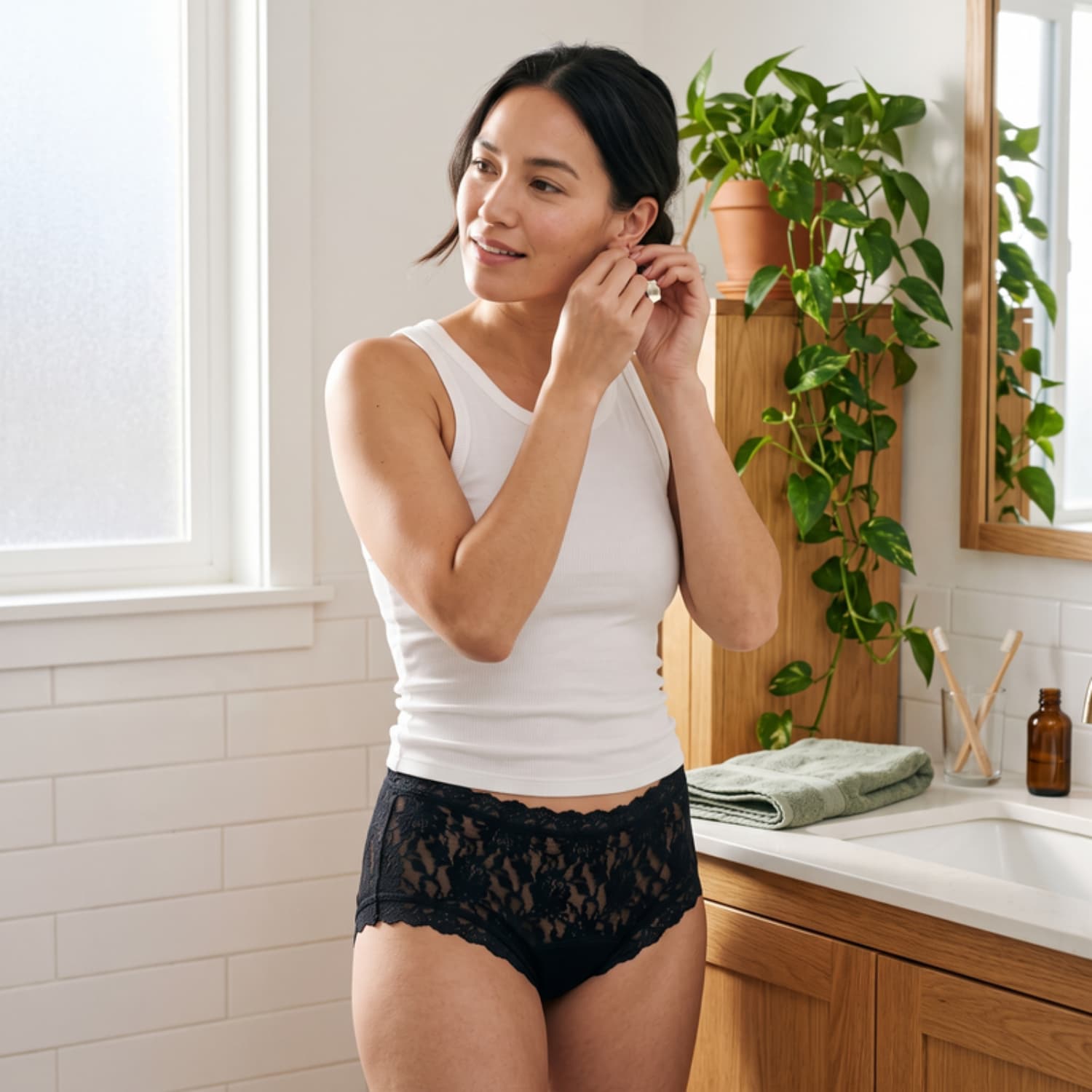
Saalt is a Boise, Idaho brand that got its start with the menstrual cup before adding period underwear. It posts its own total fluorine test results online, and every round from 2023 through 2025 came back “not detected.” Saalt is also a Certified B Corp.
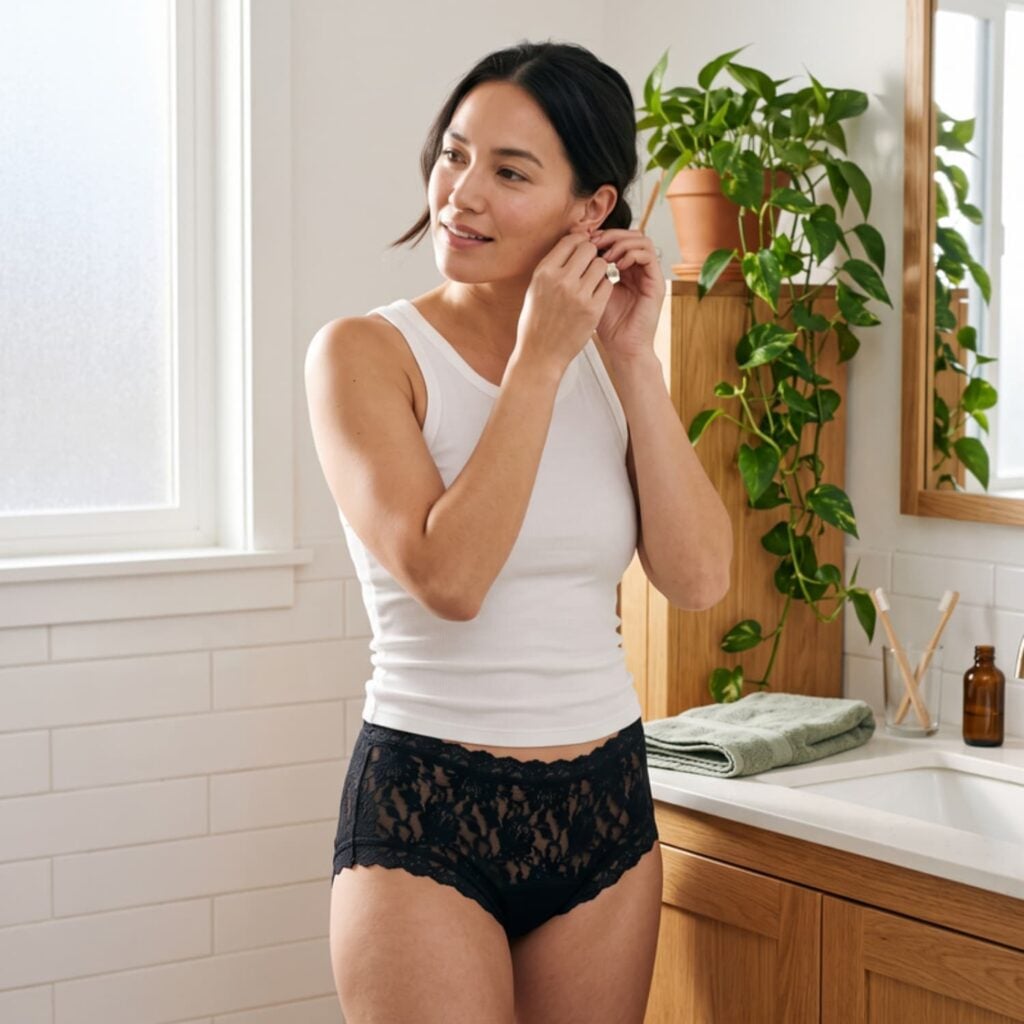
The pair pictured here is the hanky panky+ boyshort, a collaboration that sews Saalt’s leakproof gusset into Hanky Panky’s famous Signature Lace boyshort. It’s a soft, mid-rise, full-coverage cut that won’t show lines under a skirt or dress, and it holds about 3 regular tampons’ worth, so it works best on lighter days or as backup with a cup. Saalt says it isn’t treated with PFAS. The lace is nylon, though, so if you want less plastic against your skin, pick a pair from the Cotton collection, which is OEKO-TEX Standard 100 certified.
Body Fabric
Nylon Lace
⚠ PlasticLeak Barrier
PUL Laminate
⚠ PlasticSizes
XXS to 4XL
✓ InclusivePrice/Pair
$$
✓ Mid RangePros
- Publishes its PFAS test results every year
- OEKO-TEX Standard 100 Cotton collection
- Certified B Corp
- Classic Hanky Panky lace with a leakproof gusset
Cons
- Absorbent gusset is polyester
- Leak barrier is plastic (industry-wide)
- OEKO-TEX only covers the Cotton collection
- Lace boyshort holds only about 3 tampons’ worth
If you want a pair you can trust without spending hours auditing certifications, this is the place to start. The cleanest mainstream brand worth buying first.
The BOOST insert system for your heaviest days and nights
$$$
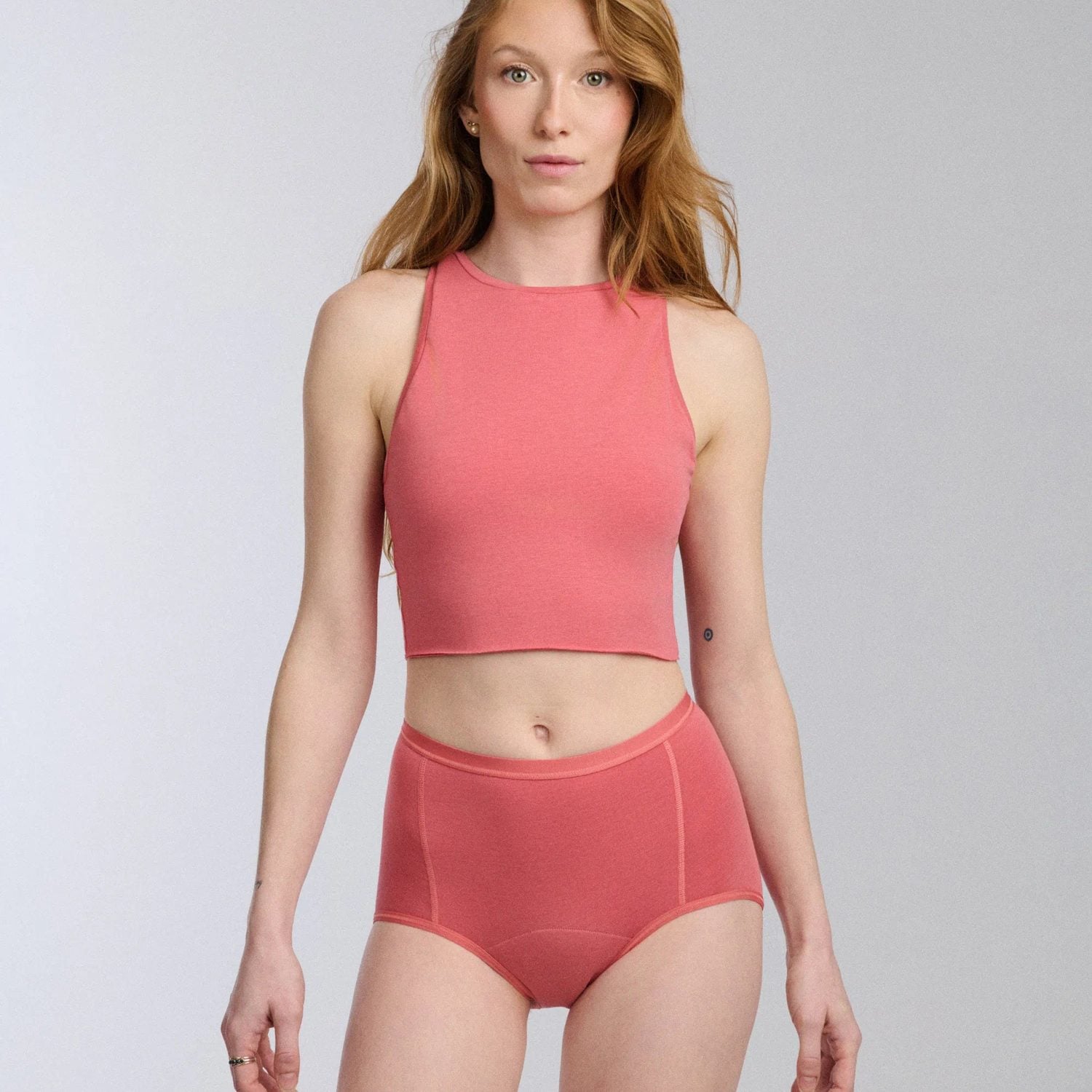
Aisle is the elder of the category. The Vancouver brand started as Lunapads in 1993, became Aisle in 2020, and has been a Certified B Corp since 2012. It uses organic cotton gussets, sizes from XXS to 5X, and has designed for trans and nonbinary customers for years.
The standout feature is the BOOST system, a removable BOOSTER insert that slides into the gusset. A pair holds about 4 tampons’ worth on its own and about 8 with the booster in, which makes Aisle a strong fit for the first heavy days of your cycle and for overnights. Aisle also has every fabric tested for PFAS by Bureau Veritas before production, and it came back clean in Mamavation’s testing.
Top Layer
Organic Cotton
✓ PFAS FreeLeak Barrier
PUL Laminate
⚠ PlasticSizes
XXS to 5X
✓ InclusivePrice/Pair
$$$
⚠ PremiumPros
- BOOSTER insert doubles capacity to 8 tampons
- Organic cotton gusset
- Every fabric lab-tested for PFAS
- Certified B Corp since 2012
Cons
- Highest price tier in this guide
- Explains its PFAS test but posts no results
- Thongs only go up to 2X
For the days when one pair has to carry you through a heavy flow, the booster makes the difference. The best pick for heavy days and overnights.
The most affordable PFAS-tested pairs, sized XS to 6X
$
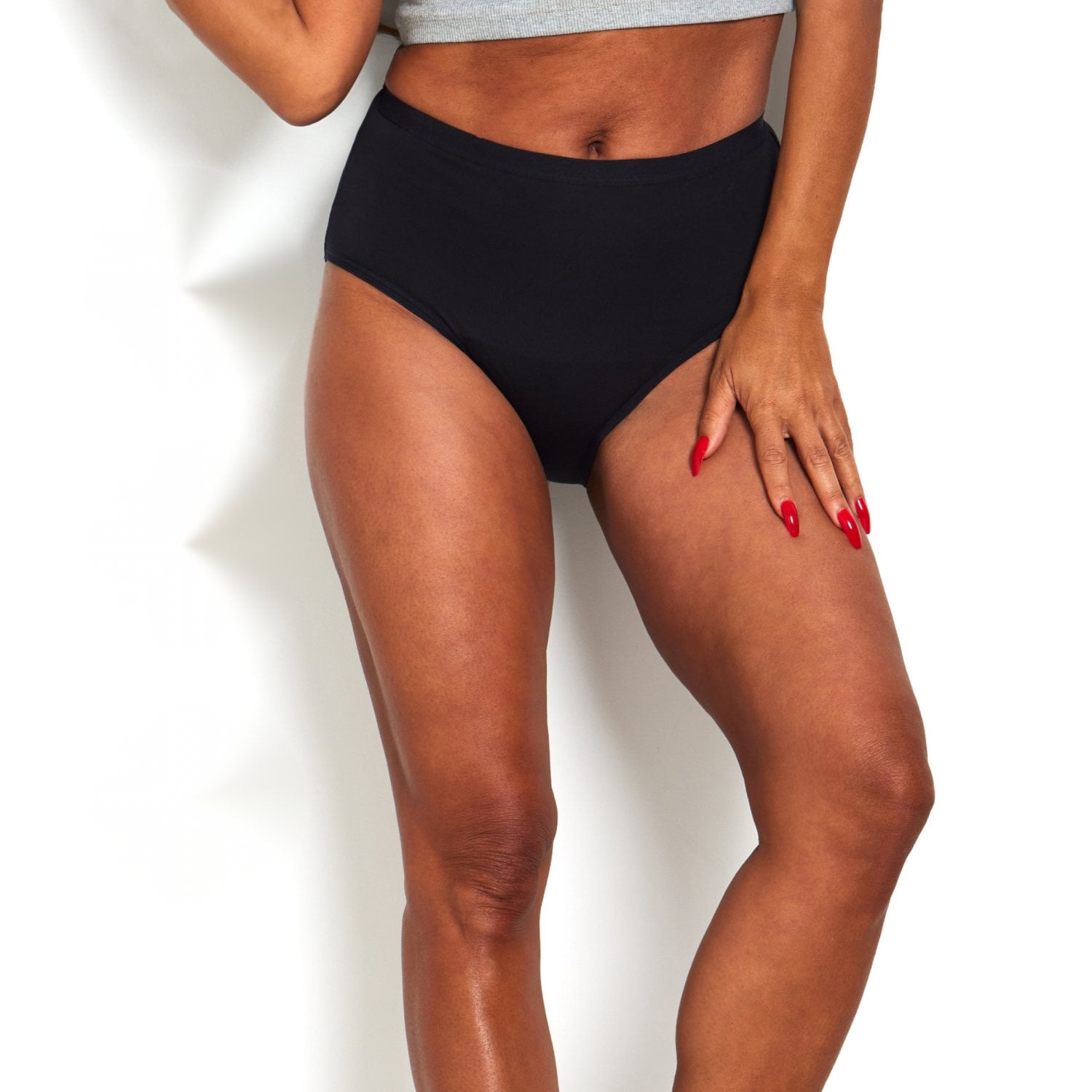
The Period Company was co-founded in 2020 by stylist Karla Welch and Sasha Markova with affordability as the headline. Most adult styles cost under $25, and sizes run from XS to 6X, plus teen sizes. The brand says outside labs Intertek and UL found no PFAS in its products, though it doesn’t post the reports, and it came back clean in Mamavation’s testing.
Every style has an organic cotton gusset, but the Microfiber line’s body fabric is synthetic, so pick the Organic Cotton line if you want less plastic in the wash. For a beginner, a teen’s first cycle, or anyone building a starter rotation, the math still works in your favor against a year of disposable pads. The SportyStretch line is made for workouts, and the brand also sells period swimwear and adaptive styles.
Gusset
Organic Cotton
✓ PFAS FreeLeak Barrier
PUL Laminate
⚠ PlasticSizes
XS to 6X
✓ InclusivePrice/Pair
$
✓ BudgetPros
- Lowest prices in this guide
- Organic cotton gusset on every style
- Sizes XS to 6X, plus teen
- Swimwear and adaptive styles too
Cons
- PFAS lab reports aren’t published
- Microfiber line sheds more in the wash
- Leak barrier is plastic (industry-wide)
If price has been the reason you haven’t switched yet, this brand removes that excuse without skipping PFAS testing. The best entry point for a starter rotation.
An OEKO-TEX certified line with the biggest period swim range here
$$
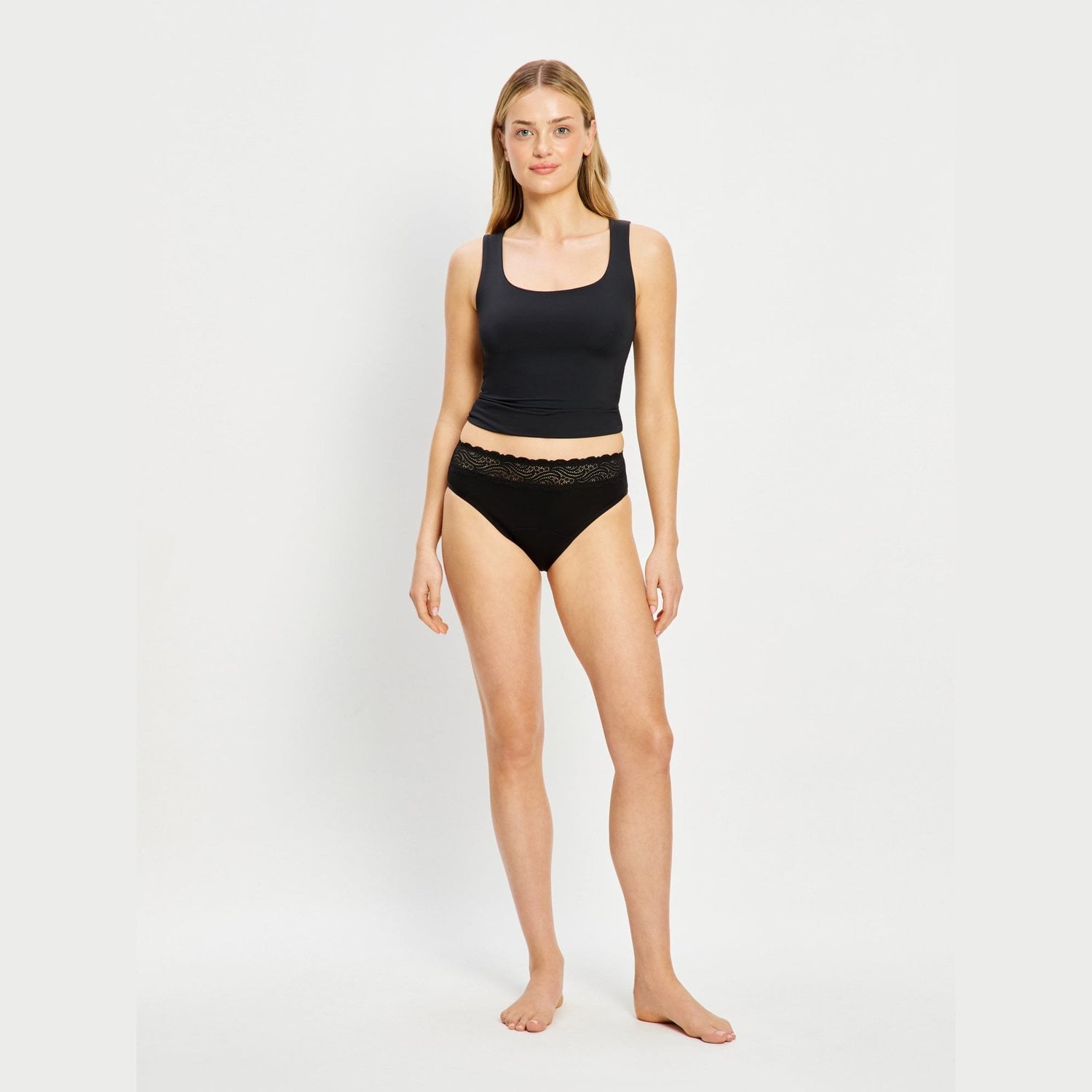
Modibodi is an Australian brand founded by Kristy Chong in 2013 and bought by Essity in 2022. Its products are OEKO-TEX Standard 100 certified, it says it doesn’t intentionally use PFAS, and it came back clean in Mamavation’s testing.
The Sensual Hi Waist Bikini pictured here is made from bamboo viscose, holds up to 10 tampons’ worth for your heaviest days and nights, and finishes with a soft scalloped lace waistband. Sizes run from 2XS to 6XL with teen sizes too, and Modibodi has the largest period swimwear range in this guide. If you want organic cotton, look at the Basic range, and check the fabric on each pair, since some styles blend in recycled nylon.
Body Fabric
Bamboo Viscose
✓ PFAS FreeLeak Barrier
PUL Laminate
⚠ PlasticSizes
2XS to 6XL
✓ InclusivePrice/Pair
$$
✓ Mid RangePros
- OEKO-TEX Standard 100 certified
- Biggest period swimwear range here
- Organic cotton, vegan Basic range
- Sizes 2XS to 6XL, plus teen
Cons
- Names no PFAS lab and posts no results
- Many styles blend in nylon or wool
- Owned by Essity since 2022 (large parent company)
If you want one brand that covers swim days, teen sizes, and everything up to 6XL, Modibodi earns its spot. The best pick for swim and size range.
GOTS certified organic cotton in the Ultimate collection
$$
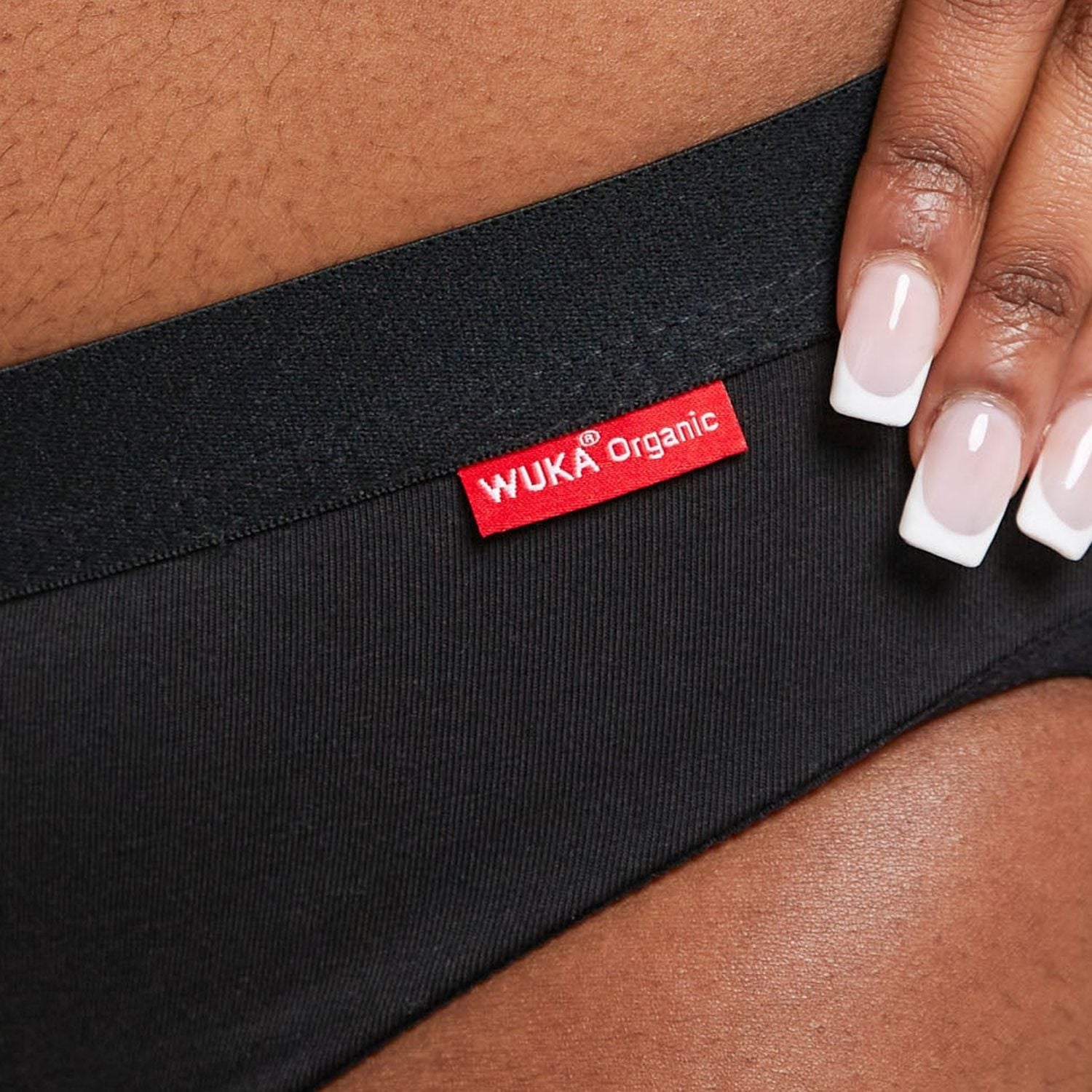
WUKA is a UK brand that Ruby Raut founded in 2017, and it’s now a Certified B Corp. Its Ultimate collection uses GOTS certified organic cotton, it bans intentionally added PFAS and screens fabrics before production, and its period pants skip silver antimicrobials.
The Stretch line is clever, since each pair stretches to cover about four sizes, though it’s mostly microfiber. Standard cuts go up to 6XL, and the US store prices everything in dollars. If organic cotton against your skin matters most, stick with the Ultimate pairs.
Top Layer
GOTS Cotton (Ultimate)
✓ CertifiedLeak Barrier
PUL Laminate
⚠ PlasticSizes
XS to 6XL
✓ InclusivePrice/Pair
$$
✓ Mid RangePros
- GOTS certified organic cotton (Ultimate)
- Certified B Corp
- Stretch pairs cover about four sizes each
- No silver in its period pants
Cons
- GOTS cotton only in the Ultimate collection
- Stretch line is mostly microfiber
- PFAS results only available on request
If GOTS certified organic cotton against your skin is the line you want to hold, start with the Ultimate collection. The best organic cotton pick in the category.
Period Underwear vs. Tampons, Pads, Cups, and Discs
Period underwear absorbs fluid externally like a pad, while tampons, cups, and discs collect it internally. Underwear has the easiest learning curve and almost no disposable waste, and like pads it carries a lower risk of toxic shock syndrome than tampons, but it costs the most upfront.
If you’re choosing between menstrual products, the right one depends on your flow, your lifestyle, and how much you care about waste.
✨tips
How to Use Period Underwear
First-time period underwear users should buy 2 to 3 pairs to test fit and absorbency, change every 8 to 12 hours, rinse in cold water before washing, and skip fabric softener and bleach.
If you’ve never tried period underwear, here’s the routine that works for most people without the awkward learning curve.
🩲 Start With Two or Three Pairs
A heavy-day pair (super or super-heavy absorbency), a light or moderate pair for the back end of your cycle, and one daily pair you can use for spotting or as a backup. Once you know what works, build out a rotation.
⏱️ Plan for 8 to 12 Hours of Wear
Most pairs are rated for that range. Heavier flows lean shorter, lighter flows lean longer. The “tampon equivalent” rating on the label is the most useful number.
🔄 Have a Backup the First Cycle
A tampon, cup, or disc the first time around. Not because the underwear is going to fail, but because knowing you have one removes the anxiety, and once you trust the pair, you’ll stop reaching for the backup.
🏃♀️ Try the Active Style for Workouts
Most brands now make a sport or active cut with extra absorbency in the gusset and a higher leg cut. The Period Company’s SportyStretch and FlowStretch lines are both designed for sweat and movement.
✈️ Travel Routine
Pack a wet bag (silicone or PUL-lined) for changes on the road. A wet bag is small and washable, and it keeps the worn pair from leaking into your luggage.
🌙 Overnight Wear
Size up. A super-heavy or overnight cut sits higher on the back and front, which catches flow when you sleep on your side or stomach.
How to Wash and Care for Period Underwear
The best way to wash period underwear is a cold-water rinse right after wearing, a cold-water machine wash in a Guppyfriend bag with mild detergent, and a flat air-dry. Skip fabric softener, bleach, and the dryer.
The wash routine is what decides whether your period underwear lasts for years or wears out early. It’s not complicated, but the order matters.
Step 1: Rinse First
As soon as you take a pair off, rinse it in cold water in the sink or shower until the water runs clear. Stick with cold water, since hot water sets blood stains permanently, just as it does on any other fabric. A quick rinse takes about 2 minutes and stops the next steps from doing extra work.
Step 2: Machine Wash (Cold, Gentle, Guppyfriend Bag)
Put the rinsed pair in a Guppyfriend laundry bag, run the machine on cold and the gentle cycle, and use a mild detergent. The bag is designed to reduce fiber shedding and filter out the microplastic fibers that come loose from synthetic parts like the shell, absorbent core, and elastic. It also protects the leak-proof barrier from snagging on zippers or hooks in the load.
Wash them with similar colors. Saalt warns that bleach and fabric softener both damage the gusset’s absorbency, so skip them, and don’t use a sheet detergent if the brand uses PVA, since that’s just trading one plastic problem for another. Our non-toxic laundry detergent guide breaks down the cleanest formats if you want to refresh your detergent at the same time.
Step 3: Air Dry Flat
The dryer is the second fastest way to wreck period underwear (the first is hot water). Lay them flat or hang them on a drying rack out of direct sunlight. If you need them faster, one round on tumble-dry low won’t ruin a pair, but repeated tumbling wears down the leak-proof layer much sooner.
Step 4: Storage
Fold them flat and store them in a drawer with the rest of your underwear. Make sure they’re fully dry first, and skip plastic bags, which trap moisture.
Picking the Right Period Underwear
Period underwear works well for teens, postpartum recovery, perimenopause, athletes, and travelers. The best style and absorbency depend on the use case, which is why most people end up with a rotation of 2 to 3 cuts.
Teens
For first-period and early-teen years, a high-waist or hipster cut with moderate absorbency is the easiest entry point. The Period Company sells teen sizes S to L at budget prices, and Knix Teen is a line made just for tweens and teens, also sold at Target as Kt by Knix.
Postpartum
Bleeding in the weeks after birth is usually heavier than a normal period, so you’ll want your highest-capacity pairs. Knix sells a dedicated maternity and postpartum collection, and Aisle’s removable BOOSTER insert adds extra capacity to a regular pair.
Perimenopause
Flow during perimenopause can swing from light spotting to flooding within the same cycle. A rotation of light, moderate, and super-heavy pairs lets you match the day, and Saalt’s Super styles hold 8 or more tampons’ worth for the heaviest ones.
Athletes
Look for active cuts with a higher leg, a snug band, and a sweat-wicking shell, like The Period Company’s SportyStretch line. For swimming, Modibodi and The Period Company both make period swimwear, and Knix makes a teen period swim line, though most swim styles still use synthetic fabric.
Travel
Pack a wet bag, and go up one absorbency level from what you’d normally wear. Travel days are long, restroom access is unpredictable, and the cost of a leak in unfamiliar clothes is higher than at home. A super-heavy pair on a flight or road trip, even if your flow doesn’t call for it, usually pays off.
FAQs on Best Period Underwear
Usually, yes. Since 2020, the CARES Act has let you spend HSA and FSA money on menstrual care products, which the IRS describes as tampons, pads, liners, cups, sponges, or similar products. Period underwear isn’t named on that list, so check with your plan administrator before you buy.
It can catch small leaks, but a Cleveland Clinic ob/gyn suggests choosing a product made for bladder leaks if that’s your main need. Saalt, WUKA, Knix, and Modibodi all sell styles designed for light bladder leaks.
Yes. The FDA regulates every menstrual product sold in the US as a medical device, and it groups period underwear with unscented menstrual pads. That group is exempt from premarket review, so unlike tampons, a new pair doesn’t need FDA clearance before it goes on sale.
A good pair shouldn’t. The top layer is built to pull moisture away so you feel dry, and Cleveland Clinic recommends changing within 12 hours to keep odor and leaks away. If a pair still smells after washing, it’s usually time to replace it.
Replace a pair when it starts leaking or holding less, the fit gets loose, the fabric thins or pills, or an odor stays after washing. Brands rate their pairs for different wash counts, so watch for those signs rather than counting washes.
Most pairs can’t go in the compost because they contain elastane and a plastic leak barrier. Wash them first, then drop them at a textile recycling point that accepts underwear, where mixed fabrics usually get turned into things like insulation or cleaning cloths.
Save This Before You Restock Your Period Drawer 📌
Final Thoughts About the Best Period Underwear
If you’ve been on the fence about period underwear because of the PFAS headlines, the brands paying attention have done the work to clean up. Saalt publishes its PFAS lab results, Aisle and The Period Company name the labs that test their fabrics, and Modibodi and WUKA screen for PFAS before production. You no longer have to choose between a pair that works and a pair that keeps forever chemicals out of your laundry water.
The bigger pattern, the one that goes past period underwear, is that “non-toxic” and “sustainable” are still mostly self-claimed. The brands willing to back those words with a certification like GOTS or OEKO-TEX and a public test result are the ones earning the language. The brands that hide behind vague green marketing usually have a reason.
Start with two or three pairs in the cleanest brand your budget allows, wear them through one full cycle, and you’ll know within a month if this swap belongs in your routine.
📚 References
- Agency for Toxic Substances and Disease Registry. (n.d.). What are the health effects of PFAS? Centers for Disease Control and Prevention. https://www.atsdr.cdc.gov/pfas/health-effects/index.html
- California State Legislature. (2022). AB-1817 Product safety: Textile articles: Perfluoroalkyl and polyfluoroalkyl substances (PFAS). https://leginfo.legislature.ca.gov/faces/billNavClient.xhtml?bill_id=202120220AB1817
- Choy, J. (2020, January 7). My menstrual underwear has toxic chemicals in it. Sierra. https://www.sierraclub.org/sierra/ask-ms-green/my-menstrual-underwear-has-toxic-chemicals-it
- Cleveland Clinic. (2022, February 7). What is period underwear and does it work? https://health.clevelandclinic.org/does-period-underwear-work
- Cleveland Clinic. (2026, March 25). Toxic shock syndrome (TSS): Causes, symptoms & treatment. https://my.clevelandclinic.org/health/diseases/15437-toxic-shock-syndrome
- Colorado General Assembly. (2024). SB24-081 Perfluoroalkyl & polyfluoroalkyl chemicals. https://leg.colorado.gov/bills/sb24-081
- European Commission. (n.d.). Single-use plastics. https://environment.ec.europa.eu/topics/plastics/single-use-plastics_en
- Food and Drug Administration. (2016, September 6). Safety and effectiveness of consumer antiseptics; Topical antimicrobial drug products for over-the-counter human use. Federal Register, 81, 61106. https://www.federalregister.gov/documents/2016/09/06/2016-21337/safety-and-effectiveness-of-consumer-antiseptics-topical-antimicrobial-drug-products-for-over-the-counter-human-use
- Food and Drug Administration. (2025, October). Menstrual products: Performance testing and labeling recommendations [Draft guidance]. https://www.fda.gov/regulatory-information/search-fda-guidance-documents/menstrual-products-performance-testing-and-labeling-recommendations
- Food and Drug Administration. (2026, July 6). Menstrual product options, facts, and safe use. https://www.fda.gov/medical-devices/products-and-medical-procedures/menstrual-product-options-facts-and-safe-use
- Friends of the Earth. (2018, October 15). Plastic periods: Menstrual products and plastic pollution. https://friendsoftheearth.uk/plastics/plastic-periods-menstrual-products-and-plastic-pollution
- Internal Revenue Service. (2020, June 17). IRS outlines changes to health care spending available under CARES Act (IR-2020-122). https://www.irs.gov/newsroom/irs-outlines-changes-to-health-care-spending-available-under-cares-act
- Maney, K. (2023, December 15). Endocrine-disrupting chemicals found in menstrual products including tampons, pads, and liners. George Mason University Institute for Biohealth Innovation. https://ibi.gmu.edu/news/endocrine-disrupting-chemicals-found-in-menstrual-products-including-tampons-pads-and-liners
- Minnesota Legislature. (2025). Minnesota Statutes § 116.943: Products containing PFAS. https://www.revisor.mn.gov/statutes/cite/116.943
- Segedie, L. (2021, May 24). Best (& worst) period underwear & period panties tested for indications of PFAS. Mamavation. https://mamavation.com/health/period-underwear-contaminated-pfas-chemicals.html
- Steinberg, J. (2023, June 9). Thinx $5 million period underwear PFAS deal gets final nod. Bloomberg Law. https://news.bloomberglaw.com/class-action/thinx-5-million-period-underwear-pfas-deal-gets-final-nod
- Treisman, R. (2023, January 19). Thinx settled a lawsuit over chemicals in its period underwear. Here’s what to know. NPR. https://www.npr.org/2023/01/19/1150023002/thinx-period-underwear-lawsuit-settlement
- U.S. Environmental Protection Agency. (2026, July 14). Our current understanding of the human health and environmental risks of PFAS. https://www.epa.gov/pfas/our-current-understanding-human-health-and-environmental-risks-pfas
- Vermont General Assembly. (2024). 9 V.S.A. § 2494b: Cosmetic and menstrual products; prohibition. https://legislature.vermont.gov/statutes/section/09/063/02494b
More Non-Toxic Clothing & Plastic-Free Living Reads
- Best Cotton Underwear for Women: 10 Organic Picks
- Is Polyester Plastic? The Truth About Your Clothes
- Is Nylon Toxic? What to Know Before You Wear It
- Non-Toxic Living: Where to Actually Start, Room by Room
- How to Spot Greenwashing: 7 Sneaky Tricks Hidden on Eco Labels
- Third-Party Certifications: The 25 Labels Worth Trusting