
Key Takeaways
- A household of four throws away about $2,913 worth of food every year per the EPA, and most of those scraps end up in a landfill making methane.
- The Lomi composter turns a 3-liter bucket of scraps into usable pre-compost in as little as 3 hours, runs quieter than a fridge, and fits an 11-inch square of counter.
- The Lomi 3 is worth its $549 price for apartments and homes with no compost access. If you have yard space for a pile, skip it and compost for free.
The Lomi 3 is worth $549 if you live in an apartment, a condo, or any home where a backyard pile or curbside compost pickup isn’t an option. It turns a bucket of food scraps into dry, crumbly pre-compost overnight, with no smell, no fruit flies, and no trips outside. If you do have yard space, the honest answer is to save your money and build a pile instead, because dirt does the same job for free.
That’s the short version. The rest of this review covers what the machine actually does, what it costs to run, what comes out of it (and why “pre-compost” is the accurate word), and the food waste math that makes a machine like this matter in the first place. We checked every spec against Lomi’s current published documentation and every environmental figure against EPA and USDA primary sources, so the numbers you see here are the numbers that hold up.
What Is the Lomi Composter?
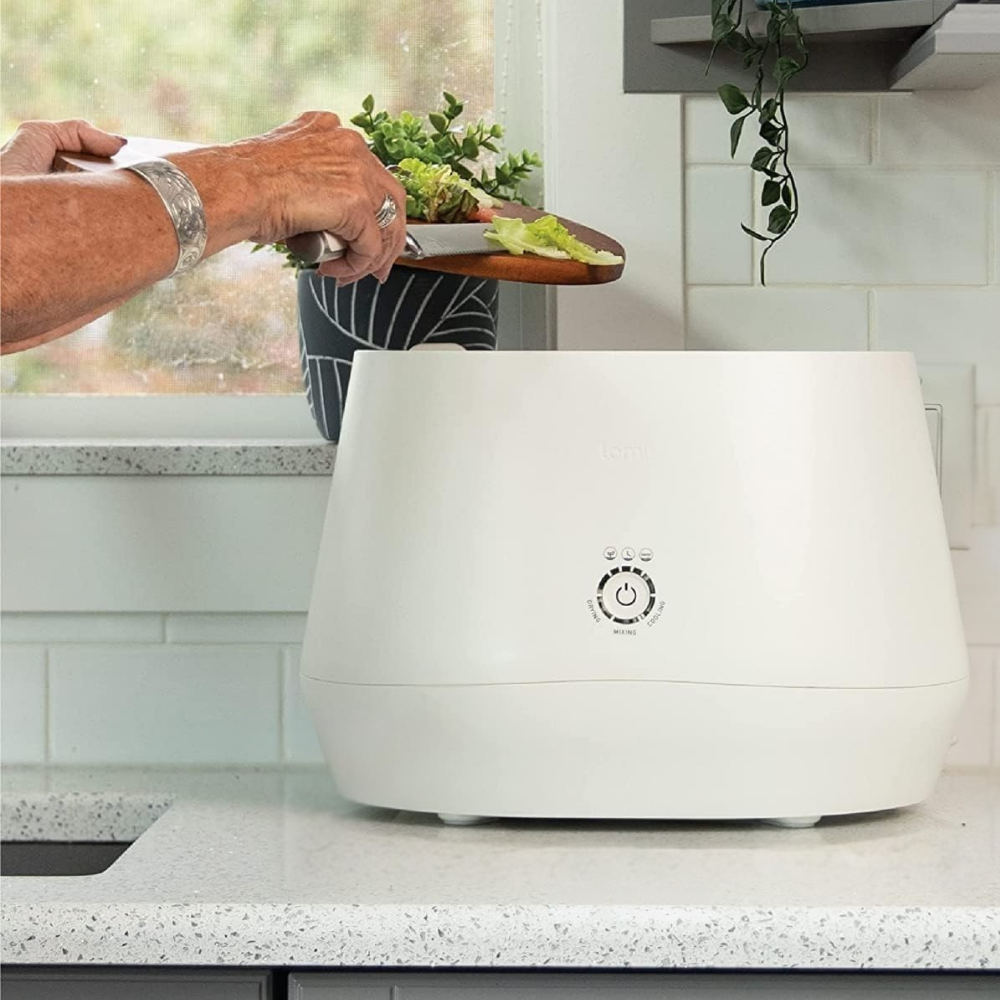
The Lomi composter is a countertop electric appliance from Pela that heats, grinds, and aerates food scraps, shrinking their volume by up to 80% and turning them into a soil additive called Lomi Earth in as little as 3 hours.
Traditional composting asks a lot: outdoor space, months of waiting, turning the pile, and tolerating the occasional swarm of gnats. The Lomi 3 compresses all of that into a machine the size of a bread maker. You fill the 3-liter bucket with scraps over a day or two, press a button, and internal sensors manage heat, moisture, and airflow while a rotating blade breaks everything down. A charcoal filter scrubs the exhaust air, which is why it can sit on a kitchen counter without announcing itself.
Lomi is made by Pela, the company best known for compostable phone cases, and the Lomi 3 is the third generation of the machine. It’s the version this review covers, because it fixed the two biggest complaints about earlier models: size and noise.
Don’t Miss: Why Is Composting Important? The case for composting goes way beyond your kitchen. See what your scraps can do for the planet. Read more →How Does the Lomi 3 Work?
The Lomi 3 has two food recycling modes plus a cleaning cycle: Express breaks down scraps in 3 to 6 hours, Grow runs a gentler 11 to 17 hour cycle that preserves more microbes for garden use, and Cleaning Mode refreshes the bucket in 1.5 hours.
Here’s what each mode is for:
- Express Mode (3 to 6 hours): the everyday setting. It runs hotter and faster, and the output is best mixed into soil or added to a green bin.
- Grow Mode (11 to 17 hours): a lower, slower cycle that keeps more of the beneficial microbes alive. This is the mode to use when the output is headed for your garden or houseplants.
- Cleaning Mode (1.5 hours): a self-cleaning cycle for the bucket, which is a genuinely useful addition nobody had to scrub for.
If you owned or researched an earlier Lomi, note that the old “Lomi Approved” bioplastics mode is gone. The Lomi 3 simplified down to two food cycles plus cleaning, and honestly, the machine is better for it.
Everything runs from one button or from the app: the Lomi 3 has built-in WiFi, so you can start a cycle from the couch or check progress from work. It also earns points for repairability, with modular parts designed around Right to Repair, so a worn part means a replacement part, not a replacement machine.
What Can Go in a Lomi?
Almost anything you eat can go in a Lomi, including fruit and vegetable scraps, meat, dairy, bread, grains, coffee grounds, and some yard waste, which is a wider menu than a backyard pile can safely handle.
That last part is worth pausing on. A traditional compost pile struggles with meat and dairy because they attract pests and can turn a pile rancid. The Lomi’s sealed, heated chamber doesn’t have that problem, so the stuff you’d normally guiltily toss in the trash (cheese rinds, leftover chicken, the school lunch that came home untouched) gets processed too.
Keep large bones, greasy liquids, and anything that isn’t food or plant matter out of the bucket, and chop bigger scraps so the blade can do its job evenly. When in doubt, Lomi’s own approved list is the reference to check.
Is Lomi Earth Real Compost?
No. Lomi Earth is pre-compost, a dried and ground soil additive that still needs to finish breaking down, so mix it into soil at a small ratio instead of planting directly into it.
This is the one place where marketing and reality need untangling, and Lomi itself is upfront about it: the company calls the output “technically speaking, pre-compost.” A backyard pile spends months letting microbes fully stabilize the material. The Lomi compresses hours into that timeline, so what comes out is dehydrated, ground-up organic matter that finishes decomposing after you mix it into soil.
In practice, that means three good options for the output: blend a little into your garden beds or potted plants as a slow-release soil booster, add it to your green bin if your city collects organics, or simply trash it, where it will take up around 80% less space and create far less methane than the wet scraps would have. What it is not is a bag of finished potting mix, and any review that tells you otherwise is overselling.
How Big and How Loud Is the Lomi 3?
The Lomi 3 measures 11 inches wide, 11 inches deep, and 12 inches tall, weighs 16 lbs, and runs at under 45 dB, which is quieter than a running refrigerator.
Size and noise were the two complaints that followed the first two Lomi models around, and the Lomi 3 addressed both directly. The footprint is 36% smaller than the Lomi 1 and 2 while keeping the same 3-liter bucket, and the noise dropped from under 60 dB to under 45 dB. For context, a normal conversation sits around 60 dB. This machine is quieter than the appliance keeping your milk cold, which is what makes running it overnight a non-event.
A few other Lomi 3 upgrades over the Lomi 2 worth knowing:
- A hinged glass lid replaces the old twist-off plastic lid, so loading scraps is one-handed now
- One easy-fill filter compartment instead of two
- Replaceable modular parts (the Lomi 2 had none)
Energy use is modest for what it does: about 1 kWh for an Express cycle, 1.1 kWh for Grow, and 0.2 kWh for a cleaning cycle. That’s in the neighborhood of a single dishwasher run.
How Much Does the Lomi Composter Cost?
The Lomi 3 costs $549 on its own (marked down from a $649 list price), or $449 with a Membership Plus subscription that adds $120 per year for filter refills and upgrades the warranty to lifetime coverage.
There are two ways to buy it, and the right one depends on how you feel about subscriptions:
Just Lomi ($549): the machine, a starter pack of charcoal filters good for about 45 cycles, and a 1-year warranty.
Lomi + Membership Plus ($449 plus $120 per year): the same machine and starter filters, plus roughly a year’s supply of filter refills delivered annually, and a lifetime warranty for as long as the membership stays active. If you plan to run the Lomi regularly, the membership math works out close to even on filters alone, and the lifetime warranty is the real prize.
Both options ship free and come with a 90-day home trial: if it isn’t working for your household, return shipping and the refund are on Lomi. That trial window takes most of the sting out of the price, because you can find out on your own counter whether it earns its spot.
Best for Homes Without Compost Access
$$$
Lomi 3 is Pela’s third-generation smart composter: a 3-liter bucket, two food cycles plus self-cleaning, WiFi and app control, and a hinged glass lid, all in a footprint 36% smaller than earlier models.
It ships free with a 90-day home trial, and modular Right-to-Repair parts mean a worn component gets replaced, not the whole machine.
Lid
Hinged Glass
✓ Plastic FreeFilter Media
Activated Charcoal
✓ Plastic FreeHousing
Plastic
✗ PlasticParts
Modular, Replaceable
⚠ RepairablePros
- Scraps to pre-compost in 3 to 6 hours on Express
- Under 45 dB, quieter than a fridge
- Handles meat and dairy a backyard pile can’t
- 90-day home trial and Right-to-Repair parts
Cons
- Output is pre-compost, not finished compost
- Uses about 1 kWh per Express cycle
- Ongoing filter refills required
The most practical path to composting when a pile isn’t possible. If your scraps currently go in the trash, this is the upgrade.
The Odor Control Restock
$
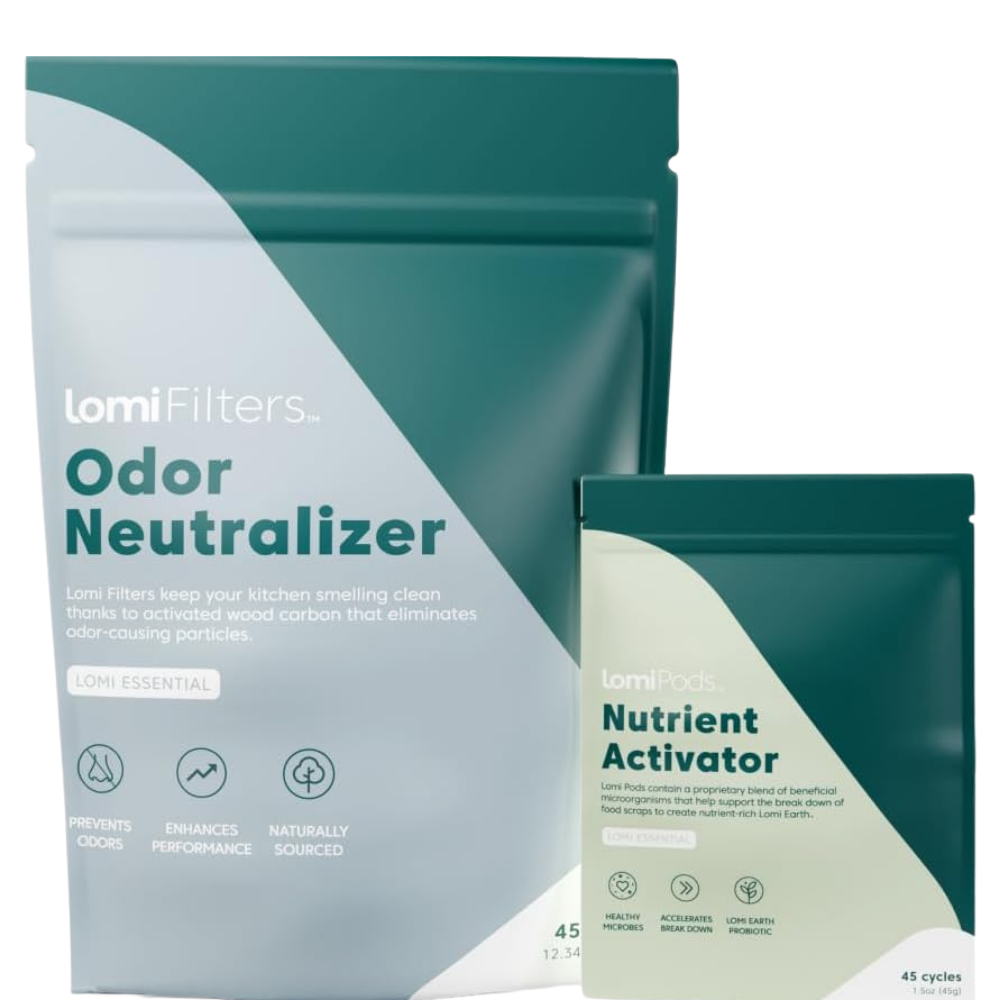
The activated charcoal filter is what keeps the whole operation smell-free, and Lomi recommends refreshing it every 45 cycles or about 3 months. LomiPods are optional tablets of beneficial microbes, one per cycle, that speed up the breakdown and boost the quality of your Lomi Earth.
If your household runs a lot of strongly scented scraps through the machine (fish, broccoli, curries), the charcoal wears out a little faster, so keeping a spare refill on hand is worth it.
Pros
- Activated charcoal, refilled loose (no cartridge waste)
- App reminds you when 45 cycles are up
Cons
- A recurring cost the machine can’t run without
- Lomi says only authentic filters keep the warranty intact
The one restock every Lomi owner needs. Buy a spare before the first one runs out.
For Gardeners Only
$
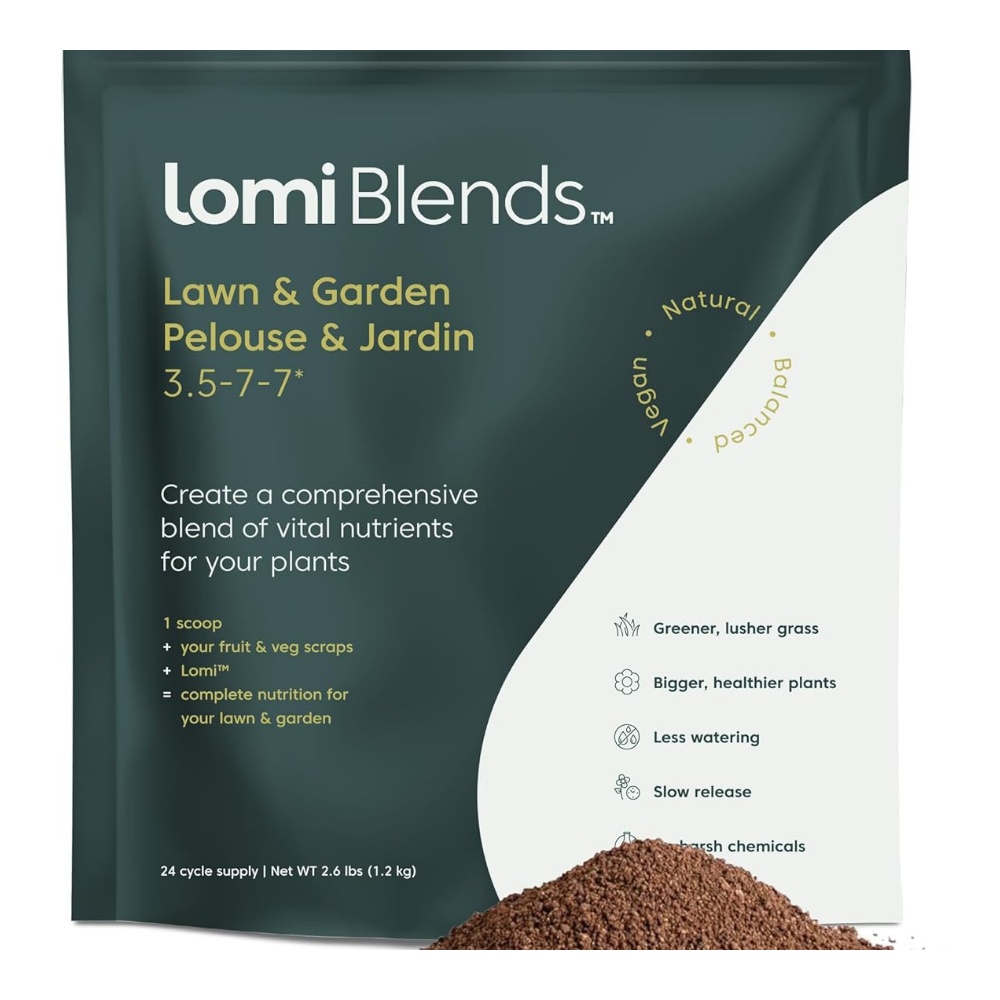
Lomi Blends add targeted nutrients to a cycle so your Lomi Earth comes out closer to a homemade fertilizer. Lomi recommends pairing them with a LomiPod and running Grow Mode, then mixing the output into soil at a 1:10 ratio.
Skip these if your Lomi Earth is headed for the green bin or the trash. They only earn their keep when the output is feeding your plants.
Pros
- Upgrades pre-compost into a fuller plant food
- Pairs with Grow Mode’s microbe-friendly cycle
Cons
- Unnecessary if you don’t garden or keep houseplants
A nice-to-have for plant people, not a need-to-have. Gardeners first, everyone else can pass.
Does the Lomi Composter Actually Help the Environment?
Yes, in one specific way: it keeps food scraps out of landfills, where food waste is responsible for 58% of the fugitive methane emissions escaping from US municipal landfills, per a 2023 EPA report.
The environmental case for any composting method starts in the landfill. When food scraps get buried under layers of trash, they break down without oxygen and produce methane, a greenhouse gas about 28 times more potent than carbon dioxide over a 100-year period, per the EPA’s global warming potential figures. Food waste makes up roughly a quarter of what goes into US landfills, but because it decays so fast, it punches far above its weight: the EPA’s 2023 landfill methane report found it generates 58% of the fugitive methane those landfills release, and an estimated 61% of the methane from landfilled food waste escapes before gas collection systems can capture it.
The scale of the waste itself is hard to look at directly. The USDA estimates that 30 to 40% of the US food supply is never eaten, and the EPA’s 2025 analysis puts the cost at $728 per person each year, or $2,913 for a household of four. Every bucket of scraps that becomes soil instead of landfill gas chips away at both numbers.
Lomi’s own community numbers are worth a mention with the honest label attached: the company reports its users diverted more than 54 million pounds of food scraps in 2024. That’s a company-reported figure, not an independent audit, but the direction of the math holds either way.
One fair counterpoint: the Lomi runs on electricity, and a backyard pile runs on nothing. If you have the space, the pile wins on footprint. The Lomi’s case is for the households where the pile was never an option, where the realistic alternative isn’t composting, it’s the trash can.
Is the Lomi Composter Worth It?
The Lomi 3 is worth $549 for apartments, condos, and homes without yard space or municipal compost pickup. If you have room for an outdoor pile or bin, traditional composting does the same job for free.
Here’s the honest breakdown of who it fits:
Worth it if you:
- Live in an apartment, condo, or rental with no outdoor compost option
- Have no municipal green bin or compost pickup where you live
- Generate meat, dairy, and cooked-food scraps a pile can’t safely take
- Want the trash to stop smelling and the fruit flies to move out
- Garden in containers and can actually use small batches of soil booster
Skip it if you:
- Have yard space for a traditional compost pile or bin, which costs nothing and produces true finished compost
- Already have reliable curbside organics pickup that takes all food waste
- Would rather not add another countertop appliance and its running costs
The 90-day trial is the tiebreaker for anyone on the fence. Run it for two months, watch what happens to your trash volume, and decide with your own data.
✨ Tip: Run it overnight. Grow Mode’s 11 to 17 hour cycle fits neatly between dinner cleanup and breakfast, and at under 45 dB you won’t hear it from the next room.
Don’t Miss: Biodegradable Garbage Bags, Are They Really Better? Less food waste means fewer trash bags. Find out whether the “compostable” ones live up to the label. Read more →Save This Lomi Guide 📌
FAQs on the Lomi Composter
Two: White and Sage Green. Both are the same machine and price, so the choice is purely about which one disappears into your kitchen better.
The included starter pack covers about 45 cycles, roughly 3 months of regular use. After that you’ll refill the single filter compartment, either a la carte or through the Membership Plus annual shipment.
No. Every function runs from the onboard touch controls. The WiFi connection and app add remote start, cycle tracking, and over-the-air updates, but the machine composts just fine without them.
The dedicated “Lomi Approved” bioplastics mode from earlier models was retired with the Lomi 3, which runs Express and Grow cycles for food and plant waste. Consult Lomi’s current approved-items list before adding any packaging, because most “compostable” plastics need industrial facilities to break down.
About 1 kWh on Express, 1.1 kWh on Grow, and 0.2 kWh for a cleaning cycle, which puts a full cycle in the same range as running your dishwasher once.
The standalone purchase includes a 1-year warranty. Buying with Membership Plus upgrades that to lifetime coverage for as long as the membership stays active, with repair or replacement at no cost.
Mix it into existing soil at a 1:10 ratio, per Lomi’s own guidance, rather than planting directly into it. Lomi Earth is still finishing its breakdown, so it works as a slow-release soil booster blended through potting soil, not as a potting mix on its own.
Final Thoughts About the Lomi Composter
The Lomi 3 earns its counter space in one specific home: the one where composting was never really available. If your scraps have been going to the landfill because there’s no yard, no pickup, and no realistic pile in your future, this machine closes that gap with less noise, less smell, and less effort than any previous version of itself.
It’s not magic, and it’s not a compost pile. The output needs soil and time to finish the job, the machine draws about a dishwasher cycle’s worth of power, and the filters are a small recurring cost. Lomi is refreshingly honest about all of that, which is part of why the product is easy to recommend to the right household.
Start with the 90-day trial, run it on your real scraps for a couple of months, and let your own trash can make the argument. Lighter bags, no smell, and nothing left for the fruit flies: that’s the whole point.
More Composting & Plastic-Free Living Reads
📚 References
Lomi. (n.d.). Lomi 3 food recycler. Lomi. https://lomi.com/products/lomi-3-food-recycler
Lomi. (n.d.). Sustainability. Lomi. https://lomi.com/pages/sustainability
U.S. Department of Agriculture. (n.d.). Food waste FAQs. USDA. https://www.usda.gov/about-food/food-safety/food-loss-and-waste/food-waste-faqs
U.S. Environmental Protection Agency. (2023). Quantifying methane emissions from landfilled food waste (EPA-600-R-23-064). EPA. https://www.epa.gov/land-research/quantifying-methane-emissions-landfilled-food-waste
U.S. Environmental Protection Agency. (2025). Estimating the cost of food waste to American consumers. EPA. https://www.epa.gov/land-research/estimating-cost-food-waste-american-consumers
U.S. Environmental Protection Agency. (n.d.). Understanding global warming potentials. EPA. https://www.epa.gov/ghgemissions/understanding-global-warming-potentials
We’ve scored every kitchen product on plastic — see them in the Kitchen directory.