
Key Takeaways
- The best backpack for school fits your child’s frame, weighs no more than 10% of their body weight when packed, and has a real laptop compartment, not just a sleeve, for tech-heavy days.
- Sustainable brands like FLUF, State, and Patagonia now build school backpacks from rPET (recycled plastic bottles) or GOTS-certified organic cotton, so durability and eco-friendly materials aren’t a trade-off anymore.
- Size by grade: 10 to 15 liters for elementary, 15 to 25 for middle school, and 25 to 35 for high school and college.
I used to think a backpack was just a backpack. Then my son hit middle school, and suddenly I was dealing with complaints about sore shoulders, homework crumpled at the bottom of his bag, and zippers that broke by October.
Here’s what changed my mind: 49% of students report pain linked to backpack use, and kids regularly carry 15% or more of their body weight in their bags.[1] The American Academy of Pediatrics recommends no more than 10% of body weight, so for a 60-pound child, that’s under six pounds total, everything included.[2] Getting this choice right isn’t about organization. It’s about your kid’s comfort and health.
We considered dozens of backpacks for this guide, checked certifications and material spec sheets against the brands’ own documentation, and read through customer reviews looking for recurring complaints about zippers, straps, and fit. Below is a full framework for choosing one, plus the sustainable picks that held up.
How to Choose a Backpack for School: A Quick Framework
Before you compare specific bags, run through these six questions. They narrow a hundred options down to a handful fast.
- Age and grade. Elementary, middle, or high school changes the size and complexity you need.
- Daily load. Textbooks and binders need more structure and support than a laptop and a notebook.
- Laptop or tablet size. A padded compartment sized to the device matters more than the backpack’s overall capacity.
- Comfort and fit. Strap width, back-panel padding, and torso length matter more than the brand name on the tag.
- Durability. Fabric weight, stitching, and zipper quality determine whether it survives one school year or three.
- Budget and materials. Recycled and organic materials now compete on price with mainstream synthetic backpacks, so budget shouldn’t force a plastic-heavy choice.
What Makes a Great School Backpack in 2026?
The best school backpacks aren’t the flashiest or the most expensive ones. They’re the ones that make school mornings easier: comfortable when fully loaded, organized enough that your kid isn’t digging for a pen during class, and durable enough to survive a full school year.
More families are also choosing backpacks made from rPET (recycled plastic bottles) or organic cotton instead of virgin plastic. It’s a way to get a durable, functional backpack while keeping plastic bottles out of landfills, and it no longer means paying a premium or sacrificing quality. If you’re cutting plastic in other parts of your home too, our room-by-room plastic-free living guide is a good place to start.
The key things that matter: padded shoulder straps that don’t dig in, multiple compartments so everything has a place, materials that can handle some weather, and strong construction at stress points like zippers and strap attachments.
What to Look for in a School Backpack
Clever Compartments = Less Chaos
A backpack with one giant compartment is a black hole for school supplies. Look for a dedicated, padded laptop sleeve if your kid uses a Chromebook or tablet, interior pockets sized for notebooks without cramming, and front compartments for the things you need quickly: student ID, snacks, earbuds.
The small details matter too: built-in pencil holders, key clips, and side pockets for a water bottle. These aren’t nice-to-haves when you’re rushing between classes.
Built to Survive the School Year: A Durability Checklist
School backpacks get tossed in lockers and stuffed past capacity. The cute backpack that looks great in the store might not survive a semester of real use. Check these five things before you buy:
- Fabric weight. Heavy-duty canvas, ballistic nylon, or high-denier polyester holds up better than thin, lightweight synthetics.
- Stitching. Double-stitched seams at stress points, especially where straps meet the bag, last longer than single-stitched ones.
- Zipper quality. Larger, metal-toothed, or YKK-branded zippers resist jamming and breaking far longer than thin plastic zippers.
- Water resistance. A coated or laminated fabric that beads water is worth more than a “water-resistant” label with no coating to show for it.
- Strap attachment points. Bar-tacked or reinforced stitching where the straps meet the bag is the single most common failure point on a cheap backpack.
Comfort That Keeps Up: A Fit Check
A backpack that hurts to wear gets abandoned fast, no matter how great it looks. Run this quick fit check with your kid wearing the backpack fully loaded:
- Strap shape and width. Wider, contoured straps distribute weight better than thin straps, especially for kids under 100 pounds.
- Back-panel breathability. Mesh or channeled foam back panels reduce sweat buildup on warm walks to school.
- Torso fit. The bottom of the bag should sit at the waist, not below it. A backpack that hangs too low pulls the shoulders back and throws off posture.
- Chest strap, if available. For kids carrying heavier loads, a sternum strap redistributes weight off the shoulders alone.
- How it sits when moving. Have your kid walk, then jog a few steps. A well-fitted bag stays close to the back without bouncing or swinging side to side.
✨ Tip: If a backpack passes the fit check empty but not loaded, it’s the wrong bag. Always test fit with the actual daily load, not an empty bag in the store.
Laptop and Device Protection: What Actually Matters
Most school days now involve a laptop, Chromebook, or tablet, and how a backpack handles that device matters as much as anything else on this list.
Sleeve versus compartment. A laptop sleeve is a soft fabric pocket, usually just a layer inside the main compartment, that keeps a device from sliding around but offers little cushioning. A dedicated laptop compartment is padded on multiple sides, positioned close to the back panel, away from impact if the bag is dropped or bumped, and often zips separately so a laptop doesn’t get crushed under textbooks. For daily school use, prioritize the compartment over the sleeve.
Size the compartment to the device, not the bag. Measure your laptop or Chromebook’s screen diagonally and match it to the backpack’s stated laptop-compartment size, with an inch or two of buffer. An oversized compartment lets a laptop shift and take corner impacts; an undersized one won’t zip closed.
Older kids need more than a sleeve. Middle and high schoolers doing a mix of laptop-based classwork and after-school activities benefit from a fully separate, padded compartment plus a document sleeve for a charger and a notebook, so the laptop isn’t sharing space with anything that could scratch or dent it.
How Do You Choose the Right Size Backpack for School?
It’s tempting to go bigger, thinking more space is better, but an oversized backpack just encourages overpacking and throws off posture. Here’s what works by grade:
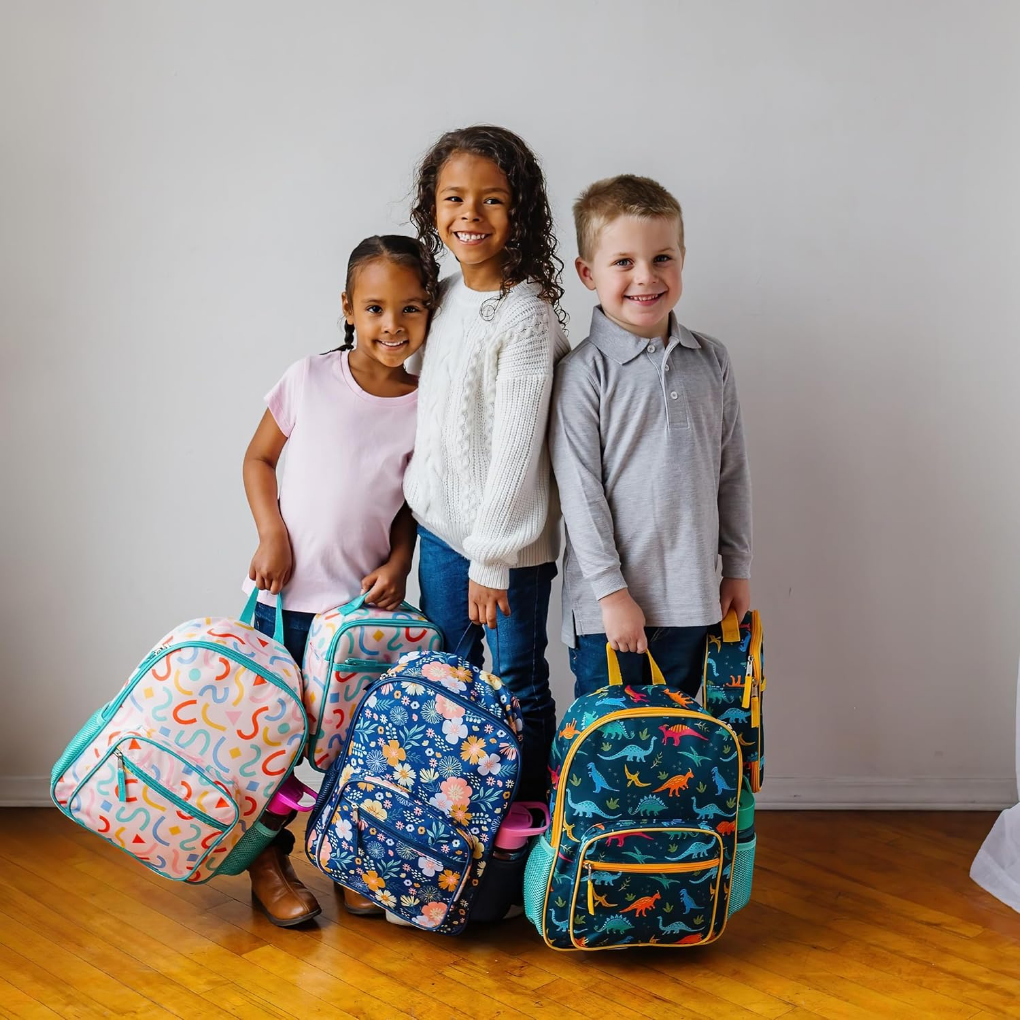
- Elementary kids (10 to 15 liters): light loads, mostly a folder, a lunch box, and a water bottle. A smaller pack is enough.
- Middle schoolers (15 to 25 liters): textbooks, a binder, and often a first laptop or tablet enter the picture, so structure starts to matter.
- High schoolers and college students (25 to 35 liters): laptops and multiple textbooks need dedicated space, and a 35-liter pack becomes excessive only if it’s mostly empty most days.
The rule that matters most: when fully loaded, the backpack should never exceed 10 to 15% of your kid’s body weight. Fit-wise, it should sit between the shoulders and lower back without extending past its natural frame.
Types of Backpacks for School
Not every backpack works for every kid. Here’s the real scoop on the four main styles.
| Style | Best for | Trade-off |
|---|---|---|
| Classic two-strap | Most kids, elementary through college | The reliable default, rarely a wrong choice |
| Laptop backpack | Tech-heavy school days | Padded compartments add some weight and bulk |
| Rolling backpack | Heavy daily loads, long walks | Great on smooth ground, awkward on stairs |
| Subject-specific (art, gym, outdoor) | Middle and high schoolers with varied schedules | Usually unnecessary for elementary kids |
The Classic Two-Strap Backpack
Your standard, reliable option, and honestly, it works for most kids. It distributes weight evenly, keeps hands free, and comes in every size and style imaginable.
Laptop Backpacks for Tech-Heavy Days
If your kid’s school day revolves around a laptop or tablet, invest in a backpack designed for tech, with a dedicated padded compartment and secure closures. More brands now build these from rPET and other recycled materials, so functionality and sustainability aren’t a trade-off.
Rolling Backpacks for Heavy Loads
We used to think these were overkill until a walk-to-school routine turned into carrying half a locker’s worth of books. A rolling backpack lets you roll on smooth ground and switch to shoulder straps for stairs or rough terrain, a hybrid worth considering if your kid carries a lot.
Subject-Specific Backpacks
Some backpacks are built around specific activities: art supply organization, ventilated sections for gym gear, or extra-durable materials for outdoor programs. These can help middle and high schoolers with varied schedules, but they’re rarely necessary for elementary kids.
Start with what your kid needs daily, not what looks coolest. You can always upgrade later if their needs change.
How We Evaluate School Backpacks
Every backpack in this guide went through the same check before it made the list. We verify each brand’s sustainability claims against its published certifications (GRS, OEKO-TEX Standard 100, GOTS, B Corporation, or Climate Neutral status), rather than taking an “eco-friendly” label at face value. We cross-reference the material breakdown on the brand’s own spec sheet against what’s actually listed on the product page, since those two things don’t always match. And we read through customer reviews looking for recurring complaints, specifically about zipper failures, strap tearing, and sizing, since those patterns show up faster in real-world use than in marketing copy.
We also draw on direct parent experience where we have it. The backpack complaints that opened this guide (sore shoulders, lost homework, an October zipper failure) came from raising a middle schooler, not a lab test. That’s a starting point for what to look for, not a substitute for checking the materials and reviews on any specific bag you’re considering.
Common School Backpack Mistakes to Avoid
- Buying too big “to be safe.” A backpack sized for high school on a second grader just encourages overpacking and creates the exact posture problems you’re trying to avoid.
- Ignoring strap comfort in favor of design. The coolest print in the store is worthless if it digs into a kid’s shoulders by October.
- Overlooking total loaded weight. It’s easy to check the empty backpack’s weight and forget that four textbooks and a laptop can push a “light” bag well past the 10% rule.
- Choosing style before function. A backpack that looks great but lacks a laptop compartment or a padded back panel becomes a daily source of complaints.
- Skipping the laptop-fit check before buying. A compartment that’s “close enough” in size often means a laptop that won’t fit, or one with an inch of empty space to shift around in.
Top Sustainable Backpacks for School
These picks meet the bar above: real certifications, materials you can verify, and a track record that holds up past the first semester.
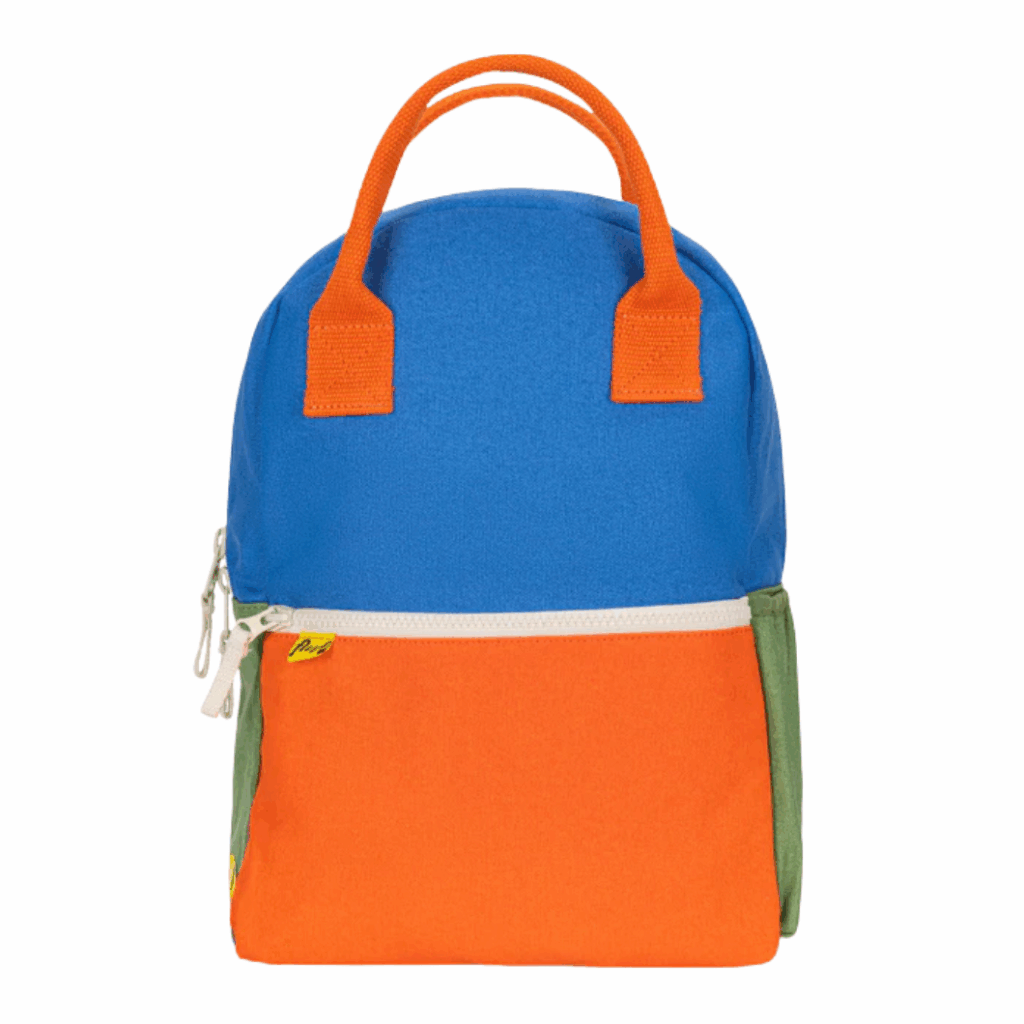
Best for Elementary School
$$
FLUF builds functional, durable backpacks from 100% organic cotton canvas with a water-resistant, food-safe lining, and the whole thing is machine washable for lunchbox leaks.
One correction on the brand’s own marketing: the canvas exterior is organic cotton, but the lining is GRS-certified recycled PET, so this isn’t fully plastic-free, just free of any virgin plastic.
Exterior
Organic Cotton Canvas
✓ Plastic FreeLining
GRS Recycled PET
⚠ Contains PlasticPackaging
Compostable, Corn-Based
✓ Plastic FreePros
- Organic cotton exterior with no virgin plastic anywhere in the build
- Climate Neutral Certified since 2022
- Machine washable, handles lunchbox leaks easily
Cons
- Water-resistant lining is recycled plastic, not fully plastic-free
- Jr. sizing tops out before middle school
The closest to plastic-free in the elementary lineup, and upfront about where the one plastic component sits. If cotton-first construction matters most, choose FLUF.
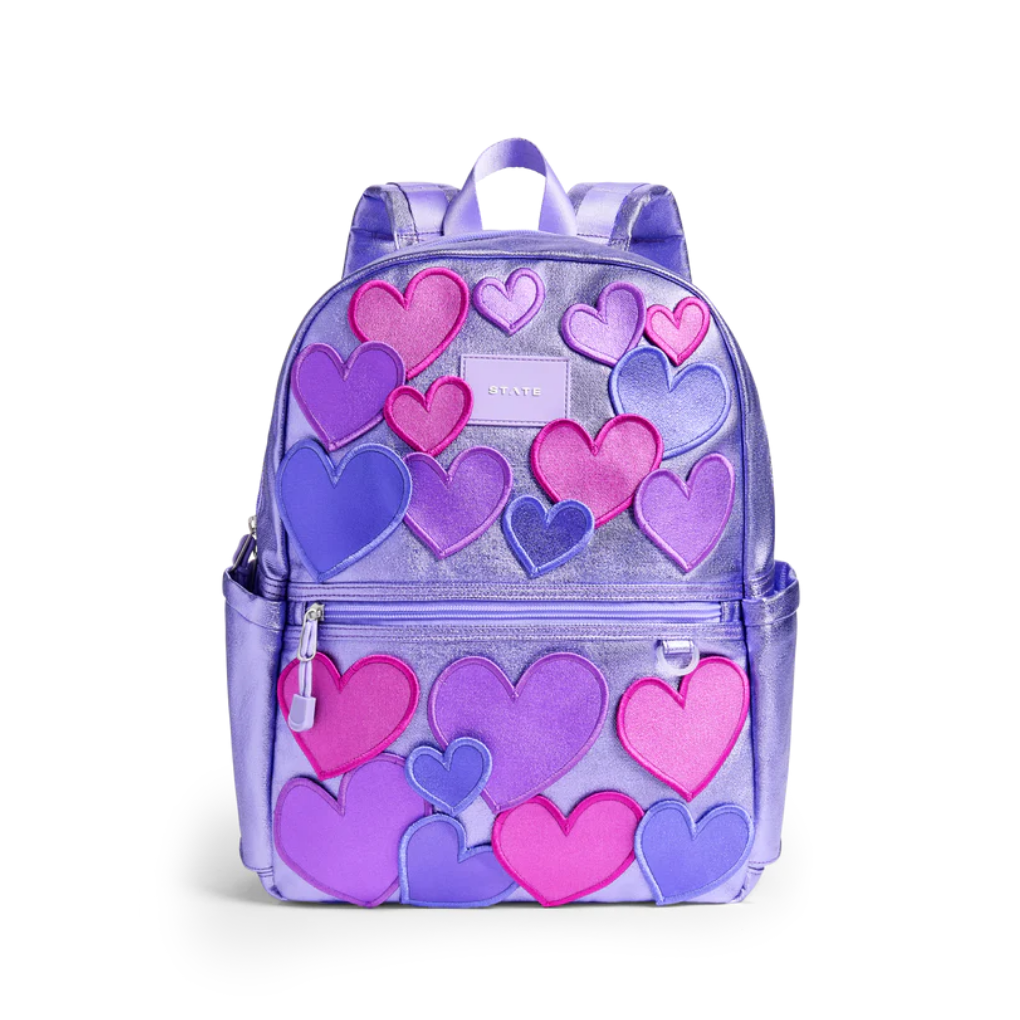
Best for Design and Mission
$$$
State Bags makes bold, playful designs kids actually want to carry, and runs on a Buy One, Give One model that’s donated over 500,000 backpacks to kids in need.
Many popular styles, including the Kane Backpack, use rPET sourced from post-consumer plastic bottles, up to 90% recycled content in some styles. State is a Certified B Corporation.
Body Fabric
rPET, ~90% Recycled
⚠ Contains PlasticCertification
B Corporation
✓ CertifiedGive-Back Model
Buy One, Give One
✓ VerifiedPros
- Bold, playful designs kids genuinely want to carry
- Buy One Give One has donated over 500,000 backpacks
- Certified B Corporation
Cons
- Body fabric is majority recycled plastic, not a low-plastic pick
- Priced higher than most of this lineup
The pick for design and mission, not for lowest plastic content. If your kid needs the backpack everyone asks about, choose State.
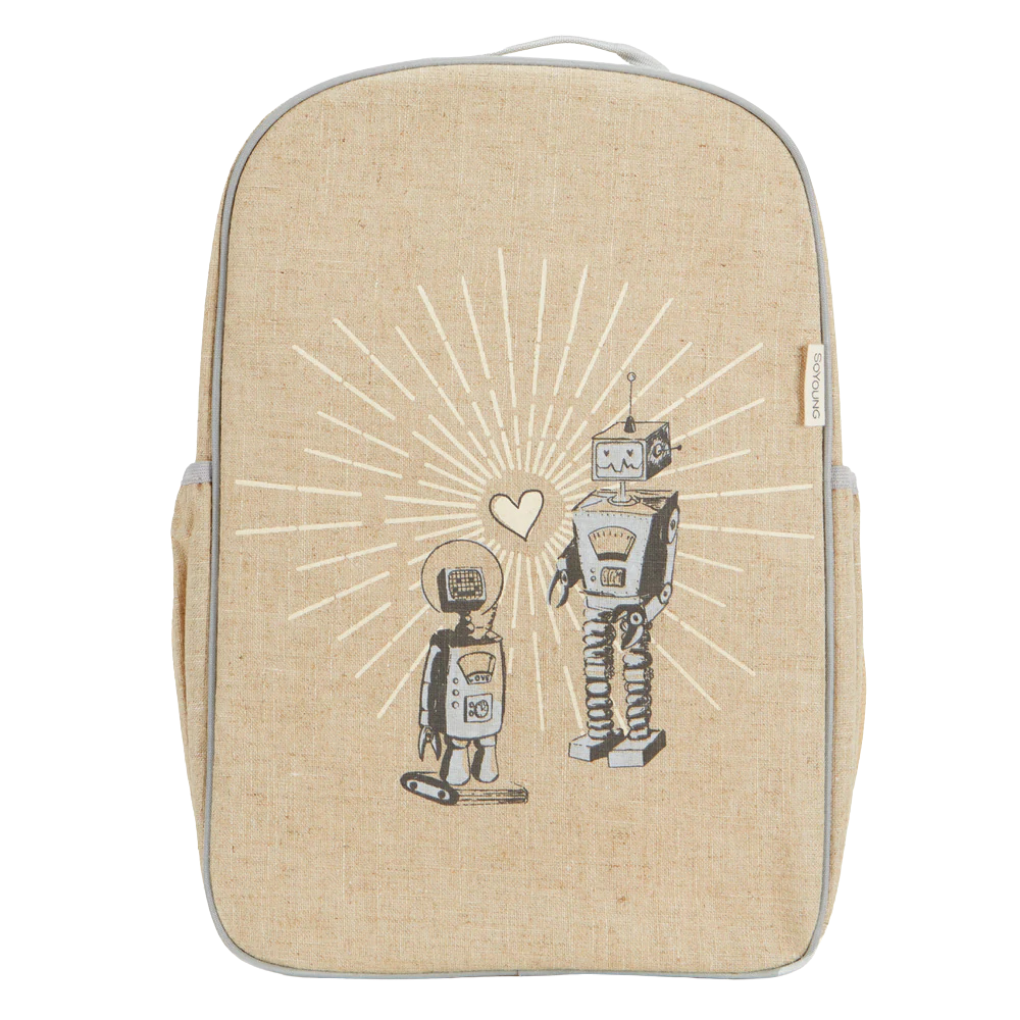
Best for a Minimalist Look
$$
SoYoung is a Canadian, woman-owned brand with a clean, minimalist look, soft colors, no cartoon characters, that works for kids and adults alike.
Backpacks use raw linen and cotton blends that are naturally antimicrobial, breathable, and machine washable. No third-party certification at this time.
Body Fabric
Raw Linen & Cotton Blend
✓ Plastic FreeProperty
Naturally Antimicrobial
✓ VerifiedOwnership
Woman-Owned, Canadian
✓ VerifiedPros
- Raw linen and cotton blend, naturally antimicrobial and breathable
- Clean, minimalist look with no cartoon characters
- Woman-owned, Canadian brand
Cons
- No third-party certification to verify sustainability claims
- Hardware material isn’t disclosed by the brand
The best-looking low-plastic pick if you want something that doesn’t scream “kids’ backpack.” If aesthetic and natural fiber matter most, choose SoYoung.
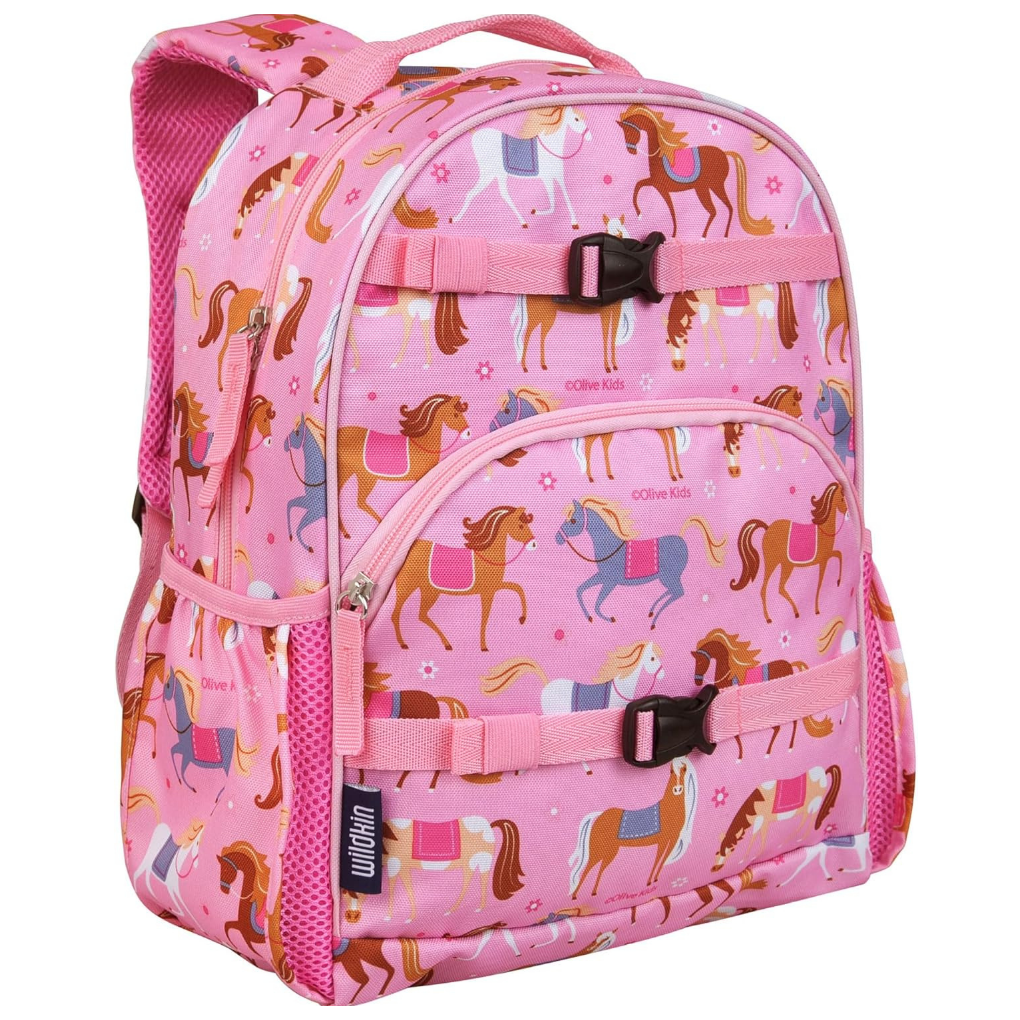
Best Budget Pick
$
Wildkin‘s ECO rPET Original Backpack collection is made from 100% recycled plastic bottles, with antimicrobial linings, padded straps, and the same prints kids already love.
It’s the most affordable pick in this lineup, and free from BPA and phthalates.
Body Fabric
100% Recycled Polyester
⚠ Contains PlasticSafety
Free of BPA & Phthalates
✓ VerifiedLining
Antimicrobial
✓ VerifiedPros
- 100% recycled polyester keeps plastic bottles out of landfills
- Most affordable pick in this lineup
- Same fun prints kids already recognize and love
Cons
- Fully synthetic fabric, no natural-fiber option in this collection
- No third-party certification
The budget pick when cost matters more than material mix. If price is the deciding factor, choose Wildkin.
Best Fully Plastic-Free Pick
$$
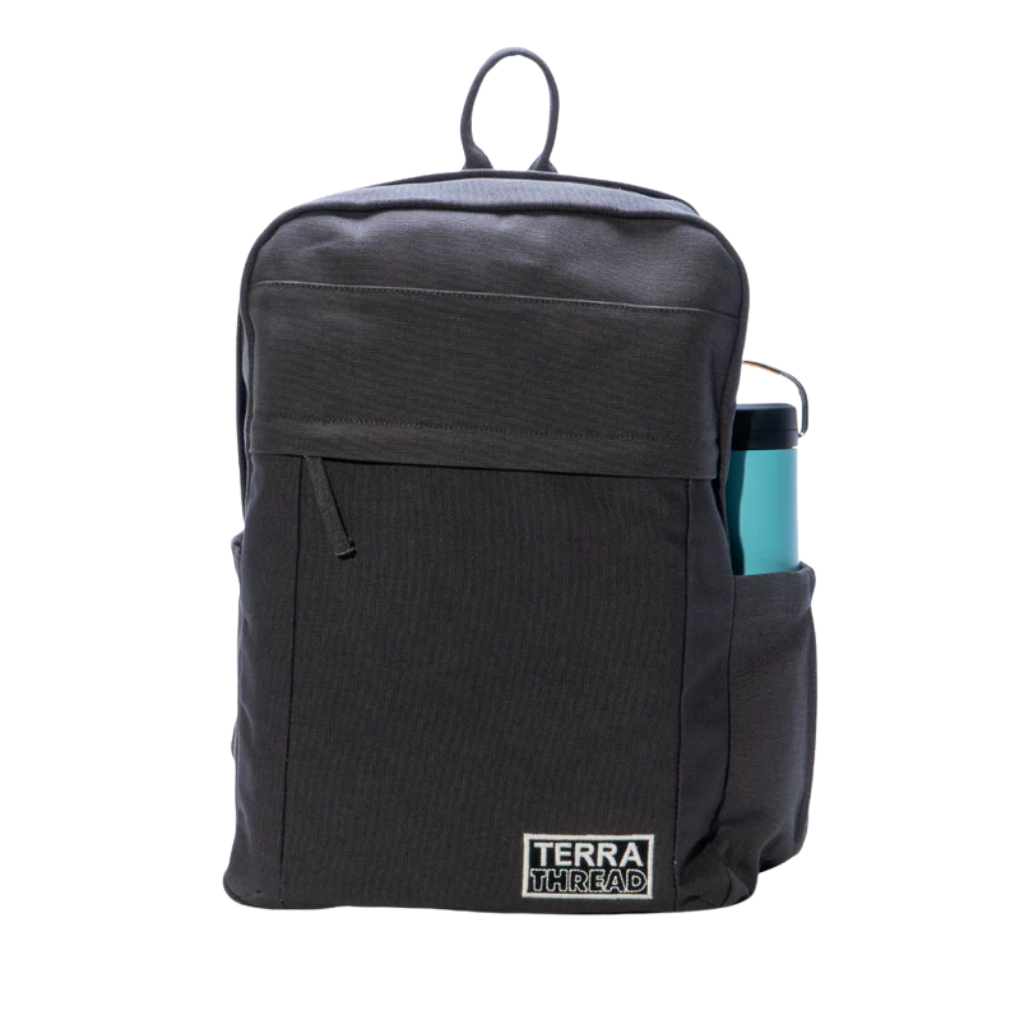
Terra Thread uses Fairtrade Certified organic cotton grown by smallholder farmers in India with rain-fed methods, made in Fair Trade Certified factories.
The brand states the bag skips synthetic materials entirely, even in the packaging, which is the strongest plastic-free claim in this lineup and one we could actually verify against their published certifications.
Exterior & Lining
GOTS Organic Cotton Canvas
✓ Plastic FreeHardware
Lead-Free, No Synthetics
✓ Plastic FreeCertification
Fair Trade Certified
✓ CertifiedPros
- Brand states the bag is entirely free from synthetic materials, even packaging
- Fair Trade Certified organic cotton grown with rain-fed methods
- Backed by a Certified B Corp with Regenerative Organic and Carbon Neutral status
Cons
- Higher price point than the elementary picks
- More grown-up look, less appealing to younger kids
The one genuinely plastic-free pick in the middle and high school lineup. If avoiding plastic entirely is the priority, choose Terra Thread.
Best for Durability
$$-$$$
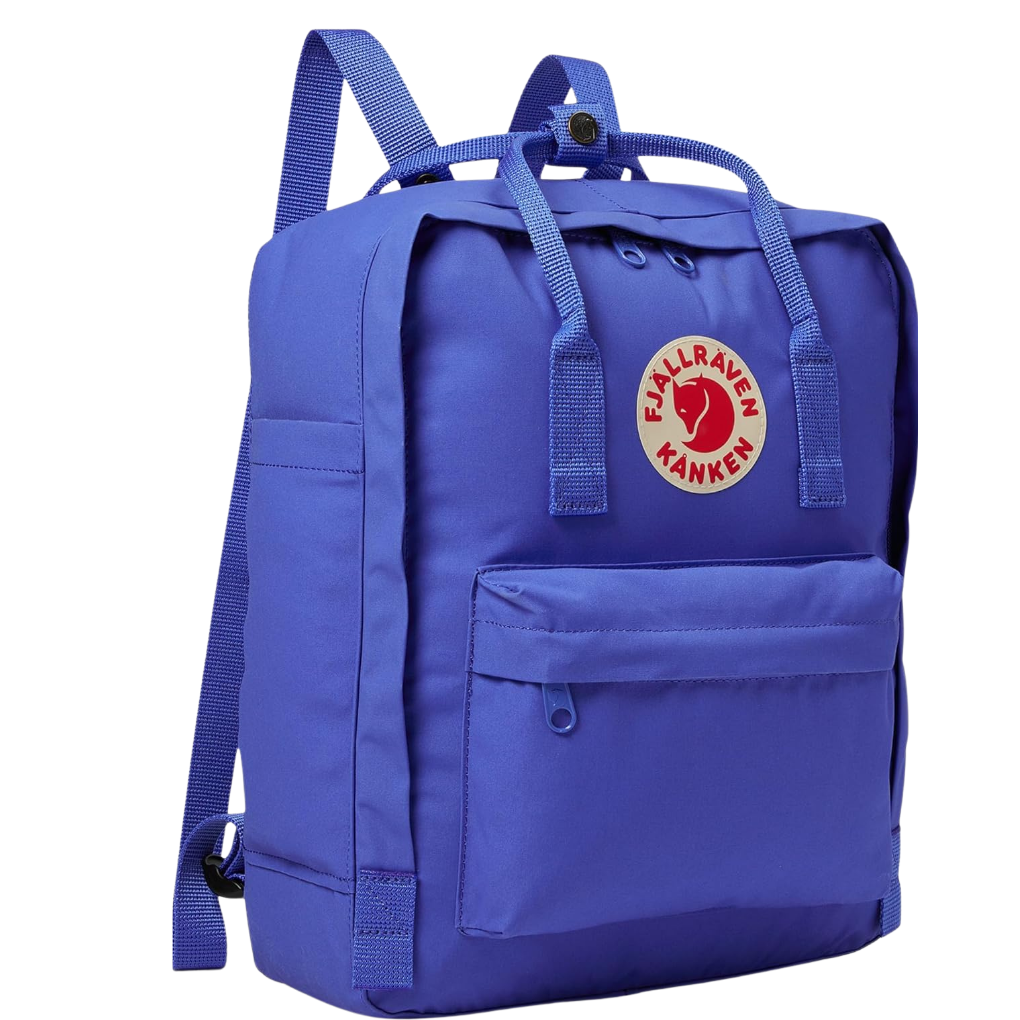
Fjällräven has made minimalist, Scandinavian-style outdoor gear since 1960, with a focus on durability over unnecessary frills.
The brand supports conservation through its Arctic Fox Initiative and is working toward becoming fully PFC-free, though it isn’t there yet.
Fabric Option
G-1000 Eco (Recycled Poly + Cotton)
⚠ Contains PlasticFabric Option
Vinylon F (Synthetic Fiber)
⚠ Contains PlasticProgram
Arctic Fox Initiative
✓ VerifiedPros
- Minimalist Scandinavian design that doesn’t look “kiddie”
- Durable enough to double as a hiking daypack
- Actively working toward becoming fully PFC-free
Cons
- Both fabric options contain synthetic or recycled plastic
- No third-party sustainability certification
The pick for durability and style that lasts past graduation. If your teen wants a bag that isn’t obviously “school,” choose Fjällräven.
Best for Hiking-to-School Durability
$$$
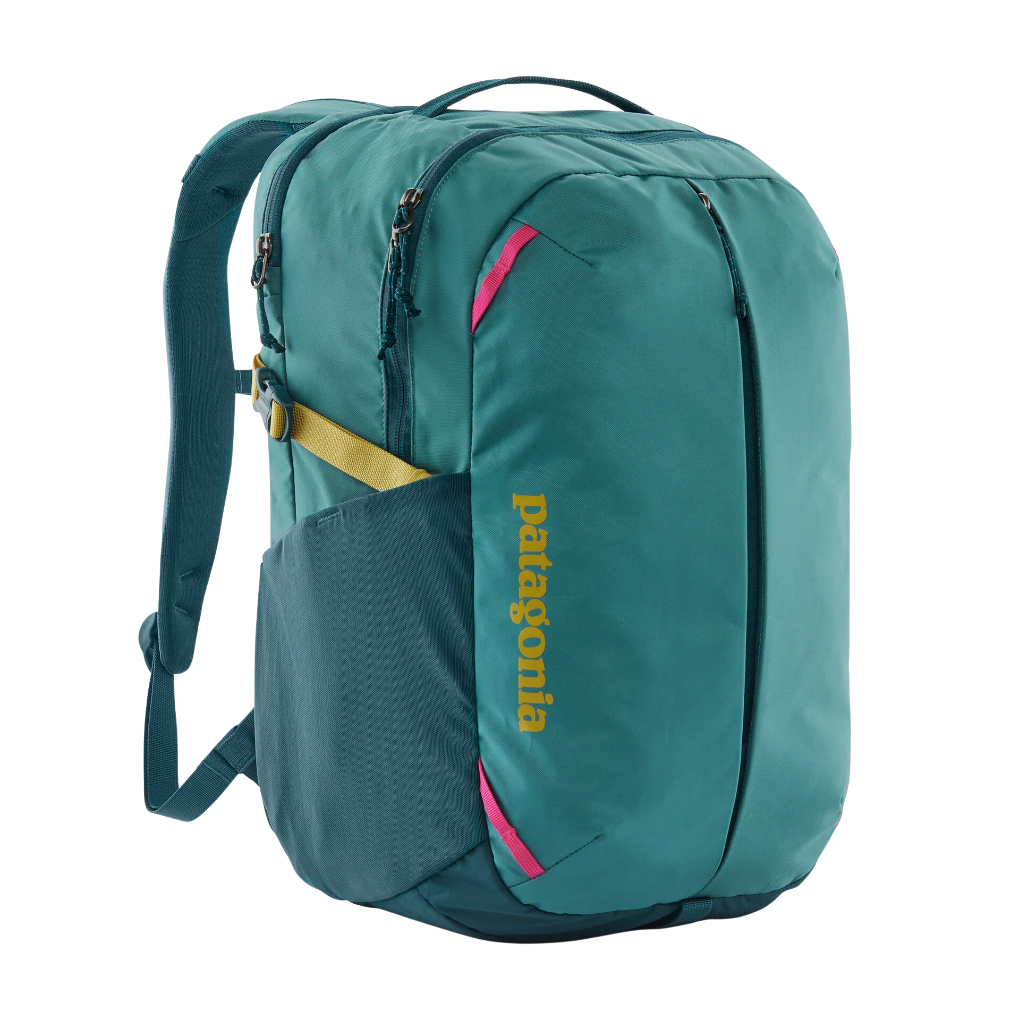
Patagonia transferred company ownership in 2022 so all profits go toward fighting climate change, with Earth as its only shareholder.
Its daypacks are built from 100% post-consumer recycled polyester with a PFAS-free water-repellent finish, and they work as well for laptops and textbooks as they do for hiking.
Body Fabric
100% Recycled Polyester
⚠ Contains PlasticCertification
Bluesign Approved
✓ CertifiedCertification
B Corporation
✓ CertifiedPros
- 100% post-consumer recycled polyester, PFAS-free water-repellent finish
- 1% of sales goes to environmental nonprofits
- Earth is the company’s only shareholder as of 2022
Cons
- Fully synthetic fabric, even though it’s recycled
- Highest price point in this lineup
The pick for a bag that pulls double duty as a hiking daypack. If durability past high school matters most, choose Patagonia.
Other Sustainable Backpacks We Considered
A few brands came up repeatedly in our research but didn’t make the featured list above, usually because they’re built more for general or outdoor use than specifically for school.
Cotopaxi is a Certified B Corp known for its Del Día line, which uses excess and remnant fabric so each bag comes in a one-of-a-kind colorway. The Batac daypack has a padded laptop sleeve and holds up well, but it isn’t marketed or sized specifically for K-12 school use.
Topo Designs makes daypacks with recycled ripstop nylon options in its Global collection. Solid build quality, but general-purpose rather than school-specific, and we couldn’t verify a brand-wide sustainability certification at the time of writing.
Boundary Supply‘s Rennen Recycled Daypack uses recycled Cordura-style fabric and a padded laptop compartment. It’s a strong commuter-style bag, but it’s priced and positioned more for daily carry and travel than for a locker-and-hallway school routine.
Make Your Backpack Last
A few simple habits can double the life of a good backpack:
- Empty it weekly. Shake out crumbs and remove stray papers before they stress the seams.
- Spot clean immediately. A damp cloth with gentle soap keeps spills from setting in. No harsh chemicals needed.
- Let it air dry. After gym, rain, or spills, unzip and hang it somewhere with airflow. Skip the dryer heat.
- Use both straps. Prevents uneven wear and shoulder strain while helping padding and stitching last longer.
- Don’t overstuff. If it resists zipping, it’s overloaded, and that stresses zippers, seams, and lining.
These take seconds and save you from replacing a backpack every year.
Don’t Miss: Is Nylon Toxic? What to Know Before You Wear It A lot of backpack fabric is nylon or a nylon blend. Here’s what that material actually means for your family. Read more →Backpack Organization Hacks That Work
Pack Heavy Items the Right Way
Put the heaviest items (textbooks, a laptop) closest to your kid’s back to keep weight centered instead of pulling them backward. Lighter items like notebooks and folders go in the front compartments.
Keep Daily Essentials Accessible
Use front and side pockets for what your kid needs to grab quickly: student ID, bus pass, snacks, earbuds, pens.
✨ Tip: Attach a small carabiner or key ring to an interior loop for house keys. It’s the single easiest fix for a kid who keeps losing them.
Prevent the “Black Hole” Effect
Use smaller pouches or zippered compartments so homework doesn’t disappear into the bottom of the bag. A pencil case keeps writing supplies together, and a small pouch for charging cables keeps them from tangling with everything else.
What a Well-Packed Morning Actually Looks Like
Here’s a real example, not just the abstract advice above: laptop in the padded compartment closest to the back, three-ring binder in the main compartment just in front of it, pencil case and calculator in an interior zip pocket, phone charger in a small pouch, water bottle in the side mesh pocket, and any permission slip or note for the day in the flat front pocket, the one place it won’t get buried.
Quick Daily Organization Routine
Every evening, empty the backpack on the kitchen table. Throw away trash, file completed homework, and repack for the next day with everything in its spot. It takes five minutes and prevents frantic morning searches, and it catches problems early, like a leaky water bottle or an unsigned permission slip.
Recommended Accessories
A few affordable add-ons that make even a basic backpack more organized:
- SoYoung Pencil Case
- State Pencil Bag
- 3-ring binders
- Lunchskins Snack Bags
FAQs on Backpack for School
What certifications should I look for in a sustainable school backpack?
Look for GRS (Global Recycled Standard, which verifies actual recycled content), OEKO-TEX Standard 100 (screens for harmful substances in the finished fabric), GOTS (for organic cotton), and B Corporation status, which verifies a company’s broader social and environmental practices, not just one product.
Are rolling backpacks allowed at school?
It depends on the school, so check before you buy. Many elementary and middle schools allow them, especially for kids with health-related accommodations, but some high schools restrict them over hallway congestion and locker size.
How often should you replace a school backpack?
Most well-made backpacks last one to three school years with normal use. Watch for frayed strap stitching, a zipper that won’t stay closed, or a back panel that’s lost its padding. Sustainable picks made from heavier canvas or rPET tend to outlast bargain synthetic bags.
Is rPET fabric actually durable, or is it just marketing?
rPET performs almost identically to virgin polyester in strength, water resistance, and abrasion resistance, because it’s the same polymer, just recycled first. Durability comes down to how it’s woven and reinforced, not whether the polyester started as a bottle or crude oil.
What’s the real difference between a laptop sleeve and a laptop compartment?
A sleeve is a soft pocket, usually inside the main compartment, with little cushioning. A compartment is padded on multiple sides, sits closer to the back panel, and often zips separately. For a school laptop that gets tossed around daily, the compartment matters more.
Do heavier backpacks really cause back problems?
Yes. The American Academy of Pediatrics and multiple studies link overloaded backpacks to shoulder, neck, and lower-back strain, especially once the load exceeds 10% of body weight. The fix is often simpler than a new backpack: leaving unnecessary books in a locker and using both straps.
What’s a reasonable budget for a sustainable school backpack?
Most genuinely sustainable picks land in the $$ to $$$ range, comparable to well-made conventional backpacks from mainstream retailers. If budget is the priority, Wildkin’s ECO rPET line is the most affordable of the group.
Final Thoughts About Backpack for School
The best school backpack is the one that fits your kid’s frame, holds what they actually carry, and survives more than one semester of real use. You don’t have to choose between a backpack that works well and one that’s made responsibly anymore.
Whether you go with something fun and colorful for elementary school or a more grown-up design for high school, think about how it’ll actually be used before you buy. Test the fit loaded, not empty, and don’t get swayed by features your kid will never use.
A good backpack is an investment that should last more than one school year. When you find one made from sustainable materials by a company that treats its workers fairly, that’s a choice that benefits your kid and the planet at the same time, and it happens to be the practical option too.
📚 References
- Rein, M. (2022, September 6). Are backpacks hurting your kids’ backs? Mayo Clinic Health System. mayoclinichealthsystem.org
- Moore, M. J., White, G. L., & Moore, D. L. (2007). Backpack weight: How heavy is safe? AAP Grand Rounds, 18(1), 10-11. doi.org/10.1542/gr.18-1-10
- FLUF. (n.d.). B-pack Jr. organic cotton school backpack. FLUF. us.fluf.ca
- State Bags. (n.d.). Kane backpack. State Bags. statebags.com
- SoYoung. (n.d.). Grade school backpacks. SoYoung. us.soyoung.ca
- Wildkin. (n.d.). ECO rPET original backpack collection. Wildkin. wildkin.com
- Terra Thread. (n.d.). Organic cotton school backpack. Terra Thread. terrathread.com
- Fjällräven. (n.d.). Kånken backpack. Fjällräven. fjallraven.com
- Patagonia. (n.d.). Refugio daypack 26L. Patagonia. patagonia.com
- Cotopaxi. (n.d.). Batac 16L daypack. Cotopaxi. cotopaxi.com
- Topo Designs. (n.d.). Global daypack. Topo Designs. topodesigns.com
- Boundary Supply. (n.d.). Rennen recycled daypack. Boundary Supply. boundarysupply.com