
Key Takeaways
- Microplastics are plastic particles smaller than 5 millimeters found in air, water, food, and human tissue including blood, lungs, and brain matter.
- They come from the breakdown of everyday plastics like bottles, packaging, and synthetic clothing, and have reached every corner of the planet.
- Exposure has been linked to inflammation, hormonal disruption, and cardiovascular damage, though research is still developing.
You’ve probably heard the headlines by now: microplastics are everywhere. But the more you dig into the research, the more that word “everywhere” actually means.
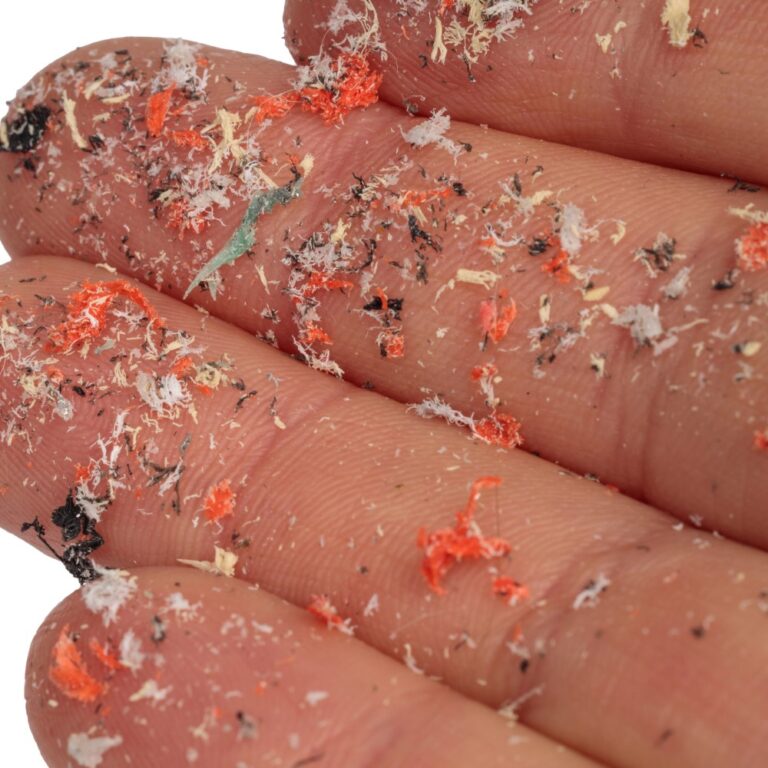
Microplastics are plastic particles smaller than 5 millimeters — about the size of a sesame seed or smaller. They’re in the water you drink, the food you eat, and the air inside your home. Researchers have found them in human blood, lung tissue, placentas, breast milk, and most recently, brain matter. Brain concentrations have increased by roughly 50% over just the past eight years.
These aren’t particles from some distant industrial disaster. They come from everyday things: plastic bottles breaking down, synthetic clothing shedding fibers in the wash, food packaging slowly degrading. They’ve been detected on the summit of Mount Everest and at the bottom of the Mariana Trench. There is no corner of the planet they haven’t reached.
In this article, we’ll cover what microplastics actually are, where they come from, what the science says about health risks, and practical steps you can take to reduce your exposure at home.
What Are Microplastics?
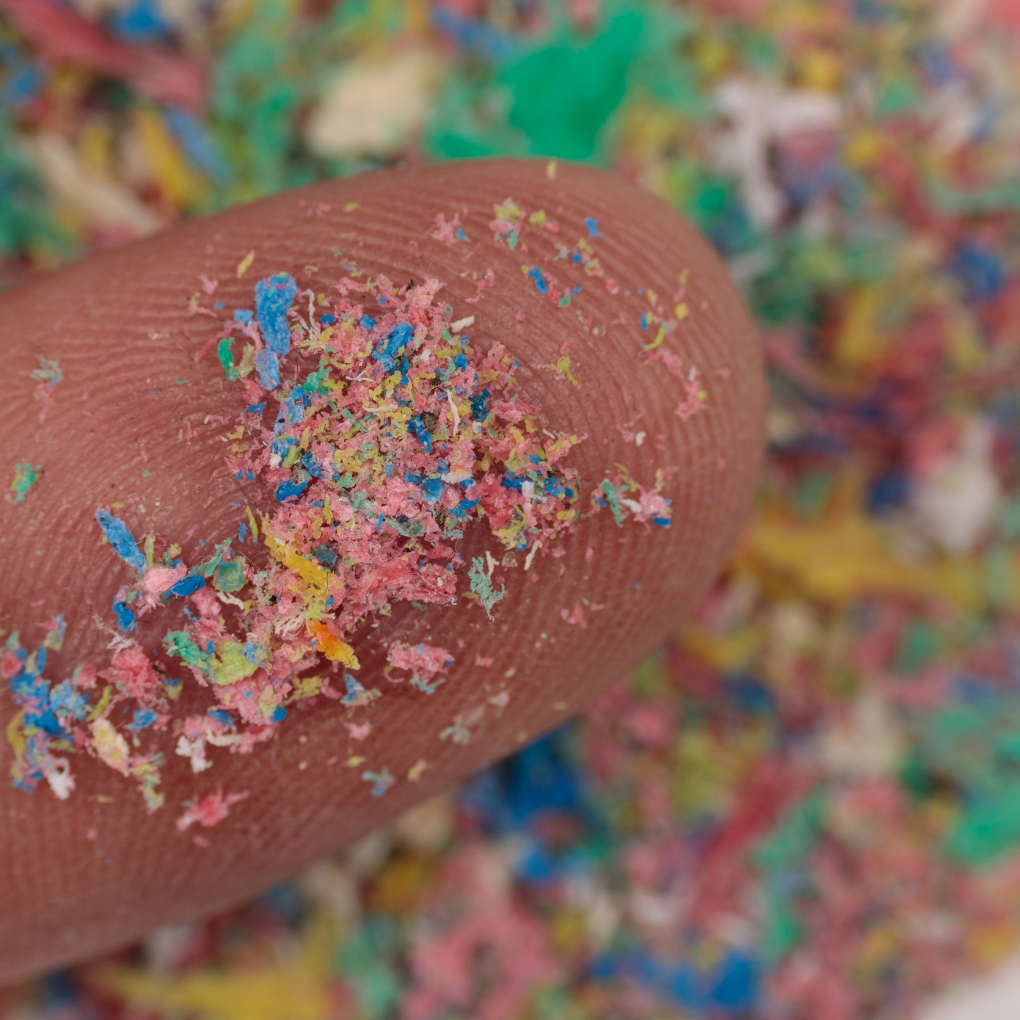
Microplastics are plastic particles smaller than 5 millimeters. Primary microplastics are manufactured to be tiny, like microbeads. Secondary microplastics form when larger plastics break down through sunlight, heat, and friction. Both types are now found in every ecosystem on Earth and throughout the human body.
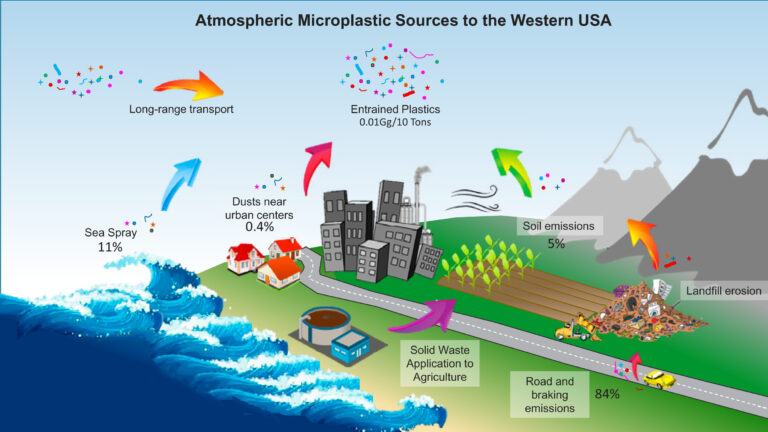
Microplastics are tiny pieces of plastic so small that most can’t be seen with the naked eye. By definition, they measure less than five millimeters across, about the size of a sesame seed or smaller. Despite their size, they’ve become one of the most widespread pollutants on the planet.
There are two main types:
- Primary microplastics are intentionally manufactured to be tiny, such as the microbeads once found in facial scrubs and toothpaste, or the plastic pellets used in industrial production.
- Secondary microplastics come from larger plastic items, such as bottles, bags, textiles, or car tires that gradually break down into smaller fragments through sunlight, friction, and weathering.
Sources are surprisingly diverse. A single load of laundry can release thousands of synthetic fibers into wastewater. Tires shed particles as cars move along the road. Household dust often carries fragments from carpets, furniture, and packaging. Even some cosmetics, cleaning products, and paints have been found to contain added microplastics.
Where Are Microplastics Found?
Microplastics have been detected in oceans, rivers, mountain air, Arctic ice, agricultural soil, drinking water, seafood, table salt, honey, and human blood, lungs, placentas, and brain tissue. No environment on Earth has tested free of microplastics.
The better question might be: where aren’t they? Microplastics have spread into nearly every corner of the planet. They’ve been measured in the air we breathe, the food and water we consume, and even in human tissue. Here’s what researchers have uncovered so far:
Natural Environments
- Oceans and coastlines encompass a wide range of environments, from surface waters and sandy beaches to the seafloor and Arctic sea ice.
- Remote places once thought untouched, including the Mariana Trench and mountain regions like the Swiss Alps.
- Freshwater sources such as rivers, lakes, and even drinking water supplies.
- Air and rainfall can transport microplastics far from where they were released.
Inside the Human Body
- Detected in blood, lungs, and digestive tracts.
- It is found in sensitive tissues, including the placenta, breast milk, and reproductive organs.
- Present in internal organs such as the liver and kidneys, showing just how deeply these particles can travel.
Food and Consumer Products
- This is common in seafood like fish and shellfish.
- Detected in animal proteins, honey, tea, sugar, fruits, and vegetables.
- It is present in everyday items such as bottled water, beer, and table salt.
Human-Made and Urban Sources
- Fibers shed from synthetic clothing like polyester and nylon during washing.
- Particles are released as car tires and road markings wear down.
- Dust from cities and construction, along with marine coatings and industrial plastic pellets.
- Plastics breaking down from litter and sewage sludge applied as fertilizer.
Microplastics are no longer limited to the environment “out there.” They cycle between ecosystems, consumer products, and living bodies, reminding us that plastic pollution is both global and deeply personal.
How Do Microplastics Affect the Environment?
Microplastics enter food chains when fish and marine animals mistake them for food. They absorb and transport toxic chemicals into living tissue. They alter soil structure and accumulate up the food chain from plankton to seafood to humans
Microplastics don’t just linger quietly in the background; they reshape the environments they enter. From oceans to farmland, their impact touches ecosystems, food chains, and ultimately our own health.
Aquatic Ecosystems
In the water, microplastics are easily mistaken for food by fish, mussels, and even whales. Once eaten, they can interfere with growth, reproduction, and survival. The problem doesn’t stop with the plastic itself: these fragments can also carry pesticides, heavy metals, and other chemicals that leach into marine life. As larger creatures eat smaller ones, plastics move up the food chain, eventually reaching the seafood on our plates.
Soils and Farmland
Microplastics aren’t just a marine issue. They’ve been found in agricultural soils, often introduced through fertilizers, sewage sludge, and plastic mulch. Once in the soil, they can alter its structure, affecting water retention and nutrient cycling. Terrestrial animals may also ingest these particles, adding stress to ecosystems that are already vulnerable.
Food Chains and Human Health
Because they move so easily between air, water, and soil, microplastics have worked their way into much of what we eat and drink. Salt, drinking water, fruits, vegetables, and animal proteins have all tested positive for plastic fragments. Research in mammals links exposure to inflammation, oxidative stress, and possible reproductive or metabolic disorders.
Instead of fading away, these tiny particles stay in circulation quietly, building up in the environment and in the bodies of animals and people year after year.
How Do Microplastics Enter Your Body?
Microplastics enter the body three ways: swallowing them in food and water, breathing them in from indoor air and synthetic dust, and, to a limited degree, absorbing them through the skin. Eating and drinking is the largest route, adding up to an estimated 39,000 to 52,000 particles a year from food and drink alone.
Knowing where microplastics come from is one thing. Understanding how they cross into your bloodstream is what turns this from an environmental story into a personal one. There are three main pathways.
Ingestion (Food and Water)
Eating and drinking is the biggest route in. Bottled water, seafood, salt, tea, and produce all carry particles, and heating food in plastic pushes more of them into what you consume. Studies estimate the average person takes in 39,000 to 52,000 microplastic particles a year from food and drink alone, and more once airborne particles are counted.
Inhalation (Indoor Air and Dust)
The air inside your home is often a bigger source than outdoor air. Synthetic carpets, upholstery, and clothing shed microfibers that settle into household dust and get breathed in. Some of the smallest particles reach deep into lung tissue, which is one reason microplastics have been recovered directly from human lungs.
Skin Contact (Limited)
Skin is the least significant pathway. Most microplastics are too large to pass through intact skin, though nanoplastics, the smallest fraction, may cross more easily through hair follicles or broken skin. The evidence here is still thin, so researchers treat it as a minor route compared with eating and breathing.
Potential Health Effects of Microplastics
Research links microplastic exposure to inflammation, oxidative stress, hormone disruption, and cardiovascular damage. They have been detected in human blood, lungs, placentas, and brain tissue. Brain concentrations have increased approximately 50% in eight years. Current findings support reducing exposure as a precaution.
Three landmark studies anchor what we know so far.
- Blood (Leslie et al., 2022): plastic was found in the blood of 17 of 22 healthy adults, at an average of 1.6 micrograms per milliliter, with PET the most common polymer.
- Placenta (Ragusa et al., 2021): the “Plasticenta” study found 12 microplastic fragments in 4 of 6 human placentas, evidence that exposure can begin before birth.
- Brain (Nihart et al., 2025): brain-tissue concentrations rose roughly 50% from 2016 to 2024, with more plastic found in brains than in liver or kidney samples.
This section covers the highlights. For the full research breakdown, study by study, see our complete guide to microplastics health effects.
If microplastics are turning up in human tissues, what does that mean for our health? Scientists are still piecing together the answers, but early research paints a troubling picture.
🧫 Inflammation and Cellular Stress
Animal studies show that microplastics can trigger inflammation, oxidative stress, and even DNA damage. In lab experiments on human cells, these particles have been linked to impaired cell growth and function. Over time, this kind of cellular stress is thought to contribute to chronic health conditions, from cardiovascular disease to immune dysfunction.
🔄 Hormone and Reproductive Disruption
Research in animals suggests microplastics may interfere with hormone signaling, which plays a central role in growth, metabolism, and reproduction. Studies have linked exposure to reduced fertility, altered hormone levels, and developmental impacts in offspring. While direct human evidence is limited, the parallels raise concern about long-term reproductive health.
🫁 Detection in Human Tissues
Microplastics have now been detected in human blood, lungs, the digestive tract, placentas, and breast milk. Their presence in these vital systems shows how deeply they infiltrate our biology, often through food, water, and the air we breathe. The discovery in placentas and breast milk is especially troubling, as it suggests exposure may begin before birth and continue into early development.
☣️ Toxic Hitchhikers
Plastic particles often act like tiny sponges, absorbing chemical additives, heavy metals, and even pathogens on their surfaces. Once inside the body, they may release these substances, amplifying potential health risks. This means microplastics are not just inert fragments; they can serve as carriers for other pollutants, adding layers of complexity to their impact on human health.
🧠 Neurological and Cognitive Concerns
Emerging studies suggest that microplastics may cross the blood–brain barrier, potentially contributing to neuroinflammation and cognitive dysfunction. While direct human data is still limited, findings from mice and brain organoid (lab-grown mini-brains that mimic human tissue) studies raise red flags about long-term brain health.
🧬 Cancer Risk Signals
Researchers are investigating whether chronic exposure could elevate cancer risk, particularly due to oxidative stress, DNA damage, and endocrine disruption. Scientists haven’t yet proven that microplastics directly cause these health problems, but the early patterns are strong enough to keep research moving forward.
📉 Bioaccumulation and Persistence
Unlike biodegradable materials, microplastics don’t easily break down once inside the body. Instead, they may accumulate in organs over time, compounding risks for infants, pregnant people, and those with chronic conditions.
Microplastics and nanoplastics have been detected in diverse human organs, including the brain, liver, kidneys, placenta, and testicles, and brain concentrations in particular have increased by about 50% over the past eight years. Studies suggest that bioaccumulation levels are tied more to long-term environmental exposure than age, meaning even infants and young people are vulnerable as plastic pollution worsens.
Don’t Miss: 15 Ways to Avoid Microplastics Want to take action in your daily routine? This article breaks down 15 practical ways to lower your exposure and protect the planet. Read more →🔍 What We Still Don’t Know
Even though research on microplastics has expanded rapidly, there are still significant gaps in what we understand.
- Long-term human studies are scarce. Most of what we know comes from short-term lab or animal research. We still don’t fully understand how lifelong exposure affects human health.
- Not all particles are the same. Size, shape, and chemical makeup may change how microplastics interact with the body. For example, fibers from clothing could behave differently from fragments from packaging.
- Nanoplastics raise new questions. These particles, smaller than 1 μm, may penetrate cells and tissues in ways larger plastics cannot. Scientists are only beginning to study their long-term impact.
- Interactions with other pollutants remain unclear. Microplastics often carry heavy metals, pesticides, or microbes on their surfaces, but we don’t yet know how these “hitchhikers” influence health risks.
✨What It Means
Small but Significant
The symbol μm stands for micrometer, which is one millionth of a meter (0.001 millimeters). To put that into perspective, a human hair is about 70 μm wide, so a particle that’s 1 μm is roughly 70 times thinner than a strand of hair.
- Nanoplastics: smaller than 1 μm (invisible even under many microscopes).
- Microplastics: up to 5,000 μm (5 millimeters) — about the size of a sesame seed or smaller.
Researchers caution that we’re only beginning to understand the long-term implications. But the evidence so far is enough to suggest caution and the value of reducing exposure where possible.
Why Are Microplastics a Problem?
Microplastics do not biodegrade they fragment into smaller pieces for decades. They are too small for most water treatment systems to filter. They absorb and carry toxic chemicals. An estimated 10 to 40 million metric tons enter the environment each year with no practical removal method at scale.
At first glance, microplastics might seem too small to matter. But their size is precisely what makes them such a lasting threat. These particles don’t break down like organic matter. Instead, they fragment into smaller and smaller pieces, persisting for decades or even centuries in water, soil, and air. Once released, they’re nearly impossible to recover.
Persistence and Pollution Pathways
Efforts to remove microplastics face severe limitations. Conventional water treatment plants and cleanup systems aren’t designed to catch particles this small, and even advanced filtration captures only a fraction. That means once they enter the environment, microplastics continue to circulate largely unchecked.
Another concern is their role as chemical carriers. Microplastics readily absorb pesticides, heavy metals, and other pollutants, then release them when ingested by wildlife or humans. This ability to transport toxins turns them into more than inert fragments; they become active agents of contamination.
Why Scale Matters
The scale of the problem is staggering. Researchers estimate that 10–40 million metric tons of microplastics are released into the environment each year, with no practical way to clean them up once they’re there. Their persistence, elusiveness, and toxicity make them one of the most troubling pollutants of our time.
What Is Being Done About Microplastics
Many countries have banned cosmetic microbeads. Researchers are developing laundry filters, wastewater upgrades, and biodegradable alternatives. International plastic treaty negotiations are underway. Major sources — synthetic textiles and tire wear — remain largely unregulated.
Many countries have already banned microbeads in cosmetics and personal care products, marking an early win against intentionally added microplastics. But the story doesn’t end there—plastics are still added in other forms. Ingredients like “acrylate polymers,” “polyethylene,” or “polyquaterniums” often show up in lotions, shampoos, makeup, and even leave-on products. These are liquid or soluble forms of plastic that can wash down the drain or linger on our skin, contributing to the same pollution problem the microbead bans set out to solve.
Organizations like Plastic Pollution Coalition are helping push this momentum forward by uniting scientists, policymakers, activists, and everyday citizens. Their campaigns amplify research on microplastics, pressure corporations to cut plastic use, and educate the public on safer alternatives. By building a global network, they strengthen the movement for systemic change.
Where Global Policy Stands
Governments have been negotiating a legally binding UN treaty on plastic pollution. The most recent full session (INC-5.2 in Geneva, August 2025) adjourned without agreement, deadlocked over limits on plastic production and chemicals of concern. A brief procedural meeting in February 2026 elected a new chair but held no substantive talks, and negotiations are expected to resume later in 2026. Progress is real but slow, and the biggest sources of microplastics, synthetic textiles and tire wear, are still not covered.
Science and Innovation on the Frontlines
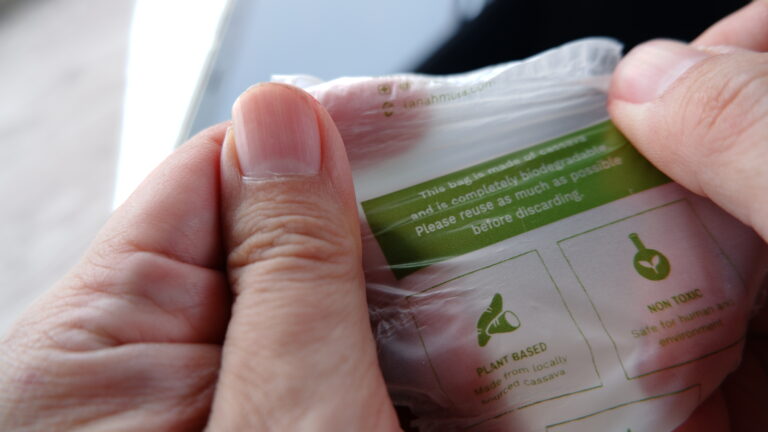
Researchers are also exploring new solutions. Biodegradable and bio-based plastics are being developed to replace conventional plastics, while innovations in recycling aim to recover materials before they fragment. Washing machine filters, textile redesigns, and wastewater treatment upgrades are being tested to stop fibers and particles from escaping into the environment.
Public awareness campaigns are also encouraging individuals and businesses to reduce their use of single-use plastics, switch to reusable alternatives, and dispose of waste responsibly. Hospitals and industries are beginning to review their own practices, seeking safer and more sustainable options.
There is no single fix, but these combined efforts, policy reform, scientific innovation, and shifts in consumer behavior, represent necessary steps toward addressing the microplastics crisis. The challenge is complex, yet momentum for real change is building.
Challenges and Gaps in Addressing Microplastics
Despite growing awareness and new policy and research initiatives, significant hurdles remain. One of the biggest is simply detecting and measuring microplastics, especially nanoplastics that are smaller than one micron. Scientists are still working on reliable, standardized methods to track these particles in air, water, soil, and living organisms. Without consistent data, it’s challenging to grasp the true scale of the problem or measure progress.
Limits in What We Know
Scientists still know little about the long-term health and environmental impacts. Researchers have detected microplastics in human tissues and across ecosystems. Still, questions remain about how they interact with other chemicals, how they move through food chains, and what risks they pose to wildlife and people over time.
Policy and Cleanup Barriers
Policy and regulation face obstacles, too. Many existing laws target only narrow sources, such as cosmetic microbeads, leaving major contributors like synthetic fibers and tire wear largely unregulated. Loopholes, delayed implementation, and uneven enforcement further limit the effectiveness of current rules.
Finally, practical cleanup options are scarce. Recycling systems are not designed to capture or process microplastics, and viable alternatives to conventional plastics are still in development. Addressing these gaps will require stronger global cooperation, more research, and sustained commitment from policymakers, industry, and the public.
Simple Steps That Make a Big Difference
The highest-impact steps are: filter your drinking water, use a laundry bag for synthetic fabrics, switch to glass or stainless steel containers, reduce bottled water, and choose natural fiber clothing. Combining several steps meaningfully lowers your daily microplastic intake.
Save These Simple Microplastic Swaps for Later 📌
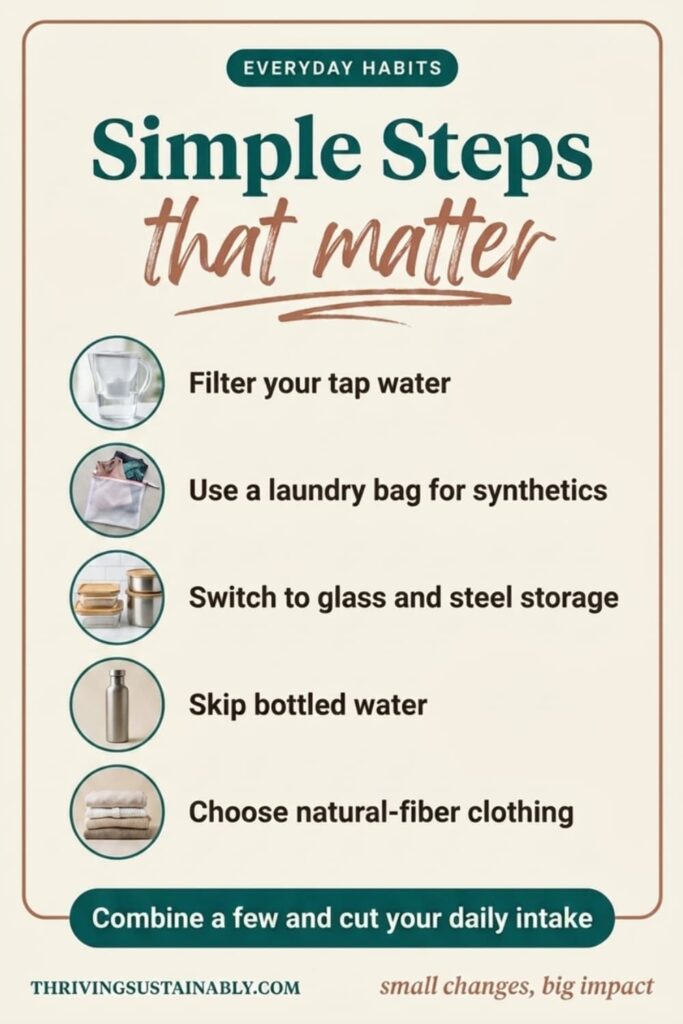
Microplastics may feel like an overwhelming problem, but you’re not powerless. The choices you make each day can protect your health and help reduce pollution at the source.
Everyday Swaps
One of the most effective steps is cutting back on single-use plastics. Reusable bags, bottles, and containers reduce demand for new plastic production and prevent the waste that eventually breaks down into microplastics. Many reusable options are also sturdier and save money over time.
Smarter Laundry
Synthetic fabrics like polyester, nylon, and acrylic release tiny fibers in the wash. Using a laundry bag (like Guppyfriend) or an in-line filter (like Filtrol) can capture thousands of those fibers before they reach waterways. Washing in cold water and choosing shorter, gentler cycles also reduces shedding and saves energy.
Safer Products
Check labels on personal care and cleaning items, and scan ingredient lists for polyethylene (PE), polypropylene (PP), or polyethylene terephthalate (PET), all common plastic polymers. In the kitchen, switch to glass or stainless steel for storage and reheating. These materials are more durable, don’t leach chemicals, and last for years.
Filter What You Can’t Avoid
Not all water filters catch microplastics equally, and the difference is large. Here is how the three most common home options compare.
| Filter type | Microplastic removal | Best for | Worth knowing |
|---|---|---|---|
| Reverse osmosis | Up to ~99.9% of micro- and nanoplastics | The smallest particles, including nanoplastics | Membrane pores sit well below 1 micron; wastes some water and needs a dedicated setup |
| Ultrafiltration | High for particles above ~0.01 micron | Most microplastics and many bacteria | Runs on water pressure with no waste stream; less reliable on the tiniest nanoplastics |
| Activated carbon | ~50 to 70% | Larger microplastics, plus chlorine and taste | Adsorbs and sieves particles but misses the nanoscale fraction |
If nanoplastics are your main concern, reverse osmosis is the strongest choice. For a lower-waste option that still catches most microplastics, ultrafiltration is a solid middle ground.
Beyond Daily Habits
Your influence doesn’t stop at home. Adding your voice to support policies that curb unnecessary plastic, volunteering for a local cleanup, or simply talking with friends and family about microplastics spreads awareness and momentum. The more people who make small changes, the bigger the collective impact.
No one can avoid microplastics entirely, but every mindful step adds up creating healthier homes, safer food and water, and a cleaner planet for future generations.
FAQs on What Are Microplastics
There is no proven way to fully remove microplastics from the human body. Your body normally clears some foreign particles, but microplastics can linger in tissues. Researchers are still studying how much builds up over time and whether any safe medical or lifestyle methods can help reduce long-term accumulation.
Microplastics measure between 1 micrometer and 5 millimeters. Nanoplastics are smaller than 1 micrometer, which makes them invisible under most microscopes. That tiny size is why nanoplastics are considered potentially more dangerous. They can slip through cell membranes, cross the blood-brain barrier, and reach tissues that larger particles cannot.
Research estimates the average person takes in roughly 39,000 to 52,000 microplastic particles a year from food and drink alone, and more once airborne particles are counted. Estimates of the total weight vary enormously between studies and remain contested, so the particle count is the more reliable figure to work from. What is consistent across the research is that people who mostly drink bottled water ingest considerably more than those who drink filtered tap water.
In most cases, yes. Bottled water often contains more microplastic particles than tap water, especially when bottles are left in the heat. Adding a good home water filter and skipping plastic containers for hot drinks or meals further reduces your exposure.
Yes. Some plastics shed particles much more easily. Polyester and nylon fabrics release large amounts of fiber every time they are washed, and tire rubber sheds particles through road friction. Plastics with added dyes or flame retardants may carry extra risks as they break down.
Emerging research suggests some plants may take up micro- and nanoplastics through their roots. It is not yet clear how much reaches the edible parts of crops or what that means for human health, but it is an active and important area of study.
Final Thoughts: What Are Microplastics
Microplastics may be small, but their impact is anything but. Researchers have found microplastics everywhere: in the deepest oceans, the highest mountains, and even within human bodies. Their persistence, ability to carry toxins, and difficulty in removal make them one of the most pressing environmental and health challenges of our time.
I’m a big believer that no matter how small the change, when enough of us take action, the collective results can be powerful. Choosing reusables, supporting better alternatives, and sharing what we learn with others really does add up. The story of microplastics is still unfolding, but the choices we make now matter—and they can shape a healthier, more sustainable future for all of us.
📚References
- Brahney, J., Mahowald, N., Prank, M., Cornwell, G., Klimont, Z., Matsui, H., & Prather, K. A. (2021). Constraining the atmospheric limb of the plastic cycle. Proceedings of the National Academy of Sciences, 118(16), e2020719118. https://doi.org/10.1073/pnas.2020719118
- Harvard T.H. Chan School of Public Health. (2025, January 2). Microplastics: A growing challenge to health and the environment. https://hsph.harvard.edu/news/microplastics-a-growing-challenge-to-health-and-the-environment/
- Mason, S. A., Welch, V. G., & Neratko, J. (2018). Synthetic polymer contamination in bottled water. Frontiers in Chemistry, 6, Article 407. https://doi.org/10.3389/fchem.2018.00407
- Nihart, A. J., Garcia, M. A., El Hayek, E., Liu, R., Olewine, M., Kingston, J. D., Castillo, E. F., Gullapalli, R. R., Howard, T., Bleske, B., Scott, J., Gonzalez-Estrella, J., Gross, J. M., Spilde, M., Adolphi, N. L., Gallego, D. F., Jarrell, H. S., Dvorscak, G., Zuluaga-Ruiz, M. E., … Campen, M. J. (2025). Bioaccumulation of microplastics in decedent human brains. Nature Medicine, 31(4), 1114–1119. https://doi.org/10.1038/s41591-024-03453-1
- Pinto-Rodrigues, A. (2023, March 24). Microplastics are in our bodies. Here’s why we don’t know the health risks. Science News. https://www.sciencenews.org/article/microplastics-human-bodies-health-risks
- United Nations Environment Programme. (2025, June 2). Everything you should know about microplastics. https://www.unep.org/news-and-stories/story/everything-you-should-know-about-microplastics
- Zhang, Q., Xu, E. G., Li, J., Chen, Q., Ma, L., Zeng, E. Y., & Shi, H. (2020). A review of microplastics in table salt, drinking water, and air: Direct human exposure. Environmental Science & Technology, 54(7), 3740–3751. https://doi.org/10.1021/acs.est.9b04535
More Microplastics Guides You’ll Want to Read
- How to Avoid Microplastics: 15 Easy Swaps
- How to Remove Microplastics from Your Body and Home
- How to Avoid Microplastics in Food
- How to Avoid Microplastics in Tea Bags
- Microplastics in Cosmetics: What’s Hiding in Your Makeup
- Microplastics in Fish and Seafood
- Microplastics in Soil: Hidden Pollution in Your Garden
- Nanoplastics in Bottled Water: What the Research Shows
- Does Silicone Have Microplastics?
- Does Reverse Osmosis Remove Microplastics?
- Best Reverse Osmosis Systems for Removing Microplastics
- Best Plastic-Free Water Bottles