
Key Takeaways
- Plastic Free July is a free global challenge run by the Plastic Free Foundation. You pick your own level, from skipping the “Top 4” plastics to a fully plastic-free month.
- In 2025, at least 174 million people in 190 countries took part, avoiding 290,000 tonnes of plastic in a single July.
- You don’t need to register to join. Start with reusable bags, bottles, straws, and coffee cups, and 86% of participants say the habits stick.
Plastic Free July is a free month-long challenge with one rule: refuse single-use plastic through July, at whatever level works for you. And it’s much bigger than most people realize. At least 174 million people across 190 countries took part in 2025, according to the Plastic Free Foundation‘s Impact Report.
This guide covers how the challenge started with 40 friends in Western Australia, what all those small swaps add up to (the numbers surprised me), and the easiest ways to join, whether you skip the “Top 4” plastics or go all in. No guilt and no perfection required.
What Is Plastic Free July?
Plastic Free July is a global challenge run by the Plastic Free Foundation that asks people to refuse single-use plastics for the month of July, choosing their own level, from skipping the “Top 4” items to going completely plastic-free.
The whole challenge fits in one sentence: for the month of July, say no to single-use plastic wherever you reasonably can. That’s it. No fee, no membership, no judgment if a plastic-wrapped snack sneaks into your cart in week two.
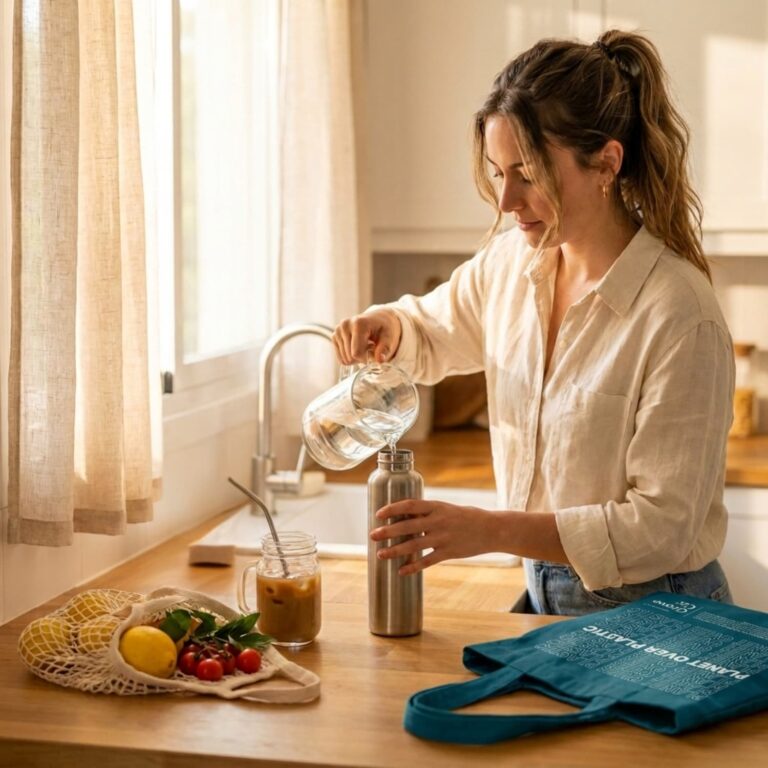
You choose your own level. Many people start with what Plastic Free July calls the “Top 4”: plastic bags, water bottles, straws, and takeaway coffee cups. Others go further and aim for a completely plastic-free month. Both count. The point isn’t purity; it’s noticing how much plastic moves through your life and proving to yourself that some of it is optional. If you’re brand new to all of this, our guide to why plastic-free living matters is a good place to start.
Where Plastic Free July Came From
Plastic Free July was founded in 2011 by Rebecca Prince-Ruiz, who convinced 40 friends and colleagues in Western Australia to skip single-use plastic for one month. It’s now the world’s largest plastic waste avoidance campaign.
Every big movement starts smaller than you’d guess. In 2011, Rebecca Prince-Ruiz was working in local government in Western Australia and was troubled by how much plastic was ending up in landfill. So she tried something simple: she convinced 40 friends and colleagues to avoid single-use plastic for the month of July.
It caught on. Per the Plastic Free Foundation, the challenge grew from 40 people to 400, then 4,000, and kept going. By 2017 it had outgrown its local government home, and the Plastic Free Foundation was set up as an independent charity to run it. Prince-Ruiz went on to co-write a book about the movement and was appointed a Member of the Order of Australia in 2023 for services to conservation.
Fifteen years later, that one-month experiment among friends is the largest plastic waste avoidance campaign on the planet.
Why Does Plastic Free July Matter?
Plastic Free July matters because collective action works: participants avoided 290,000 tonnes of plastic in 2025 alone, and 15 million tonnes of total waste over the past seven years.
One person skipping a straw feels like a drop in the ocean. That framing misses what actually happens when 174 million people skip the straw in the same month.
The Numbers Behind the Movement
The Plastic Free Foundation’s 2025 Impact Report breaks it down. In 2025, participants cut their household waste by about 13 kg per person, which works out to 3.1% less waste. Globally, that meant 1.4 million tonnes less landfill waste, 900,000 tonnes less recyclable waste, and 290,000 tonnes less plastic consumed. Over the past seven years, participants have avoided 15 million tonnes of waste, more than the ten biggest cleanup efforts in the world combined. And it sticks: 86% of participants say the changes they made became lasting habits.
It’s in Our Bodies, Not Just the Ocean
This isn’t only about beaches. A 2022 study in Environment International found plastic particles in the blood of 17 of the 22 people tested, nearly 8 in 10 samples. Microplastics have also turned up in soil, drinking water, and food, which we cover in microplastics in our lives. Meanwhile, per the OECD‘s Global Plastics Outlook, only about 9% of plastic waste worldwide actually gets recycled. The rest ends up in landfills, incinerators, or the environment, no matter how carefully we sort our recycling bins.
It’s Changing Laws, Too
Individual swaps create political cover for bigger moves. The 2025 Impact Report points to a wave of July policy action: Toronto launched a Single-Use Plastic Free Day, Lisbon became the first European capital to adopt a citywide reusable cup system, and the New York State Senate has declared July a Plastic Free Month every year since 2017. When millions of people change their habits in public, governments notice.
How Do You Join Plastic Free July?
You can join Plastic Free July by taking the free challenge at plasticfreejuly.org, making an online Plastic Free Pledge, or simply refusing single-use plastics through July without registering at all.
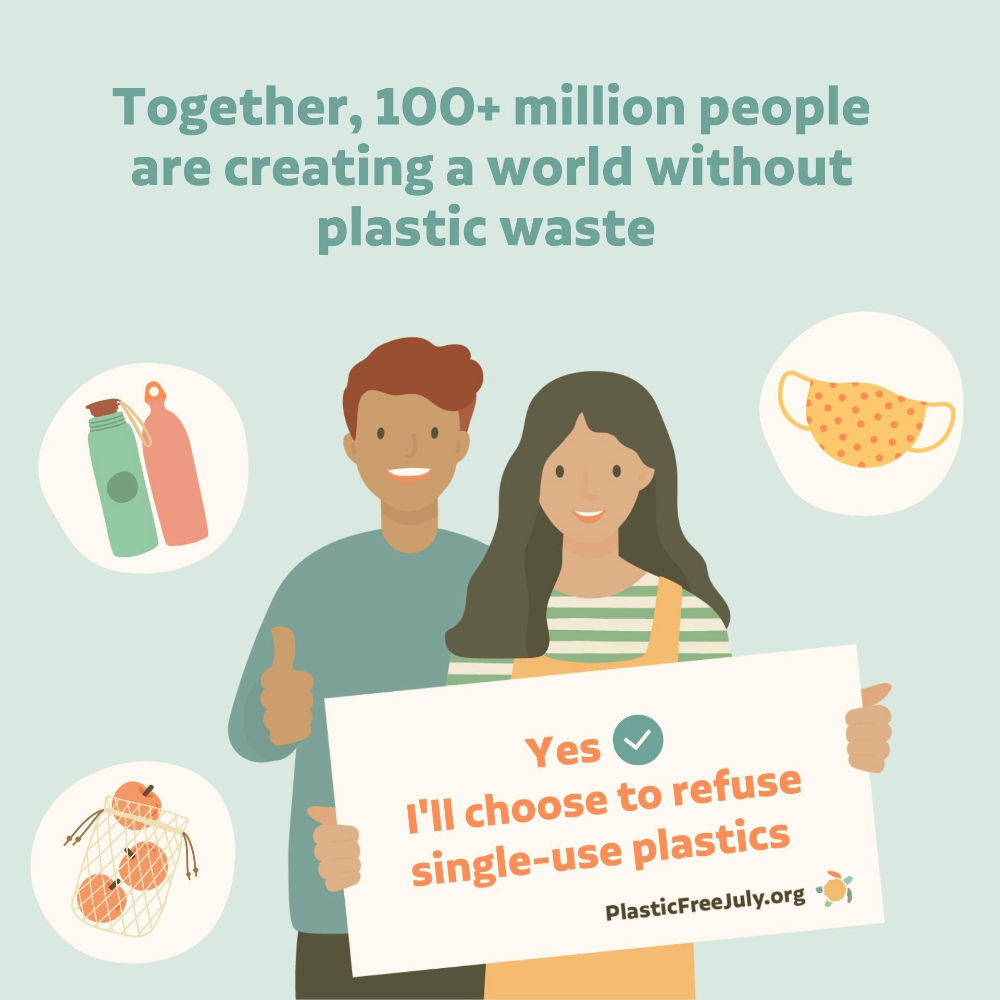
Starting your Plastic Free July journey doesn’t mean you must overhaul your entire life overnight. (Deep breaths.) It’s about noticing, questioning, and slowly shifting the habits that have quietly wrapped themselves in plastic.
Here’s how to ease into it:
- Start with a Plastic Audit: Before you make any changes, take a quick look around. What kinds of plastic show up the most in your daily routine? Is it food packaging? Bathroom products? Those endless grocery store bags? You don’t need to make a formal list; just noticing is powerful. Awareness is the first step to change.
- Pick One Area to Focus On: Trying to tackle everything at once can feel overwhelming (and honestly, a little discouraging). Instead, choose one area to start. Maybe it’s your kitchen, your morning coffee routine, or your shopping habits. Small, specific wins build momentum.
- Swap Smart, Not Fast: The goal isn’t to throw out everything plastic you own (that would create even more waste!). Instead, when something runs out, replace it with a plastic-free alternative. Refillable cleaning products, bar soap instead of bottled, and reusable produce bags are just a few examples of the options that are growing every day.
- Embrace Progress, Not Perfection: If you accidentally bring home a plastic-wrapped snack or forget your reusable bag, it’s okay. Really. Plastic Free July isn’t about being perfect; it’s about making more mindful choices, more often. Celebrate the changes you do make. They matter.
- Get Inspired and Stay Connected: Following the official Plastic Free July website or connecting with others who are participating can keep your spirits high. Swap tips, share wins, and laugh at the occasional reusable-bag-forgetting moment.
From Awareness to Action: Your Next Steps for Plastic Free July
The highest-impact Plastic Free July swaps are reusable bags, bottles, and coffee cups, plus beeswax wraps in the kitchen, bar soap in the bathroom, and waste-free lunchboxes for school.
Making the switch to a plastic-free lifestyle can feel a little overwhelming at first, but it gets a lot easier when you break it down by where you spend your time. Whether you’re mostly at home, clocking hours at work, or packing lunches for school, there are simple swaps and small changes that add up to a big impact.
At Home: Where Small Swaps Add Up
- Kitchen: Swap cling wrap for beeswax wraps or reusable silicone lids. Buy loose fruits and veggies instead of pre-packaged ones.
- Bathroom: Switch to bar soap, shampoo bars, and plastic-free toothpaste tablets when you run out.
- Cleaning: Try refillable cleaning concentrates instead of buying new plastic spray bottles each time. (Blueland fans, I see you!)
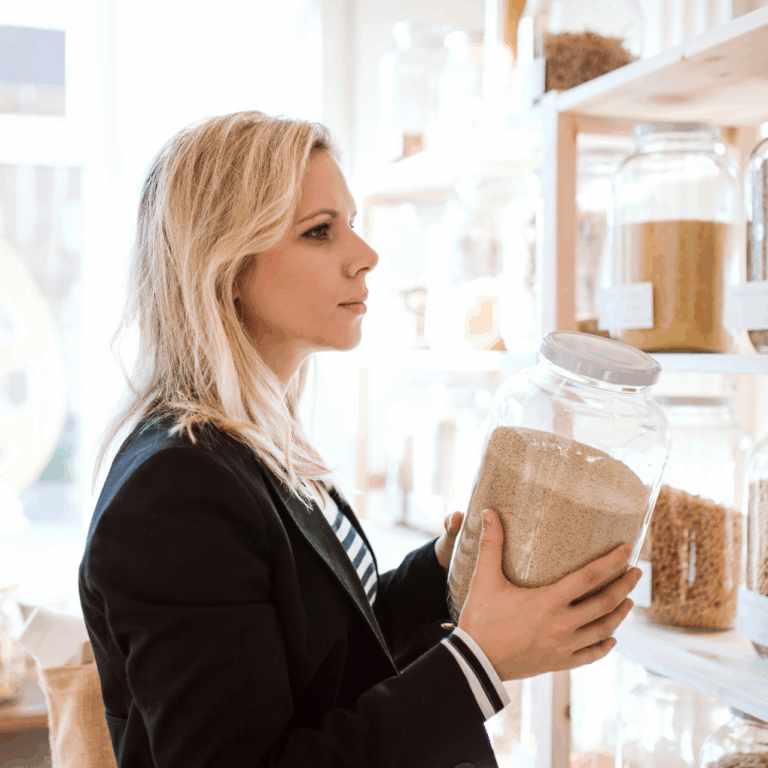
- Shopping: Keep reusable bags, produce bags, and jars handy for groceries or farmer’s market runs.
At Work: Packing Lighter, Thinking Smarter
- Lunch: Bring your own containers, utensils, and a reusable water bottle or coffee cup.
- Snacks: Skip individually packaged snacks and bring bulk nuts, fruit, or homemade treats.
- Office Supplies: Look for refillable pens, recycled paper, and plastic-free sticky notes or alternatives.
- Conversations: Mention Plastic Free July to coworkers, sometimes just talking about it sparks new ideas for everyone.
At School: Learning and Leading by Example
- Lunchboxes: Pack waste-free lunches with stainless steel containers, beeswax wraps, and a reusable water bottle.
- School Supplies: Choose notebooks with recycled covers, refillable pens, and canvas backpacks over plastic ones.
- Projects and Fundraisers: Suggest eco-friendly options for class activities, like plastic-free fundraisers or recycled craft projects.
- Set the Example: Kids, teachers, and parents can all be powerful role models; small changes get noticed!
Tips for Staying on Track Without the Stress
The goal of Plastic Free July (or any plastic-free challenge) isn’t perfection because, let’s be honest, perfection doesn’t exist. It’s about progress. Every swap you make is a win, and every step forward counts. The more we take on this journey, the more we can help shift those habits.
Here are some tips to keep things stress-free and enjoyable:
- Don’t aim for perfection; progress counts: You don’t need to have a perfectly plastic-free kitchen or bathroom by the end of the month. Small, consistent changes have a bigger impact over time than trying to make them all at once.
- Share the journey with friends or online: Whether it’s a group of friends or your Instagram followers, telling others about your plastic-free challenge can keep you motivated and create a sense of community. Plus, you might inspire someone else to make a change, too!
- Keep track of wins (and challenges) in a journal or photo diary: Sometimes, it’s easy to forget how far we’ve come. Documenting your progress—even the hiccups—can help you see the impact you’re making. It can also be fun to look back on the changes you’ve made and how you’ve adapted over time.
Remember, every small victory is a step toward a less plastic-dependent world. And if you slip up, that’s okay too. It’s all part of the process.
What Happens After July?
Most participants keep their Plastic Free July habits: 86% say the changes they made during the challenge became lasting, habit-forming.
The end of Plastic Free July doesn’t mean the end of your journey; it’s just the beginning of a new chapter in your sustainable lifestyle.
Here’s how to keep the momentum going:
- Celebrate your wins: First, take a moment to give yourself credit for all the changes and improvements you’ve made. Whether you went all-in or made just a few adjustments, every effort counts. Celebrate your progress, no matter how big or small; it’s about making lasting changes, not being perfect.
- Reflect on what habits felt doable: Look back at what worked well for you. Maybe you found that carrying a reusable water bottle was easier than you thought, or you discovered a favorite plastic-free snack packaging. These are the habits to hold on to. Understanding what’s sustainable for your lifestyle will help you move forward with confidence.
- Keep what works, and don’t be afraid to keep tweaking: Sustainability isn’t about a one-time challenge; it’s about continuous improvement. Keep what’s working for you, but don’t be afraid to make adjustments. If you hit a roadblock or if a certain swap didn’t work as well as you hoped, it’s okay! Revisit the items in your life that still need attention and tweak your approach as needed.
FAQs on Plastic Free July
Plastic Free July runs every year for the whole month of July. You can start on July 1st or jump in any day after, and nothing stops you from carrying the habits into August and beyond. That’s the whole idea: 86% of participants say the changes they made during the month stuck around year-round.
The 2026 campaign puts children and young people at the forefront under a “Plastic Free Future” focus, building on youth programs like the NextGen Fellowship the Foundation launched across the Asia Pacific region.
The Plastic Free Foundation is a registered Australian charity. Donations fund free challenge resources, school and community toolkits, and research partnerships, including marine plastic litter studies with CSIRO.
Yes, and they’re a big part of the impact. In 2025, 47 member councils avoided over 8,500 tonnes of plastic waste together, and licensees ranged from water companies to London’s Gatwick Airport, which ran its own plastic-free marketplace.
No. Zero waste aims to send nothing to landfill, year-round, across all materials. Plastic Free July targets one material for one month, which is exactly why it’s a better entry point for most people.
This Has Been About What is Plastic Free July
At its heart, Plastic Free July is about awareness, action, and community. It’s a global movement that invites us to look a little closer at plastic’s role in our daily lives and to imagine what life could look like with less of it. Whether you make one swap or twenty, the goal isn’t perfection. It’s participation.
By refusing single-use plastics for a month (and maybe beyond), we help create a ripple effect that leads to bigger changes in our homes, communities, and planet. Plastic Free July is a reminder that every small choice matters
📚 References
- Leslie, H. A., van Velzen, M. J. M., Brandsma, S. H., Vethaak, A. D., Garcia-Vallejo, J. J., & Lamoree, M. H. (2022). Discovery and quantification of plastic particle pollution in human blood. Environment International, 163, 107199. https://doi.org/10.1016/j.envint.2022.107199
- Organisation for Economic Co-operation and Development. (2022). Global plastics outlook: Economic drivers, environmental impacts and policy options. OECD Publishing. https://doi.org/10.1787/de747aef-en
- Plastic Free Foundation. (n.d.). About the founder. https://plasticfreefoundation.net/about-us/founder/
- Plastic Free Foundation. (2025). Impact 2025. https://plasticfreefoundation.net/our-impact/2025-report/
More Plastic-Free Living Reads
- Third-Party Certifications: The 25 Labels Worth Trusting
- Non-Toxic Living: Where to Actually Start, Room by Room
- Plastic-Free Gum: 12 Brands With Nothing to Hide (2026)
- The Hidden Threat: Nanoplastics in Bottled Water
- Plastic-Free Summer Essentials for Kids: 7 Swaps Worth It
- Creative and Eco-Conscious Summer Kids Activities