
Key Takeaways
- “Non-toxic” nail polish is not a regulated term. Labels like 3-free, 10-free, and 21-free are brand-defined marketing, and a bigger number does not automatically mean a safer bottle.
- The ingredients most worth avoiding are formaldehyde, toluene, and DBP (the “toxic trio”), plus camphor, formaldehyde resin, xylene, parabens, and TPHP, a suspected hormone disruptor that can absorb into your body during a manicure.
- Water-based brands like Kapa Nui have the lowest fumes, while cleaner solvent-based brands like Côte and tenoverten cut the worst chemicals and still wear well, so the right pick depends on what you want from a manicure.
Non-toxic nail polish skips the ingredients most linked to health concerns, like formaldehyde, toluene, and DBP, so you can have painted nails without the background worry. The catch is that “non-toxic” isn’t a regulated term, so the pretty front label and what’s actually in the bottle don’t always line up.
This guide does two things. It walks you through what those “free-from” numbers really mean and which ingredients to avoid, and provides a working list of non-toxic nail polish brands grouped by type. Let’s be honest, the goal here isn’t fear. It’s a manicure you don’t have to think twice about.
What “Non-Toxic” Actually Means for Nail Polish
“Non-toxic” nail polish has no legal definition. The term describes polish made without the ingredients most linked to health concerns, but the standard varies by brand, so it signals intent rather than a guarantee.
Flip a few bottles over at the drugstore, and you’ll see the same words again and again. Clean. Non-toxic. 10-free. They sound official, like a checklist somebody enforces. They aren’t. For cosmetics sold in the US, the Food and Drug Administration does not define or pre-approve words like “non-toxic,” “clean,” or “natural.” A brand can print them based on its own rules. The first real update to federal cosmetics oversight since 1938 only arrived with the Modernization of Cosmetics Regulation Act of 2022, and even that focuses on safety record-keeping and recalls, not marketing language on the front of a bottle.
So “non-toxic” is best read as a direction, not a finish line. A polish labeled that way has usually dropped the ingredients with the worst reputations. That’s a real improvement over old-school salon lacquer. It just isn’t the same as a product that’s been independently certified safe.
Why “free-from” numbers are mostly marketing
The “free” numbers are the clearest example of the gap. A 3-free polish leaves out three flagged ingredients. A 21-free polish claims to leave out twenty-one. The problem is that no agency decides which ingredients go on those lists, so two brands can both say “10-free” and mean different things.
It gets slipperier. Some brands pad their lists with ingredients that were never standard in nail polish to begin with, making the number look impressive without changing the formula much. A higher count can be a real signal, or it can be a clever bit of math. The ingredient list on the back of the bottle always tells you more than the number on the front.
“Non-toxic” is a spectrum, not a guarantee
Here’s the honest part. There is no nail polish that is completely free of any chemical concern, especially among the long-wear, glossy formulas most of us reach for. Polish needs solvents to flow on smoothly, film-formers to harden, and pigments for color. Those are functional ingredients, not impurities, and they don’t vanish because a label says “clean.”
What changes meaningfully is exposure. A well-formulated, non-toxic polish avoids ingredients tied to the most serious health concerns and reduces the fumes you breathe. That’s worth doing. It’s just more accurate to think of polishes as sitting along a range from “lower concern” to “higher concern” rather than splitting them into toxic and non-toxic.
Don’t Miss: How to Spot Greenwashing in Beauty Products “Clean” and “non-toxic” are just the start. Learn the label tricks that make ordinary products look healthier than they are. Read more →❌ Nail Polish Ingredients to Avoid
The nail polish ingredients to avoid are formaldehyde, toluene, and dibutyl phthalate (the “toxic trio”), as well as camphor, formaldehyde resin, xylene, parabens, and TPHP.
You don’t need a chemistry degree to shop for polish. You need a short list of names to scan for on the back of the bottle, and a sense of why each one earned its spot. Here’s what to skip and the reason behind it:
- Formaldehyde. Used as a hardener, it’s classified as a known human carcinogen by the National Cancer Institute and is a common trigger for skin and breathing irritation. It’s the single name most worth avoiding.
- Toluene. A solvent that gives polish its smooth glide. The Agency for Toxic Substances and Disease Registry notes that breathing it in can affect the central nervous system, with symptoms such as headaches and dizziness at higher exposures.
- Dibutyl phthalate (DBP). Keeps polish flexible so it chips less. It belongs to a group of chemicals called phthalates that have been studied for their effects on hormones, which is why many people skip it, especially during pregnancy.
- TPHP (triphenyl phosphate). A plasticizer that has quietly replaced DBP in many formulas. It’s a suspected hormone disruptor, and research has found it can absorb into the body during a manicure, so it’s worth avoiding even though labels often leave it off.
- Camphor. Adds a glossy finish, but it’s a frequent skin irritant and a common allergy trigger around the nails.
- Formaldehyde resin. Helps polish stick to the nail. It’s a different, lower-concern ingredient than formaldehyde itself, but it’s still a known cause of allergic reactions.
- Xylene. Another solvent in the same family as toluene, used for smooth application, with similar cautions.
- Parabens. Preservatives carried over from other cosmetics. Many shoppers skip them out of caution about possible hormone effects.
✅ What to Look For in a Non-Toxic Nail Polish
The best non-toxic nail polish has a fully published ingredient list, drops the toxic trio and TPHP, and matches its formula type, water-based or solvent-based, to what you want from a manicure.
Knowing what to avoid is half the job. The other half is knowing the green flags. When you’re comparing bottles, look for these:
- A full, published ingredient list. Transparency is the trait that holds up no matter the formula. If a brand makes its complete ingredient list easy to find, that openness is a good sign. If it leans on a slogan and hides the list, be more cautious.
- A specific “TPHP-free” statement. Because TPHP often isn’t listed at all, a brand that calls it out by name is telling you it checked. That’s stronger than any “free-from” number.
- The formula type that fits your priority. Choose water-based if your top concern is low fumes or easy removal. Choose a cleaner solvent-based polish if you want longer wear and a wider color range. Neither is universally better.
- A short ingredient list. Fewer ingredients means fewer potential irritants and an easier label to actually vet, which matters most for sensitive skin.
- A credible cruelty-free certification. A mark like Leaping Bunny verifies the cruelty-free claim. Keep in mind it confirms ethics, not ingredient safety, so use it alongside the ingredient list, not instead of it.
- Honest wear-time claims. A clean formula that promises two-week, chip-proof wear is overpromising. Brands that are realistic about wear time tend to be realistic about the rest.
✨ Tip
TPHP is the sneaky one
A study led by Duke University researchers, published in Environment International, found that a marker of TPHP rose in nearly every participant’s body within hours of applying polish and was detected in eight of ten polishes tested, including some that didn’t list it. A brand that specifically states it’s TPHP-free is showing you it did the work.
How to Read a Nail Polish Label
Reading a nail polish label means trusting the back-of-bottle ingredient list over front-label claims, and treating words like “vegan,” “plant-based,” and “breathable” as descriptions of a single feature, not proof that a polish is non-toxic.
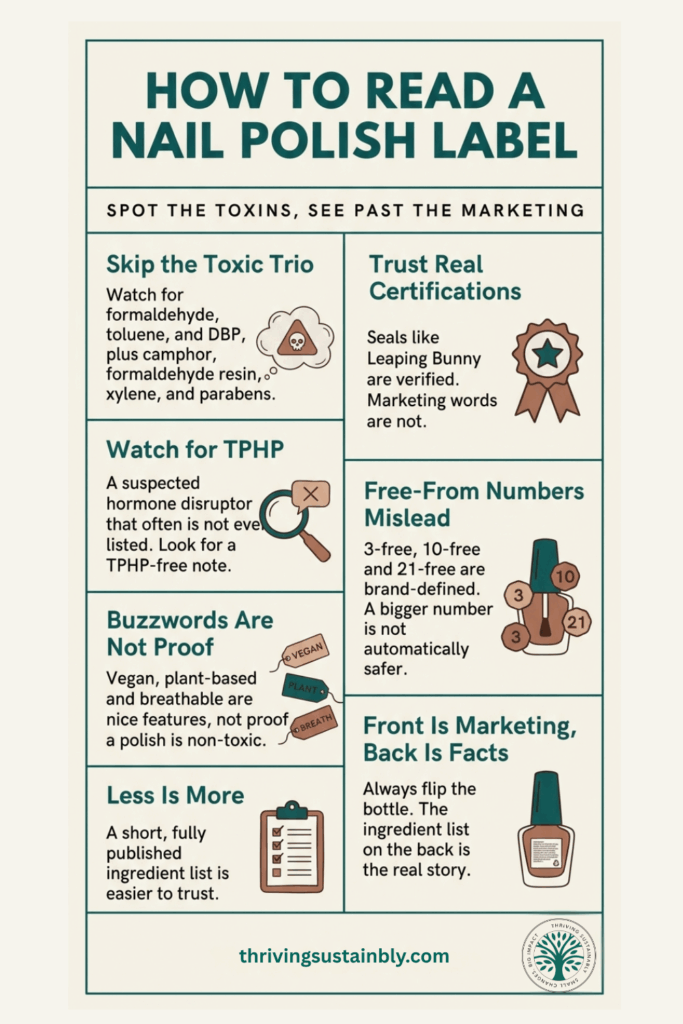
The front of a polish bottle is advertising. The back, where the ingredients live, is closer to the truth. Once you know that, shopping gets a lot calmer.
Front of the bottle vs. the ingredient list
Front-label words are designed to make you feel something quickly. “Clean,” “non-toxic,” and big “free” numbers all do that job. They aren’t lies, exactly, but they’re unverified shorthand.
The ingredient list is the recipe. If a brand prints it in full and names the specific chemicals it leaves out, that openness is itself a good sign. If a brand leans hard on a slogan but omits or skimps on the ingredient list, treat the slogan with more caution. You’re not trying to memorize chemistry. You’re just checking that the back of the bottle backs up the front.
What “vegan,” “plant-based,” and “breathable” actually mean
These three words are treated as proof of safety, but they’re really just product features.
“Vegan” means no animal-derived ingredients, and “cruelty-free” means no animal testing. Both are ethical claims, and neither tells you whether the polish contains TPHP or camphor. “Plant-based” usually means some ingredients are derived from sources like corn, sugarcane, or cotton, but most polish still needs solvents and film-formers to work, so it rarely describes the whole formula. “Breathable” refers to a film that lets some water or air pass through to the nail. It’s a performance trait, not a measure of chemical exposure, and a breathable polish can still be solvent-based. Read each of these as one helpful detail, then go back to the ingredient list for the rest.
Water-Based vs. Solvent-Based Non-Toxic Polish
Water-based nail polish uses water as its main carrier, producing the lowest fumes and removing without acetone, while solvent-based “clean” polish drops the worst chemicals but still relies on solvents for longer wear and a glossier finish.
Once a polish has cut the concerning ingredients, the biggest remaining choice is what carries the formula. This is where the two main types of non-toxic polish go their separate ways, and neither one is the universal winner.
Water-based polish swaps most of the traditional solvent system for water. That’s why it has so little odor and why you can usually remove it by soaking or peeling, rather than reaching for acetone. The tradeoff is shorter wear and a smaller range of finishes. Solvent-based “clean” polish keeps a solvent system, just without formaldehyde, toluene, and the rest of the flagged list. It wears longer, looks glossier, and comes in far more shades, but it still emits fumes while drying, so a little ventilation goes a long way.
There’s no wrong answer here. If lowest fumes and easy removal matter most, water-based wins. If you want a manicure that survives for weeks, a solvent-based clean polish is the practical pick. Plenty of people keep both and choose based on the week ahead.
Is Nail Polish a Source of Microplastics?
Nail polish is a small but real source of microplastics. Its hardened film is made of plastic polymers, and glitter shades add cut plastic film, both of which shed tiny fragments when polish chips or gets filed off.
Here’s an angle most beauty guides skip. A finished manicure is, in plain terms, a thin layer of plastic worn on the nail. That isn’t a scandal, it’s just how polish is built. It does mean a manicure carries a plastic footprint worth understanding, especially once glitter comes into play.
The polish film itself is plastic
A polish film only lasts because synthetic film-forming polymers harden into a smooth, durable coat, and those polymers are plastic. The plastic matters at two moments most people never think about. When polishing chips, those flakes are tiny plastic fragments. When you file or buff polish off, you create fine plastic dust, much of which gets rinsed down the drain. It’s a small contribution next to bigger household sources like synthetic laundry and food packaging, so it isn’t a reason to panic. It is a reason to be a little deliberate about how you remove polish.
Glitter is the bigger plastic offender
If the base film is a thin layer of plastic, glitter polish is plastic that you can see. Conventional cosmetic glitter is cut from PET film, the same plastic used in drink bottles, and is usually coated with a metallic finish for shine. Every glitter particle is, by definition, a microplastic. When a glitter manicure chips or gets filed away, it sheds those particles straight into your sink and your home.
Plant-based glitter made from cellulose does exist, and it’s a real step forward for things like festival makeup. Nail polish is a harder problem. Cellulose glitters don’t hold up well to polish solvents, and some “biodegradable” glitters still rely on a thin aluminum and plastic coating for their sparkle. For now, a mineral mica shimmer is the realistic lower-plastic choice when you want a glow rather than chunky sparkle. Regulators have started to move here as well. The EU’s 2023 microplastics rule banned loose plastic glitter immediately and set cosmetics, including nail products, on a longer phase-out timeline, though the United States has no equivalent rule yet.
How to keep a manicure’s plastic footprint low
You don’t have to give up polish to shrink its plastic footprint. A few easy habits do most of the work:
- Remove polish over a bin or paper towel so chips and filing dust don’t scatter or wash down the drain.
- Save heavy glitter shades for special occasions rather than everyday wear, and reach for mica shimmer when you want subtle sparkle.
- Treat polish as an occasional pleasure rather than a permanent fixture, which also gives your nails a break.
- Recycle the glass bottle once it’s empty, and check whether the brand takes back caps or packaging.
If you’re working through plastic exposure across the rest of your home, our guide on how to avoid microplastics puts a manicure in proportion.
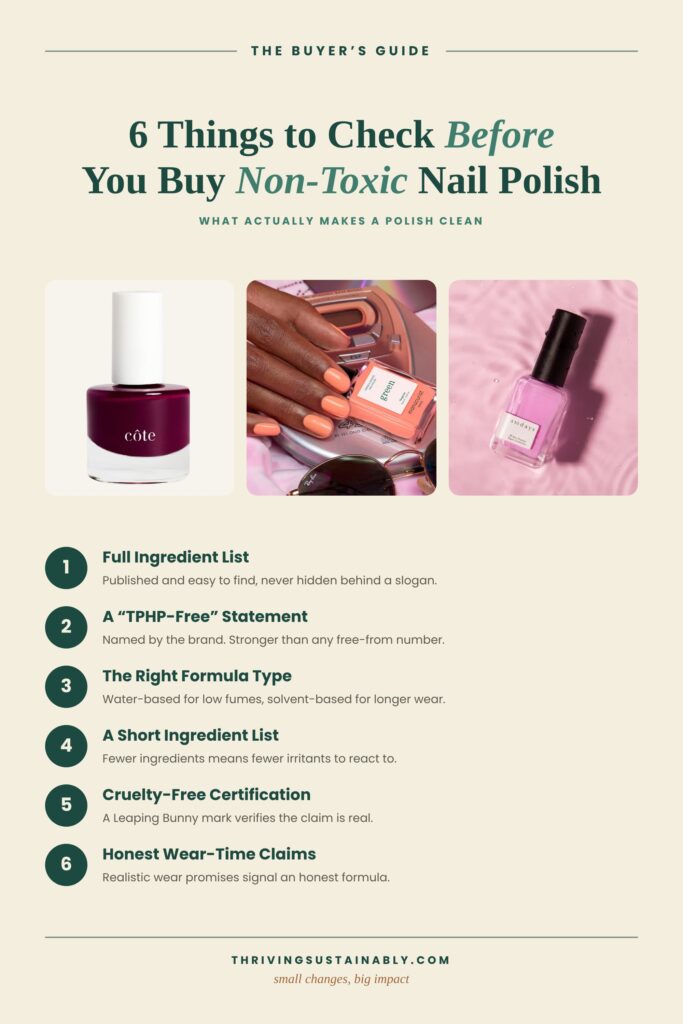
Save This Checklist Before You Buy Your Next Polish 📌
The 14 Best Non-Toxic Nail Polish Brands
Our standout non-toxic nail polish picks are Côte for clean, long-wear, Kapa Nui for the lowest fumes, and Piggy Paint for kids, with 11 more vetted brands grouped by formula type.
No single brand is perfect for everyone, so we vetted these 14 on their ingredient lists, certifications, formula type, and how openly each one discloses what is inside. They are grouped into clean solvent-based polish for longer wear, water-based polish for the lowest fumes, and kids’ polish for little hands, so you can jump to your pick. Affiliate disclosure: some links below are affiliate links, which support Thriving Sustainably at no extra cost to you.
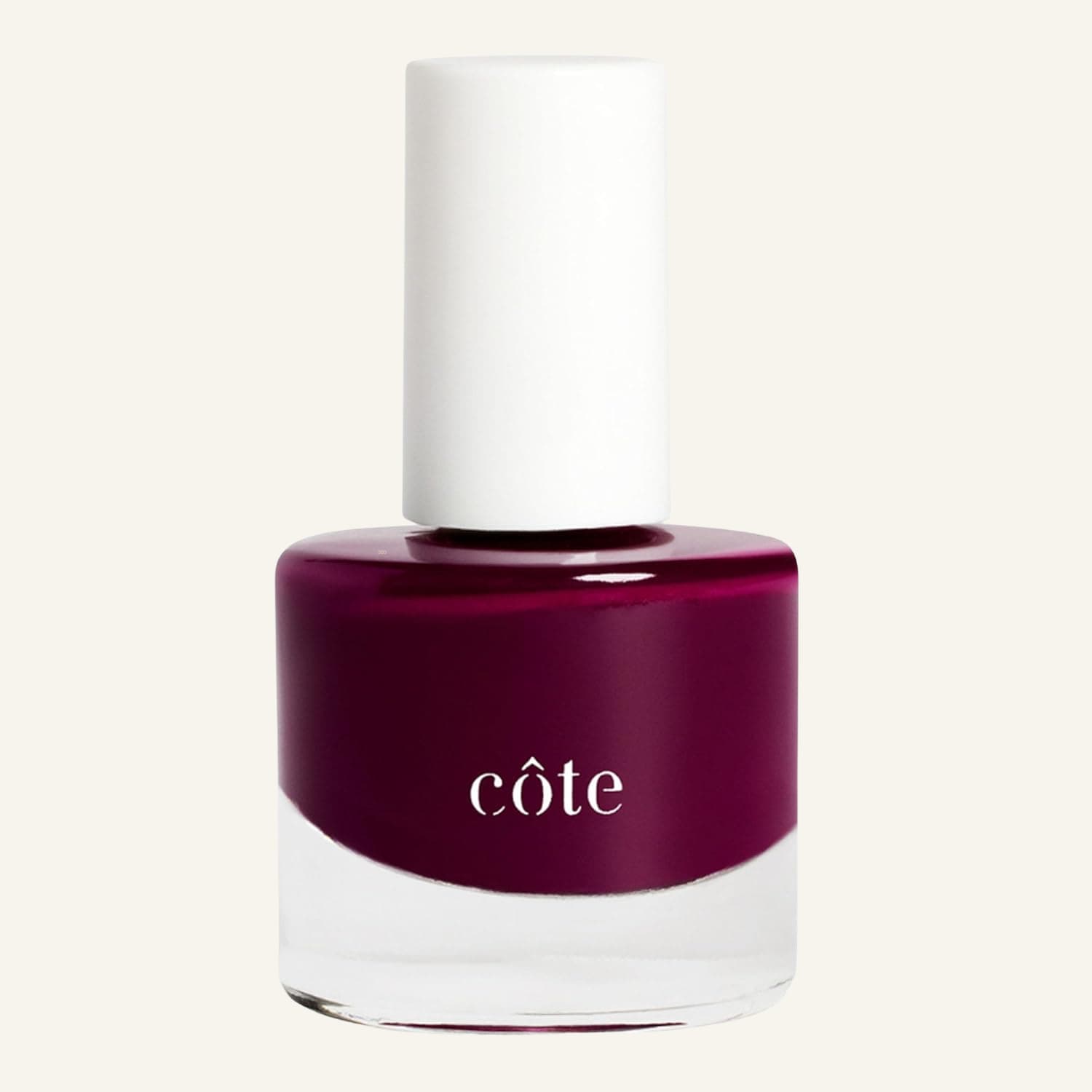
Our best overall pick for clean, long-wearing color
$18 starting price
Côte is the brand to reach for when you want a clean formula that still wears like a proper manicure. Its polishes are 10-free, leaving out the toxic trio, TPHP, formaldehyde resin, camphor, xylene, ethyl tosylamide, and parabens, and the brand is vegan and Leaping Bunny certified.
It’s also carried by Credo Beauty, a retailer with one of the stricter ingredient standards in clean beauty, which is a useful extra screen. The color range is wide and modern, and wear holds up well with a base and top coat.
Free-From
10-Free
✓ Toxic Trio OutFormula
Solvent-Based
⚠ Some FumesEthics
Vegan
✓ Leaping BunnyWear
Up to ~7 Days
✓ Long WearPros
- 10-free formula skips the toxic trio, TPHP, and camphor
- Vegan and Leaping Bunny certified
- Carried on Credo Beauty’s vetted shelf
- Wide, modern color range
Cons
- Solvent-based, so it still has some fumes
- Premium price per bottle
- Sold mostly direct, not on Amazon
If you want one clean polish that behaves like a salon polish, this is where to start. Best overall non-toxic nail polish.
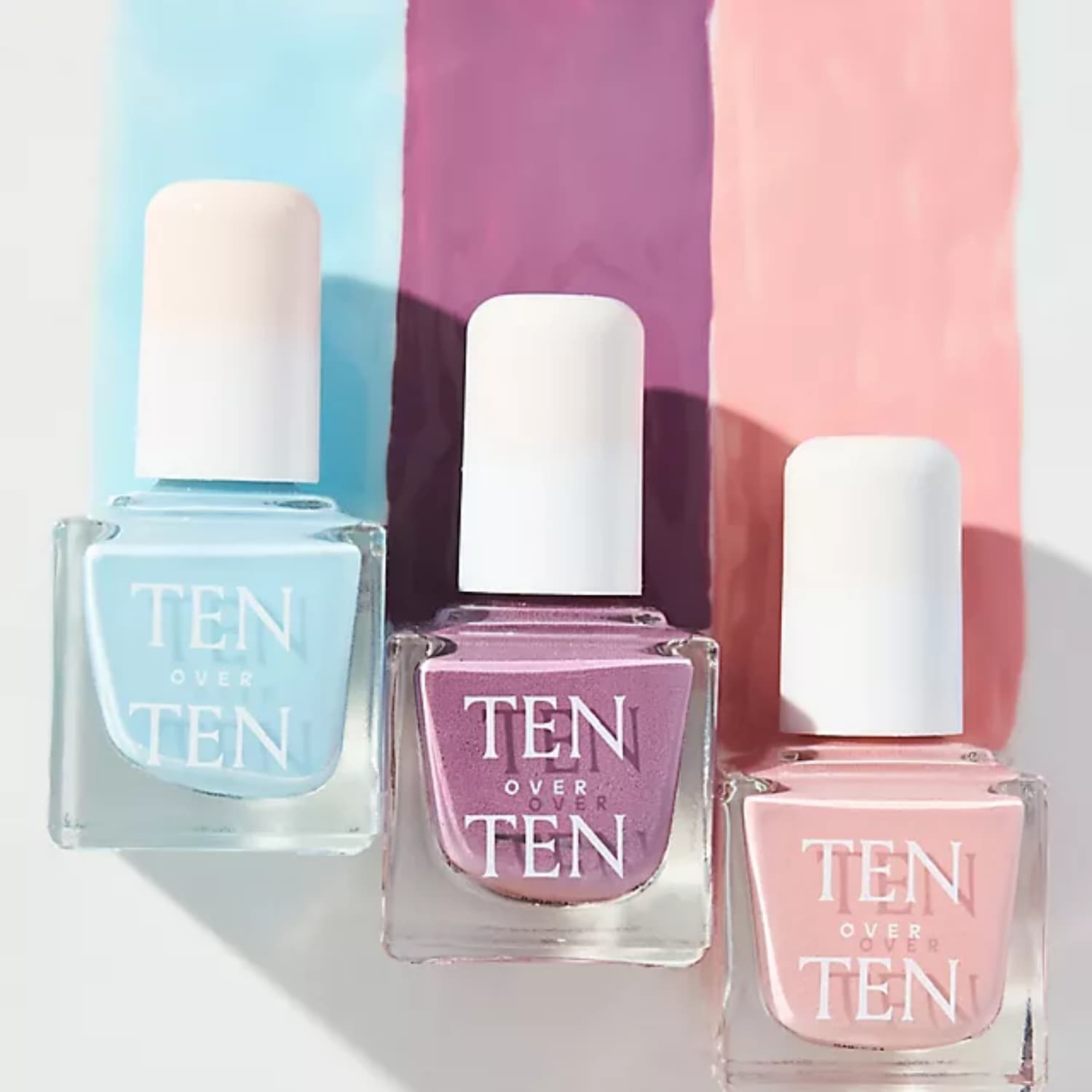
Salon-developed clean polish built to last
$14 starting price
tenoverten grew out of a group of clean-focused nail studios, and the polish reflects that salon background. The formula is 8-free, the line is vegan, and the brand is Leaping Bunny certified.
The color palette leans understated and wearable, the kind of shades that look polished in an office or at an event. Wear time is strong for a clean polish, especially with the brand’s own base and top coats.
Free-From
8-Free
✓ Toxic Trio OutFormula
Solvent-Based
⚠ Some FumesEthics
Vegan
✓ Leaping BunnyWear
Up to ~6 Days
✓ Long WearPros
- 8-free, vegan, and Leaping Bunny certified
- Salon-developed formula
- Sophisticated, very wearable shades
- Matching base and top coats
Cons
- Solvent-based, has some fumes
- Higher price point
- Mostly sold direct, not on Amazon
The pick for someone who wants a clean polish that still feels professional. Best for long, salon-quality wear.
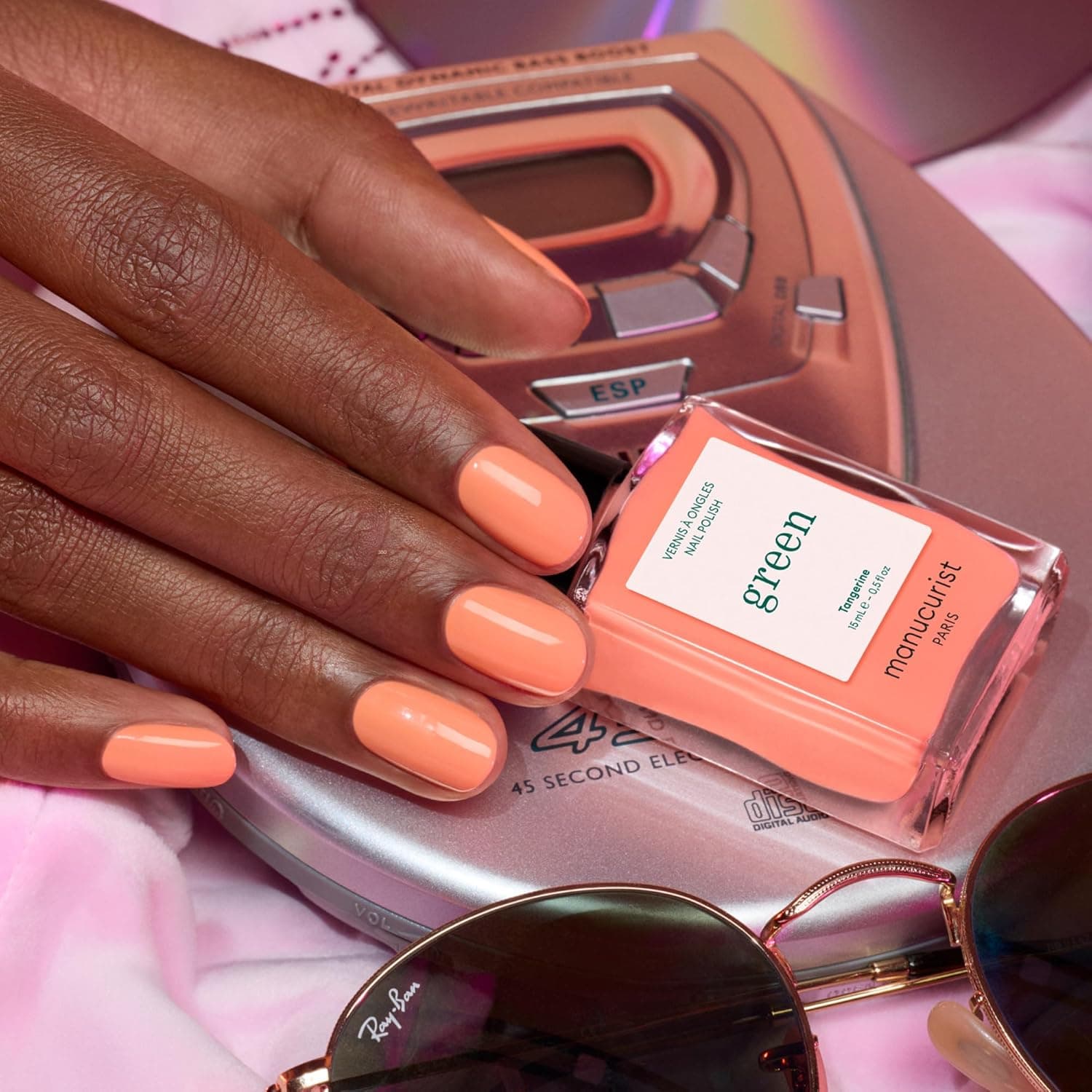
A plant-based formula made in France
$14 starting price
Manucurist makes its Green line in France using a high share of plant-based ingredients drawn from crops like corn and cassava, rather than petroleum. It’s a 9-free formula, vegan, and cruelty-free.
This is the pick if a plant-based formula and a fashion-forward color range both matter to you. The brand also makes a separate LED gel-style line, so check you’re buying the Green polish if a regular formula is what you want.
Free-From
9-Free
✓ Toxic Trio OutFormula
Plant-Based
⚠ Some FumesEthics
Vegan
✓ Cruelty-FreeWear
Up to ~6 Days
✓ Long WearPros
- High share of plant-derived ingredients
- 9-free, vegan, and cruelty-free
- Wide, on-trend color range
- Made in France
Cons
- Solvent-based, still has some fumes
- Easy to confuse the Green line with the gel line
- Premium price
A strong choice for a plant-forward formula without giving up color choice. Best plant-based non-toxic polish.
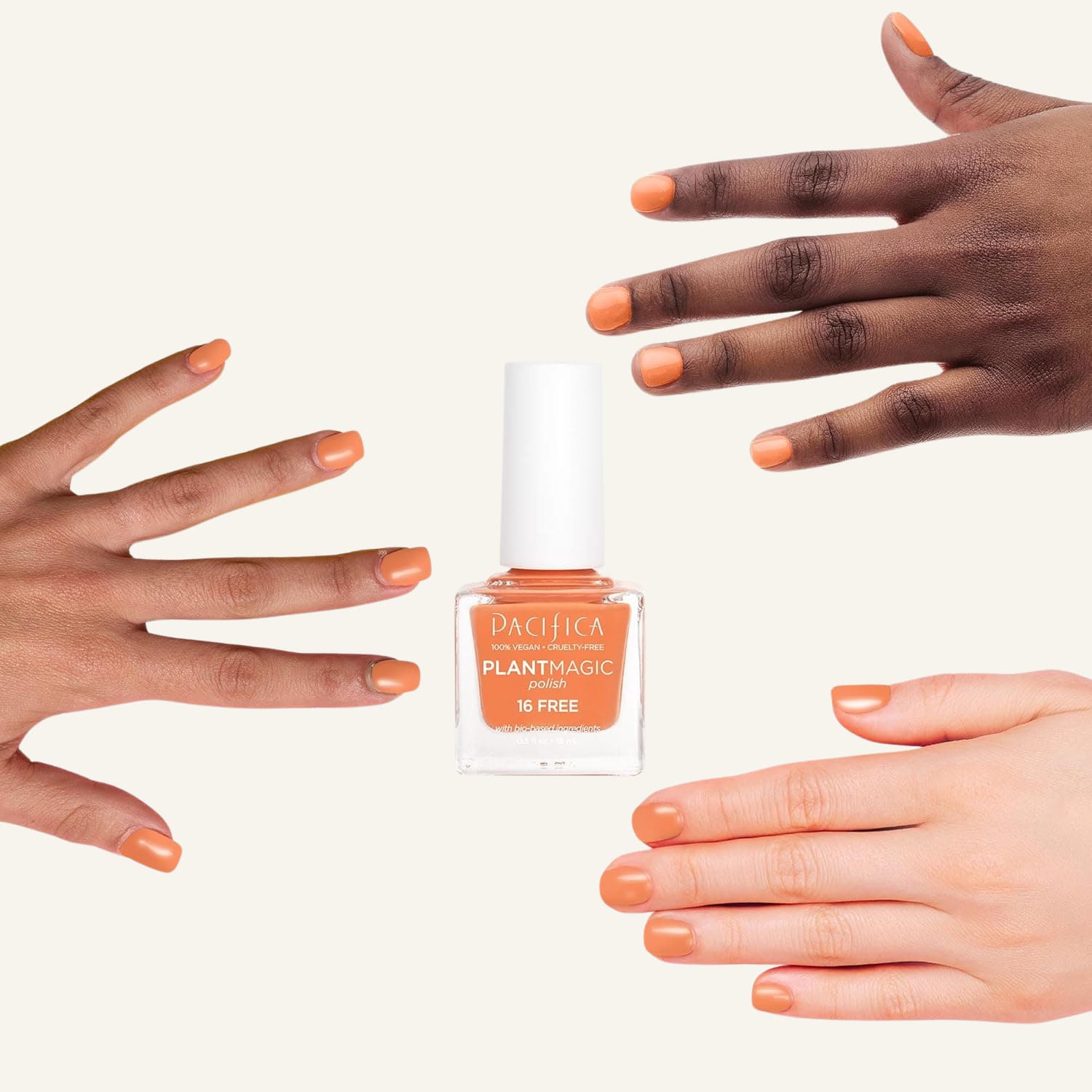
The budget pick you can find almost anywhere
$5 starting price
Pacifica is the most accessible brand on this list, widely stocked at drugstores and on Amazon, and usually under $10. Its 7-free polish skips formaldehyde, toluene, DBP, camphor, xylene, parabens, and formaldehyde resin.
The whole brand is 100% vegan and cruelty-free. It’s the easiest no-fuss upgrade from conventional drugstore polish, with a big, playful color range.
Free-From
7-Free
✓ Toxic Trio OutFormula
Solvent-Based
⚠ Some FumesEthics
Vegan
✓ Cruelty-FreeWear
Up to ~5 Days
✓ Solid WearPros
- Budget-friendly, usually under $10
- 100% vegan, cruelty-free brand
- Widely available in stores and on Amazon
- Large, fun color range
Cons
- Solvent-based, has some fumes
- 7-free is a shorter list than the leaders
- Wear is good, not exceptional
The easiest, most affordable step up from drugstore polish. Best budget non-toxic nail polish.
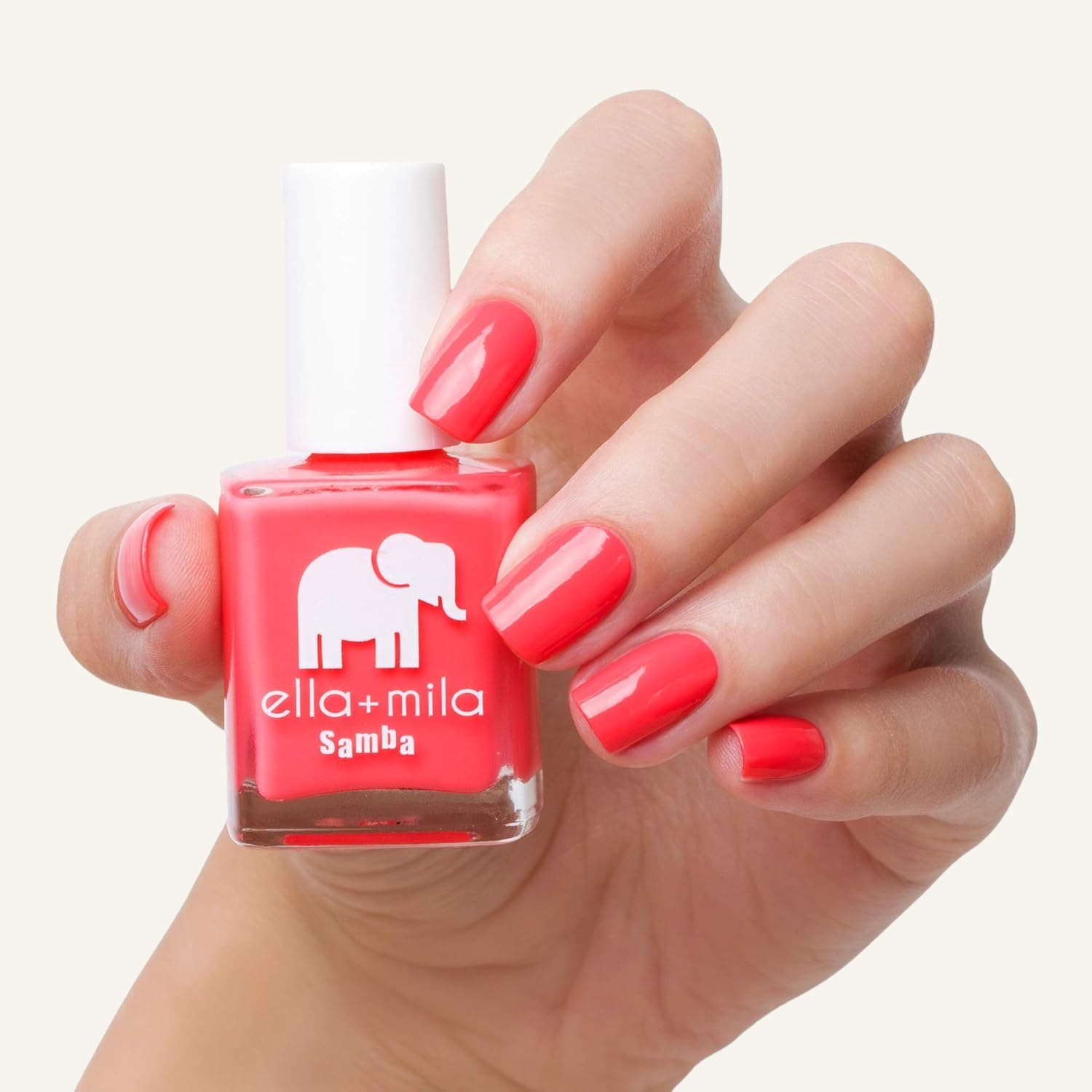
An affordable clean brand with a deep shade range
$10 starting price
Ella + Mila is one of the more affordable clean brands that still goes deep on the free-from list. Its polishes are 17-free, vegan, and cruelty-free, and made in the USA.
The color range refreshes often, which makes it an easy entry point if you’re switching from conventional polish and want plenty of options. It’s also easy to find on Amazon.
Free-From
17-Free
✓ Toxic Trio OutFormula
Solvent-Based
⚠ Some FumesEthics
Vegan
✓ Cruelty-FreeWear
Up to ~5 Days
✓ Solid WearPros
- 17-free formula at an affordable price
- Vegan and cruelty-free, made in the USA
- Frequent new color collections
- Easy to find on Amazon
Cons
- Solvent-based, still has some fumes
- The 17-free count is partly marketing math
- Wear varies by shade
A lot of clean polish for the money, with colors for days. Best value clean polish.
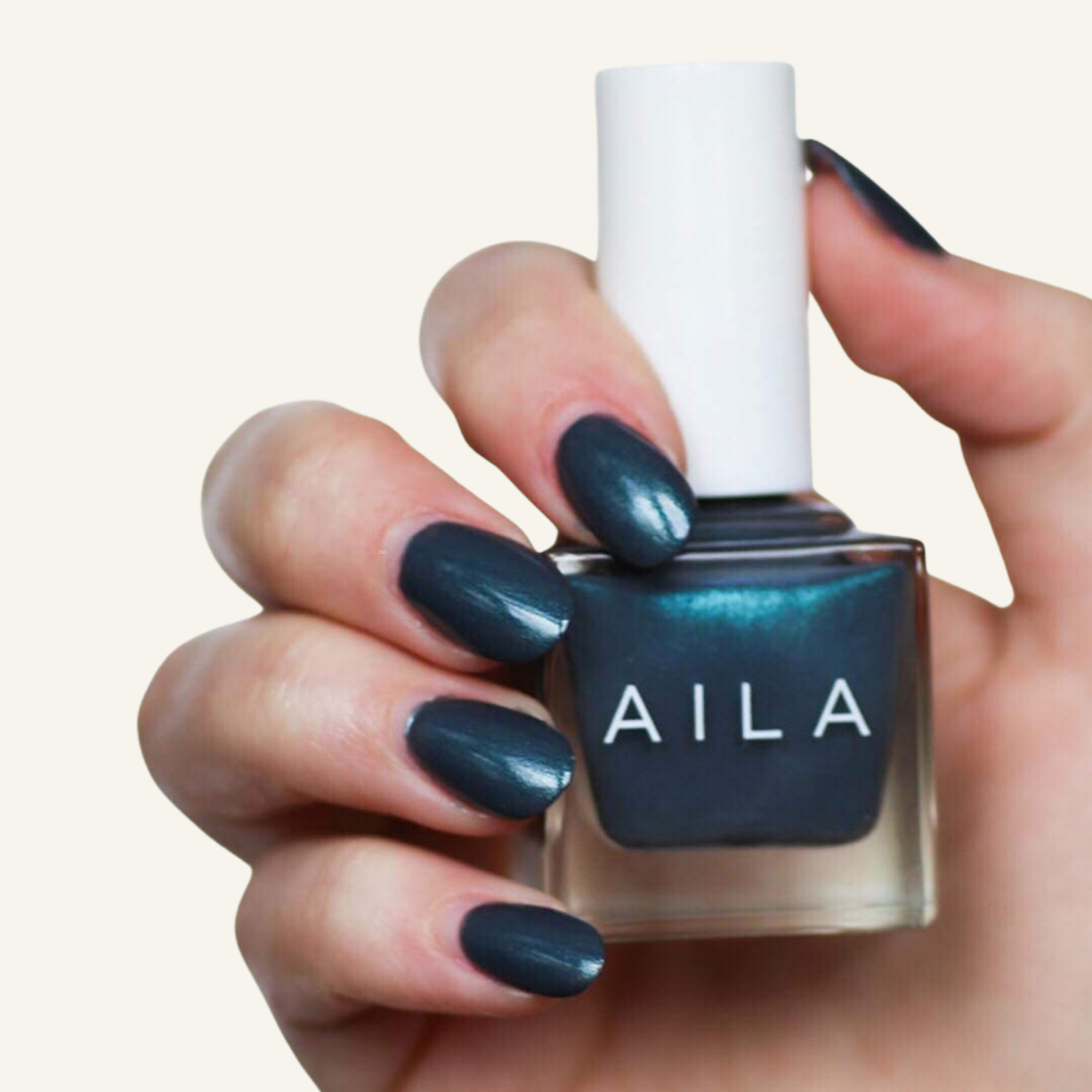
Founded by a foot surgeon, formulated for nail health
$16 starting price
Aila stands out because it was created by a podiatric surgeon, and the brand’s whole focus is nail health, not just color. The formula clears well past 10-free, skipping the toxic trio, TPHP, xylene, ethyl tosylamide, and more.
It’s vegan, cruelty-free, and made in the USA, and the brand is a vocal advocate of the dry manicure that skips the nail-weakening water soak. Colors are rich and the formula is known for going on smoothly.
Free-From
15-Free
✓ Toxic Trio OutFormula
Solvent-Based
⚠ Some FumesEthics
Vegan
✓ Cruelty-FreeWear
Up to ~7 Days
✓ Long WearPros
- Created by a podiatric surgeon, nail-health focus
- Clears well past the 10-free bar
- Vegan, cruelty-free, made in the USA
- Smooth application, rich colors
Cons
- Solvent-based, has some fumes
- Premium price
- Smaller brand, fewer retail stockists
The pick if nail health, not just a pretty color, is your priority. Best for nail-health credentials.
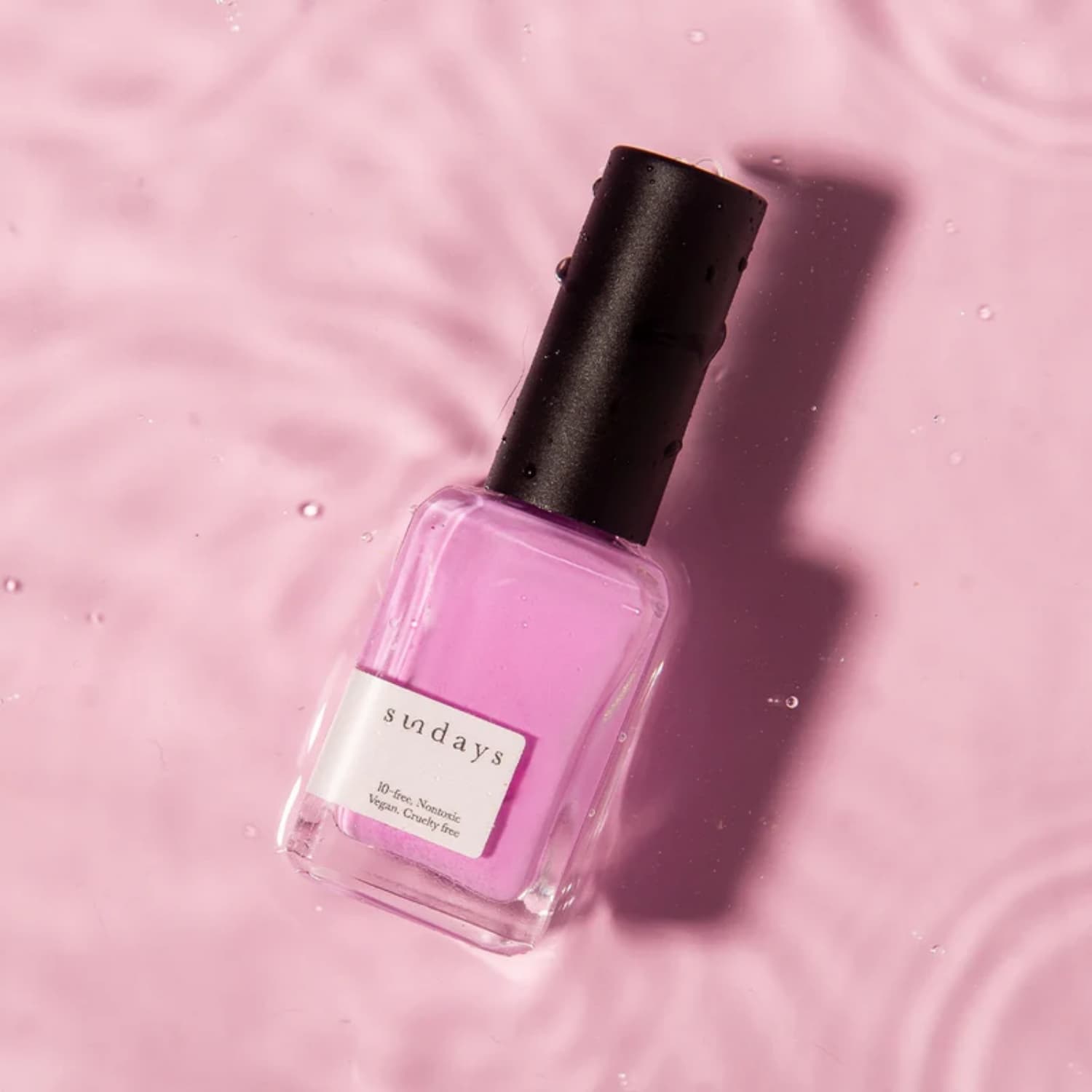
A wellness-minded brand with a calm, neutral palette
$18 starting price
Sundays is a New York nail-care brand built around a wellness angle, with a 10-free formula that leaves out DBP, TPHP, toluene, xylene, ethyl tosylamide, camphor, formaldehyde, formaldehyde resin, and parabens. It’s vegan and cruelty-free.
The shade range is famously calm and neutral, the soft, wearable tones that suit a minimalist manicure. It’s also one of the easier clean brands to find on Amazon.
Free-From
10-Free
✓ Toxic Trio OutFormula
Solvent-Based
⚠ Some FumesEthics
Vegan
✓ Cruelty-FreeWear
Up to ~6 Days
✓ Long WearPros
- 10-free, vegan, and cruelty-free
- Calm, neutral, very wearable shades
- Available on Amazon
- Wellness-focused brand
Cons
- Solvent-based, has some fumes
- Neutral palette means fewer bold colors
- Premium price
The clean polish for anyone who lives in soft neutrals. Best neutral shade range.
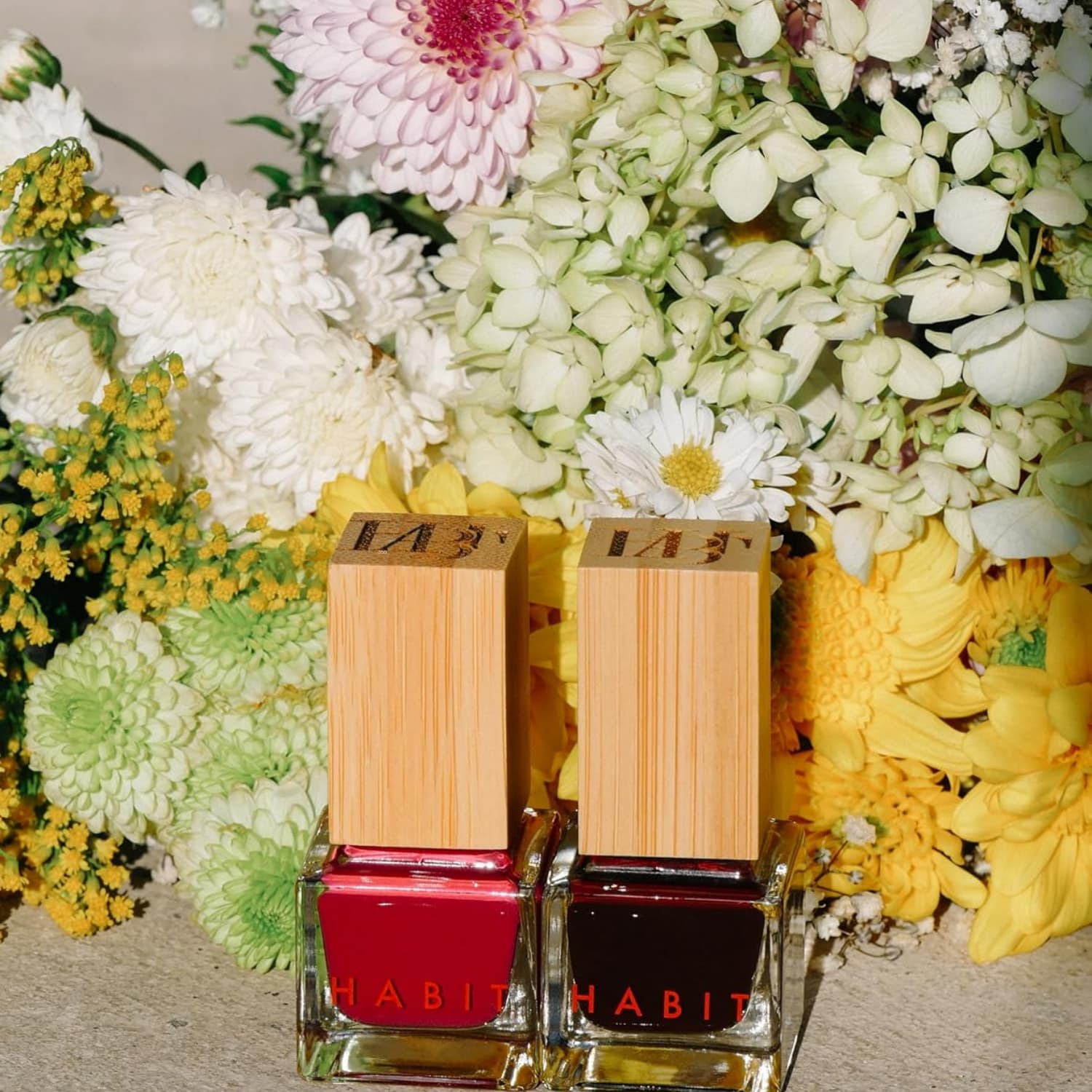
A fully vegan, plant-based lacquer
$15 starting price
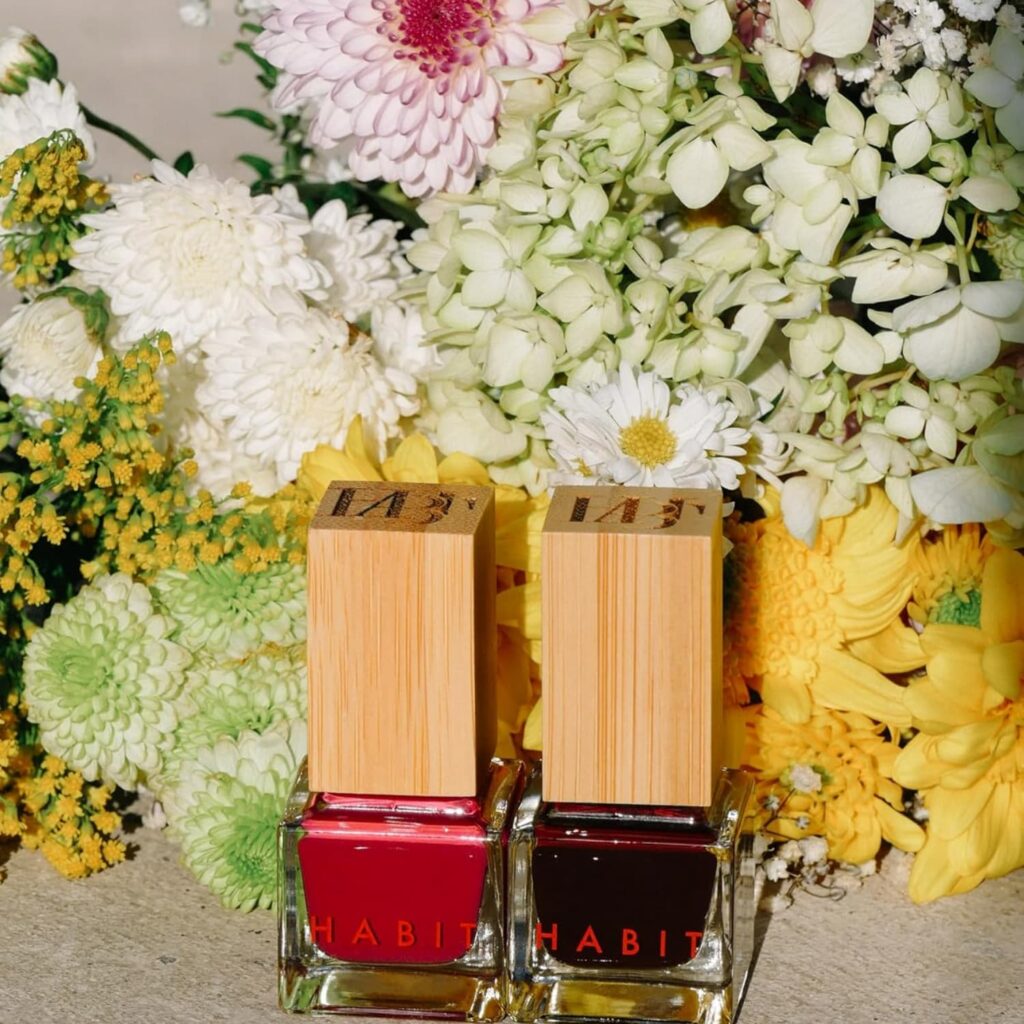
Habit Cosmetics is a fully vegan, plant-based brand with a 10-free polish formula. It leans into plant-derived ingredients while still delivering a familiar, long-wear lacquer.
Free-from lists shift over time as brands reformulate, so check the current ingredient list on Habit’s site before you buy. That’s smart practice with any polish, but especially worth doing here.
Free-From
10-Free
✓ Toxic Trio OutFormula
Plant-Based
⚠ Some FumesEthics
Vegan
✓ 100% VeganWear
Up to ~5 Days
✓ Solid WearPros
- Fully vegan, plant-based brand
- 10-free formula
- Familiar long-wear lacquer feel
- Modern color range
Cons
- Solvent-based, has some fumes
- Verify the current free-from list before buying
- Sold mostly direct
A solid plant-based pick, just confirm the latest formula. Best for a plant-based lacquer feel.
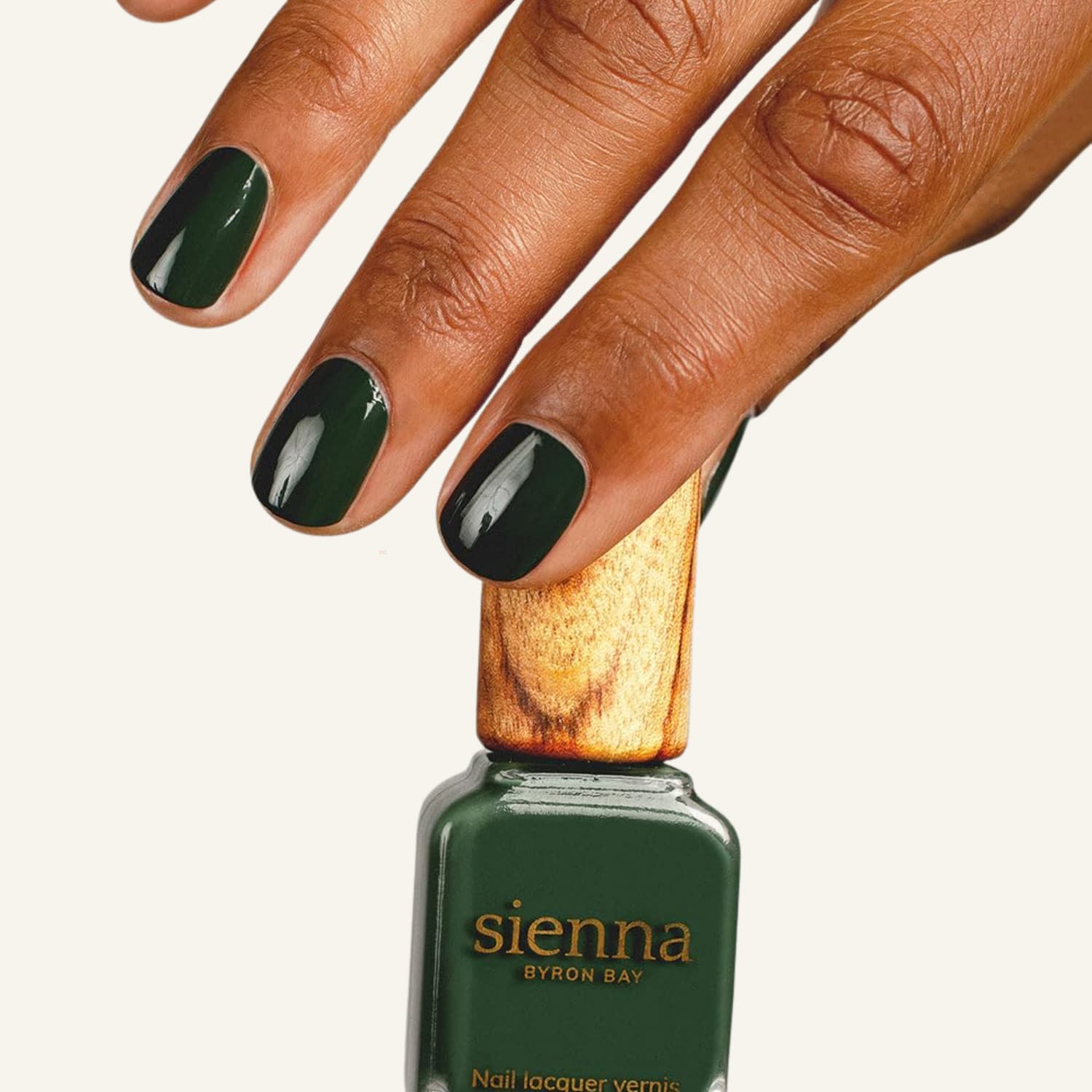
Eco-luxe polish with bio-based ingredients
$20 starting price
Sienna Byron Bay is an Australian eco-luxe brand whose polish uses bio-derived ingredients sourced from sugarcane, cassava, cotton, and corn. It’s 10-free, vegan, cruelty-free, and made without nano-particles or benzophenone-1.
The sustainability commitments go beyond the formula, with carbon-neutral shipping, recyclable packaging, and an in-house recycling program. It’s the priciest bottle here, aimed at shoppers who want the environmental side handled too.
Free-From
10-Free
✓ Toxic Trio OutFormula
Bio-Based
⚠ Some FumesEthics
Vegan
✓ Cruelty-FreeWear
Up to ~6 Days
✓ Long WearPros
- Bio-derived ingredients from sugarcane and corn
- Vegan, cruelty-free, no nano-particles
- Carbon-neutral shipping and recycling program
- High-shine, long-wearing finish
Cons
- The most expensive polish on this list
- Solvent-based, still has some fumes
- Ships from Australia
The pick if sustainability credentials matter as much as the formula. Best eco-luxe non-toxic polish.
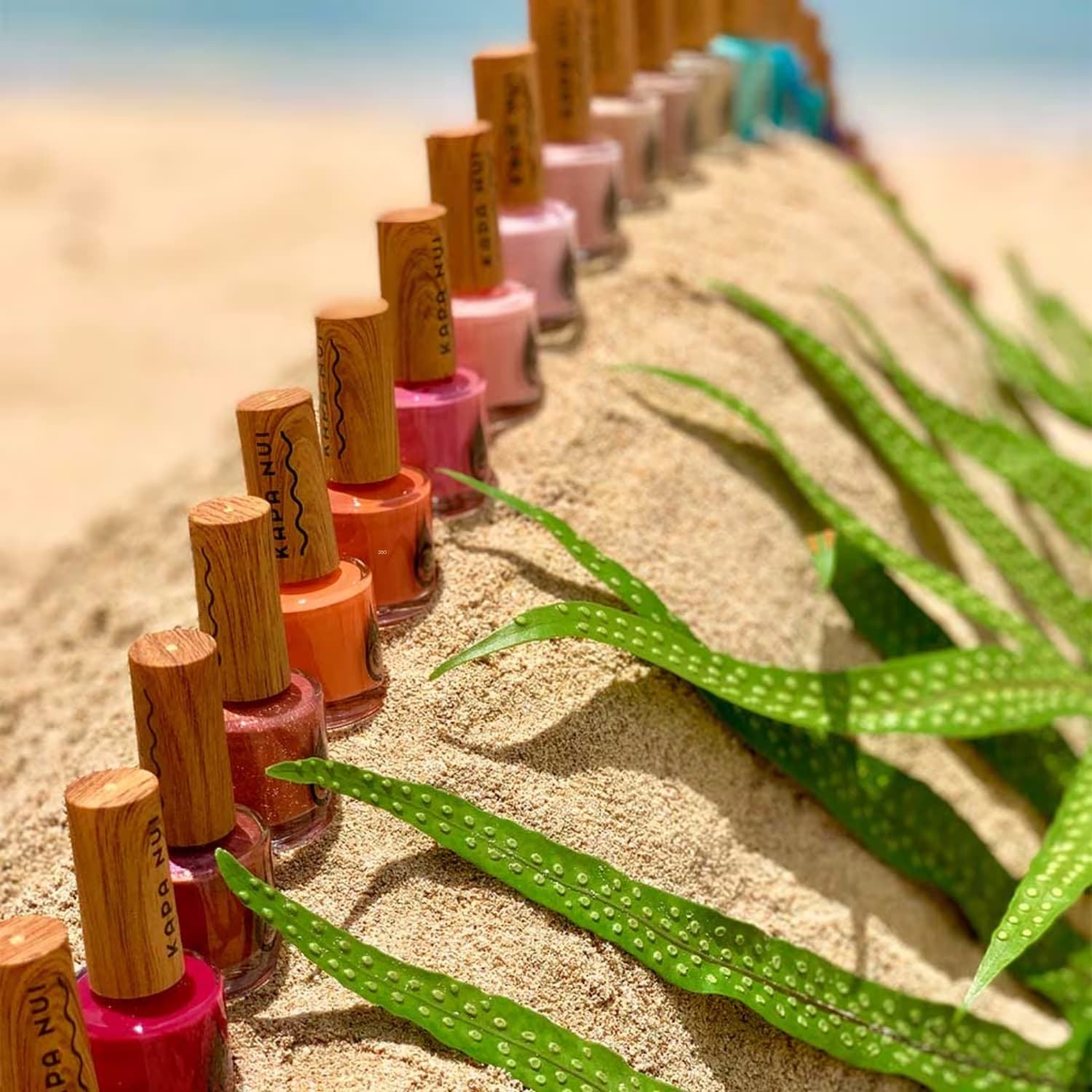
About as low-exposure as nail polish gets
$12 starting price
Kapa Nui is our lowest-exposure pick. The formula is water-based, built around just a few ingredients, and close to odorless, so there’s almost nothing to breathe in while it dries. It’s vegan, cruelty-free, and made in Hawaii.
It removes with soap and water rather than a chemical remover, and the brand designed its system with nail health in mind. The trade-off is wear time and a smaller color range, so it suits people who repaint often and care most about cutting fumes.
Free-From
Solvent-Free
✓ No Harsh SolventsFormula
Water-Based
✓ Very Low FumeEthics
Vegan
✓ Cruelty-FreeWear
1 to 4 Days
⚠ Shorter WearPros
- Water-based, near-zero fumes
- Just a few simple ingredients
- Removes with soap and water, no acetone
- Vegan, cruelty-free, made in Hawaii
Cons
- Chips sooner than solvent polish
- Smaller, more muted color range
- Sold direct, not on Amazon
The cleanest, lowest-fume bottle here, if you can live with shorter wear. Best water-based nail polish.
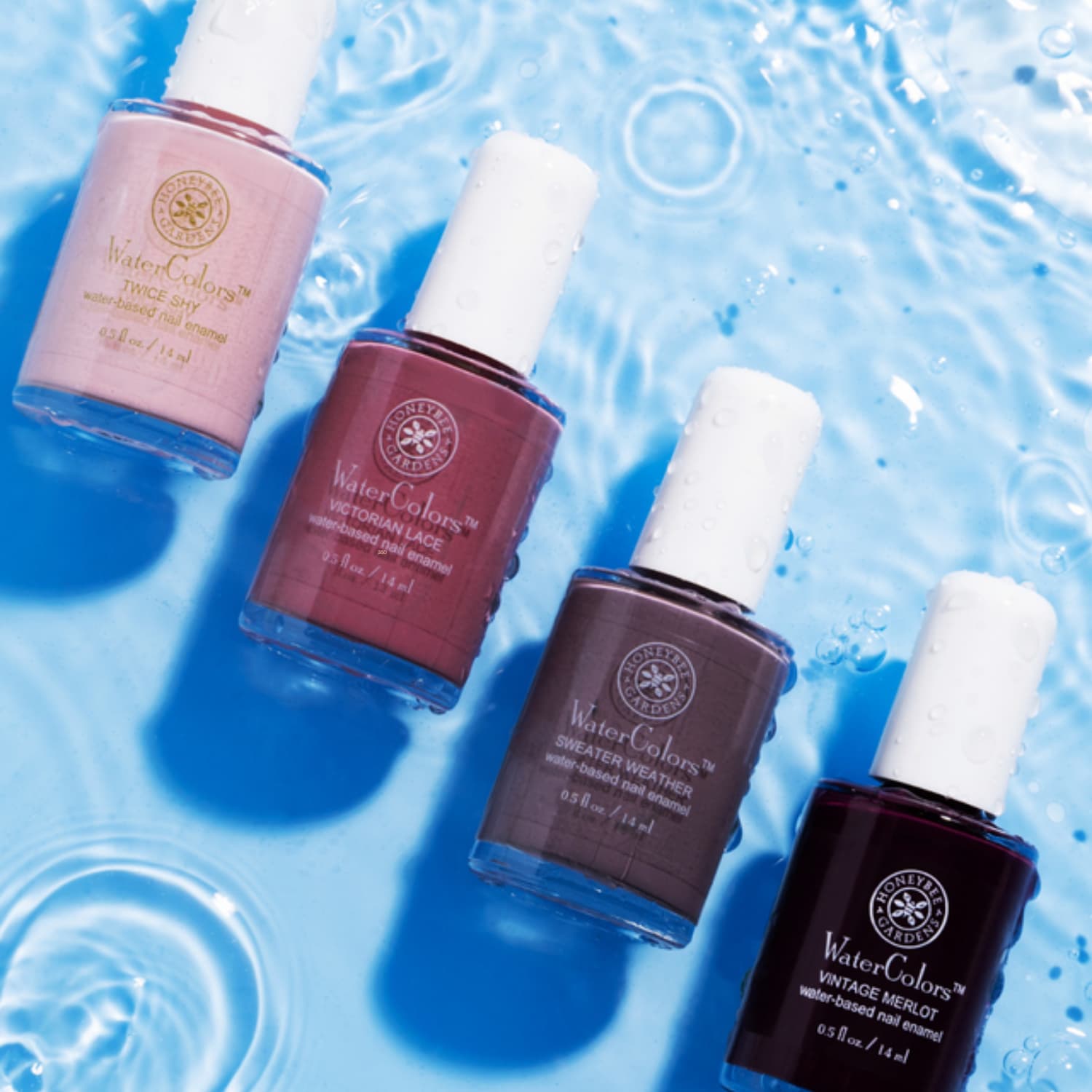
An odorless water-based polish that’s easy to find
$13 starting price
Honeybee Gardens makes a water-based nail enamel that’s odorless, vegan, cruelty-free, and gluten-free. It’s formulated without formaldehyde, toluene, DBP, camphor, formaldehyde resin, xylene, parabens, fragrance, TPHP, and benzophenone-1.
Unlike most water-based polishes, it’s easy to find on Amazon, which makes it a convenient low-fume option. Like all water-based formulas, it trades some wear time for that gentleness.
Free-From
Trio + TPHP-Free
✓ Toxic Trio OutFormula
Water-Based
✓ OdorlessEthics
Vegan
✓ Cruelty-FreeWear
2 to 4 Days
⚠ Shorter WearPros
- Odorless, water-based formula
- Vegan, cruelty-free, and gluten-free
- Skips TPHP, fragrance, and benzophenone-1
- Easy to find on Amazon
Cons
- Shorter wear than solvent polish
- Sheerer coverage, may need extra coats
- Smaller shade range
An easy-to-buy water-based pick when low fumes are the priority. Best widely available water-based polish.
Water-based polish, with a peelable kids’ line too
$9 starting price
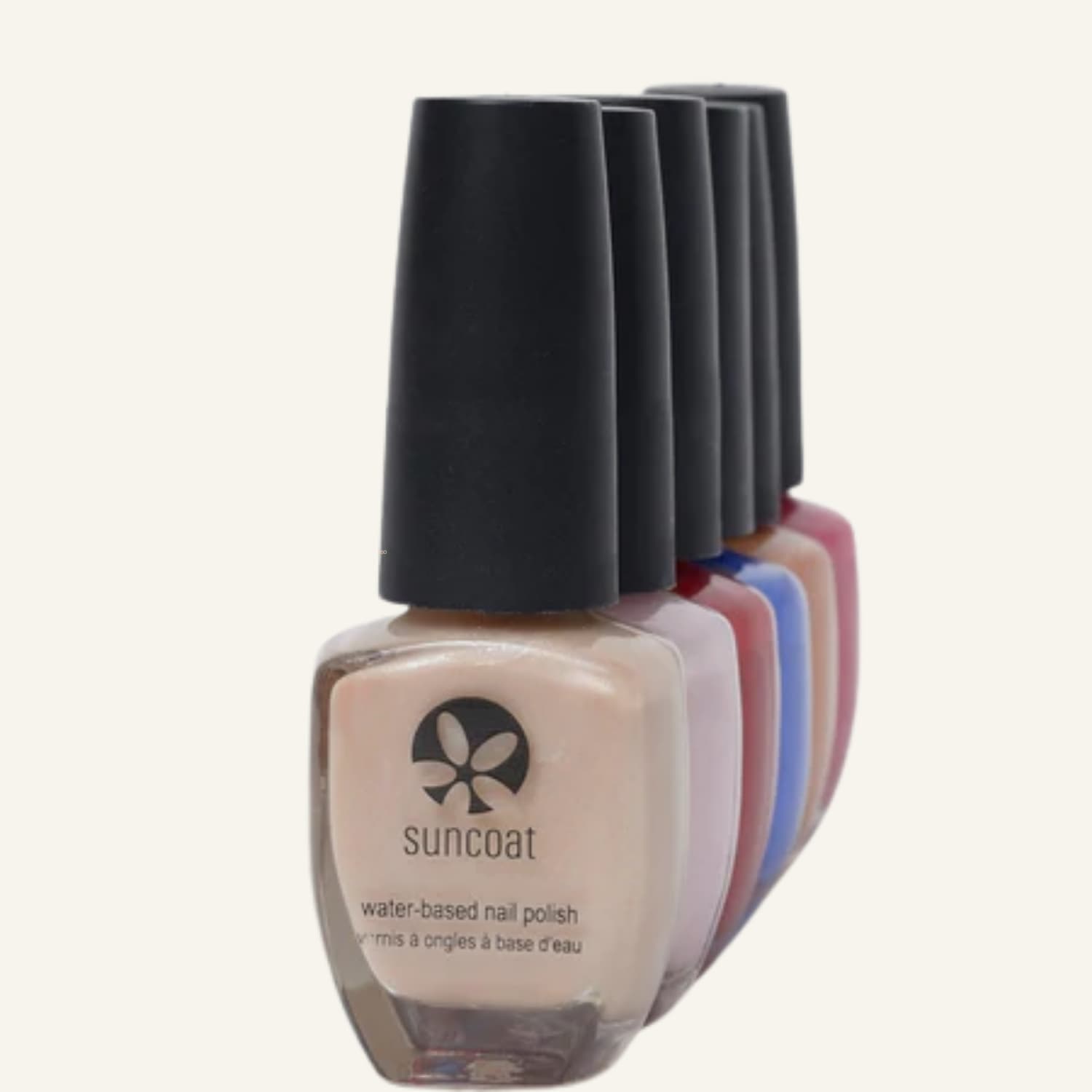
Suncoat makes a water-based line that’s a long-time favorite for anyone sensitive to smell. The polish is vegan and cruelty-free, with very low odor.
Its Suncoat Girl polishes are designed to peel right off with no remover, which makes them a hit with kids. Like all water-based polish, it won’t outlast a solvent formula, but for a low-drama, low-fume option it’s hard to beat.
Free-From
Solvent-Free
✓ No Harsh SolventsFormula
Water-Based
✓ Low OdorEthics
Vegan
✓ Cruelty-FreeWear
1 to 3 Days
⚠ Shorter WearPros
- Water-based, very low odor
- Vegan and cruelty-free
- Suncoat Girl line peels off, no remover
- Long-standing, trusted brand
Cons
- Short wear, especially the peelable line
- Muted color selection
- Application takes a little practice
A dependable low-fume option with a kid-friendly peelable line. Best water-based polish for the whole family.

The go-to water-based polish for little hands
$9 starting price
Piggy Paint is a water-based, low-odor polish made specifically for kids. It’s vegan, cruelty-free, and free of the solvents and harsh chemicals in conventional polish.
It’s widely available, including on Amazon, and dries to a harder finish than most water-based polishes when set with a blow-dryer. A great first polish for a child, and gentle enough for fume-sensitive adults too.
Free-From
Solvent-Free
✓ No Harsh SolventsFormula
Water-Based
✓ Low OdorEthics
Vegan
✓ Cruelty-FreeWear
1 to 3 Days
⚠ Shorter WearPros
- Made specifically for kids, water-based
- Low odor, no harsh solvents
- Vegan and cruelty-free
- Widely available, including on Amazon
Cons
- Short wear like all water-based polish
- Best results need a blow-dryer to set
- Limited finishes
The easy, trusted first polish for a child. Best non-toxic nail polish for kids.
A peel-off polish kids can apply themselves
$7 starting price
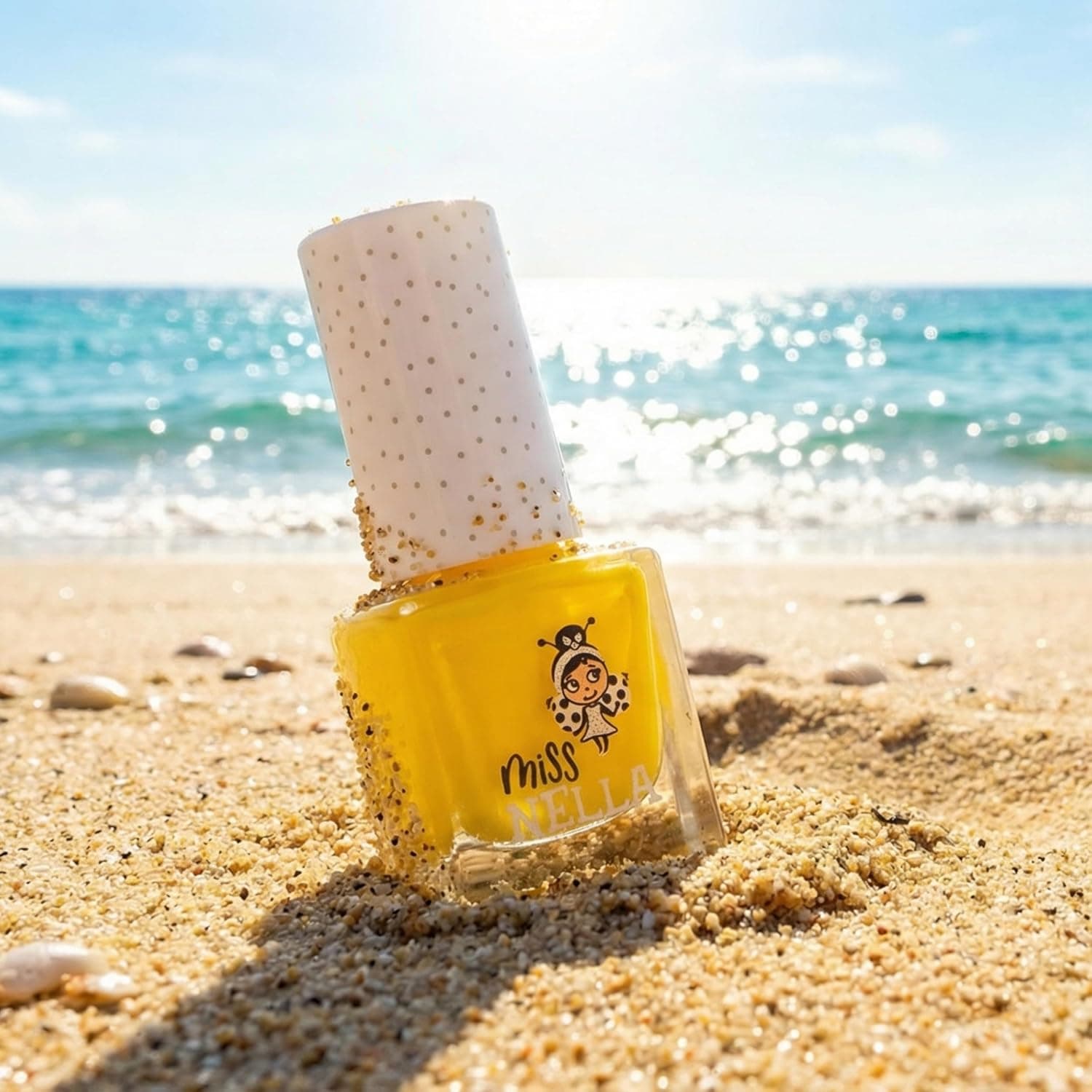
Miss Nella is a water-based, peel-off nail polish made for children ages 3 and up. It skips the solvents and flagged chemicals of conventional polish, including formaldehyde and toluene, and it is dermatologically tested and close to odorless.
The big draw is removal. Polish peels off in seconds with no remover at all, and the range runs to dozens of colors and glittery shades. Wear is short, which is normal for a peelable kids’ formula.
Free-From
Solvent-Free
✓ No Harsh SolventsFormula
Water-Based
✓ Peel-OffMade For
Kids Ages 3+
✓ Kid-SafeWear
1 to 2 Days
⚠ Shorter WearPros
- Water-based and made for children ages 3+
- Peels off in seconds, no remover needed
- Free of formaldehyde, toluene, and solvents
- Dozens of colors and glittery shades
Cons
- Short wear like all peelable polish
- Lighter coverage on some shades
- Not made for long, durable manicures
An easy, low-fume polish a child can take off all by themselves. Best peel-off polish for kids.
Nail Polish, Pregnancy, Kids, and Sensitive Skin
For pregnancy, kids, and sensitive skin, water-based nail polish is generally the lowest-exposure choice because it produces minimal fumes and removes without acetone, though pregnant readers should always check with their own doctor.
Some groups have good reason to be a little more careful with polish. The good news is that the safer choice is usually the same one: lower fumes, simpler formula.
🤰 During pregnancy
The most common worry during pregnancy isn’t the polish on the nail, it’s the fumes while it dries. Water-based polish keeps those to a minimum, which is why it’s the easy pick. If you prefer a solvent-based clean polish, use it in a well-ventilated room and keep sessions short. Pregnancy guidance is personal, so treat this as general information and check with your own healthcare provider for advice that fits you.
🧒 For kids and toddlers
Kids put their hands near their mouths constantly, so a low-fume, acetone-free formula makes the most sense. Water-based polishes made specifically for children are designed with easy peel-or-soak removal in mind. They won’t last as long as grown-up polish, but for a child, that’s usually a feature, not a flaw.
🤧 For sensitive skin and allergies
If polish has ever left the skin around your nails red, itchy, or flaky, the usual suspects are camphor and formaldehyde resin, two of the more common allergy triggers. Look for a short, fully published ingredient list that lists what’s left out, and patch-test a new polish on one nail before doing a full set.
How to Have a Healthier Manicure Routine
A healthier manicure routine lowers exposure through good ventilation, gentler acetone-free removal, and regular breaks that let the nail underneath recover.
The polish you choose matters, but so does how you use it. A few small habits cut your exposure more than chasing a perfect bottle ever will.
Let the room breathe
Most of your exposure happens through the air while the polish dries, not from the dry polish on your nails. So open a window, or paint near one, and skip the small enclosed bathroom. If you go to a salon, the same logic applies. A space that smells strongly of chemicals is telling you something about its ventilation.
Rethink how you remove it
Removal is the step people overlook. Acetone strips the natural oils from your nails, leaving them dry and brittle over time. An acetone-free remover is gentler, and water-based polish often skips the remover entirely. Whichever you use, do it over a bin so polish flakes don’t scatter, and follow up with a little oil on the cuticles.
Space it out and care for the nail underneath
Nails do better with breaks. Leaving them bare for a few days between manicures lets them recover, and it’s a good moment to notice how they actually look without color. A simple cuticle oil or balm does more for long-term nail health than any single polish. Color is the fun part. The nail underneath is the part worth protecting.
FAQ About Non-Toxic Nail Polish
Most standard gel polish is not considered non-toxic. Gel formulas often contain acrylates that can trigger allergic reactions, and they’re cured under UV lamps, which adds a separate skin-exposure concern. Removal also means soaking in acetone, which is hard on the nail. A few brands now offer cleaner gel-style options, but, as a category, gel sits at the higher end of the concern scale.
Not necessarily. Dip powder systems typically use acrylic powders and cyanoacrylate adhesives, and the shared-jar version raises hygiene concerns. Press-on nails use strong glues or adhesive tabs that can stress the natural nail. Both can look great, but “safer than polish” isn’t a reliable assumption. Check the specific products the same way you would a polish.
Yellowing usually comes from pigment staining, especially under dark or red shades worn for a long stretch without a base coat. It’s a cosmetic stain, not damage, and it fades as the nail grows out. Using a base coat under colored polish is the simplest way to prevent it.
Often a little, but not always. Many non-toxic polishes land in the same range as mid-tier conventional brands, roughly 10 to 20 dollars a bottle, while a few luxury lines cost more. Because non-toxic polish nudges you toward wearing it less often, the cost per manicure can end up close to even.
Partly. You can bring your own non-toxic polish, base coat, and top coat, and ask for a dry manicure that skips the long water soak. What you can’t control at a regular salon is the air, since other stations may be using conventional products. A dedicated clean salon solves that, but bringing your own polish is a solid backup.
Yes, it deserves the same attention. Acetone is effective but strips the nails’ natural oils, leaving them dry and brittle with frequent use. An acetone-free remover is gentler for regular wear, and water-based polish often skips the remover altogether. Whatever you use, follow up with cuticle oil.
Final Thoughts About Non-Toxic Nail Polish
Non-toxic nail polish is a meaningful upgrade over conventional lacquer, even though no polish is completely free of chemical concern, so the goal is informed choice rather than perfection.
Non-toxic nail polish isn’t about achieving a perfect, chemical-free manicure, because that bottle doesn’t exist. It’s about steadily reducing your exposure to ingredients with the worst track records and choosing brands that are honest enough to show you what’s inside.
That’s doable for anyone. Read the back of the bottle, not just the front. Scan for the toxic trio: camphor, formaldehyde resin, and TPHP. Pick a water-based or solvent-based brand based on what you actually want from a manicure. Give the room some air. None of that requires giving up polish, and none of it requires anxiety.
Pick one small change for your next manicure. Maybe it’s checking an ingredient list before you buy, or painting near an open window, or swapping in an acetone-free remover. Small changes are the whole point, and your nails will be just as pretty for it.
More Clean Beauty & Plastic-Free Living Reads
We’ve scored every personal care product on plastic — see them in the Personal Care directory.