
Key Takeaways
- A truly non-toxic sunscreen uses non-nano zinc oxide or titanium dioxide as the active ingredient, skips oxybenzone, octinoxate, octocrylene, homosalate, and synthetic fragrance, and avoids hidden polymers like acrylates copolymer that act as microplastics in waterways.
- Of the 16 sunscreen actives sold in the US, only zinc oxide and titanium dioxide are recognized as safe and effective by the FDA. The other 12 chemical filters need more safety data, and several are confirmed hormone disruptors or coral toxins.
- Plastic-free sunscreen packaging (tin, glass, sugarcane tube, paper stick) is rarer than the marketing suggests, and most mineral SPFs still ship in plastic. Choosing tin or sugarcane is the fastest way to keep your sunscreen routine out of the microplastic stream.
Sunscreen is one of those products you grab without thinking, slather on, and don’t read the back of. We’re told to wear it every day (which is fair, skin cancer is real), but a lot of what’s in most bottles is doing more than blocking UV. A 2020 study published in JAMA tested 6 common chemical sunscreen ingredients and found that all 6 entered people’s bloodstream at levels above the FDA’s safety threshold within a few hours and remained there for days. Once you know that, it’s hard to look at the bottle in your beach bag the same way.
If you’ve been trying to clean up your routine and feel like every “non-toxic” sunscreen at the store still has something off about it, you’re not imagining it. Most of them do. Some hide hormone-disrupting ingredients in the active ingredient panel, others hide tiny synthetic polymers in the inactive ingredient list, and almost all ship in a plastic tube. This guide walks through what non-toxic sunscreen actually means, the ingredients hiding behind the marketing, and how to pick a tube (or tin) you can feel okay about.
Why Non-Toxic Sunscreen Matters
Chemical sunscreens absorb into your bloodstream, disrupt hormones, and damage coral reefs, while hidden polymers in the formula rinse off your skin as microplastics every time you swim.
Most of us slather on sunscreen without a second thought. It’s just part of the routine, the beach bag, the school nurse’s office, the bathroom counter. Americans go through about 14,000 tons of it a year, and an estimated 4,000 to 6,000 tons of it washes right off our skin into reef waters each year. Whatever is in your bottle ends up in two places: your bloodstream and the ocean.
The bloodstream part surprised researchers. In 2020, a JAMA study tested six chemical sunscreen filters under normal use and found that all 6 were absorbed through the skin into the blood within hours, sometimes after a single application. Some levels were still elevated three weeks later. The FDA hasn’t exactly called those ingredients unsafe. What they’ve said is that the industry hasn’t given them enough data to confirm they ARE safe, which is a meaningfully different statement. Right now, only zinc oxide and titanium dioxide are on the FDA’s “safe and effective” list. The other 12 chemical UV filters are sitting in regulatory limbo.
The reef damage is just as troubling. A 2016 coral study found that oxybenzone (one of those filters) bleaches coral, damages its DNA, and deforms coral larvae at concentrations as low as one drop in six Olympic-sized swimming pools. That’s why Hawaii, Palau, the US Virgin Islands, Aruba, and a handful of other places have banned it outright. When five separate governments pull a chemical off shelves, that tells you something the marketing won’t.
What Makes a Sunscreen “Non-Toxic”?
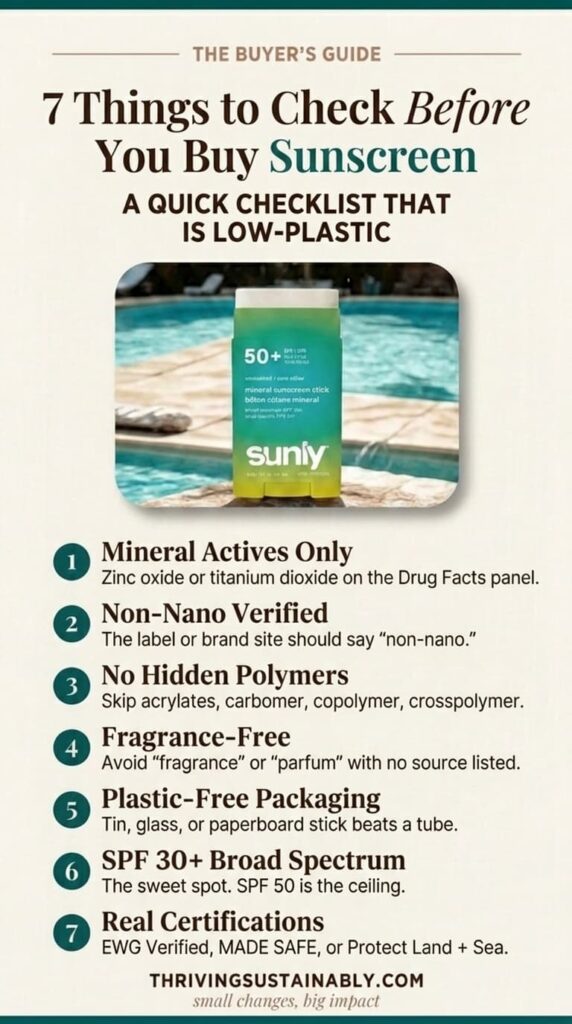
A non-toxic sunscreen uses non-nano zinc oxide or titanium dioxide as the active ingredient, skips hormone-disrupting chemical UV filters and synthetic fragrance, and contains no hidden polymers acting as microplastics.
Here’s the catch with “non-toxic” sunscreen: it’s not a regulated term. Brands can stamp it on the front of the bottle right next to “clean,” “natural,” and “reef-safe,” and there’s no FDA officer checking the back of the label to confirm. That means the work falls on us as shoppers.
A truly clean sunscreen clears two bars simultaneously. The active ingredient (the one actually blocking UV rays) needs to be a mineral, zinc oxide or titanium dioxide, not a chemical filter. AND the rest of the formula has to skip the polymer, hormone-disruptor, and fragrance traps that quietly turn a “mineral” SPF into something a little less clean than the marketing implies.
❌ Sunscreen Ingredients to Avoid
These are the actives and additives that appear on EWG‘s hazard list, are subject to regulatory bans, or are cited in peer-reviewed research as concerning. If you see them on the label, put it back on the shelf.
✅ Safer Sunscreen Ingredients to Look For
Clean mineral SPFs rely on physical UV filters and skin-soothing botanicals. The good ones look like this.
ℹ️ The quick label test: if the active ingredients box lists only zinc oxide and/or titanium dioxide, and the inactive ingredients are mostly plant oils, butters, and waxes, you’re in solid shape. If anything from the avoid table shows up in the actives, it’s not a non-toxic sunscreen, no matter what the front of the bottle is selling you.
The Hidden Plastic Problem in “Clean” Sunscreens
Many sunscreens marketed as clean, mineral, or reef-safe still contain synthetic polymers like acrylates copolymer and carbomer that function as microplastics. These are hidden in the inactive ingredients list and require a separate second-label check from the active UV filter.
This is the part of the sunscreen conversation that almost nobody covers, and it’s the part that surprised me most when I started writing about plastics. You can do everything “right,” skip oxybenzone, switch to a mineral SPF, feel pretty solid about your purchase, and STILL be smearing tiny bits of plastic directly into your skin and rinsing more of it into the ocean every time you swim. The active ingredient is only half the story on a sunscreen label.
Europe is well ahead of the US on this. In September 2023, the European Commission adopted Regulation (EU) 2023/2055, which phases out intentionally added microplastics in cosmetics. Microbeads and loose glitter are already banned, rinse-off products must comply by 2027, and leave-on products (including sunscreen) must be microplastic-free by 2029. The US has no equivalent law, so American sunscreen formulas can still use synthetic polymers that will be banned in the EU in the coming years.
Here are the polymers worth knowing in the “inactive ingredients” list:
- Acrylates / acrylates copolymer / acrylates crosspolymer: Synthetic film-formers that help sunscreen feel less greasy and stay on in water. They don’t biodegrade.
- Carbomer: A plastic-based thickener used to give lotions and gels their texture.
- Polyethylene (PE) and polypropylene (PP): Solid plastic particles, listed by name. More common in scrubs, but they pop up in some tinted SPFs too.
- Nylon-12 and nylon-6: Plastic powders used in tinted and face sunscreens for that smooth, matte “soft focus” finish.
- Dimethicone crosspolymer: A silicone-based polymer. Less aquatic-toxic than the plastic versions, but still synthetic, persistent in the environment, and on Europe’s restriction watchlist.
- VP/VA copolymer: A plastic film-former that shows up in water-resistant sport SPFs.
✨tip
The fast way to scan a label
Anything ending in “-acrylate,” “-crosspolymer,” or “-copolymer,” plus the word “carbomer,” is a polymer. Some are aquatic-toxic, all of them are persistent, and none of them are what you want to be slathering on a kid before they jump in the ocean.
The cleanest mineral SPFs skip synthetic polymers entirely and use beeswax, candelilla wax, or shea butter to do the same job, holding the formula on your skin and providing some water resistance. They’re harder to formulate (real beeswax doesn’t spread the way a synthetic film does), but the brands doing it well are out there.
Don’t Miss: Microplastics in Cosmetic – How to Spot and Avoid Them Sunscreen isn’t the only place hidden polymers hide. Our full guide to microplastics in cosmetics shows you the full ingredient list to avoid, with photos of common culprits. Read more →The Other Plastic: Sunscreen Packaging
Most sunscreens ship in plastic tubes that are technically recyclable but rarely actually processed because of their small size and greasy residue. Choosing tin, glass, or paperboard packaging eliminates this stream entirely.
Even a clean mineral formula loses points if it ships in a plastic tube. And cosmetic packaging is a real piece of the global plastic problem: over 120 billion units produced every year, nearly all made from virgin plastic. Sunscreen tubes are particularly hard for the recycling system to handle, and most of them end up in landfill regardless of which bin you tossed them in.
Here’s why sunscreen tubes are such a recycling headache:
- They’re too small. Most curbside sorting equipment skips anything under about 3 inches because smaller items jam the optical sorters. A 3-ounce sunscreen tube is right on the borderline.
- They’re made of layered materials. Soft tubes are often built from multiple plastic layers with an aluminum lining for shelf stability. Multi-material plastics are nearly impossible to recycle.
- They’re greasy. Dirty plastic gets sorted out and landfilled. And most of us don’t rinse a sunscreen tube before tossing it (would you?).
- The pumps are mixed. Spring-loaded pump tops combine metal and plastic and almost never get recycled, even at facilities that take rigid plastic.
The cleanest packaging options, in rough order:
- Aluminum tin: Infinitely recyclable, 100 percent plastic-free, and easy to actually recycle. Common in mineral balms and creams.
- Glass jar: Heavy and breakable (not ideal for a beach bag), but fully recyclable and chemically inert.
- Sugarcane-based tube: A small group of brands has switched to plant-based plastic. Better than petroleum plastic, but read the brand’s recycling instructions, “bio-based” doesn’t always mean “compostable at home.”
- Paperboard push-up stick: Like a deodorant stick, but for sunscreen. Compostable cardboard core, no plastic at all in the cleanest versions.
- PCR (post-consumer recycled) plastic tube: Still plastic, but better than virgin. A reasonable fallback when tin or glass isn’t an option.
Pump bottles and aerosol cans should both be treated as the worst-case formats. Aerosols carry the propellant and benzene-contamination risks we covered above, and pumps add the recycling problem.
Mineral vs. Chemical Sunscreen: How They Actually Work
Mineral sunscreen sits on the skin’s surface and reflects UV rays with zinc or titanium. Chemical sunscreens absorb into the skin and convert UV energy into heat using carbon-based filters.
The difference is mechanical, and once you understand how each one works, the safety differences make a lot more sense.
Mineral (physical) sunscreen
Uses finely ground zinc oxide and titanium dioxide, suspended in a base of plant oils or waxes. When you apply it, those particles form a thin layer on your skin. UV rays hit the layer and are reflected or scattered before reaching the skin below. The minerals don’t break down or absorb; they just wear off mechanically through sweat, towel friction, or water.
Chemical sunscreens
Use carbon-based filters from the avoidance table above. These molecules absorb into the top layer of your skin within minutes and into your bloodstream within hours. When UV light hits them, they absorb the energy and convert it into heat that dissipates from the skin. You have to reapply because the molecules break down in sunlight, and while they’re active, they circulate throughout your body.
For non-toxic purposes, mineral wins on every measure that matters: no bloodstream absorption, no hormone-disruption risk, reef-safe, broad spectrum, and it works the second you put it on (chemical filters need about 20 minutes to bind and start blocking UV). The historical knock on mineral SPF was the chalky white cast, and yes, the older formulas earned that reputation. But the new generation of non-nano mineral formulas blends in dramatically better, especially the tinted ones, which almost entirely cancel the white cast.
The American Academy of Dermatology officially says both formats are effective at blocking UV, and that’s accurate. But for a non-toxic, reef-safe SPF, mineral is the only category that clears the bar.
Types of Non-Toxic Sunscreen and How to Pick One
The cleanest, non-toxic sunscreen formats are a mineral cream or balm in a tin for body, a mineral stick for face, and a tinted mineral cream for daily wear under makeup.
There isn’t one “best” non-toxic sunscreen format, just the right one for the situation. The tube of mineral cream that’s perfect for a beach day isn’t the one you want sitting on your bathroom counter for daily face wear, and the kid-friendly stick that’s easy to throw in a swim bag isn’t the format you’d reach for under foundation. Here’s how each format actually stacks up.
A few quick picks by use case:
- Every day face under makeup: A tinted mineral cream or balm in glass or aluminum packaging. The tint neutralizes the white cast and provides a moisturizing base layer under foundation, without pilling.
- Kids and babies over 6 months: A mineral balm in a tin or a paperboard stick. Look for fragrance-free, broad-spectrum, non-nano formulas. (No sunscreen on babies under 6 months; the AAP recommends shade and clothing only.)
- Sport, swim, and active days: A mineral cream or stick labeled “water-resistant 80 minutes.” Reapply after swimming or heavy sweating. Skip sprays; even if they’re labeled ‘mineral,’ the inhalation issue applies to mineral particles too.
- Acne-prone or sensitive skin: Non-nano zinc-only formulas are the safest bet. Skip titanium dioxide if you’ve reacted to it before, and go fragrance-free even if the brand uses essential oils.
- On-the-go reapplication: A mineral stick in cardboard or aluminum is by far the easiest to throw in a bag and use without making a mess. Just confirm the stick mechanism itself isn’t plastic; that’s a common problem.
9 Non-Toxic Sunscreens & Low-Plastic
Non-toxic sunscreen brands worth trusting in 2026 include Raw Elements, Badger, ATTITUDE, All Good, Kōkua Sun Care, Stream2Sea, and Earth Mama. Each one clears the mineral-only, polymer-free, low-plastic bar in slightly different ways.
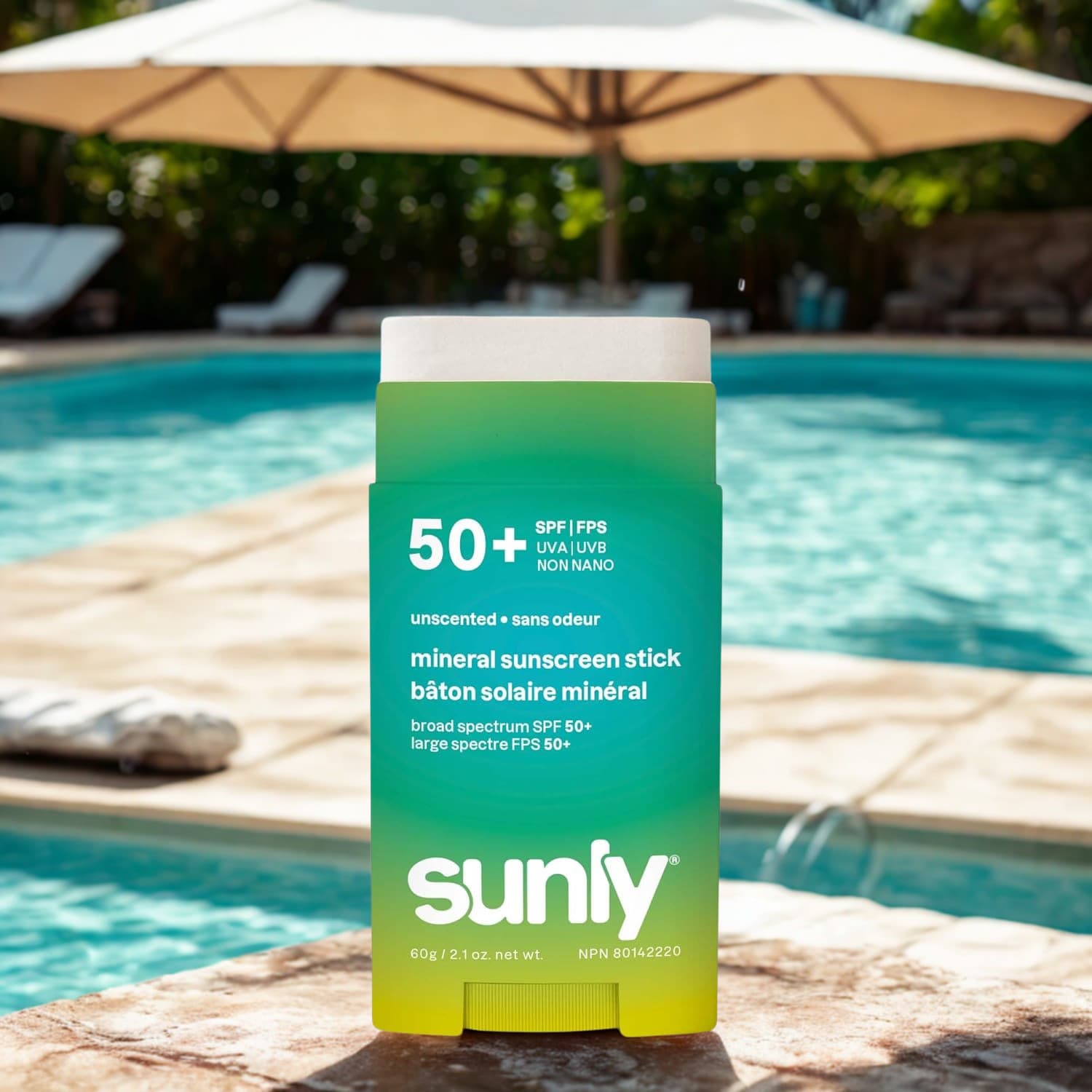
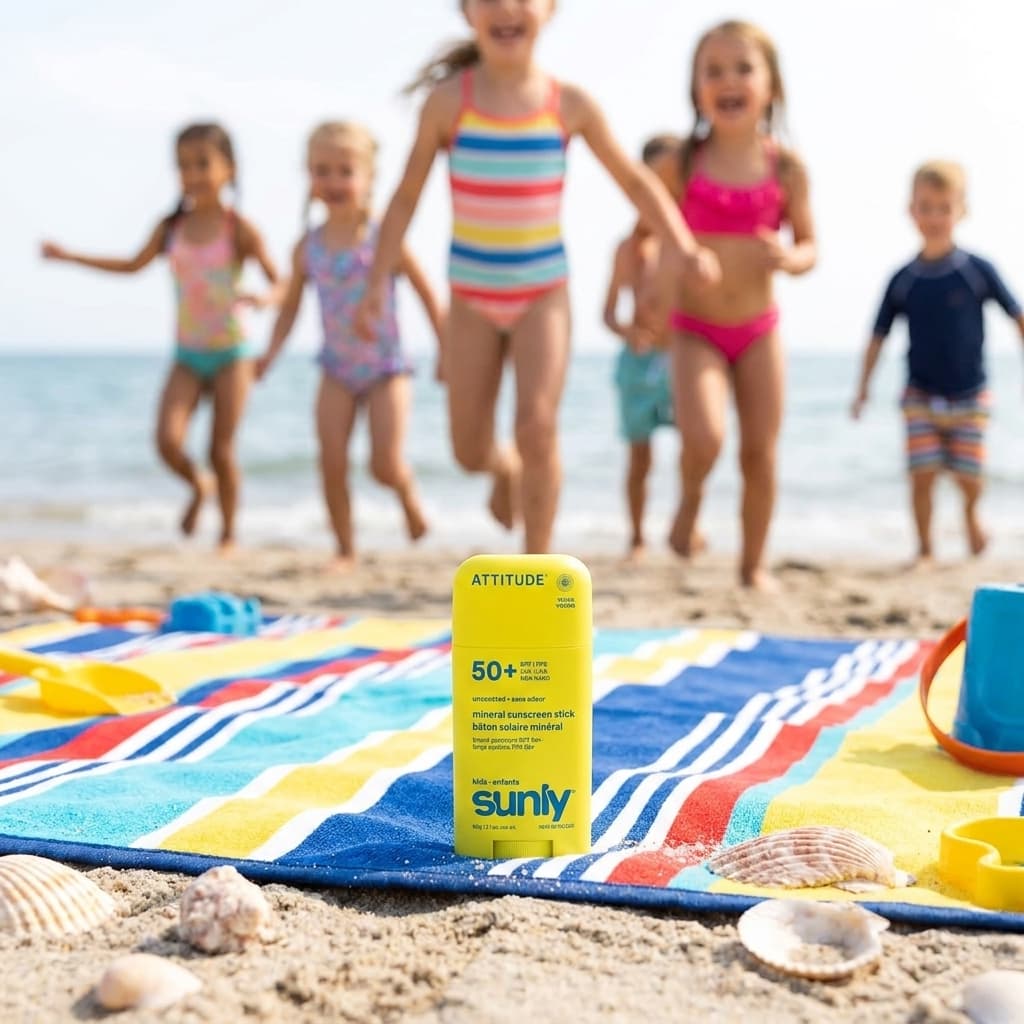
ATTITUDE Sunly Stick SPF 50+
SPF 50+ unscented mineral sunscreen stick in a biodegradable cardboard tube
$22 starting price
The ATTITUDE Sunly stick is one of the very few mineral sunscreens that comes in genuinely plastic-free packaging. The 60 g / 2.1 oz push-up tube is FSC-certified biodegradable cardboard, non-nano zinc oxide is the only active ingredient, and the formula is broad-spectrum SPF 50+. EWG VERIFIED, vegan, dermatologically tested, and no fragrance.
Easy to throw in a bag, no mess on hands, and it applies smoothly without streaking. Best for daily wear, walks, and casual outdoor time rather than long swim sessions; reapply after toweling off.
This is the sunscreen I reach for every day. The compact stick format makes reapplying easy, there is no plastic tube to throw away, and after a few years of using it I have not had a single sunburn. It earns its spot in my bag.
Tube
FSC Cardboard
✓ Plastic FreeActive
Non-Nano Zinc Oxide
✓ Mineral OnlyFormat
Solid Push-Up Stick
✓ BiodegradableCertifications
EWG Verified, Vegan
✓ Dermatologist TestedPros
- Fully plastic-free FSC-certified cardboard packaging
- Non-nano zinc oxide as the only active ingredient
- Broad-spectrum SPF 50+, unscented, EWG VERIFIED
- 60 g / 2.1 oz compact stick is easy to reapply on the go
Cons
- Texture goes on thick and takes a moment to blend
- Slight white cast on darker skin tones
- Cardboard tube can soften if left in a hot car or beach bag
- Pricier per ounce than plastic-tube competitors
A truly plastic-free mineral sunscreen at SPF 50+ that actually performs. The cardboard tube is the rare real deal, not greenwashed PCR plastic dressed up as eco. The best everyday plastic-free sunscreen stick on the market.
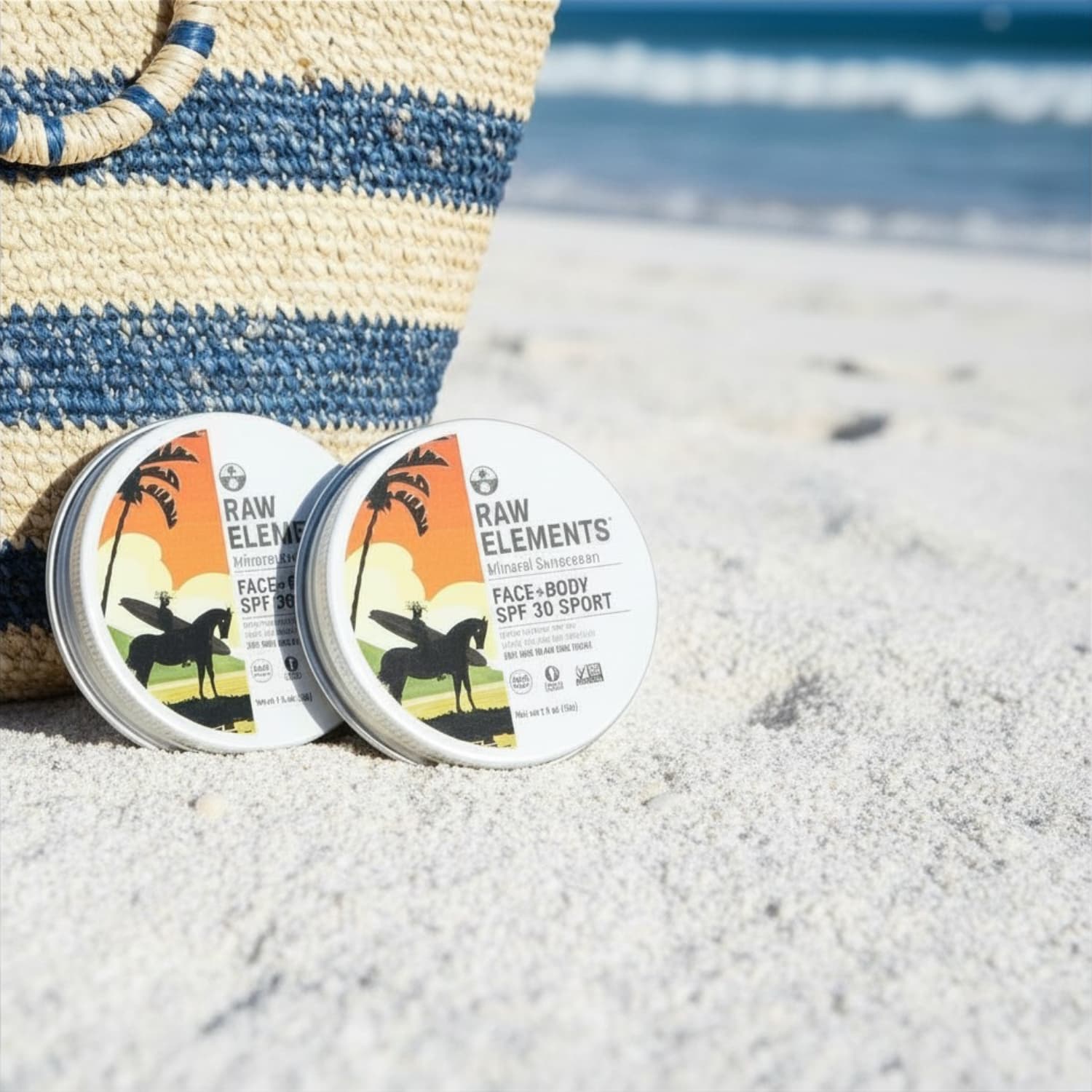
Raw Elements Face + Body
SPF 30 mineral sunscreen in a recyclable aluminum tin
$19 starting price
Raw Elements built this sunscreen for surfers and ocean lovers, and the formula reflects that. The only active ingredient is 23% non-nano zinc oxide, paired with a short list of organic oils, butters, and botanical extracts. No oxybenzone, octinoxate, or synthetic fragrances anywhere on the label.
The tin is the standout. It is fully recyclable, refillable, and the outer carton is compostable. Water-resistant for 80 minutes, safe for kids, and certified reef-safe. This is the cleanest plastic-free sunscreen package you can find right now.
Container
Aluminum Tin
✓ Plastic FreeLid
Aluminum
✓ Plastic FreeActive
Non-Nano Zinc 23%
✓ Mineral OnlyOuter Carton
Compostable Paper
✓ Plastic FreePros
- Truly plastic-free packaging from tin to outer carton
- Non-nano zinc oxide is reef-safe and ocean-tested
- Water-resistant up to 80 minutes
- Short, recognizable ingredient list with organic botanicals
Cons
- Thicker texture takes more rubbing to blend
- Light white cast on darker skin tones
- Distinct nutty scent from sunflower oil base
- Pricier per ounce than tube-format sunscreens
If your priority is keeping plastic out of your sunscreen routine entirely, this is the cleanest option on the shelf. The tin is the real win, refillable and free of the bio-resin or PCR plastics most eco brands rely on. The best fully plastic-free sunscreen for beach and ocean days.
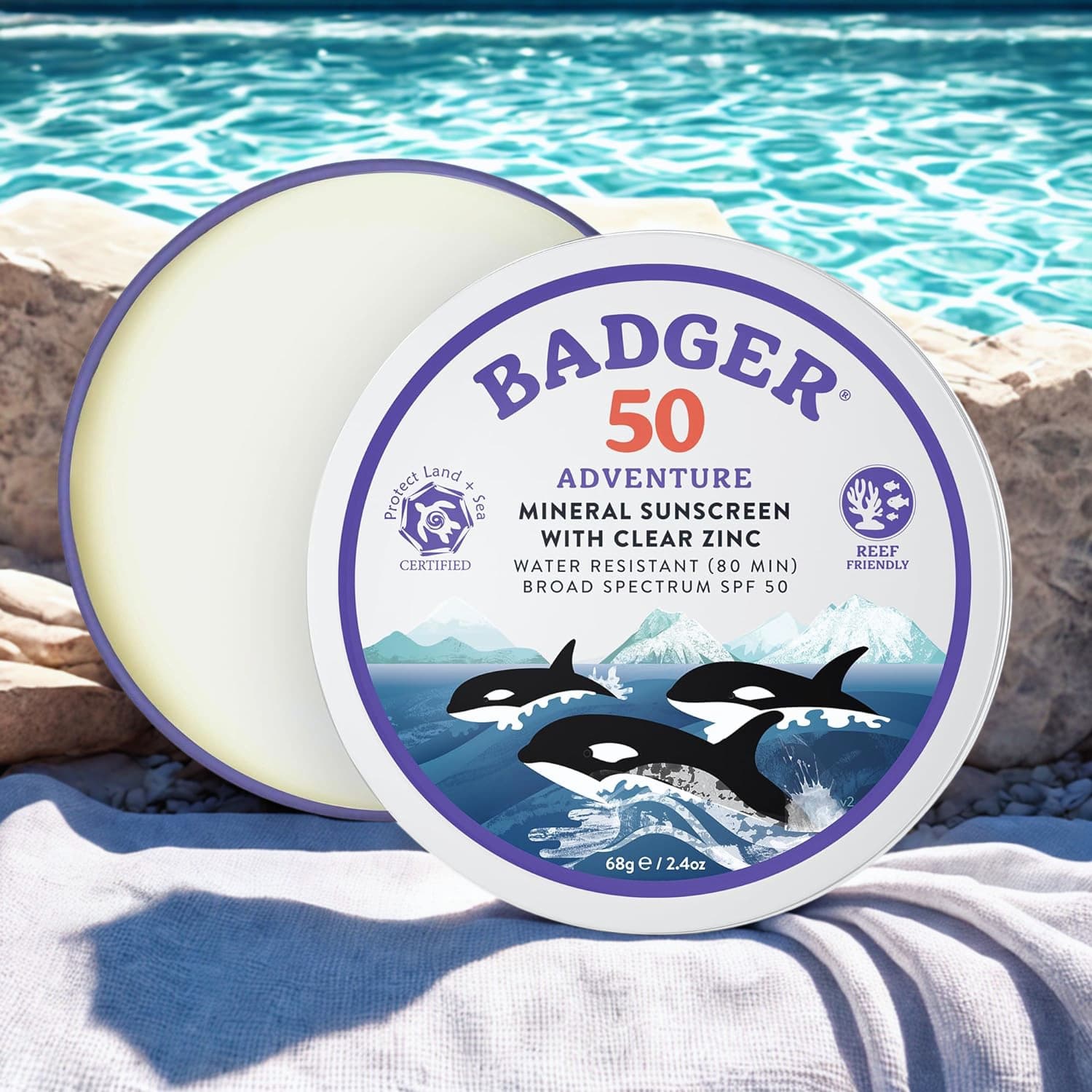
Badger Adventure Sport SPF 50
SPF 50 mineral sunscreen in a recyclable aluminum tin
$18.99 starting price
The Badger Adventure Sport Mineral Sunscreen Tin has the shortest, cleanest ingredient list on this list. Just four things: 25% non-nano zinc oxide, organic sunflower oil, organic beeswax, and sunflower vitamin E. Nothing else. That is the highest percentage of zinc oxide the FDA allows, water-resistant for 80 minutes, and 98% organic.
The 2.4 oz tin is fully recyclable aluminum, no plastic anywhere. Made by a women-owned New Hampshire family business powered by solar. One of the first mineral formulas to earn the rigorous Protect Land + Sea Certification for reef safety.
Tin
Aluminum
✓ Plastic FreeActive
Non-Nano Zinc 25%
✓ Mineral OnlyInactives
4 Organic Ingredients
✓ 98% OrganicCertification
Protect Land + Sea
✓ Reef FriendlyPros
- Fully recyclable aluminum tin, no plastic anywhere
- Highest zinc oxide percentage the FDA allows (25%)
- Water-resistant for 80 minutes for swim and sport days
- Protect Land + Sea Certified reef-friendly
Cons
- Thicker balm texture takes more rubbing to blend
- Visible white cast typical of high-zinc formulas
- Tin format is slower to apply than a stick or pump
- Distinct natural oil scent from the sunflower base
A serious, no-nonsense mineral sunscreen in a fully recyclable aluminum tin. Highest zinc percentage allowed by law, four ingredients, made with solar power. The best plastic-free mineral sunscreen for sport and water.
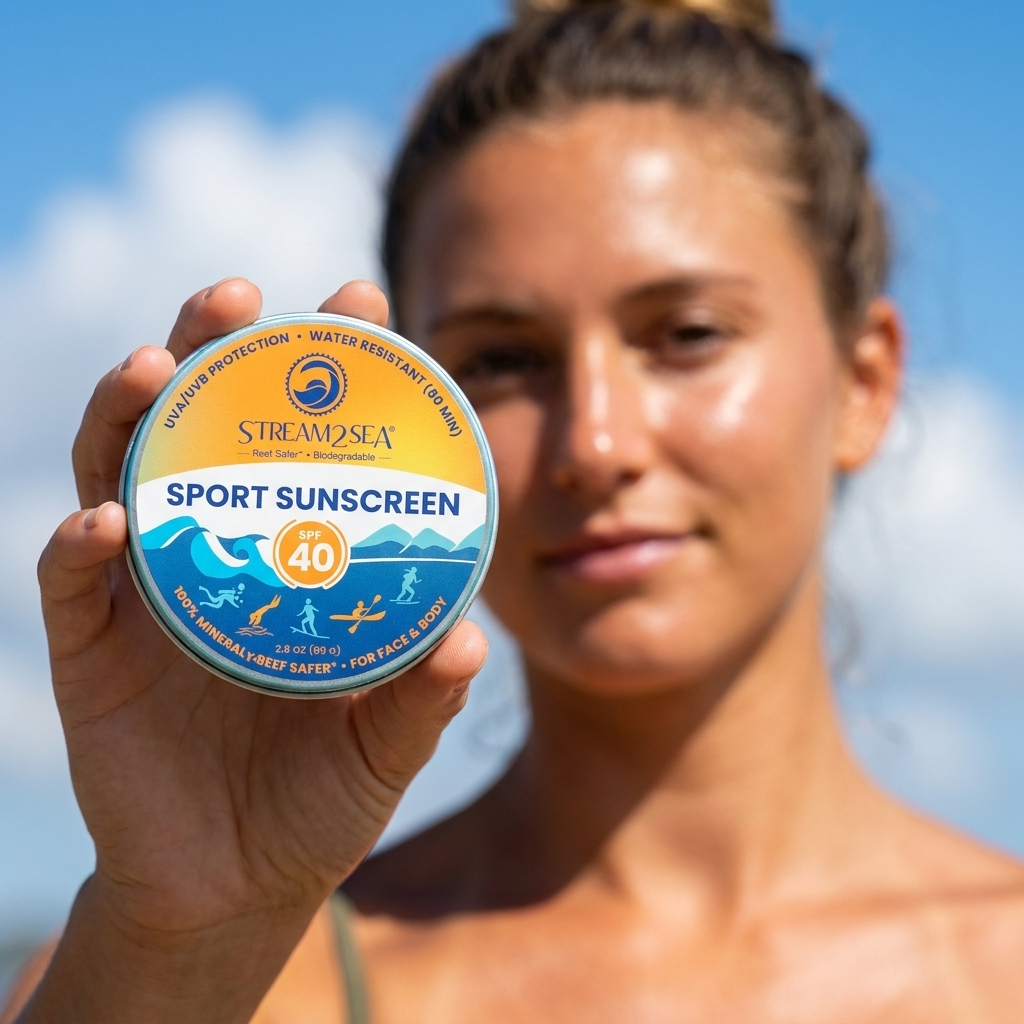
Stream2Sea Sport SPF 40
Biodegradable mineral formula in a recyclable aluminum tin
$20 starting price
Stream2Sea was created by a cosmetic chemist who is also a scuba diver, and it is the first personal care brand independently tested for aquatic safety on coral larvae and fish. The Sport tin uses 20% non-nano EcoSafe Zinc, is biodegradable in fresh and saltwater, and is genuinely safer for reefs than most.
The 2.8 oz container is an infinitely recyclable aluminum tin, no petroleum plastic and no bio-resin. Water-resistant for 80 minutes, USDA Biobased certified, and packed with green tea, tulsi, wakame, and olive leaf extracts for antioxidant support.
I picked this up for my son a couple of summers ago, and it did the job. He was outside for hours and never burned. Worth knowing: it takes a few extra seconds to fully rub in, so plan for that and it works beautifully.
Tin
Aluminum
✓ Plastic FreeActive
Non-Nano Zinc 20%
✓ Mineral OnlyFormula
Biodegradable
✓ Reef TestedBotanicals
Green Tea, Wakame
✓ AntioxidantPros
- Plastic-free recyclable aluminum tin packaging
- First brand independently tested safe for coral and fish
- USDA Biobased certified biodegradable formula
- Water-resistant for 80 minutes
Cons
- Takes a few extra seconds to fully rub in
- Light white cast typical of zinc formulas
- Pricier than mainstream mineral sunscreens
- Tin format is slower to apply than a tube or pump
The most rigorously reef-tested formula on this list, in a fully plastic-free aluminum tin. The best plastic-free choice for snorkeling, diving, and ocean swimming.
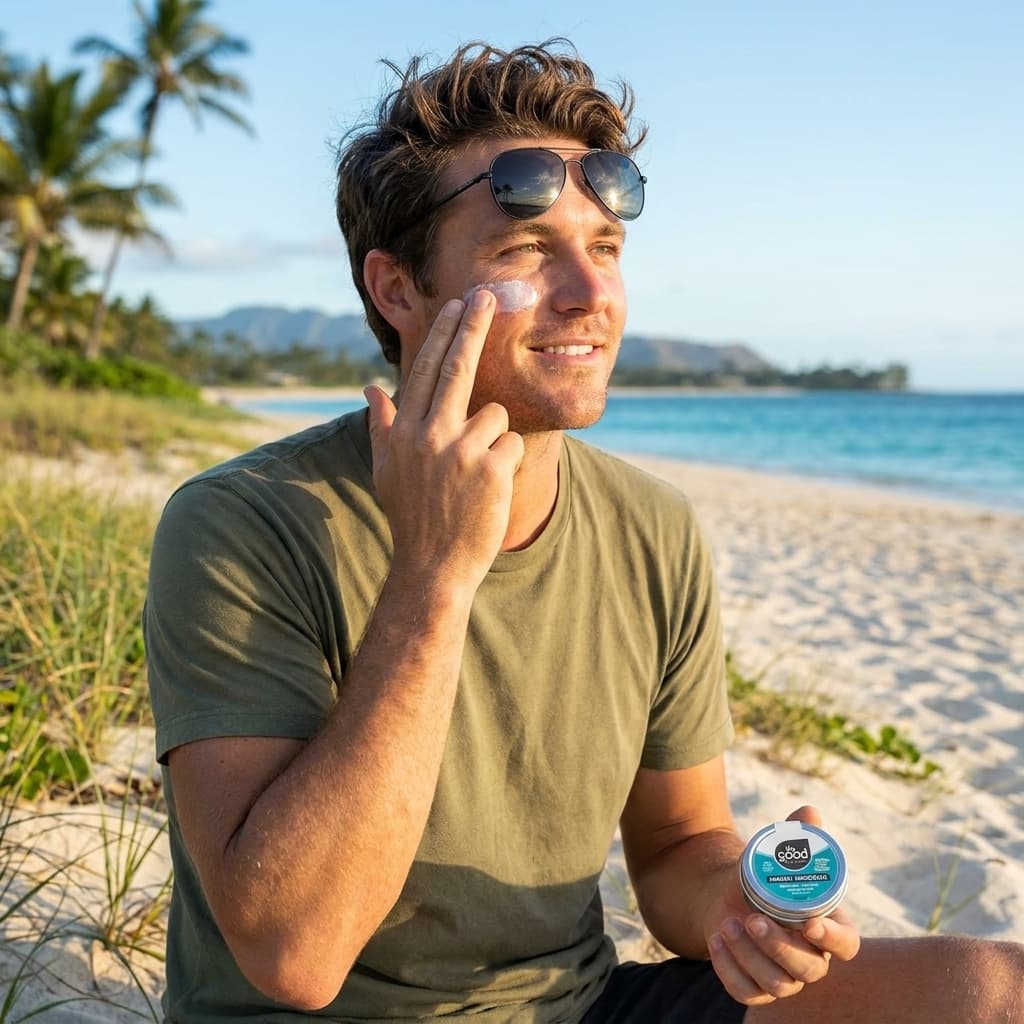
All Good
SPF 50+ mineral sunscreen butter in a recyclable aluminum tin
$10 starting price
All Good Sunscreen Butter packs non-nano zinc oxide into a thick, SPF 50+ balm-style formula made for face, lips, ears, and the spots that need extra staying power. The base is organic coconut oil, beeswax, and calendula-infused jojoba, with vitamin E to nourish sun-stressed skin.
Packaged in a 1 oz recyclable aluminum tin that fits in a pocket or beach bag. Water-resistant for 80 minutes, reef-friendly, and gentle enough for kids. The catch is the small size: at 1 oz, this is built for face and touch-ups, not full-body application.
Tin
Aluminum
✓ Plastic FreeActive
Non-Nano Zinc Oxide
✓ Mineral OnlyBase
Coconut, Beeswax, Jojoba
✓ Organic BotanicalsBotanicals
Calendula
✓ Skin SoothingPros
- 100% plastic-free aluminum tin packaging
- SPF 50+ broad spectrum with non-nano zinc oxide
- Water-resistant for 80 minutes, doubles as a lip and spot SPF
- Calendula-infused jojoba soothes sensitive skin
Cons
- Small 1 oz tin, built for face and touch-ups not full body
- Thicker butter texture takes longer to rub in than a lotion
- May leave a faint white cast on deeper skin tones
- Need to scoop product out with fingers, not as quick as a pump
A clean SPF 50+ formula in a tin that actually delivers on the plastic-free promise. The high zinc concentration and pocketable packaging make it a strong face and travel pick. The best All Good sunscreen for plastic-free packaging.
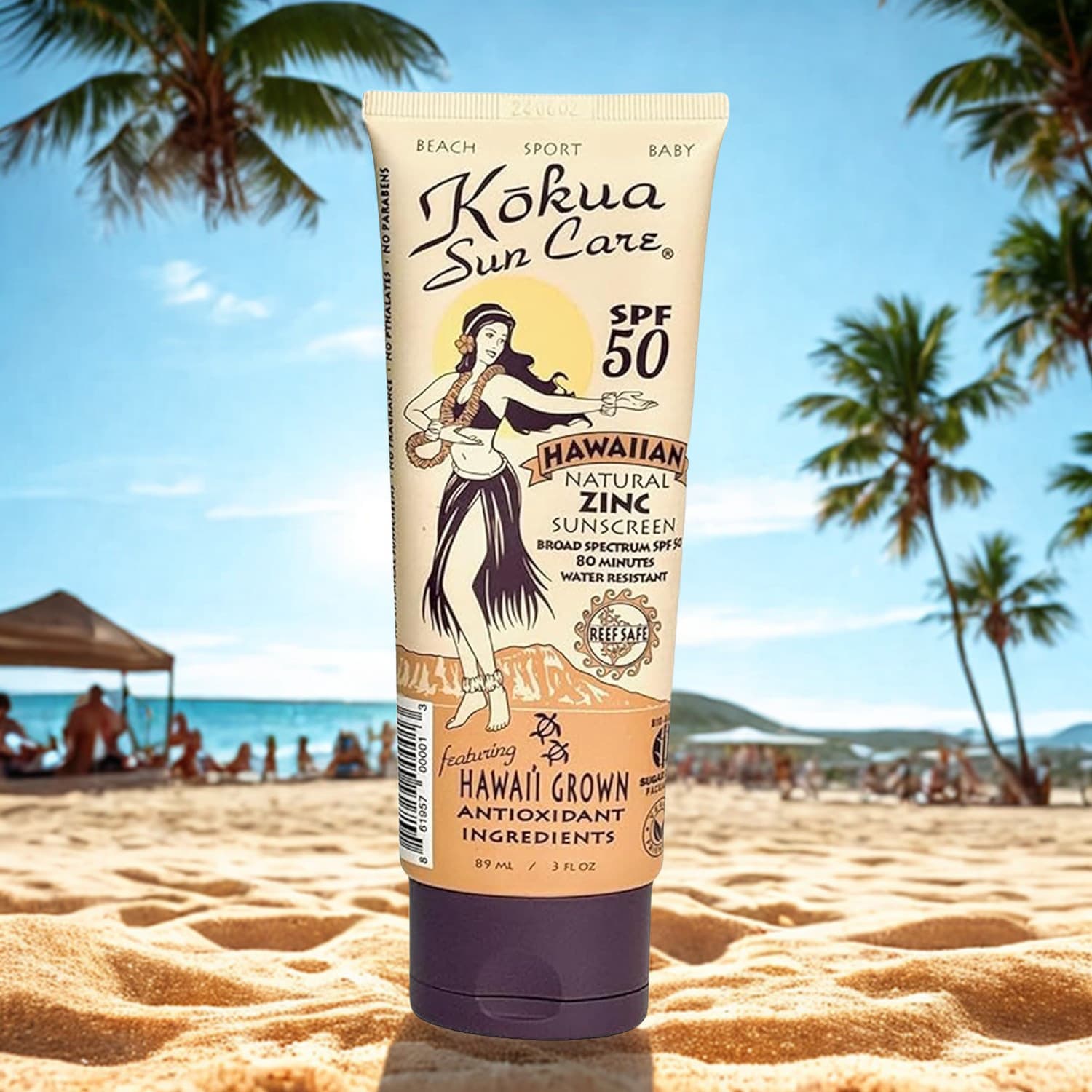
Kōkua Sun Care SPF 50
Hawaiian-made with 25% zinc and superfood botanicals
$33 starting price
Kōkua Sun Care is made in Hawaii by people who actually live in the high-UV ocean conditions this sunscreen is built for. The formula uses 25% non-nano zinc oxide, the highest percentage on this list, which means serious broad-spectrum protection for water sports and tropical climates.
What makes it different is the Hawaiian-grown botanicals: kukui nut oil, macadamia oil, spirulina, noni, and plumeria extract. The tube is sugarcane bio-resin, free of petroleum plastic. Water-resistant for 80 minutes, no eye sting, rubs in surprisingly clear given the high zinc concentration.
Tube
Sugarcane Bio-Resin
⚠ Plant-Based PlasticActive
Non-Nano Zinc 25%
✓ Mineral OnlyBotanicals
Kukui, Macadamia, Noni
✓ Hawaiian SourcedAntioxidants
Spirulina, Plumeria
✓ Reef CompliantPros
- Highest zinc oxide percentage (25%) on this list
- Hawaii-grown botanicals nourish while protecting
- Sugarcane bio-resin tube, no petroleum plastic
- Hawaii Reef Compliant, no eye sting, rubs in clear
Cons
- Most expensive sport mineral sunscreen here
- Bio-resin is still plant-derived plastic, not plastic-free
- Long ingredient list with many botanical extracts
- Limited availability outside specialty retailers
A small-batch Hawaiian sunscreen with the highest zinc concentration here, made by people who actually use it in punishing tropical sun. The best high-performance mineral sunscreen for tropical and water sports.
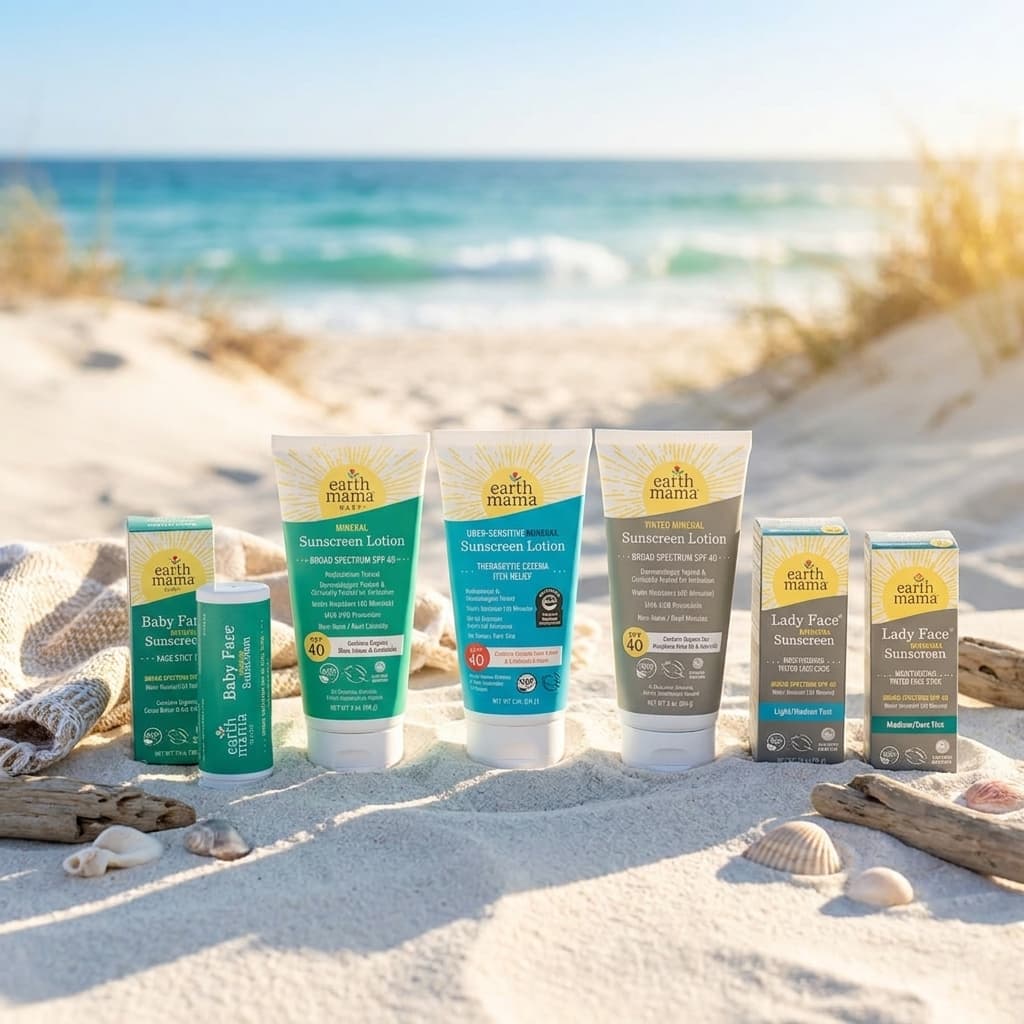
Earth Mama Baby SPF 40
Pediatrician-tested mineral formula safe for the whole family
$19 starting price
The Earth Mama Baby Mineral Sunscreen is formulated for the most sensitive baby skin, which means it is also one of the gentlest options for adults. The formula uses 25% non-nano zinc oxide, the highest baby-safe concentration available, with organic shea butter, calendula, red raspberry seed oil, and pomegranate seed oil.
It earns EWG’s top safety rating of 1, meaning the lowest possible hazard score. Pediatrician and dermatologist tested, NSF/ANSI 305 certified by Oregon Tilth, Leaping Bunny certified cruelty-free, and the brand is Plastic Neutral. Water-resistant for 40 minutes.
Tube
Plastic, Plastic Neutral
⚠ Offset ProgramActive
Non-Nano Zinc 25%
✓ Mineral OnlyInactives
Organic Oils & Butters
✓ NSF/ANSI 305Safety Rating
EWG Score of 1
✓ Lowest HazardPros
- EWG safety rating of 1, the lowest possible hazard score
- Pediatrician and dermatologist tested for sensitive skin
- Brand is Plastic Neutral with verified offsets
- Safe for babies 6 months and up, kids, and adults
Cons
- Plastic tube, even with the offset program
- Thick texture requires massaging the tube before use
- Visible white cast common with high-zinc baby formulas
- Only 40 minutes water resistance
The cleanest baby-safe formula on this list, with the lowest hazard score EWG awards. Gentle enough for newborns and effective enough for the whole family. The best family mineral sunscreen for sensitive and baby skin.
ATTITUDE Sunly Kids
SPF 50+ mineral sunscreen stick in a cardboard push-up tube
$23 starting price
ATTITUDE’s Sunly Kids stick is the rare kids’ sunscreen that ships in fully plastic-free packaging. The cardboard push-up tube has zero plastic, and the formula inside is non-nano zinc oxide, broad-spectrum SPF 50+, with no fragrance, no synthetic dyes, and none of the polymers we flagged in the avoid list.
EWG VERIFIED, vegan, dermatologist-tested, and made in Canada. The stick format is the easiest way to apply sunscreen on a wiggly kid: no goopy hands, no mess, and small enough to throw in any swim bag. The unscented version is the safest pick for sensitive skin.
Stick
Cardboard Tube
✓ Plastic FreeActive
Non-Nano Zinc
✓ Mineral OnlySPF
50+ Broad Spectrum
✓ UVA + UVBSize
60g / 2.1 oz
✓ Travel SizePros
- Cardboard push-up tube, zero plastic packaging
- EWG VERIFIED and dermatologist-tested
- Mess-free stick format made for wiggly kids
- SPF 50+ broad spectrum, vegan, fragrance-free
Cons
- Pricier per ounce than plastic-tube competitors
- Stick is harder to apply on larger body areas
- May leave a faint white cast that takes a moment to blend
- Hard to cover large body surfaces quickly with a stick
One of the only fully plastic-free kids’ sunscreens at a normal price. The cardboard tube and SPF 50+ mineral formula make it the cleanest stick for swim bags and school nurses’ offices. The best plastic-free sunscreen for kids.
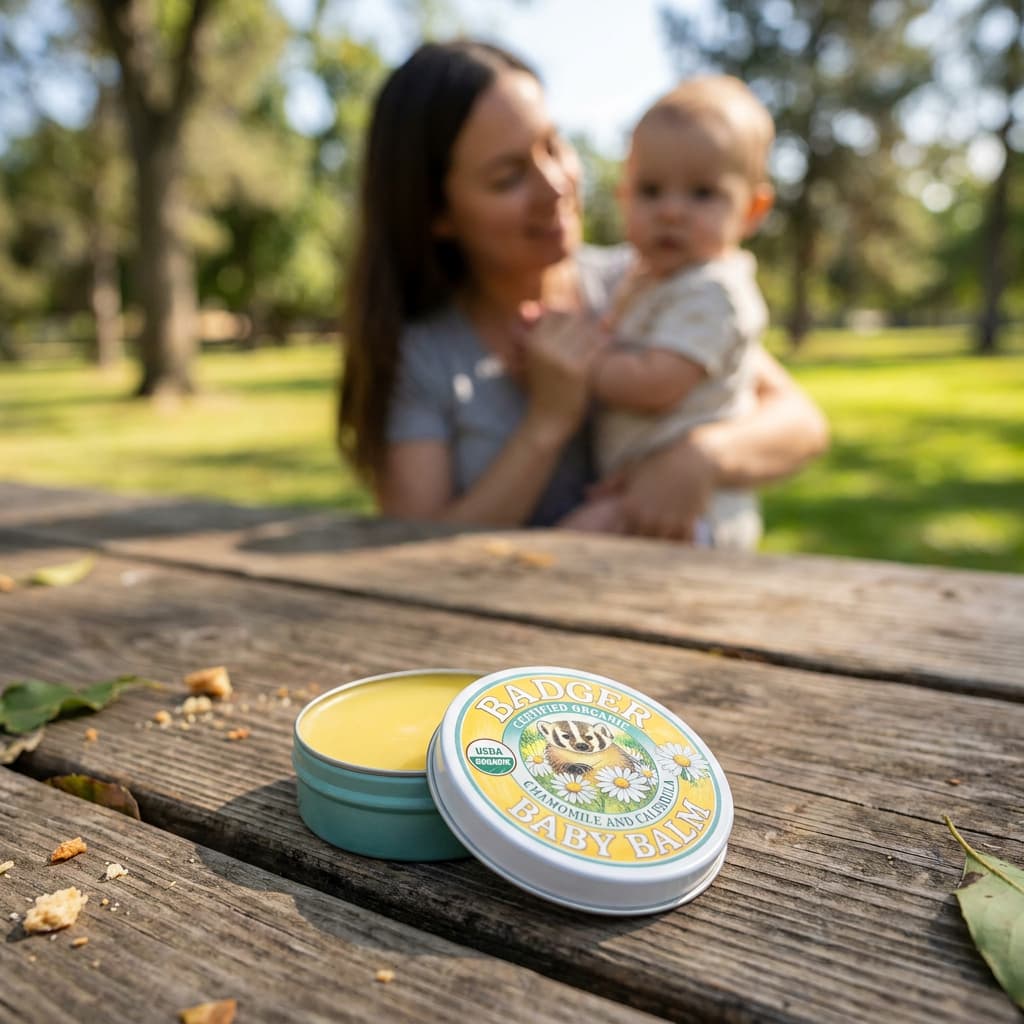
Badger Baby
Mineral sunscreen for sensitive baby skin in a recyclable aluminum tin
$12 starting price
Badger’s Baby Mineral Sunscreen is one of the few baby-specific sunscreens that ships in a fully recyclable aluminum tin. The formula uses non-nano zinc oxide as the only active, paired with organic sunflower oil, beeswax, organic calendula, and organic chamomile to calm sensitive skin. Just a handful of recognizable ingredients, all 98% organic.
Made for babies 6 months and up (the AAP’s minimum sunscreen age), with no synthetic fragrance, no preservatives, and no chemical UV filters. EWG VERIFIED, B Corp certified, and family-owned in New Hampshire since 1995. The aluminum tin is shelf-stable, beach-bag-friendly, and infinitely recyclable.
Tin
Aluminum
✓ Plastic FreeActive
Non-Nano Zinc Oxide
✓ Mineral OnlyInactives
Organic Ingredients
✓ Fragrance FreeBotanicals
Calendula, Chamomile
✓ Skin SoothingPros
- Recyclable aluminum tin, no plastic packaging
- AAP-compliant for babies 6 months and up
- Non-nano zinc oxide as the only active, no chemical filters
- EWG VERIFIED, B Corp, family-owned in the US
Cons
- Thicker cream texture takes longer to rub in than a lotion
- Visible white cast common with high-zinc baby formulas
- Small tin size best for face and touch-ups
- Tin format means scooping product with fingers
A genuinely baby-safe formula in a tin that delivers on the plastic-free promise. The fragrance-free option and calming chamomile and calendula make it a strong first sunscreen for sensitive baby skin. The best plastic-free baby sunscreen for sensitive skin.
✨ Tip
Let Your Phone Do the Label-Reading
Download the free EWG Healthy Living app on your phone. You can scan any sunscreen barcode at the store and instantly see its EWG hazard rating (1 to 10, with 1 being best), plus a breakdown of every active and inactive ingredient. Way faster than reading the back of every bottle, and it covers the EWG Sunscreen Guide’s full database of over 1,800 products.
Liked These Picks? Pin It! 📌
FAQs on Non-Toxic Sunscreen
Not in any meaningful way under real-world use. A 2019 review in the British Journal of Dermatology found that sunscreen doesn’t significantly compromise vitamin D status, because most of us miss spots, under-apply, and still get incidental sun on our hands, arms, and face throughout the day. If you’re concerned about vitamin D, the more reliable fix is dietary intake (fatty fish, fortified milk, mushrooms) or a supplement, not skipping sunscreen.
This is one of the few DIY swaps where the answer is firmly no. SPF testing requires controlled lab equipment, and the difference between SPF 5 and SPF 30 isn’t something you can see or feel on the skin. Homemade sunscreens consistently test at far lower SPF than the recipes claim, and people get burned while trusting them. If non-toxic is the goal, buy a tested mineral formula.
The Environmental Working Group’s annual Guide to Sunscreens scores products on three main factors: the hazard of the active and inactive ingredients (toxicity, allergy potential, hormone disruption), the UVA-to-UVB protection balance, and the stability of the active ingredient on the shelf. A score of 1 or 2 out of 10 is best. The database covers over 1,800 products and is updated yearly.
Yes, after 6 months. The American Academy of Pediatrics recommends keeping infants under 6 months old entirely out of direct sunlight, using shade and clothing as the only protection. After 6 months, mineral-only sunscreen (zinc oxide, titanium dioxide, or both, non-nano, fragrance-free) is recommended. Skip sprays for kids regardless of formula; the inhalation risk is real.
Most mineral SPFs stay stable for 12 to 18 months after opening if stored away from heat. Mineral actives like zinc and titanium don’t degrade as chemical filters do, so the SPF level stays consistent. What can go wrong is the plant oil base; watch for changes in smell, color, or texture. The “12M” or “18M” PAO (period after opening) symbol on the back is the brand’s stated window.
Yes, and a tinted mineral formula is often easier to wear under makeup than chemical SPF. Apply a thin layer, let it absorb for 60 to 90 seconds, then layer foundation as usual. Tinted formulas with iron oxides also help block visible blue light from screens, which is a bonus for daily desk life. Just avoid tinted SPFs that list nylon-12 or acrylates copolymer in the inactives those add plastic particles to your face.
Not always. The term is unregulated in the US. Hawaii’s reef-safe law only bans two specific ingredients (oxybenzone and octinoxate), so a “reef-safe” sunscreen can still contain coral-toxic ingredients like octocrylene, homosalate, or avobenzone. The Protect Land + Sea Certification, run by the Haereticus Environmental Lab, is the only third-party seal that actually tests for the broader coral-toxic list.
Final Thoughts on Non-Toxic Sunsreen
A non-toxic sunscreen in 2026 uses non-nano zinc oxide or titanium dioxide as its active ingredient, skips synthetic polymers and fragrance in the inactive ingredients, and ships in tin, glass, or sugarcane tube packaging.
At the end of the day, picking a non-toxic sunscreen comes down to one habit: flip the bottle. The front is marketing. The back tells you what’s actually happening to your skin and in the ocean.
Mineral-only, plastic-free options are everywhere now, in natural grocery stores, online, even at Target. Pick a tin or glass jar SPF for body, a tinted mineral for face, throw on a hat and a UPF shirt for beach days, and you’ve got a sun routine you can feel okay about.
📚 References
- American Academy of Dermatology. (2024). Sunscreen FAQs. https://www.aad.org/media/stats-sunscreen
- American Academy of Pediatrics. (2023). Sun safety and protection tips. HealthyChildren.org. https://www.healthychildren.org/English/safety-prevention/at-play/Pages/Sun-Safety.aspx
- Danovaro, R., Bongiorni, L., Corinaldesi, C., Giovannelli, D., Damiani, E., Astolfi, P., Greci, L., & Pusceddu, A. (2008). Sunscreens cause coral bleaching by promoting viral infections. Environmental Health Perspectives, 116(4), 441–447. https://doi.org/10.1289/ehp.10966
- Downs, C. A., Kramarsky-Winter, E., Segal, R., Fauth, J., Knutson, S., Bronstein, O., Ciner, F. R., Jeger, R., Lichtenfeld, Y., Woodley, C. M., Pennington, P., Cadenas, K., Kushmaro, A., & Loya, Y. (2016). Toxicopathological effects of the sunscreen UV filter, oxybenzone (benzophenone-3), on coral planulae and cultured primary cells and its environmental contamination in Hawaii and the U.S. Virgin Islands. Archives of Environmental Contamination and Toxicology, 70(2), 265–288. https://doi.org/10.1007/s00244-015-0227-7
- Environmental Working Group. (2025). EWG’s 19th annual guide to sunscreens. https://www.ewg.org/sunscreen/
- European Commission. (2023). Commission Regulation (EU) 2023/2055 of 25 September 2023 amending Annex XVII to Regulation (EC) No 1907/2006 of the European Parliament and of the Council concerning the Registration, Evaluation, Authorisation and Restriction of Chemicals (REACH) as regards synthetic polymer microparticles. Official Journal of the European Union. https://eur-lex.europa.eu/eli/reg/2023/2055/oj
- Food and Drug Administration. (2021). Sunscreen: How to help protect your skin from the sun. U.S. Department of Health and Human Services. https://www.fda.gov/drugs/understanding-over-counter-medicines/sunscreen-how-help-protect-your-skin-sun
- Hawaii State Legislature. (2018). SB 2571: Relating to water pollution. https://www.capitol.hawaii.gov/sessions/session2018/bills/SB2571_CD1_.HTM
- Matta, M. K., Florian, J., Zusterzeel, R., Pilli, N. R., Patel, V., Volpe, D. A., Yang, Y., Oh, L., Bashaw, E., Zineh, I., Sanabria, C., Kemp, S., Godfrey, A., Adah, S., Coelho, S., Wang, J., Furlong, L. A., Ganley, C., Michele, T., & Strauss, D. G. (2020). Effect of sunscreen application on plasma concentration of sunscreen active ingredients: A randomized clinical trial. JAMA, 323(3), 256–267. https://doi.org/10.1001/jama.2019.20747
- National Toxicology Program. (2012). NTP technical report on the photocarcinogenesis study of retinoic acid and retinyl palmitate. U.S. Department of Health and Human Services. https://ntp.niehs.nih.gov/publications/reports/tr/500s/tr568
- Stien, D., Clergeaud, F., Rodrigues, A. M. S., Lebaron, K., Pillot, R., Romans, P., Fagervold, S., & Lebaron, P. (2019). Metabolomics reveal that octocrylene accumulates in Pocillopora damicornis tissues as fatty acid conjugates and triggers coral cell mitochondrial dysfunction. Analytical Chemistry, 91(1), 990–995. https://doi.org/10.1021/acs.analchem.8b04187
- Valisure. (2021). Valisure detects benzene in sunscreen. https://cdn.prod.website-files.com/6215052733f8bb8fea016220/62728f83d7f91acc8572e9ee_FDA-2021-P-0497-0001_attachment_1.pdf
More Plastic-Free Living Guides You’ll Want to Read
- Microplastics in Cosmetics: How to Spot and Avoid Them
- The Non-Toxic Makeup Checklist
- How to Avoid Microplastics in Your Home, Food, and Body
- How to Remove Microplastics From Your Body and Home
- 10 Best Non-Toxic, Plastic-Free Laundry Detergents in 2026
- Zero Waste Lifestyle: Easy Steps to Get Started
- Say No to Plastic: A Beginner’s Guide to Cutting Plastic Waste
We’ve scored every personal care product on plastic — see them in the Personal Care directory.