
Bialetti Moka Express Stovetop Espresso Maker, Made in Italy
Bialetti
Moka Express Stovetop Espresso Maker
A 90 year old design you can rebuild forever with cheap official parts. Coffee touches bare aluminum and passes a natural rubber gasket, and the handle is plastic, so it is low plastic rather than plastic free. Bialetti says all of this itself, which counts for a lot.
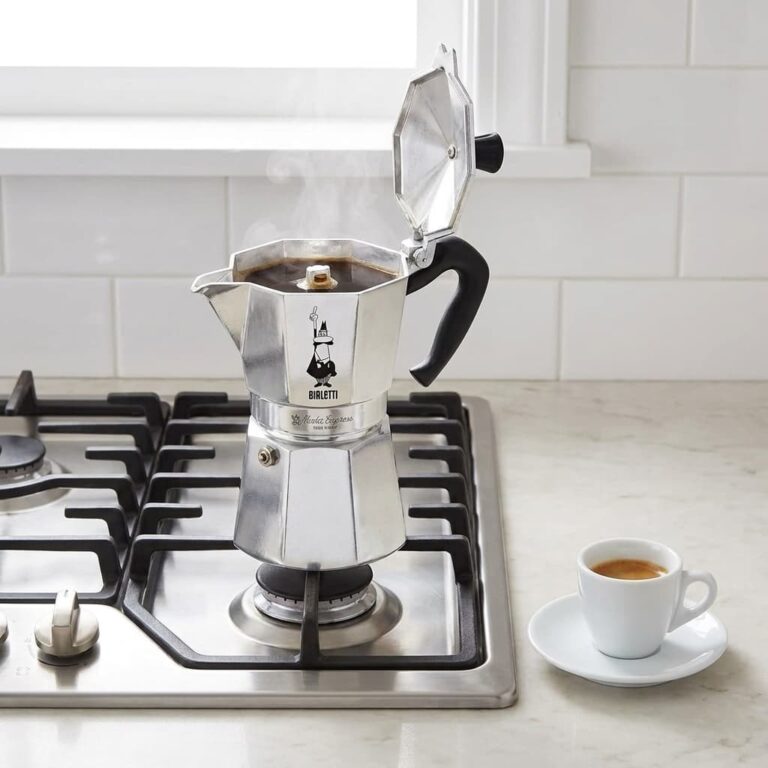
The 1933 original eight sided moka pot, still made in Italy in 100% recyclable aluminum. The handle and lid knob are thermoplastic and the gasket is natural rubber, both stated by Bialetti itself.
How this score breaks down
Strengths
- Made in Italy to the same 1933 design, built to last decades
- Body is 100% recyclable aluminum per Bialetti, with gaskets and filters sold as official spares
- No electronics, no coatings, nothing nonstick
- Gasket is natural rubber as standard, with silicone as the official alternative
Trade-offs
- Handle and lid knob are thermoplastic, polymer unspecified
- Brew path is uncoated aluminum and Bialetti publishes no statement on aluminum and health
- The rubber gasket sits where brewed coffee passes and needs periodic replacement
- Hand wash only; aluminum discolors in the dishwasher
Scored on our durable-goods method (durables-v1, 2026-08-16). How we rank →
What's inside
Body and filter parts are aluminum, which Bialetti states is 100% recyclable. The handle and lid knob are thermoplastic, polymer not specified. The standard gasket is natural rubber per Bialetti's own spare parts pages, with a silicone version sold as an alternative.
| Part | Material |
|---|---|
| Boiler, upper chamber, funnel | Aluminum |
| Filter plate holder | Aluminum |
| Gasket | Natural rubber standard; silicone spare available |
| Handle and lid knob | Thermoplastic, polymer not stated |
| Safety valve | Patented, material not stated |
Free of PFAS, PTFE, nonstick coatings, glass
- Packaging
- Not stated by the brand.
- Microplastics
- None expected from aluminum; the natural rubber gasket is not a petroleum plastic. The thermoplastic handle and knob stay outside the brew.
Attributes
What this product is, at a glance.
Certifications
None listed. We only show independent third-party certifications we can verify with the issuing body, and this product does not currently hold any.
About Bialetti
Bialetti began in 1919 when Alfonso Bialetti opened an aluminum workshop in Crusinallo, a hamlet of Omegna in northern Italy. In 1933 he invented the Moka Express, the eight sided stovetop pot named after the Yemeni coffee city of Mokha, and the design has barely changed since. The mustachioed little man on every pot is a 1958 pencil drawing by Paul Campani that became the company symbol. Today Bialetti Industrie is a publicly listed Italian company and still makes the Moka Express in Italy. The pot is aluminum rather than stainless steel, with a thermoplastic handle and knob, and Bialetti publishes no statement on aluminum and health, so the honest pitch is a repairable icon rather than a plastic free one.
Categories: