
Key Takeaways
- Castile soap sits at a pH of about 8.7 to 9.9 while your skin’s acid mantle is 4.5 to 5.5, so whether castile soap is good for your skin comes down to your skin type.
- It is a solid, low-tox pick for oily and normal skin, but dry, sensitive, and eczema-prone skin should keep it off the face.
- Diluting it every time and following with a pH-balancing rinse is what keeps castile soap from stripping your skin barrier.
It depends on your skin type and how you use it. For oily, normal, or non-sensitive skin, well-diluted castile soap can be a clean, plant-based way to wash without harsh synthetic detergents. For dry, sensitive, or eczema-prone skin, it is usually a poor match, because true soap is alkaline and your skin is meant to be slightly acidic. That pH gap is the whole catch, and it is the part most castile soap fans never hear about. Here is who should reach for it, who should skip it, and how to use it without wrecking your skin barrier.
What Is Castile Soap? (Quick Refresher)
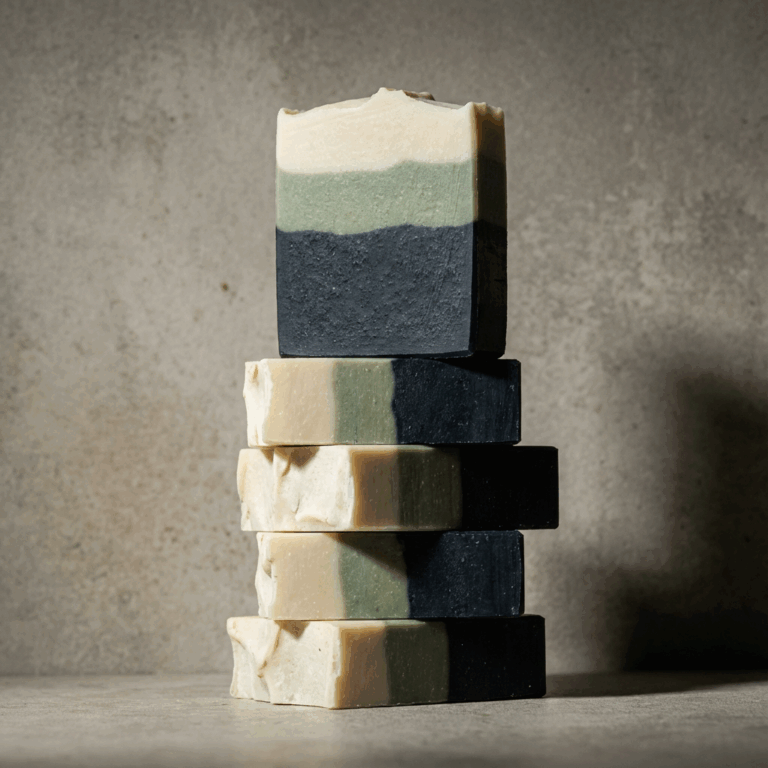
Castile soap is a concentrated soap made by saponifying plant oils such as olive, coconut, and hemp with an alkali, with no animal fat and no synthetic detergents. That simple, sulfate-free makeup is what sets castile soap apart from most drugstore washes.
Castile soap is a plant-oil soap. Instead of animal fat or synthetic detergents, it is made by saponifying vegetable oils such as olive, coconut, and hemp with an alkali (sodium hydroxide for bar soap, potassium hydroxide for liquid). The name traces back to the Castile region of Spain, where olive-oil soap was first made centuries ago.
Today it is a favorite in low-tox homes because it is concentrated, multi-use, and free of the sulfates and synthetic fragrance in most drugstore washes. If you are new to swapping out conventional personal care, castile soap is one of the classic starting points. You can see how it fits a broader routine in our guide to non-toxic living.
The Short Answer: Is Castile Soap Good for Your Skin?
Castile soap is good for oily, normal, and non-sensitive skin, and a poor choice for dry, sensitive, or eczema-prone skin, because castile soap is alkaline at a pH of about 8.7 to 9.9 while healthy skin sits at 4.5 to 5.5.
The deciding factor is your skin barrier and how much your skin tolerates a temporary rise in surface pH.
When it is a great choice
If your skin runs oily to normal and is not reactive, castile soap tends to work well. Oily skin actually benefits from a cleanser that cuts sebum, and a healthy barrier bounces back to its normal acidity within an hour or so after washing. In these cases you get genuinely gentle, plant-based cleansing without sulfates or synthetic fragrance. It is also a solid pick for body, hands, and quick cleanups where the skin is thicker and less delicate than your face.
When it is a bad idea
If your skin is dry, sensitive, eczema-prone, rosacea-prone, or has seborrheic dermatitis, castile soap is usually the wrong call. These skin types already struggle to hold onto moisture and keep the barrier intact, and repeatedly nudging the surface pH upward makes that harder. The result is often tightness, flaking, and flare-ups. A compromised barrier does not need an alkaline cleanser, no matter how natural the ingredient list looks.
Don’t Miss: Essential Oils for Skin Reaching for a scented castile? Some essential oils calm skin and others quietly irritate it. Here is how to tell them apart. Read more →6 Real Benefits of Castile Soap for Skin
The main skin benefits of castile soap are gentle, plant-based cleansing with no SLS, no synthetic fragrances or parabens, biodegradable, low-tox ingredients, vegan and cruelty-free formulas, a single multi-use bottle for face, body, hands, and home, and moisturizing base oils like olive and hemp.
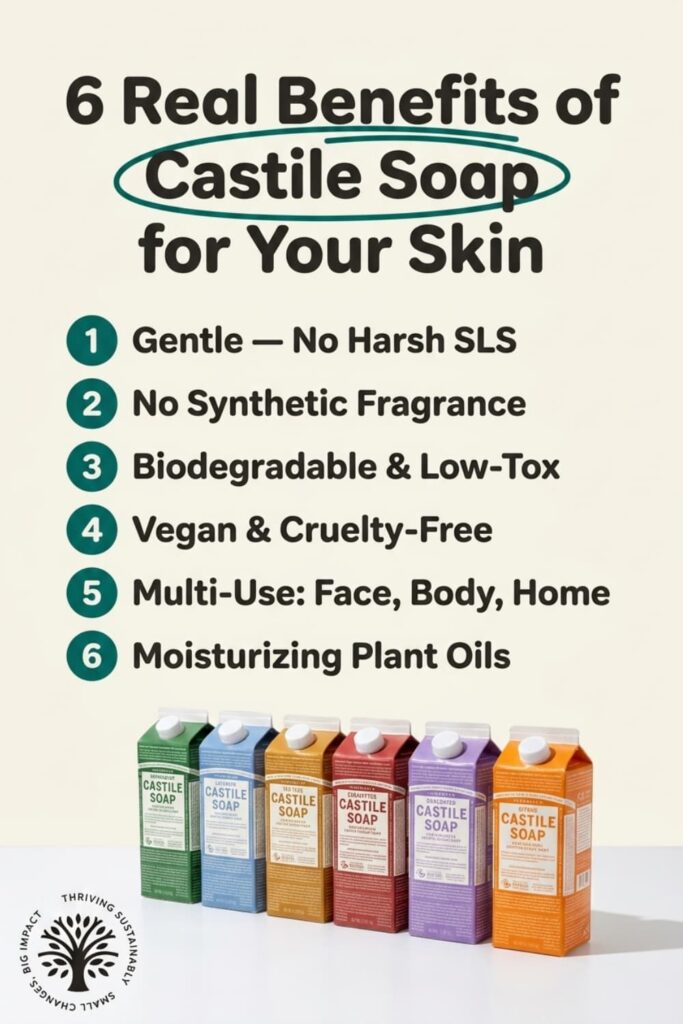
For the right skin type, the upsides are real. Here is what castile soap actually does well.
Gentle plant-based cleansing (no SLS)
Castile soap cleans using saponified plant oils rather than sodium lauryl sulfate (SLS) or sodium laureth sulfate, the strong foaming detergents that leave some people tight and squeaky. For normal and oily skin, that means effective cleansing with less of the stripped feeling harsh surfactants can cause.
No synthetic fragrance or parabens
Most pure castile soaps are scented with essential oils, if at all, and skip parabens and synthetic fragrance. Synthetic fragrance is one of the most common triggers of contact dermatitis, so a fragrance-free or essential-oil-only formula removes a frequent irritant.
Biodegradable and low-tox
True castile soap is readily biodegradable and made from simple, recognizable ingredients. That matters if you are trying to keep both your skin and your drain water free of hard-to-break-down synthetic chemicals.
Vegan and cruelty-free formulations
Because it is built on plant oils rather than tallow, most castile soap is vegan, and the major brands are cruelty-free. For anyone shopping by those values, it is an easy box to check.
Multi-use (face, body, hands, home)
One bottle can cover body wash, hand soap, and household cleaning. Castile soap is a common base for homemade cleaners and even non-toxic laundry detergent. That versatility is a big reason low-waste homes keep it around, since it replaces several single-use plastic bottles.
Moisturizing base oils (olive, coconut, hemp)
The plant oils in castile soap, especially olive and hemp, carry some conditioning fatty acids. This does not cancel out the pH issue, but it does make a well-diluted castile wash feel less stripping than a bar of harsh deodorant soap.
The Big Downside: Castile Soap and Your Skin’s pH
Healthy skin is protected by an acid mantle at a pH of about 4.5 to 5.5, while castile soap is alkaline at roughly 8.7 to 9.9. Washing already-fragile skin with something that alkaline every day can slowly weaken the skin barrier over time.
Here is the part the marketing skips. Healthy skin is protected by the acid mantle, a thin film of sebum, sweat, and acids that keeps the surface at a slightly acidic pH of about 4.5 to 5.5. That acidity is not an accident. It holds the outer skin layer together, supports the good bacteria in your skin microbiome, and keeps harmful microbes out.
Castile soap, like all true soap, is alkaline. Dr. Bronner’s, the best-known brand, measures its pure-castile soaps at a pH of roughly 8.7 to 9.9, and true soap in general sits around 8.5 to 11. Every time you wash with something that alkaline, you push your skin surface pH up and away from its happy zone.
For healthy skin, that shift is temporary and the barrier recovers. The problem is repeated, daily alkaline washing on skin that is already fragile. Dermatology research links a raised skin pH to a weaker barrier, more water loss through the skin, altered bacterial flora, and enzyme activity that breaks down the skin’s own structure. In plain terms, keep splashing an alkaline cleanser on dry or sensitive skin and you can slowly wear down the very barrier you are trying to protect.
Castile Soap Side Effects to Watch For
The most common castile soap side effects are dryness, a tight feeling after washing, redness or irritation, worsened eczema, and waxy or straw-like hair when it is used undiluted on the scalp. Most trace back to its alkaline pH of about 8.7 to 9.9 or to using it without diluting.
Most castile soap complaints trace back to that pH gap, or to using it undiluted. Watch for dryness and a tight, drawn feeling after washing, which is the earliest sign your skin is not tolerating it. Others report redness or irritation, worsened eczema and other flare-ups, and stinging if it gets near the eyes.
Used on the scalp as shampoo, undiluted or unrinsed castile soap can leave hair feeling waxy or straw-like, because the same alkalinity roughs up the hair cuticle. If you notice any of these, that is your skin telling you to dilute more, add aftercare, or stop.
How to Use Castile Soap on Skin Without Wrecking Your Barrier
To use castile soap without wrecking your barrier, dilute it every time, follow with a pH-balancing rinse or moisturizer, skip it on your face if your skin is dry or sensitive, and patch test first. Dilution and aftercare are what offset its alkaline pH of about 8.7 to 9.9.
If your skin type is a good match, a few habits make all the difference.
Always dilute
Castile soap is concentrated, and using it straight is the number one mistake. Dilute it every time. As a general starting point:
| Use | Rough dilution |
|---|---|
| Face (oily/normal skin only) | 2 to 3 drops in a wet, cupped hand |
| Body wash | About half a tablespoon on a wet washcloth |
| Hand soap (foaming pump) | 1 part soap to 3 parts water |
| Full-body in the shower | A dime-size amount worked into a wet cloth |
Follow with a pH-balancing step
Because washing nudges your skin alkaline, help it swing back to acidic. A diluted apple cider vinegar rinse (about 1 tablespoon in a cup of water) or simply following with a good acidic-leaning moisturizer helps the acid mantle recover faster. This aftercare step is non-negotiable if you have any dryness at all.
Skip it on your face if you have dry or sensitive skin
Facial skin is thinner and more reactive than the skin on your body. If you are dry, sensitive, or breakout-prone in a rosacea or eczema way, keep castile soap off your face entirely and use a pH-balanced or syndet facial cleanser instead. Save the castile for hands, body, and cleaning.
Patch test first
Before you commit, test a diluted amount on your inner forearm and wait 24 hours. If you see redness, itching, or tightness, castile soap is not the wash for your skin.
Castile Soap vs. Regular Soap vs. Syndet Bars for Skin
Castile soap and regular bar soap are both alkaline true soaps, at roughly 8.7 to 9.9 and 9 to 11, while syndet bars are formulated near skin’s own pH of about 5.5 to 7. That is why syndet bars suit dry and sensitive skin, and castile suits oily, normal, low-tox routines.
Not all cleansers treat your acid mantle the same way. Here is how the three main options compare.
| Castile soap | Regular bar soap | Syndet bar | |
|---|---|---|---|
| pH | About 8.7 to 9.9 (alkaline) | About 9 to 11 (alkaline) | About 5.5 to 7 (near skin) |
| What cleans | Saponified plant oils | Saponified fats plus lye | Mild synthetic surfactants |
| Best skin type | Oily, normal, non-sensitive | Oily, non-sensitive | Dry, sensitive, eczema, rosacea |
| Fragrance/additives | Usually essential oils only | Often synthetic fragrance | Varies, many fragrance-free |
| Cost | Low per use (concentrated) | Low | Moderate |
The takeaway: syndet bars are the only option here that sits in or near your skin’s natural pH range, which is why dermatologists often recommend them for compromised skin. Castile soap is the better natural, low-tox choice, but it is still alkaline, so it asks more of your barrier than a syndet does.
Best Castile Soaps for Skin (By Skin Type)
For sensitive or fragrance-reactive skin, choose an unscented baby castile soap; for oily skin, a peppermint castile gives a light, cooling wash; for normal skin, a mild lavender castile works well. Whichever you pick, dilution and aftercare matter more than the scent.
You do not need a specific brand to get this right, but the format and scent matter. As a general guide, unscented baby castile is the safest pick for sensitive skin and anyone reactive to fragrance, since it removes essential oils from the equation. A peppermint castile suits oily skin and hot weather, with a light cooling finish, though keep it away from the face and eyes. A lavender castile is a gentle everyday option for normal skin that wants a mild, calming scent. Whichever you choose, the dilution and aftercare steps above matter far more than the label.
Castile soap, scored by format
$
Dr. Bronner’s is a family-run soap maker best known for its Pure-Castile soaps, made with Regenerative Organic Certified oils from organic and fair trade supply chains, per drbronner.com. The soap inside is the same simple, fully disclosed formula in every format. What changes is the package, so we score Dr. Bronner’s castile by format, not by brand.
| 1 | Pure-Castile Bar Soap Plastic-free recycled paper wrapper, no bottle at all |
Shop |
| 2 | Liquid Soap Refill Carton, 32 oz FSC-certified paper carton with a thin plastic and aluminum lining; Dr. Bronner’s says it uses 82% less plastic than its 32 oz bottle |
Shop |
| 3 | Pure-Castile Liquid Soap in a bottle Same soap in a 100% post-consumer recycled plastic bottle, recyclable but still a single-use bottle; refill it from the carton to cut most of the plastic |
Certifications do not change these numbers. Scored on the Consumables Scoring Guide.
Should You Use Castile Soap? A 3-Question Decision Tree
Use castile soap if your skin is oily to normal and you are willing to dilute it every time and follow with a pH-balancing step; skip it on your face if your skin is dry, sensitive, or eczema-prone, since its pH of about 8.7 to 9.9 sits well above skin’s 4.5 to 5.5.
- Is your skin dry, sensitive, eczema-prone, or rosacea-prone? If yes, skip castile soap on your face and lean on a syndet or pH-balanced cleanser instead. If no, keep going.
- Are you willing to dilute it every single time? If no, castile soap will likely leave you tight and dry, so it is not your match. If yes, keep going.
- Will you follow with a pH-balancing rinse or moisturizer? If yes, castile soap can be a great, low-tox part of your routine. If no, expect some dryness and reconsider.
FAQs on Castile Soap and Skin
Not really. Both are alkaline true soaps, so neither matches sensitive skin well. Castile skips synthetic fragrance and sulfates, which helps, but for truly sensitive or eczema-prone skin a pH-balanced or syndet cleanser is the safer choice.
It can, especially if you use it undiluted or have dry skin to begin with. The alkaline pH temporarily disrupts your acid mantle, which can leave skin tight. Diluting well and following with a moisturizer reduces this.
Only if your skin is oily to normal and tolerates it. Dry and sensitive skin should not use it on the face daily, since repeated alkaline washing can wear down the barrier over time.
For oily, acne-prone skin that is not sensitive, diluted castile soap can help by cutting excess oil. It is not a treatment for acne, though, and if your skin is also reactive it may cause more irritation than it is worth.
That tight feeling is your skin’s raised pH and reduced surface oils after an alkaline wash. It is the classic sign castile soap is a bit too stripping for you, or that you need to dilute more and add a moisturizing step.
Yes. Eczema-prone skin has a weakened barrier, and alkaline cleansers can push it further out of balance and trigger flares. Most dermatologists steer eczema patients toward pH-balanced, fragrance-free cleansers instead.
For most healthy skin, yes, when diluted. Dr. Bronner’s is alkaline like all castile soap, so the same rules apply: dilute it, patch test, and skip it on the face if your skin is dry or sensitive.
Yes. Straight castile soap is too concentrated and can be drying. Work a small amount into a wet washcloth or add it to water first rather than applying it directly.
Castile soap is not an antibacterial or antiseptic product. Like any soap, it removes germs, oil, and dirt from the skin by helping them rinse away, but it does not kill bacteria the way a labeled antibacterial cleanser claims to.
Castile soap is alkaline, typically around a pH of 8.7 to 9.9, compared with your skin’s natural pH of about 4.5 to 5.5. That gap is the reason dilution and pH-balancing aftercare matter.
Final Thoughts
Castile soap earns its spot for oily to normal skin when you dilute it and follow with a pH-balancing step. For dry, sensitive, or eczema-prone skin, keep it off your face and use it for hands, body, and cleaning instead.
The plant-based, low-tox, multi-use appeal is real, but the alkaline pH is also real. Match it to your skin type and use it wisely, and castile soap is a keeper. Force it onto a fragile barrier and it will not be.
More Non-Toxic Skin Care Reads
📚 References
- American Academy of Dermatology. (n.d.-a). Face washing 101. https://www.aad.org/public/everyday-care/skin-care-basics/face/face-washing-101
- Cleveland Clinic. (2022, June 27). Castile soap: What it is and how to use it. https://health.clevelandclinic.org/castile-soap
- Dr. Bronner’s. (n.d.-b). Skin pH, soap and the microbiome: How castile soap cleans. https://www.drbronner.com/pages/soap-ph-skin-microbiome-castile
- Indian Journal of Dermatology, Venereology and Leprology. (n.d.-c). Acid mantle: What we need to know. https://ijdvl.com/acid-mantle-what-we-need-to-know/
- Journal of Integrative Dermatology. (2024). From discovery to modern understanding: The acid mantle in dermatology. https://jintegrativederm.org/doi/10.64550/joid.pemwha98
- Mijaljica, D., Spada, F., & Harrison, I. P. (2022). Skin cleansing without or with compromise: Soaps and syndets. Molecules, 27(6), 2010. https://pmc.ncbi.nlm.nih.gov/articles/PMC8954092/