


Key Takeaways
- Polyester made up 59% of all fiber produced worldwide in 2024, so many sweaters on the rack are partly plastic.
- The most sustainable sweaters use 100% natural fiber, like recycled cashmere, recycled wool, alpaca, or organic cotton.
- Recycled polyester still sheds microfibers in the wash, so a label reading “recycled” doesn’t mean plastic-free.
Flip over the tag on almost any sweater at the mall, and it will likely list polyester, acrylic, or nylon. Polyester alone made up 59% of all fiber produced worldwide in 2024, and synthetics as a whole reached about 69%, according to Textile Exchange’s latest materials report. That cozy knit you’re eyeing may be partly plastic.
The most sustainable sweaters are made from natural fibers with nothing synthetic mixed in: recycled cashmere, cashmere, recycled wool, merino, alpaca, and organic cotton. They keep plastic microfibers out of your laundry water, and they break down at the end of their life instead of lingering as plastic.
We researched dozens of sweaters and checked each fiber label against the brand’s own product page. Below you’ll find nine picks sorted by fiber type, plus how to read a label so you can spot a truly sustainable sweater on your own.
What Makes a Sweater Sustainable?
A sustainable sweater is made from natural fiber (like cashmere, wool, alpaca, or organic cotton), ideally recycled or third-party certified, with no polyester, nylon, or acrylic in the blend.
Three things matter most. The first is the fiber itself. Natural fibers like wool, cashmere, and cotton come from animals or plants, so they don’t shed plastic microfibers when you wash them.
Next comes where the fiber came from. Recycled fiber reuses sweaters and factory scraps that already exist, and certified fiber comes with outside proof about animal welfare, land care, or organic farming.
How long the sweater lasts counts too. A well-made cashmere crewneck you wear for ten falls does more good than three cheap acrylic ones that pill by November.
Watch for one catch. Many sweaters marketed as eco-friendly are blends, and the synthetic part usually does the most damage. A sweater that’s 70% wool and 30% nylon still sheds plastic every time it goes in the wash.
Sustainable Sweater Fibers Compared
Recycled cashmere, cashmere, wool, merino, alpaca, and organic cotton are all plastic-free sweater fibers, while recycled polyester and acrylic are plastic no matter how they’re marketed.
Each fiber has its own feel, care routine, and certification to look for. This quick chart shows how they stack up, with the plastic-free options first.
| Sweater fiber | Contains plastic? | Label to look for | Care |
|---|---|---|---|
| Recycled cashmere | No | Global Recycled Standard (GRS) | Hand wash cold, dry flat |
| Cashmere | No | Good Cashmere Standard | Hand wash cold, dry flat |
| Recycled wool or merino | No | Global Recycled Standard (GRS) | Hand wash or wool cycle |
| Wool or merino | No | Responsible Wool Standard (RWS) | Hand wash or wool cycle |
| Alpaca | No | Responsible Alpaca Standard (RAS) | Hand wash cold, dry flat |
| Organic cotton | No | GOTS or OCS | Machine wash cold |
| Recycled polyester | Yes | GRS proves it’s recycled, not plastic-free | Sheds microfibers when washed |
| Acrylic | Yes | None fixes it | Sheds the most microfibers |
Natural fibers also have a big advantage once a sweater finally wears out. In a 90-day marine test led by New Zealand’s AgResearch, wool scored between 20.3 and 67.3 for breakdown, measured against a paper pulp benchmark of 100. Polyester scored 6.3 and nylon just 0.8.
💫 Now You Know
What Is Recycled Cashmere?
It’s cashmere that has already lived one life. Old sweaters and factory scraps get sorted by color, shredded back into fiber, and spun into new yarn. Brands often blend in a little new cashmere or wool so the shorter recycled fibers hold together.
Why Recycled Polyester Sweaters Still Shed Plastic
Recycled polyester is still plastic, and in one lab study, knits made from recycled polyester shed about 2.3 times more microfibers than knits made from new polyester.
Recycled polyester sounds like a win, and it does keep some plastic bottles out of landfills. In fact, 98% of recycled polyester still comes from plastic bottles, according to Textile Exchange. Once that bottle becomes a sweater, though, it behaves like any other plastic fabric in the wash.
A University of Plymouth study found a single 6 kg load of acrylic laundry could release over 700,000 microfibers. Polyester released about 496,000 in the same test. A later study went further: knits made from recycled polyester shed about 2.3 times as many fibers as knits made from new polyester.
Some of those fibers slip past wastewater treatment and end up in rivers and oceans. So when you’re shopping for a sweater, it helps to know what to skip and what to look for.
❌ Skip These Sweater Blends
- Acrylic: the cheapest “wool look,” and the top microfiber shedder in lab tests.
- Recycled polyester blends: Tentree’s Highline sweaters, for example, are 44% recycled polyester.
- Wool and nylon blends: Patagonia’s women’s recycled wool-blend crewneck is 31% recycled nylon.
- Alpaca and nylon blends: PAKA’s Original Crew is 35% recycled nylon.
✅ Look for These Instead
- 100% natural fiber: cashmere, wool, merino, alpaca, or organic cotton, with nothing else on the tag.
- Recycled natural fiber: recycled cashmere and recycled wool reuse fiber that already exists.
- Third-party labels: GRS, RWS, RAS, GOTS, or the Good Cashmere Standard back up the claims.
9 Best Sustainable Sweaters for Women
The nine best sustainable sweaters are 100% natural fiber picks from Reformation, Eileen Fisher, Quince, Naadam, Colorful Standard, Baukjen, Arms of Andes, and Tentree, sorted by fiber type.
Every sweater below has zero synthetic fiber on its label, and we checked each one against the brand’s own product page. They’re grouped by fiber, so you can jump straight to the feel and price point you want.

Best Relaxed Fit
$$$
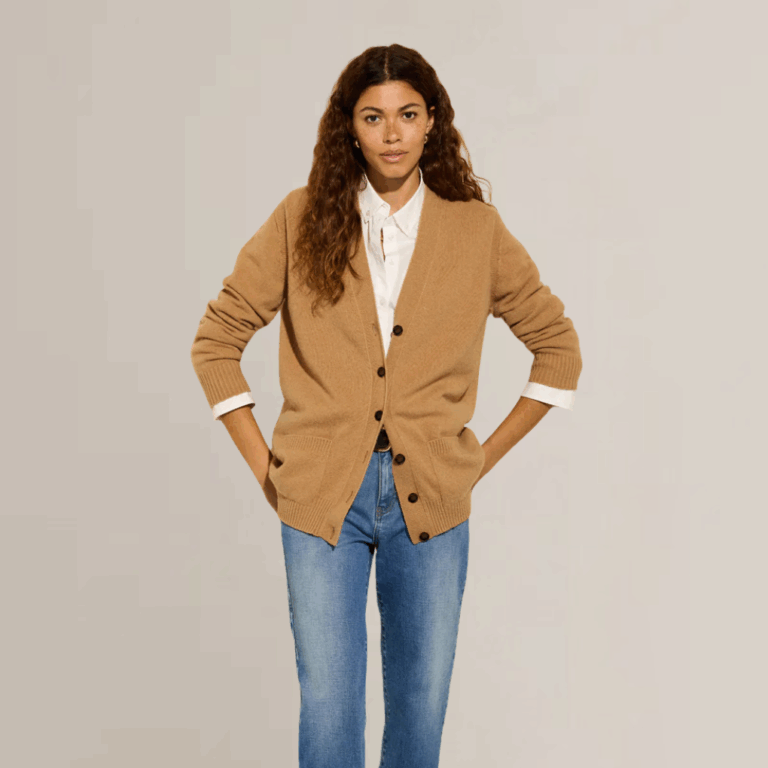
Reformation‘s Boyfriend Sweater is the one you’ll reach for on slow weekend mornings. It’s cut loose and easy with ribbed cuffs, and it has the soft, broken-in drape of a sweater you borrowed and never gave back.
Almost all of the cashmere is recycled, so you get that supple, cozy feel with nothing synthetic mixed in and far less demand for new fiber.
Main Fiber
95% Recycled Cashmere
✓ Plastic FreeBlend
5% Cashmere
✓ Plastic FreeSynthetics
None Listed
✓ Plastic FreeCertification
Not Listed
ⓘ InfoPros
- 95% recycled fiber
- No synthetic fiber on the label
- RefRecycling gives $5 credit per returned Ref piece
Cons
- No third-party recycled certification listed
- Stock varies by color
Mostly recycled cashmere in an easy, oversized shape. The pick for cashmere lovers who want recycled fiber first.
Best Circular Pick
$$$
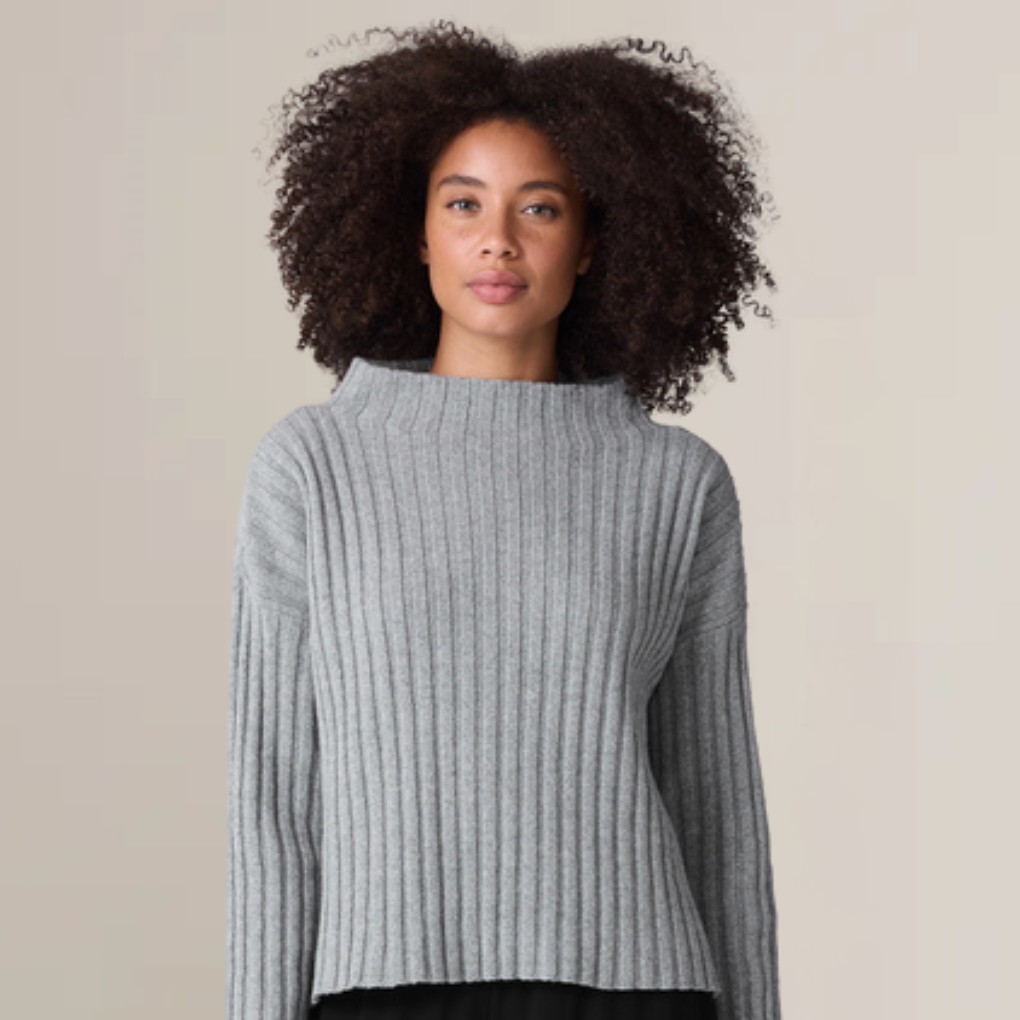
This funnel neck top from Eileen Fisher started life as someone else’s sweater. The brand collects worn pieces through its Renew take-back program and gives the wool a second life here, blended with recycled cashmere.
The boxy, cropped shape drapes away from your body, and reviewers say it feels warm without the bulk and soft instead of itchy.
Main Fiber
80% Recycled Wool
✓ Plastic FreeBlend
20% Recycled Cashmere
✓ Plastic FreeSynthetics
None Listed
✓ Plastic FreeBrand
B Corp Since 2015
ⓘ InfoPros
- 100% recycled fiber
- Wool comes from Renew take-back garments
- Certified B Corporation since 2015
Cons
- Highest price on this list, even on markdown
- Renew mail-in is paused, so returns are in-store only
A sweater made from old sweaters, by a brand that collects its own. The pick for closing the loop on your closet.
Best Budget Cashmere
$$$
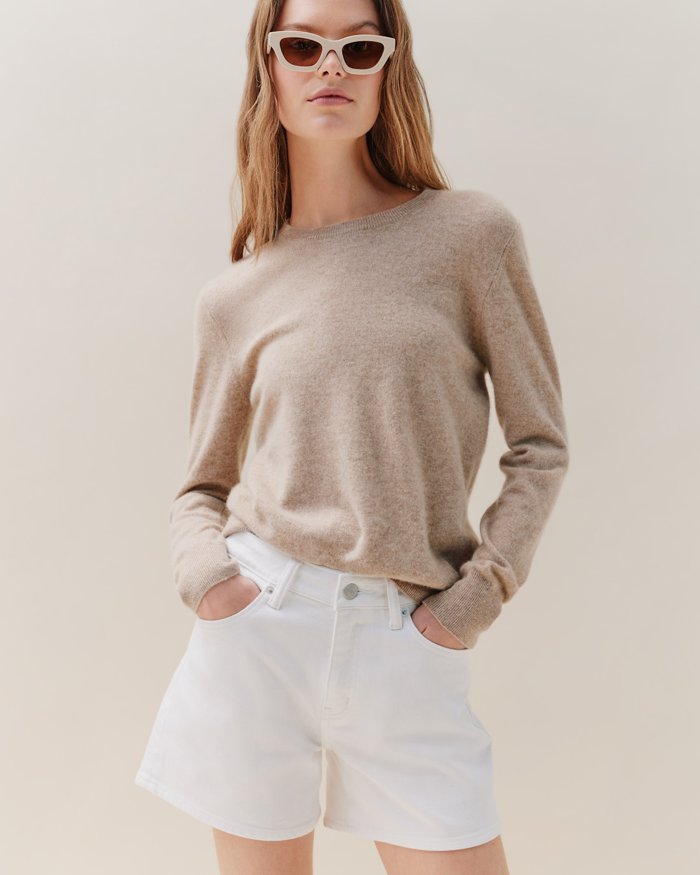
If you’ve always wanted a real cashmere sweater but balked at the price, Quince is the place to start. This classic crewneck is pure Grade A Mongolian cashmere with a buttery feel and a cozy, substantial drape.
It comes in easy neutrals like oatmeal, ivory, and charcoal, so it slips right into your fall rotation, and there’s no synthetic blend hiding in the knit. Want the full story on the brand? Our Quince sustainability review covers it.
Main Fiber
100% Grade A Cashmere
✓ Plastic FreeSynthetics
None Listed
✓ Plastic FreeOrigin
Inner Mongolia
ⓘ InfoCertification
Not Listed
ⓘ InfoPros
- Pure cashmere at an entry-level price
- No synthetic fiber
- Fine 15.8 to 16.2 micron fiber
Cons
- No third-party cashmere certification listed
- New cashmere, not recycled
Real cashmere at a price that makes it an everyday sweater. The pick if budget is the deciding factor.
Best Classic Crewneck
$$$
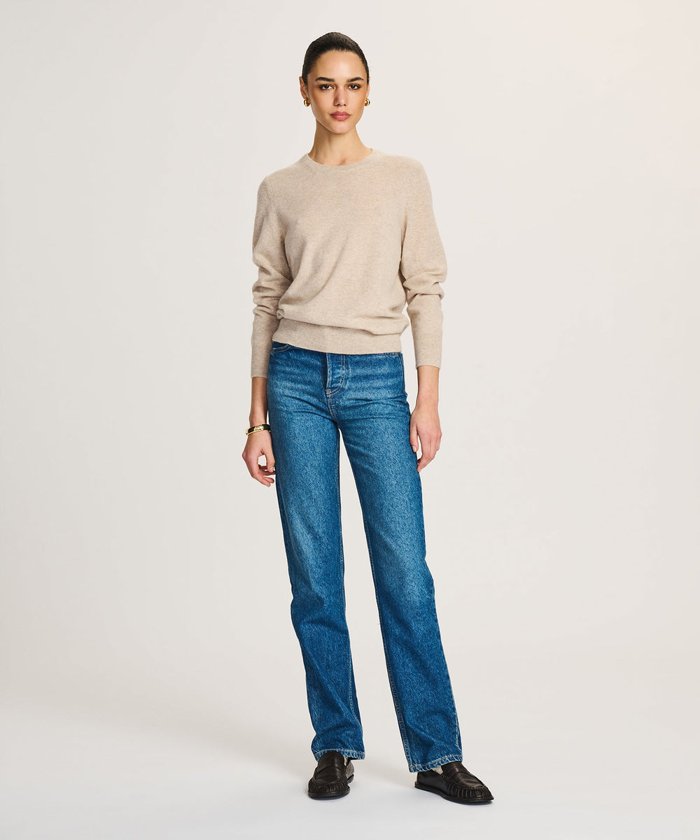
The Original is the sweater Naadam built its name on, an easy crewneck you can wear on its own, over a tee, or tossed over your shoulders on a cool evening.
It’s knit in the brand’s signature everyday weight and hits at just the right length for a front tuck. Naadam has worked directly with herding communities in Mongolia since 2013, so you know where the fiber comes from.
Main Fiber
100% Cashmere
✓ Plastic FreeSynthetics
None Listed
✓ Plastic FreeOrigin
Mongolia
ⓘ InfoCertification
Not Listed
ⓘ InfoPros
- Sourced directly from Mongolian herders
- Signature 12-gauge knit
- No synthetic fiber
Cons
- No third-party cashmere certification listed
- New cashmere, not recycled
A simple, pure-cashmere crew with a direct line to the herders. The pick for a timeless crewneck you wear every week.
Best Recycled Merino
$$$
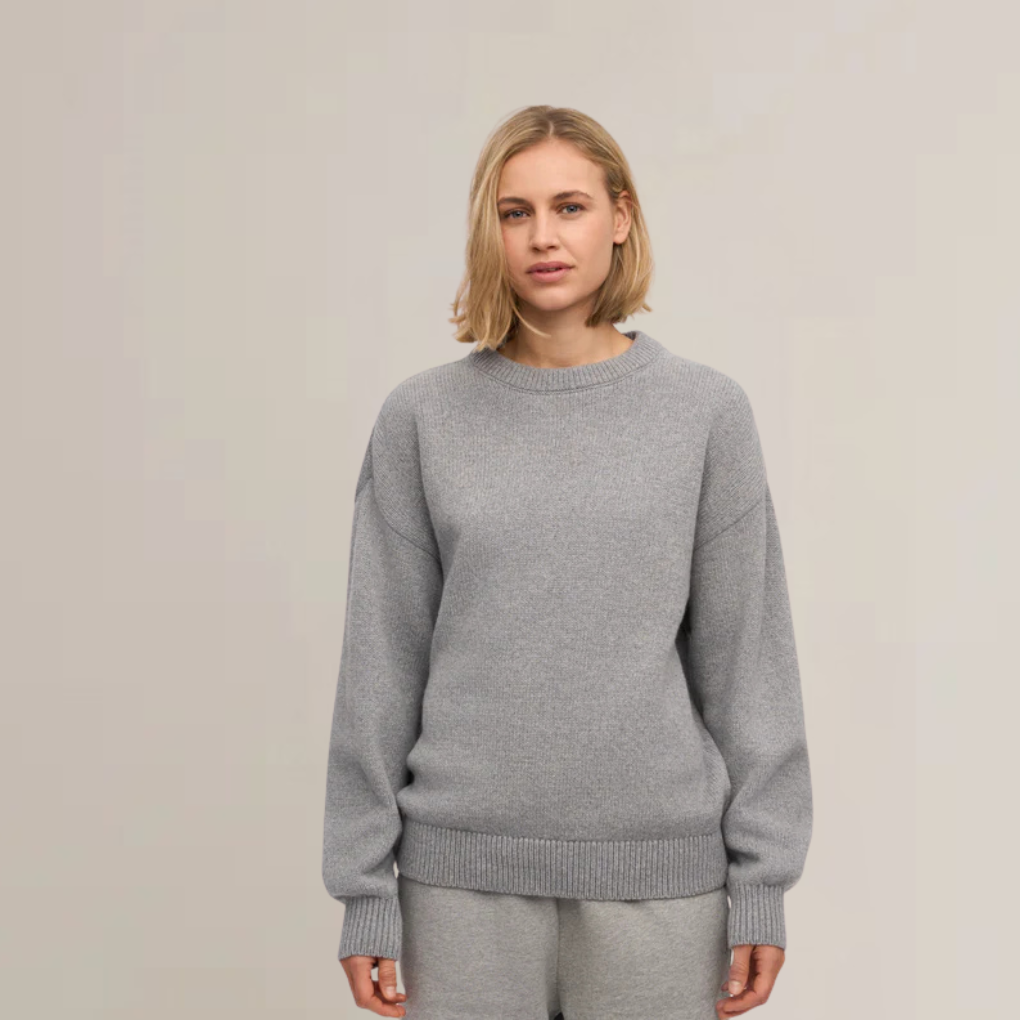
Colorful Standard‘s oversized crew is made for wrapping yourself up in. Dropped shoulders and a relaxed drape give it that cozy, lived-in shape, and the recycled merino feels soft and gentle against your skin.
Wear it with jeans and boots on a crisp afternoon, or pull it on over sweatpants for a quiet night in. The recycled wool is certified by the Global Recycled Standard and knit in Portugal.
Main Fiber
100% Recycled Merino
✓ Plastic FreeSynthetics
None Listed
✓ Plastic FreeCertification
GRS
ⓘ InfoMade In
Portugal
ⓘ InfoPros
- GRS-certified recycled merino
- Made in Portugal
- No synthetic fiber
Cons
- Unisex fit, so the brand suggests women size down
- Needs a hand wash or wool cycle
Soft recycled merino with a third-party label to back it up. The pick for an everyday wool sweater that’s fully recycled.
Best Classic Wool Crew
$$$
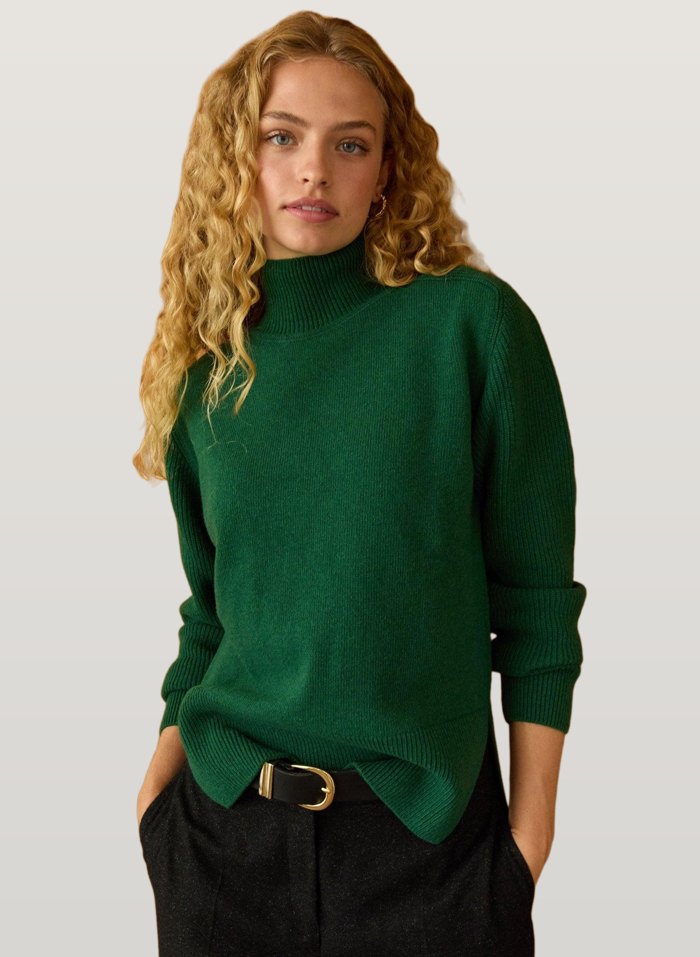
The Joanie from Baukjen is a midweight crew with a funnel neck that keeps the chill off and side splits that make it easy to layer over a shirt or under a coat.
It’s knit from fully recycled wool and goes with everything from denim to leather pants. Baukjen is also a Certified B Corporation with a B Impact score of 153.6, nearly double the 80 points needed to certify.
Main Fiber
100% Recycled Wool
✓ Plastic FreeSynthetics
None Listed
✓ Plastic FreePackaging
Plastic-Free (Brand States)
✓ Plastic FreeBrand
B Corp, 153.6 Score
ⓘ InfoPros
- 100% recycled extrafine wool
- B Impact score of 153.6
- Plastic-free packaging, per the brand
Cons
- Ships from the U.K., and you pay duties on delivery
- Hand wash or dry clean only
Fully recycled wool from one of fashion’s top-scoring B Corps. The pick for a classic crew that skips new wool.
Best Alpaca Sweater
$$$
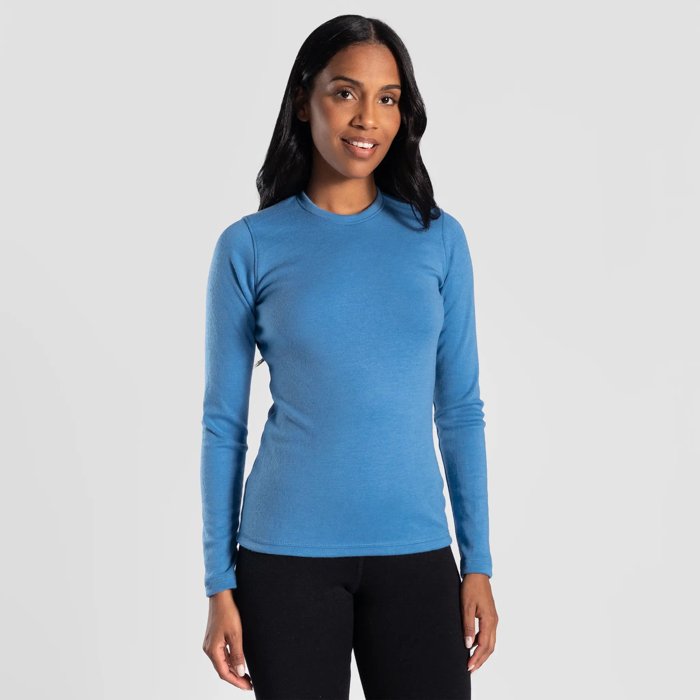
Arms of Andes makes this lightweight alpaca sweater in Peru, from the fleece all the way to the finished knit. It has a fitted cut with a little natural stretch, and it’s the layer you pull on when the air turns cool, whether you’re hiking, traveling, or running errands.
The details are what set it apart. The thread is cotton and the labels are organic cotton, so there’s no hidden plastic anywhere in the build.
Fabric
100% Royal Alpaca
✓ Plastic FreeThread
100% Cotton
✓ Plastic FreeLabels
Organic Cotton
✓ Plastic FreeDyes
OEKO-TEX Certified
ⓘ InfoPros
- Plastic-free down to the thread and labels
- Made entirely in Peru
- Compostable packaging since 2021
Cons
- No Responsible Alpaca Standard certification listed
- Lightweight knit, so layer it in deep cold
The only pick here we could confirm is plastic-free down to the thread. The pick for the most thorough plastic-free build.
Best Organic Cotton Knit
$$$
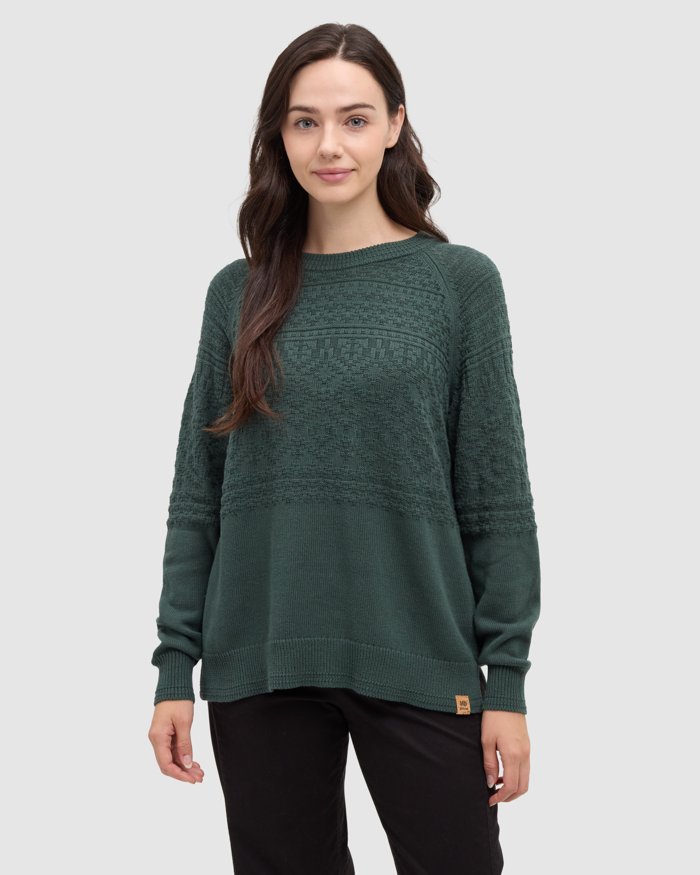
Tentree‘s Mesa Sweater is the kind you’ll wear all season long. It’s lightweight organic cotton with a relaxed fit and a longer length that’s easy to throw on any day of the week.
It’s a great choice if wool makes you itch, and the stretch comes from the knit itself instead of spandex, so there’s no plastic hiding in the fabric.
Main Fiber
100% Organic Cotton
✓ Plastic FreeSynthetics
None Listed
✓ Plastic FreeStretch
From the Knit
✓ Plastic FreeCertification
Not Listed
ⓘ InfoPros
- No spandex, the stretch comes from the knit
- Wool-free for sensitive skin
- Designed in Canada
Cons
- No organic certification listed on the page
- Many other Tentree sweaters are 44% recycled polyester
Tentree’s plastic-free knit, made from organic cotton alone. The pick for a soft, wool-free sweater.
Lowest-Priced Pick
$$$
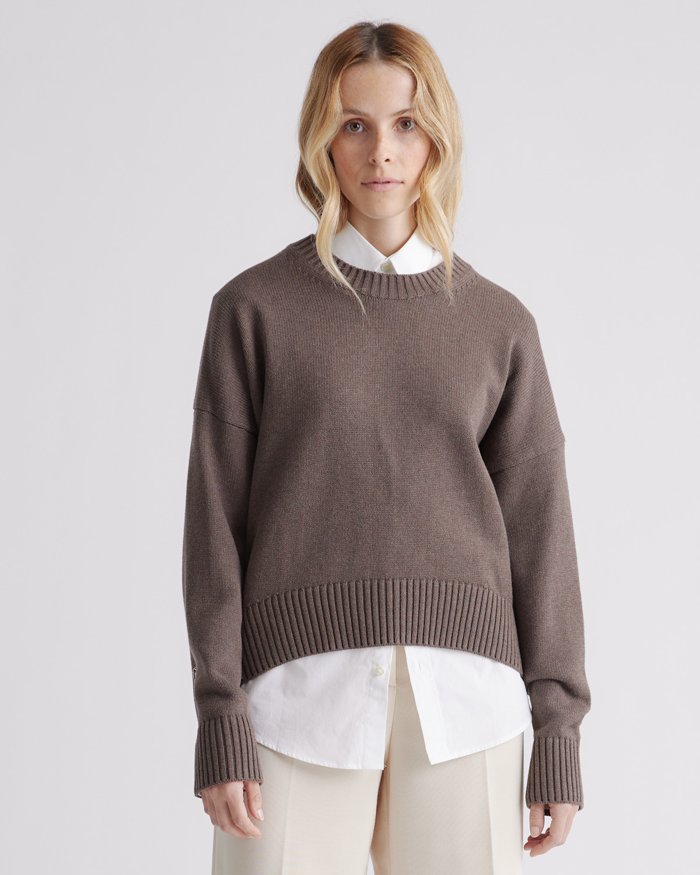
This boyfriend crew from Quince is slouchy and oversized, with a slightly cropped length and a high-low hem that sits nicely over high-waisted jeans.
The organic cotton feels breathable and soft in a just-right medium weight, and you can wash it on a delicate cycle at home. It’s also the friendliest price on this list.
Main Fiber
100% Organic Cotton
✓ Plastic FreeSynthetics
None Listed
✓ Plastic FreeCertification
OEKO-TEX 100
ⓘ InfoCertification
Organic Content Std
ⓘ InfoPros
- Third-party checks for organic content and harmful substances
- Lowest price on this list
- No synthetic fiber
Cons
- Less warm than wool or cashmere
- No GOTS listed on the product page
Certified organic cotton at the friendliest price here. The pick for layering on a budget.
Save This Sustainable Sweater Guide 📌
Is Recycled Cashmere Better Than New Cashmere?
Recycled cashmere is usually the lower-impact choice because it reuses fiber that already exists, while new cashmere relies on goat herding that has worn down much of Mongolia’s grassland.
Cashmere comes from the soft undercoat of cashmere goats, and each goat gives only a small amount. An adult Mongolian goat produces about 170 to 850 grams of raw cashmere a year, and a good share of that is lost when the coarse outer hair gets removed.
That adds up to a lot of goats. The UN Development Programme estimates about 70% of Mongolia’s pastureland is degraded to some extent, and the country’s herd has roughly doubled since 2000.
Recycled cashmere sidesteps that pressure. Stella McCartney, which tracks its footprint in-house, reports that its recycled cashmere has an environmental impact seven times lower than new cashmere. That’s brand-reported data, not an independent study, but it points in the same direction.
New cashmere can still be a responsible pick when it’s certified. The Good Cashmere Standard covers goat welfare, farmer livelihoods, and land care. Certified programs covered about 36% of the world’s cashmere in 2024, so it’s worth asking for.
How to Spot a Truly Sustainable Sweater
The fastest way to spot a sustainable sweater is to read the fiber tag for 100% natural fiber, then look for a third-party label like GRS, RWS, RAS, GOTS, or the Good Cashmere Standard.
Brand buzzwords like “eco yarn” or “consciously made” don’t tell you much on their own. The fiber tag and a third-party label tell you far more. Here’s what each certification actually checks.
- Global Recycled Standard (GRS): confirms recycled content and bans harmful chemicals. A consumer label needs at least 50% recycled content.
- Responsible Wool Standard (RWS): certifies every site from the farm onward for animal welfare and land care.
- Responsible Alpaca Standard (RAS): the same approach, built for alpaca farms.
- Good Cashmere Standard: covers goat welfare, farmers, and the land cashmere comes from.
- GOTS: certifies organic fiber plus environmental and social rules through processing. Products labeled “organic” must contain at least 95% organic fiber.
- OEKO-TEX Standard 100: tests the finished sweater for harmful substances. It’s a safety label, not a sign of organic or recycled fiber.
For a deeper look at which labels hold up, our guide to third-party certifications breaks down each one. If a brand’s claims still feel vague, our guide to greenwashing in fashion covers the red flags.
✨ TIP
Check the Tag, Not the Hang Tag
The cardboard hang tag is marketing. The sewn-in label is the one U.S. law requires to list fiber content by percentage. If it shows polyester, nylon, acrylic, or elastane, the sweater contains plastic.
How to Care for Wool and Cashmere Sweaters
Wool and cashmere sweaters last longest when you wash them rarely, use cold water and a wool-safe detergent, dry them flat, and store them folded.
The most sustainable sweater is the one you keep wearing, and good care can add years to a knit. These habits keep natural fiber sweaters soft and in shape.
- Wash less often: wool and cashmere resist odors, so airing a sweater out overnight is often enough between wears.
- Go cold and gentle: hand wash in cold water with a mild wool detergent, then press the water out instead of wringing.
- Dry flat: lay the sweater on a towel and reshape it, since hanging a wet knit stretches it out.
- De-pill with a comb: a cashmere comb or sweater stone lifts pills without cutting fibers.
- Store folded: hangers stretch the shoulders, so fold sweaters and tuck cedar or lavender nearby to keep moths away.
When a favorite finally wears through, it still has a second life. Turn it into something new with our DIY sweater upcycle ideas, or send it back through a take-back program like Reformation’s or Eileen Fisher’s.
Don’t Miss: Is Polyester Plastic? The Truth About Your Clothes in 2026 If polyester is on your sweater tag, here’s what it’s made of and what happens every time you wash it. Read more →FAQs on Sustainable Sweaters
Most people find merino much softer than regular wool because its fibers are finer. Extra-fine merino, like the recycled merino in the Colorful Standard crew, is soft enough for many people to wear against bare skin. If you’re very sensitive to wool, organic cotton or cashmere is the safer bet.
Only when the care label says so. Some wool is treated to survive a machine wool cycle, but most cashmere and untreated wool will shrink or felt with heat and agitation. When in doubt, hand wash in cold water and dry flat.
An organic cotton sweater works well for mild fall days and for layering under a coat. Cotton doesn’t insulate as well as wool or cashmere once it gets damp, so choose wool, alpaca, or cashmere for cold, wet weather.
Buying a secondhand sweater is one of the lowest-impact choices you can make because no new fiber is produced. Just read the tag the same way you would for a new sweater, since a thrifted acrylic sweater still sheds plastic in the wash.
Final Thoughts About Sustainable Sweaters
The best sustainable sweater has one fiber on the tag, not three, and you wear it for many falls to come.
Recycled cashmere, wool, merino, alpaca, and organic cotton all keep plastic out of your wardrobe and your wash water. Start with the fiber you love most, check the tag for synthetics, and look for a third-party label to back up the brand’s claims. Whether you choose Reformation’s recycled cashmere, the Quince crewneck, or Tentree’s organic cotton Mesa, each one on this list is 100% natural fiber, and with good care it will stay cozy for years.
We’ve also scored clothing and textile picks on plastic in the Fashion & Textiles directory.
📚 References
- AgResearch. (n.d.). Microfibre pollution and the marine biodegradation of wool [Case study]. International Wool Textile Organisation. https://iwto.org/wp-content/uploads/2020/04/26-March-AgR-Research-Case-Study.pdf
- Collie, S., Brorens, P., Hassan, M. M., & Fowler, I. (2024). Marine biodegradation behavior of wool and other textile fibers. Water, Air, & Soil Pollution, 235(5), 283. https://doi.org/10.1007/s11270-024-07093-6
- Gao, M., Yang, T., Som, C., & Nowack, B. (2024). Differences in the release of microplastic fibers and fibrils from virgin and recycled polyester textiles. Resources, Conservation and Recycling, 207, 107659. https://doi.org/10.1016/j.resconrec.2024.107659
- Global Standard gGmbH. (n.d.). Global Organic Textile Standard (GOTS). https://global-standards.org/our-standards/gots
- Napper, I. E., & Thompson, R. C. (2016). Release of synthetic microplastic plastic fibres from domestic washing machines: Effects of fabric type and washing conditions. Marine Pollution Bulletin, 112(1-2), 39-45. https://doi.org/10.1016/j.marpolbul.2016.09.025
- OEKO-TEX. (n.d.). OEKO-TEX STANDARD 100. https://www.oeko-tex.com/en/our-standards/oeko-tex-standard-100
- Özkan, İ., & Gündoğdu, S. (2021). Investigation on the microfiber release under controlled washings from the knitted fabrics produced by recycled and virgin polyester yarns. The Journal of The Textile Institute, 112(2), 264-272. https://doi.org/10.1080/00405000.2020.1741760
- Simões, M. (2021, June 15). How sustainable cashmere is reversing land degradation in Mongolia. United Nations Development Programme. https://www.undp.org/blog/how-sustainable-cashmere-reversing-land-degradation-mongolia
- Stella McCartney. (n.d.). Recycled cashmere. https://www.stellamccartney.com/gb/en/sustainability/recycled-cashmere.html
- Textile Exchange. (2025). Materials market report 2025. https://textileexchange.org/app/uploads/2025/09/Materials-Market-Report-2025.pdf
- Textile Exchange. (n.d.). Global Recycled Standard. https://textileexchange.org/recycled-claim-global-recycled-standard/
- Textile Exchange. (n.d.). Responsible Alpaca Standard. https://textileexchange.org/responsible-alpaca-standard/
- Textile Exchange. (n.d.). Responsible Wool Standard. https://textileexchange.org/responsible-wool-standard/
- The Good Cashmere Standard. (n.d.). The Good Cashmere Standard by the Aid by Trade Foundation. https://thegoodcashmerestandard.org/
- Tseveenjav, B., Garrick, D. J., Batjargal, E., & Yondon, Z. (2020). Economic selection index to improve fiber quality in Mongolian cashmere goats. Livestock Science, 232, 103898. https://doi.org/10.1016/j.livsci.2019.103898
- University of Plymouth. (2016, September 27). Washing clothes releases thousands of microplastic particles into environment, study shows. https://www.plymouth.ac.uk/news/washing-clothes-releases-thousands-of-microplastic-particles-into-environment-study-shows