
Key Takeaways
- The fastest way to reduce plastic use is to start with single-use items like straws, bags, water bottles, and coffee cups, since these four categories alone are responsible for billions of pieces of waste every year in the US.
- Only about 9% of all plastic ever made has been recycled, according to a 2017 Science Advances study, so reducing what you use up front matters far more than relying on the blue bin.
- The swaps that stick are the ones that match a routine you already have. A reusable straw in your bag, a cotton tote in the car, and bar soap on the counter quietly replace hundreds of single-use items every year.
Americans toss out about 500 million plastic straws every single day, according to Beyond Plastics. That’s just straws. Add in the bags, bottles, takeout boxes, coffee lids, and shampoo bottles you might use in a normal week, and the number gets uncomfortable fast. Figuring out how to reduce plastic use doesn’t take a full lifestyle overhaul or a closet full of mason jars, though.
Most of the swaps that move the needle cost less than a coffee, fit into routines you already have, and pay for themselves within a few months. This guide walks through 21 of them, starting with the easiest single switch you can make today (plastic straws), then working through your kitchen, bathroom, bag, and closet. You’ll see what the latest research says about why plastic use matters, what swaps actually pay off, and the small habits that quietly add up over a year.
Why Reducing Plastic Use Matters in 2026
Reducing plastic use matters because the world now produces around 460 million tons of plastic each year, only about 9% has ever been recycled, and microplastics have been found in human blood, lungs, and placentas as a direct result of how much plastic we make and throw away.
The Scale of the Problem
The big picture is sobering, but it’s also the reason small swaps add up so fast. Global plastic production has roughly doubled since the early 2000s and now stands at nearly 460 million tons a year, according to the OECD’s Global Plastics Outlook. A 2017 study in Science Advances by Roland Geyer and colleagues found that of all the plastic humans have ever produced, only about 9% has actually been recycled. The rest is in landfills, drifting in the ocean, or already broken down into microplastics.
Microplastics Are Showing Up Inside Us
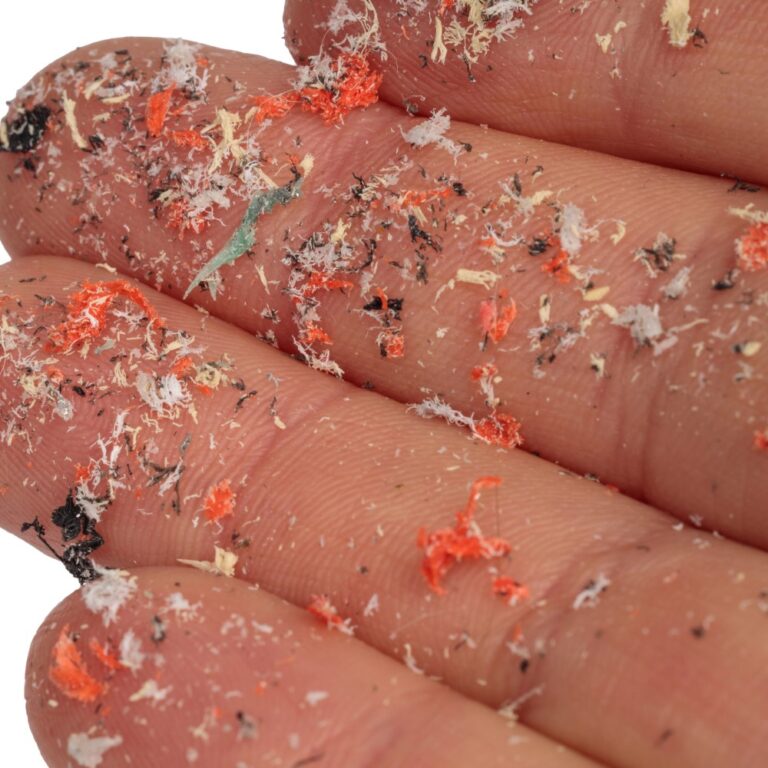
Microplastics are the part that turned many casual eco-conscious shoppers into committed ones. Researchers led by Heather Leslie at Vrije Universiteit Amsterdam published the first study to detect microplastics in human blood in 2022, in the journal Environment International. Since then, plastic particles have also been found in human lungs, breast milk, and placentas. The body keeps showing us that “out of sight” isn’t a thing with plastic anymore.
The Wildlife Cost
The wildlife cost is just as clear. Plastic ingestion is one of the leading causes of death among sea turtles, and plastic bags and straws routinely rank among the top 10 items collected during the Ocean Conservancy’s annual International Coastal Cleanup.
Why Individual Swaps Still Matter
The takeaway isn’t that skipping one straw saves a sea turtle. It’s that a system producing 500 million plastic straws a day, each used for about 10 minutes, is built on the assumption you’ll keep accepting them. Skip enough, and the system has to bend.
Plastic Footprint Directory
Know the plastic behind the products you buy.
Every product is scored 1 to 10 on its plastic footprint: packaging, recyclability, reuse, microplastics, and lifecycle. Only products scoring 3 or better earn a listing. When a product falls short, we retire it and point you to a better swap.
1 is the lowest plastic footprint we measure.
🚧 Pardon our dust. The directory is brand new, so you will catch us still adding products, images, and scores. It gets a little fuller every week.
Reducing Plastic Use in the Kitchen
Reducing plastic use in the kitchen comes down to swapping plastic wrap, single-use food storage bags, and plastic water bottles for glass jars, beeswax wraps, silicone bags, and a single high-quality water filter pitcher or stainless steel bottle.
The kitchen is where most households use the most plastic without noticing. The fridge, pantry, under-sink cabinet, and trash can are all stocked with single-use items. Here are the swaps that pay off the fastest.
1. Replace Plastic Wrap With Beeswax or Silicone
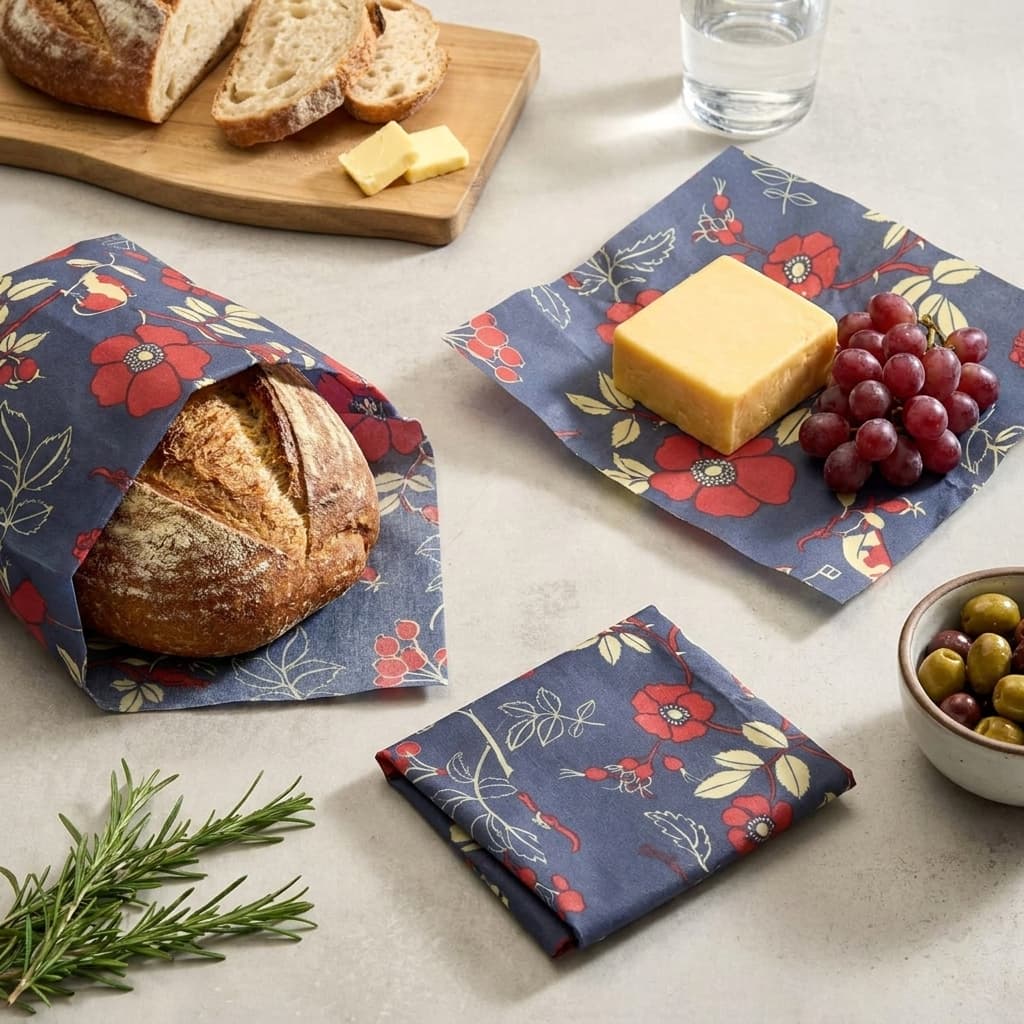
Plastic wrap is one of the worst offenders because it can’t be recycled in standard curbside programs, and it ends up shredding into microplastics in the trash. Beeswax wraps mold around bowls and half-cut produce, last about a year with cool water washes, and compost at the end of their life. Silicone stretch lids are the reusable option for bowls and cans.
2. Switch to Glass Storage Containers
Glass food storage containers cost more up front, but they last for decades, don’t stain or retain odors, and don’t leach chemicals when you reheat leftovers. Plastic containers with the recycling codes #7 or #3 should be retired first, since they’re most likely to contain BPA, BPS, or phthalates.
3. Use a Water Filter Instead of Bottled Water
Bottled water is one of the biggest plastic categories by volume in the US. A countertop or under-sink water filter, paired with a stainless steel or glass water bottle, eliminates the need for daily plastic bottles. A filter pitcher usually pays for itself in a couple of months.
4. Buy Pantry Staples in Bulk
Bulk bins at co-ops, Whole Foods, and zero-waste grocery stores let you fill cotton or muslin bags with rice, oats, beans, flour, and pasta. If you don’t have a bulk store nearby, even buying the largest package size cuts your packaging-per-pound ratio.
5. Skip Single-Use K-Cups
A reusable stainless steel K-Cup costs about $10 and replaces hundreds of plastic pods per year. Loose-leaf tea in a strainer does the same for tea bags, many of which contain plastic in the sealant or the bag itself. If you’re ready to upgrade the machine itself, see our guide to the best plastic-free coffee makers.
Bathroom Swaps That Cut Plastic Bottle Clutter
Reducing plastic use in the bathroom means swapping shampoo and body wash bottles for bar versions, replacing your plastic toothbrush with a bamboo one, and switching to refillable or bar deodorant, since most bathrooms are quietly full of plastic bottles you only see when you’re tossing them.
The bathroom is the room where small swaps make the fastest visible dent. Most of the bottles you replace here last for months, so even one swap ends up in the trash bin within a week.
6. Try Shampoo and Conditioner Bars
A solid shampoo bar replaces multiple plastic bottles and lasts much longer than most people expect. The good ones use natural surfactants, come in paper or compostable wrappers, and don’t add silicones that build up over time.
7. Switch to Bar Soap or a Refillable Body Wash
Bar soap is the simplest plastic-free swap in the entire house. If you prefer body wash, look for brands that sell refillable aluminum bottles with paper-wrapped concentrate pouches.
8. Use a Bamboo or Compostable Toothbrush
A standard plastic toothbrush sits in a landfill for hundreds of years. A bamboo handle composts in months once the bristles are removed. Look for ones with castor-bean or boar-bristle heads if you want to skip nylon entirely.
9. Try a Safety Razor
A double-edge safety razor is metal, refillable with single blades, and lasts a lifetime if kept dry. The blades themselves are recyclable in most cities, and a year’s worth of blades costs less than two months’ worth of disposable plastic razors.
10. Refillable or Bar Deodorant
Refillable deodorants come in metal or compostable cardboard tubes with paper-wrapped refills. Bar deodorant works the same way as bar soap; you swipe it on instead of pumping it from a plastic stick.
How to Reduce Plastic Use on the Go
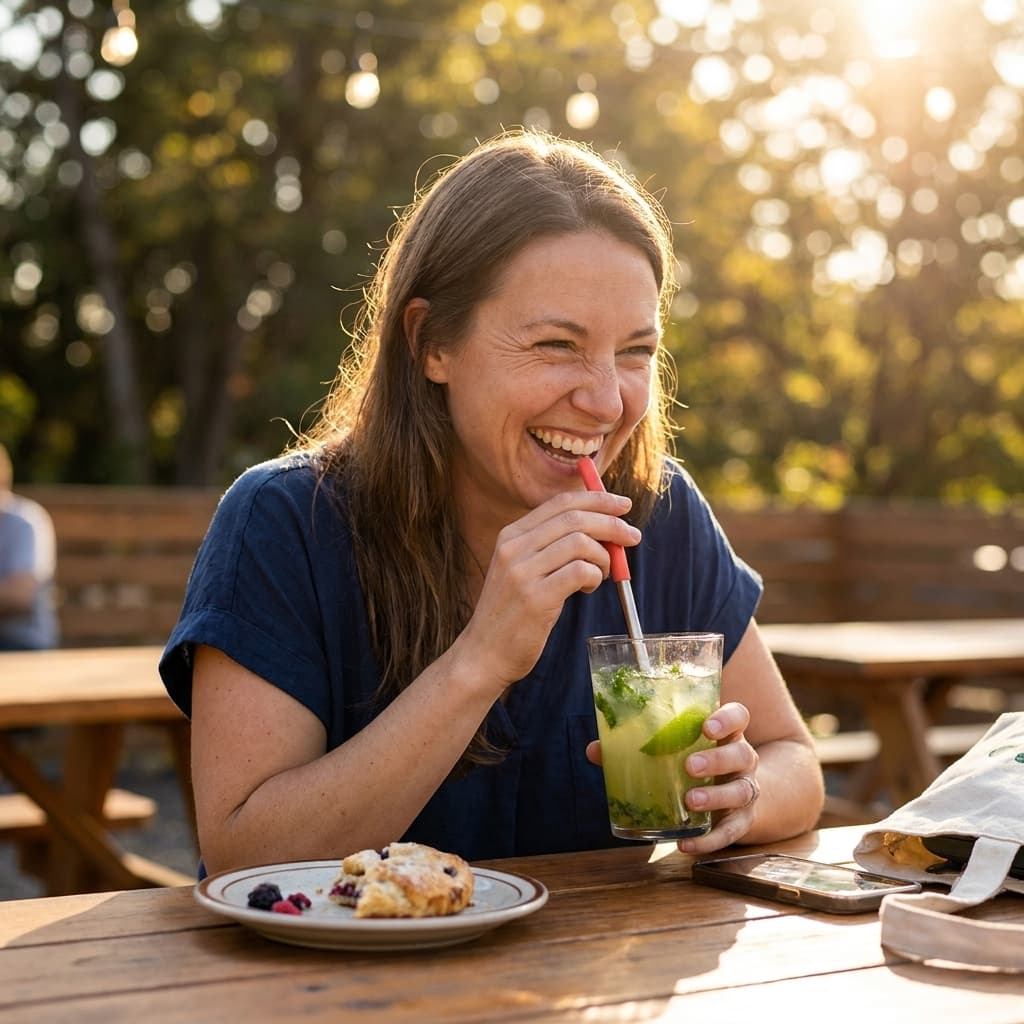
Reducing plastic use on the go means building a small “kit” you keep with you, usually a reusable water bottle, a cup, a straw, a fork, and a tote bag, so that you can refuse single-use plastics without planning ahead.
The single biggest reason people fall back on disposable plastic is that they got caught without a reusable. A small grab-and-go kit fixes that for almost any normal day.
11. Carry a Reusable Water Bottle
A stainless steel or glass bottle that fits your car’s cup holder is the one that actually gets used. Cute bottles that sit in a cabinet don’t count.
12. Bring Your Own Coffee Cup
Most coffee shops will fill a reusable cup, and many offer a small discount (usually 10 to 25 cents). Disposable coffee cups are coated with a thin plastic lining that makes them mostly impossible to recycle in standard programs.
13. Pack a Reusable Fork and Cloth Napkin
A small fabric pouch with a fork, a spoon, and a cloth napkin lives in a purse or backpack without taking up real space. It comes out for any takeout meal you eat away from the kitchen.
14. Keep a Foldable Tote in Your Bag
A foldable tote bag scrunches down to the size of a small wallet and pops open to hold about 20 pounds. Cotton, hemp, and recycled-canvas versions all work, but skip polyester totes since they shed microplastics in the wash.
15. Carry a Reusable Straw
Plastic straws are one of the easiest single-use items to give up. Beyond Plastics estimates Americans toss out 500 million per day, and a 2023 study in Food Additives & Contaminants found PFAS “forever chemicals” in 75% of plastic straws tested, while stainless steel came back clean. A single stainless steel, glass, or silicone straw costs under $10 and replaces hundreds of disposables a year. Keep one in your bag, one in your car, and one in your kitchen drawer. For the full material breakdown, see our guide on what reusable straws are made of.
Grocery Store Habits That Skip Single-Use Plastic
Reducing plastic use at the grocery store means shopping the perimeter, bringing cotton or mesh produce bags, choosing items in glass or paper packaging, and buying loose produce instead of pre-bagged fruit and vegetables.
Grocery shopping is where reducing plastic use can feel hardest, since most packaged food sits behind plastic by default. The smallest changes here add up fast, though, because grocery shopping happens every week.
16. Refuse Plastic Produce Bags
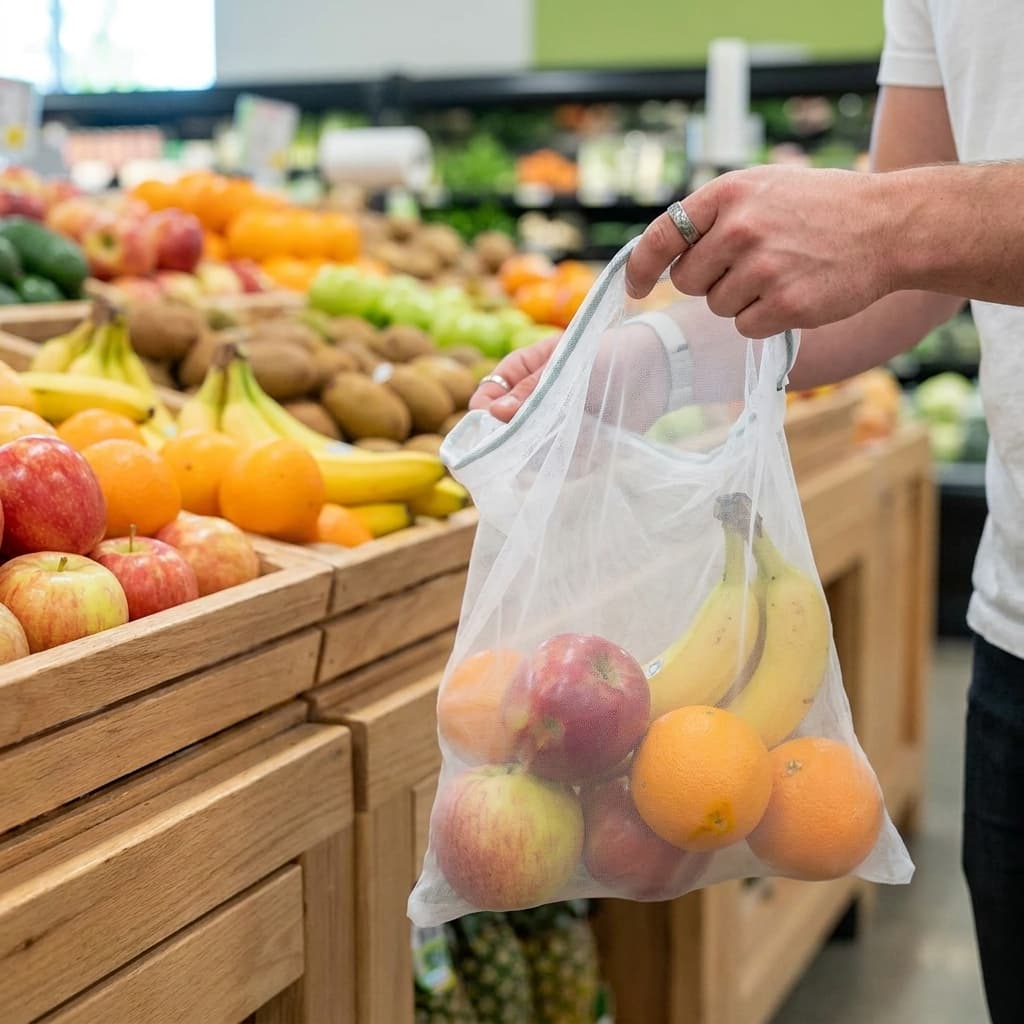
The thin plastic bags at the produce aisle are used for the eight-minute trip to the checkout, then thrown out. Cotton or organic mesh produce bags wash in the regular laundry, weigh almost nothing on the scale, and last for years.
17. Bring Cotton Totes for Checkout
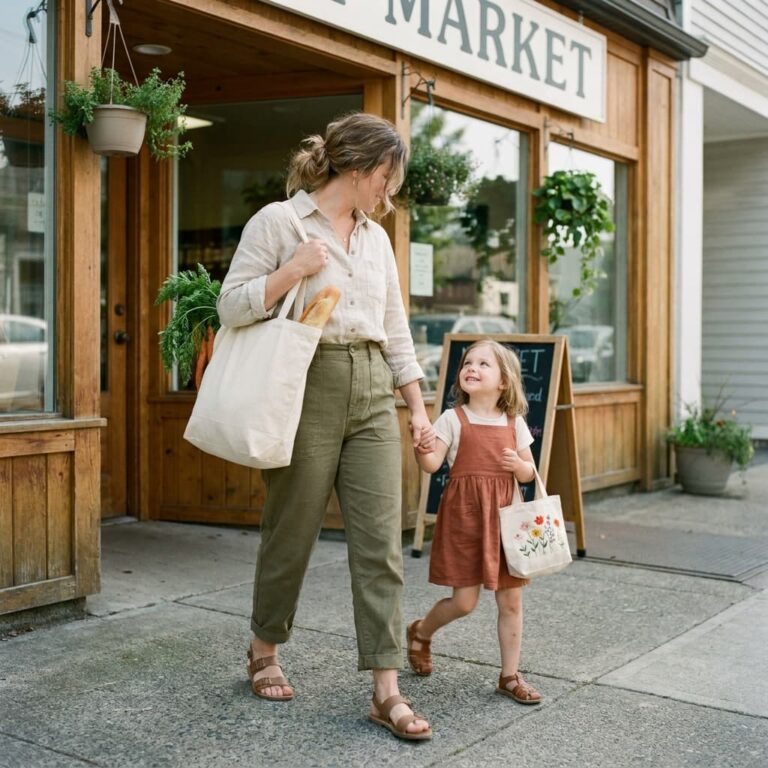
Cotton totes hold more than plastic checkout bags, don’t tear when you have a heavy item, and don’t blow out of trash cans. Keep two or three in your car and one foldable in your bag.
18. Choose Glass, Paper, or Cardboard Over Plastic
Tomato sauce in glass jars, oats in paper canisters, peanut butter in glass jars, cereal in cardboard, and vinegar in glass. These small-format choices add up.
19. Hit the Farmers Market
Farmers’ market produce usually comes loose, and most vendors are happy to drop fruit straight into your basket or tote. A wicker basket lasts for decades and looks like an entire mood board on its own.
✨ Tip
Don’t Beat Yourself Up
If you forget your reusables, don’t beat yourself up about it. The most sustainable bag is the one you already own. Use the plastic bag you got, then turn it into a small trash can liner or a wet-shoe bag for travel before it heads out.
Wardrobe Swaps That Beat Polyester Shedding
Reducing plastic use in your wardrobe means buying secondhand when possible, choosing natural fibers like organic cotton, linen, and wool over polyester and acrylic, and washing synthetic clothes in a microfiber-catching bag to reduce microplastic shedding.
A piece you might not connect to plastic at all is your closet. Polyester, acrylic, nylon, elastane, and most “performance” fabrics are plastic, woven into thread. Every wash sheds tiny plastic fibers that flow straight into wastewater.
20. Buy Secondhand First
Secondhand clothing means no new manufacturing footprint, no new plastic packaging, and no new shipping plastic. ThredUp, Poshmark, Depop, local consignment stores, and good old thrift shops cover most categories. The 80/20 rule is a good starting point: aim for about 80% of your wardrobe to be secondhand or already owned over time.
21. Choose Natural Fibers When You Buy New
Organic cotton, linen, hemp, Tencel/lyocell, and wool are all natural fibers that biodegrade at the end of their life and don’t shed microplastics during washing. They cost more, but they last longer, and the math evens out fast.
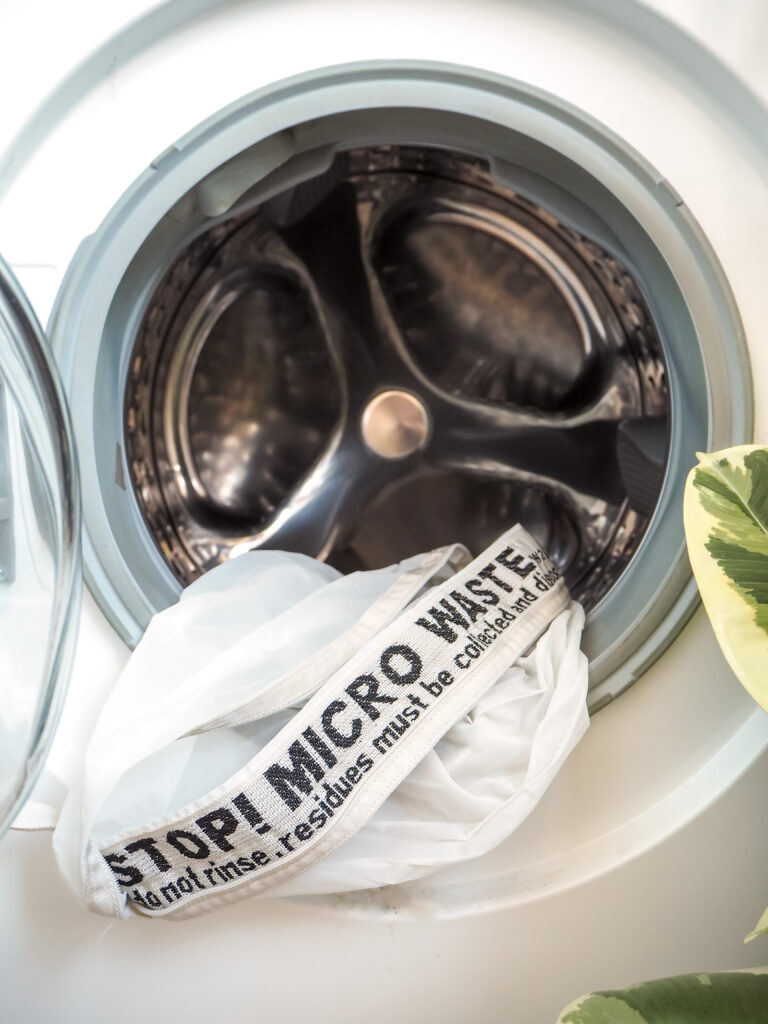
If you do own polyester or fleece, a microfiber-catching laundry bag (such as a Guppyfriend) catches a meaningful share of the fibers before they hit your drain. It’s the simplest fix for the workout gear you already own. For more on this, see is polyester plastic?
Long-Term Lifestyle Changes That Actually Stick
The plastic-reducing changes that stick are the ones tied to habits you already have, so the most effective long-term strategy is to swap one item at a time, replace it only when the old one runs out, and avoid buying anything new just because it looks more sustainable.
This is where a lot of “low waste” advice goes off the rails. People throw out their existing plastic containers to buy a matching set of glass ones, which ends up in the landfill, not to mention. The smarter long-term approach is slower and cheaper.
🔁 Replace as Things Wear Out
When a plastic spatula breaks, swap it for a wooden or stainless one. When the shampoo bottle empties, try a bar. When the sponge falls apart, try a wood-handled brush or a Swedish dishcloth. The slow-rolling switch is the one that doesn’t burn anyone out.
👗 Choose Durable Over Trendy
A cast-iron pan, a stainless-steel pot, a wooden cutting board, and a glass food storage set will outlast every plastic version five times over. The upfront cost is higher, the lifetime cost is lower.
🏡 Make a Few Things at Home
All-purpose cleaner made from vinegar, water, and a few drops of essential oil replaces multiple plastic bottles. Baking soda handles most scrubbing jobs. A simple oat-milk maker (or just a blender plus oats and water) cuts out the carton lining.
👀 Watch Out for Greenwashing
Bioplastics, “ocean plastic,” and “30% recycled” labels often deliver less than they promise. Look for actual certifications (B Corp, Forest Stewardship Council, EWG Verified, ASTM D6400 for compostables) and read the fine print.
How to Get Your Community Involved
The fastest way to scale a personal plastic reduction effort is to bring others in, since community challenges, school pledges, and one-paragraph emails to local lawmakers create the pressure that turns individual swaps into policy.
Individual swaps matter, but the math gets exciting when communities move together. A neighborhood that collectively skips plastic checkout bags moves the dial on what local grocers stock. A school that bans single-use water bottles starts a ripple of conversation across hundreds of families.
Take the Plastic Free July Pledge
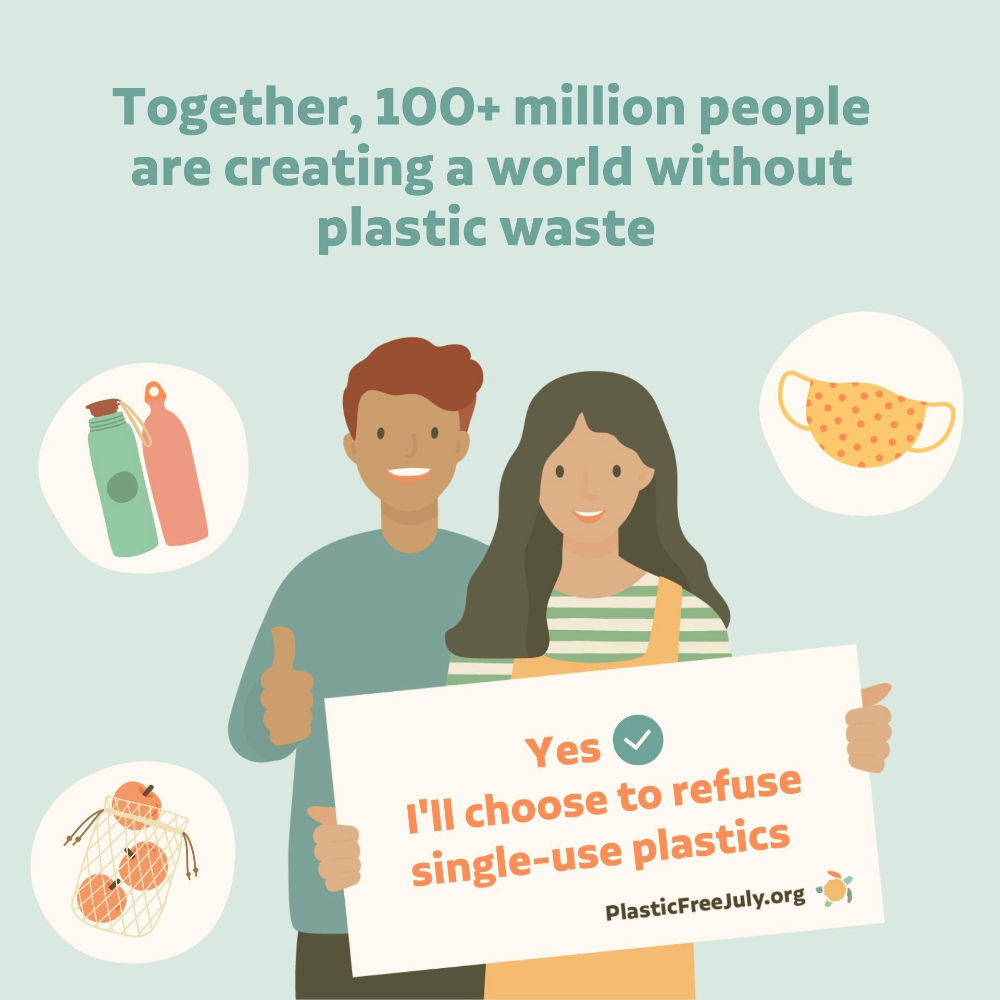
Plastic Free July is a month-long, low-stakes challenge run by the Plastic Free Foundation. It started in Perth, Australia, in 2011 with a handful of local participants and now hosts more than 100 million people across 190+ countries each year. The way it works is simple. You sign up on their site, pick how many swaps you’re committing to (just one is fine), and the foundation sends weekly tips, recipes, and progress check-ins for the whole month. The “bounded” piece is what makes it stick. It’s only 31 days, so almost anyone can try a swap that long. See our full guide to Plastic Free July for how to join and which swaps deliver the biggest impact.
Join International Plastic Bag Free Day on July 3
July 3 is also International Plastic Bag Free Day, a separate awareness day that falls right inside Plastic Free July. It was launched in 2008 by Zero Waste Europe and the Global Alliance for Incinerator Alternatives, and it focuses specifically on getting people, businesses, and governments to phase out single-use plastic bags. The whole idea is to skip plastic bags for one day to see how often they’re shoved at you without asking, then carry that habit forward. Our full guide on International Plastic Bag Free Day 2026 walks through 9 easy ways to take part.
Sign a Petition or Contact a Local Lawmaker
A short paragraph to your city council member, a state representative, or a senator about a specific plastic policy (bag bans, straw bans, or extended producer responsibility laws) takes 10 minutes and adds your name to the public record on the issue. Beyond Plastics and Plastic Pollution Coalition both keep up-to-date petition lists with prefilled scripts if you’d rather sign than write from scratch.
Run or Join a Community Cleanup
Beach, river, and park cleanups do double duty. They remove plastic from waterways and collect data that organizations like the Ocean Conservancy use to push policy. The Ocean Conservancy’s annual International Coastal Cleanup is the world’s largest volunteer effort for ocean health. Every cigarette butt, bottle cap, and plastic bag volunteers log gets fed back into the science that informs ocean plastic policy. You can find a cleanup near you or register one on their site. Surfrider Foundation also runs chapter-level beach cleanups across the US.
Join Plastic Pollution Coalition Webinars
Plastic Pollution Coalition is a global alliance of more than 1,200 organizations, businesses, and individual members working to end plastic pollution. They host free public webinars and live “Notes from the Field” calls where you hear directly from scientists, policy experts, and grassroots organizers working on different parts of the plastic crisis.
The webinars are open to anyone, archived on their site for replay, and most run under an hour. Signing up for their newsletter is the easiest way to keep the calls on your radar. A small group of neighbors swapping ideas keeps motivation up far better than going solo, and joining a coalition like this gives you a steady stream of next steps.
FAQs on How to Reduce Plastic Use
The most effective way to reduce plastic use is to refuse single-use items at the source instead of trying to recycle them afterward. The “refuse” step beats the “recycle” step because only about 9% of all plastic ever produced has ever been recycled, according to the 2017 Science Advances study by Geyer and colleagues. Skipping the plastic straw, bag, or bottle in the first place keeps it out of the system entirely.
It depends on the item. Plastic water bottles take roughly 450 years, plastic bags up to 500 years, and plastic straws more than 200 years, according to estimates from the World Wildlife Fund. None of those numbers means the plastic disappears at the end. It fragments into microplastics that persist in soil, water, and bodies for far longer.
Sometimes, but with caveats. Plastics labeled “compostable” only break down in industrial composting facilities, not in backyard piles or landfills. If your city doesn’t have an industrial composter, bioplastics behave almost identically to conventional plastic. Look for products certified to ASTM D6400 or BPI standards, and check whether your local composting program accepts them.
Prioritize the single-use items you go through fastest, in this order: water bottles, coffee cups, plastic bags, plastic straws, and produce bags. These five categories together account for the bulk of household plastic waste, and each one has a low-cost reusable alternative that pays for itself within a few months.
Only if you actually reuse them many times. A 2018 Danish Environmental Protection Agency analysis found that a conventional cotton tote needs to be reused about 52 times to beat the climate footprint of a single-use plastic bag. The math works in your favor over the years with normal use, but the worst outcome is collecting brand-new totes you never actually use.
The cheapest plastic-reducing moves cost nothing. Use the tote bags, glass jars, and reusable water bottle you already own. Fill an old pasta sauce jar with bulk oats instead of buying a new mason jar. Skip the plastic bag at checkout. Bar soap is usually cheaper per use than body wash. None of this requires a fresh purchase.
The two aren’t separate. Consumer demand pressure is one of the levers that has pushed brands like Unilever, Procter & Gamble, and major grocery chains to commit to reduced-plastic packaging. Individual swaps don’t fix the system on their own, but they’re the demand signal that enables corporate and policy changes. Pair the personal swap with a five-minute email to a local lawmaker if you want both.
Final Thoughts About How to Reduce Plastic Use
You don’t need to overhaul your kitchen, gut your bathroom, or replace anything that’s still working. The whole point of this list is that reducing plastic use is a stack of small, boring decisions that quietly add up. Pick the one swap that feels easiest to you, whether that’s the reusable straw, the cotton tote, the bar soap, or the water filter, and put the reusable somewhere you actually see it.
Once that habit settles in, pick the next one. A year of skipping plastic straws is roughly 365 straws kept out of the trash. A year of carrying a reusable water bottle means avoiding a few hundred plastic bottles. Multiply that by a household, then by a decade, and the impact starts to feel real.
Small changes really do add up. Pick one, start there, and let the rest follow.
🗨️ Which plastic swap was the easiest one for you to actually stick with? Drop it in the comments so other readers can copy the move; your favorite swap might be the nudge someone else needs.
📚 References
- Beyond Plastics. (n.d.). Plastic pollution facts. Beyond Plastics. https://www.beyondplastics.org/
- Boisacq, P., De Keuster, M., Prinsen, E., Jeong, Y., Bell, A. M. M., De Coen, W., Eens, M., Covaci, A., & Groffen, T. (2023). Assessment of poly- and perfluoroalkyl substances (PFAS) in commercially available drinking straws using targeted and suspect screening approaches. Food Additives & Contaminants: Part A, 40(9), 1230–1241. https://doi.org/10.1080/19440049.2023.2240908
- Danish Environmental Protection Agency. (2018). Life cycle assessment of grocery carrier bags. Environmental Project No. 1985. https://www2.mst.dk/Udgiv/publications/2018/02/978-87-93614-73-4.pdf
- Geyer, R., Jambeck, J. R., & Law, K. L. (2017). Production, use, and fate of all plastics ever made. Science Advances, 3(7), e1700782. https://www.science.org/doi/10.1126/sciadv.1700782
- Leslie, H. A., van Velzen, M. J. M., Brandsma, S. H., Vethaak, A. D., Garcia-Vallejo, J. J., & Lamoree, M. H. (2022). Discovery and quantification of plastic particle pollution in human blood. Environment International, 163, 107199. https://doi.org/10.1016/j.envint.2022.107199
- Ocean Conservancy. (2023). International Coastal Cleanup annual report. Ocean Conservancy. https://oceanconservancy.org/trash-free-seas/international-coastal-cleanup/
- Organisation for Economic Co-operation and Development. (2022). Global Plastics Outlook: Economic drivers, environmental impacts and policy options. OECD Publishing. https://www.oecd.org/environment/global-plastics-outlook-de747aef-en.htm
- World Wildlife Fund. (2021). Plastics: Facts and figures. WWF. https://www.worldwildlife.org/threats/plastic-pollution
More Plastic-Free Living Guides You’ll Want to Read
- Say No to Plastic: Simple Swaps to Protect Your Health & Home
- What Is a Reusable Straw Made Of? Materials Compared (2026)
- How to Avoid Microplastics: 15 Simple Ways to Reduce Exposure
- International Plastic Bag Free Day 2026: 9 Easy Ways to Join
- What Is Plastic Free July® 2026 (And Why It’s Easier Than You Think)
- Best Plastic-Free Shampoo Bars and Refillable Brands (2026)
- Plastic-Free Toothbrush Guide: Best Sustainable Picks for 2026
- Zero Waste Lifestyle: Easy Steps to Get Started