
Key Takeaways
- Is Quince sustainable? It ranges from 1 to 8 on our plastic footprint scale. The linen, organic cotton, non-stretch silk, and cashmere lines are plastic-free; the activewear is petroleum plastic.
- All Quince silk is mulberry silk, but the washable stretch silk styles add 10% spandex and score a 2, so they are not plastic-free.
- Quince “bamboo” sheets are 100% viscose, a chemically regenerated rayon, and score a 5. The word organic describes the plant, not the fabric.
- One 6 kg load of synthetics can shed over 700,000 microfibers, so buy Quince by the fiber, not the brand.
Quince is one of the few brands where “is it sustainable” has no single answer, and anyone who gives you one is rounding off the truth. On our plastic footprint scale, Quince products range from a 1 (completely plastic-free) to an 8 (petroleum plastic that sheds microplastics every wash), depending entirely on which fiber you pick. The linen, organic cotton, silk, and cashmere lines are the real deal. The bamboo sheets and the activewear are not what the natural-fiber reputation suggests.
So the honest review is not “buy Quince” or “skip Quince.” It’s buy Quince by the fiber. Here’s exactly how each line scores, straight from Quince’s own product pages.
Quince
Fashion & Bedding, scored by material
Direct-to-consumer brand selling clothing, bedding, and home goods on a factory-direct model.
$$ to $$$
Quince built its name on affordable natural fibers, and its linen, organic cotton, silk, and cashmere lines are genuinely low-plastic and OEKO-TEX tested. But the same brand sells bamboo sheets that are chemically regenerated viscose, not raw bamboo, and an activewear line of nylon or polyester with spandex. Those shed plastic microfibers and are not what earns the low scores. Watch the label on silk: every Quince silk is mulberry silk, but the stretch silk styles add 10% spandex. Buy Quince by the fiber.
| 1 | 100% European Linen Plant fiber, no plastic, biodegradable, OEKO-TEX tested |
Shop |
| 1 | 100% Organic Cotton Plant fiber, no plastic, OEKO-TEX tested |
Shop |
| 1 | 100% Mulberry Silk (non-stretch styles) Protein fiber, no plastic, biodegradable. All Quince silk, washable included, is mulberry silk |
Shop |
| 2 | Washable Stretch Silk styles 90% mulberry silk with 10% spandex for stretch; the spandex means not plastic-free |
Shop |
| 1 | 100% Mongolian Cashmere Animal fiber, no plastic, biodegradable |
Shop |
| 1 | 100% Merino Wool base layers Animal fiber, 100% extra-fine Australian merino, no plastic, biodegradable |
Shop |
| 5 | Bamboo Viscose bedding Chemically regenerated rayon that sheds, not raw bamboo |
Shop |
| 7 | Activewear, recycled-poly styles (Ultra-Soft, Flowknit) 86-88% recycled polyester (GRS) with 12-14% spandex, sheds microplastics every wash |
Shop |
| 8 | Activewear, nylon styles (Ultra-Form) 78% virgin nylon with 22% spandex, sheds microplastics every wash |
Shop |
Certifications do not change these numbers. Scored on the Fiber Scoring Guide v1.0.
What is Quince?
Quince is a direct-to-consumer brand selling clothing, bedding, and home goods through a factory-direct model that, in its own words, “cuts out the supply-chain middlemen and reduces costs.”
Quince’s founders came out of the luxury industry, and their about page tells the story plainly: “We built careers working for high-end brands, but investing in luxury clothing, jewelry, and home goods for ourselves was a rare treat.” So they flipped the model. No sourcing agents, no warehouses, no storefronts, just “ethical factories right to your door” at “radical prices.” On price they deliver: real European linen, Grade-A Mongolian cashmere at $50, and 22-momme washable silk at prices that fabric almost never sees.
Here’s what that model means for plastic. Because Quince chases whatever essentials sell, the catalog is enormous and changes constantly, and natural fibers sit shoulder to shoulder with synthetics under the same trusted brand name. The same company selling you plastic-free linen also sells viscose “bamboo” sheets and nylon leggings, and nothing on the shelf flags the difference.
The saving grace is that Quince discloses fiber composition on every product page, consistently and specifically. That’s what lets us score each material line instead of guessing, and it’s why this review scores Quince by the fiber, not by the reputation.
How we scored Quince
Every Quince line gets its score from our locked fiber-to-points table: the fiber’s plastic content, microfiber shedding, and end of life set the base, and any elastane adds a point. Certifications never move the number.
Here’s the actual math. Each fiber starts from a base score on our Fiber Scoring Guide v1.0. Linen, organic cotton, silk, and cashmere start at 1 because they contain no petroleum plastic and biodegrade. Lyocell starts at 3, conventional viscose (including bamboo viscose) at 5, recycled polyester and recycled nylon at 6, and virgin polyester and nylon at 7.
Blends follow two rules. Any elastane or spandex, even 5%, adds one point and disqualifies the item from being called plastic-free, because spandex sheds and blocks recycling. And a blend never scores better than its worst meaningful plastic component. That’s how the activewear lands where it does: 86% recycled polyester with 14% spandex is 6 plus 1, a 7. And 78% virgin nylon with 22% spandex is 7 plus 1, an 8.
Certifications like OEKO-TEX and GRS feed the trust badge and the transparency pillar, but they never change the fiber score. A certificate can prove a fabric was tested for harmful substances. It cannot make viscose stop shedding. Every composition below comes from Quince’s own product pages, checked in July 2026.
Don’t Miss: The Plastic Footprint Directory Every brand we’ve scored, with the full breakdown behind each number. Quince’s complete card lives there. Read more →Which Quince products are plastic-free?
Quince’s 100% European linen, 100% organic cotton, 100% mulberry silk, and 100% Mongolian cashmere lines are plastic-free and score a 1 on our plastic footprint scale. All four carry STANDARD 100 by OEKO-TEX testing. One catch: the washable stretch silk styles add 10% spandex, so they score a 2 and are not plastic-free.
Quince’s European linen is “woven from 100% European flax” and carries the STANDARD 100 by OEKO-TEX label, which means the finished fabric was tested for hundreds of harmful substances. The organic cotton percale bedding is “woven from 100% Organic Cotton” with its OEKO-TEX certificate number right on the page. All Quince silk is mulberry silk, and the non-stretch washable silk pieces are “crafted from washable, 100% mulberry silk.” The washable stretch silk styles in the same collection blend in 10% spandex, so they score a 2 and are not plastic-free. The cashmere is “crafted from 100% Grade-A Mongolian cashmere.”
These fibers shed when you wash them, like every textile does. The difference is they shed cellulose and protein, which biodegrade, not persistent plastic. If you want the lowest-plastic version of Quince, this is it, and frankly it’s most of what made the brand famous.
Are Quince bamboo sheets really bamboo?
No. Quince’s own product page lists the bamboo sheets as “100% viscose from organic bamboo,” a chemically regenerated rayon. They score a 5 on our plastic footprint scale: not petroleum plastic, but not the natural fiber the name suggests.
Viscose is bamboo the way paper is a tree. The plant gets dissolved in harsh solvents and extruded into an entirely new regenerated fiber, so what touches your bed is rayon, not grass.
To be fair to Quince, they disclose this on the product page, which is more than some bamboo brands manage. And viscose beats polyester sheets. But it sheds heavily processed fibers, the solvent process uses carbon disulfide, and the word “organic” in the title describes the bamboo that went into the vat, not what comes out. The bamboo sheets sit at a 5: better than synthetic, nowhere near the linen, and priced like it’s natural.
If you love the cool, silky feel bamboo sheets are sold on, the linen gets you the temperature regulation with zero plastic and no solvent chemistry.
Is Quince activewear sustainable?
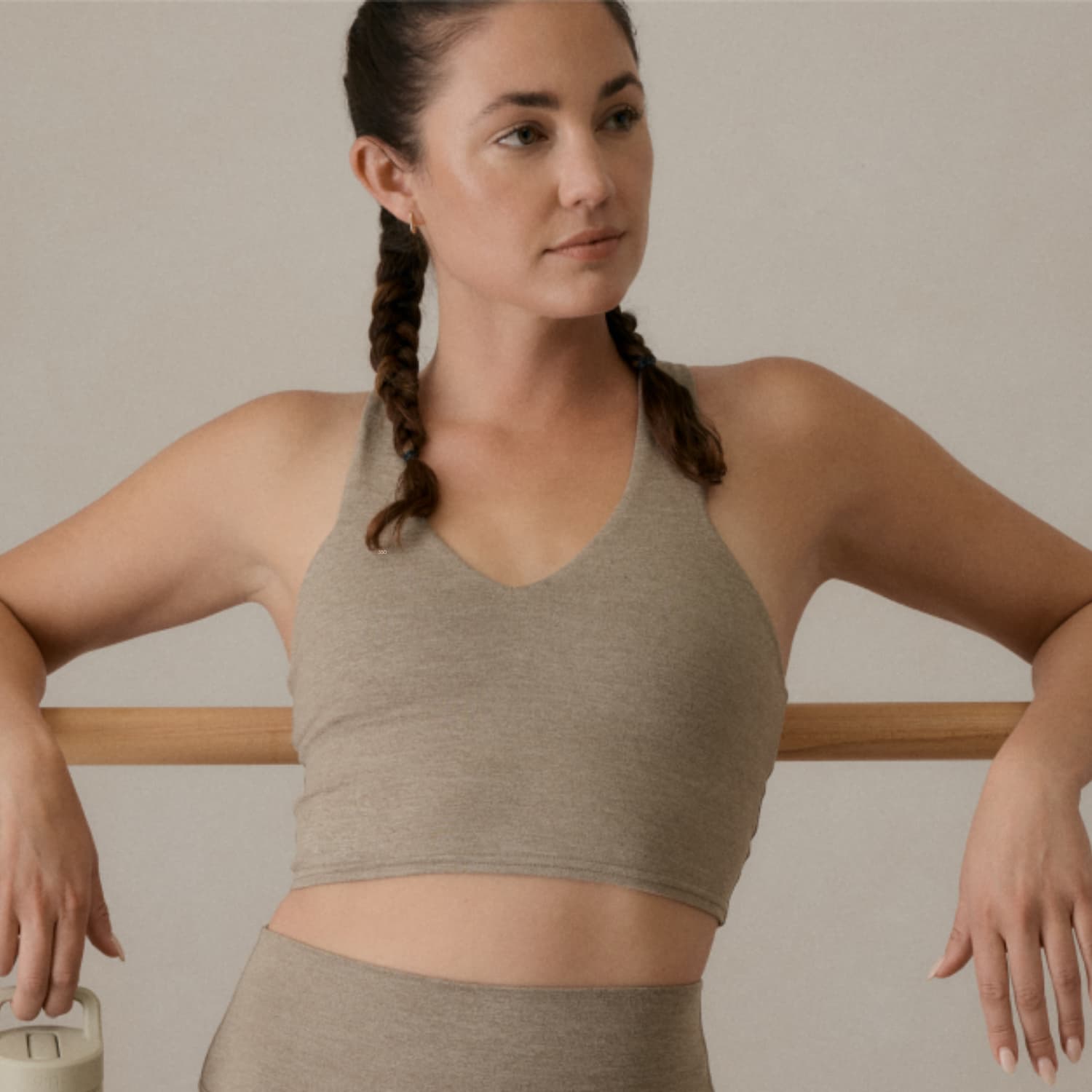
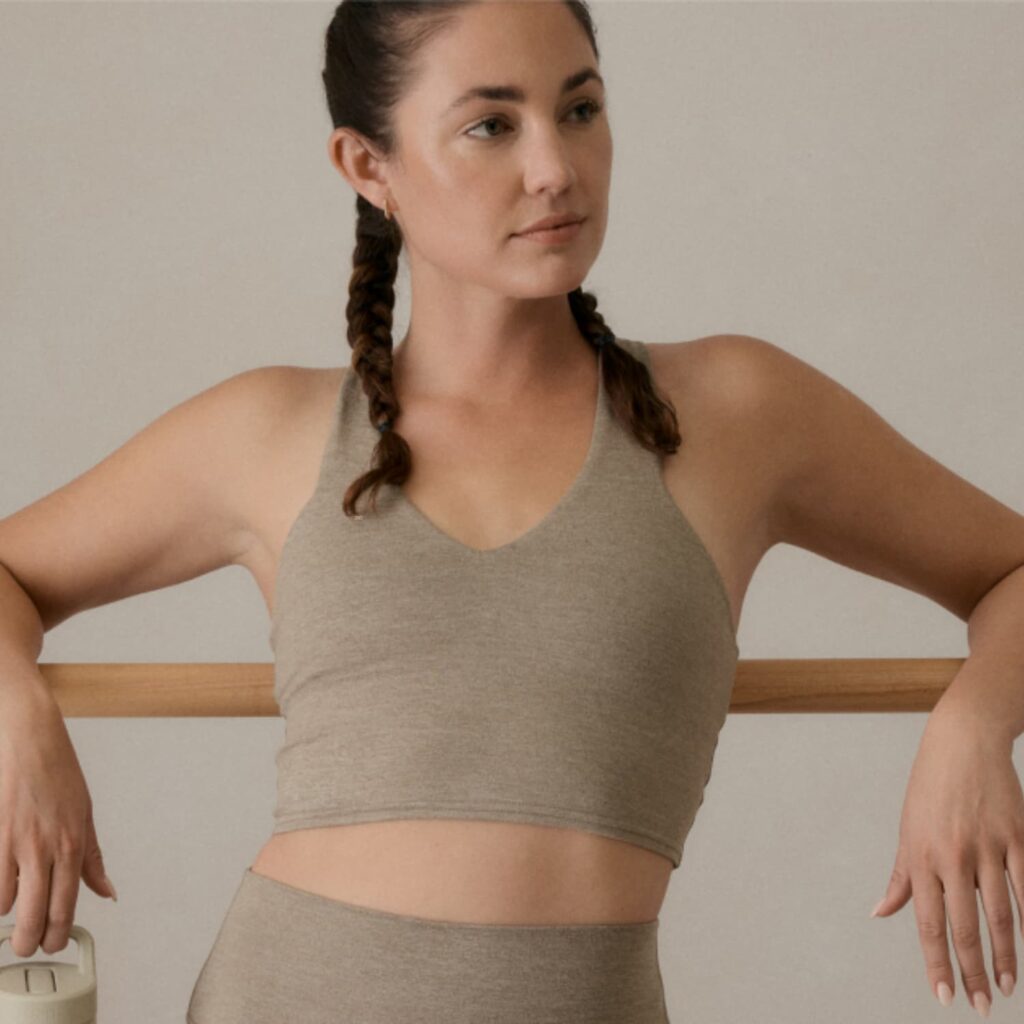
Mostly no. Quince’s synthetic activewear is petroleum plastic and scores 7 to 8 on our plastic footprint scale: the Ultra-Form legging is “78% Nylon, 22% Spandex” per Quince’s own page, and the recycled styles are “86% polyester, 14% spandex.” The one exception is the 100% merino wool base layers, which are plastic-free and score a 1.
This is the line where the natural-fiber halo does the most work, so let’s be precise. The exact plastic varies by style. The Ultra-Form High-Rise Legging lists “78% Nylon, 22% Spandex” with no recycled content claimed. The Ultra-Soft legging lists “86% polyester, 14% spandex” with GRS certified fabric, meaning recycled content verified to the Global Recycled Standard.
On our scale that’s an 8 for the virgin nylon styles and a 7 for the recycled ones. Recycled polyester diverts bottles from landfill, which is worth something, but it sheds microplastic in the wash exactly like virgin polyester. One 6 kg load of synthetics can release over 700,000 microfibers. Spandex makes it worse: it adds shed, and it makes the garment effectively unrecyclable.
There is one genuinely plastic-free item hiding in the activewear section: the base layers made from “100% extra-fine Australian merino wool.” Wool is an animal fiber that sheds biodegradable protein, not plastic, so those score a 1 like the cashmere. If you want Quince activewear without the microplastics, the merino base layers are the pick.
Quince’s activewear pages do carry OEKO-TEX certification and WRAP factory certification, which speak to chemical safety and labor conditions. They don’t change what the fiber is. If you buy Quince activewear, wash it cold in a microfiber-catching bag, and don’t buy it believing it’s the sustainable option in the catalog.
Quince by the numbers
| Material line | Score | What Quince’s page says | Shop |
|---|---|---|---|
| 100% European Linen | 1 | “Woven from 100% European flax,” OEKO-TEX | Linen collection |
| 100% Organic Cotton | 1 | “Woven from 100% Organic Cotton,” OEKO-TEX | Organic cotton styles |
| 100% Mulberry Silk (non-stretch styles) | 1 | “Crafted from washable, 100% mulberry silk” | Silk collection |
| Washable Stretch Silk styles | 2 | “90% mulberry silk for luxe feel, and 10% spandex” | Silk collection |
| 100% Mongolian Cashmere | 1 | “100% Grade-A Mongolian cashmere” | Cashmere collection |
| 100% Merino Wool base layers | 1 | “100% extra-fine Australian merino wool” | Merino base layers |
| Bamboo Viscose bedding | 5 | “100% viscose from organic bamboo” | Bamboo sheets |
| Activewear, recycled-poly styles (Ultra-Soft, Flowknit) | 7 | “86% polyester, 14% spandex” / “88% recycled polyester, 12% spandex” (GRS) | Flowknit styles |
| Activewear, nylon styles (Ultra-Form) | 8 | “78% Nylon, 22% Spandex” | Ultra-Form styles |
The full breakdown with pillar scores lives in the Plastic Footprint Directory.
What Quince doesn’t tell you
Quince does not disclose what its shipping packaging is made of anywhere we could find, so our directory card marks packaging “Not stated.” We don’t guess.
The second gap is blends. Watch the labels on items that sound like the pure lines. Quince sells cotton-modal tees, linen-viscose blends, and cotton-cashmere sweaters that live right next to the 100% versions in the catalog. The composition is always on the product page. Read it before you assume you’re getting the plastic-free version.
How to shop Quince the low-plastic way
- Start with the fiber, not the product photo. Check the materials section on every product page. Quince discloses composition consistently, which we credit them for.
- Buy freely from the 100% linen, organic cotton, silk, and cashmere lines. They score a 1 and are the best value in the catalog.
- Treat “bamboo” as viscose. If you want it anyway, you’re choosing a 5 and that’s your call, but choose it knowingly.
- Treat activewear as plastic, because it is. If you buy it, cold wash it in a microfiber filter bag and skip the dryer.
- Any elastane on a label, even 5%, means the item is not plastic-free and can’t be recycled into anything useful. That includes most of the stretch basics.
If you just want to browse the good stuff, start at Quince and filter to linen, organic cotton, silk, or cashmere.
Don’t Miss: The 25 Certification Labels Worth Trusting OEKO-TEX and GRS show up all over Quince’s pages. Here’s exactly what those labels prove, and what they don’t. Read more →FAQs on Quince and sustainability
Partially. Its linen, organic cotton, non-stretch silk, and cashmere lines are plastic-free and OEKO-TEX tested, scoring 1 on our plastic footprint scale. Its stretch silk adds 10% spandex (2), its bamboo bedding is regenerated viscose (5), and its activewear is nylon or polyester with spandex (7 to 8). Sustainability at Quince depends entirely on the fiber you pick.
The finished sheets are OEKO-TEX Standard 100 certified, so the fabric was tested for harmful substances. The concern isn’t toxicity in your bed. It’s that bamboo viscose is a chemically regenerated fiber that sheds processed cellulose and is made with harsh solvents.
Some activewear styles use GRS-certified recycled polyester. Recycled polyester is still petroleum plastic and sheds microplastics in the wash the same as virgin polyester, so it scores 7 on our scale.
On plastic footprint, yes. It’s 100% European flax, OEKO-TEX tested, biodegradable, and among the cheapest real linen bedding you’ll find thanks to the factory-direct model.
Final Thoughts on Quince
Quince proves you can get real natural fibers at reasonable prices, and it proves that the same brand will happily sell you plastic under a leafy name. Buy the fiber, not the brand, and Quince is one of the best low-plastic values out there.
📚 References
- De Falco, F., Cocca, M., Avella, M., & Thompson, R. C. (2021). Domestic laundry and microfiber pollution. PLOS One. journals.plos.org
- Napper, I. E., & Thompson, R. C. (2016). Release of synthetic microplastic fibres from domestic washing machines. Marine Pollution Bulletin, 112(1-2). sciencedirect.com
- Quince. About Us: “factory-direct model that cuts out the supply-chain middlemen.” quince.com/about-us
- Quince. Bamboo Sheet Set: “Material is 100% viscose from organic bamboo.” quince.com/home/bamboo-sheets
- Quince. Cashmere Crewneck Sweater: “Crafted from 100% Grade-A Mongolian cashmere.” quince.com
- Quince. Linen Sheet Set: “Woven from 100% European flax.” quince.com
- Quince. Organic Crisp Percale Sheet Set: “Woven from 100% Organic Cotton,” OEKO-TEX cert 15.HIN.75800. quince.com
- Quince. Silk Pillowcase: “crafted from the finest 22-momme silk.” quince.com
- Quince. Ultra-Form High-Rise Legging: “78% Nylon, 22% Spandex,” OEKO-TEX 22.HCN.20980. quince.com
- Quince. Ultra-Soft High-Rise Legging: “86% polyester, 14% spandex,” GRS certified fabric. quince.com
More Plastic-Free Living Reads
- Is Polyester Plastic? What Your Clothes Are Really Made Of
- Third-Party Certifications: The 25 Labels Worth Trusting
- 10 Best Non-Toxic Laundry Detergents (Plastic-Free)
- How to Reduce Plastic Use: 21 Easy Ways That Actually Work
- Upcycling Jeans: 8 Creative Ways to Give Your Denim a New Life
- The Plastic Footprint Directory: Every Brand We’ve Scored