
Key Takeaways
- Food waste causes about 58% of the methane that escapes from U.S. landfills, so decor you can compost after the holiday, like pumpkins, gourds and cranberries, beats decor you store in a bin or throw away.
- The best Thanksgiving decor ideas use real produce, branches, glass and wood, which look richer than foam pumpkins and polyester runners and cost less when you shop your kitchen first.
- Beeswax tapers, linen napkins and glass jars are simple swaps for paraffin candles, polyester linens and plastic holders, and they come back out every November.
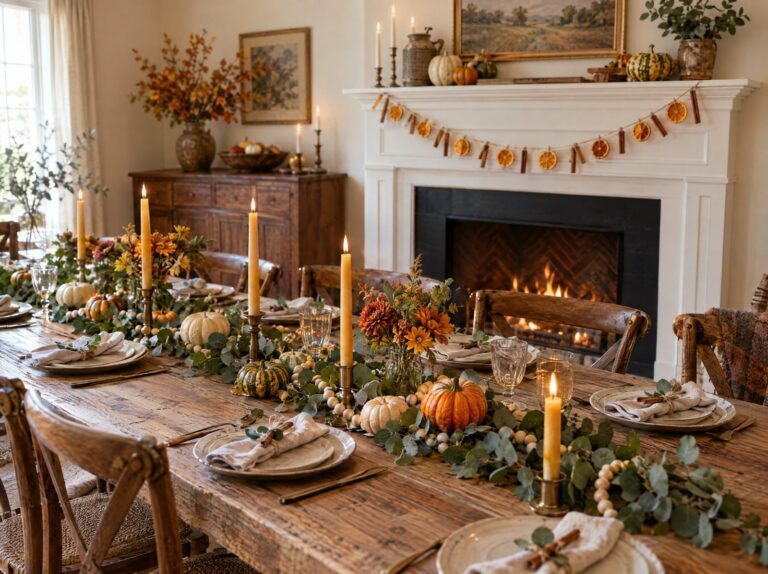
The best Thanksgiving decor ideas start at the farm stand, not the craft store. A pile of real pumpkins, a few branches, beeswax candles, and cloth napkins will make your table look warmer than anything sold in a plastic bag, and most of it can go in the compost once the pie is gone.
Walk down a holiday aisle and a lot of what looks natural is not. The pumpkins are molded foam, the rustic table runner is polyester, and the tapers are paraffin, a wax made from petroleum. None of it is scary to set on a table. It is simply plastic you buy once, store in a bin all year, and eventually throw away.
We pulled together 10 ideas for the table, the entryway and the front porch, built from natural materials wherever we could. The products we point to are scored in our Plastic Footprint Directory, where we look at what each one is made of, what it ships in, and what happens to it when you are done with it.
Pour yourself a mug of cider, and let’s set the table.
Thanksgiving Decor Ideas to Recreate at Home
These Thanksgiving decor ideas cover the whole house, from the dinner table to the entryway to the front porch. Each look starts with a photo you can save, followed by a list of what’s in it and a Shop the Look button with pieces made from glass, metal, wood, linen and beeswax instead of plastic. Anything you can’t buy online, like fresh gourds and berry branches, is easy to pick up at your local farmers market or pumpkin patch.
1. Blue and White Coastal Table

📸Image: Heather Baird for HGTV
Blue and white is a fresh way to set a Thanksgiving table, and this look trades the usual orange for indigo tie-dye linens, woven chargers and nautical blue and white plates. Hand-dyed cotton, water hyacinth, glass and ceramic do most of the work, so these pieces come back out year after year instead of lasting one holiday. White pumpkins, a few shells and a little gold crab at each end keep the whole table playful.
What’s in the Look:
- Indigo tie-dye cotton table runner
- Blue tie-dye cotton napkins
- Water hyacinth woven chargers
- Blue and white nautical dinner plates
- Jute knot napkin rings
- Stemless wine glasses
- White ceramic pumpkins
- Ceramic shell sculptures
- Gold metal crab figurines
- White porcelain pitcher
- Dried baby’s breath and blue thistle
2. Grazing Board Thanksgiving Table
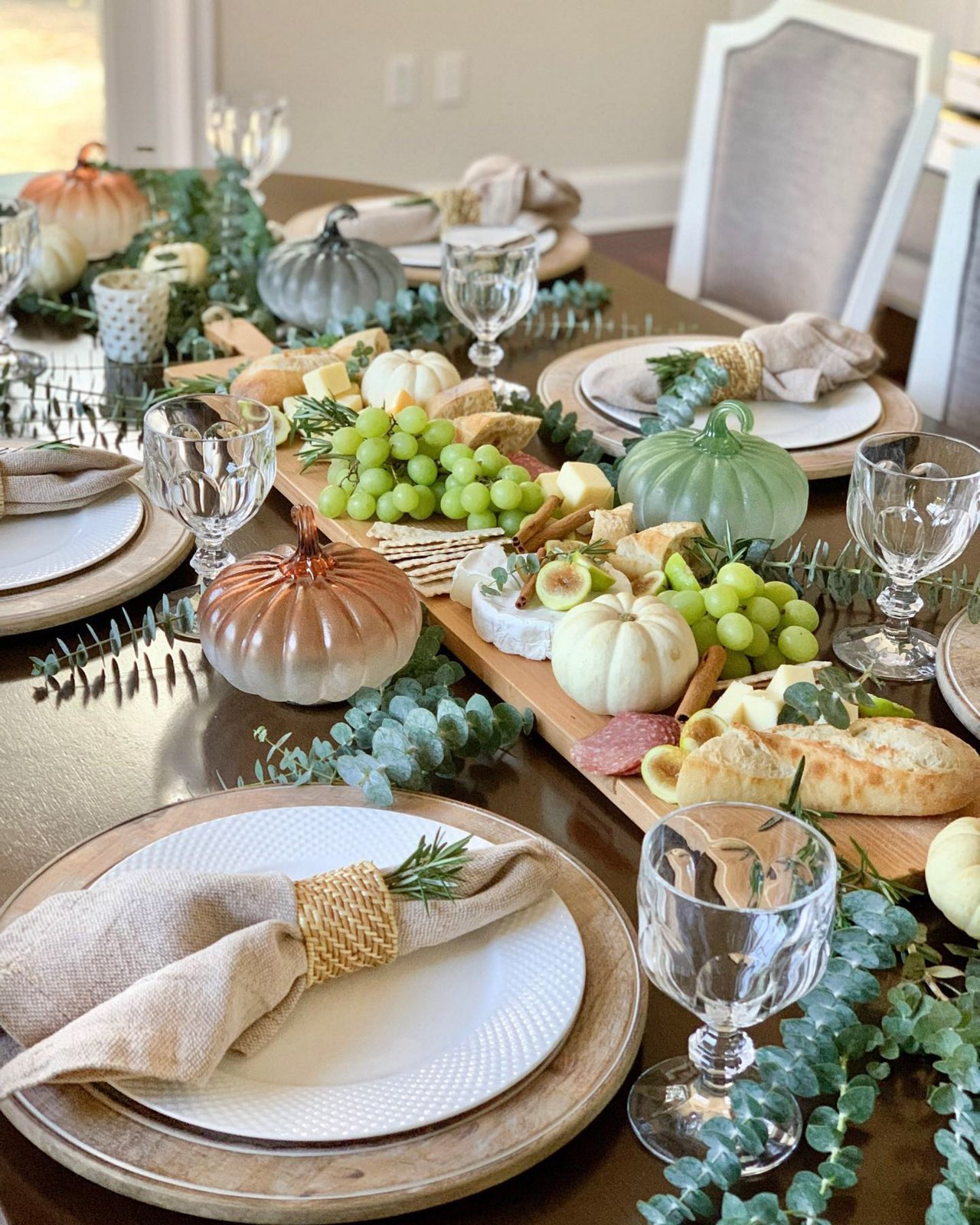
This Thanksgiving table makes the food the centerpiece, with one long wooden board running down the middle, loaded with grapes, cheese, figs and bread. Glass pumpkins, fresh eucalyptus and linen napkins tied with rosemary keep the look calm and natural. Nearly every piece is wood, glass, ceramic or linen, so it comes back out every fall. If you want a board you can carve on too, our guide to non-toxic cutting boards covers the ones that skip the plastic.
What’s in the Look:
- 36 inch acacia serving board
- Handblown copper glass pumpkin
- Handblown glass pumpkin set
- White ceramic mini pumpkins
- Real dried eucalyptus stems
- Natural wood charger plates
- White embossed ceramic dinner plates
- 100% linen napkins in flax
- Woven rattan napkin rings
- Hobnail pressed glass goblets
- Mercury glass votive holders
3. Gourd and Flower Centerpiece

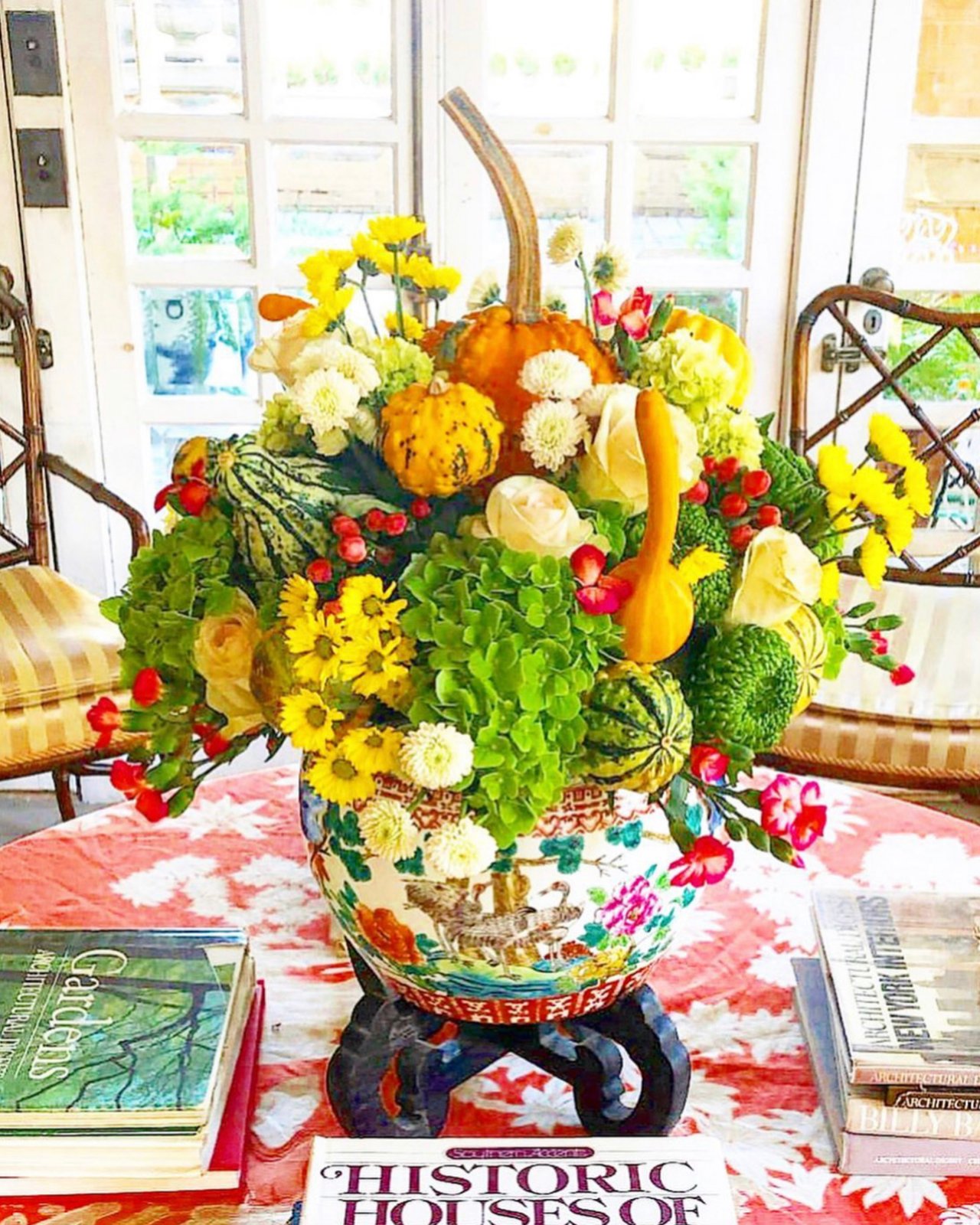
This centerpiece piles fresh flowers and long-stemmed gourds into a colorful porcelain bowl, and it turns any table into the showpiece of the room. Chicken wire hides inside the bowl to hold every stem in place, so there is no need for floral foam, which is a plastic that crumbles into tiny bits. The long-stemmed gourds, mini pumpkins, hydrangeas, mums and roses are all real, and you can grab them at your local market or pumpkin patch. When the holiday ends, everything but the bowl goes in the compost.
What’s in the Look:
- Hand-painted porcelain fishbowl planter
- Carved wooden vase stand
- Galvanized chicken wire for arranging
- Bamboo skewers for the gourds
- Floral shears
- Red floral cotton round tablecloth
- Ornamental pumpkin tree stems
- Dried yellow daisy chrysanthemums
- Natural dried mini bottle gourds
4. Pumpkin Urn Front Porch
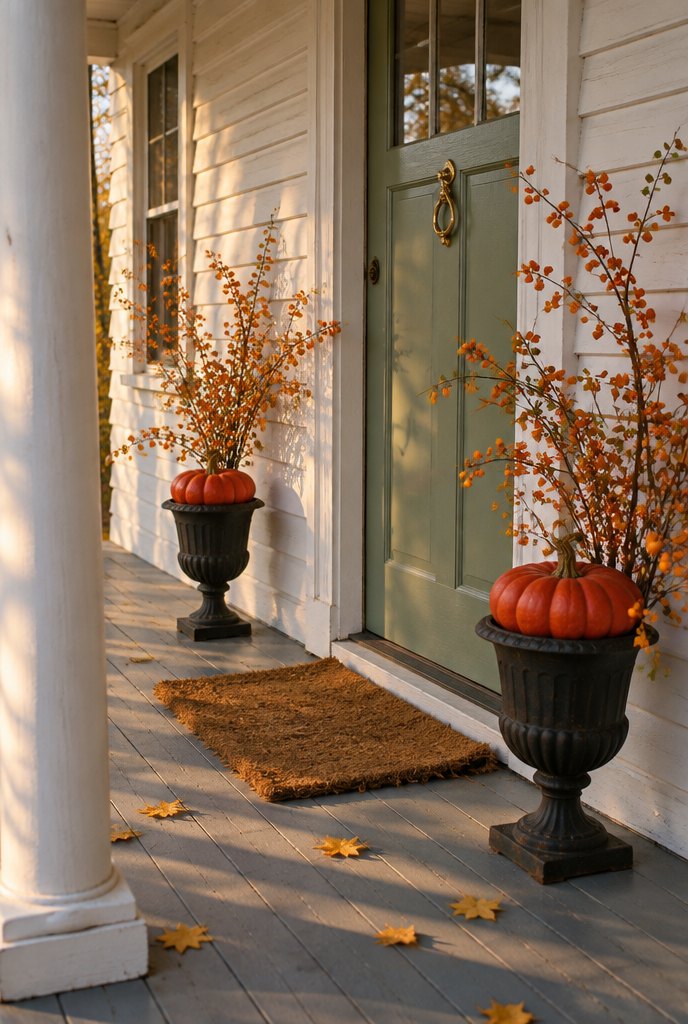
Two giant pumpkins perched on tall black urns make a front door look grand, and it takes about five minutes to set up. The urns are metal, so they work for mums in fall, greenery in winter and flowers all summer. Pick up two big flat Cinderella pumpkins at your local pumpkin patch, and ask your florist or farmers market for fall berry branches to tuck around the base.
Uncarved pumpkins keep much longer than carved ones. Oregon State University Extension says whole pumpkins in good condition can be stored for several months when kept cool and dry, ideally between 50 and 55 degrees, so a pumpkin you buy in October can see you through Thanksgiving.
What’s in the Look:
- Black metal urn planters, set of 2
- Woven coco coir doormat
- Solid brass door knocker
- Two large Cinderella pumpkins from the pumpkin patch
- Fall berry branches from your florist or farmers market
5. Black and White Check Thanksgiving Table
📸Image: MacKenzie-Childs via ELLE DECOR
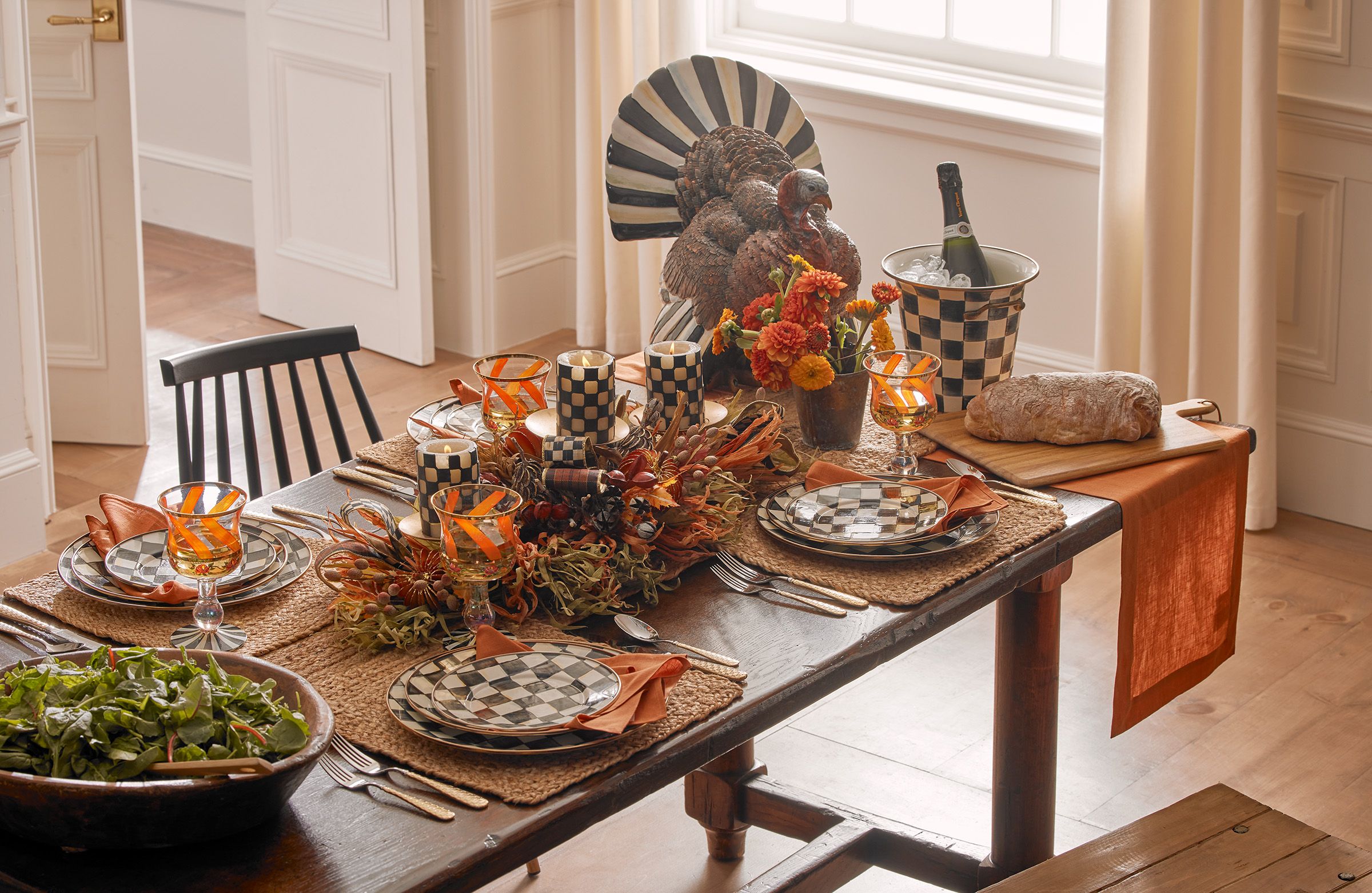
Classic black and white check makes a Thanksgiving table feel playful and polished at the same time, and warm rust linens keep it cozy for fall. The check plates, ice bucket and candlestick are enamel on steel, so they last for years, and pure beeswax candles, woven placemats, linen and a wooden bread board bring in natural texture. Finish with a pot of orange mums and a loaf of crusty bread, and dinner is served.
What’s in the Look:
- Black and white check enamel dinner plates
- Black and white check enamel ice bucket
- Black and white check enamel pillar candlestick
- 100% beeswax pillar candles
- Round woven bulrush placemats
- Rust linen napkins
- Rust linen table runner
- Amber glass goblets
- Acacia wood bread board
6. Thankful Tree Entryway
:max_bytes(150000):strip_icc():focal(499x0:501x2):format(webp)/101416916v1-7e3fb942256e4cbc9b8fd968e754a717.jpg)
📸Image: Midwest Living
A thankful tree gives your entryway a warm welcome and gets everyone talking before dinner. Set bare branches in a white pitcher with a little sand in the bottom to hold them steady. Hand each guest a paper tag as they walk in, let them write what they’re grateful for, and hang it on a branch. By the end of the night, you have a keepsake worth saving.
What’s in the Look:
- White ceramic pitcher vase
- Natural willow branches
- Kraft paper tags with jute twine
- Gold mercury glass votive holders
- Round silver metal tray
- Beeswax tealights
- A small potted rosemary or lemon cypress from the garden center
7. Fall Floral Thanksgiving Table

📸Image: Ashley of Modern Glam
A big, loose bouquet in fall colors makes the whole table feel like a celebration. Tuck garden roses, dahlias, cosmos and mums into a white pumpkin vase, and set a few mandarins at the base. Golden beeswax tapers, gold votives and a soft gray linen runner keep everything else simple, so the flowers get all the attention.
What’s in the Look:
- White ceramic pumpkin vase
- Antique gold candlesticks
- Beeswax taper candles
- Gold glass votive holders with beeswax tealights
- Gray linen table runner
- Copper mugs
- Fresh fall flowers and mandarins from the florist or farmers market
8. Moss and Rocks Candle Centerpiece
:max_bytes(150000):strip_icc():focal(274x0:276x2):format(webp)/BHG154126-97fd76b3597f437da7fda60cb01adeb8.jpg)
📸Image: Midwest Living
This little centerpiece takes about five minutes to put together, and it looks lovely all season. Set beeswax votives in tiny clay pots, then fill a white tray around them with smooth river rocks, bits of moss and an engraved gratitude stone. After Thanksgiving, tuck in a few sprigs of evergreen and keep it out through December.
What’s in the Look:
- White porcelain serving tray
- Mini terracotta pots
- Beeswax votive candles
- Polished river rocks
- Preserved reindeer moss
- Engraved gratitude stones
9. Amber Glass Thanksgiving Table
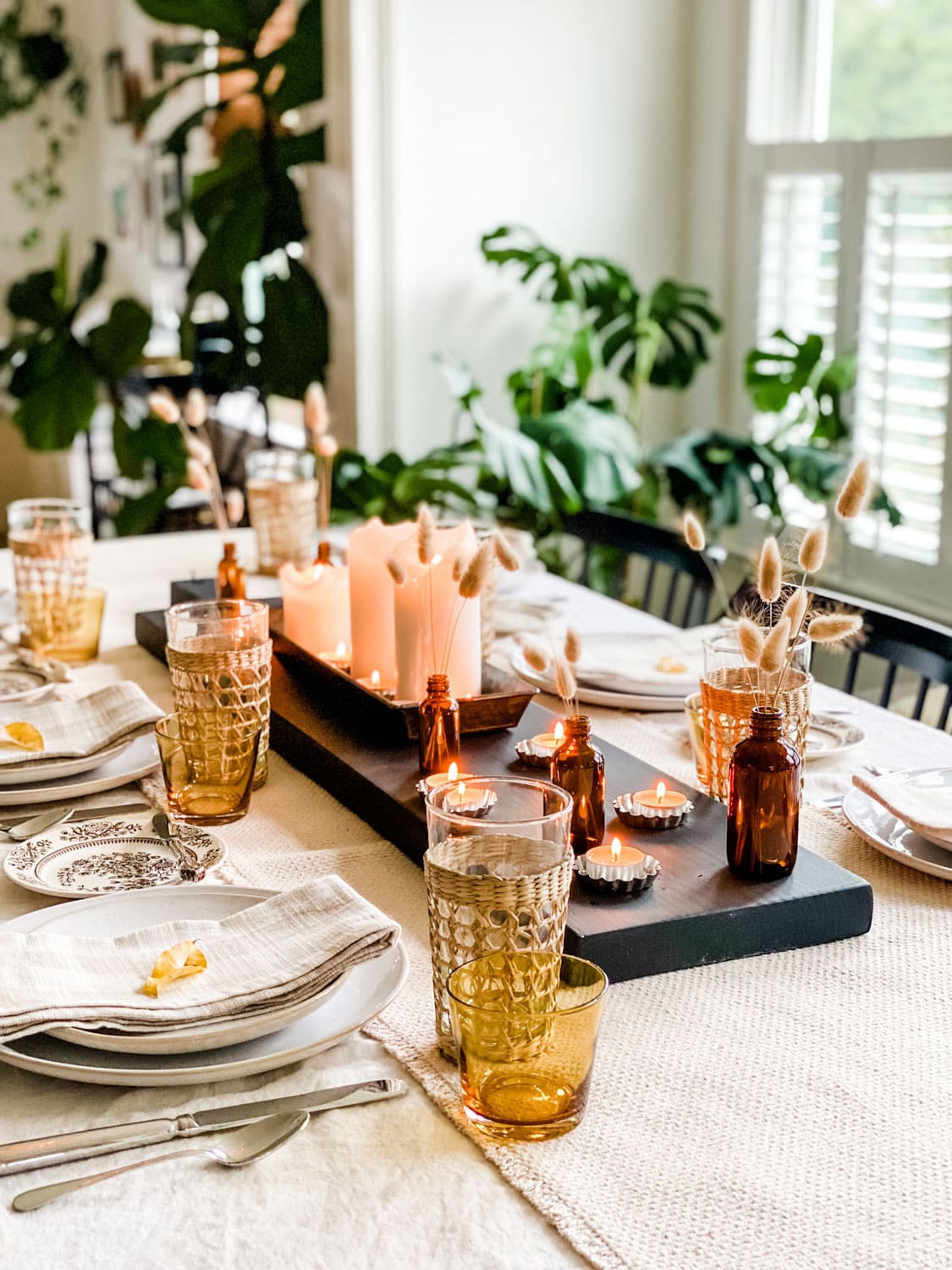
Amber glass catches candlelight in the prettiest way, and this table leans into that warm glow. A long wood board runs down the center with ivory beeswax pillars and tealights, while small amber bottles hold fluffy bunny tail grass. Gingham linen napkins and amber glasses pull it all together, and it works with the plates you already have.
What’s in the Look:
- Amber glass bud vases
- Dried bunny tail grass
- Beeswax pillar candles
- Long wood serving board
- Beeswax tealights
- Amber drinking glasses
- Linen gingham napkins
10. “I Am Thankful For” Place Setting
:max_bytes(150000):strip_icc():focal(499x0:501x2):format(webp)/102277881-cfb9d8a41204419f9bd03ad365699fc5.jpg)
📸Image: Midwest Living
Kraft paper placemats turn dinner into a moment of gratitude. Write “I am thankful for” at the top of each one and leave a few lines for guests to fill in, then tie each set of silverware with baker’s twine and a strip of cotton ribbon. The lists make great conversation at the table, and the paper can go in the compost when dinner is done.
What’s in the Look:
- Brown kraft paper roll
- Red and white cotton baker’s twine
- Wine red cotton ribbon
- Rust linen napkins
- Vintage-style stainless steel flatware
- Matte gray stoneware dinner plates
The Thanksgiving Decorations With the Most Plastic
The most plastic-heavy Thanksgiving decorations are foam or resin pumpkins, polyester table runners and napkins, paraffin candles, and fake leaf garlands. Real produce, beeswax, linen, glass and wood give you the same look with little or no plastic.
Seasonal decor is one of the easiest places for plastic to hide, because so much of it is made to look like something natural. Here is how to tell what you are really buying.
❌ Skip These
- Foam and resin pumpkins. Check the tag, and you will usually see polyurethane foam, polystyrene foam or resin, all of which are plastics.
- Polyester runners, tablecloths and napkins. Polyester is plastic, and it sheds tiny fibers when it goes through the wash.
- Paraffin candles. Paraffin is refined from petroleum, the same raw material behind most plastics.
- Fake leaf garlands and floral picks. Check the tag and you will usually find polyester or plastic, and none of it can be composted.
- Plastic tablecloths and disposable plates. These get used for a few hours and thrown away the same night.
✅ Choose These
- Real pumpkins, gourds and squash. They look better up close, and you can roast or compost them.
- Beeswax candles. A natural wax with a cotton wick and a warm glow.
- Linen or cotton napkins and runners. Plant fibers that wash well for years.
- Glass jars and wooden boards. Pieces you already use in the kitchen, dressed up for the holiday.
- Branches, dried wheat and fallen leaves. Free, seasonal and easy to compost.
You do not have to toss the decor you already own to make a change. Use what you have until it wears out, and when it does, replace it with a natural version. Over a few years, your holiday bin fills up with things that last.
Save This for Your Thanksgiving Table Setup 📌

What to Do With Your Decor After Thanksgiving
Most of the pieces in these Thanksgiving decor ideas can be used again next year or go right into the compost, so very little ends up in the trash. The real pumpkins, gourds, flowers, berry branches and mandarins can all be composted once they start to soften. That matters more than you might think, because the U.S. Environmental Protection Agency found that food waste is behind about 58% of the methane released from municipal landfills.
Before anything goes in the compost, pull off any twine, ribbon, tags and candle wax. New to composting? Our guide to composting for beginners walks you through setting up your first pile. No compost pile? Many cities take pumpkins and gourds in the yard waste or food scrap bin, or you can smash them and bury the pieces in a garden bed, where they break down over the winter.
Everything else packs away for next November. Wash and dry the linen napkins and runners, wrap the candlesticks, glass votives and amber bottles in a dish towel so they don’t chip, and keep the beeswax candles in a cool drawer so they hold their shape. Dried branches, bunny tail grass and river rocks last for years in a box, and the notes from your thankful tree make a sweet keepsake to tuck in with them.
Don’t Miss: DIY Fall Garland: 10 Plastic-Free Ideas Want one more natural touch for the mantel or doorway? These easy garlands use dried fruit, leaves and twine you can compost when the season ends. Read more →FAQs on Thanksgiving Decor Ideas
Start with a tablecloth or runner, then set a dinner plate at each seat with the napkin on top or to the left. Forks go on the left, and the knife and spoon go on the right with the knife blade facing the plate. Put water and wine glasses above the knife, and keep the centerpiece low so guests can see each other.
Shop your kitchen and yard before you buy anything. Glass jars, cutting boards and cake stands make great centerpiece bases, and fallen leaves, branches and pinecones are free. Spend your money on produce you will eat later, like mini pumpkins, pears and cranberries.
Yes, as long as they were never carved. Oregon State University Extension says whole pumpkins in good condition can keep for several months in cool, dry conditions. If yours were carved, compost them after Halloween and start fresh.
Most people decorate for Thanksgiving in early to mid November, once Halloween decor comes down. Many of the ideas in this guide, like pumpkins, gourds and dried wheat, work from October all the way through Thanksgiving weekend.
Traditional Thanksgiving decorations celebrate the harvest: pumpkins, gourds, dried corn, wheat, fall leaves and a cornucopia overflowing with fruit and vegetables. Candles and a set dinner table are the other classic pieces, since the meal itself is the heart of the holiday.
That is up to you and your household. A simple way to split the difference is to lean on neutral winter pieces like pine branches and beeswax candles in late November, then add the full Christmas decor after Thanksgiving dinner.
Final Thoughts About Thanksgiving Decor Ideas
The best Thanksgiving decor ideas use real pumpkins, beeswax candles, linen napkins and glass jars you already own. They look warmer than store-bought plastic decor, cost less over time, and mostly end up in the compost instead of a landfill.
If you only change one thing this year, make it the candles. Beeswax tapers sit right in the middle of the table, everyone notices them, and they replace a petroleum product with something made by bees.
After that, let the farm stand do the rest. Pumpkins, gourds, cranberries and pears carry the whole look, and they give you soup, pie and compost when the holiday is over.
Every product on this page is scored in our Plastic Footprint Directory or is being added to it, on the same rubric as everything else on the site.
📚 References
- Napper, I. E., & Thompson, R. C. (2016). Release of synthetic microplastic plastic fibres from domestic washing machines: Effects of fabric type and washing conditions. Marine Pollution Bulletin, 112(1-2), 39-45. https://doi.org/10.1016/j.marpolbul.2016.09.025
- National Candle Association. (n.d.). Elements of a candle: Wax. https://candles.org/elements-of-a-candle-wax/
- Oehler, N., & Hibbard-Swanson, J. (2024). Preserving pumpkins and winter squash (SP 50-767). Oregon State University Extension Service. https://extension.oregonstate.edu/catalog/sp-50-767-preserving-pumpkins-winter-squash
- U.S. Environmental Protection Agency. (2023). Quantifying methane emissions from landfilled food waste (EPA-600-R-23-064). https://www.epa.gov/land-research/quantifying-methane-emissions-landfilled-food-waste