
Key Takeaways
- The world generated an estimated 400 million tonnes of plastic waste in a single year, and faux leaf garlands made of PVC and polyester add to that pile every fall.
- A DIY fall garland made from dried oranges, pinecones, corn husks, wool, or fresh greenery skips plastic and can be composted or reused next year.
- Watch for hidden plastic in craft supplies: glitter, hot glue, acrylic yarn, synthetic raffia, and polyester ribbon.
The fall décor aisle is full of garlands that look like leaves and berries but are made from polyester and PVC. A DIY fall garland gives you the same cozy look with dried oranges, pinecones, corn husks, wool, and fresh greenery, and when the season ends it goes into the compost bin instead of the trash.
Below are 10 easy garlands you can make for Thanksgiving, a quick guide to the craft supplies that secretly contain plastic, with plastic-free supplies linked right inside each tutorial.
Why Plastic Fall Garlands Are Worth Skipping
Plastic fall garlands are usually made from polyester or PVC, which never break down. They slowly shed into microplastics, tiny fragments now found in human blood, lungs, and placentas.
The world generated an estimated 400 million tonnes of plastic waste in one year, according to the UN Environment Programme. Seasonal décor is a sneaky part of that because it gets used for a few weeks, stored badly, and tossed when the leaves fade or crack.
Plastic does not biodegrade. Over time it breaks into smaller and smaller pieces called microplastics. Researchers in the Netherlands found plastic particles in the blood of 17 of 22 healthy adult donors, a UK team found microplastics in 11 of 13 lung tissue samples, and an Italian study found them in 4 of 6 human placentas. Scientists are still working out what that means for our health, which is exactly why cutting back where it is easy makes sense.
Garlands are one of the easiest places to start. Every material in this guide is either compostable, reusable year after year, or both.
Don’t Miss: Plastic-Free Living: Where to Actually Start, Room by Room Holiday décor is a fun first step. This guide shows where plastic hides in every room of your home and which swaps matter most. Read more →Plastic Craft Supplies to Swap Out
Common craft supplies like glitter, hot glue, acrylic yarn, sequins, and synthetic ribbon are made from plastic. Plant-based, wool, cotton, wood, and paper versions give the same look without it.
Many craft staples are plastic in disguise, so a homemade garland can still end up full of it. This quick swap chart keeps your projects plastic-free from the start.
| ❌ Skip This | ✅ Use That |
|---|---|
| Plastic glitter | Plant-cellulose glitter, or skip glitter entirely |
| Metallic spray paint | Natural materials left unpainted |
| Polyester or nylon ribbon | Cotton, linen, or jute ribbon |
| Synthetic raffia | Natural palm raffia or jute twine |
| Acrylic yarn | 100% wool or cotton yarn |
| Hot glue and craft glue | Knotted twine or homemade flour paste |
| Sequins and plastic beads | Unfinished wood, glass, or clay beads |
| Faux leaves and florals | Pressed leaves, dried flowers, or fresh greenery |
❌ Why These Craft Supplies Count as Plastic
- Glitter: Most craft glitter is PET plastic coated in aluminum. A 2021 study found conventional glitter harmed freshwater plant life, and the European Union banned loose plastic glitter in 2023.
- Metallic spray paint: The binders in spray paint are usually acrylic or alkyd resins, which leave a thin plastic film over natural items and keep them out of the compost.
- Synthetic ribbon and raffia: Polyester, nylon, and polypropylene are all made from oil. Shiny “raffia” at craft stores is often polypropylene.
- Acrylic yarn: Acrylic is a plastic fiber that sheds tiny strands, so it is a poor pick for tassels and pom-poms.
- Hot glue and craft glue: Glue sticks are usually EVA (ethylene-vinyl acetate), and white school glue is usually PVA (polyvinyl acetate). Both are plastic polymers.
- Sequins and cheap beads: Sequins are typically PVC or PET, and bargain craft beads are usually acrylic or polystyrene.
- Faux leaves and florals: Artificial greenery is almost always polyester or PVC wrapped around wire.
💫 Now You Know
What is “biodegradable” glitter?
Biodegradable glitter is made from plant cellulose, usually from eucalyptus, instead of PET plastic. Some brands still add a thin plastic coating, so look for a third-party biodegradability certification on the package before you buy.
10 DIY Fall Garland Ideas for Thanksgiving
The easiest plastic-free fall garlands use dried oranges, pinecones, corn husks, pressed leaves, fabric scraps, paper, wool, wooden beads, or fresh greenery strung on jute twine.
Garlands are one of the quickest ways to make a home feel ready for the holidays. Hang one across the mantel, drape it down the dining table, or frame a doorway so guests feel welcome the moment they walk in.
📌 Pin This One for Your Fall Decorating Weekend
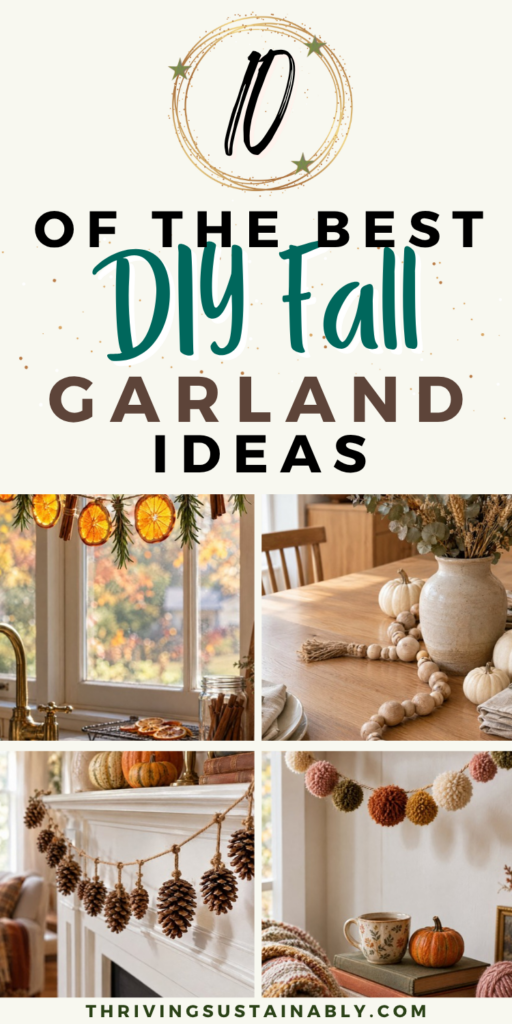
1. Corn Husk Garland: Harvest-Inspired
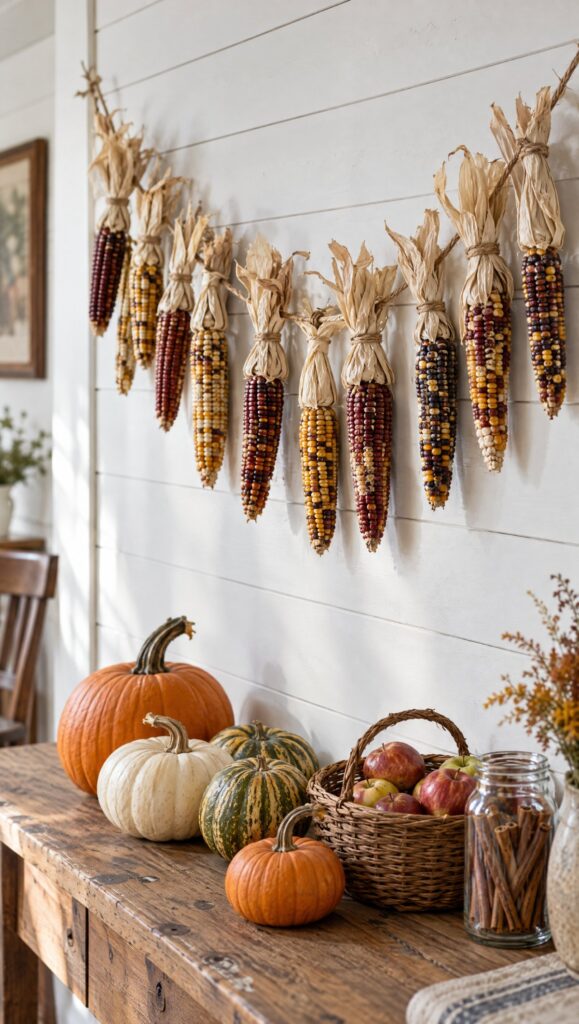
This garland feels like it came straight from a harvest festival. Dried ornamental corn brings deep reds, golds, and purples, and the pulled-back husks make a natural hanging loop, so you need nothing but twine.
What You Need:
- 6 to 10 dried ornamental (Indian) corn cobs with husks attached
- Jute twine or natural palm raffia
- Scissors
How to Make It:
- Gently peel the dry husks back from each cob and bunch them together above the top of the cob.
- Wrap a short piece of twine tightly around each bunch of husks and knot it.
- Tie each cob onto a long piece of twine by its husks, spacing them 3 to 4 inches apart.
- Hang it across a wall, porch, or mantel, and let the cobs settle at their own natural angles.
2. Leaf Garland: Nature’s Own Décor
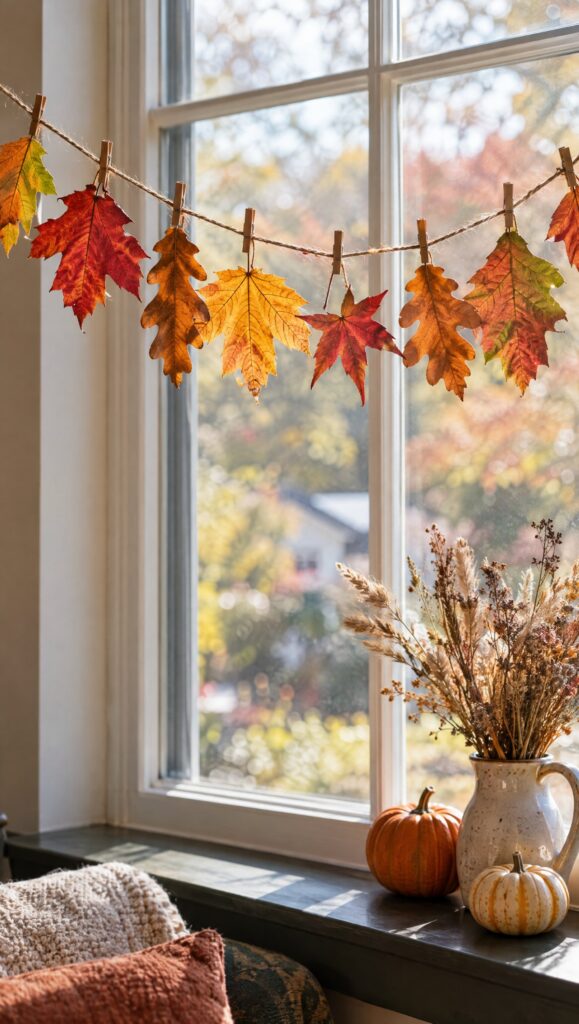
For the most budget-friendly option, this is it. Fall leaves bring all the color you need, and pressing them lets you enjoy them long after they drop.
What You Need:
- Colorful fall leaves
- Heavy books or a flower press
- Jute twine
- Mini wooden clothespins
How to Make It:
- Collect leaves in different colors and sizes.
- Press them between sheets of paper inside heavy books for about a week, until flat and dry.
- Clip the leaves to the twine with mini clothespins.
- Hang the garland in a window or across a wall.
3. Pinecone Garland: Rustic and Natural
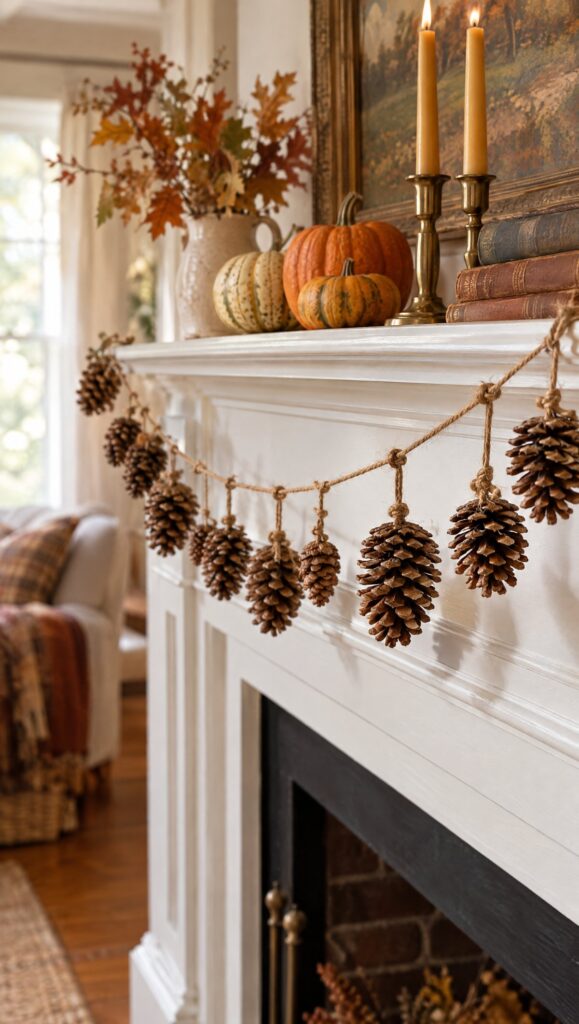
A pinecone garland feels like you took a walk in the woods and brought the best parts home. Pinecones add texture and warmth, and a drop of cinnamon oil makes the whole room smell like fall.
What You Need:
- Pinecones of similar size
- Jute twine
- Optional: cinnamon essential oil
How to Make It:
- Bake the pinecones at 200°F for about 30 minutes to dry out sap and any hitchhiking bugs, then let them cool.
- Wrap a piece of twine between the bottom rows of scales on each pinecone and knot it tight.
- Tie each pinecone onto a long piece of twine, spacing them evenly.
- Hang the garland and add a drop of cinnamon oil to a few pinecones if you like.
4. Fabric Scrap Garland: Textured and Eclectic
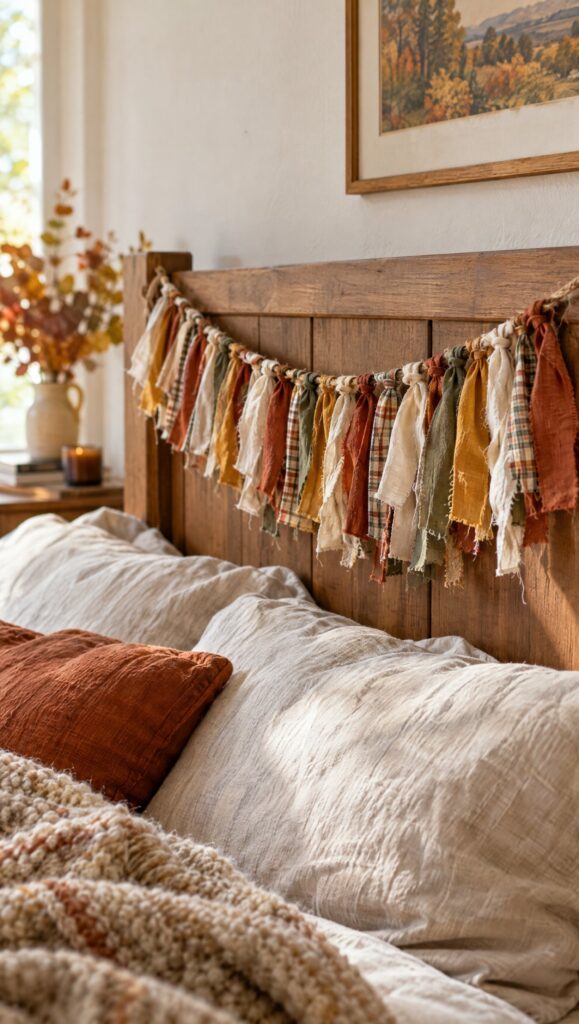
Old sheets, worn-out shirts, and ribbon leftovers turn into a boho garland that looks far more expensive than it is. Stick to cotton, linen, or other natural fabrics so nothing sheds plastic fibers.
What You Need:
- Cotton or linen fabric scraps, or cotton ribbon
- Scissors
- Jute twine or cotton rope
How to Make It:
- Cut your fabric into strips about an inch wide and 8 to 10 inches long.
- Knot the strips onto the twine, pushing them close together for fullness.
- Keep going until you like the look.
- Hang it across a headboard, wall, or mantel.
5. Paper Chain Garland: Nostalgic and Easy
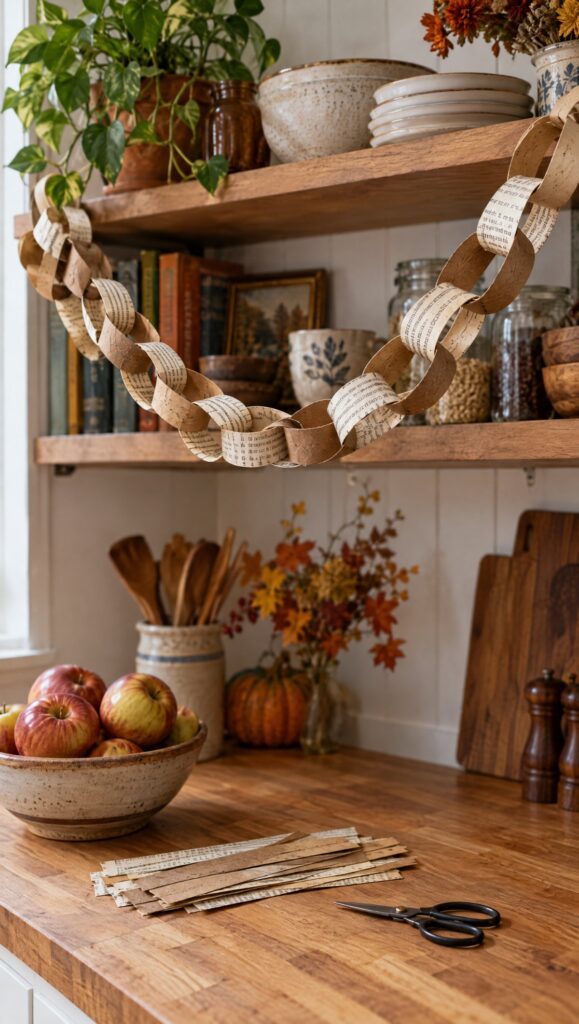
This grade school throwback is simple, colorful, and oddly satisfying to make. Kraft paper and old book pages give it a grown-up fall look.
What You Need:
- Kraft paper, old book pages, or leftover wrapping paper
- Scissors
- Flour paste (2 tablespoons flour mixed with about 3 tablespoons water) or a stapler
How to Make It:
- Cut the paper into strips about an inch wide.
- Loop one strip into a circle and seal it with a dab of flour paste or a staple.
- Slide the next strip through the loop and close it to make a chain.
- Keep going until it is long enough for your space.
6. Tassel Garland: Boho With a Twist
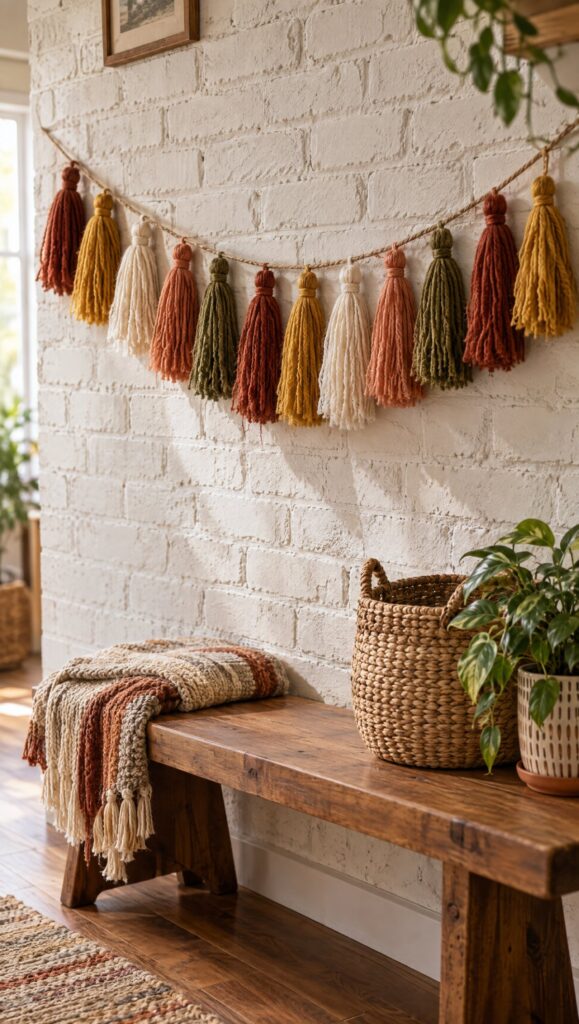
Tutorial by What’s Up Moms
If you love texture, this is your garland. Tassels bring a fringe-y, laid-back look, and they are easier to make than they appear. Mix a few colors for a fun, eclectic feel.
What You Need:
- 100% wool yarn or cotton yarn
- Scissors
- Jute twine
- A piece of cardboard or a paperback book
How to Make It:
- Wrap yarn around the cardboard about 20 times.
- Slide it off, tie it tightly at the top, and cut the bottom loops.
- Wrap a short piece of yarn around the neck of the tassel and trim the ends neatly.
- Repeat until you have a bunch, then tie them onto the twine and hang.
7. Beaded Garland: Minimalist but Stylish
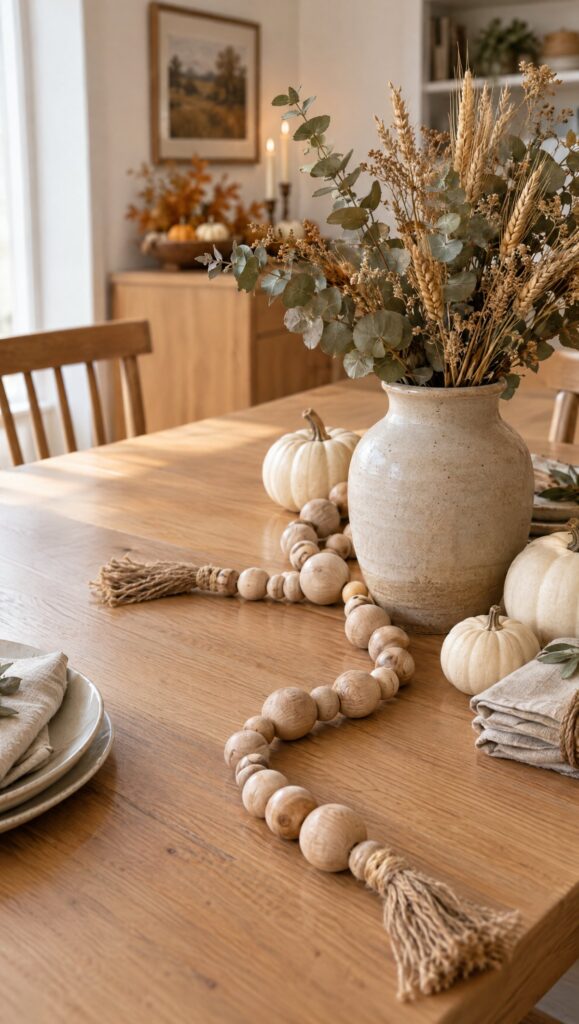
Sometimes less really is more. A wooden bead garland is neutral and chic, and it works with almost any décor style. It also lasts for years, so you can pull it out every fall.
What You Need:
- Unfinished wooden beads in mixed sizes
- Jute twine
- Scissors
How to Make It:
- Cut the twine to your desired length and wrap one end tightly to make threading easier.
- Thread the beads in any order. A pattern and a random mix both work.
- Knot the ends so the beads stay put.
- Drape it across a mantel, wrap it around a vase, or layer it with greenery.
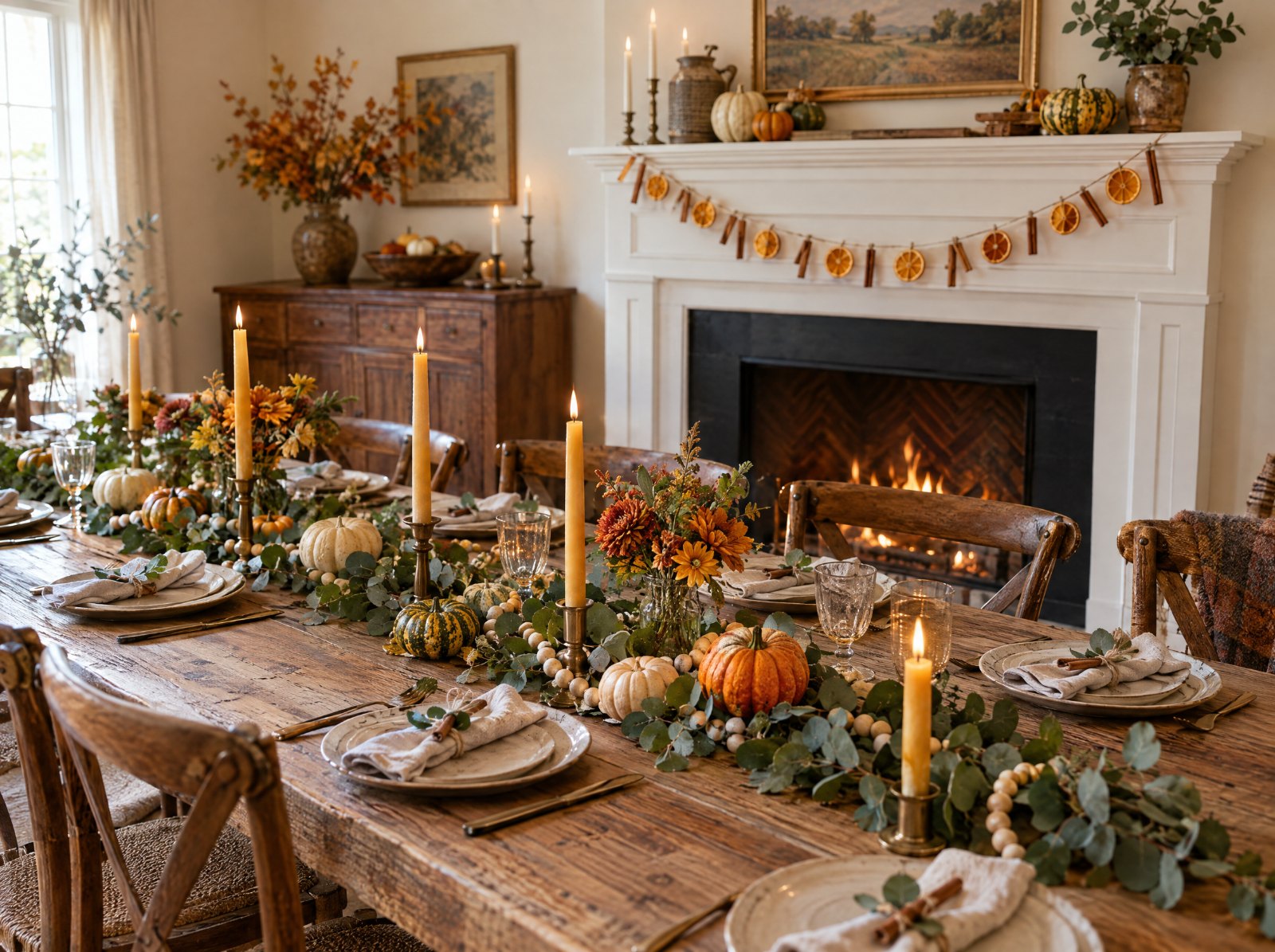
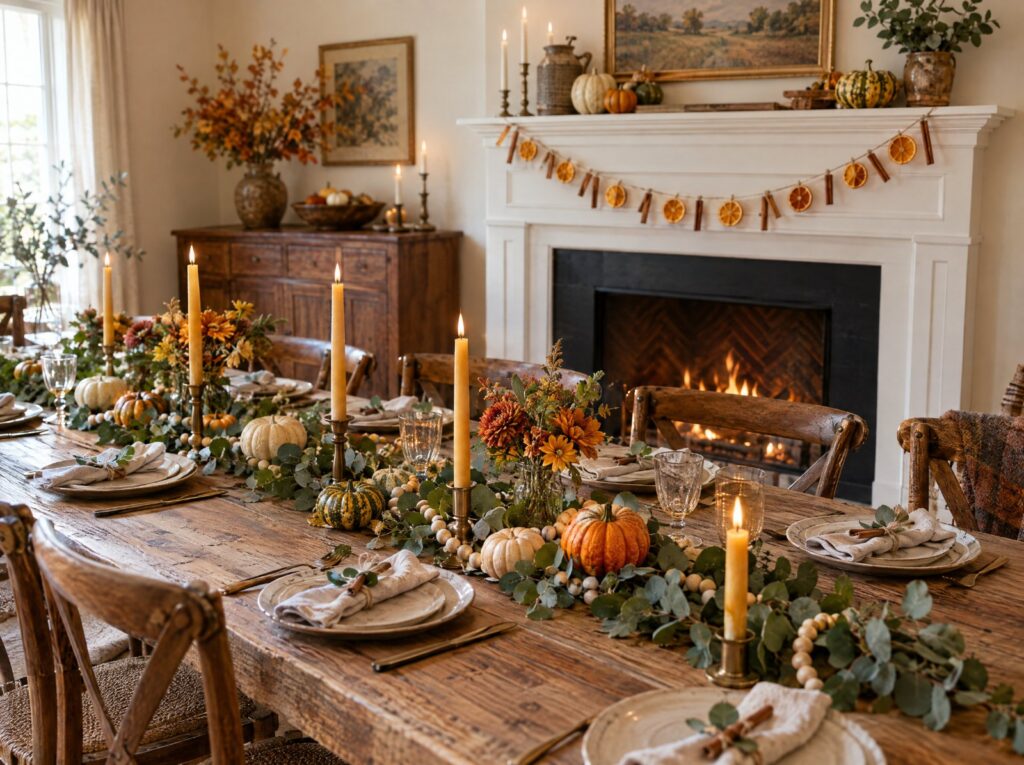
8. Dried Orange Garland: Warm and Festive
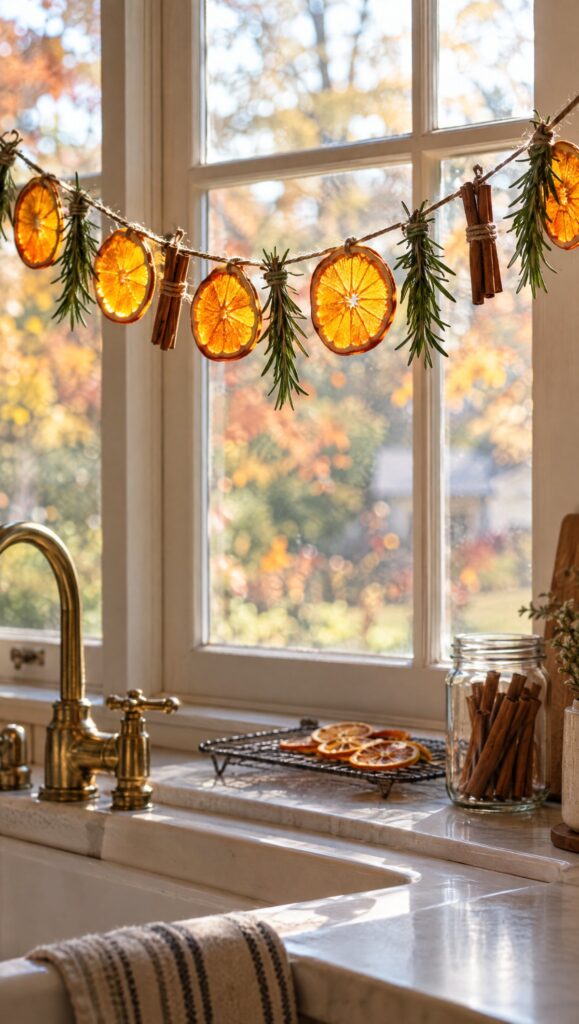
This garland does double duty: it looks gorgeous and smells incredible. The slices glow like stained glass in the window, and rosemary and cinnamon sticks add a cozy spice-market scent.
What You Need:
- 3 to 4 oranges
- A sharp knife
- A baking sheet with a wire cooling rack
- A clean kitchen towel
- Jute twine and a large-eye steel needle
- Fresh rosemary sprigs
- Organic cinnamon sticks
How to Make It:
- Slice the oranges about 1/4 inch thick so they dry evenly.
- Press each slice between a kitchen towel to soak up extra juice.
- Lay the slices on a wire rack set over the baking sheet and bake at 200°F for 2 to 3 hours, flipping every 30 to 45 minutes, until completely dry.
- Let the slices cool fully.
- Thread them onto twine with the needle, spacing them a couple of inches apart, and tie rosemary and cinnamon sticks between some of the slices.
Once your garland is up, keep it away from steamy spots like the stove and dishwasher. Humidity softens the slices, and soft slices can mold.
✨ TIP
Skip the Parchment Paper
A wire cooling rack lets hot air reach both sides of each slice, so the oranges dry faster and flatter. You get crisper slices and one less disposable in the trash.
9. Pom-Pom Garland: Playful and Cozy
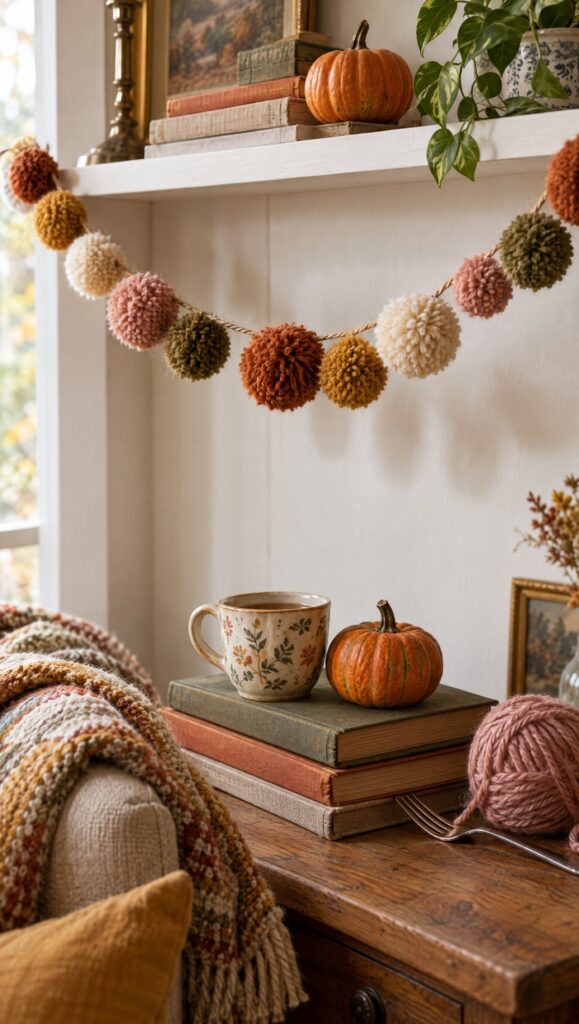
Tutorial by Sheep & Stitch
A pom-pom garland is handmade, colorful, and instantly softens a room. It is a sweet pick for a cottage or boho look, and kids love helping make it.
What You Need:
- 100% wool yarn in fall colors
- A fork or a piece of cardboard (most pom-pom makers are plastic, and you do not need one)
- Scissors
- Jute twine
How to Make It:
- Wrap yarn around the fork tines or cardboard until you have a thick bundle.
- Tie it tightly in the center with a separate piece of yarn.
- Cut the loops on both sides and trim the pom-pom into a round shape.
- Repeat until you have a collection, then tie them onto twine and hang.
10. Greenery Garland: Effortlessly Elegant
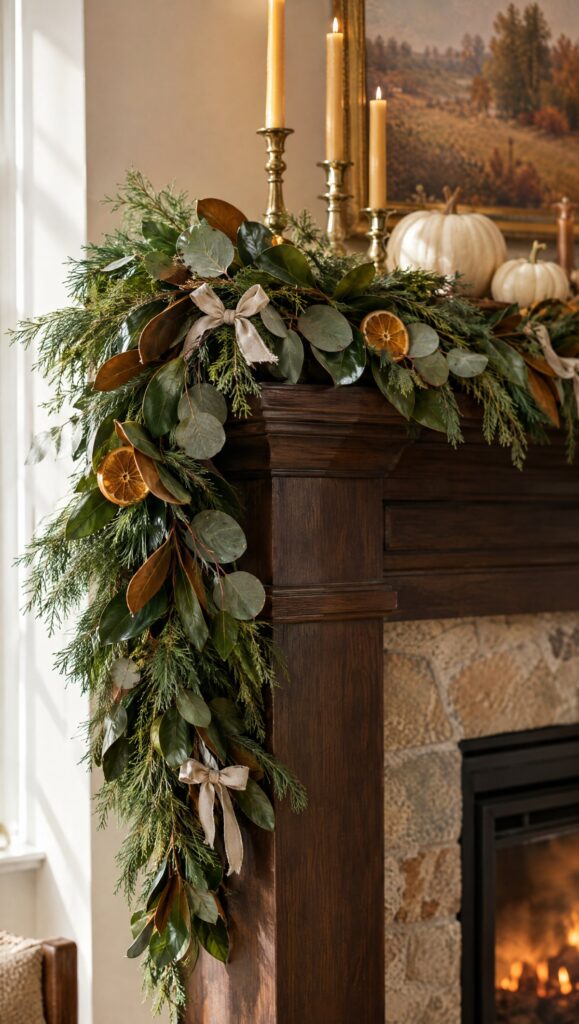
Fresh greenery feels instantly elevated. It smells wonderful, looks like it came from a home magazine, and works in any room of the house.
What You Need:
- Fresh eucalyptus, magnolia, or pine
- Jute twine and uncoated paddle wire
- Pruning shears
- Optional: cotton ribbon or dried flowers
How to Make It:
- Cut the greenery into smaller stems about 8 inches long.
- Lay the stems so they overlap in one direction and wrap each one to the twine with wire.
- Keep layering until the garland reaches the length you want.
- Drape it over a mantel, down the table, or across a doorway, and mist it every day or two to keep it fresh.
How to Style a Fall Garland
Mix smooth and rustic textures, group accents in odd numbers, and build on a sturdy jute base so your fall garland looks full and intentional.
A few simple tricks make a homemade garland look like it came from a boutique.
- Mix smooth pieces like wooden beads with rustic ones like pinecones or fabric scraps. The contrast makes the garland look layered and intentional.
- Group accents like dried oranges or mini pumpkins in odd numbers. Groups of three or five look more natural to the eye.
- Fill sparse spots with extra greenery or leftover fabric strips instead of buying more supplies.
- Start with a sturdy base of jute twine, then build on top of it. A strong base makes layering much easier.
- Think beyond the mantel. Garlands look lovely on mirrors, windows, stair railings, and down the center of the Thanksgiving table.
Once the holidays are over, the dried and fresh pieces can go straight into your compost, and the twine, beads, and wool pieces can be packed away for next year.
Don’t Miss: Boo-tiful Plastic-Free DIY Halloween Decorations Want more handmade décor for the season? These spooky projects skip the plastic and still look amazing on the porch. Read more →FAQs on DIY Fall Garland
Dried garlands made from oranges, pinecones, corn husks, and fabric last the whole season and often several years if stored in a cool, dry place. Fresh greenery usually stays vibrant for about 7 to 10 days. Keep fresh garlands away from fireplaces and heaters, and mist them lightly to stretch their life.
Yes, most natural garlands are compostable. Dried oranges, rosemary, cinnamon sticks, leaves, corn husks, and pinecones can go into your compost bin. Remove any wire first, and save reusable pieces like wooden beads and wool pom-poms for next year.
It depends on the type. Natural raffia comes from the leaves of raffia palms and is fully compostable, while the shiny, brightly colored raffia sold at many craft stores is often polypropylene plastic. Check the label for “natural” or “palm” raffia.
Wrap the garland loosely in a cotton cloth or paper and store it in a cardboard box or glass jar somewhere cool and dry. Avoid basements and garages where humidity can soften the slices and cause mold.
Yes, and it creates a beautiful layered look. Keep in mind that fresh greenery dries faster, so plan to swap it out midway through the season or enjoy the rustic look as it dries.
Final Thoughts About DIY Fall Garland
A DIY fall garland made from oranges, pinecones, wool, and jute looks just as festive as store-bought décor, and it composts or packs away instead of adding to plastic waste.
Thanksgiving decorating does not have to mean faux leaves and glitter. With a few natural supplies and an afternoon, you can make something that feels personal, smells amazing, and never sheds plastic into your home. Pick one garland from this list to start, and add another each year until your fall bin is full of pieces you love.
📚 References
- European Commission. (2023). Commission Regulation (EU) 2023/2055 of 25 September 2023 amending Annex XVII to Regulation (EC) No 1907/2006 as regards synthetic polymer microparticles. Official Journal of the European Union. https://eur-lex.europa.eu/eli/reg/2023/2055/oj
- Green, D. S., Jefferson, M., Boots, B., & Stone, L. (2021). All that glitters is litter? Ecological impacts of conventional versus biodegradable glitter in a freshwater habitat. Journal of Hazardous Materials, 402, 124070. https://doi.org/10.1016/j.jhazmat.2020.124070
- Jenner, L. C., Rotchell, J. M., Bennett, R. T., Cowen, M., Tentzeris, V., & Sadofsky, L. R. (2022). Detection of microplastics in human lung tissue using μFTIR spectroscopy. Science of the Total Environment, 831, 154907. https://doi.org/10.1016/j.scitotenv.2022.154907
- Leslie, H. A., van Velzen, M. J. M., Brandsma, S. H., Vethaak, A. D., Garcia-Vallejo, J. J., & Lamoree, M. H. (2022). Discovery and quantification of plastic particle pollution in human blood. Environment International, 163, 107199. https://doi.org/10.1016/j.envint.2022.107199
- Ragusa, A., Svelato, A., Santacroce, C., Catalano, P., Notarstefano, V., Carnevali, O., Papa, F., Rongioletti, M. C. A., Baiocchi, F., Draghi, S., D’Amore, E., Rinaldo, D., Matta, M., & Giorgini, E. (2021). Plasticenta: First evidence of microplastics in human placenta. Environment International, 146, 106274. https://doi.org/10.1016/j.envint.2020.106274
- UN Environment Programme. (2025, April 29). Answering 10 pressing questions about plastic pollution. https://www.unep.org/news-and-stories/story/answering-10-pressing-questions-about-plastic-pollution