
Key Takeaways
- The cleanest non-toxic baby wipes skip phenoxyethanol, fragrance, PEGs, and formaldehyde releasers, and many are 99% water or more.
- Look for the EWG Verified or MADE SAFE seal to confirm a wipe was vetted, not just marketed as clean.
- Most disposable wipes are made from plastic fibers that shed microplastics, so a plant-based, plastic-free wipe protects your baby and the water supply at once.
You wipe your baby dozens of times a day, so the ingredients in that little wet cloth touch some of the most delicate skin there is. The best non-toxic baby wipes keep the formula simple: purified water, a plant-based cleanser, maybe a soothing botanical, and nothing that ends up on a dermatologist’s watch list. After researching more than 20 popular wipes against their full ingredient labels, EWG Skin Deep scores, and third-party certifications, nine rose to the top for 2026.
Here is the short answer before we go deep: for most families, WaterWipes is the cleanest everyday pick, HealthyBaby is the best EWG Verified option for newborns, and a stash of reusable cloth wipes is the most affordable and lowest-waste choice over time. Below you will find the full ranking, an ingredient teardown for each pick, the wipes we would skip and why, and the cost-per-wipe math no one else shows you.
The Experts Behind the Research
- Mary Wu Chang, MD, pediatric dermatologist at the University of Connecticut and lead author of the 2014 Pediatrics study that first reported allergic rashes in US children from the preservative methylisothiazolinone in wet wipes. Her research shapes the ingredients we tell you to avoid.
- Jennifer Shu, MD, FAAP and Laura A. Jana, MD, FAAP, pediatricians and American Academy of Pediatrics authors of “A Word on Wipes,” whose guidance on when a baby actually needs a wipe informs our water-and-cloth section.
We cite these experts’ published work throughout this guide. They did not review or endorse this article.
Our Top Picks at a Glance
The best non-toxic baby wipes for 2026 are WaterWipes for everyday use, HealthyBaby for newborns, and Coterie for sensitive or eczema-prone skin. All three keep their formulas at or above 99% water and carry a clean ingredient label.
Here is how the nine picks compare on the numbers that matter. Price per wipe is rounded from current pack pricing and can shift with subscriptions or sales.
| Wipe | 3rd Party Certs | Material | Fragrance | Price / Wipe | Best For |
|---|---|---|---|---|---|
| Reusable cloth wipes | GOTS / OEKO-TEX fabric | Organic cotton or bamboo | You control it | Near $0 after buy-in | Zero-waste |
| Mustela Eco-Wipes | GOTS (registry verified) | 100% organic cotton, reusable | You control it | Near $0 after $20 buy-in | GOTS-certified reusable |
| WaterWipes | None At This Time | Plant-based (per brand) | Fragrance-free | ~$0.03 | Best overall |
| HealthyBaby | EWG Verified | Wood pulp (per brand) | Unscented | ~$0.05 to $0.10 | Newborns |
| Coterie The Wipe | EWG Verified, Eczema seal | Lyocell, biodegradable | Fragrance-free | ~$0.09 to $0.12 | Sensitive skin |
| Honest Sensitive | None At This Time | Plant-based (per brand) | Fragrance-free | ~$0.06 | Everyday value |
| Kinder by Nature | None At This Time | Natural viscose, biodegradable per brand | Light botanical | ~$0.07 | Plastic-free |
| Caboo Bamboo | EWG Verified, MADE SAFE | Bamboo viscose | Fragrance-free | ~$0.07 | Bamboo option |
| ATTITUDE | EWG Verified | Plant cellulose | Unscented | ~$0.07 | Plant-based budget |
How We Researched and Ranked
We ranked these baby wipes by reading every ingredient label against the INCI name, cross-checking each product in EWG’s Skin Deep database, and confirming certifications with the issuing body. We researched the wipes, we did not lab-test them.
To be fair and consistent, every wipe was scored the same way. First, we pulled the full ingredient list and flagged anything on the avoid list below. Second, we checked how much of the formula was water, since a more water-heavy wipe usually means a shorter, gentler formula. Third, we looked at the wipe material to see whether it was plant-based or plastic. Fourth, we confirmed any “clean” or “non-toxic” marketing claim against a real certification like EWG Verified or MADE SAFE. A shiny label means nothing if the seal behind it does not exist.
One honesty note. Because most disposable wipes are made from spun plastic fibers, they are a quiet source of the microplastics we write about across this site. That is why plant-based and plastic-free materials carried real weight in our ranking, not just the ingredient list.
Don’t Miss: The Microplastics Hub Plastic wipes are one of the sneakiest sources of microplastics in the nursery. See where else they hide and how to cut them out. Read more →What Makes a Baby Wipe Non-Toxic
A non-toxic baby wipe is one whose full ingredient list is free of known skin sensitizers and hidden contaminants, chiefly phenoxyethanol, fragrance, PEG compounds, propylene glycol, and formaldehyde-releasing preservatives. The shorter the list, the lower the risk.
“Non-toxic” is not a regulated word, so the only way to trust it is to read the label yourself. Here are the ingredients worth avoiding, the materials to watch, and the certifications that actually back up a clean claim.
❌ Ingredients to Avoid
- Phenoxyethanol. A common preservative. In a 2008 warning the FDA said that ingested phenoxyethanol can depress an infant’s central nervous system, and France’s medicines agency has advised against using it on the diaper area for children under three.
- Fragrance or parfum. A legal catch-all that can hide dozens of undisclosed allergens under trade-secret protection.
- Methylisothiazolinone and methylchloroisothiazolinone (MI and MCI). The preservatives tied to the baby-wipe rash cases Dr. Chang documented. Many brands removed them, so check the label.
- PEG compounds. Processing can leave behind 1,4-dioxane, a probable human carcinogen that never appears on a label.
- Propylene glycol. A recognized irritant that can sensitize compromised or newborn skin.
- DMDM hydantoin, quaternium-15, and other formaldehyde releasers. They slowly release formaldehyde, a known allergen and carcinogen. Quaternium-15 is banned in the EU.
✅ Materials to Look For
- Plant-based viscose or lyocell. Made from wood pulp, soft, and biodegradable. This is the gold standard for a disposable wipe.
- Bamboo viscose. Tree-free and compostable, though it is still a processed rayon, not a raw fiber.
- Organic cotton. Best for reusable cloth wipes and the softest option for reactive skin.
Steer away from wipes labeled polyester or PET. Those are plastic, they do not break down, and they shed microfibers every time you use one.
💫 now you know
What is viscose?
Viscose is a soft fiber spun from wood pulp or bamboo. Unlike polyester, it is plant-based and breaks down over time, which is why the cleanest disposable wipes use it instead of plastic.
Certifications That Actually Matter
Four seals are worth trusting because a third party verifies the formula: EWG Verified confirms a product avoids EWG’s full list of ingredients of concern, MADE SAFE screens against thousands of harmful chemicals, USDA Organic covers organic content, and OEKO-TEX certifies the fabric is free of harmful substances. If a wipe has none of these, judge it on its ingredient list alone. We break down each seal in our full guide to third-party certifications.
The 9 Best Non-Toxic Baby Wipes
These nine wipes earned a spot by pairing a clean ingredient label with a plant-based or reusable material. Each entry below lists the formula, its rating, the honest downside, and who it suits best.
Best Zero-Waste Reusable Cloth Wipe
$$ price tier
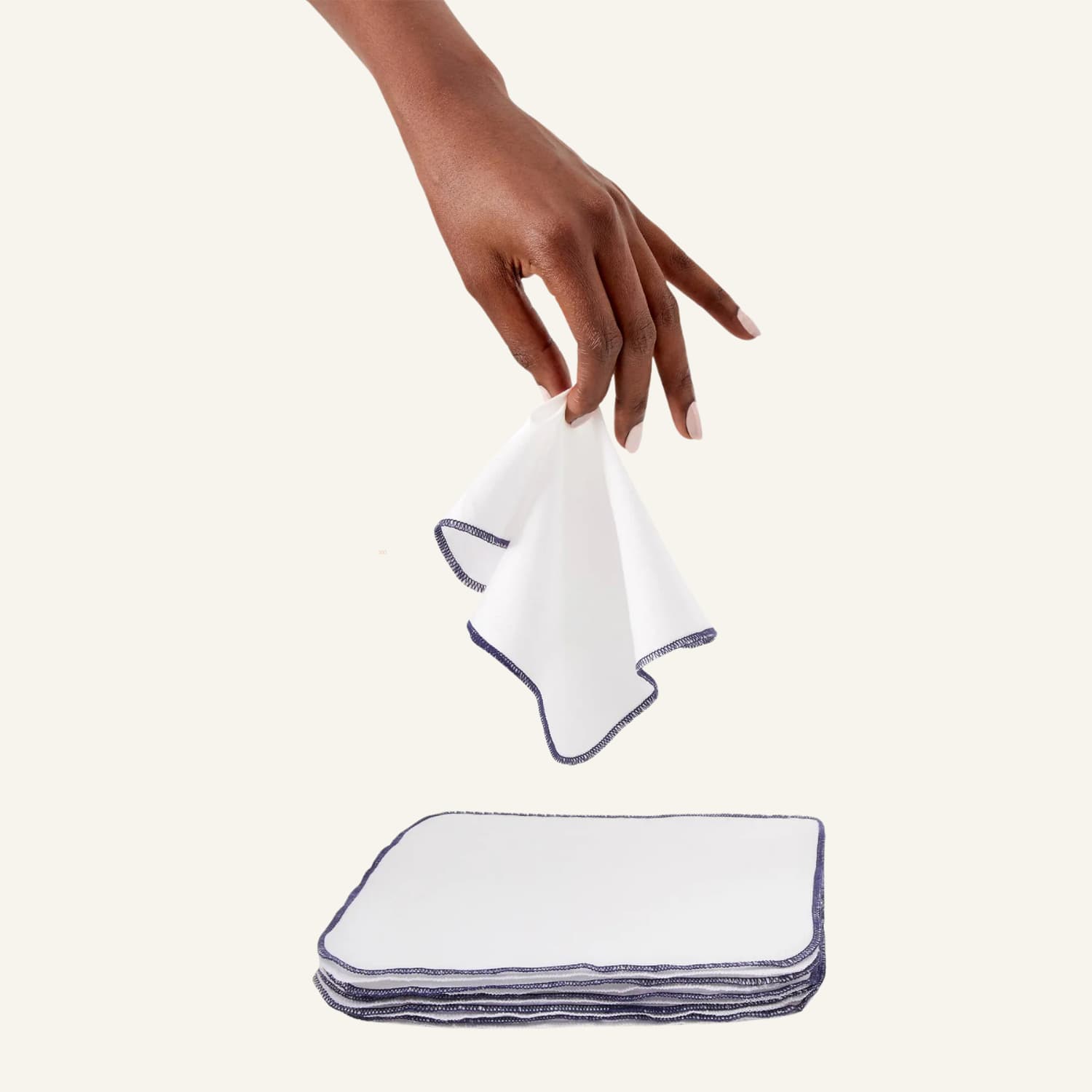
Esembly Wipe Ups are dual textured reusable wipes in 100% unbleached organic cotton, OEKO-TEX certified per the brand, with a soft side for delicate skin and a scrubby side for real messes.
Used with plain warm water they replace the single use wipe stream entirely. The brand reports independent testing free of lead, BPA, PVC, and phthalates. The stitching thread is the only component not disclosed.
Fabric
100% Organic Cotton, Unbleached
✓ Plastic FreeTexture
Soft + Scrubby Sides, Both Cotton
✓ Plastic FreeSolution
Plain Water, You Control It
✓ Plastic FreeStitching
Thread Not Disclosed
⚠ UnverifiedPros
- Replaces the disposable wipe stream entirely
- 100% unbleached organic cotton, OEKO-TEX certified per the brand
- Tested free of lead, BPA, PVC, and phthalates per the brand
- Cost per wipe near zero after the upfront buy
Cons
- Upfront cost and regular laundering
- Less travel friendly than disposables
- Stitching thread composition not disclosed
The lowest plastic wipe there is, because there is no wipe to throw away. Scores 1 of 10 in our directory, the top score in this guide.
The cleanest wipe is the one with no preservative at all. A stash of organic cotton or bamboo terry cloth wipes, used with plain warm water or a simple homemade solution, removes every ingredient concern and every scrap of packaging. Look for GOTS organic cotton or an OEKO-TEX fabric certification. The upfront cost is higher, but after that the cost per wipe is close to zero.
- Ingredients: none beyond water, or a drop of mild cleanser in your own solution
- Rating: look for GOTS or OEKO-TEX certified fabric
- Best for: zero waste and the lowest long-term cost
- The downside: you carry soiled wipes home and launder often, which is less travel-friendly
Best GOTS-Certified Reusable Wipe
$$$ price tier
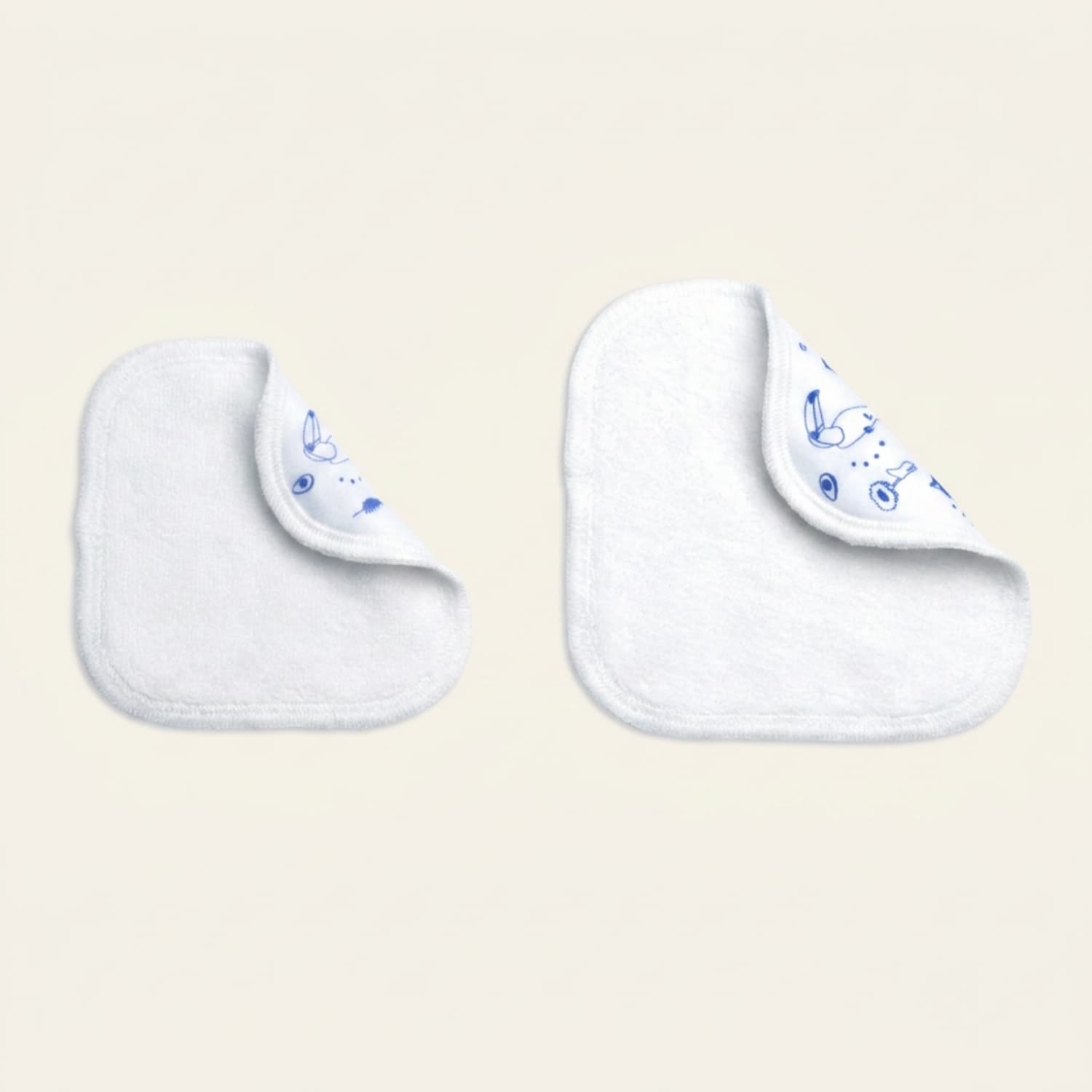
Mustela Reusable Eco-Wipes are double sided, terry on one face and smooth cotton on the other, in 100% GOTS-certified organic cotton. The certificate number the brand publishes matches the public GOTS registry record, the strongest certification paper trail in this guide.
Used with plain water there is no preservative to vet at all. The six pack comes in two sizes, three large and three small. Stitching thread and packaging are the two details the brand does not disclose.
Fabric
100% GOTS Organic Cotton
✓ Plastic FreeTexture
Terry + Smooth Sides, Both Cotton
✓ Plastic FreeStitching
Thread Not Disclosed
⚠ UnverifiedPackaging
Not Stated
⚠ UnverifiedPros
- GOTS certificate verified in the public GOTS registry
- No bamboo viscose, microfiber, or polyester claimed anywhere in the fabric
- Two sizes and two textures in one pack
- No formula at all, you control the solution
Cons
- About $20 for six wipes
- Stitching thread and packaging not disclosed
- Laundry routine like any cloth wipe
The strongest certification paper trail of any wipe in this guide, on a fully cotton cloth. Scores 1 of 10 in our directory, the top score in this guide.
Mustela’s Reusable Eco-Wipes are the certification standout of the cloth options. Each wipe is double sided, terry on one face and smooth cotton on the other, cut from 100% GOTS-certified organic cotton. Mustela publishes its certificate number, and it matches the record in the public GOTS registry, the strongest paper trail of any wipe in this guide. A pack of six, three large and three small, runs about $20.
- Ingredients: none, you add plain water or your own simple solution
- Rating: GOTS-certified organic cotton, certificate verified in the GOTS registry
- Best for: families who want a certified organic reusable wipe
- The downside: about $20 for six wipes, so building a full stash takes a few packs, plus regular laundering
If cloth is not practical for every change, no guilt. The seven disposable picks below pair clean formulas with plant-based cloths, starting with our overall favorite.
Best Overall: WaterWipes
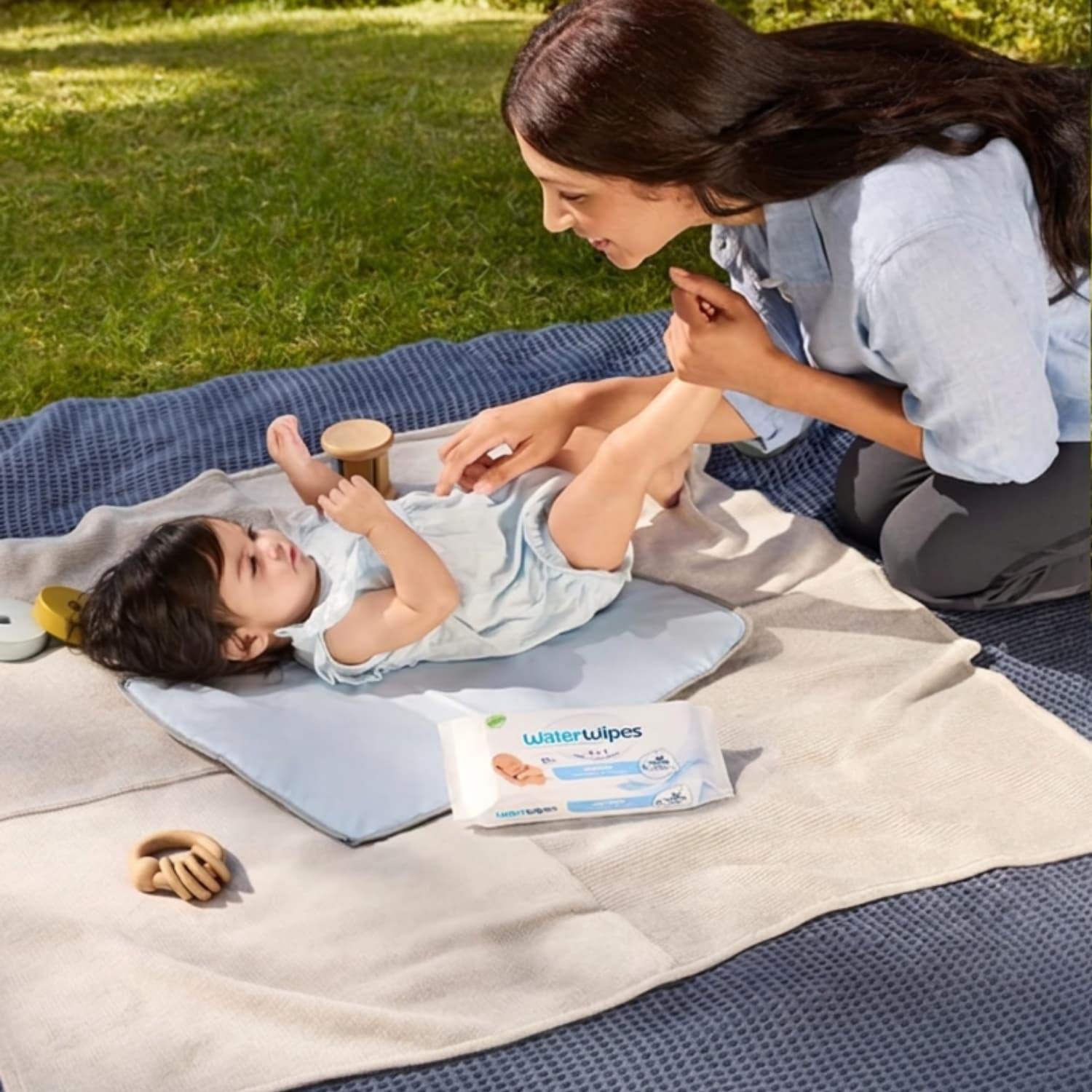
Best Overall Non-Toxic Wipe
$ price tier
WaterWipes keeps the formula to 99.9% purified water and a drop of grapefruit seed extract, on a cloth the brand states is plant based and plastic free. EWG Skin Deep scores it 1, the lowest hazard rating.
The plastic sits in the packaging: the soft pack is polyethylene film with 30% recycled content. The brand does not name the cloth fiber or its process, so the shedding class is inferred, not confirmed.
Cloth
Plant-Based Fiber, Not Named
⚠ Stated OnlySolution
99.9% Water + Grapefruit Seed Extract
✓ Plastic FreePack
Polyethylene Film, 30% PCR
✗ PlasticCarton
FSC Mix Card, Multipacks
✓ Plastic FreePros
- Two ingredient, 99.9% water formula
- EWG Skin Deep hazard score 1
- Plant based, plastic free cloth stated by the brand
- Vegan Society and National Eczema Association programs shown on the brand site
Cons
- Polyethylene film pack
- Cloth fiber and process not named
- Minimal formula can struggle with heavy messes
The simplest mainstream wipe formula on a plastic free cloth, at the lowest price here. Our everyday pick. The plastic is in the pack, not the wipe.
WaterWipes keeps it about as simple as a wet wipe gets: 99.9% water and a drop of grapefruit seed extract. That is the whole formula on the US label. EWG rates it 1, the lowest hazard score, and the newer packs use a cloth the brand states is plant-based and plastic-free instead of the old polyester blend. At roughly 3 cents a wipe, it is also the most affordable premium option.
- Ingredients: water, grapefruit seed extract
- Rating: EWG 1 (low hazard)
- Best for: everyday use, newborns, tight budgets
- The downside: the minimal formula can struggle with heavy blowouts, so you may reach for a second wipe
Best EWG Verified: HealthyBaby
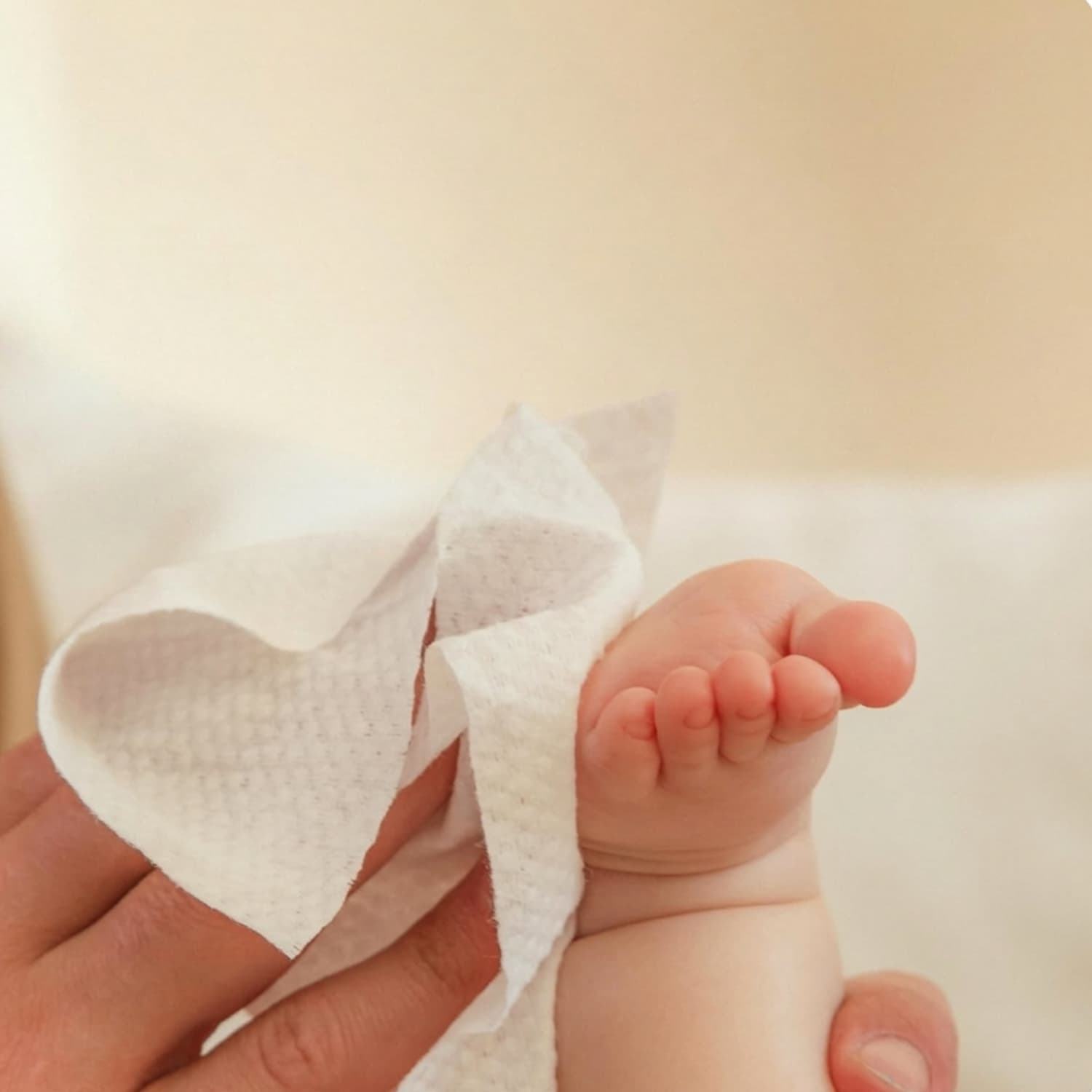
Best EWG Verified for Newborns
$$$ price tier
HealthyBaby is the certification pick: the wipe is EWG Verified, and you can confirm the mark in EWG’s own database. The formula is water, aloe, chamomile, honeysuckle, glycerin and vitamin E, fully disclosed.
The material story is thinner. The cloth is described as plant based and biodegradable without a fiber name, and the pouch material is not stated.
Cloth
Plant Based, Fiber Not Named
⚠ Stated OnlySolution
Water + Botanicals, Full INCI
✓ Plastic FreePouch
Not Stated
⚠ UnverifiedFree Of
Fragrance, Phenoxyethanol, Parabens
✓ EWG VerifiedPros
- EWG Verified, confirmed in the EWG database
- Short botanical formula, fully disclosed
- Cloth stated plant based and biodegradable
Cons
- Cloth fiber not named
- Pouch material not stated
- Highest price tier, mostly sold direct
The strongest formula paper trail of the disposable wipes here, with material disclosure that lags behind it. Our pick for brand new skin.
HealthyBaby carries the EWG Verified seal, and you can confirm the mark in EWG’s own database, which is why it is our pick for brand-new skin. The formula adds gentle soothers like aloe, chamomile, and honeysuckle extract on a cloth the brand says is made from FSC-certified wood pulp. It is a splurge at full price, but a subscription brings it down to around 5 cents a wipe.
- Ingredients: water, aloe, chamomile, honeysuckle extract, glycerin, vitamin E, gluconic acid, sodium benzoate, citric acid
- Rating: EWG Verified
- Best for: newborns and reactive skin
- The downside: most expensive at full price and mainly sold direct or by subscription
Best for Sensitive Skin: Coterie The Wipe
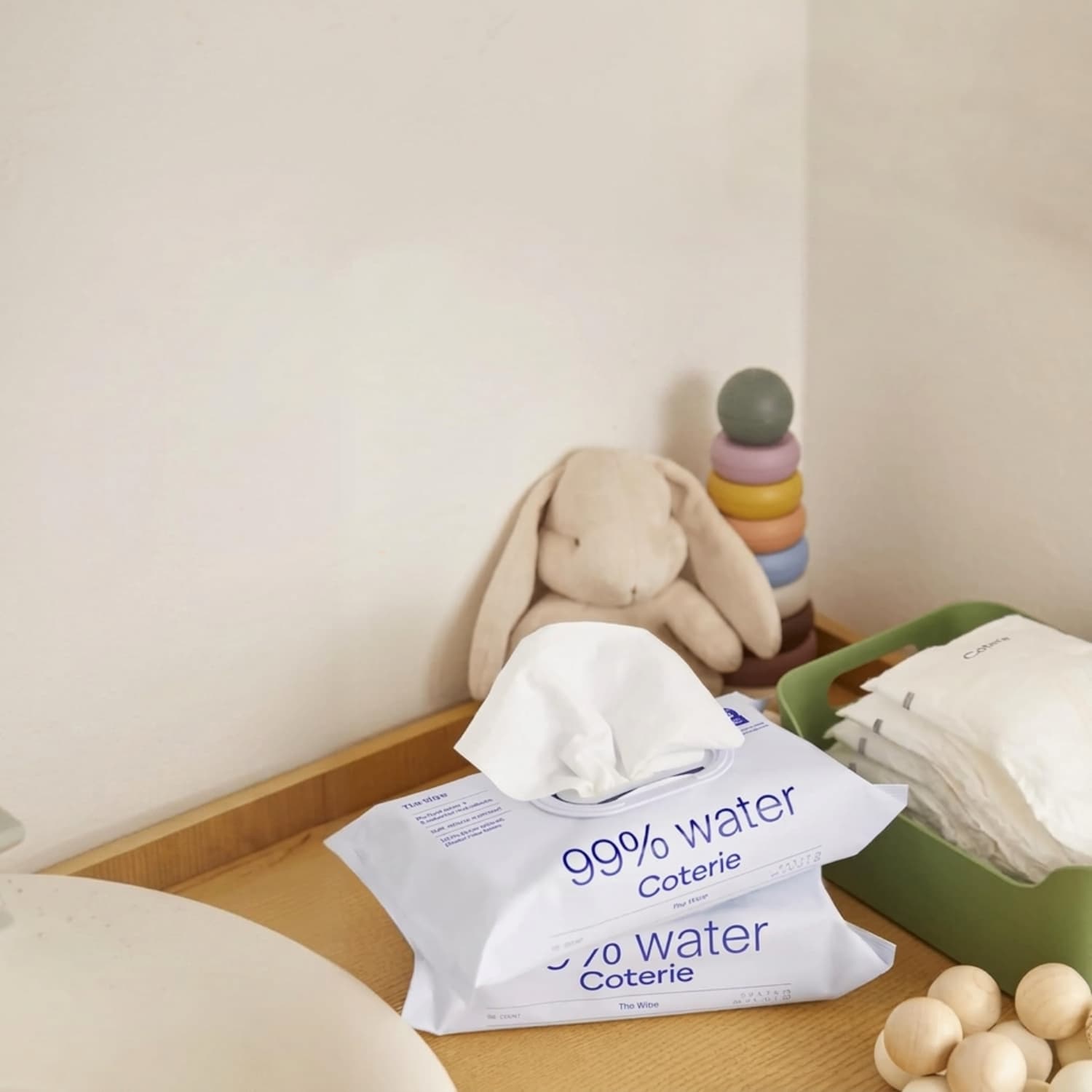
Best for Sensitive and Eczema-Prone Skin
$$$ price tier
Coterie The Wipe is 99% water on a plant based lyocell cloth with a short six ingredient formula. It is EWG Verified and carries the National Eczema Association Seal of Acceptance.
The cloth is unusually plush for a water wipe, which often means fewer wipes per change. It is the priciest disposable on this list, and like its peers it still comes in a single use pouch.
Cloth
Lyocell, Plant Based
✓ Plastic FreeSolution
99% Water, Full INCI
✓ Plastic FreePouch
Not Stated
⚠ UnverifiedFree Of
Fragrance, Phenoxyethanol, Parabens
✓ EWG VerifiedPros
- EWG Verified and National Eczema Association seal
- Named lyocell cloth, plant based
- Plush, thick cloth for fewer wipes per change
Cons
- Highest list price per wipe of the disposables
- Lyocell is a cellulosic and sheds plant fibers in use
- Single use pouch
The wipe we point eczema and sensitive skin families toward first. Certified, named fiber, premium price.
Coterie is 99% water on a plant-based lyocell cloth the brand says biodegrades in about twelve weeks. It is EWG Verified and carries the National Eczema Association Seal of Acceptance, so it is the one we point eczema and sensitive-skin families toward first. The formula is short and the cloth is unusually plush.
- Ingredients: water, sodium benzoate, caprylyl glycol, citric acid, glycerin, decyl glucoside
- Rating: EWG Verified, National Eczema Association seal
- Best for: eczema and sensitive skin
- The downside: the highest list price per wipe of the disposable picks
✨tip
Buy one small pack first
Before you commit to a bulk case, buy a single pack and do a patch test on your baby’s inner arm. Even a clean formula can react with an individual child, and one pack is a cheap way to find out.
Best Everyday Value: Honest Company Sensitive
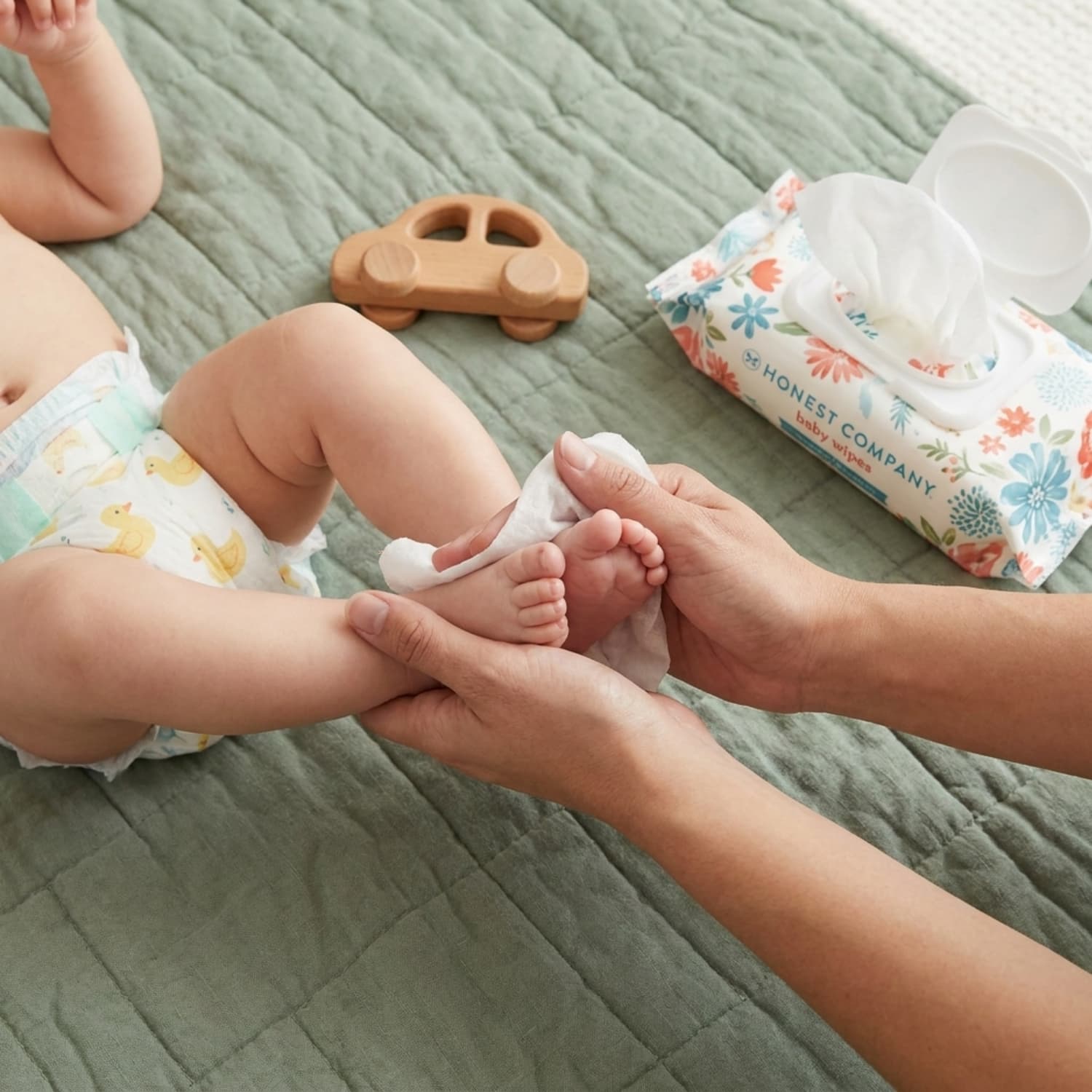
Best Everyday Value
$ price tier
The Honest Company Sensitive fragrance free wipe earns its shelf space with an EWG hazard score of 1 and a fully disclosed formula you can buy at most large retailers.
Two honest gaps: this exact SKU is not EWG Verified even though other Honest wipes are, and the brand calls the cloth plant based without naming the fiber. The pouch is plastic film.
Cloth
Plant Based, Fiber Not Named
⚠ Stated OnlySolution
Water Based, Full INCI
✓ Plastic FreePouch
Plastic Film
✗ PlasticFree Of
Fragrance, Parabens, Phenoxyethanol
✓ DisclosedPros
- EWG Skin Deep hazard score 1 with full disclosure of the formula
- Fragrance free
- Available at most large retailers
Cons
- Not EWG Verified (this SKU)
- Cloth fiber not named
- Plastic pouch, single use
- Ethylhexylglycerin can mildly irritate some children
A clean, easy to find everyday wipe. The value pick, minus the certification seal.
The Honest Company Sensitive fragrance-free wipe pairs a cloth the brand describes as plant-based with an EWG score of 1 and a price that lands around 6 cents a wipe. You can grab it at most big retailers, which makes it an easy everyday option. It is not the most minimal formula on this list, but every ingredient is well within the clean range.
- Ingredients: water, trisodium ethylenediamine disuccinate, sodium benzoate, sorbitan oleate decylglucoside crosspolymer, caprylyl glycol, ethylhexylglycerin, citric acid
- Rating: EWG 1 (low hazard)
- Best for: everyday use and easy availability
- The downside: contains ethylhexylglycerin, which EWG flags for mild irritation potential
Best Plastic-Free: Kinder by Nature
Best Plastic-Free Disposable
$$ price tier
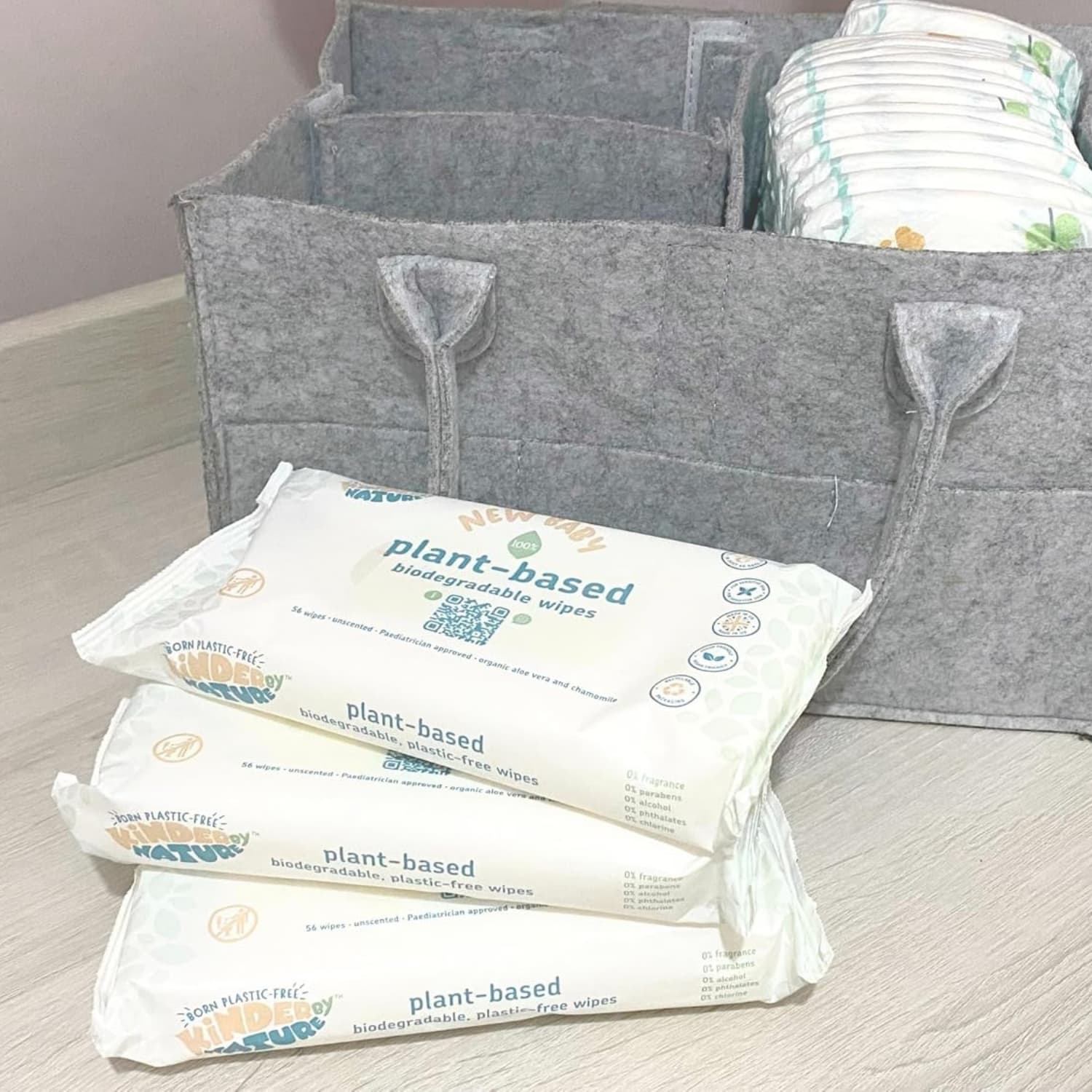
Kinder by Nature does the thing most wipe brands will not: it names the cloth fiber, 100% natural viscose, and publishes the full ingredient list with a plain language explanation for each one.
The brand reports lab testing behind its biodegradable claim, and the packaging is 100% recyclable per the brand, though the polymer is not named. The light scent comes from the botanicals, not added fragrance.
Cloth
100% Natural Viscose
✓ Plastic FreeSolution
Water + Botanicals, Full INCI
✓ Plastic FreePackaging
Recyclable Per Brand, Polymer Not Named
⚠ UnverifiedFree Of
Phenoxyethanol, Parabens, SLS, Fragrance
✓ DisclosedPros
- 100% natural viscose, fiber named by the brand
- Full ingredient disclosure with plain language explanations
- No phenoxyethanol, parabens, SLS, or added fragrance
- Vegan friendly and made in the UK
Cons
- No third party certification
- Packaging polymer not named
- Light natural scent from botanicals
Fiber named, every ingredient explained, biodegradability lab tested per the brand. The disclosure leader among disposables.
Kinder by Nature plant-based wipes are 100% natural viscose, which the brand’s lab testing shows biodegrades in about 60 days, with a soft botanical formula built on chamomile and aloe. They are a strong choice if a low-waste, plastic-free cloth is your priority. One caveat: the plant-based version carries a light natural scent, so if you want truly unscented, choose the brand’s separate water-based wipe.
- Ingredients: water, betaine, glycerin, capryl glucoside, levulinic acid, potassium sorbate, chamomile flower extract, aloe, sodium citrate
- Rating: vegan and cruelty-free (no current EWG listing)
- Best for: plastic-free and compostable priorities
- The downside: the plant-based version is lightly scented and it is not independently EWG rated
Best Bamboo: Caboo
Best Bamboo Wipe
$$ price tier
Caboo is the rare bamboo wipe whose certifications actually check out: EWG Verified in the EWG database and MADE SAFE in the MADE SAFE catalog. The label even lists the bamboo viscose cloth among the ingredients.
Bamboo viscose is a cellulosic, so it sheds plant fibers rather than plastic. The pouch material is the one thing the brand does not state, and the cloth runs thinner than premium wipes.
Cloth
Bamboo Viscose, Named on Label
✓ Plastic FreeSolution
Water Based, Full INCI
✓ Plastic FreePouch
Not Stated
⚠ UnverifiedFree Of
Fragrance, Parabens, Phenoxyethanol
✓ MADE SAFEPros
- EWG Verified, confirmed in the EWG database
- MADE SAFE certification confirmed in the MADE SAFE catalog
- Substrate named right in the ingredient list
Cons
- Pouch material not stated
- Thinner cloth than premium wipes
- Single use, do not flush
Two registry confirmed certifications on a named bamboo viscose cloth. The bamboo pick that proves its seals.
Caboo bamboo baby wipes carry both EWG Verified and MADE SAFE seals, which is rare for a bamboo wipe. The formula leans on aloe and vitamin E, and the cloth is tree-free bamboo viscose. They run about 7 cents a wipe. Reviewers note the cloth is on the thinner side, so they suit lighter cleanups better than a full blowout.
- Ingredients: water, glycerin, gluconolactone, sodium benzoate, sodium citrate, citric acid, aloe, vitamin E, bamboo viscose
- Rating: EWG Verified and MADE SAFE
- Best for: families who want a bamboo cloth with real certification
- The downside: thinner than premium wipes
Best Plant-Based Budget: ATTITUDE

Best Plant-Based Wipe on a Budget
$$ price tier
ATTITUDE unscented 99% water wipes are EWG Verified with a six ingredient formula, and the label does something almost no wipe does: it lists the viscose cloth itself among the ingredients.
Viscose sheds plant based cellulosic fibers, not plastic. The compostable marketing has no certificate behind it that we could find, and the pouch material is not stated.
Cloth
Viscose, Named on Label
✓ Plastic FreeSolution
99% Water, Soy Protein, Oat Extract
✓ Plastic FreePouch
Not Stated
⚠ UnverifiedCompost Claim
No Certificate Found
⚠ UnverifiedPros
- EWG Verified, data updated February 2026
- Viscose substrate disclosed in the ingredient list
- Short unscented formula at a budget friendly price
Cons
- Compostable claim carries no certificate
- Pouch material not stated
- Soy protein is an allergen for some children
A certified formula that names its cloth fiber right on the label. The budget certified pick.
ATTITUDE unscented baby wipes are EWG Verified and plant-based, marketed as compostable, usually at a friendlier price than the DTC brands. The formula is short and gentle, with a colloidal oatmeal variant for extra-sensitive skin. Like other thin plant-cellulose cloths, they are best for routine changes rather than the worst messes.
- Ingredients: water, sodium citrate, sodium benzoate, potassium sorbate, glycerin, sodium cocoamphoacetate, chamomile flower extract, citric acid, cellulose
- Rating: EWG Verified
- Best for: a certified plant-based wipe on a budget
- The downside: thinner cloth and an uncertified compostable claim
Save This Guide for Your Next Restock 📌
Pin this comparison so the ingredient list and price-per-wipe math are one tap away the next time you order.
Wipes We Don’t Recommend and Why
Skip any wipe that still lists phenoxyethanol high on the label, added fragrance, or a formaldehyde-releasing preservative. A few common drugstore and warehouse wipes fall short on one of these, though several have quietly reformulated, so always check the current label.
Naming names matters, because a “gentle” or “natural” label on the front tells you nothing about the back. Here is where a few popular wipes lose points, with the honesty that some have improved.
- Older Amazon Mama Bear (99% Water). Lists phenoxyethanol as the second ingredient and scores worse for allergy potential in EWG. A newer Mama Bear Gentle SKU drops it, so check which one you are looking at.
- Scented Huggies Natural Care. The scented versions add fragrance or parfum, which hides undisclosed allergens. The fragrance-free version is milder, but this line also uses a PEG and silicone blend we would rather avoid.
- Any wipe listing methylisothiazolinone (MI or MCI). This is the preservative behind the documented baby-wipe rash cases. Most brands removed it, but bargain and imported wipes sometimes still carry it.
- Generic drugstore wipes with DMDM hydantoin or bronopol. These are formaldehyde releasers, worth skipping for daily use on a baby.
Two fairness notes. Pampers reformulated its Sensitive wipes and no longer uses phenoxyethanol, so the old warning about that line is out of date. And Kirkland Signature wipes from Costco are genuinely clean aside from phenoxyethanol, the preservative we flag above, so they land in a gray zone rather than on a naughty list.
Non-Toxic Wipes vs. Water and Cloth
For a newborn, plain water on a soft cloth is often all you need, and the American Academy of Pediatrics notes that not every diaper change requires a wipe. A clean disposable wipe is the convenient choice for messes and life on the go.
When Plain Water Is Enough
In “A Word on Wipes,” AAP pediatricians point out that a wet washcloth, a moist tissue, or a quick rinse in the tub works fine for a simple wet diaper. Reserving wipes for cleaning up poop is easier on delicate newborn skin, which is still balancing its natural pH in the first weeks. Water and cloth is the gentlest starting point, then you add wipes for convenience as your baby grows.
The Cost Over Two Years
A baby goes through roughly 6 to 8 wipes a day early on, which adds up fast. At about 5 cents a wipe and 7 wipes a day, disposables run near $125 a year, or $250 across two years of diapering. A reusable cloth stash of 40 wipes costs around $50 to $60 upfront, then only the pennies of water and detergent to wash them. Over two years, cloth can save well over $150 while keeping hundreds of plastic-based wipes out of the trash.
Don’t Miss: Non-Toxic Living: Where to Actually Start, Room by Room Clean wipes are one swap. This room-by-room guide walks you through the rest of the house, one simple change at a time. Read more →How to Read a Baby Wipe Ingredient Label
Read a baby wipe label from the top down: water should come first, and the preservative near the end tells you the most. If you see phenoxyethanol, fragrance, a PEG, or a formaldehyde releaser, put it back.
Ingredients are listed by amount, so the first two or three make up most of the formula. On a clean wipe, that means water and a mild plant-based cleanser like decyl glucoside or coco-glucoside. The back of the list is where preservatives live, and that is where problem ingredients hide. Sodium benzoate, potassium sorbate, and citric acid are the gentle preservatives you want to see. Phenoxyethanol, DMDM hydantoin, and anything ending in “isothiazolinone” are the ones to avoid. If the label says only “fragrance” with no breakdown, treat it as an unknown.
FAQs About Non-Toxic Baby Wipes
The cleanest wipes carry EWG’s Verified seal or score a 1 on Skin Deep. HealthyBaby, Coterie, Caboo, and ATTITUDE are EWG Verified, while WaterWipes and Honest Sensitive both score a 1 for low hazard.
Yes. WaterWipes are 99.9% water with only a drop of grapefruit seed extract, and they earn EWG’s lowest hazard score of 1. It is one of the simplest wipe formulas you can buy.
The EU caps phenoxyethanol in cosmetics at 1%, but in a 2008 warning the FDA said ingested phenoxyethanol can depress an infant’s central nervous system, and France’s medicines agency has advised against it on the diaper area for children under three. Many parents choose to avoid it, and plenty of clean wipes skip it entirely.
The Honest Company Sensitive fragrance-free wipe scores a 1 on EWG with a fully disclosed formula, on a cloth the brand describes as plant-based. It is a solid everyday choice, though this particular SKU is not EWG Verified even though some other Honest wipes are.
Yes, especially for newborns. The AAP notes that a wet washcloth or a rinse in the tub works fine for wet diapers, and reusable cloth wipes with plain water remove every ingredient concern while cutting cost and waste.
Bamboo viscose wipes are plant-based and will biodegrade, unlike plastic-based wipes. But biodegradable does not mean flushable. Even bamboo wipes clog sewers and should go in the trash, not the toilet.
“Natural” is unregulated marketing, “organic” refers to certified organic content, and “non-toxic” means free of harmful ingredients but is also unregulated. Only a third-party seal like EWG Verified, USDA Organic, or MADE SAFE proves the claim.
Kirkland Signature fragrance-free wipes score a 1 on EWG and skip fragrance, parabens, and formaldehyde releasers. They do contain phenoxyethanol, the preservative this guide suggests avoiding for babies, so they are not one of our picks, but they are still cleaner than most warehouse-brand wipes.
Final Thoughts About Non-Toxic Baby Wipes
For most families, WaterWipes is the cleanest and most affordable everyday wipe, HealthyBaby is the safest certified choice for newborns, and a set of reusable cloth wipes is the lowest-cost, lowest-waste option over the long haul.
You do not need to overthink this. Pick a wipe with a short ingredient list, a plant-based cloth, and ideally a real certification seal, and you have already cleared the bar that most drugstore wipes fail. If you want to go one step further for your baby and for the water supply, keep a stack of cloth wipes by the sink for home changes and save the disposables for the diaper bag. Small swap, real payoff.
📚 References
- American Academy of Pediatrics. (2024). A word on wipes. HealthyChildren.org. https://www.healthychildren.org/English/ages-stages/baby/diapers-clothing/Pages/A-Word-on-Wipes.aspx
- Chang, M. W., & Nakrani, R. (2014). Six children with allergic contact dermatitis to methylisothiazolinone in wet wipes (baby wipes). Pediatrics, 133(2), e434 to e438. https://publications.aap.org/pediatrics/article-abstract/133/2/e434/30865/
- Environmental Working Group. (n.d.). EWG Skin Deep: Baby wipes. https://www.ewg.org/skindeep/browse/category/baby_wipes/
- Campaign for Safe Cosmetics. (n.d.). Phenoxyethanol. https://www.safecosmetics.org/chemicals/phenoxyethanol/
- U.S. Food and Drug Administration. (n.d.). 1,4-Dioxane: A cosmetic manufacturing byproduct. https://www.fda.gov/cosmetics/potential-contaminants-cosmetics/14-dioxane-cosmetics-manufacturing-byproduct
- Campaign for Safe Cosmetics. (n.d.). Formaldehyde. https://www.safecosmetics.org/chemicals/formaldehyde/
More Low-Plastic Living Reads
We’ve scored every baby and family product on plastic — see them in the Baby & Family directory.