
Key Takeaways
- A homemade drain cleaner made from baking soda and vinegar clears grease, soap scum, and light buildup, but it cannot dissolve a solid hair clog the way caustic chemical products do.
- Skipping store-bought chemical cleaners keeps corrosive lye and acid off your skin and out of your pipes, and one more plastic jug out of the landfill.
- The right fix depends on the clog: hot water and dish soap for grease, baking soda and salt for a slow drain, and a plunger or drain snake for anything solid.
The water in your sink is pooling instead of draining, and the plastic jug of chemical drain cleaner under the counter promises to fix it in fifteen minutes. It might. It might also burn your skin if it splashes on you, generate enough heat to soften your pipes, and leave you with one more empty plastic bottle headed for the trash.
The good part is that a homemade drain cleaner made from things already in your kitchen clears most everyday clogs just as well, without the corrosive chemicals or the packaging. Baking soda, white vinegar, salt, dish soap, and hot water handle grease, soap scum, food residue, and slow drains. Below are eight recipes, exactly what each one is for, and an honest note on the one thing none of them can do.
Why Skip Chemical Drain Cleaners
Chemical drain cleaners work by force: they rely on sodium hydroxide (lye) or sulfuric acid to burn through a clog. Those same ingredients burn skin, release irritating fumes, corrode pipes, and ship in single-use plastic, which is why a homemade drain cleaner is the safer first move for a routine clog.
Most liquid drain openers on the shelf contain either sodium hydroxide or sulfuric acid. Both are strongly corrosive. According to the ATSDR, the federal toxic-substances agency, contact with concentrated sodium hydroxide can cause severe burns to the eyes, skin, and airways. Sulfuric acid products dissolve hair and grease but also attack metal and porcelain and can release irritating gas as they react.
There is a plumbing cost too. Sodium hydroxide can generate a lot of heat as it works, and when a clog slows the flow, that heat sits against one spot in the pipe. Over time, repeated use can weaken older pipes and the joints that hold them together. A clog you “fix” with a caustic pour can turn into a slow leak inside a wall later.
Then there is the waste. Every jug is single-use plastic, and the EPA’s Safer Choice program exists partly because so many household cleaners carry ingredients worth avoiding. A homemade drain cleaner skips all of it: no corrosive burn risk, no plastic bottle, and ingredients you already keep in the pantry. That is the same logic behind a lower-plastic home: every cleaner you can mix from pantry staples is one more plastic jug you never have to buy, store, or throw away.
Don’t Miss: DIY Cleaning Products for Every Room The same baking soda, vinegar, and castile soap that clear your drains can replace most of the sprays under your sink. Read more →What Homemade Drain Cleaners Can (and Can’t) Fix
A homemade drain cleaner works well on grease, soap scum, food debris, and mineral film, which is what causes most slow drains. It cannot dissolve a solid hair clog or a hard object, because the baking-soda-and-vinegar reaction neutralizes itself into little more than salty water.
Here is the honest chemistry, because it changes what you should expect. When baking soda (a mild base) meets vinegar (a weak acid), they neutralize each other and fizz, producing carbon dioxide gas, water, and a bit of sodium acetate. As the University of Illinois Physics Van explains, once the two cancel out, what is left is close to neutral and chemically weak.
That fizzing is mostly a gentle scrubbing action. It loosens greasy film and freshens a smelly drain. What it does not do is break down hair. Hair is keratin, a tough protein, and dissolving it takes an aggressive chemical like lye. So a natural drain cleaner is excellent maintenance and a solid fix for grease and gunk, but a packed hair clog usually needs a plunger, a drain snake, or your fingers.
✨ Tip: Before you pour anything, pull out any visible hair or debris near the opening with a bent piece of wire or a plastic drain zip tool. Clearing the top of the clog first makes every recipe below work better.
The 8 Best Homemade Drain Cleaner Recipes
The 8 best homemade drain cleaner recipes are baking soda and vinegar, boiling water, baking soda with salt and hot water, salt with borax and vinegar, dish soap and hot water, baking soda and lemon juice, a cream of tartar flush, and a wet/dry vacuum. Match the recipe to the clog, and give slow drains an overnight soak for the best results.
Each recipe lists what it is best for and how to run it. Match the recipe to the clog, and give slow drains an overnight sit for best results.
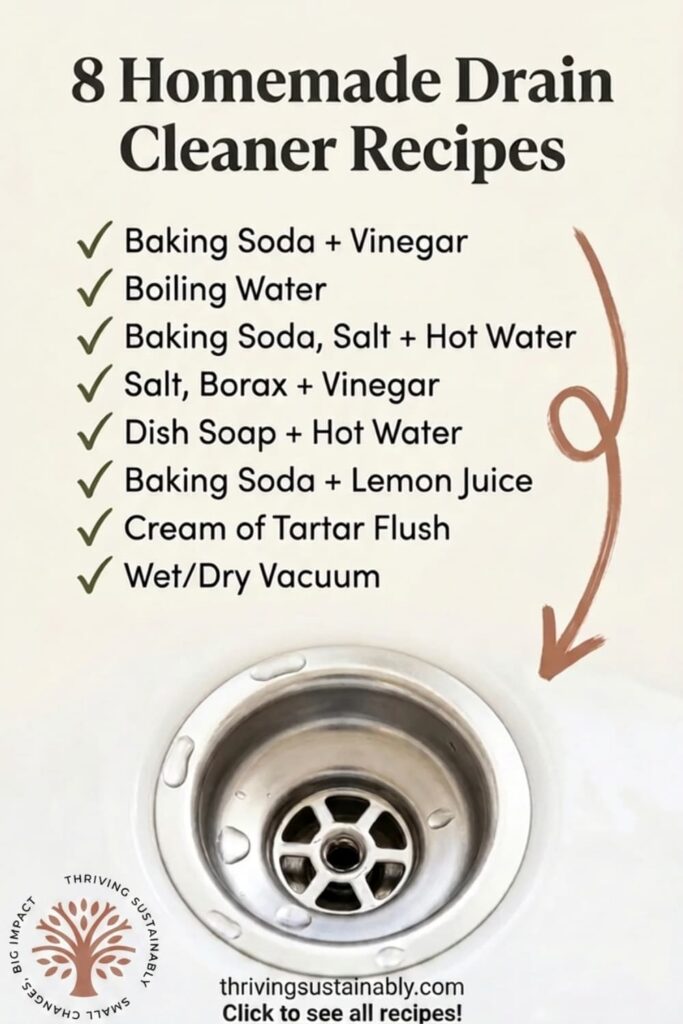
1. Baking Soda and Vinegar (The Classic)
This is the workhorse. Pour in the baking soda first, then the vinegar, and cover the drain with a stopper or rag so the fizzing pushes down against the clog instead of back up at you. Wait 10 to 15 minutes, then chase it with a kettle of hot water. The David Suzuki Foundation recommends this exact method and notes it works best as a regular habit, not a one-time rescue. Ratio: 1 cup baking soda, then 1 cup white vinegar. Best for routine buildup, mild odors, and greasy film.
2. Boiling Water on Its Own
Grease is the one clog that hot water alone often clears, because heat re-liquefies the fat so it can wash away. Pour it in two or three stages, letting each pour work for a few seconds. One caution: if your drainpipes are PVC or other plastic, use the hottest water from your tap rather than a rolling boil, since sustained boiling water can soften plastic pipe joints over time. Boiling water is best saved for metal pipes and porcelain. Best for grease clogs in a kitchen sink with metal pipes.
3. Baking Soda, Salt, and Boiling Water
Salt adds a mild abrasive scrub to the baking soda. This one rewards patience: pour the dry mix in, leave it to work overnight while no one is using the sink, and flush it in the morning. It is a good monthly reset for a drain that has started to slow but is not fully blocked. Ratio: 1 cup baking soda, 1/2 cup salt, then hot water in the morning. Best for a sluggish drain that needs a longer soak.
4. Salt, Borax, and Vinegar
Borax (sodium borate) is a naturally occurring mineral that boosts cleaning and cuts odor, which makes this the heavier-duty pantry recipe. Keep borax away from kids and pets, and rinse the drain well afterward. Give it a full hour before flushing. Ratio: 1/4 cup salt, 1/4 cup borax, 1/2 cup vinegar, then hot water. Best for a stubborn, greasy, or smelly drain.
5. Dish Soap and Hot Water
Dish soap is built to break down fat, so it is a natural fit for a greasy kitchen line. The soap emulsifies the grease and the hot water flushes it through. It is the simplest recipe here and a good first thing to try on a slow kitchen sink. Ratio: 2 tablespoons dish soap, then a few cups of hot water. Best for kitchen grease clogs.
6. Baking Soda and Lemon Juice
Lemon juice is a mild acid, so it fizzes with baking soda much like vinegar does, with the bonus of a fresh citrus smell. Think of this as the deodorizing option: great for a bathroom drain that has gone a little sour, less about heavy clogs. Ratio: 1/2 cup baking soda, then 1/2 cup lemon juice, wait 10 minutes, flush with hot water. Best for freshening a bathroom sink.
7. Cream of Tartar Deodorizing Flush
Cream of tartar (potassium bitartrate) is a mild acid that helps clean and brighten metal. This is the lesser-known recipe, and it is honest to call it a maintenance flush rather than a clog-buster: it freshens and polishes but will not clear a real blockage. Use it to keep a clear drain clear. Ratio: 2 tablespoons cream of tartar, 1/2 cup baking soda, 1/2 cup salt, then hot water. Best as a maintenance rinse for metal drains.
8. Wet/Dry Vacuum Method
When the clog is a physical object, a wet/dry vacuum is the no-chemical mechanical answer. Create the tightest seal you can over the drain (an old plunger head or a rag helps), set the vac to wet mode so you do not damage the motor, and let the suction do the work. This is the recipe for the hair-and-gunk plug that the fizz recipes can only loosen. Best for a solid clog no liquid recipe can touch.
Homemade Drain Cleaner Comparison Table
Here is the quick version, so you can match a recipe to your clog at a glance.
| Recipe | Best for | Wait time | Cost |
|---|---|---|---|
| Baking soda + vinegar | Routine buildup, odor, greasy film | 10 to 15 min | $ |
| Boiling water only | Grease clogs (metal pipes) | Minutes | Free |
| Baking soda + salt + hot water | Slow, sluggish drains | Overnight | $ |
| Salt + borax + vinegar | Stubborn, smelly drains | 1 hour+ | $ |
| Dish soap + hot water | Kitchen grease | Minutes | $ |
| Baking soda + lemon juice | Freshening a bathroom drain | 10 min | $ |
| Cream of tartar flush | Maintenance, brightening metal | Minutes | $ |
| Wet/dry vacuum | Solid clogs | Minutes | Free (own the vac) |
How to Use Baking Soda and Vinegar to Unclog a Drain (Step-by-Step)
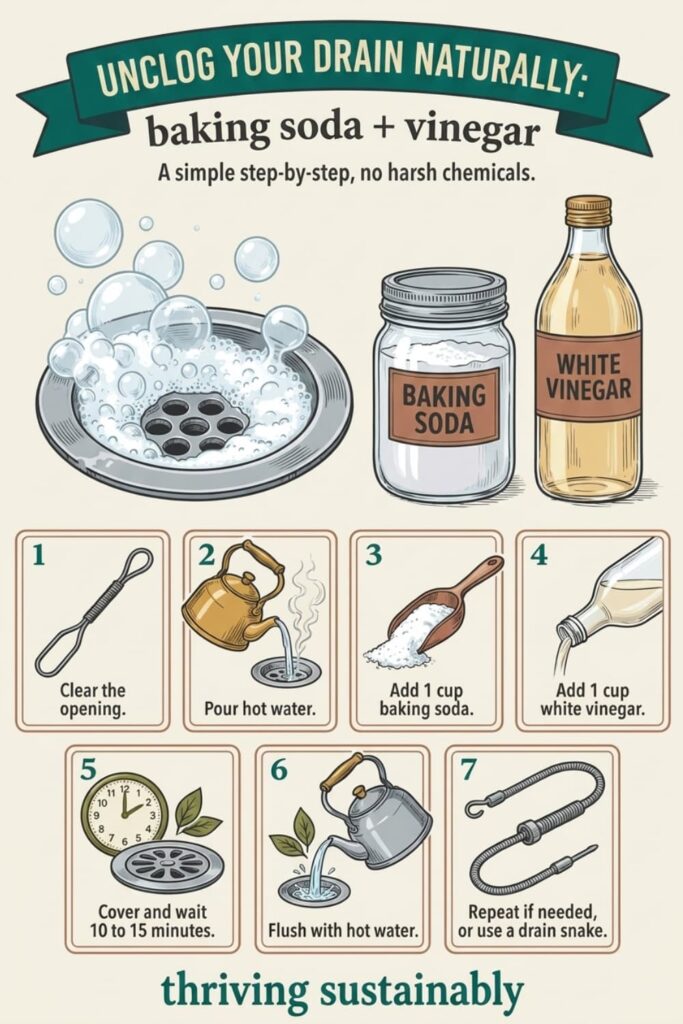
Clear visible debris, pour boiling-hot water, add 1 cup baking soda, then 1 cup vinegar, cover for 10 to 15 minutes, and flush with more hot water. Repeat once if the drain is still slow.
- Clear the opening. Pull out any hair or gunk you can reach with a bent wire or a plastic drain tool.
- Warm the pipe. Pour a kettle of hot water down the drain to loosen greasy film (tap-hot if your pipes are plastic).
- Add the baking soda. Send 1 cup of baking soda straight down the drain.
- Add the vinegar. Pour in 1 cup of white vinegar. It will fizz right away.
- Cover and wait. Put the stopper on or lay a rag over the opening so the reaction works downward. Give it 10 to 15 minutes.
- Flush. Pour another kettle of hot water through to carry the loosened debris away.
- Repeat if needed. A stubborn but non-solid clog often clears on the second round. If it does not move after two tries, the clog is likely solid and needs a plunger, snake, or vacuum.
Save This for the Next Slow Drain 📌
Homemade Drain Cleaner for Specific Drains
The best recipe depends on the drain: bathroom drains clog with hair and soap, kitchen drains clog with grease and food, showers clog with hair and mineral film, and toilets need a plunger rather than any pour-in recipe.
Bathroom Sink
Bathroom sinks clog with a mix of hair, toothpaste, and soap scum. Clear the visible hair first, then run the baking soda and vinegar recipe, or the baking soda and lemon juice version if odor is the main complaint. A drain screen over the opening prevents most future clogs.
Kitchen Sink
Kitchen clogs are almost always grease and food. Start with dish soap and hot water, since soap is made to cut fat. For a slow line, follow with baking soda and vinegar. Never pour bacon grease or cooking oil down the drain in the first place; let it cool and scrape it into the trash or a compost bin.
Shower and Tub Drains
Showers and tubs are hair-and-mineral territory. Pull the drain cover, remove the hair you can reach, then run baking soda and vinegar to clear the greasy soap film around it. For a packed hair clog, a drain snake or a wet/dry vacuum will do what the fizz can’t.
Toilet
A toilet is different: there is no pipe recipe to pour in. A blocked toilet needs a flange plunger, and a toilet auger for anything deeper. Skip the baking-soda pours here, and never use a chemical drain opener in a toilet, where it sits against the porcelain and traps.
Don’t Miss: Plastic-Free Dishwasher Detergent Picks Kitchen cleanup without the plastic jugs starts at the sink and the dishwasher. See which detergents make the cut. Read more →Preventive Maintenance to Keep Drains Clear Naturally
The easiest homemade drain cleaner is the one you never need. A weekly hot-water flush, drain screens on every drain, and keeping grease and hair out of the pipes prevent most clogs before they start.
A few small habits keep drains flowing:
- Run a hot-water flush weekly. Once a week, pour a kettle of hot water down each drain to keep grease from building into a plug.
- Put a screen on every drain. A simple mesh or silicone drain screen catches hair and food before it goes down. It is the single highest-return move for fewer clogs, and it means less plastic waste from repeat cleaner purchases.
- Keep grease and coffee grounds out of the sink. Both are classic clog-makers. Scrape plates into the trash or compost, and pour cooled grease into a jar for the bin.
- Do a monthly baking soda and vinegar flush. A once-a-month treatment on a clear drain keeps film from turning into a blockage.
When Homemade Won’t Cut It: Signs You Need a Plumber
Call a plumber when more than one drain backs up at once, when you hear gurgling from other drains as water runs, when sewage backs up into a tub or sink, or when the same drain clogs again and again. Those point to a problem deeper than any homemade drain cleaner can reach.
A homemade drain cleaner handles the clog in front of you. It cannot fix a blocked main line. Watch for these signals:
- Several drains slow or back up at the same time. If your kitchen sink and bathtub are both draining slowly, the blockage is likely in the shared main line, not the individual drains.
- Gurgling sounds from other fixtures. When flushing a toilet makes the shower drain gurgle, trapped air is moving past a blockage down the line.
- Sewage or dark water backing up. Anything coming up instead of going down is a health issue and a call-the-pro moment, not a DIY one.
- The same drain clogs repeatedly. A drain that reclogs within days of clearing points to buildup, a pipe problem, or root intrusion that needs a professional to diagnose.
If you hit any of these, stop pouring recipes and call a plumber. Repeated home attempts on a main-line clog usually just delay the fix.
FAQs on Homemade Drain Cleaner
Ten to fifteen minutes is enough for most clogs. For a slow drain, you can leave a baking soda and salt mix in overnight. Longer than that adds little, since the reaction finishes within minutes and what is left is chemically weak.
Yes. Baking soda and vinegar, or dish soap and hot water, are safe for a disposal and help cut odor and grease. Run cold water and the disposal for a few seconds afterward to clear anything loosened.
Yes. Baking soda, vinegar, and salt are diluted to mildness by the time they reach the tank and will not harm the bacteria a septic system relies on. Chemical drain openers, by contrast, can disrupt that bacterial balance.
No. Vinegar is a weak acid and is safe for PVC and metal drainpipes at household strength. It is the boiling water you pour after it, not the vinegar, that is worth watching on plastic pipes; use hot tap water instead of a rolling boil for PVC.
Once a month is a good rhythm for a clear drain, plus a weekly hot-water flush. Regular maintenance is where the baking-soda-and-vinegar method genuinely shines, far more than as an emergency fix.
No, and do not mix bleach with vinegar either. Bleach combined with an acid like vinegar releases chlorine gas, which the Washington State Department of Health warns can cause serious breathing problems and, at high levels, can be deadly. Keep bleach out of any drain recipe entirely.
Final Thoughts About Homemade Drain Cleaner
A homemade drain cleaner is not a weaker version of the chemical stuff, it is a different tool for a different job. For the everyday slow drain, the greasy kitchen sink, and the sour-smelling bathroom line, baking soda, vinegar, salt, and hot water do the work without the burns, the pipe wear, or the plastic jug.
Where they stop is the solid clog, and that is worth being straight about. A packed hair plug needs a snake or a vacuum, and a backing-up main line needs a plumber. Match the recipe to the clog, keep a screen on every drain, and run a monthly flush, and you will reach for a store-bought opener a lot less often, if ever. That is one more corner of the house handled without a plastic jug, which is what low-plastic living looks like in practice: small, repeatable swaps that add up.
📚References
- Agency for Toxic Substances and Disease Registry. (n.d.). Sodium hydroxide (ToxFAQs). U.S. Department of Health and Human Services. https://wwwn.cdc.gov/TSP/ToxFAQs/ToxFAQsDetails.aspx?faqid=248&toxid=45
- → Used in “Why Skip Chemical Drain Cleaners” for the point that concentrated sodium hydroxide (lye) causes severe burns.
- David Suzuki Foundation. (n.d.). How to unclog a drain without harsh chemicals. https://davidsuzuki.org/living-green/how-to-unclog-a-drain/
- → Used in Recipe 1 (baking soda and vinegar), which notes the foundation recommends this method and that it works best as a regular habit.
- The Physics Van, University of Illinois Urbana-Champaign. (n.d.). Acids and bases in drain cleaner. https://van.physics.illinois.edu/ask/listing/491
- → Used in “What Homemade Drain Cleaners Can (and Can’t) Fix” to explain that baking soda and vinegar neutralize into something chemically weak.
- U.S. Environmental Protection Agency. (n.d.). Safer Choice. https://www.epa.gov/saferchoice
- → Used in “Why Skip Chemical Drain Cleaners” for the point that many household cleaners carry ingredients worth avoiding.
- Washington State Department of Health. (n.d.). Dangers of mixing bleach with cleaners. https://doh.wa.gov/community-and-environment/contaminants/bleach-mixing-dangers