

Key Takeaways
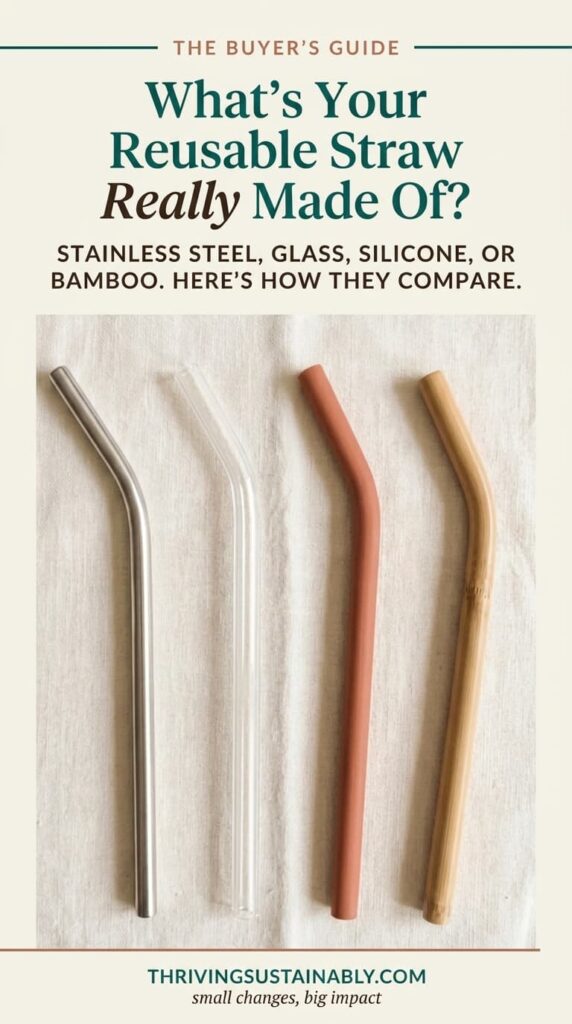
- Most reusable straws are made from stainless steel, glass, silicone, or bamboo, and each one replaces hundreds of plastic straws that would otherwise take 200+ years to break down.
- A 2023 study in Food Additives & Contaminants found PFAS “forever chemicals” in 90% of paper, 80% of bamboo, 75% of plastic, and 40% of glass straws tested, but 0% of stainless steel.
- Stainless steel is the most durable, glass is the most taste-neutral, silicone is the safest for kids, and bamboo is the most natural but the shortest lived.
What is a reusable straw made of? In 2026, the answer is almost always one of four materials: stainless steel, glass, silicone, or bamboo. Americans toss out an estimated 500 million plastic straws every day, according to Beyond Plastics, and each one takes more than 200 years to break down. They don’t actually disappear either; they crumble into microplastics that end up in tap water, beach sand, and human blood.
That’s why so many people have switched. A reusable straw costs $5 to $20, lives in your bag or kitchen drawer, and replaces hundreds of single-use plastic straws every year.
This guide walks through what each material is, how it’s made, what the latest research says about safety (including a 2023 study that found PFAS “forever chemicals” in paper, bamboo, plastic, and some glass straws, but none in stainless steel), and which one actually fits your routine.
What Is a Reusable Straw Made Of?
A reusable straw is made from stainless steel, glass, silicone, or bamboo. Stainless steel is the most common because it lasts the longest, is fully recyclable, and was found to be PFAS-free in a 2023 European study.
A reusable straw is any drinking straw designed to be washed and used repeatedly, rather than tossed after one drink. The four main materials on the market in 2026 are stainless steel, glass, silicone, and bamboo. Each one is made differently and behaves differently in your cup.
Plastic straws, by comparison, are designed for one use. They’re made from polypropylene (recycle code #5), a petroleum-based plastic that’s cheap to produce but takes hundreds of years to break down in landfills and waterways. When people talk about “switching to a reusable straw,” they usually mean replacing that single-use plastic straw with one of those four reusable materials.
You can also find specialty reusable straws in copper, titanium, or pressed wheat stems, but they make up a tiny share of what’s actually sold, and we’ll cover those briefly later.
Pin It for Later, Try Them All 📌
Why People Are Switching From Plastic Straws
Plastic straws are single-use products that take more than 200 years to decompose, shed microplastics into drinks (especially hot ones), and consistently rank in the top 10 items collected during Ocean Conservancy beach cleanups.
Plastic straws are among the easiest single-use items to give up, and the case against them has grown stronger every year.
First, the environmental load. The World Wildlife Fund estimates that plastic straws can take up to 200 years to decompose on land, and ocean conditions can extend that to more than 400 years. They don’t melt away; they shred into smaller pieces that end up as microplastics in the food chain. Plastic straws also routinely land in the top 10 items collected during the Ocean Conservancy’s International Coastal Cleanup.
Second, the chemistry. The 2023 Belgian study (more on that in the next section) found PFAS in 75% of the plastic straws it tested, on top of the BPA and phthalate concerns that come with most petroleum-based plastics. Hot or acidic drinks make plastic shed faster, which is exactly the situation a straw is built for.
Third, the laws. The European Union’s Single-Use Plastics Directive banned plastic straws in 2021. California, Washington, Oregon, and dozens of US cities now require on-request-only service or have outright banned plastic straws in restaurants. The pressure is moving in one direction.
Read more on the bigger picture in our guide to why plastic-free living matters.
Are Reusable Straws Safe? What the PFAS Research Says
Stainless steel reusable straws tested completely free of PFAS in a 2023 European study, while paper, bamboo, plastic, and some glass straws all contained trace amounts of these “forever chemicals.”
A 2023 study published in Food Additives & Contaminants: Part A tested 39 brands of drinking straws sold in Belgium across five materials (paper, bamboo, glass, stainless steel, and plastic). Researchers checked each one for PFAS, a group of human-made chemicals that linger in the body and the environment for years.
Here’s what they found:
- 90% of paper straw brands tested positive for PFAS
- 80% of bamboo straws tested positive
- 75% of plastic straws tested positive
- 40% of glass straws tested positive
- 0% of stainless steel straws had detectable PFAS
PFAS are added to fibrous materials like paper and bamboo to make them water-repellent so they don’t fall apart in your drink. Stainless steel doesn’t need that coating because it’s already water-resistant.
The researchers’ direct quote was that stainless steel is the “most sustainable alternative” because it can be reused, contains no PFAS, and is fully recyclable. That’s a strong signal if your top concern is what’s leaching into your drink.
This doesn’t mean glass, silicone, or bamboo straws are unsafe. The doses were small, and most people don’t use straws every day. But it’s a useful piece of context to keep in mind as you choose a material.
Don’t Miss: How to Avoid Microplastics in Your Home, Food, and Body Plastic straws are one source. See the full list of where microplastics hide and the swaps that actually move the needle. Read more →A Closer Look at Reusable Straw Materials
The four main reusable straw materials are stainless steel, glass, silicone, and bamboo. Each one starts with a different raw ingredient and offers different trade-offs in durability, taste, safety, and lifespan.
Each of the four main reusable straw materials starts with a different raw ingredient and yields different strengths. Here’s how each one is made, what it does well, and where it falls short, so you can match the material to your actual routine.
Stainless Steel Reusable Straws
Stainless steel reusable straws are made from food-grade 304 (18/8) stainless steel, an alloy of iron, chromium, and nickel. They are the most durable, recyclable, and PFAS-free reusable straw option on the market.
Stainless steel is the workhorse of the reusable straw world. Most of the ones sold today are made from 304 stainless steel, sometimes labeled “18/8” because the alloy contains 18% chromium and 8% nickel. That formula is the same food-safe steel used in cookware, kitchen utensils, and water bottles.
How it’s made:
- Sheets of stainless steel are rolled at low temperatures into thin strips.
- The strips are cut, formed into tubes, and the seam is welded shut.
- The tube is cut to length, polished smooth, and the ends are rounded so they don’t catch your lip.
- If it’s a bent straw, it gets shaped on a pipe bender at the very end.
Pros
|
Cons
|
✨ Tip
Skip the Rust
Look for “304” or “18/8” stamped on the straw or the packaging. That confirms it’s food-grade. Cheaper, unmarked steel may be 201 grade, which can rust over time.
Glass Reusable Straws
Glass reusable straws are made from heat-resistant borosilicate glass, the same shatter-resistant material used in lab glassware and Pyrex bakeware. They offer the cleanest taste of any reusable straw.
Glass straws are usually made from borosilicate glass, the same material used in Pyrex baking dishes and laboratory beakers. Borosilicate contains boron and silica, which let it handle big temperature swings (hot coffee to iced lemonade) without cracking.
How it’s made:
- Glass tubes are heated until they’re soft enough to shape.
- A glassblower or machine pulls the tube to the right length and diameter.
- The ends are fire-polished to round off any sharp edges.
- The straw is annealed (cooled slowly) to lock in its strength.
Pros
|
Cons
|
Silicone Reusable Straws
Silicone reusable straws are made from food-grade silicone, a rubber-like material made from silicon (a natural mineral) bonded with oxygen, carbon, and hydrogen. They are soft, flexible, and the safest choice for children.
Silicone straws look and feel a lot like rubber, but they’re not plastic in the traditional sense. Food-grade silicone is made from silicon (the same natural mineral found in sand) bonded with oxygen, plus a small amount of carbon and hydrogen for flexibility. It’s the same material used in baby bottle nipples, pacifiers, and silicone bakeware.
How it’s made:
- Silicon is heated and combined with other elements to form a silicone gel.
- The gel is injected into a straw-shaped mold under pressure.
- The molded straw is cured at high heat to harden it.
- Quality silicone is then post-baked to release any leftover byproducts.
Pros
|
Cons
|
If you’re wondering whether silicone is technically a plastic, it sits in a gray area. It behaves differently from petroleum plastics and sheds far fewer microplastics, but it isn’t a fully natural material either. See our deeper look at does silicone have microplastics for the full breakdown.
✨ Tip
Food-Grade Silicone
Look for “100% food-grade silicone” or “LFGB-certified” on the label. LFGB is the strictest European standard and goes beyond US FDA testing.
Bamboo Reusable Straws
Bamboo reusable straws are made by cutting and sanding the hollow stems of bamboo plants. They are the most natural and fully biodegradable reusable straw option, but also the shortest-lived.
Bamboo straws are about as close as you can get to drinking through nature. They’re hollow sections of bamboo stem, cut to length, sanded smooth, and rinsed. Some makers heat-treat them or apply a food-safe natural oil for extra durability.
How they’re made:
- Mature bamboo stalks are harvested by hand.
- Hollow sections are cut to standard straw lengths.
- The inside is cleared and brushed clean.
- The outside is sanded smooth.
- Some makers boil or oil the straws to slow down mold growth.
Pros
|
Cons
|
Other Reusable Straw Materials
Less common reusable straw materials include copper (antibacterial but reacts with acidic drinks), titanium (extremely light and tough), and wheat or rye stems (compostable but soften within a single drink).
A few alternative materials show up in specialty shops and online listings:
- Copper: has natural antimicrobial properties and looks beautiful, but it reacts with acidic drinks like lemon water or kombucha, which can leach into your glass. Stick to water or tea.
- Titanium: lighter than steel, won’t rust, and survives camping and outdoor use. Pricey and a niche pick.
- Wheat or rye stems: the original “straw,” literally. Naturally hollow, fully compostable, and grown as a wheat byproduct. They soften quickly and work best as a one-trip option, just a biodegradable one.
- Pasta straws: edible and fully compostable, but they get soggy in 30 minutes or less. Mostly used for cocktails.
- Rose-gold or colored glass: the same borosilicate as standard glass with a thin plated coating. Same pros and cons.
These are fine if they fit your routine, but they aren’t the four main options most people will encounter.
Which Reusable Straw Material Is Best?
The best reusable straw depends on your priority: stainless steel for durability and travel, glass for taste, silicone for kids, and bamboo for the most natural feel.
Here’s how the four main materials compare across the things people actually care about.
4 Sustainable Reusable Straw Brands Worth Buying
Not every brand selling a reusable straw is actually sustainable. Plenty of cheap reusable straws come from sellers who disappear and pop back up under new names every few months, with no recycling program when the straws wear out. The four brands below have been around long enough to prove themselves, use food-grade materials, and either replace or recycle your straw when it finally hits the end of its life.
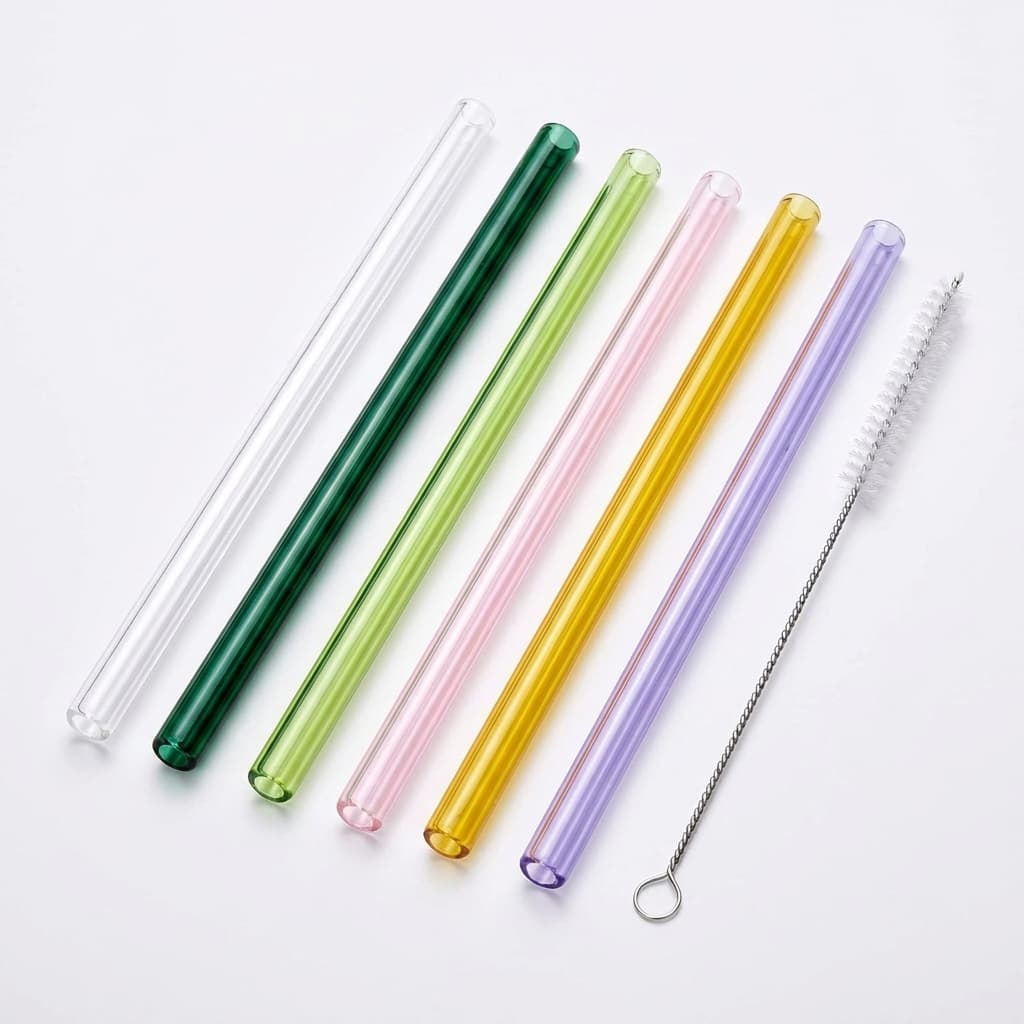
Best Plastic-Free Pick
$$
Simply Straws are borosilicate glass, handmade in California, with walls up to 2 mm depending on the size you pick. The 9 mm Classic and 12 mm Wide are the thickest at 2 mm, while the Cocktail and Tumbler sizes run 1.5 mm.
The company has been a certified B Corporation since 2013 with a B Impact score of 99.2, is women-owned, and is a 1% for the Planet member. Straws ship in compostable FSC-certified 100% post-consumer recycled paper printed with non-toxic dyes, so the whole package composts.
Straw
Borosilicate Glass
✓ Plastic FreeWall
1.5 to 2 mm By Size
✓ Plastic FreePackaging
Compostable FSC Paper
✓ Plastic FreeCleaning Brush
Included, Not Disclosed
⚠ UnverifiedPros
- See-through, so you can tell when it’s actually clean
- No taste transfer at all, unlike steel
- Handmade in California, B Corp since 2013
- Packaging composts, no plastic in the box
- Lifetime guarantee on breaks, cracks and chips
Cons
- Glass still breaks if it lands on a tile floor
- Approved guarantee claims pay out as store credit
- Brush bristle material isn’t disclosed
- Not the pick for toddlers or car cupholders
The cleanest straw in this lineup, and the only one whose packaging composts. Choose this if you want zero plastic anywhere in the box.
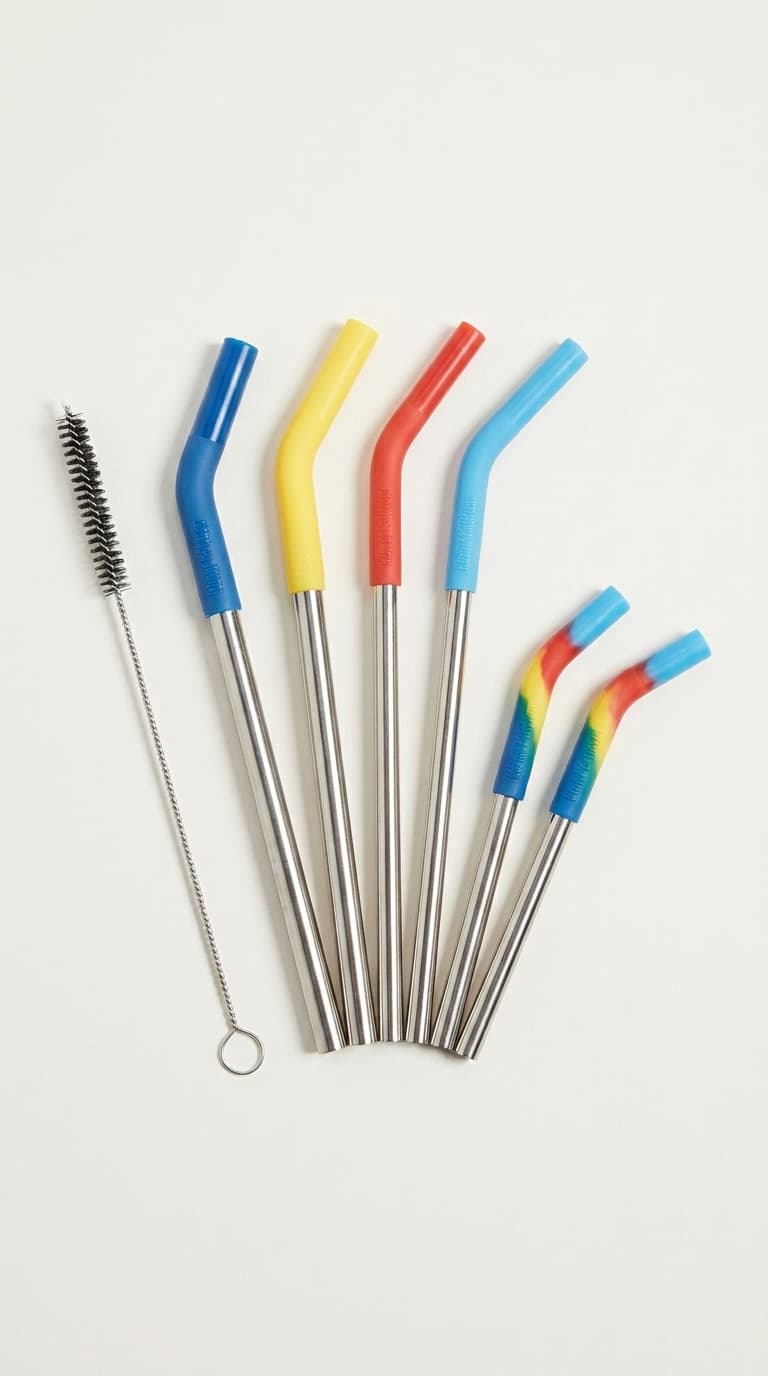
Best for Kids and Sensitive Teeth
$$
Klean Kanteen straw multi-packs are 18/8 stainless steel that Intertek certifies as 90% post-consumer recycled, topped with a removable food-grade silicone flex tip.
That tip is the whole point. It takes the hard edge off a steel straw for kids, and for anyone who dislikes the feel of metal on their teeth. The brand is a certified B Corporation, carries The Climate Label (formerly Climate Neutral Certified), and backs the straws with its Strong as Steel lifetime limited warranty.
Straw Tube
18/8 Stainless Steel
✓ Plastic FreeRecycled Content
90% Post-Consumer, Multi-Packs
✓ IntertekFlex Tip
Food-Grade Silicone
◎ SiliconePackaging
Material Not Disclosed
⚠ UnverifiedPros
- Silicone tip protects teeth, good for kids
- Multi-pack steel is Intertek-certified 90% post-consumer recycled
- Certified B Corporation, and carries The Climate Label
- Tips pull off, so nothing hides in the joint
- Strong as Steel lifetime limited warranty
Cons
- Klean Kanteen has discontinued the straw brush, so buy one separately
- Silicone tips wear out and need replacing
- The 90% recycled claim is on the multi-packs, not the single straw
- Packaging material isn’t disclosed
The straw to hand a kid without worrying about a chipped tooth. Steel durability with a soft tip that forgives a stumble.
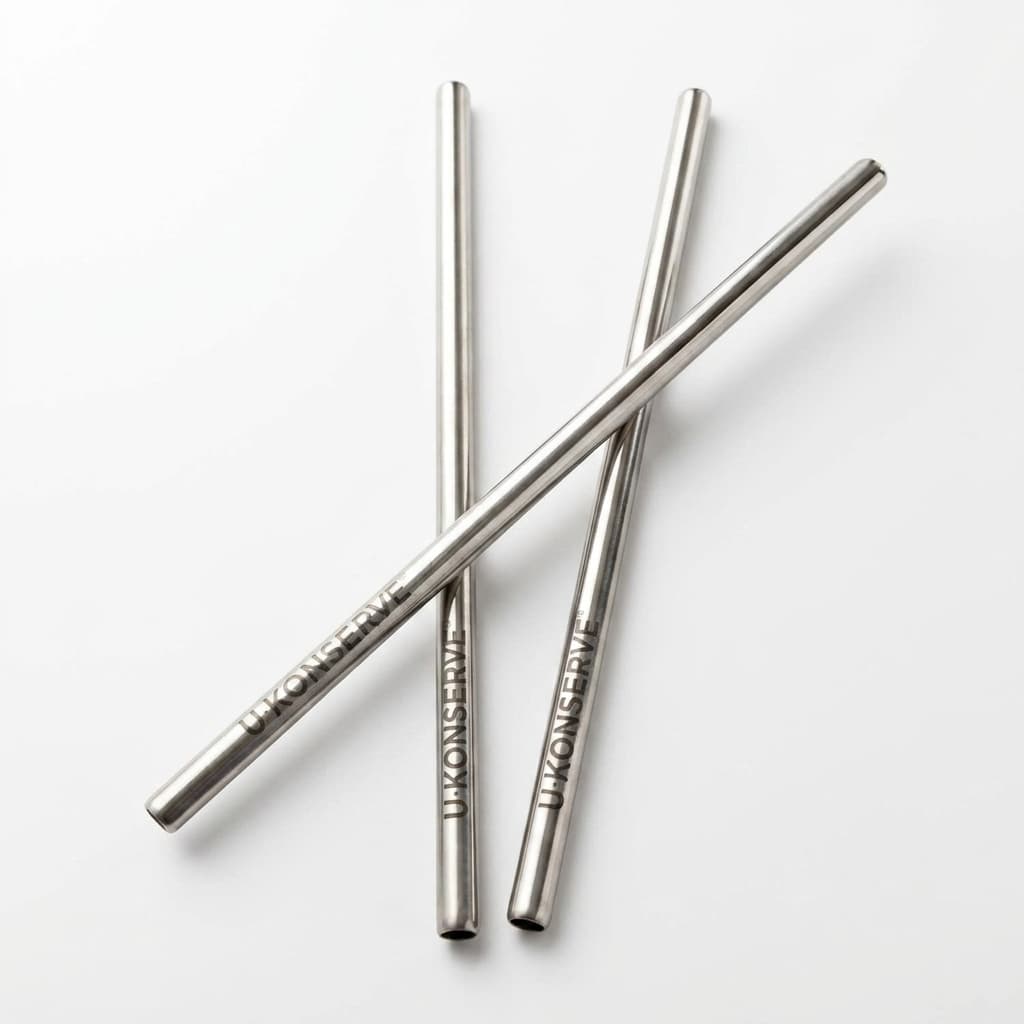
Best Everyday Steel Set
$
U-Konserve straws are 304 (18/8) food-grade stainless steel. The brand says its straws have a thicker wall and smoother, rounded edges than other less-expensive stainless steel straws, though it does not publish a wall measurement.
The company created its first zero-waste lunch kit in 2008 and is a verified 1% for the Planet member. Every retail set ships with a cleaning brush and a cotton travel pouch, which matters more than it sounds: most reusable straws get abandoned because nobody owns the brush.
Straw
304 (18/8) Stainless Steel
✓ Plastic FreeTravel Pouch
100% Cotton
✓ Plastic FreeBrush Bristles
Nylon
✗ PlasticRetail Packaging
Material Not Disclosed
⚠ UnverifiedPros
- Cleaning brush and cotton pouch included
- Verified 1% for the Planet member
- Dishwasher safe, no tips to lose
- Making zero-waste lunch gear since 2008
- Lowest price tier in this lineup
Cons
- Brush bristles are nylon, a plastic
- No third-party product certification at this time
- The thicker-wall claim is the brand’s, with no published measurement
- Bare steel gets cold and tastes faintly metallic
The workhorse set for a household that just wants steel straws that last. Best value here, and the brush is in the box.
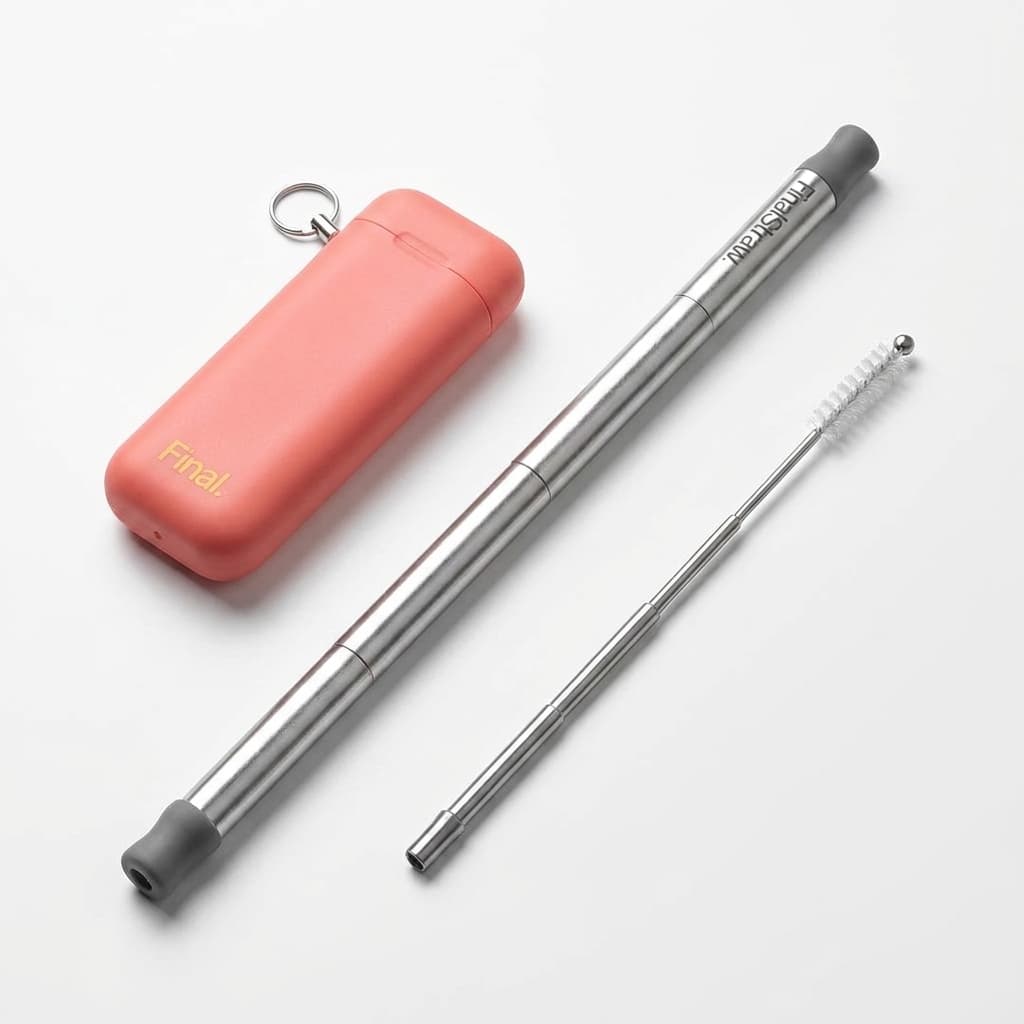
Best for Carrying Everywhere
$$$
FinalStraw folds into a case that clips to a keychain, which solves the real reason reusable straws fail: the straw is sitting at home in a drawer.
The tube is 301 stainless steel and the tips are food-grade silicone. The catch is the carrying case, which the brand says is made from post-consumer recycled plastic, so this is the only pick here with plastic in the kit. A telescoping cleaning brush comes in the box.
Straw
301 Stainless Steel
✓ Plastic FreeTips
Food-Grade Silicone
◎ SiliconeCarrying Case
Post-Consumer Recycled Plastic
✗ PlasticCleaning Brush
Included, Not Disclosed
⚠ UnverifiedPros
- Folds to keychain size, so it’s actually with you
- 301 stainless steel with food-grade silicone tips
- Case is made from post-consumer recycled plastic
- Telescoping cleaning brush comes in the box
Cons
- Recycled or not, the case is still plastic
- Highest price tier here, and it’s one straw
- More joints means more places to scrub
- Brush bristle material isn’t disclosed
The one you’ll actually carry, which beats the perfect straw you left at home. Worth the plastic case only if the alternative is a single-use straw.
Want the full picture before you buy? Every reusable straw and bottle we’ve researched is scored 1–10 on plastic in our Plastic Footprint Directory — see how these brands compare.
How to Care for Your Reusable Straw
Most reusable straws should be rinsed right after use, scrubbed with a thin straw brush at least once a day, and either dishwashed weekly (steel, glass, silicone) or hand-washed and air-dried (bamboo).
A reusable straw only works if you actually clean it. A skipped cleaning turns a straw into a small, dark tube that can harbor bacteria, which is why every reusable straw should come with a brush.
The routine that works for steel, glass, and silicone:
- Rinse the straw under hot water right after your drink (especially after smoothies and milk-based drinks).
- Run a thin pipe-cleaner straw brush through it. Twice if you used it for a smoothie.
- Add to the dishwasher, ideally in a utensil cage so it doesn’t bounce around.
- Air-dry standing up, if possible, so any leftover water drains out.
Bamboo needs the same brushing, but should be hand-washed only. Dishwasher heat will dry out the fibers and crack the straw. Replace bamboo every 6 to 12 months, or sooner if you see dark spots inside.
Buy a small straw cleaning brush at the same time you buy your first reusable straw. Most reusable straws get abandoned because nobody owns the brush.
Don’t Miss: Say No to Plastic, Simple Swaps to Protect Your Health and Home A reusable straw is one swap. Here are the next 14 plastic items worth replacing this year, ranked by how often you touch them. Read more →FAQs on What Is a Reusable Straw Made Of
A reusable straw used daily replaces about 365 plastic straws per year. A stainless steel straw used for 10 years can keep more than 3,600 single-use plastic straws out of landfills and waterways. That number climbs faster for households with kids or for anyone who often orders iced drinks
Stainless steel and glass can chip a tooth or scrape enamel if you bite down hard, especially for kids. Silicone is the safest option for anyone with a strong bite reflex, sensory needs, or braces. Bamboo is soft enough to be safe but can splinter slightly as it ages.
Collapsible stainless steel straws are food-safe as long as the seals at each joint are silicone. The trade-off is that they’re harder to clean fully, because liquid can sit in the seams. If you choose one, run the cleaning brush through it after every use and let the segments dry separately.
For water, juice, and iced coffee, look for an inner diameter of 6-8mm and a length of 8-10 inches. For smoothies and bubble tea, go up to 10-12mm inner diameter so thick drinks and tapioca pearls actually fit. Most multi-packs include both sizes.
Yes, especially if you order iced drinks even once a week. One reusable straw used 50 times a year still keeps 500 plastic straws out of landfills over a decade. The cheapest stainless steel set pays for itself environmentally within the first month of use.
Final Thoughts About Reusable Straw Materials
A reusable straw won’t single-handedly fix plastic pollution. Straws make up roughly 0.025% of the plastic that flows into oceans each year, and the bigger problems are fishing gear, packaging, and synthetic textiles. That’s not really the point.
The point is that a reusable straw is one of the easiest plastic swaps you’ll ever make. It costs $5 to $20, lives in your bag or kitchen drawer, and replaces hundreds of single-use plastic straws every year. Over a decade of regular use, a single stainless steel straw can replace thousands of plastic straws. That habit also nudges you toward bigger swaps, like a reusable water bottle, a produce bag, and bar shampoo. Our room-by-room non-toxic living guide maps out where those next swaps fit across the rest of your home.
Pick the material that matches your life. If you have kids, silicone wins. If you drink mostly cold beverages and care about taste, a glass is unbeatable. If you want one straw that outlasts your kitchen, stainless steel is the safest long-term bet. Then put a cleaning brush right next to it and use the thing.
📚 References
- Beyond Plastics. (n.d.). Get the facts about single-use plastic straws. Beyond Plastics. https://www.beyondplastics.org/fact-sheets/plastic-straws
- Boisacq, P., De Keuster, M., Prinsen, E., Jeong, Y., Bervoets, L., Eens, M., Covaci, A., Willems, T., & Groffen, T. (2023). Assessment of poly- and perfluoroalkyl substances (PFAS) in commercially available drinking straws using targeted and suspect screening approaches. Food Additives & Contaminants: Part A, 40(9), 1230-1241. https://www.tandfonline.com/doi/full/10.1080/19440049.2023.2240908
- European Commission. (2021). Single-use plastics directive (EU) 2019/904. European Commission. https://environment.ec.europa.eu/topics/plastics/single-use-plastics_en
- Ocean Conservancy. (2024). International Coastal Cleanup annual report. Ocean Conservancy. https://oceanconservancy.org/trash-free-seas/international-coastal-cleanup/
- World Wildlife Fund Australia. (n.d.). The lifecycle of plastics. WWF Australia. https://wwf.org.au/blogs/the-lifecycle-of-plastics/
More Plastic-Free Living Reads You Might Like
- How to Avoid Microplastics: 15 Simple Ways to Reduce Exposure
- The Truth About Plastic: Why Plastic-Free Living Matters
- Does Silicone Have Microplastics? Silicone vs Plastic Explained
- Plastic-Free Water Bottles: Best Reusable and Safe Picks
- Say No to Plastic: Simple Swaps to Protect Your Health and Home
- Microplastics in Our Lives: Why It’s Time to Take Action
- Best Plastic-Free Coffee Makers: Skip the Microplastics
- How to Remove Microplastics: Simple Ways to Reduce Exposure