
Key Takeaways
- Almost every laundry detergent sheet has microplastics concerns because it is made with PVA (polyvinyl alcohol), a synthetic material from petroleum.
- One peer-reviewed study estimated about 75% of PVA slips through US water treatment without fully breaking down; the cleaning industry and the EPA say it does break down and is safe.
- The science is split, so for zero doubt, choose a PVA-free option: a powder in a cardboard box, a PVA-free tablet, or a plastic-free sheet like Proofed!
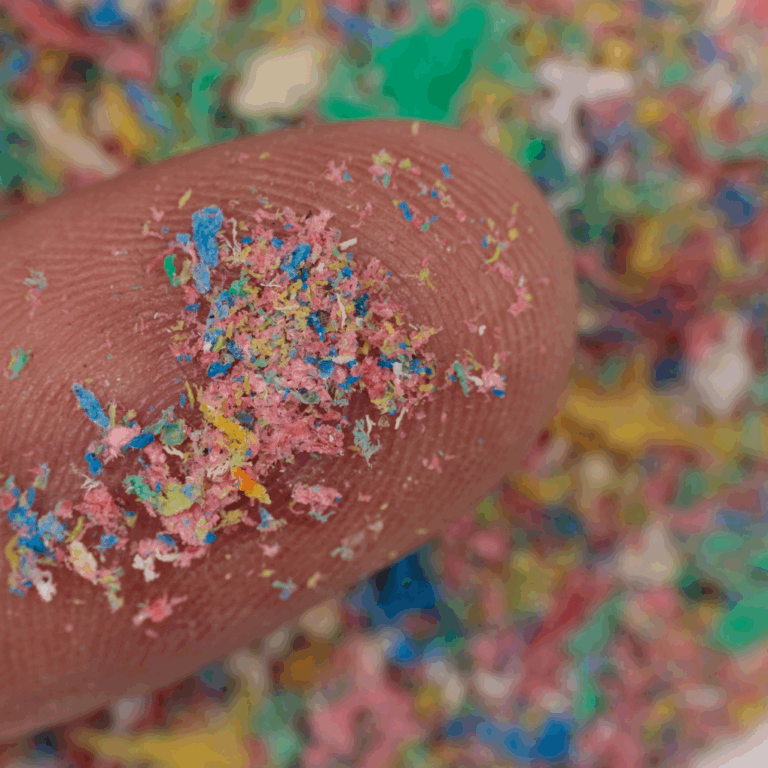
Yes, they do. Almost every laundry detergent sheet you can buy is made with a synthetic material called PVA (polyvinyl alcohol, sometimes written PVOH). It comes from petroleum, and it is the part that dissolves in your wash. Whether that dissolved PVA actually counts as a “microplastic” is where honest people disagree, and it is worth understanding before you decide the thin, lightweight sheets are the greener choice.
Here is the one idea to hang onto. Dissolving and disappearing are not the same thing. Sugar dissolves in your coffee, but it does not vanish, it is still in there. The real question with PVA is what happens to it after it dissolves and washes down the drain. That is the part scientists are still arguing about. If you are working on cutting down plastic around the house, laundry sheets are one of those hidden everyday plastics most people never think twice about.
What Laundry Detergent Sheets Are Made Of
Laundry sheets are built around PVA (polyvinyl alcohol), a synthetic polymer usually made from petroleum. It is the thin film that holds the sheet together and melts away in water, and it forms the body of the sheet, not just a coating.
Think of PVA as the glue and the paper rolled into one. It is the same material that wraps a dishwasher pod or a single-load laundry pod. In a sheet, it is not some small add-in you could swap out. It is the whole reason a scoop of detergent can exist as a dry, flat strip instead of a sloshing liquid. Take the PVA away and you do not have a sheet, you just have loose powder.
The rest of what is in a sheet is the part that actually cleans: surfactants, which lift grease and dirt off your clothes, sometimes optical brighteners, which make whites look whiter by bouncing light, and fragrance if it is scented. None of those are the microplastic worry. The PVA film is.
So why does the whole industry use it? Because a sheet has to pull off a trick: sit dry and solid in the box for months, then completely disappear the moment it hits water. PVA is cheap, stays stable on the shelf, and dissolves right on cue. The catch is that dissolving on cue and fully breaking down in nature are two very different things.
Don’t Miss: The Best Non-Toxic Laundry Detergents See which detergents skip the synthetic film and harsh additives altogether. Read more →Is PVA a Microplastic? The Honest Answer
Whether PVA is a microplastic is genuinely unsettled. One peer-reviewed study estimated about 75% of it passes through US water treatment without fully breaking down, while the cleaning industry and regulators call it readily biodegradable and do not count it as a microplastic.
This is the question everyone actually came for, and it deserves both sides.
On the worried side, a 2021 study by two Arizona State University researchers, Rolsky and Kelkar, looked at how much PVA from pods and sheets reaches water treatment plants and how much those plants can really break down. Their estimate was that roughly 75% of it slips through without fully degrading and ends up out in the environment. Their reasoning: PVA only breaks down when the right bacteria are present in the right conditions, and many treatment plants simply are not set up for it. This study is what pushed the Plastic Pollution Coalition to petition the EPA in 2022 to pull PVA from its approved-ingredient list.
On the reassuring side, the cleaning industry (through the American Cleaning Institute) and the EPA say that the study overstates the problem. They point to lab tests showing detergent PVA meets a standard called OECD 301, meaning at least 60% of it breaks down into carbon dioxide and water within 28 days once bacteria adjust to it. In 2024, an independent review panel also concluded PVA is biodegradable. One fair thing to keep in mind: much of that reassuring research is paid for by the industry, so it is worth a raised eyebrow, the same way the worried study is worth a second look because it is a computer estimate rather than a real-world measurement.
And here is where the rule-makers land right now, which surprises a lot of people:
As of 2026, no major regulator classifies PVA as a microplastic. The EPA kept it on its approved Safer Choice list in 2023, and the EU’s 2023 microplastics rules specifically exempt materials that dissolve in water, which PVA does.
So the official answer on both sides of the Atlantic is that PVA is not a microplastic, mostly because it dissolves. Critics push back that “dissolves” is not the same as “harmless,” and that “not banned yet” only means the science is not finished. Both of those can be true at once, which is why this ends up being a personal judgment call.
What Happens to PVA After Your Wash
After it dissolves, PVA flows to a water treatment plant, where how much breaks down depends on the plant. Whatever survives can stick to the leftover sludge, some of which is spread on farmland, or flow out into rivers and the ocean.
Once the water leaves your machine, the dissolved PVA heads to a treatment plant. Whether it fully breaks down there comes down to that specific plant, whether it has the right bacteria and enough time to work. Some plants handle it well. Older or overloaded ones may not. That is a big reason two studies can look at the same material and reach different conclusions: the real answer changes from town to town.
Whatever does not break down does not just poof out of existence. Some of it clings to the thick sludge that plants filter out of the water. In the US, a lot of that sludge gets spread on farm fields as fertilizer, so there is a path for leftover PVA to end up in soil. That route gets almost no attention, but it is worth knowing about.
The rest, the part that stays intact and passes straight through, flows out into rivers and eventually the ocean. The research on what it does out there is still thin. The concern is that dissolved synthetic material can grab onto other pollutants like heavy metals and carry them along. We do not have enough real-world data yet to say for sure, and for some people that uncertainty is reason enough to skip it. If it worries you, here is how to remove microplastics from your water.
Which Laundry Sheet Brands Contain PVA?
If it is a laundry sheet, it almost certainly contains PVA. Earth Breeze, Tru Earth, Grove Co., Kind Laundry, and Sheets Laundry Club all use it. The main exception is Proofed!, a newer sheet made without PVA; the other brands that skip it are tablets or powders.
The pattern is dead simple: the sheet format needs PVA to work, so all the sheet brands use it. The only way to dodge it is to buy something that is not a sheet. Here is where the popular names land.
| Brand | Format | Contains PVA? | What the brand says |
|---|---|---|---|
| Earth Breeze | Sheets | Yes | Says PVA is water-soluble and biodegradable, and that its sheets do not add microplastics |
| Tru Earth | Sheets | Yes | Says PVA fully dissolves and breaks down in treatment |
| Grove Co. | Sheets | Yes | Markets as eco-friendly; still a PVA-based film |
| Kind Laundry | Sheets | Yes | Highlights plastic-free packaging; the sheet itself still uses PVA |
| Sheets Laundry Club | Sheets | Yes | Eco-marketed; PVA-based sheet |
| Proofed! | Sheets | No | The one plastic-free sheet here: no PVA/PVOH, uses a patented bio-based film, made in the USA |
The real lesson: how “green” a brand looks tells you nothing about whether it uses PVA. The format tells you everything. Every sheet on that list uses it, no matter how earthy the box looks, which is a good reminder to spot greenwashing before you trust the label. The standout exception is Proofed!, which swaps the PVA film for a bio-based one; otherwise, to skip PVA you have to leave the sheet format behind.
Laundry Sheets vs. Pods, Liquid, and Powder
Pods use the same PVA film as sheets, so they carry the same question. Liquid detergent has no PVA but comes in a big plastic jug. Powder in a cardboard box is usually the lowest-plastic option of all.
If you are weighing your options, here is the quick rundown. Pods are wrapped in the exact same PVA film as sheets, the same film on plastic-free dishwasher detergents, so swapping sheets for pods changes nothing here. Liquid detergent has no PVA at all, but it trades that for a giant plastic jug, so you are just picking a different kind of plastic. Powder is the one that dodges both problems, no film and no jug, which is why it usually comes out on top for anyone whose main goal is less plastic overall.
Truly Plastic-Free Laundry Alternatives
To avoid PVA completely, choose a powder, soap nuts, a bar, a PVA-free tablet, or a PVA-free sheet like Proofed! All of them clean your clothes without a synthetic PVA film.
If you want the PVA question gone entirely, you have four solid routes:
- Powdered detergent in a cardboard box. The easiest swap by far. No film, no jug, and you can find it almost anywhere. Molly’s Suds is a popular pick.
- Soap nuts (also called soap berries). Dried shells that release a natural soap in warm water. Fully compostable, and best for everyday, lightly soiled loads.
- Bar detergents. Solid concentrated bars you rub onto stains or the load, usually sold in paper or a tin.
- PVA-free tablets, like Blueland. A pre-measured tablet that dissolves without any plastic film, if you love the grab-and-go ease of a pod but want to skip the PVA.
- PVA-free sheets, like Proofed! If you love the sheet format, Proofed! is the one made without PVA, using a bio-based film instead.
How to Cut Microplastics From Every Load
Your detergent is only one source. Synthetic clothes shed tiny plastic fibers every wash, so catching those fibers matters no matter which detergent you use.
Here is something worth knowing: even with perfect detergent, your clothes themselves shed microplastics. Anything made of polyester, nylon, or other synthetics releases tiny plastic fibers in the wash. So these habits help no matter what is in your detergent drawer:
- Toss in a Guppyfriend bag or a Cora Ball to catch loose fibers before they go down the drain.
- Use a front-loading machine when you can. They are gentler on fabric and shed fewer fibers than top-loaders with a center agitator.
- Wash in cold water on shorter cycles.
- Add an external filter to your machine’s drain hose to trap fibers on the way out.
- Wash synthetic clothes less often and in fuller loads, so there is less rubbing per item.
We scored both the Guppyfriend and the Cora Ball in our Plastic Footprint Directory, so check them out before you buy.
Don’t Miss: How to Remove Microplastics From Your Home and Water Simple, proven ways to cut the microplastics already making it into your water and air. Read more →FAQs on Laundry Sheets and Microplastics
A powdered detergent in a cardboard box is the most reliable PVA-free, low-plastic choice. Soap nuts, PVA-free tablets, and PVA-free sheets like Proofed! are great options too.
PVA (polyvinyl alcohol) is a synthetic material that dissolves in water, used to hold the sheet together and melt it away in the wash. It is considered safe to handle and is not toxic to touch. The debate is purely environmental, about whether it fully breaks down after it goes down your drain.
Earth Breeze sheets are made with PVA. The company says PVA is biodegradable and does not add microplastics, pointing to the American Cleaning Institute. Critics disagree about how completely it breaks down in real treatment plants.
Tide Pods use the same PVA film as laundry sheets, so they come with the exact same question.
A powdered detergent in a cardboard box is the most reliable PVA-free, low-plastic choice. Soap nuts and PVA-free tablets are great options too.
It is uncertain. PVA needs specific bacteria to break down, and a home septic tank may not have the same helpful bacteria as a big treatment plant does, so it is not guaranteed.
If your main goal is ditching the heavy plastic jug and having something lighter to store and carry, yes. If your goal is avoiding synthetic materials entirely, a powder or PVA-free tablet is the smarter switch or Proofed!
Final Thoughts About Laundry Sheets and Microplastics
Laundry sheets are a real step up from a plastic jug, but they are not plastic-free. If PVA gives you pause, a cardboard box of powder clears the question entirely, and a fiber-catching bag handles the microplastics your clothes shed no matter what you wash with.
Do laundry sheets have microplastics? They are made with PVA, a synthetic material, and whether that counts as a microplastic is still up for debate. Regulators say no because it dissolves. One peer-reviewed study says most of it survives and ends up in the environment. Both sides have a real point, and it helps to remember the comforting research is largely industry-funded while the worrying study is an estimate, not a measurement.
If you switched to sheets from a heavy plastic jug, you genuinely cut plastic waste, and that counts. If you want to avoid synthetic materials altogether, reach for a cardboard box of powder or a PVA-free tablet instead. Small changes, big impact.
📚 References
- American Cleaning Institute. (n.d.). Get the facts about PVA and detergent pods. https://www.cleaninginstitute.org/get-facts-about-pva-and-detergent-pods
- European Commission. (2023). Commission Regulation (EU) 2023/2055 of 25 September 2023 (restriction of intentionally added microplastics). https://eur-lex.europa.eu/legal-content/EN/TXT/?uri=CELEX:32023R2055
- Plastic Pollution Coalition. (2022). PVA plastic: What you need to know. https://www.plasticpollutioncoalition.org/blog/2022/11/18/pva-plastic-what-you-need-to-know
- Rolsky, C., & Kelkar, V. (2021). Degradation of polyvinyl alcohol in US wastewater treatment plants and subsequent nationwide emission estimate. International Journal of Environmental Research and Public Health, 18(11), 6027. https://doi.org/10.3390/ijerph18116027
- SciPinion. (2024). Panel concludes polyvinyl alcohol is biodegradable. https://scipinion.com
- US Environmental Protection Agency. (2023). Safer Choice program status of polyvinyl alcohol. https://www.epa.gov/saferchoice