Key Takeaways
- Plastic cutting boards are considered food-safe, but research shows they can shed microplastics into food during normal use.
- Deep knife grooves in plastic boards can trap bacteria like E. coli and Salmonella, increasing food safety risks over time.
- If you’re asking “are plastic cutting boards safe,” the safest long-term option is switching to wood, bamboo, or silicone boards and replacing worn plastic boards promptly.
Plastic cutting boards are everywhere. They’re cheap, easy to find, and simple to toss in the dishwasher. Most of us grew up using them without a second thought. But lately, more people are pausing to ask an important question: Are plastic cutting boards safe for everyday food prep?
The concern isn’t just about germs. Research now shows that plastic cutting boards can shed tiny plastic particles called microplastics every time you slice, chop, or dice. One study found that chopping food on plastic boards can release hundreds to thousands of plastic particles per meal, depending on the board’s wear. That means small bits of plastic may end up right in your food.
There’s also the issue of wear and tear. Over time, knife marks create deep grooves in plastic boards. These grooves can trap moisture and bacteria, even after washing. Food safety experts note that once a plastic board is heavily scarred, it should be replaced, but many people keep using them far longer than recommended.
So should you be worried? And does that mean plastic cutting boards are unsafe altogether?
In this guide, we’ll break down what the science says, what food safety experts recommend, and how plastic boards compare to wood, bamboo, and other alternatives. By the end, you’ll have the facts you need to decide what’s best for your kitchen and your family.
Are Plastic Cutting Boards Safe?
Plastic cutting boards have been used for decades, but recent research has raised new concerns, particularly about microplastics. Scientists are now taking a closer look at what happens when knives scrape across plastic surfaces day after day.
What the Research Is Showing
Studies suggest that plastic cutting boards can release microplastics during everyday food prep. When you chop vegetables, slice meat, or dice fruit, tiny plastic fragments can break off and mix with your food.
Some research estimates that hundreds to thousands of plastic particles may be released in a single meal, depending on how worn the board is. Older boards with deep knife marks tend to shed more than newer, smoother ones.
This doesn’t mean every meal is suddenly unsafe, but it does raise questions about long-term exposure, mainly since microplastics have already been found in human blood, lungs, and digestive systems.
How Microplastics Form on Cutting Boards
Microplastics don’t come from chemical leaching; they come from physical damage to the board itself.
Here’s how it happens:
- Knife marks: Every cut creates tiny grooves.
- Wear and tear: Repeated slicing deepens those grooves over time.
- Heat and dishwashers: High heat and detergents weaken plastic surfaces.
- Scraping motions: Chopping and dragging food across the board loosens particles.
Once the surface becomes rough, it’s easier for small plastic fragments to break free and end up on food.
What Scientists Agree On and What’s Still Unknown
What experts agree on:
- Plastic cutting boards do shed microplastics as they wear.
- Worn boards are more complex to clean and more likely to trap bacteria.
- Replacing damaged boards reduces both hygiene and plastic exposure risks.
What’s still being studied:
- How many microplastics are “too many” for human health?
- Whether long-term exposure from food prep causes specific health problems.
- How microplastics interact with the body over decades.
Because the science is still evolving, most experts take a precautionary approach: reduce exposure where it’s easy to do so, especially in everyday activities like cooking.
Health Risks Associated with Plastic Cutting Boards
Once microplastics enter the food chain, the big question becomes: what happens when we eat them? Scientists are still working to understand the whole picture, but early research offers some clues.
Potential Health Impacts of Microplastic Ingestion
Microplastics have now been detected in human blood, lungs, and digestive systems, confirming that they can enter and move through the body. While researchers don’t yet know exactly how harmful this exposure is, some studies suggest possible links to:
- Inflammation in tissues
- Oxidative stress, which can damage cells
- Hormone disruption, since plastics can interact with endocrine systems
It’s important to note that these findings don’t prove that cutting boards alone cause direct harm. Most experts agree that exposure to microplastics comes from many everyday sources, including food packaging, water, and household items. Cutting boards are just one piece of that bigger picture.
Why Scientists Are Still Cautious
Right now, there are no official safety limits for how many microplastics a person can ingest. Long-term studies in humans are still ongoing, and results may take years to understand fully.
Because of this uncertainty, many health and environmental experts recommend a precautionary approach, reducing exposure where it’s practical and straightforward, especially in places like the kitchen, where safer alternatives are available.
Other Health Concerns to Consider
Microplastics aren’t the only reason plastic cutting boards raise questions.
Bacteria in knife grooves
As plastic boards wear down, deep cuts form that can trap moisture and food particles. Food safety research shows that these grooves can make thorough cleaning more difficult and may allow bacteria such as E. coli and Salmonella to survive if boards aren’t replaced.
Chemical exposure over time
Plastic cutting boards are regulated for food use, but heat, dishwashing, and age can cause materials to break down slowly. While this doesn’t mean immediate danger, long-term exposure adds another reason some people choose to switch materials.
Don’t Miss: Microplastics — Health Risks, Sources, and How to Reduce Exposure Plastic cutting boards are just one way microplastics can enter our food. This in-depth guide explains where microplastics come from, how they affect health, and practical ways to reduce exposure at home. Read more →Pros and Cons of Plastic Cutting Boards
Plastic cutting boards are popular for a reason: they’re convenient, affordable, and easy to clean. But those benefits come with trade-offs that aren’t always obvious at first glance. The chart below outlines the key pros and cons of plastic cutting boards, so you can quickly see where they excel and where they fall short.
| Benefits of Plastic Cutting Boards | Drawbacks of Plastic Cutting Boards |
|---|---|
| Easy to clean: The nonporous surface helps resist absorbing juices, odors, and stains. | Microplastic release: Knife friction can shave off tiny plastic particles, especially as boards wear down. |
| Dishwasher-safe: High heat and detergents can sanitize boards when they’re still in good condition. | Deep grooves trap bacteria: Cut marks can hold moisture and food particles, making thorough cleaning harder over time. |
| Affordable: Plastic boards are usually inexpensive and easy to replace. | Short lifespan: Boards often need replacing once surfaces become rough or heavily scored. |
| Lightweight and convenient: Easy to store, move, and grab for quick meal prep. | Environmental impact: Plastic boards contribute to plastic waste and are rarely recycled. |
Best Practices for Safe Use
If you’re using plastic cutting boards, a few simple habits can help reduce wear, limit bacteria, and lower the risk of microplastic exposure.
🔪 Minimize Wear and Tear
The more scratched a board becomes, the harder it is to keep clean. To slow down damage:
- Use sharp knives — dull blades dig deeper into plastic and create rough grooves faster
- Go easy on heavy chopping — plastic boards aren’t meant for forceful cuts
- Rotate boards — using more than one board helps spread out wear
Less damage means fewer grooves and an easier-to-clean surface.
🧼 Clean and Sanitize Properly
Cleaning your cutting board right away is one of the most critical steps for food safety.
- Wash after every use with hot, soapy water
- Sanitize regularly using a bleach solution (1 tablespoon unscented bleach per gallon of water)
- Air-dry completely — trapped moisture can lead to bacterial growth
- Dishwasher use is okay, but repeated high heat can speed up surface breakdown
For raw meat or poultry, cleaning and sanitizing right away is especially important.
⚠️ Know When It’s Time to Replace
Plastic cutting boards don’t last forever. Replace yours if you notice:
- Deep knife grooves you can feel with your fingers
- Rough or fuzzy spots on the surface
- Stains or odors that won’t wash out
- Warping or cracks
✨tip
A Small Detail That Makes a Big Difference
If your board no longer looks or feels smooth after washing, it’s time to let it go.
Using these best practices can help make plastic cutting boards safer in the short term. For many people, though, switching to a longer-lasting material is an easy way to reduce both health and environmental concerns.
Alternatives to Plastic Cutting Boards
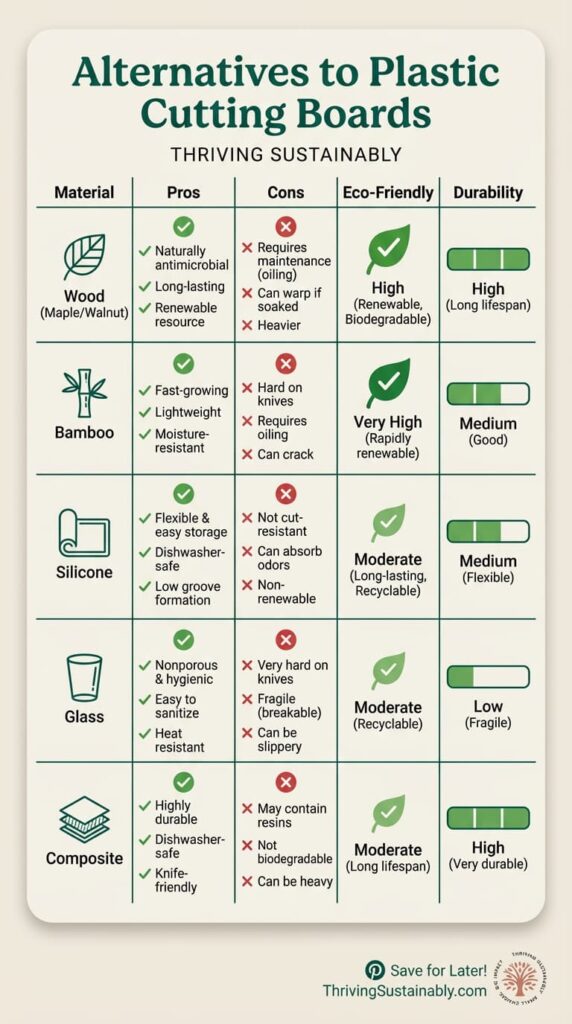
If you’re thinking about moving away from plastic cutting boards, you have more options than you might realize. Different materials offer distinct benefits in terms of safety, durability, and environmental impact. The comparison below breaks down the most common alternatives so you can quickly see which type of cutting board best fits your kitchen and lifestyle.
Are Plastic Cutting Boards Safe? FAQs
Sometimes. Most are made from HDPE (#2) or polypropylene (#5), but many recycling programs don’t accept cutting boards due to food contamination. Check local rules, or repurpose worn boards before disposal.
Yes. Dull steel knives tend to create deeper grooves, while tough ceramic knives can shave plastic. The most significant factor is board wear—more scratches mean more plastic shedding.
Yes. Many are labeled food-grade or FDA-compliant, but these certifications apply to new boards. They don’t account for long-term wear or microplastic release.
No significant difference in risk. Colored boards can hide stains and damage, while white boards make wear more visible, helping you know when to replace them.
Final Thoughts on Are Plastic Cutting Boards Safe
Plastic cutting boards are convenient, but research shows they can shed microplastics, trap bacteria as they wear down, and need frequent replacement. While they’re considered food-safe when new and adequately cared for, long-term use comes with trade-offs worth considering.
You don’t need to change everything at once. Replacing worn boards and choosing longer-lasting materials like wood or bamboo can reduce plastic exposure in a simple, practical way. Small choices in the kitchen add up, and informed swaps can make a real difference over time.
📚References
- Ak, N. O., Cliver, D. O., & Kaspar, C. W. (1994). Cutting boards of plastic and wood contaminated experimentally with bacteria. Journal of Food Protection, 57(1), 16–22. https://doi.org/10.4315/0362-028X-57.1.16
- United States Department of Agriculture, Food Safety and Inspection Service. (n.d.). Kitchen sanitation: Cutting boards and utensils. https://www.fsis.usda.gov/food-safety