


Key Takeaways
- DIY Halloween costumes save money and let you skip the plastic that fills 83% of store-bought costumes.
- The easiest low-plastic costumes start with what you own or thrift: cotton, denim, wool, and cardboard beat new polyester every time.
- Small swaps do the heavy lifting: wool felt over craft felt, mineral face paint over glitter, cardboard props over foam.
A DIY Halloween costume is any costume you make yourself instead of buying a pre-packaged one off the shelf. Most people go the DIY route to save money, to get creative, or to end up with something nobody else at the party is wearing. There is one more reason worth knowing: most store-bought costumes are made of plastic. A 2019 survey by the Fairyland Trust and Hubbub found that 83% of the material in the Halloween costumes they checked was oil-based plastic, mostly polyester. Making your own is the easiest way to skip that.
You do not need to sew, spend much, or be crafty. This guide gives you 17 easy DIY Halloween costume ideas, each one built from things you probably already own or can grab cheap from a thrift store. Because a homemade costume can still hide plastic in the details, every idea includes a simple low-plastic swap. Pick one, gather a few supplies, and you are done.
Quick Tips Before You Start
Before making a DIY Halloween costume, gather a few basics: clothes you already own or thrift, cardboard, wool felt, twine, safety pins, and fabric glue. Most costumes need nothing more than that.
Before you pick a costume, get your supplies and your plan sorted. It saves a last-minute panic run to the store. Most DIY costumes come together with a short list of basics, so reach for these first:
- Clothes you already own, or thrifted pieces in the right colors
- Cardboard from delivery boxes, plus kraft paper or newspaper
- Wool or wool-blend felt, twine, and safety pins
- Fabric glue, a hot glue gun, and paper-based tape
- A white cotton bedsheet or old muslin for ghosts, togas, and mummies
- Mineral face paint and a few basic makeup items you own
For kids, keep it comfortable and safe. Pick closed-toe shoes they can walk in, skip masks that block their view since face paint is easier and more comfortable, and layer warm clothes underneath if trick-or-treating gets cold. Do a small patch test of any face paint on the inside of the arm a day ahead to check for a reaction.
Don’t Miss: DIY Halloween Decorations: 21 Plastic-Free Ideas Once the costume is sorted, the porch and the party are next. Paper, wood, fabric, and foraged finds that give you the spooky look without the plastic. Read more →Why Are Store-Bought Halloween Costumes a Plastic Problem?
Store-bought Halloween costumes are mostly plastic. A 2019 Fairyland Trust and Hubbub survey found 83% of the material tested was oil-based plastic, mainly polyester. Americans spend about $4.3 billion on Halloween costumes a year, most of them polyester and many worn only once.
Store-bought costumes are mostly plastic because they are made from cheap synthetic fabric. In that survey of 324 costume items, most of the material was oil-based plastic. The scale is easy to picture in the US, where the National Retail Federation expects shoppers to spend about $4.3 billion on Halloween costumes in 2025, and roughly 7 in 10 people buy one each year. Most are polyester, and a costume worn once then thrown out joins the 11.3 million tons of textiles the US landfills every year.
Here is the part most people miss. Polyester, nylon, and acrylic are all plastic. Washing synthetic clothing sheds tiny plastic threads called microfibers. One study found a single 6kg wash load of polyester released around 496,030 microfibers, while acrylic released about 728,789. A costume worn once, then tossed, is plastic that sticks around for centuries. Glitter tells the same story, since it is microplastic, and research shows both regular and biodegradable glitter can harm freshwater life.
💫 now you know
Is Craft Felt Actually Plastic?
Most felt sold in craft stores is polyester or acrylic, which means it is plastic. Wool felt or a wool blend is the real low-plastic choice. It costs a little more, but it looks better and it lasts.
Making your own costume from natural materials skips most of this. Here is a quick cheat sheet you can come back to. When a costume calls for one of these plastic items, reach for the swap instead.
| Common plastic costume item | Why it is plastic | Low-plastic swap |
|---|---|---|
| Store-bought polyester costume | Synthetic fabric that sheds microfibers | Thrifted cotton, wool, or denim clothes |
| Craft felt (most of it) | Usually polyester or acrylic | Wool or wool-blend felt |
| Foam props and accessories | Plastic foam (EVA, polystyrene) | Cardboard or papier-mache |
| Glitter | Microplastic | Mineral or mica-based makeup, or skip it |
| Plastic masks | PVC plastic | Face paint or a cardboard mask |
| Synthetic wigs | Plastic fibers | Real hair styling, thrifted, or wool yarn |
| Bottled fake blood | Plastic bottle and additives | Homemade cornstarch and cocoa blood |
| Poly-fil stuffing | Plastic fiber fill | Old clothes, cotton batting, or newspaper |
1. Cardboard Mad Hatter
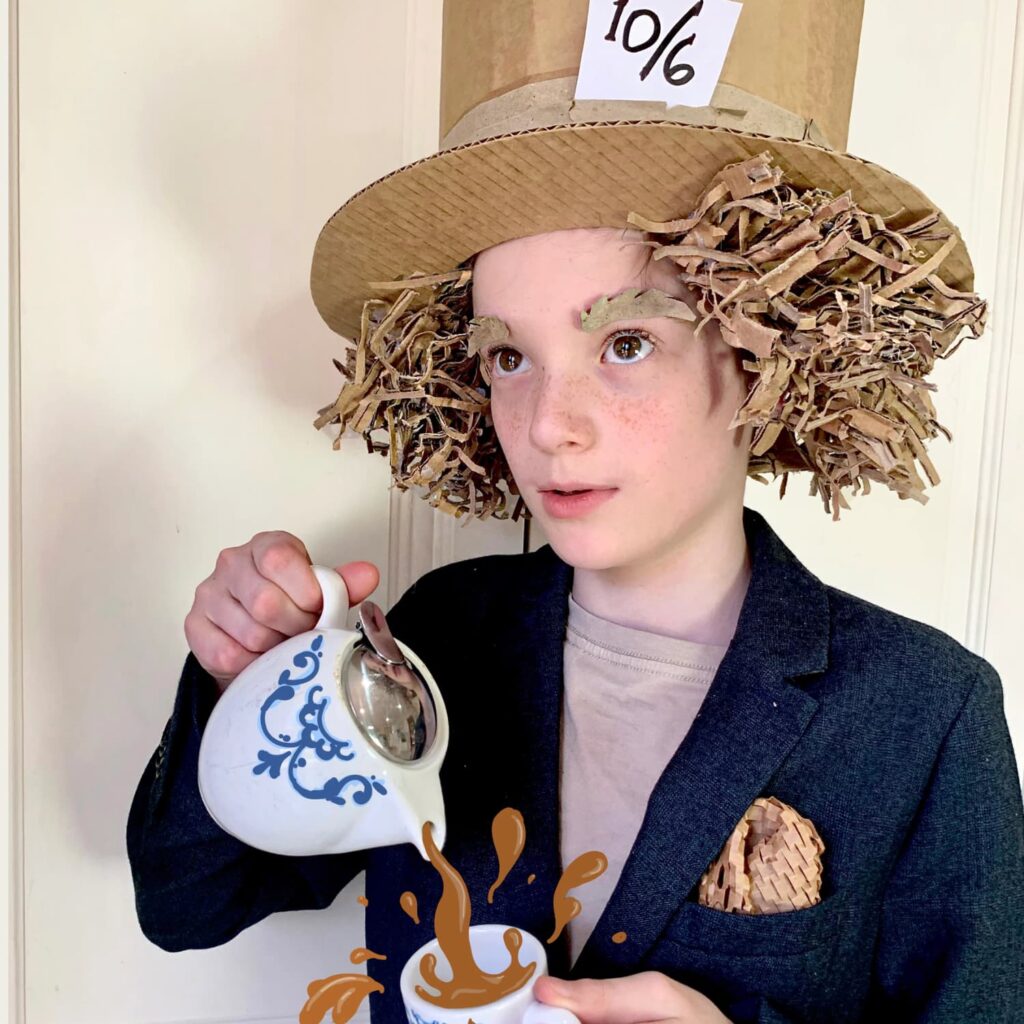
Tutorial: Zygote Brown Designs
We’re all mad here, and we’re all out of craft supplies! The entire hat is cardboard, packing paper, and an old newspaper, so raid the recycling bin and you are already halfway done. Print, cut, stack, done.
No sewing, no fabric, no store run. The only plastic in the build is the hot glue, and flour-and-water paste holds cardboard just as well.
2. Praying Mantis
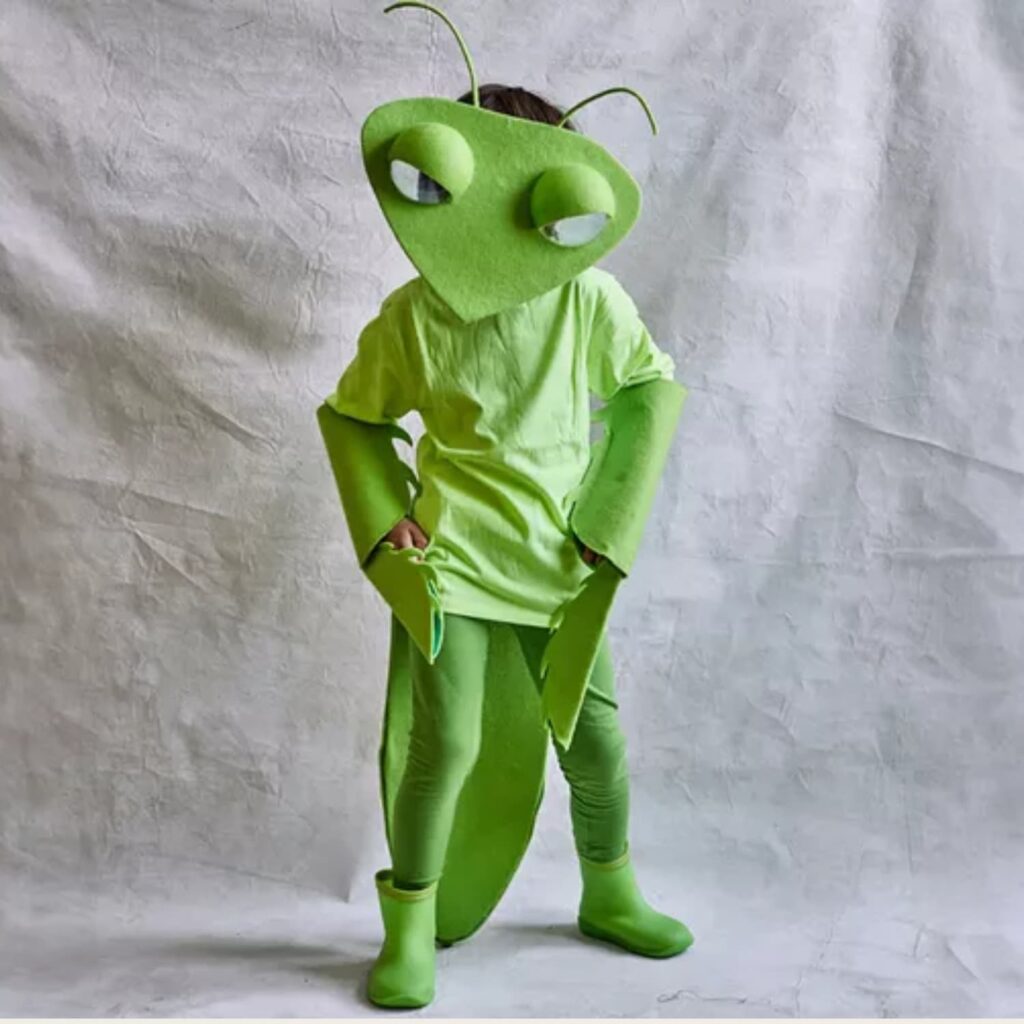
Tutorial: Martha Stewart
Cardboard is the secret to this bug’s life! The head, arms, and tail all get cut from broken-down boxes, which is exactly the kind of costume we like around here.
Three swaps worth making: use wool felt in place of the green craft felt, since craft felt is polyester; skip the spray adhesive, which is a solvent and acrylic polymer in an aerosol can, and brush on flour-and-water paste instead; and trade the plastic spheres for wooden craft balls cut in half and painted.
3. Foil-Wrapped Tin Man
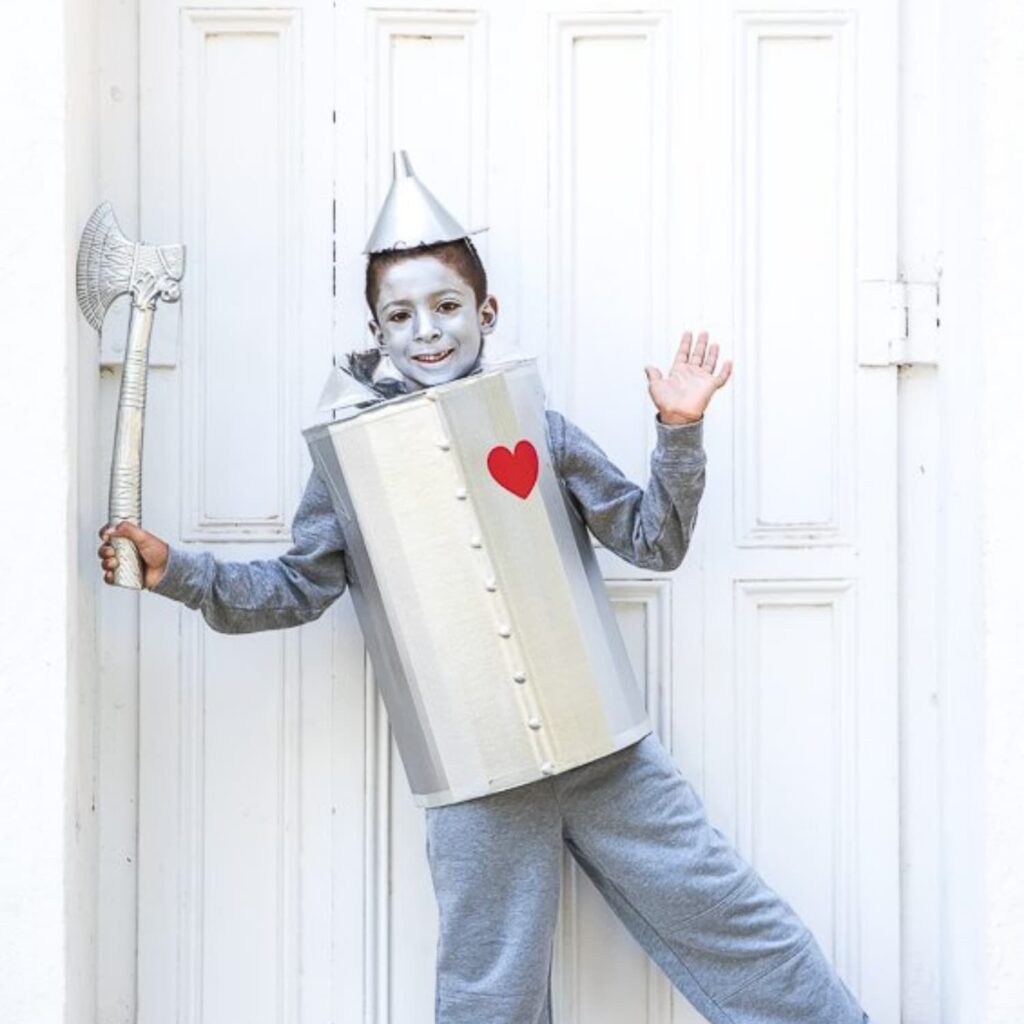
Tutorial: A Pumpkin & A Princess
If he only had a heart! And slightly less duct tape. The build is adorable, but it wraps a perfectly good cardboard box in silver tape and then adds spray paint on top. Skip both and smooth aluminum foil over the cardboard instead, pressing it down with a credit card.
You get a better shine than tape gives you, and it is actual metal. For the face, reach for a mineral silver cream, because most silvery face paints are loaded with plastic glitter.
4. Cardboard Robot Family
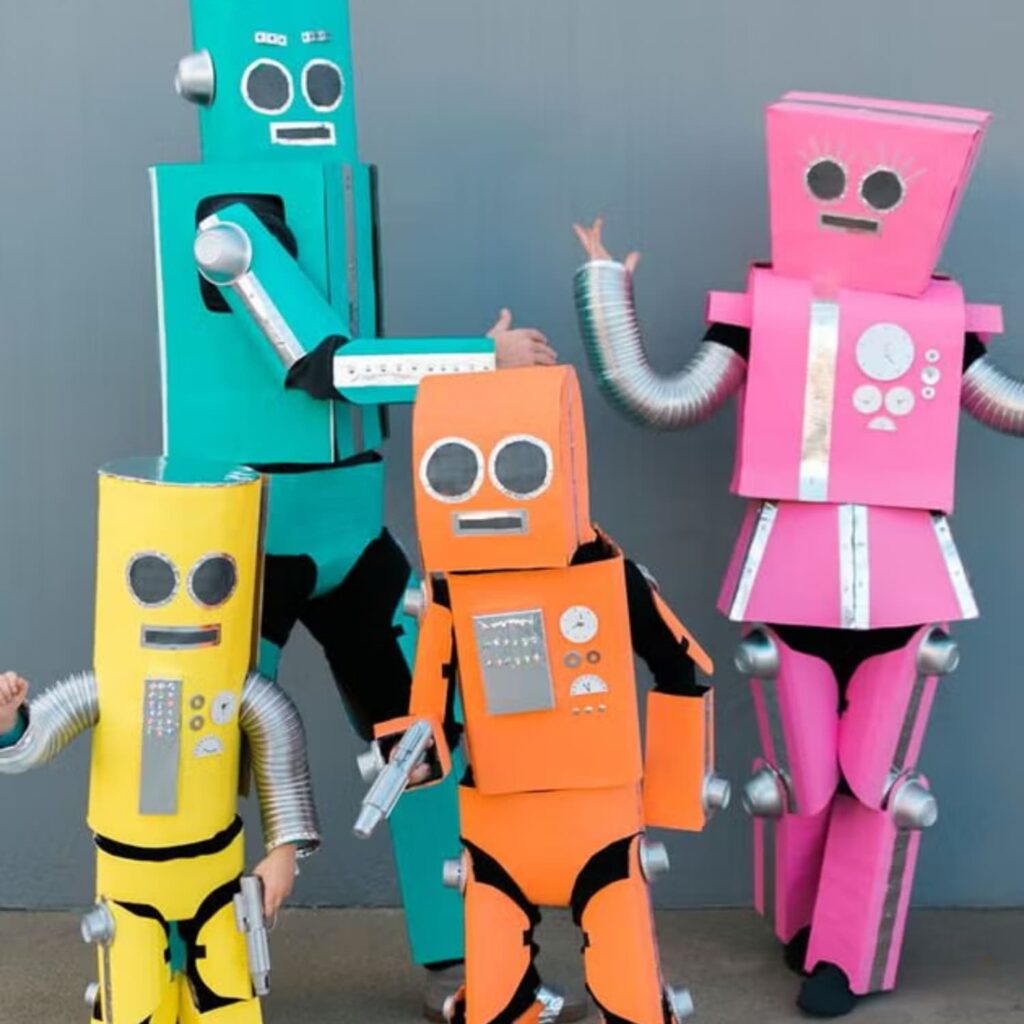
Tutorial: Tell Love and Party
Beep boop, this family wins the night! Just know the supply list leans on dollar store plastic bowls, lids, and ramekins that get worn exactly once. Tin can lids, metal jar lids, and washers give you the same riveted robot look and probably cost nothing.
Use the wall paint the tutorial already suggests instead of the spray paint, and tie the pieces on with cotton twill tape instead of velcro.
5. Tea-Stained Mummy

Tutorial: Polkadot Chair
Wrap it up; this one is a winner! It is a white cotton tee, gray sweatpants turned inside out, and a yard of cotton torn into strips and aged with black tea.
The tutorial even tells you to skip polyester because it will not take the dye, which is my kind of craft post.
One swap: trade the tulle for torn cotton muslin or a worn-out sheet, since tulle is nylon and the tea will not grab it anyway.
6. Cardboard Frankenstein
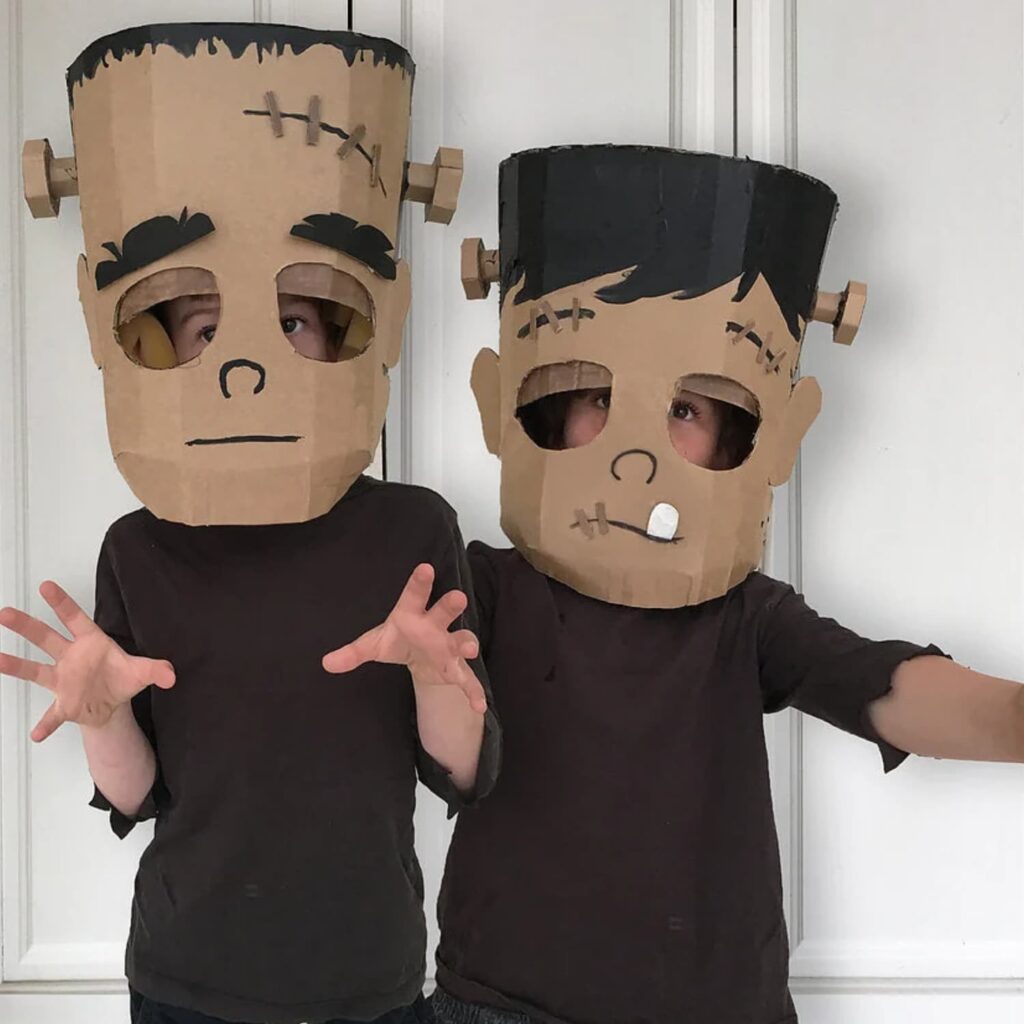
Tutorial: Zygote Brown Designs
It’s alive! And it is made of a shipping box. Print the template, cut single-walled cardboard, and those flat angled planes do all the work for you.
No sculpting, no rubber mask, no sweaty face at the school parade. Swap the hot glue for gummed paper tape, and the whole costume composts with the box.
7. Sweet Milkshake
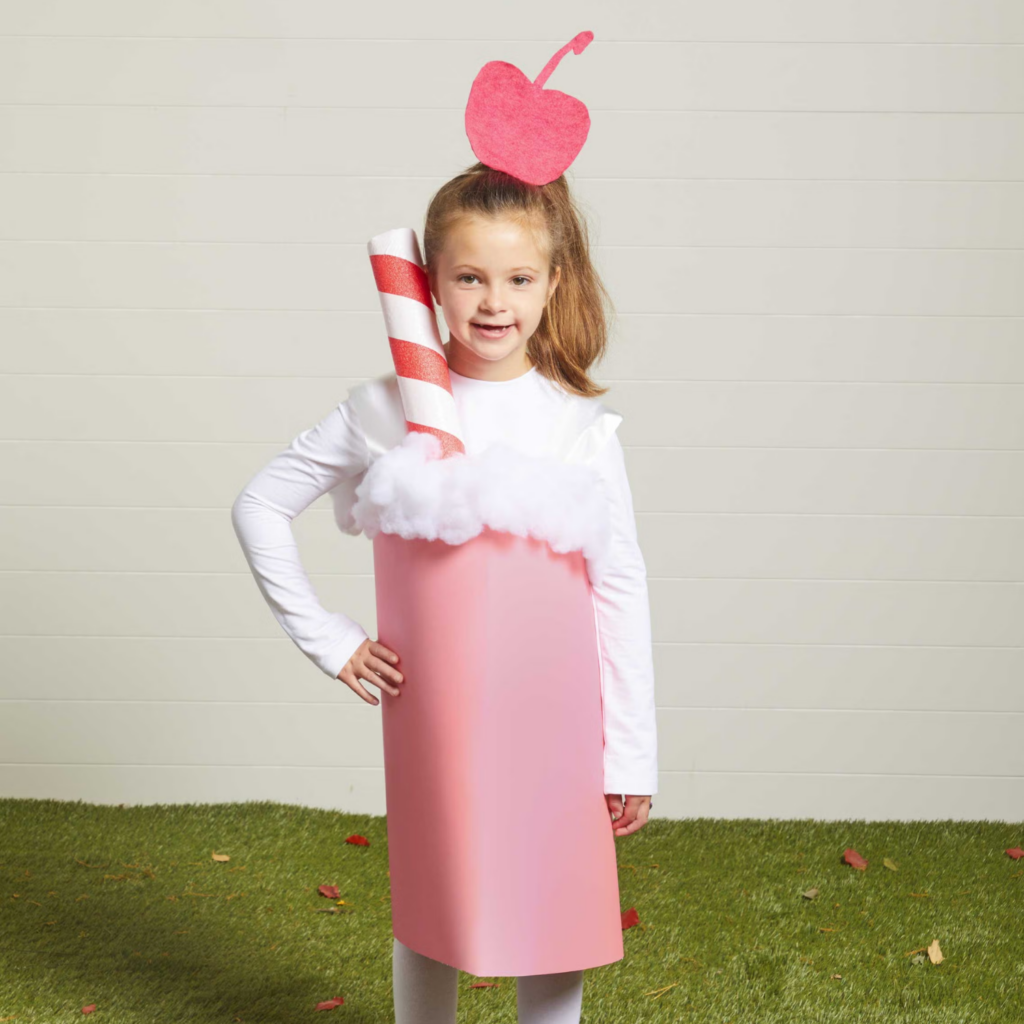
Tutorial: Country Living
Shake it off; this silhouette is adorable! The base is just two pieces of poster board taped into a cup, which costs almost nothing. It is also the most plastic-heavy build on this list, so here is where to redirect.
The whipped cream calls for Poly-fil, which is polyester fiberfill, so crumple white tissue paper or use cotton batting instead. The straw is a pool noodle wrapped in duct tape, polyethylene twice over, so roll a cardboard tube and wrap it in red and white paper.
Tie the shoulder straps with cotton twill tape rather than sticky-back Velcro, and cut the cherry from wool felt.
8. Haunted Gingerbread House
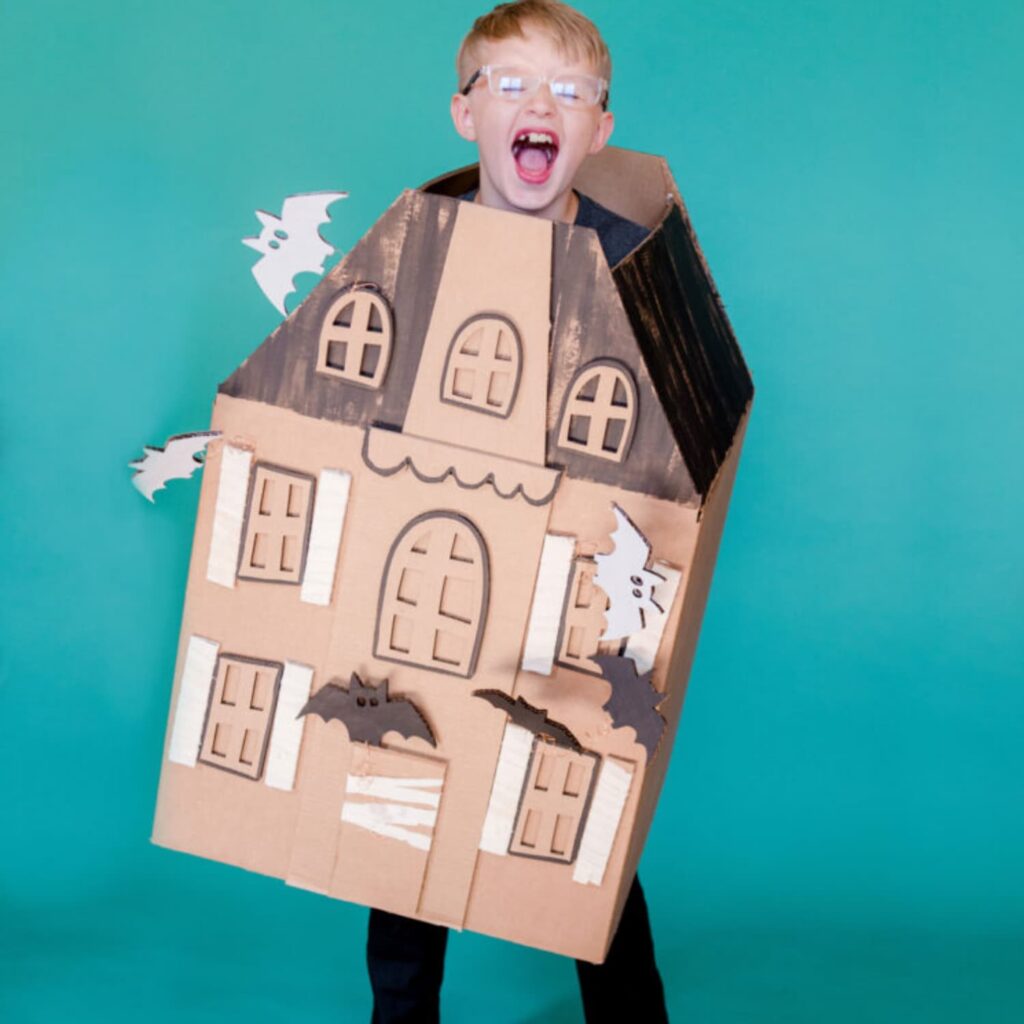
Tutorial: Oh Yay Studio
This gingerbread house went feral and we are here for it. A cardboard box, some wire, torn muslin, and twine straps turn into the creepiest thing on the sidewalk.
Two easy swaps: take the brown paper tape the tutorial offers instead of the packing tape, and use milk paint or tempera instead of acrylic, because acrylic paint is liquid plastic.
9. Inside Out Sadness
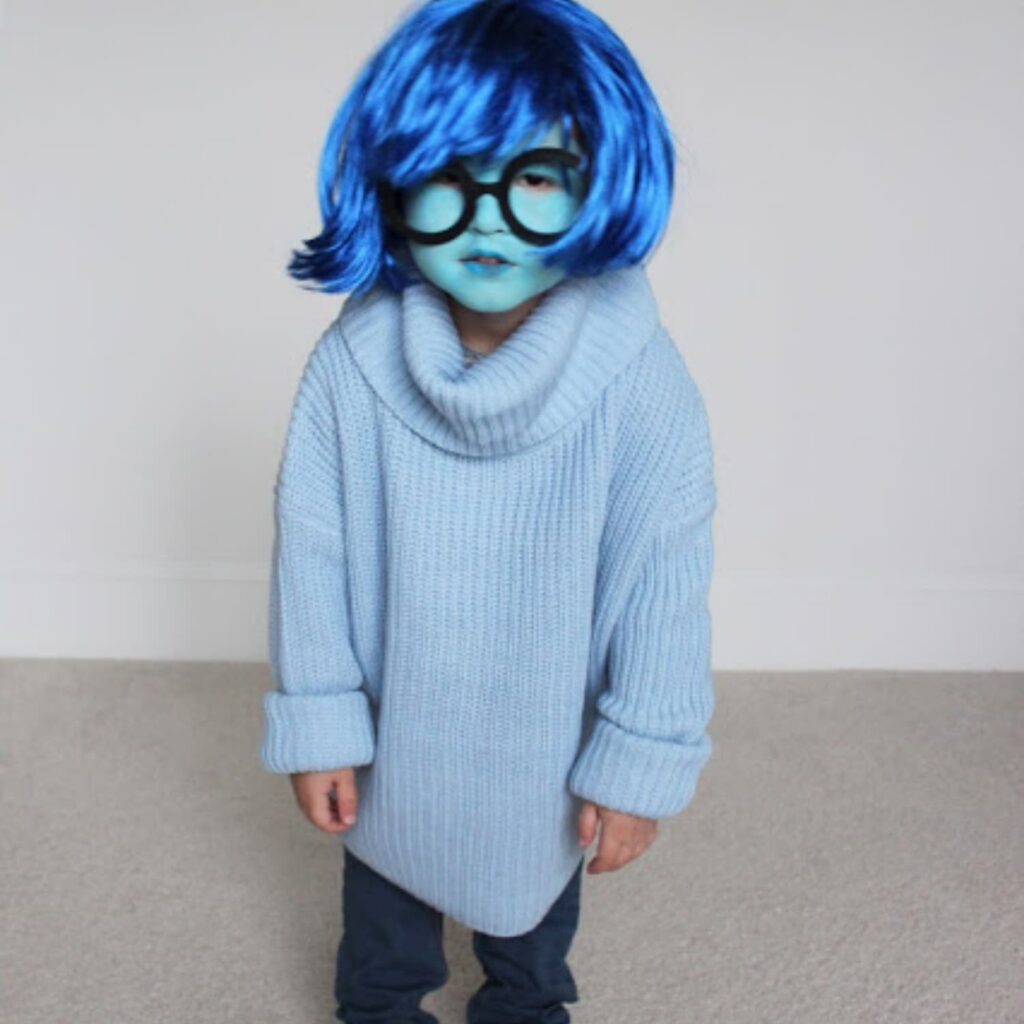
Tutorial: Love & Lion
Feeling blue never looked so good! The best part is that it is almost all clothes, not craft supplies, so a blue turtleneck, jeans, and round glasses get you there fast.
Thrift the sweater instead of buying new. And skip the blue wig, which is polyester and sheds all night, in favor of a blue knit beanie or a swipe of temporary hair chalk.
10. Crocheted Where’s Waldo
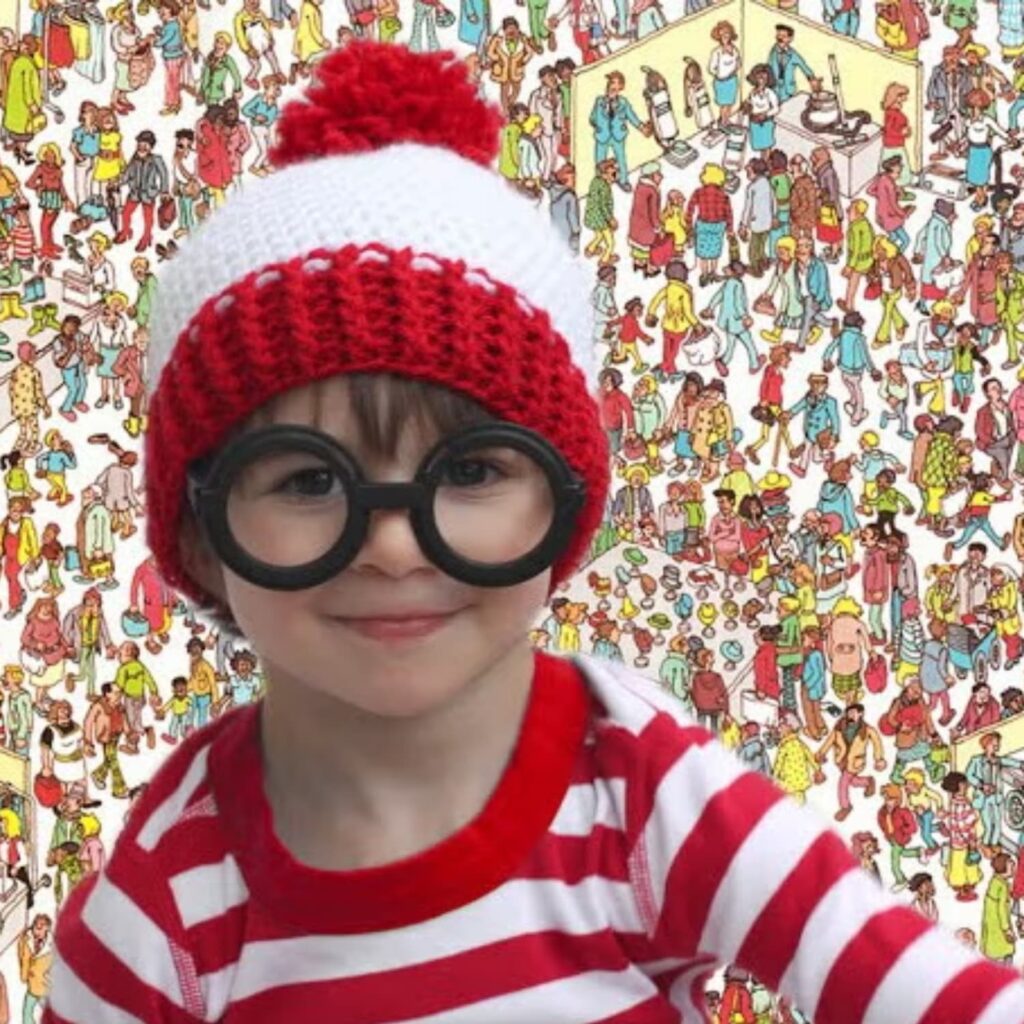
Tutorial: Repeat Crafter Me
Found him! Striped shirt, jeans, glasses, and a beanie you crochet yourself. If you already crochet, this is a one-evening project.
Just sub the acrylic yarn the pattern names for red and white wool or cotton, so the hat lasts for years instead of pilling and shedding microfibers in every wash.
11. Cardboard Bounty Hunter Armor

Tutorial: Zygote Brown Designs
This is the one that gets the “wait, you MADE that?” reaction. Cardboard helmet and armor plates lace together with cotton twine and a blunt needle, worn over a fitted sweater.
The materials list already skips duct tape and zip ties in favor of masking tape and twine, so there is genuinely nothing to fix here. Reuse a pair of old sweats you already own for the underlayer, and you are set.
12. Poppy the Troll
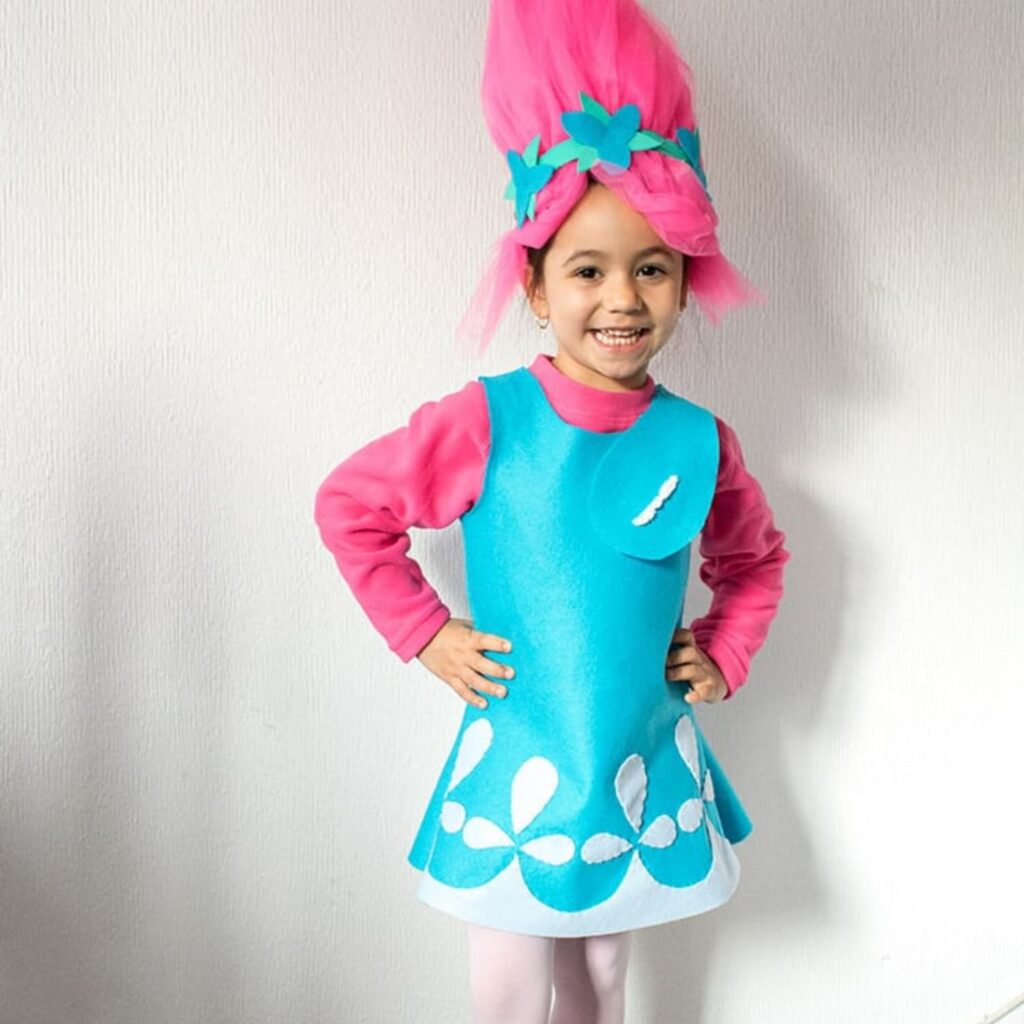
Tutorial: The Crafting Nook
Hair up, spirits up! The dress is the easy part, just felt circles stitched onto a sleeveless dress. The wig is where it gets plastic-heavy, since it is craft foam plus tulle plus a lot of hot glue.
Wrap wool roving or torn cotton jersey strips around the headband instead; it actually moves like hair and will not crack at the fold. Use wool felt for the dress circles too, since craft felt is polyester and wool cuts cleaner.
13. Spelling Bee
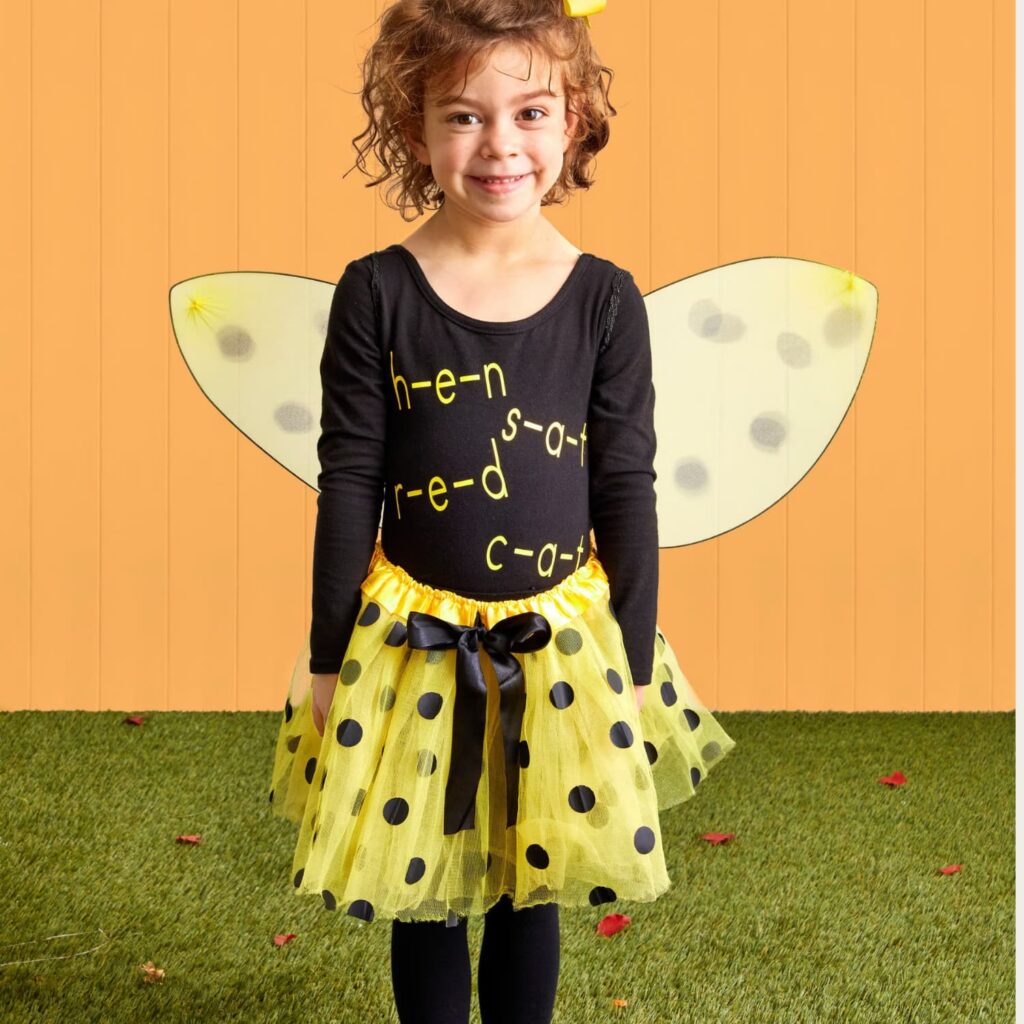
Tutorial: Country Living
Could this idea bee any cuter? Add letters to a black leotard and a plain outfit becomes the cleverest pun at the party.
Two swaps: iron-on letters are usually PVC vinyl, so cut yours from wool felt and stitch them on, or stencil them with fabric paint.
Costume wings are usually nylon stretched over wire, so borrow a pair instead of buying new ones, or bend your own from florist wire and an old lace curtain.
14. Unicorn Fit For a Princess
Tutorial: Zygote Brown Designs
One horn, zero glitter, all magic. Print the template, cut a sturdy box, and the head and tail carry the whole costume over a plain dress or leggings.
Save a thicker box for this one, 4 to 5mm. Tie it on with cotton twill tape or grosgrain instead of the polyester ribbon craft stores push.
15. Safety-Pin Minion
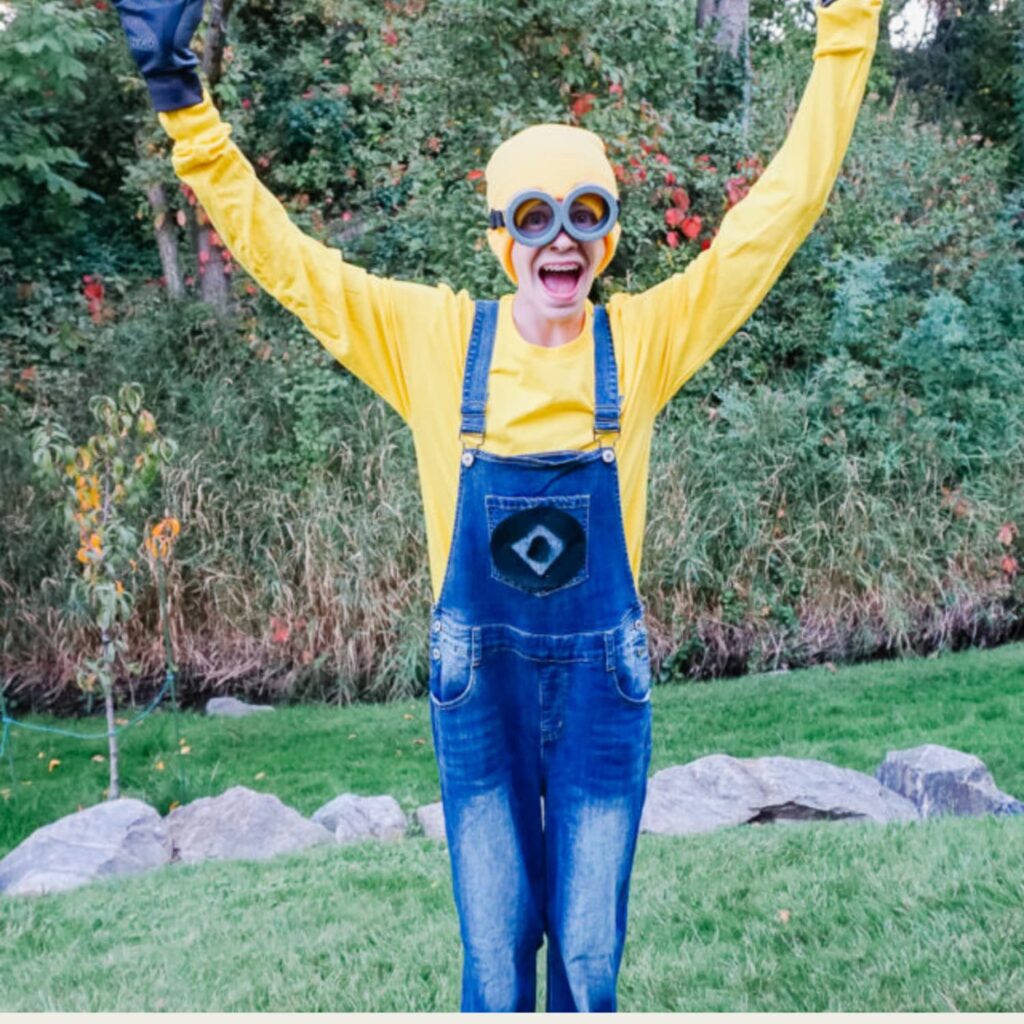
Tutorial: Heather Handmade
One in a minion! This is the true last-minute hero: yellow shirt, overalls, black gloves, and five safety pins. No sewing, no glue, ten minutes flat.
Use wool felt for the little eye detail, cut the goggle ring from cardboard or use swim goggles you already own, and pick a cotton beanie over the fleece hat, since fleece is polyester.
16. No-Sew Superhero Cape
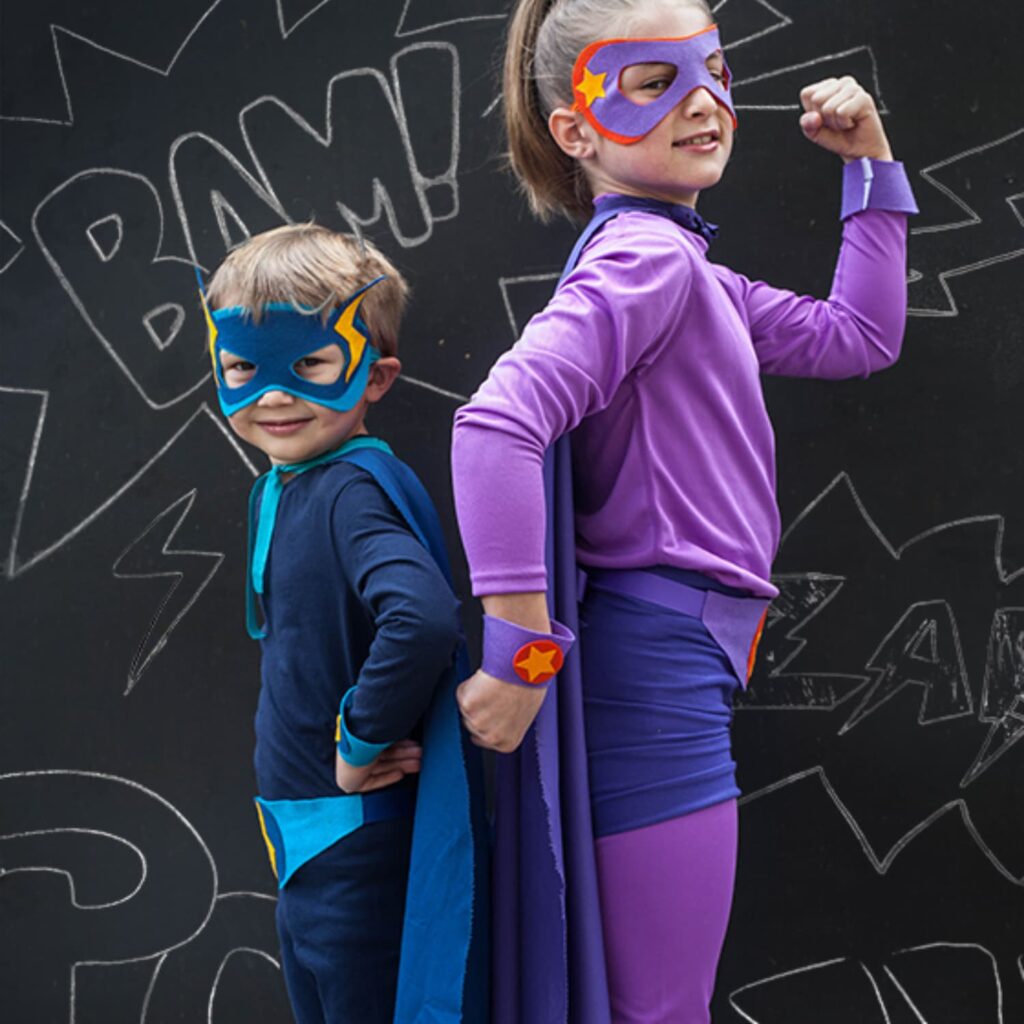
Tutorial: Lia Griffith
Cape on, worries off! This tutorial already calls for wool blend felt instead of the cheap polyester kind, which is exactly the upgrade I would have told you to make. It scales beautifully if you are outfitting more than one kid.
Two tweaks: stitch the cape appliqués with a simple running stitch instead of the iron-on fusible web, and tie the cape with two lengths of cotton twill tape instead of the nylon Velcro. Safer for a small kiddo, too.
17. Bandana Pirate
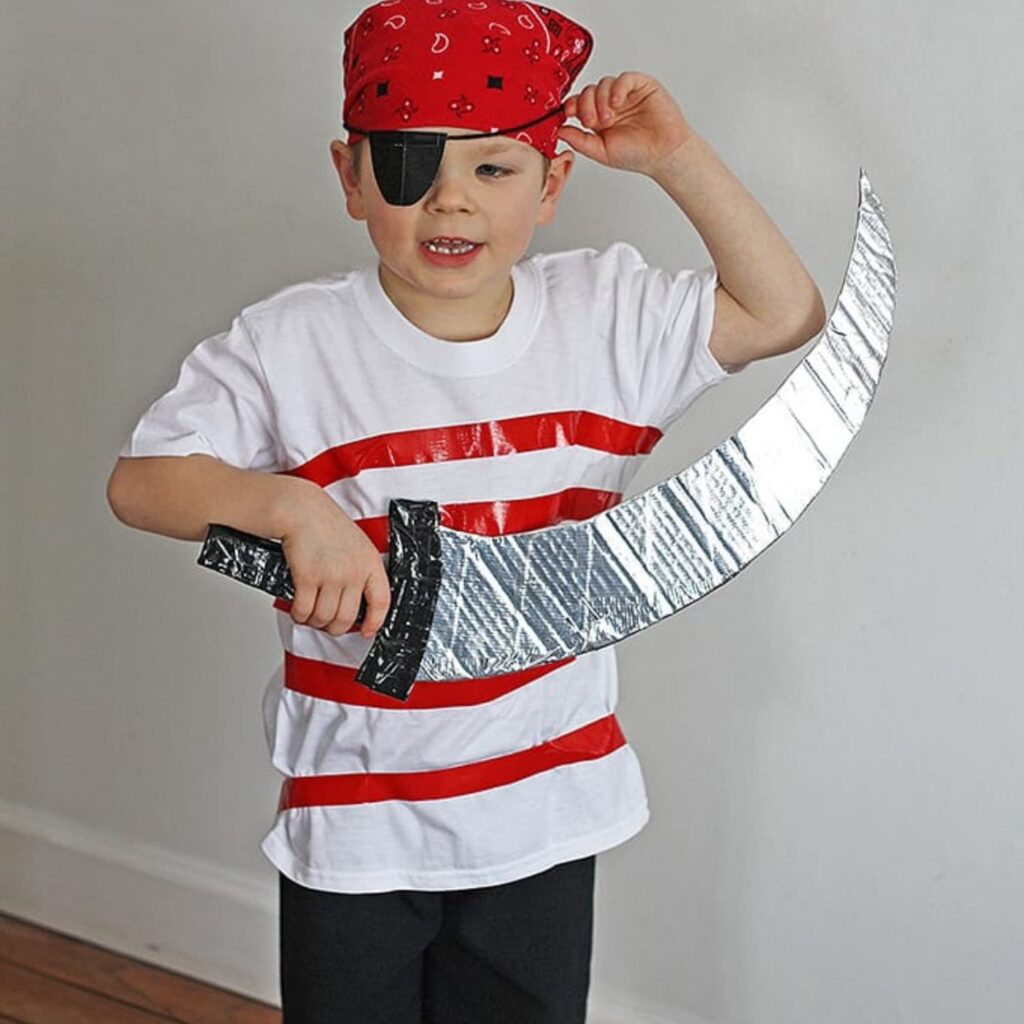
Tutorial: Crafts by Amanda
Ahoy, matey, this one is basically free! A white tee and a red bandana you already own do most of the lifting.
The sword and eye patch are where the duct tape piles up, so build them on cardboard instead of foam core, then paint the details or glue on colored paper. One extra drying step, and the plastic is gone. Cotton yarn for the eye patch tie.
You will notice several of these come from Zygote Brown Designs. I keep going back to them because their cardboard templates turn a stack of delivery boxes into something that genuinely looks impressive, for almost nothing. They are also the easiest builds to hand off to your kids. Print the template, cut, and let them put it together alongside you.
Save This for Halloween 📌
Materials and Budget: Costumes for Almost Nothing
The cheapest DIY Halloween costumes come from your own closet, a thrift store, and the recycling bin. Most cost under $10, and many cost nothing.
The cheapest and lowest-plastic costumes come from three places you already have access to. Start with your own closet: pull out everything black, white, brown, and denim, and you have covered ghosts, cats, skeletons, scarecrows, mummies, and half the animals you can think of.
Next, the thrift store. For a few dollars you can find natural-fiber clothes in any color, plus scarves, hats, and old sheets to cut up. Thrifting keeps clothes out of the landfill and new polyester out of your costume. Last, the recycling bin: delivery boxes become robot bodies, wings, scythes, and signs, and that cardboard is both free and the lowest-plastic material you can find.
To keep costs down, shop your closet first, borrow or swap pieces with friends, buy nothing single-use, and store the parts you make so you can reuse them. A costume you can wear again, or hand down, is cheaper and greener than a bagged costume worn once.
Final Tips for Finishing the Look
To finish a DIY Halloween costume, use mineral face paint instead of a mask, add one signature prop for recognizability, and wear closed-toe shoes with warm layers underneath for comfort.
A few small touches take a costume from close enough to one you love. Face paint does more than a mask ever will, and it is more comfortable, so choose a mineral-based paint and patch-test it first. Skip glitter, which is microplastic, and use a touch of mica shimmer or nothing at all. Raid the thrift store for hats, glasses, and jewelry that sell the character.
Comfort matters more than you expect. Parties and trick-or-treating mean a lot of walking, sometimes in the cold, so wear closed-toe shoes you can move in and layer warm clothes underneath rather than over the costume. Make sure kids can see and hear clearly. And to make any costume recognizable, lean on one clear signal: a single strong color, a signature prop, or a well-known pose tells people who you are from across the room.
FAQs About DIY Halloween Costumes
The classic ghost. Take an old white cotton bedsheet, drape it over your head, mark where your eyes are, and cut two holes. It takes about five minutes, costs nothing, and uses no plastic.
Use fabric glue, a hot glue gun, and safety pins instead of a needle and thread. Wool felt, thrifted clothes, and cardboard all hold together fine with glue and pins, so most ideas here skip sewing entirely.
Start with clothes you already own, especially black, white, brown, and denim pieces. Fill gaps at a thrift store for a few dollars, and use cardboard from delivery boxes for props. Most costumes here cost under $10, and many cost nothing.
Keep it recognizable, comfortable, and school-appropriate. Many schools ban masks and weapons, so use face paint instead of a mask and cardboard props instead of anything that looks like a real weapon. Pick closed-toe shoes and a costume your child can wear through a full day without overheating.
Start with natural-fiber clothes you own or thrift, choose wool felt over regular craft felt, use cardboard instead of foam, and pick mineral face paint over glitter. Those four swaps handle almost every costume on this list.
Final Thoughts About DIY Halloween Costumes
The lowest-plastic Halloween costume is the one you make from what you already own. Start with your closet and a couple of cardboard boxes, and you are halfway there.
DIY Halloween costumes save you money, let you be creative, and give you something no one else will have. Better still, making your own is the simplest way to skip the plastic that fills most store-bought costumes. With clothes you already own, a thrift-store find or two, and a few cardboard boxes, you can build any of the 17 ideas here.
Choose one costume that fits your time, your budget, and your style. If you do only one thing today, gather your supplies: pull the black, white, and brown clothes from your closet and set a couple of boxes aside. You are already halfway to a costume.
📚 References
- Fairyland Trust, & Hubbub. (2019). Halloween clothing and costumes survey 2019. Fairyland Trust. http://www.fairylandtrust.org/wp-content/uploads/2019/10/Halloween-Plastics-Clothing-and-Costumes-Report-2019.pdf
- Green, D. S., Jefferson, M., Boots, B., & Stone, L. (2021). All that glitters is litter? Ecological impacts of conventional versus biodegradable glitter in a freshwater habitat. Journal of Hazardous Materials, 402, 124070. https://doi.org/10.1016/j.jhazmat.2020.124070
- Napper, I. E., & Thompson, R. C. (2016). Release of synthetic microplastic plastic fibres from domestic washing machines: Effects of fabric type and washing conditions. Marine Pollution Bulletin, 112(1-2), 39-45. https://doi.org/10.1016/j.marpolbul.2016.09.025
- National Retail Federation. (2025). NRF consumer survey finds Halloween spending to reach record $13.1 billion. National Retail Federation. https://nrf.com/media-center/press-releases/nrf-consumer-survey-finds-halloween-spending-to-reach-record-13-1-billion
- U.S. Environmental Protection Agency. (n.d.). Textiles: Material-specific data. U.S. Environmental Protection Agency. Retrieved August 22, 2026, from https://www.epa.gov/facts-and-figures-about-materials-waste-and-recycling/textiles-material-specific-data