Key Takeaways
- Sustainable fashion documentaries reveal what really happens behind cheap, fast-changing clothing trends.
- These films make it easier to understand how fashion impacts the planet, workers, and animals.
- Watching ethical fashion documentaries often inspires people to shop less, choose better, and care more about what they wear.
People love knowing where their food comes from. We read labels, ask questions, and care about how it’s grown. But when it comes to our clothes, most of us never stop to wonder where they were made or what it took to make them.
We all wear clothes every day, yet behind trendy outfits and low price tags is a global industry that affects the environment, workers, and even our health. Most of that story stays hidden while we scroll, shop, and move on to the next trend. Sustainable fashion documentaries bring those unseen stories to the surface. They show where our clothes come from, who makes them, and what happens after trends fade and garments get tossed aside.
These films matter because they make significant, complicated issues feel real and relatable. Instead of drowning you in facts, they focus on real people, real places, and real consequences, helping explain why fashion choices matter more than we often realize.
If you’ve ever wondered whether your clothing habits actually make a difference, these documentaries are a powerful place to start.
What Is Sustainable Fashion?
Sustainable fashion is all about making clothes in ways that are better for people, animals, and the planet. It looks at the entire life of a piece of clothing from where the materials come from, to who makes it, to what happens when we’re done wearing it.
Most sustainable fashion documentaries focus on how different this is from fast fashion, which pushes cheap clothes, constant trends, and rapid production. While fast fashion makes shopping feel fun and affordable, it often comes with hidden costs most of us never see.
Here’s what these documentaries usually uncover:
- Environmental damage: Making clothes uses vast amounts of water, energy, and chemicals. Dyeing fabrics can pollute rivers, and synthetic materials shed microfibers that end up in oceans.
- Unfair working conditions: Many garment workers earn very low wages and work in unsafe factories, often with little protection or job security.
- Animal welfare concerns: Some films look at how animals are treated in the production of fur, leather, wool, and other materials.
- Too much stuff, too fast: Trends change quickly, clothes fall apart, and millions of garments are thrown away every year.
- Greenwashing: Some brands tout being “eco-friendly” without making meaningful changes behind the scenes.
Sustainable fashion documentaries don’t just explain these problems—they show them. By following real people and genuine supply chains, they help connect the dots between what’s in our closets and what’s happening around the world.
The True Cost
What it’s about
The True Cost looks at what really goes on behind cheap clothing and fast-moving trends. It connects the dots between what we buy, who makes our clothes, and the environmental damage left behind. The film travels across several countries to show how fashion impacts real people and real communities.
Why it’s worth watching
This documentary is often the first wake-up call for people learning about sustainable fashion. It’s eye-opening without being preachy, and it leaves most viewers thinking differently the next time they shop.
RiverBlue
What it’s about:
RiverBlue focuses on one of fashion’s dirtiest secrets: water pollution. The film follows river conservationist Mark Angelo as he travels the world, showing how toxic chemicals from textile dyeing are contaminating rivers that millions of people depend on for drinking water, bathing, and farming.
Why it’s worth watching
This documentary makes the environmental impact of fashion impossible to ignore. Seeing once-beautiful rivers turned bright blue, red, or black is shocking, and it clearly shows how our clothing choices affect people far beyond the store checkout.
SLAY
What it’s about
SLAY follows filmmaker Rebecca Cappelli as she explores the fashion industry’s use of animal skins, including fur, leather, and wool. The documentary examines how these materials are sourced and asks whether they can be considered ethical or sustainable. It connects animal welfare, environmental damage, and misleading marketing claims in fashion.
Why it’s worth watching
This film adds an important perspective that’s often missing from sustainable fashion conversations. It encourages viewers to think more critically about animal-derived materials and challenges long-held assumptions about what “natural” or “luxury” really means in fashion.
ReDress The Future
What it’s about
ReDress The Future is a short documentary series that explores what a more sustainable fashion industry could look like. Instead of focusing only on what’s broken, it highlights designers, innovators, and ideas that are trying to change how clothing is made, worn, and reused.
Why it’s worth watching
This series feels hopeful and forward-looking. It’s a great watch if you want to see real solutions and creative thinking, not just the problems. It shows that fashion doesn’t have to stay stuck in the same cycle.
Unravel
What it’s about
Unravel is a short documentary that explores another part of the clothing story: what happens after we throw pieces away. The film visits textile recycling centers in northern India, where workers sort large bales of clothing sent from Western countries. As the garments are recycled back into yarn, the workers share their thoughts and dreams while processing the cast-offs.
Why it’s worth watching
This short film is a powerful reminder that our “discarded” clothes don’t just disappear. It shows how clothing can travel the world, be reborn into new materials, and highlight the hidden labor behind recycling. Unravel makes viewers think twice about waste and where our fashion really ends up.
73 Cows
What it’s about
73 Cows is a short documentary that follows a young cattle farmer who makes the difficult decision to sell his entire herd and step away from animal farming. While it isn’t strictly a fashion film, it’s deeply connected to conversations around leather, animal welfare, and the wider impacts of using animals for products.
Why it’s worth watching
This film is quiet, emotional, and incredibly powerful. It shows how changing systems isn’t just about industries — it’s about people, values, and hard choices. For anyone thinking about where materials like leather come from, 73 Cows adds an important human perspective to the sustainable fashion conversation.
Toxic Price of Leather
What it’s about
The Toxic Price of Leather examines the environmental and human health impacts of leather tanning. The documentary focuses on communities living near tanneries, where toxic chemicals are often released into water and soil. It shows how leather production can harm workers, pollute neighborhoods, and create long-term health risks.
Why it’s worth watching
This film shines a light on a side of leather most people never see. It helps viewers understand that leather isn’t just a “natural” material; it often comes with serious environmental and human costs. After watching, it’s hard not to think differently about leather goods and where they come from.
Udita
What it’s about
Udita follows the life of a young garment worker in India, offering a close, personal look at the people behind the clothes sold around the world. Instead of focusing on factories as a whole, the film centers on one woman’s daily life, her work, and her hopes for the future.
Why it’s worth watching
This documentary makes the human side of fashion impossible to ignore. By telling one person’s story, Udita helps viewers understand how global fashion systems affect real lives. It’s quiet, honest, and profoundly moving, and it reminds us that every piece of clothing has a human story behind it.
Made in Africa
What it’s about
Made in Africa explores fashion production across several African countries, highlighting local designers, makers, and garment workers. The documentary challenges common assumptions about where clothing is made and shows how African-led fashion can support local economies, creativity, and ethical production.
Why it’s worth watching
This film offers a refreshing perspective that’s often missing from sustainable fashion conversations. Instead of focusing only on harm, it highlights opportunity, craftsmanship, and the importance of supporting fashion systems that empower communities rather than exploit them.
The Clothes We Wear
What it’s about
The Clothes We Wear looks at the global journey of clothing, from production to consumption. The documentary explores how fashion impacts workers, communities, and the environment, while also questioning the true cost of cheap, mass-produced garments. It helps viewers understand how closely fashion is tied to everyday choices.
Why it’s worth watching
This film connects the dots in a clear, approachable way. It’s especially helpful for anyone new to sustainable fashion because it explains big issues without feeling overwhelming. After watching, it’s hard not to think more carefully about what’s in your closet and where it came from.
What You’ll Learn from These Documentaries
Most sustainable fashion documentaries change how you see your clothes almost right away. After watching just one, it’s hard to look at a price tag the same way again.
One of the biggest things you’ll learn is that cheap clothes often come with hidden costs. These films show how pollution, unsafe factories, and unfair wages are pushed out of sight so clothing can stay inexpensive and trendy.
You’ll also see the people behind the clothes. Many documentaries focus on garment workers and communities who are directly affected by fashion production. Hearing their stories makes the issue feel real, not distant.
Another eye-opening lesson is the extent to which overbuying plays a role. The documentaries show how quickly clothes are made, worn a few times, and then tossed. It becomes clear that the problem isn’t just fashion itself, it’s how fast and how much we consume.
Most importantly, these films don’t leave you feeling helpless. Instead, they help you realize that small choices matter. Buying less, choosing better, and wearing clothes longer all make a difference.
By the end, many people walk away feeling more thoughtful about their closets and more confident in making choices that align with their values.
Don’t Miss Greenwashing in Fashion: How to Spot Misleading Claims Many brands use vague “eco-friendly” language without real change behind it. Learn how to spot greenwashing in fashion and make more informed clothing choices. Read more →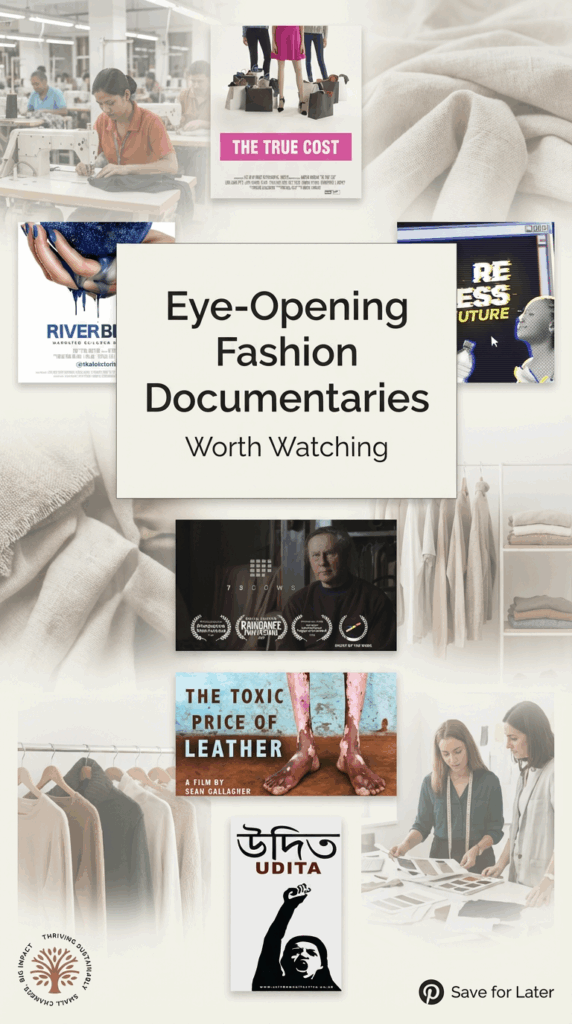
How to Take Action After Watching
After watching sustainable fashion documentaries, it’s normal to feel inspired, curious, or even a little overwhelmed. The good news is you don’t have to change everything at once to make a difference.
One of the simplest steps is to buy less and wear what you already own more often. Before shopping, take a look at your closet and see what you can restyle, repair, or wear in new ways. Even extending the life of clothes by a few extra wears helps reduce waste.
Another easy action is to shop more intentionally when you do need something new. This might mean choosing better quality pieces, supporting ethical or secondhand brands, or avoiding impulse buys driven by trends.
You can also take care of your clothes so they last longer. Washing in cold water, air-drying when possible, and fixing small tears can keep items out of the trash and in your rotation.
If you want to go a step further, consider sharing instead of buying. Clothing swaps, thrift stores, and resale apps make it easy to refresh your wardrobe without adding to overproduction. Most importantly, permit yourself to start small. Sustainable fashion isn’t about perfection. It’s about learning, paying attention, and making choices that feel realistic for your life.
Additional Resources
If these documentaries spark more questions or curiosity, there are plenty of ways to keep learning about sustainable fashion without feeling overwhelmed.
Books are a great place to start if you want a deeper context. Books such as Overdressed by Elizabeth L. Cline and Fashionopolis by Dana Thomas break down fast fashion, overconsumption, and what change could look like in a clear, approachable way.
Podcasts are an easy way to keep learning while commuting, walking, or folding laundry. A few well-known options in the sustainable fashion space include:
- Conscious Chatter – Focuses on ethical fashion, slow fashion, and the people working to change the industry. It’s educational but still easy to follow.
- Wardrobe Crisis – Hosted by a fashion journalist, this podcast talks about overconsumption, sustainability, and how fashion can do better without losing creativity.
- The Sustainable Fashion Podcast – Covers a wide range of topics, from materials and supply chains to how consumers can make more thoughtful choices.
- Pre-Loved Podcast – Centers on secondhand fashion, vintage clothing, and shopping more intentionally instead of always buying new.
These podcasts are great if you want to keep learning in a low-pressure way and hear real conversations from people inside the fashion world.
You can also follow sustainable fashion organizations and advocates online. Many share bite-sized education, behind-the-scenes looks at the fashion industry, and practical tips for shopping and caring for clothes more responsibly.
Don’t Miss Microplastics: Health Risks, Sources, and How to Reduce Exposure 👉 Many clothes are made from plastic-based fibers that shed microplastics when washed. These tiny particles don’t disappear, they move through water, food, and our bodies. Learn more about microplastics, where they come from, and how to reduce exposure. Read more →FAQs on Sustainable Fashion Documentaries
Fast fashion is built around making clothes quickly, cheaply, and in large quantities. Trends change fast, prices stay low, and many items are only worn a few times before being tossed. This approach often leads to pollution, waste, and unfair working conditions.
Sustainable fashion takes a slower, more thoughtful approach. It focuses on reducing environmental harm, treating workers fairly, using safer materials, and making clothes that last longer. Instead of asking, “How fast can we make this?” sustainable fashion asks, “How can we make this better?”
Yes. Some documentaries highlight innovation, circular fashion, and brands working toward real change. Films like ReDress The Future focus on solutions and show that a better fashion system is possible.
No, and that’s a very common misconception.
Sustainable fashion isn’t about being perfect or never buying anything new again. It’s about being more intentional. That might mean buying fewer items, choosing better quality, wearing clothes longer, or shopping secondhand when you can.
Small changes matter. Even slowing down how often you shop or avoiding impulse buys can make a real difference over time. The goal isn’t guilt — it’s awareness and progress.
Final Thoughts on Sustainable Fashion Documentaries
Sustainable fashion documentaries help us see clothing in a whole new way. They pull back the curtain on an industry we interact with every day but rarely question.
You don’t need to watch every film or change your habits overnight. Even watching one documentary can spark awareness, curiosity, or a slight shift in how you shop and care for your clothes.
These stories matter because they remind us that fashion isn’t just about trends. It’s about people, the planet, and the choices we make along the way. And when we know better, it becomes easier to choose better — one piece of clothing at a time