
Key Takeaways
- Dermatologists say to keep showers to 5 to 10 minutes, and a shower steamer turns that short rinse into an aromatherapy session with no extra time.
- To use a shower steamer, set it on the floor in a back corner away from the direct spray, so it fizzes slowly and lasts most of your shower.
- The steam carries the scent, so eucalyptus can ease a stuffy nose while lavender helps you wind down, and no bathtub is needed.
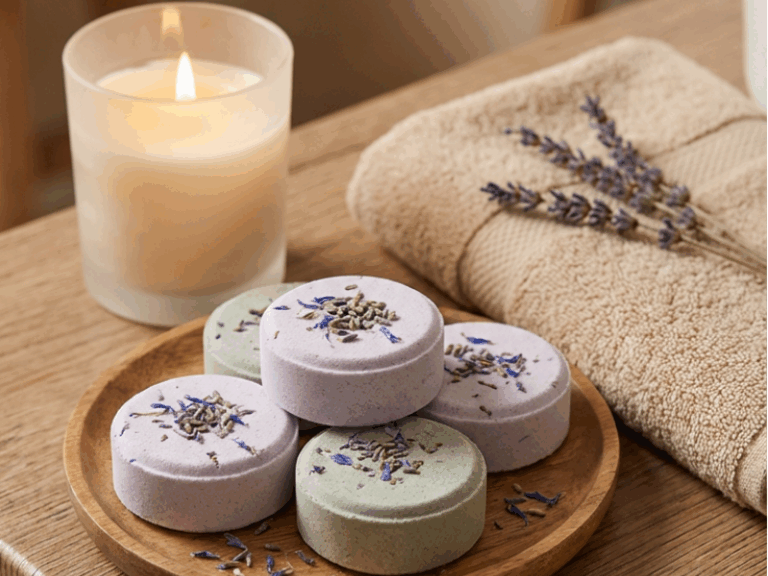
A shower steamer is a scented tablet you set on your shower floor, and the steam releases its essential oils into the air as it slowly dissolves. Learning how to use shower steamers well comes down to three things: hot water, smart placement, and a little patience. Turn the water hot, set the steamer in a back corner away from the direct stream, and breathe. That is the whole method.
Most of the trouble people run into comes from treating a steamer like a bath bomb and dropping it straight under the water, where it fizzes out in seconds. This guide covers the exact steps, where to place it, how long it lasts, the best scents for each mood, and the small mistakes that waste a good tablet.
What Is a Shower Steamer? (And How Is It Different from a Bath Bomb?)
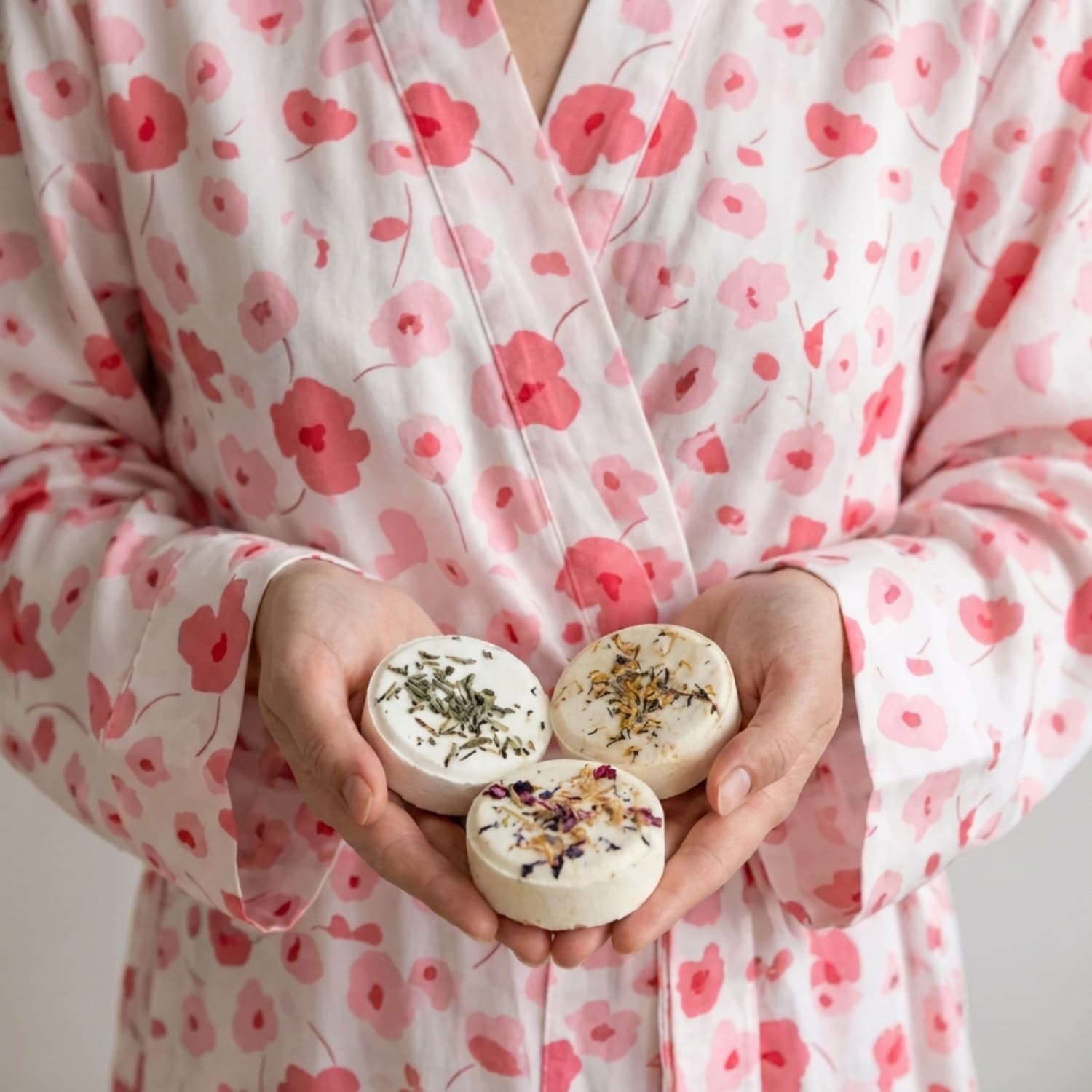
A shower steamer is a small pressed tablet of baking soda and citric acid loaded with essential oils. Unlike a bath bomb, a shower steamer is made for steam and standing water on a shower floor, not for soaking in a full tub.
Both fizz for the same reason. When baking soda meets water and citric acid, the two react and release the scent. The difference is the dose. A bath bomb is built to color and soften a whole tub of water, so the oils get diluted across gallons. A shower steamer is concentrated for aromatherapy, so a splash of water sets off a burst of scented steam right where you are standing.
The number one mistake is using a shower steamer in a bath. In a tub, all that scent spreads thin and disappears fast, which wastes the tablet. Keep steamers for the shower, where the heat and humidity do the work.
How to Use a Shower Steamer in 5 Steps
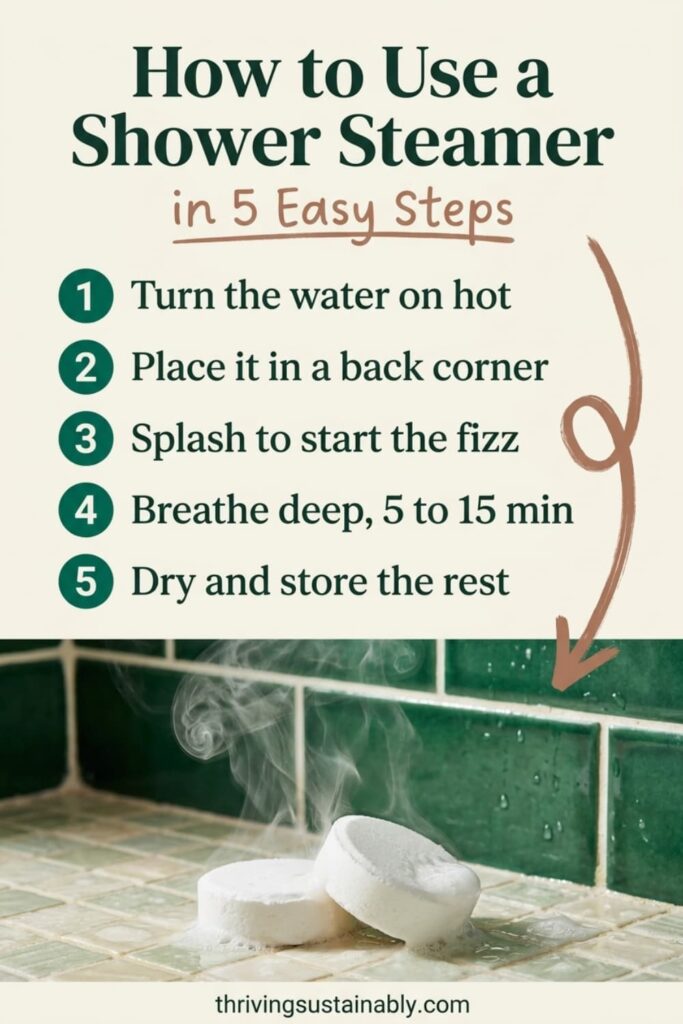
To use a shower steamer, warm the shower with hot water, place the tablet in a back corner off the direct stream, splash it to start the fizz, then breathe deeply for 5 to 15 minutes and dry any leftover piece for next time.
Step 1: Turn on hot water and warm the shower
Start the water hot and let the room build up steam for a minute before you step in. Steam is what carries the scent into the air. As the Cleveland Clinic notes, the heat and moisture from a hot shower help open up clogged sinuses, so a warm, steamy shower also makes the aromatherapy stronger.
Step 2: Choose the right placement
Set the steamer on the shower floor in a back corner, off to the side, away from the direct stream. You want splashes and steam to reach it, not a full blast of water. This is the single biggest factor in how long your steamer lasts.
You have two options. Use the whole tablet for a strong, all-at-once scent, or break off a corner and save the rest to stretch one steamer across several showers. The sprinkle method, where you crumble a small piece near the drain, gives a lighter scent and makes a pack last much longer.
Step 3: Activate with a splash of water
Flick a little water onto the steamer to kick off the fizz. Do not drown it. A light splash keeps it releasing scent slowly instead of dissolving in one big rush.
Step 4: Breathe deeply and enjoy
Close the shower door or curtain to hold the steam in, then take slow, deep breaths for 5 to 15 minutes. Most steamers give their best scent in the first several minutes, so there is no need to rush.
Step 5: Store the leftover half properly
If part of the tablet is still whole, move it out of the wet zone, pat it dry, and keep it in an airtight bag or jar away from humidity. Left in the shower, a leftover piece will slowly fizz away on its own and lose its scent.
✨tip
Keep it out of the splash zone
If your steamer keeps vanishing in under a minute, it is getting too much direct water. Move it a few inches further into the corner and let steam, not the stream, do the work.
Where Exactly Should You Place a Shower Steamer?
Place a shower steamer on the floor in a back corner, out of the direct stream but close enough to catch splashes and steam. A back corner makes a steamer last the longest, while directly under the water makes it disappear in under 2 minutes.
Think of placement as a trade between scent strength and how long it lasts. The closer to the water, the stronger and faster it burns through. The further into a corner or up on a ledge, the slower and gentler the scent. For most people, a back corner near the feet is the sweet spot: enough splash to fizz, enough distance to last the whole shower.
Don’t Miss: Non-Toxic Living: Where to Actually Start, Room by Room A steamy shower is a small ritual, and a low-tox home is the bigger picture. See where to start, one room at a time. Read more →How Long Does a Shower Steamer Last?
One shower steamer lasts about 5 to 20 minutes, depending on placement. Set in a back corner it can hold scent for 10 to 20 minutes, while a steamer under the direct stream is gone in under 2 minutes.
The chart below shows roughly how long a single tablet lasts based on where you put it. Your exact time depends on water pressure, tablet size, and how much oil the steamer holds.
| Placement | Roughly how long it lasts | Scent strength |
|---|---|---|
| Soap dish or ledge (splash only) | 15 to 20+ minutes | Mild, slow |
| Back corner, off the stream | 10 to 20 minutes | Steady, medium |
| Floor near your feet | 8 to 15 minutes | Medium |
| Directly under the stream | Under 2 minutes | Strong, then gone |
Best Scents for Each Mood
The best shower steamer scent depends on the mood you want. Eucalyptus and peppermint help with congestion and focus, citrus lifts low energy, and lavender helps you relax before bed.
Scent is the whole point of a shower steamer, so match it to what you need that day. Eucalyptus is rich in a compound called 1,8-cineole, which is why it is the classic pick for a stuffy nose. Use the quick chart below to choose.
| Scent | Good for | When to reach for it |
|---|---|---|
| Eucalyptus or menthol | Congestion, stuffy sinuses | Colds, allergy season, mornings |
| Peppermint | Focus, morning fog, sinus pressure | Start of the day, midday reset |
| Citrus (orange, grapefruit) | Energy, mood lift | Groggy or slow mornings |
| Lavender | Winding down, sleep | Evening showers |
💫 now you know
Why eucalyptus helps a stuffy nose
Eucalyptus oil is high in 1,8-cineole, a natural compound linked to easier breathing. Paired with the warm steam of a hot shower, which the Cleveland Clinic says helps open clogged sinuses, it is a comforting choice when you are congested.
❌ 7 Common Shower Steamer Mistakes and Fixes
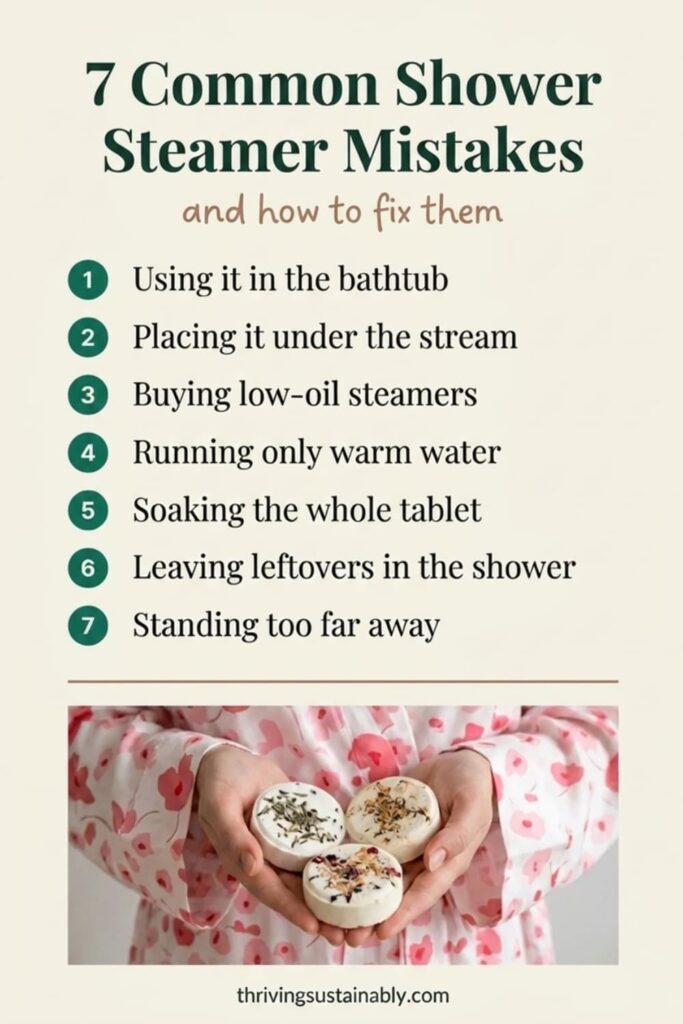
The most common shower steamer mistake is placing the tablet under the direct stream, which uses it up in under 2 minutes. Move it to a back corner, run hot water first, and store leftovers dry to get the most from each one.
- Using it in the bathtub. Fix: keep steamers for the shower floor, where steam concentrates the scent.
- Placing it under the stream. Fix: move it to a back corner so splashes, not a full blast, set off the fizz.
- Buying low-oil steamers. Fix: choose ones made with real essential oils, since cheap tablets smell faint and fade fast.
- Running only warm water. Fix: start hot to build steam, then adjust the temperature once the room is misty.
- Soaking the whole tablet at once. Fix: use a light splash to activate it slowly instead of drowning it.
- Leaving the leftover half in the wet shower. Fix: dry it off and store it airtight for next time.
- Standing too far away. Fix: close the door to trap the steam and breathe near where the scent rises.
Save This Shower Steamer Guide 📌
Can You Use a Shower Steamer in a Bath?
You can technically drop a shower steamer in a bath, but it is a waste. A shower steamer is concentrated for steam, so in a full tub the scent spreads thin and fades fast. Use a bath bomb for the tub and save steamers for the shower.
Shower steamers and bath bombs are built for different jobs. A bath bomb is made to disperse across gallons of water and soften your soak. A steamer packs its oils tight so a small splash creates a strong cloud of scent. Put a steamer in the tub and you lose that punch, which is why the shower floor is where it shines.
DIY: Can You Make Your Own Shower Steamers?
Yes, you can make shower steamers at home with baking soda, citric acid, a little water, and your choice of essential oils. Homemade steamers let you control the scent strength and skip synthetic fragrance.
Making your own is easier than it sounds, and it costs a fraction of store-bought tablets. You mix the dry base, add oils, press the paste into a mold, and let the tablets dry overnight. Homemade also means you know exactly what is in them, which matters if you are avoiding synthetic fragrance.
Don’t Miss: DIY Shower Steamers for Aromatherapy Support Want to make your own? Get the full recipe, scent blends, and step-by-step molds in our DIY guide. Read more →FAQs About Shower Steamers
Eucalyptus and menthol steamers can help you feel clearer because warm, scented steam soothes the sinuses. The Cleveland Clinic notes that the heat and moisture of a hot shower help open clogged nasal passages. They ease symptoms and comfort, but they are not a cure for a cold.
Usually it is too dry or has absorbed moisture and fizzed out early. Give it a light splash of water to activate the baking soda and citric acid reaction. If it still does nothing, it likely sat in a humid bathroom and lost its fizz before use.
Use caution. The National Association for Holistic Aromatherapy advises avoiding strong oils like eucalyptus and peppermint around young children, and using only well-diluted, approved oils during pregnancy. Keep steamers out of reach, ventilate the room, and check with your doctor if you are pregnant or using them near a child.
Most do not, since the base rinses away with water. Brightly colored steamers can occasionally leave a light residue on grout or a textured floor, so rinse the area after use and choose dye-free tablets if you are worried.
You can use one daily if you like the scent. Keep showers to about 5 to 10 minutes with warm water, as the American Academy of Dermatology suggests, to protect your skin. If a scent ever feels irritating, cut back and give the room more air.
Final Thoughts About Shower Steamers
Using a shower steamer is simple once you get the placement right: hot water, a back corner off the stream, a splash to start, and slow breathing. Match the scent to your mood and one small tablet turns an everyday shower into a spa moment.
The best part is how little it asks of you. No extra time, no bathtub, no special setup, just a tablet in the corner and a few deep breaths. Start with a eucalyptus steamer on a stuffy morning or lavender before bed, and adjust the placement until the scent lasts as long as you want.
A steamer is one small ritual. If you want more that fit the same 5 to 15 minute window, our list of 120 self-care ideas is sorted by mood and by how much time you actually have.
📚 References
- American Academy of Dermatology. (n.d.). Dermatologists’ top tips for relieving dry skin. https://www.aad.org/public/everyday-care/skin-care-basics/dry/dermatologists-tips-relieve-dry-skin
- Cleveland Clinic. (n.d.). 7 home remedies for sinus pressure. https://health.clevelandclinic.org/home-remedies-for-sinus-pressure
- National Association for Holistic Aromatherapy. (n.d.). Safety information. https://naha.org/explore-aromatherapy/safety/