Key Takeaways
- These pet-hair cleaning hacks remove embedded fur from furniture, floors, and laundry with minimal effort.
- Targeting high-hair zones first makes cleaning faster and more effective than whole-house deep cleans.
- Small daily habits reduce pet hair buildup and keep homes looking cleaner with less effort.
If you have pets, you already know the deal. No matter how often you clean, pet hair keeps coming back. It sticks to couches, works its way into rugs, and somehow ends up on clean clothes.
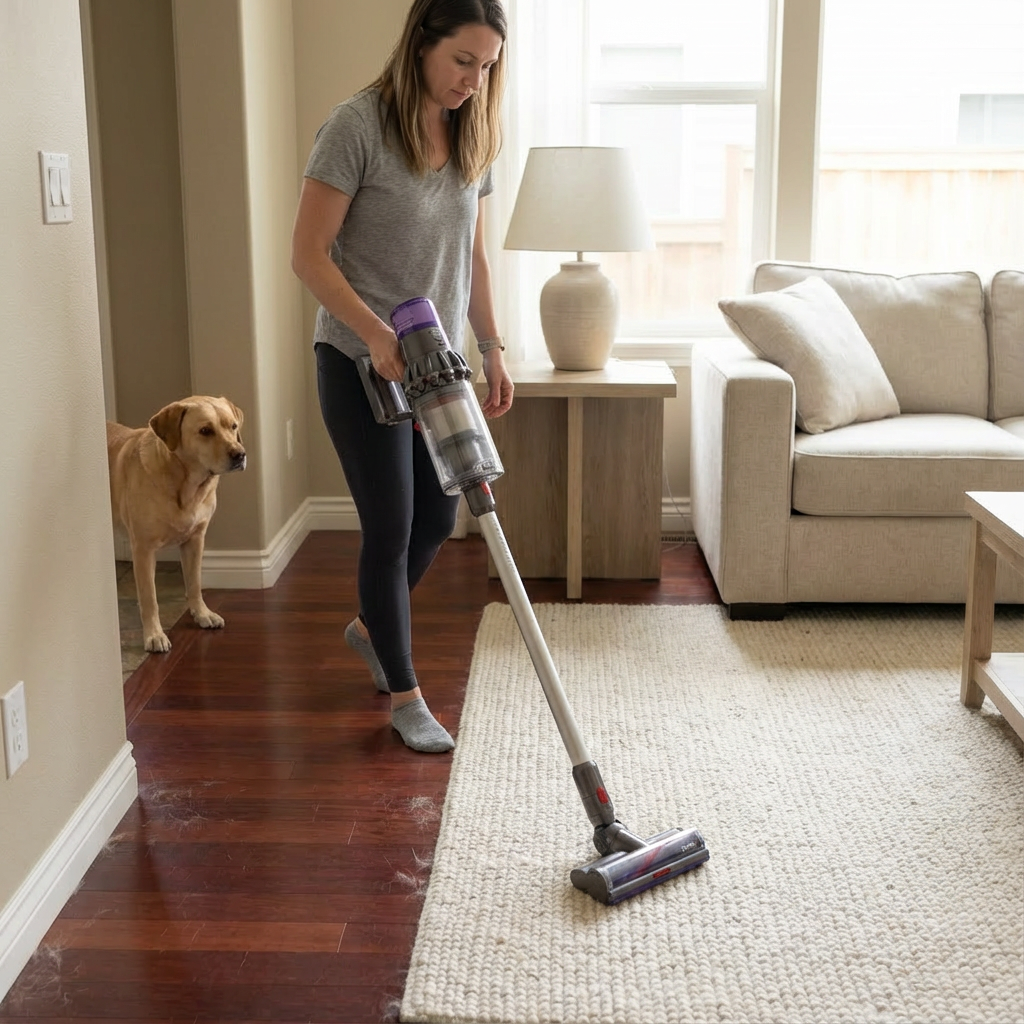
I have a yellow Lab, and before getting her, everyone warned me that Labs shed. I remember thinking, how bad can a little hair be? Then I watched blonde fur collect across my dark cherry wood floors every single day. It became a constant battle to keep things looking clean.
That’s why this list exists. These pet-hair cleaning hacks are built around small habits that fit into everyday routines. They’re meant to help you stay ahead of shedding instead of constantly feeling behind.
How to Use These Hacks
You don’t need to use every hack on this list to see results. Pet hair builds up differently depending on the type of pet you have, how much they shed, and where they spend most of their time.
Start by paying attention to where hair shows up first, not where it ends up last. For example, if your dog naps in the same spot every afternoon, that area will need more frequent attention than the rest of the room. Choosing hacks based on problem areas saves time and makes cleaning feel more manageable.
Many of these cleaning hacks take under a minute and work best when done consistently. A quick daily reset or a targeted fix often prevents pet hair from spreading and becoming harder to remove later. The goal is progress, not perfection.
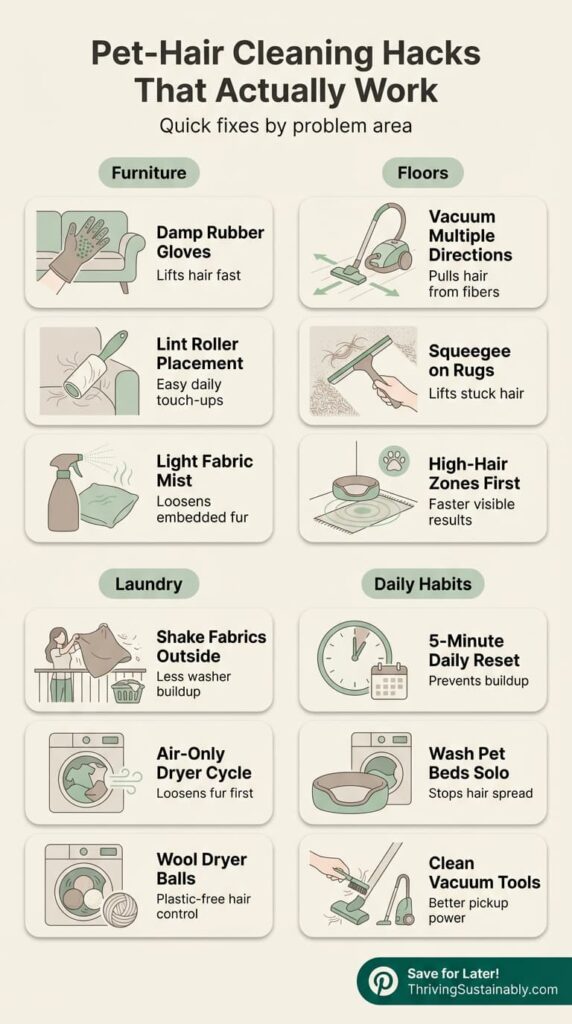
13 Pet-Hair Cleaning Hacks That Actually Work
Pet hair sticks around because it behaves differently from regular dust or dirt. It clings, embeds, and travels easily from one surface to another. That’s why surface-level cleaning often doesn’t feel like enough.
The hacks below focus on simple techniques that loosen, lift, and contain pet hair before it spreads. You don’t need special equipment or extra time. Each one targets a specific problem area and can be used on its own or layered into your routine.
1. Use Damp Rubber (Latex) Cleaning Gloves on Upholstery
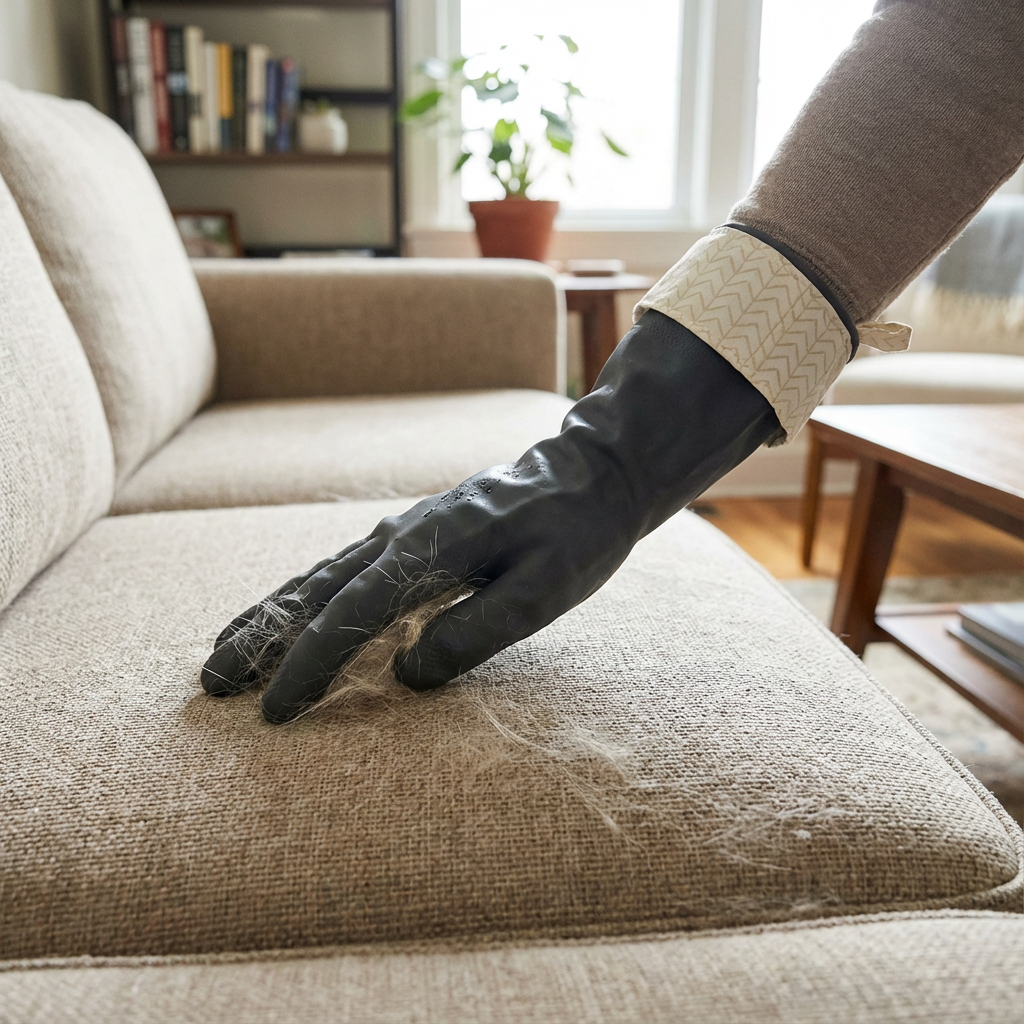
This is one of the simplest pet-hair cleaning hacks, and it works surprisingly well because of friction. Natural rubber, including latex, naturally grips pet hair, pulling it off the fabric rather than pushing it deeper into the fabric.
To use this hack, put on a pair of latex cleaning gloves and lightly dampen them with water. You don’t want them dripping wet. Run your hands over the fabric using short, sweeping motions. As you move, pet hair will gather into clumps that are easy to pick up and toss.
This works exceptionally well on upholstered furniture where vacuum attachments struggle, like couch cushions, chair backs, ottomans, and even car seats. It’s also ideal for quick touch-ups when you notice hair building up, but don’t want to pull out the vacuum.
For best results, work in one direction at a time and rinse the gloves as hair builds up. This hack is fast, reusable, and well-suited for daily maintenance during heavy shedding.
2. Lightly Mist Fabric Before Vacuuming
Pet hair often clings to fabric due to static and friction, making it harder for vacuums to lift. Adding a small amount of moisture helps release that grip, so hair comes up more easily.
Before vacuuming, lightly mist the surface with plain water. A fine spray is enough, or you can quickly wipe the area with a damp cloth. The fabric should feel barely damp, not wet.
This step helps the vacuum pull up more hair in fewer passes, reducing time and effort. It’s a simple adjustment that can noticeably improve results during heavy shedding periods.
3. Squeegee Pet Hair Off Carpets and Rugs
A standard rubber squeegee can pull up pet hair left behind by vacuums. The rubber edge creates resistance against carpet fibers, lifting hair that has settled in and become tangled below the surface.
To use this hack, drag the squeegee slowly across the rug using steady pressure. You’ll see hair gather into long, visible lines that are easy to collect by hand or with a dustpan. Working in short sections keeps the process manageable and prevents hair from spreading back out.
This method is best suited for low-pile carpets, runners, and flat-woven rugs. It’s a helpful step to add before vacuuming, especially in areas where pets spend a lot of time resting or walking.
4. Keep a Lint Roller Where Hair Collects
Lint rollers work best when they’re easy to grab. If they’re tucked away in a closet, they rarely get used, even when hair is everywhere.
Place lint rollers in areas where pet hair collects most often, like next to the couch, near the entryway, or on a bedside table. When hair is visible and the tool is within reach, quick cleanups happen naturally rather than being put off.
This small placement change makes a big difference by turning pet-hair cleanup into a habit rather than a task. A few quick passes throughout the day prevent buildup and reduce how much hair spreads to other areas.
5. Wash Pet Beds Separately and More Often
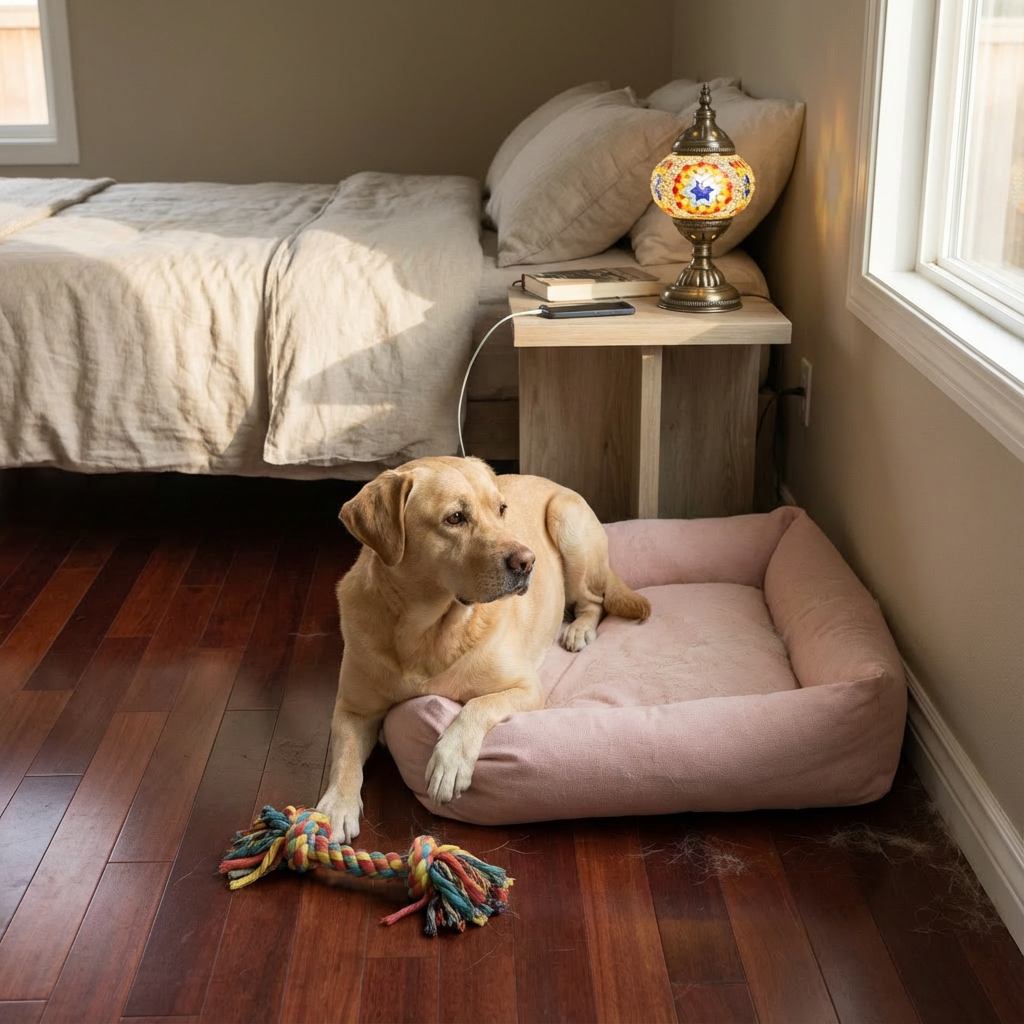
Pet beds collect more hair than almost anything else in the house. When they aren’t cleaned regularly, that hair transfers back onto floors, furniture, and even clean laundry.
Washing pet beds on their own keeps hair from spreading to other items in the washer. Before tossing them in, take a moment to shake them outside or vacuum off loose fur. This simple step reduces buildup inside your machine and helps the wash cycle work more efficiently.
Cleaning pet beds more frequently doesn’t have to mean more work. Adding them to a regular routine, like once a week or every other week, helps control both hair and odors before they become noticeable.
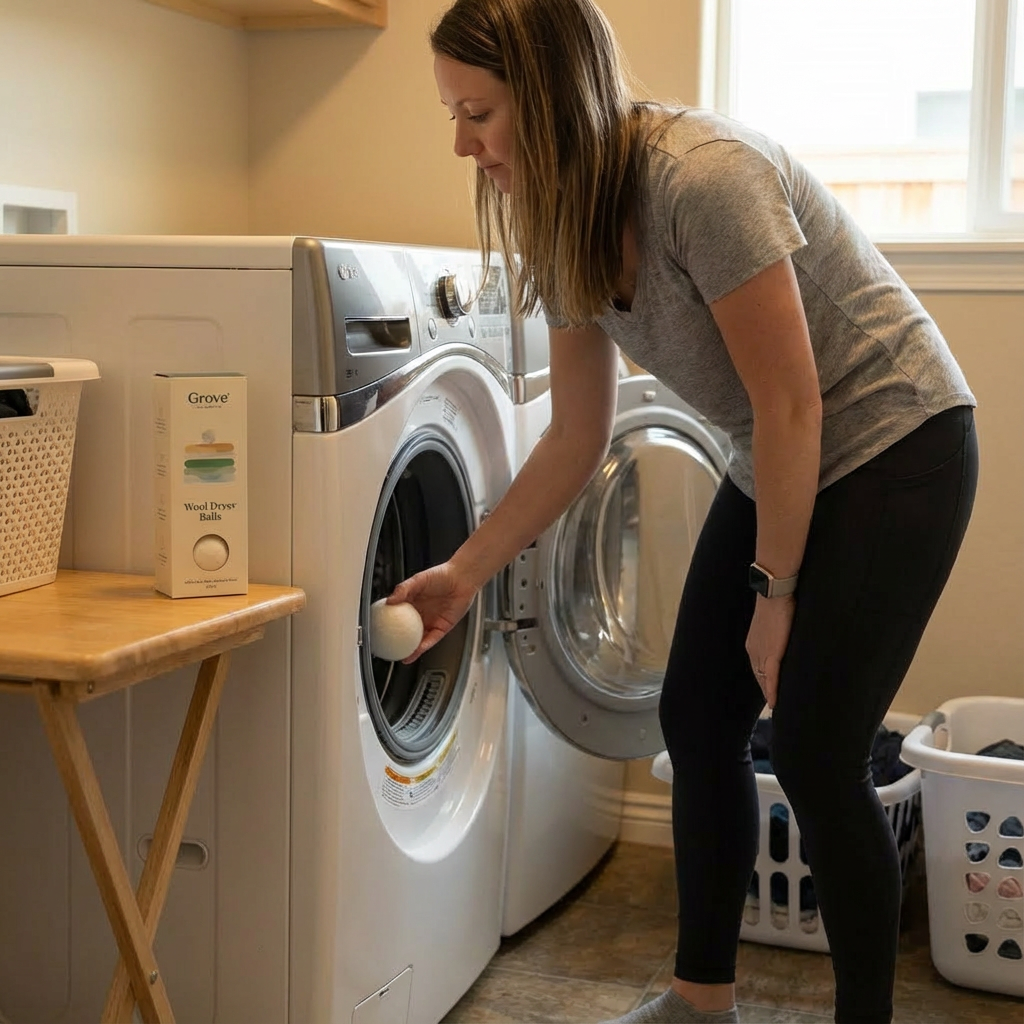
6. Add a Hair-Catching Tool to Laundry Loads
Pet hair often clings to fabric during washing, which is why it reappears after clothes are dry. Hair-catching tools help loosen hair so it rinses away instead of sticking.
These tools move through the wash with your clothes, creating friction that pulls hair off fabric surfaces. They don’t replace good laundry habits, but they can reduce hair transfer between loads.
This hack is most useful for items that attract hair easily, like blankets, sweatshirts, and pet bedding. Used consistently, it helps reduce lint and fur buildup over time.
Don’t Miss: Dryer Balls vs Dryer Sheets For laundry loads with pet hair, a plastic-free hair-catching option like wool dryer balls can help reduce cling and loose fur. This guide breaks down how dryer balls compare to dryer sheets for cost, performance, and long-term use. Read more →7. Vacuum in Multiple Directions
Pet hair doesn’t sit neatly on the surface. It twists and settles into carpet fibers based on foot traffic, furniture placement, and where pets move or rest most often. When you vacuum in just one direction, a lot of that hair stays behind.
Instead of straight back-and-forth lines, vacuum the same area from several angles. Slow passes forward, backward, and slightly diagonal help lift hair that’s wrapped around the fibers rather than lying flat.
This approach takes a little longer in the moment, but it reduces how often you need to re-clean the same spots. Over time, it also helps carpets look better by keeping more hair from becoming embedded.
8. Choose Plastic-Free Options for Hard Floors First
Pet hair on hard floors is easiest to manage when you use tools that grab fur rather than push it around. Plastic-free options like natural-fiber brooms, cotton dust mops, or vacuuming with a hard-floor setting can remove hair without shedding synthetic fibers.
If you already own a microfiber mop or cloth, you don’t need to replace it immediately. Using it dry and only when required helps limit fiber shedding, and washing it less often reduces microplastic release. The key is using what you have thoughtfully, while choosing lower-plastic options moving forward.
A quick daily pass, no matter the tool, keeps hair from collecting along baseboards and corners, making deeper cleaning easier later.
9. Clean Vacuum Filters and Brushes Regularly
When a vacuum stops picking up pet hair, the issue is often the tool itself, not the surface you’re cleaning. Hair wraps around brush rolls and clogs filters, reducing suction and spreading hair rather than removing it.
Taking a few minutes to clear hair from brushes and rinse or replace filters keeps your vacuum working the way it should. This doesn’t need to happen constantly, but making it a regular habit prevents buildup that makes cleaning feel harder than it needs to be.
Well-maintained tools clean faster, pick up more hair in fewer passes, and help you avoid re-passing the same area.
10. Focus on High-Hair Zones First
Pet hair doesn’t spread evenly throughout a home. It builds up most in the places your pet spends the most time, then gets tracked elsewhere.
Instead of cleaning every room the same way, start with these high-hair zones. Giving extra attention to just a few spots often makes the entire space feel cleaner, even if you don’t have time to tackle everything.
This approach saves time and energy by putting effort where it actually makes a visible difference, which is especially helpful on busy days.
11. Shake Fabrics Outside Before Washing
Pet hair that goes straight into the washer doesn’t always rinse away. Instead, it can cling to the drum, filters, and future loads.
Before washing items like blankets, throws, pet bedding, or slipcovers, take a moment to shake them outside. This removes a surprising amount of loose hair and keeps it from circulating through your machine.
Making this a quick habit helps laundry come out cleaner and reduces the amount of pet hair transferred from one load to the next.
12. Use a Dryer Air Cycle Before Washing
When fabrics are heavily covered in pet hair, running them through a short air-only dryer cycle can help loosen fur before washing. The tumbling action knocks hair free, so it collects in the lint trap instead of ending up in the washer.
Use this step for items like blankets, throws, and pet bedding that are safe to tumble dry. Keep the cycle short and make sure it’s air-only, with no heat. Always clean the lint trap right after to prevent buildup.
This extra step takes a few minutes but can significantly reduce the amount of hair that reaches your washing machine, making the wash cycle more effective.
13. Do a 5-Minute Daily Hair Reset
Pet hair is much easier to manage when it’s addressed a little at a time. A short daily reset prevents buildup and keeps hair from spreading throughout the house.
This doesn’t need to be complicated. Pick one or two tools and focus only on the areas that collect hair fastest. A quick pass each day keeps things under control and reduces the need for longer cleaning sessions later.
A small, consistent effort creates better results than waiting until hair is everywhere.
Less Plastic Alternatives
If you’re replacing or adding cleaning tools anyway, it can help to choose options that rely on less plastic. Many standard pet-hair tools are made entirely from plastic or synthetic fibers, even when simpler materials work just as well.
The products below focus on reusable, lower-plastic alternatives that support the cleaning hacks in this guide. You don’t need to swap everything at once. Even choosing one or two of these options can reduce waste while still making pet hair easier to manage at home. Each option is linked for easy reference if you want to explore them further.
Recommended Products
Below are products that are made with less plastic.

Tips to Help Reduce Shedding
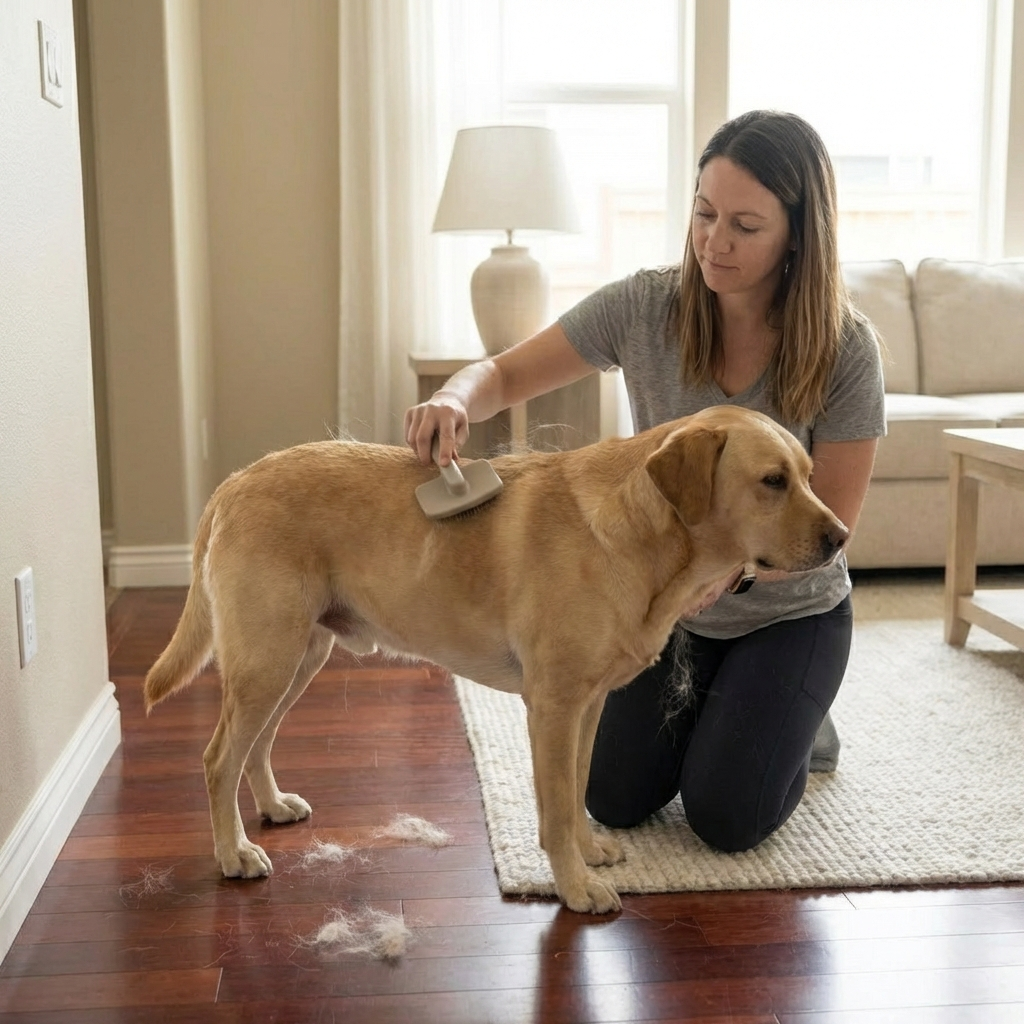
While no pet is truly shed-free, a few simple habits can noticeably cut down how much hair ends up around your home.
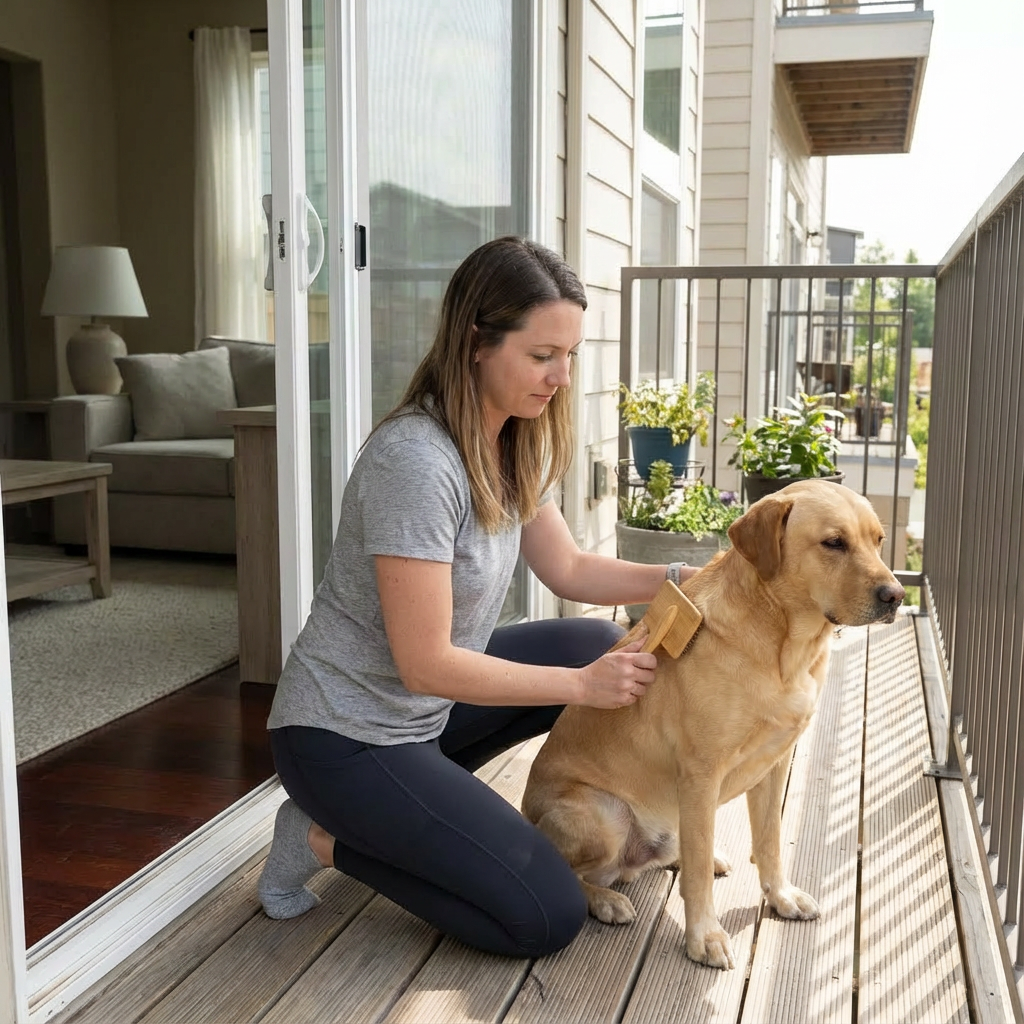
🪮 Brush regularly, even for short-haired breeds.
Dogs like Labs still benefit from frequent brushing. A few sessions each week help remove loose hair before it settles on floors and furniture.
🌿 Brush outdoors when possible
Brushing outside keeps fur from circulating indoors and saves cleanup time. Even a quick brush before coming back inside can help.
🫧 Keep a consistent bathing routine
Bathing too often can dry out skin, while waiting too long can lead to more loose hair. A steady, gentle routine supports healthier skin and coat balance.
🥣 Support coat health through nutrition
Healthy skin sheds less excessively. A balanced diet and plenty of water help maintain coat health over time.
🍂 Adjust during seasonal shedding
Many dogs shed more at certain times of year. Increasing brushing during these periods helps keep hair manageable instead of overwhelming.
Reducing shedding at the source won’t eliminate pet hair, but it makes every cleaning hack in this guide more effective.
FAQs on Pet-Hair Cleaning Hacks
Pet hair has tiny barbs and a static charge that cause it to cling to fabric, carpet fibers, and even clean laundry. Once it embeds, regular sweeping or quick vacuum passes often aren’t enough to lift it out.
Light daily maintenance works better than occasional deep cleaning. A quick five-minute reset each day helps prevent hair from building up and spreading throughout the house.
What’s the fastest way to re
Yes. Wool dryer balls, natural-fiber brooms, and regular vacuum maintenance can help manage pet hair without relying heavily on synthetic tools. If you already own microfiber products, using them sparingly and drying them thoroughly can reduce shedding.
Final Thoughts on Pet-Hair Cleaning Hacks
Pet hair is part of life with animals you love. It doesn’t mean your home is dirty or that you’re falling behind. Shedding is constant, especially with breeds like Labs, and that’s normal.
The goal isn’t to remove every single hair. It’s to stay ahead of buildup with small habits that fit into your routine. Even using two or three of these cleaning hacks consistently can make a noticeable difference.
Save this list, come back to it when needed, and focus on progress over perfection.