
Key Takeaways
- Earth Day activities for kids help children understand environmental responsibility through hands-on learning.
- Simple activities like planting flowers, nature scavenger hunts, recycled crafts, and science experiments make Earth Day fun and educational.
- Celebrating Earth Day with kids encourages lifelong habits that support sustainability, conservation, and care for the planet.
Earth Day is celebrated every year on April 22, and it’s a great time to help kids learn about the planet we all share. It’s a day focused on protecting nature, reducing waste, and taking better care of our environment.
For kids, the best way to learn these ideas is through hands-on activities. Planting flowers, going on nature walks, creating crafts from recycled materials, or doing simple science projects can all make Earth Day fun and memorable.
When children take part in these activities, they start to see how their actions affect the world around them. Small things like picking up litter, saving water, or planting a seed help kids understand that everyone can help care for the Earth.
The goal isn’t to make Earth Day complicated. A few simple activities can spark curiosity about nature and help kids build habits that last.
In this guide, you’ll find a variety of Earth Day activities for kids, including outdoor adventures, crafts, school projects, and easy ways families can celebrate together.
Why Earth Day Matters for Kids
Earth Day is an inspiring chance for kids to discover the wonders of their world. Rather than simply learning about environmental challenges, they actively engage with the magic of how nature thrives.
When kids plant a seed, pick up litter, or sort recycling, the lesson becomes real. They begin to understand that people’s choices can help or harm the planet.
These early experiences matter. Kids who spend time outside and learn about nature often grow up feeling more responsible for protecting it. Even simple activities can help them see how ecosystems work and why animals, plants, water, and soil all depend on each other.
In addition to understanding, Earth Day invites kids to feel a joyful connection to nature. Whether it’s a walk in the park, watching backyard birds, or exploring a garden, these moments ignite curiosity and a sense of wonder about the world around them.
Most importantly, through these experiences, children learn that small actions add up. Turning off lights, planting flowers for pollinators, and reducing waste are simple habits that make a difference.
And when learning happens through fun activities, those lessons stick. That’s why Earth Day activities for kids are such a powerful way to build lifelong environmental awareness.
Don’t Miss: Plastic-Free Living — The Truth About Plastic Many Earth Day activities help kids understand how waste affects the planet. This guide explains why plastic pollution is a growing problem and why reducing plastic is important for wildlife, oceans, and future generations. Read more →9 Fun Earth Day Activities for Kids
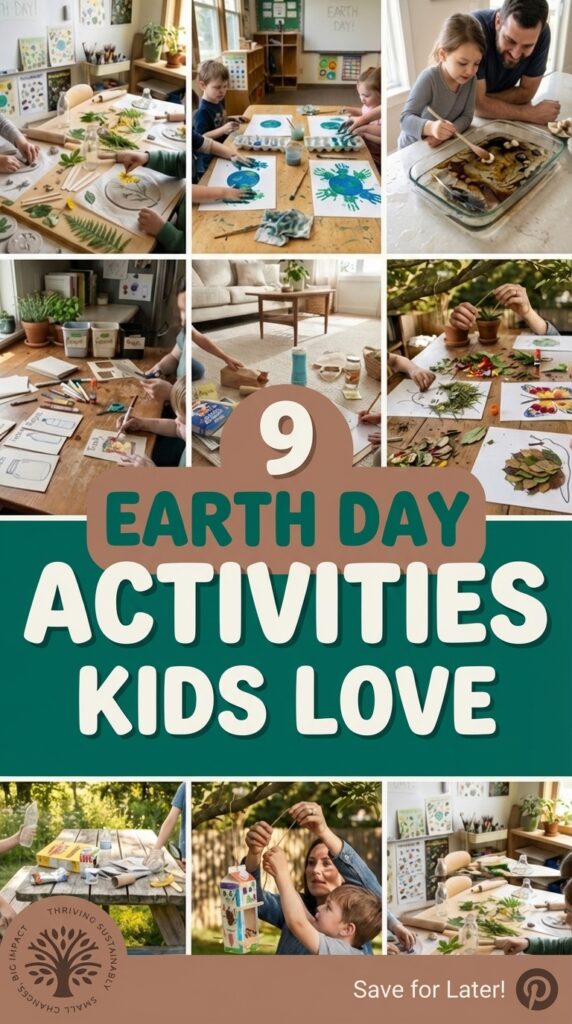
The best way for kids to learn about the planet is to get involved and have fun. Earth Day activities give children a chance to explore nature, create things with their hands, and see how small actions can help the environment.
Some activities get kids outside observing plants, animals, and ecosystems. Others use crafts, simple science experiments, or everyday habits to show how people can care for the Earth.
You don’t need to plan an entire day of events. Even one or two activities can spark curiosity and help kids start thinking about how their choices affect the world around them.
Below you’ll find a collection of Earth Day activities for kids that are easy to try at home, in classrooms, or with community groups.
1. Printable Recycling Sorting Cards
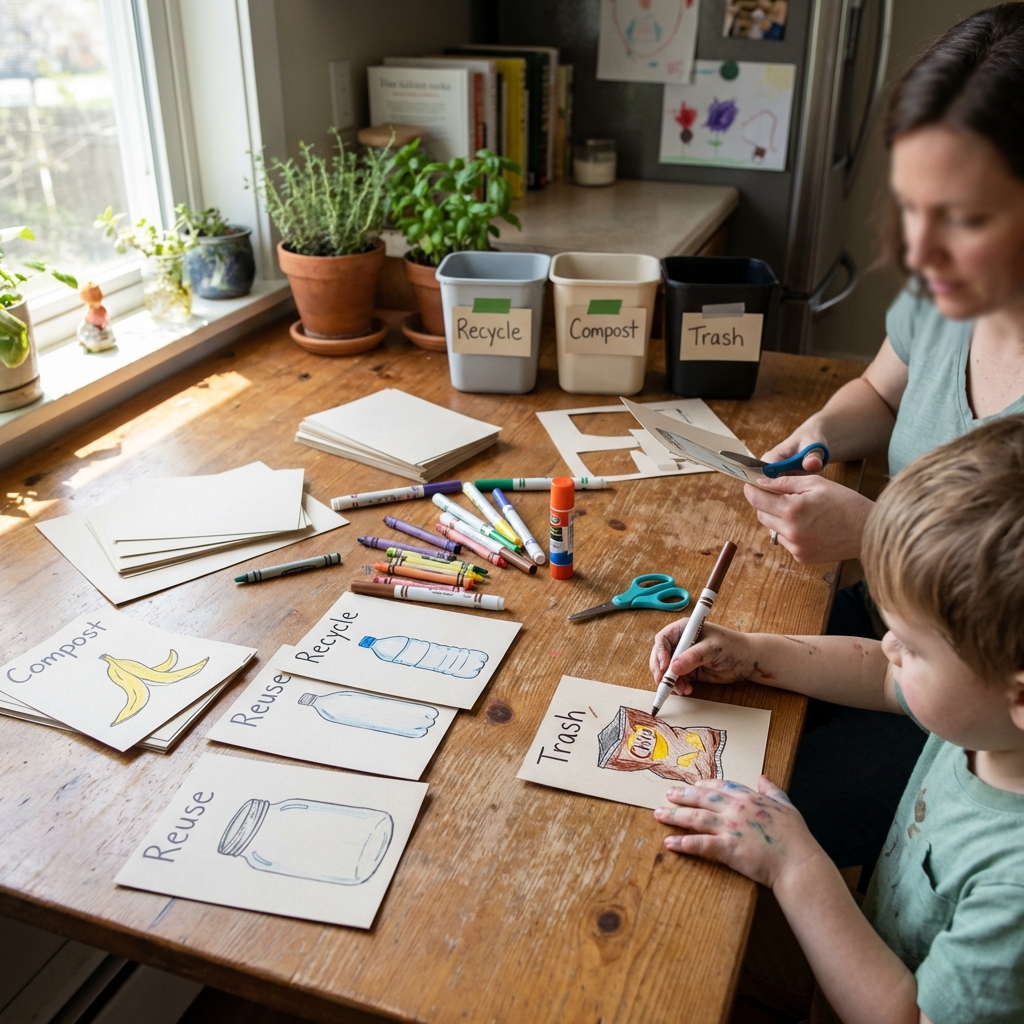
This activity teaches kids how to sort items into recycling, compost, or trash with simple picture cards. It is designed for classrooms, homeschools, or quick home lessons.
What Kids Will Learn
Children sort specific household items into recycling, compost, or trash, focusing on proper disposal methods. This builds early awareness of how everyday decisions impact waste.
Materials Needed
- Printable picture cards of common items (plastic bottle, banana peel, newspaper, aluminum can, cardboard box, yogurt cup, chip bag, apple core, etc.)
- Three containers, such as baskets, boxes, bowls, or bins
- Labels for each container:
- Recycle
- Compost
- Trash
- Scissors
- Optional: laminator or clear tape to make cards reusable.
How to Set It Up
- Print and cut out the item cards.
- Label three containers: Recycle, Compost, and Trash.
- Place containers within easy reach of kids.
- Shuffle and stack the cards.
Use 8–10 cards for young kids and 15–20 for older kids.
How to Do the Activity
- Have children pick a card from the pile.
- Look at the picture and name the item together.
- Ask where the item should go.
- Have children place the card in the correct container.
- Briefly discuss why each item belongs in its container.
For example, if the card shows a banana peel, you might say:
“Banana peels break down naturally and turn into soil, so they belong in compost.”
Questions to Ask Kids
These prompts help reinforce the lesson while they sort.
- “What is this item made from?”
- “Can it be turned into something new?”
- “Does it break down in nature?”
Ways to Make It More Fun
- Turn it into a timer challenge and see how quickly kids can sort correctly.
- Let kids draw their own cards to add to the pile.
- After sorting, ask them to find a real item around the house that matches one of the cards.
✨ Tip
Make the Cards Reusable
If you laminate the cards or cover them with clear packing tape, you can reuse this activity for Earth Day lessons, science units, or rainy-day learning at home.
2. Make Pollinator Wildflower Seed Balls
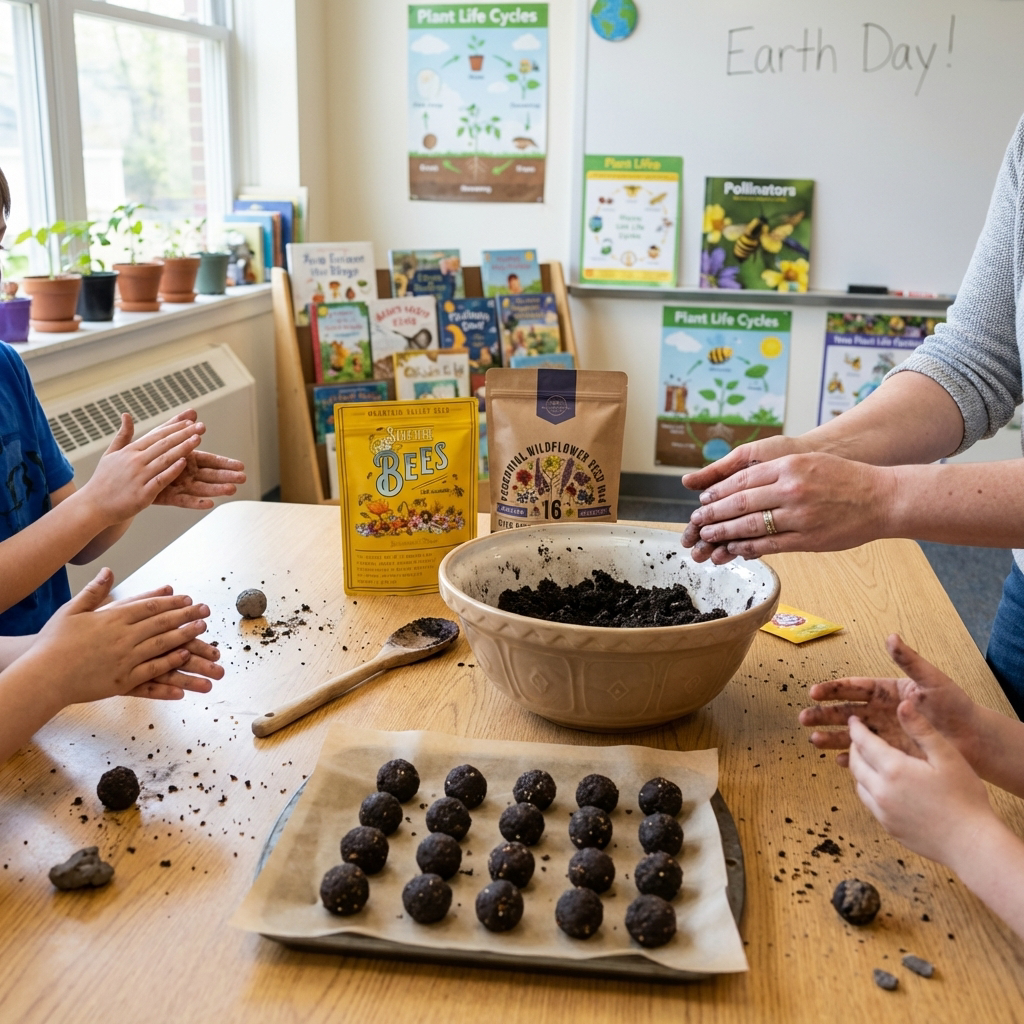
Seed balls are small balls made from soil, clay, and wildflower seeds that can be tossed into gardens or bare soil where flowers can grow. When rain breaks down the ball, the seeds begin to germinate and grow.
This activity helps kids learn how plants grow while also supporting bees, butterflies, and other important pollinators.
What Kids Will Learn
Kids will understand each stage of seed development into a plant, recognize the role of flowers in supporting pollinators such as bees and butterflies, and learn how planting flowers can positively impact local ecosystems.
Materials Needed
- wildflower seeds for pollinators
- potting soil or compost
- natural clay powder or air-dry clay
- water
- mixing bowl
- spoon or small scoop
- A tray or a baking sheet for drying
Pollinator-friendly seeds that work well include:
- black-eyed Susans
- coneflowers
- poppies
- milkweed
- cosmos
How to Set It Up
Add potting soil, clay, and seeds to a mixing bowl.
A common ratio is:
- 1 cup wildflower seeds
- 5 cups soil or compost
- 2–3 cups of clay
Slowly pour in water, mixing until the mix is sticky and holds shape. Check that the mixture feels slightly damp, like cookie dough.
How to Do the Activity
- Scoop a small amount of the mixture into your hands and roll it into balls about the size of a golf ball or a large marble.
- Set each seed ball onto a tray or baking sheet to dry.
- Allow them to dry for 24–48 hours to harden slightly.
- After drying, place the seed balls in the areas where you want flowers to grow.
- Wait for the rain to dissolve the seed balls so the seeds can sprout.
Questions to Ask Kids
- Why do bees and butterflies need flowers?
- What do you think will happen when rain hits the seed ball?
- Where do you think these flowers would grow best?
3. Oil Spill Cleanup Science Experiment
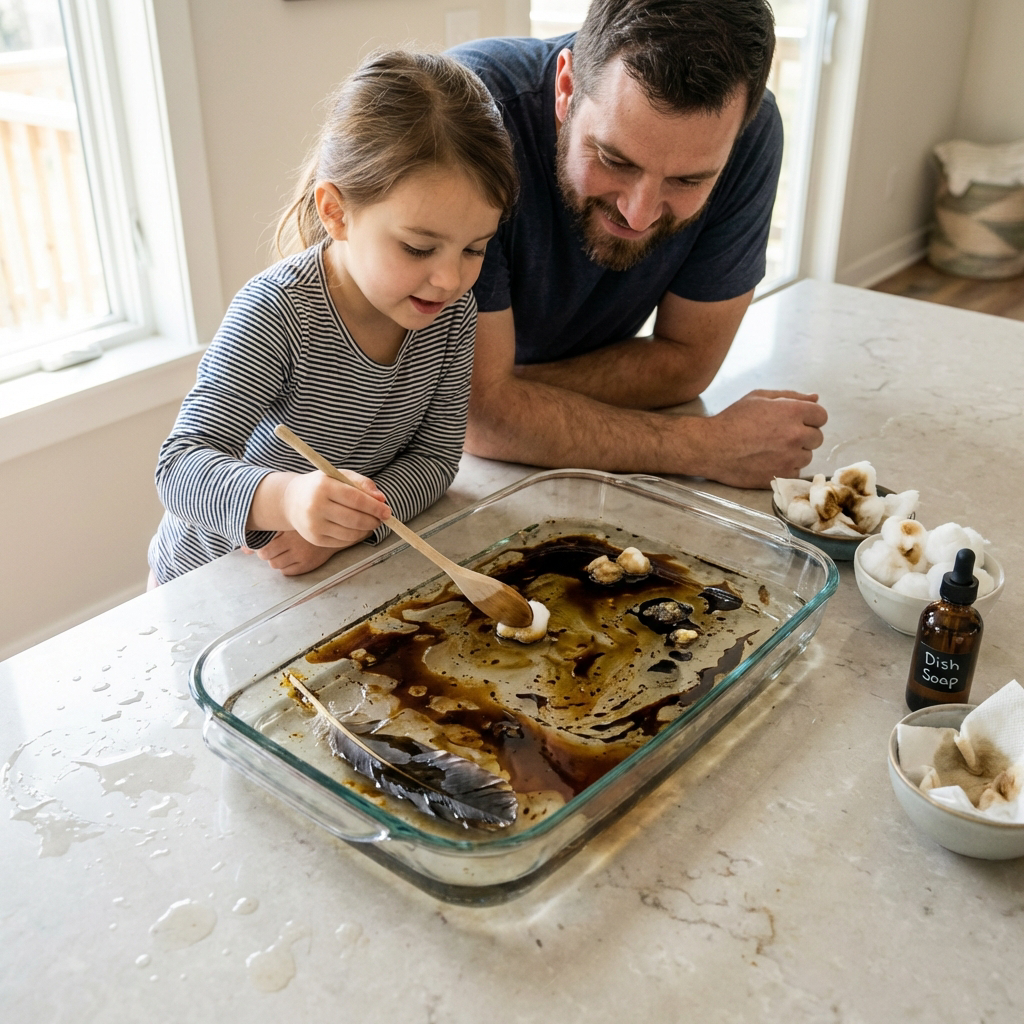
This hands-on activity helps kids see what happens when oil spills into water and why it is so difficult to clean up. By testing different materials, children can explore how oil behaves and what methods work best to remove it.
It’s a simple experiment that creates a strong visual and helps kids understand real environmental challenges in a meaningful way.
What Kids Will Learn
Kids learn that oil and water do not mix and that oil spreads quickly across the surface of water. They also discover that removing oil is not easy and that some methods work better than others.
Materials Needed
- large bowl or shallow tray filled with water
- cooking oil
- spoon or dropper
- feather or cotton ball (to represent animals)
- dish soap
- paper towels
- cotton balls or pads
- small sponge
- Instead of a plastic spoon, use a wooden one or a craft stick
How to Set It Up
Fill a bowl or tray with water and place it on a protected surface. Before adding anything, ask kids what they think will happen when oil is poured into the water.
Slowly add a small amount of cooking oil and let kids watch how it spreads across the surface. Place a feather or a cotton ball in the water so they can see how the oil clings to it.
How to Do the Activity
- Give kids different materials and let them try to remove the oil from the water.
- They can use paper towels, cotton balls, or a sponge to absorb the oil, or try using a spoon to skim it from the surface.
- Encourage them to test different methods and see which one works best.
- After they have tried a few methods, add a small drop of dish soap to the water.
- Watch what happens as the oil breaks into smaller droplets and spreads out rather than staying in a single layer.
- Explain that the soap does not remove the oil but alters its behavior, which can still impact the environment.
🎥Check out this YouTube video from the Georgia Aquarium.
Questions to Ask Kids
- What happened when the oil touched the water?
- Which material removed the most oil?
- How do you think an oil spill would affect animals, plants, and the water in the environment?
Extend the Activity
After the experiment, talk about how people try to clean up real oil spills and why it can be so challenging.
You can also have kids think about ways to prevent oil spills and protect the environment.
4. The “Garbology” Trash Investigation
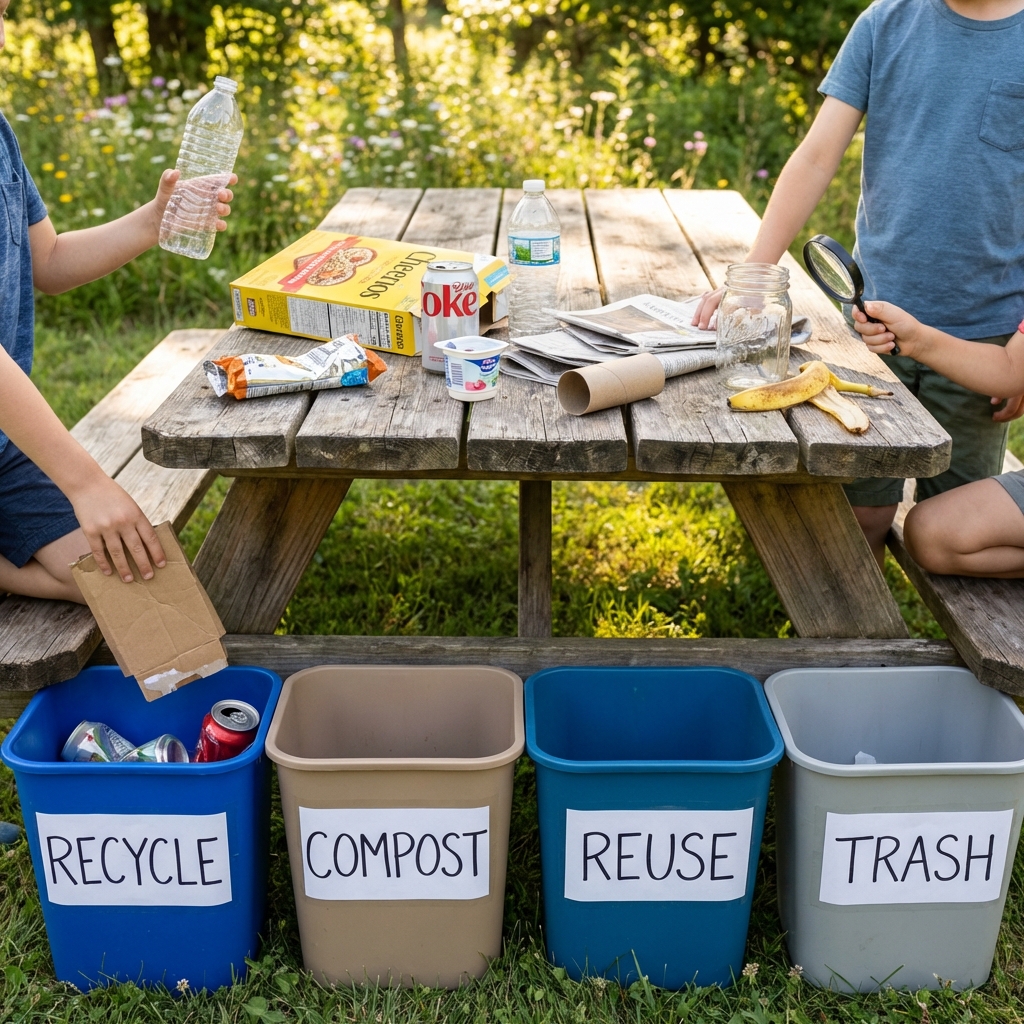
This activity turns kids into waste scientists who investigate what people throw away and determine what could have been recycled, reused, or composted. It is based on the idea of garbology, the study of trash and waste patterns often used in environmental education.
Kids enjoy this activity because it feels more like solving a mystery than sorting.
What Kids Will Learn
Children begin to see that many items placed in the trash could actually be recycled, reused, or composted. They also learn to recognize common materials such as paper, plastic, and metal, and start thinking about what happens to these items after they are thrown away.
Materials Needed
- A small bag of clean household trash and recyclables
- Gloves (optional but helpful for kids)
- A table or a large tray
- Four containers labeled Recycle, Compost, Reuse, and Trash
- Magnifying glass
Examples of items you can include:
- cereal box
- aluminum can
- newspaper
- yogurt container
- banana peel
- cardboard tube
- snack wrapper
- glass jar
How to Set It Up
Place all items in a bag or box. Tell kids, “This bag represents one day’s household trash.” Spread the items on a table or large tray so each item is clearly visible. Tell kids, “Your task is to investigate the trash and decide what should happen to each item.”
How to Do the Activity
Have kids pick up one item at a time. Tell them to examine it and say what it’s made of. Let kids choose which bin the item goes in, then have them place it there.
For example:
- cereal box → Recycle
- banana peel → Compost
- glass jar → Reuse
- snack wrapper → Trash
After each choice, discuss why the item belongs in its selected category.
Questions to Ask Kids
These questions help guide the discussion and encourage kids to think more deeply about waste.
- What material is this made from?
- Could this item be used again before throwing it away?
- Why do you think this item cannot be recycled?
5. Earth Day Recycling Scavenger Hunt
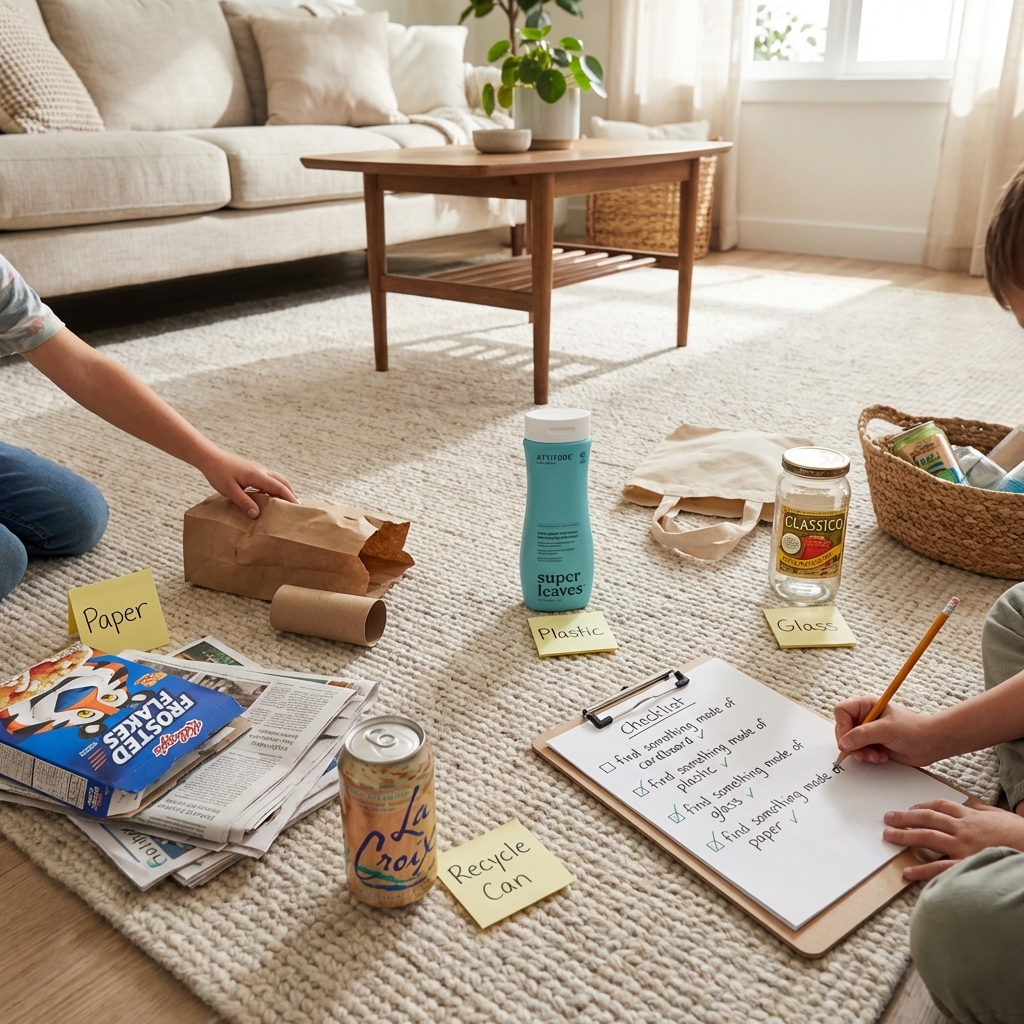
A recycling scavenger hunt gets kids moving while helping them discover recyclable materials in their homes, classrooms, or neighborhoods. Instead of sitting at a table, children search for real-world examples of paper, plastic, metal, and other materials that can be recycled or reused.
This activity works well indoors, outside in the yard, or even during a short neighborhood walk.
What Kids Will Learn
Kids begin to notice how many everyday objects around them are made from recyclable materials. They also learn that waste is everywhere, but small choices can help reduce what ends up in landfills.
Materials Needed
- A scavenger hunt checklist
- Pencil or crayon
- Small basket or tote bag for collected items
- Optional gloves if kids are collecting items outdoors
Example scavenger hunt items:
- An item made from cardboard
- An item made from plastic
- An item made from metal
- An item made from glass
- An item made from paper
- Something that could be reused instead of tossed out
- Something from the kitchen that can be composted
- Something that cannot be recycled
How to Set It Up
Create a simple checklist of items kids should search for. Give each child or small group a copy of the list along with a basket or bag. Explain that their goal is to find objects that match each item on the checklist.
How to Do the Activity
Let kids explore the house, yard, or classroom as they look for items that match the categories on their list. When they find something, they can either place it in their basket or write it down.
Once the scavenger hunt is complete, gather everyone together and review the items found. Discuss where each item should go: recycling bin, compost pile, reuse pile, or trash.
Questions to Ask Kids
These prompts help kids think about the bigger picture of waste and recycling.
- Where did you find the most recyclable items?
- Which material did you find the most of?
- Did you find anything surprising that could be recycled?
6. Clay Imprints with Plants and Flowers
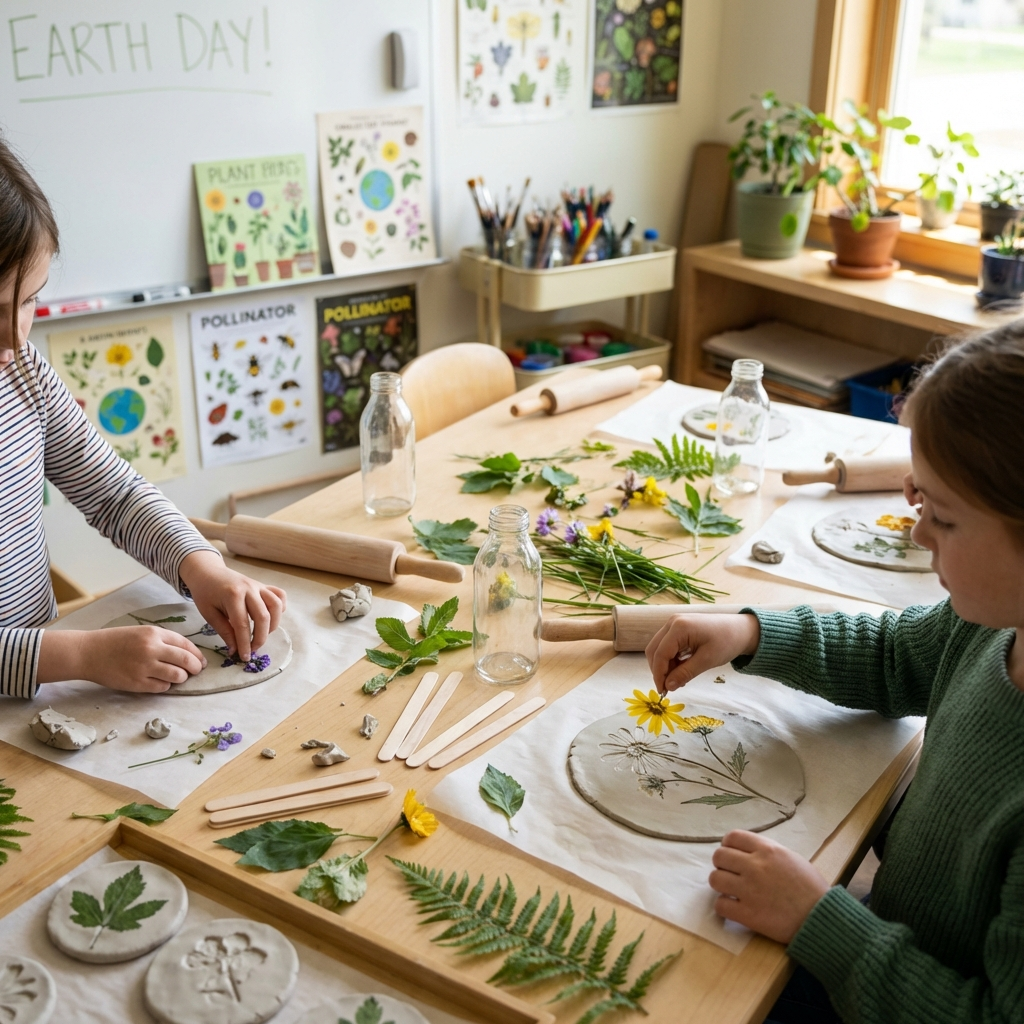
Clay imprint art is a simple Earth Day activity that helps kids explore the shapes and textures found in nature. By pressing leaves, flowers, and small plants into clay, children can create beautiful nature prints while learning to observe details in the natural world.
This activity combines art and science and works well for classrooms, homeschool lessons, or a creative project at home.
What Kids Will Learn
Kids practice close observation of plants and flowers while learning that nature has unique patterns and textures. They also begin to appreciate plants and pollinators that play an important role in the environment.
Materials Needed
- air-dry clay or natural clay
- rolling pin or smooth bottle
- fresh leaves, flowers, or small plant stems
- small sticks or sculpting tools
- wax paper or parchment paper
- tray or flat surface for drying
Good plants and flowers for imprinting include:
- fern leaves
- small wildflowers
- clover
- grass stems
- mint leaves
- flower petals
How to Set It Up
Cover the table with wax or parchment paper. Give each child clay and show how to roll it flat, about a quarter inch thick. Offer leaves and flowers for kids to choose from.
How to Do the Activity
- Gently press a leaf or flower into the flattened clay.
- Use fingers or a rolling pin to press firmly, capturing the plant’s details.
- Slowly lift the plant to reveal its imprint in the clay.
- Add details or write names using sticks or sculpting tools, if desired.
- Place finished pieces on a tray and let them air dry as recommended for the clay.
Questions to Ask Kids
- What shapes do you notice in the leaf or flower?
- Can you see the tiny lines in the leaf veins?
- Why do you think plants have these patterns?
7. Build a Bird Feeder from Recycled Materials
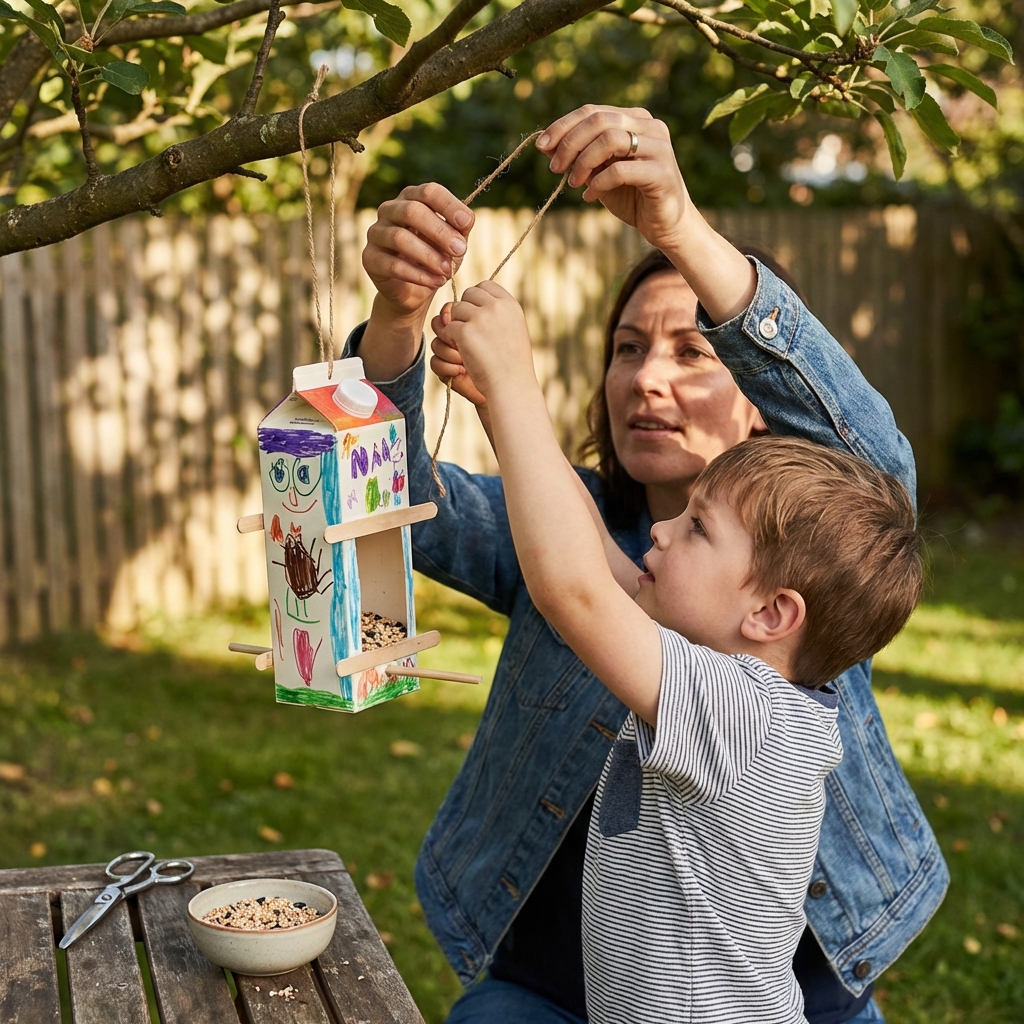
Building a bird feeder from recycled materials is a fun Earth Day activity that helps kids reuse everyday items while supporting local wildlife. Instead of throwing containers away, children can turn them into something useful that provides food for birds in the yard or garden.
This activity encourages creativity and helps kids learn how small actions can help birds and other animals in their environment.
What Kids Will Learn
Kids learn that many household items can be reused instead of thrown away. They also discover how birds rely on food sources and habitats.
Materials Needed
- empty cardboard milk carton or juice carton
- wooden craft sticks or small twigs for perches
- string or twine
- scissors (adult help may be needed)
- bird seed
- optional markers or paint for decorating
How to Set It Up
- Clean and dry the carton before starting.
- Using scissors, cut one or two feeding openings on the side of the carton. Leave about 2 to 3 inches at the bottom so the birdseed stays inside the feeder.
- Make a small hole below the opening and slide a craft stick or twig through the carton to create a perch where birds can land.
- Punch two small holes near the top of the carton and thread a piece of string or twine through the holes so the feeder can hang from a tree branch.
How to Do the Activity
Let kids decorate the outside of the carton using markers or paint. Fill the feeder with bird seed through the top opening. Hang the feeder from a tree branch, fence, or garden hook where birds can easily find it.
Over the next few days, encourage kids to watch for birds visiting the feeder.
Questions to Ask Kids
- What birds do you think might visit the feeder?
- Why do birds need safe places where they can eat?
- Where do birds usually find food in nature?
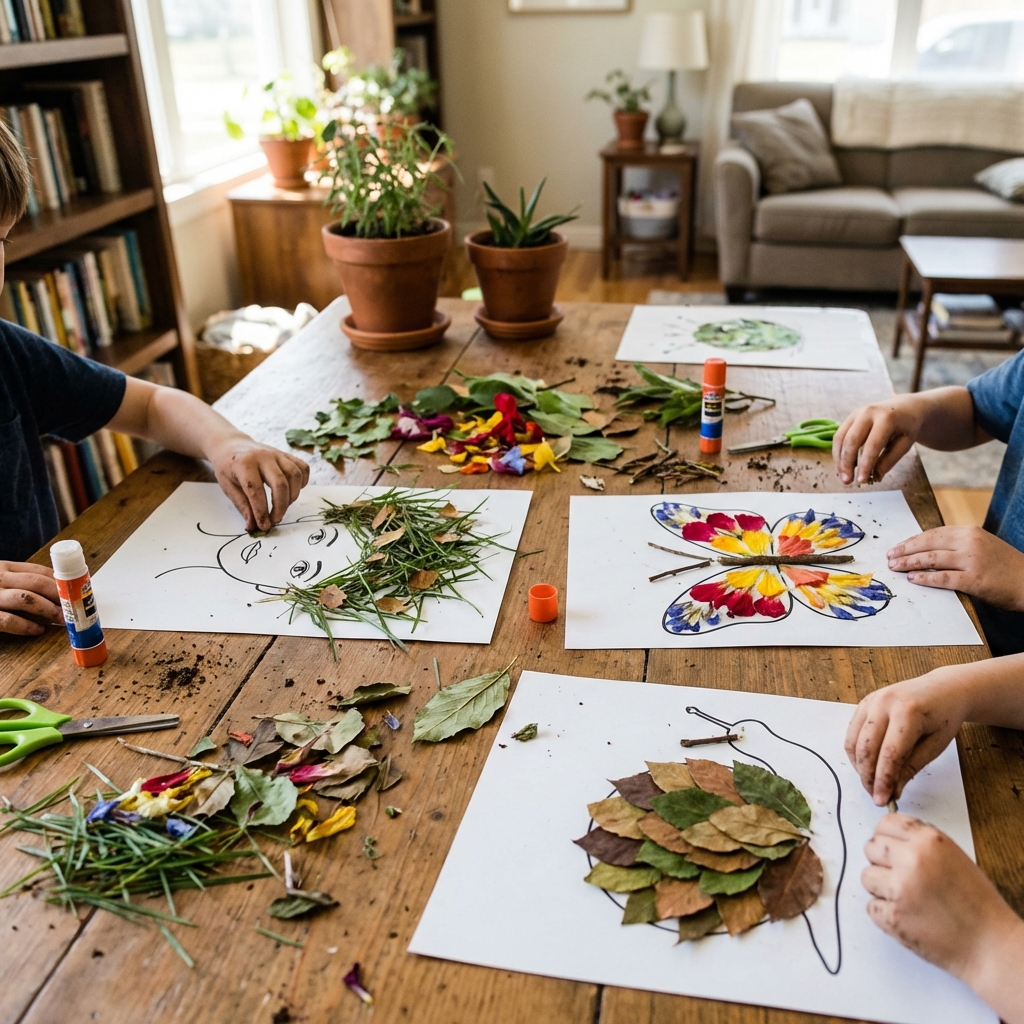
8. Nature Art Collage with Leaves and Flowers
This creative Earth Day activity lets kids use real leaves, flowers, and natural materials to decorate preprinted templates. Children can turn simple outlines into colorful artwork by arranging nature items to create hair, wings, shells, and more.
It’s a great way to combine art with outdoor exploration while helping kids see nature as a source of creativity.
What Kids Will Learn
Kids practice creativity and fine motor skills while learning to observe shapes, colors, and textures in nature. They also begin to see how natural materials can be used instead of synthetic craft supplies.
Materials Needed
- printed templates (faces, butterflies, snails, animals, etc.)
- fresh leaves, flowers, grass, small twigs
- glue (school glue works best)
- scissors (optional for trimming)
- paper plates or trays for organizing materials
How to Set It Up
Print out a few templates, such as a face outline, a butterfly, or a snail. Place leaves, flowers, and natural materials in small piles or trays so kids can easily choose what they want to use.
Encourage kids to think about how each material could be used, for example, leaves as hair or petals as wings.
How to Do the Activity
Give each child a template and let them choose their materials. Kids glue leaves, flowers, and other natural items onto the paper to fill in the design.
Examples:
- leaves and grass for hair on a face
- flower petals for butterfly wings
- small leaves or shells for a snail shell
- twigs for porcupine quills
Let kids be creative and design their artwork however they like.
Questions to Ask Kids
- Which materials did you choose and why?
- What shapes do you see in the leaves or flowers?
- How can you use different textures to make your design stand out?
Extend the Activity
Take kids outside to collect their own materials before starting the project. This adds an extra layer of exploration and makes the activity feel more connected to nature.
9. Handprint Earth Day Art
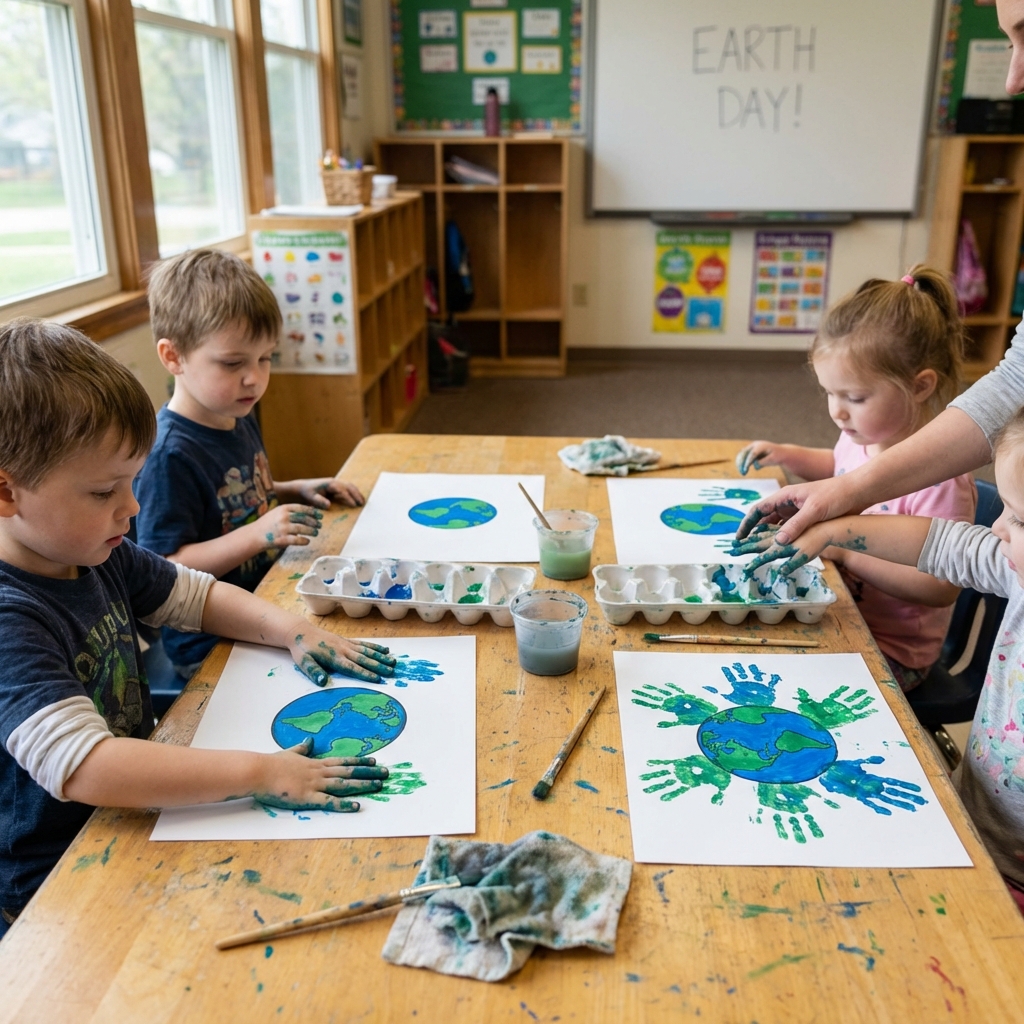
This simple, meaningful activity lets kids use their handprints to create Earth Day artwork that shows their care for the planet. It’s easy to set up and works well for both younger kids and elementary school-aged kids.
Instead of just painting, kids use their hands as part of the design to show how even small actions can make a difference.
What Kids Will Learn
Kids explore creativity while connecting the idea that their own actions can help protect the Earth. It also builds fine motor skills and introduces the idea of using art to express environmental care.
Materials Needed
- white cardstock or thick paper
- washable paint (green, blue, and optional brown or white)
- paintbrushes or sponges
- A compostable plate or a tray for paint
- wipes or a bowl of water for cleanup
How to Set It Up
Pour small amounts of paint onto a plate or tray.
Choose a simple design ahead of time, such as:
- a globe made from handprints
- hands surrounding the Earth
- handprints forming trees or leaves
Place paper on a flat surface where kids have room to work.
How to Do the Activity
Have kids dip their hands into paint and press them onto the paper to create their design.
Examples:
- Use blue and green handprints to form the shape of the Earth.
- Create a circle first, then layer handprints around it.
- Use smaller handprints to make patterns like leaves or grass.
Let the paint dry, then kids can add extra details with a brush, such as:
- clouds
- simple continents
- hearts or small designs
✨ Tips
Making Earth Day Meaningful
Earth Day activities are a great start, but kids should learn that caring for the planet is part of everyday life.
Connect activities to daily habits. If kids plant flowers, discuss how plants help pollinators. Collecting litter leads to conversations about reducing waste and keeping nature clean.
Let kids ask questions and explore. Children often spot details that adults miss, like insects in the soil or birds in the trees. Encouraging curiosity builds natural interest in the environment.
Continue learning after Earth Day by starting small family habits that help the planet. Recycling, saving water, planting a garden, or reducing plastic can become routines kids grow up with.
Keep it positive. When kids feel their actions matter, they are more likely to continue those habits as they grow.
Resources and Further Reading
If your kids are curious after trying some Earth Day activities, books, and educational resources can help them learn even more about the planet. Stories, pictures, and simple explanations make big environmental ideas easier for children to understand.
Here are a few kid-friendly resources that explore nature, conservation, and caring for the Earth.
Earth Day Books for Kids
- The Earth Book by Todd Parr
A colorful and simple book that introduces young children to easy ways they can help the planet. - The Lorax by Dr. Seuss
A classic story that helps kids understand why protecting trees and natural resources matters. - What a Waste: Trash, Recycling, and Protecting Our Planet by Jess French
A great choice for older kids who want to learn more about pollution, recycling, and how waste affects the environment. - We Are Water Protectors by Carole Lindstrom
A beautifully illustrated story inspired by Indigenous environmental activism and the importance of protecting water.
Helpful Environmental Education Websites
- EarthDay.org – The official Earth Day organization with activities, lesson plans, and environmental education resources for families and schools.
- EPA Environmental Education – Educational activities and materials from the U.S. Environmental Protection Agency.
- National Geographic Kids – Articles, games, and videos about wildlife, ecosystems, and conservation.
- NASA Climate Kids – Kid-friendly explanations of climate science with interactive games and activities.
Community and Family Earth Day Activities
Earth Day is more meaningful when families, schools, and communities celebrate together and work to care for the environment.
Group activities show children that everyone shares responsibility for the planet. Participating in clean-ups, community gardening, or local projects helps them see how small actions make a big difference when done together.
To help families and communities take action, consider these ideas for getting involved together.
Join a Neighborhood or Park Clean-Up
Gather your family and friends and join a neighborhood or park clean-up this Earth Day. Walking through a local park, trail, or beach and picking up litter is a simple way for kids to see how waste affects the environment.
These activities also help children understand how plastic pollution and trash impact wildlife and natural spaces. Even collecting a small bag of litter can make a visible difference in the places kids play and explore.
Families who want to participate in greater efforts can join EarthDay.org’s Great Global Cleanup, a worldwide campaign that encourages communities to organize cleanups and protect local environments.
During clean‑up events, volunteers can also use the Clean Swell® app to record the types of trash they collect. All data submitted through the app is uploaded to Ocean Conservancy’s global ocean trash database, helping researchers track pollution trends and understand where plastic waste originates.
Start or Visit a Community Garden
Community gardens let kids see how food grows and how healthy soil supports plants. Many welcome volunteers to help with planting, watering, or harvesting.
If your area doesn’t have a community garden, get your neighbors together and start a small shared garden or compost bin today. Take the initiative and grow something green in your area.
Host a School or Neighborhood Book Swap
Organize an Earth Day book swap at school or in your neighborhood and invite kids to bring books they’ve already read. Instead of buying new ones, children can trade stories with friends and discover something new to read.
You can turn it into a small themed event by decorating tables with plants, recycled paper signs, or Earth Day posters. Kids could also share their favorite nature- or environment-themed books and discuss what they learned from them.
An activity like this helps children see how reusing and sharing items reduces waste and keeps materials in use longer. It’s also a fun way to build community while encouraging kids to read and learn more about the planet.
Organize a Backyard Campout
A backyard campout celebrates nature close to home. Families set up tents, watch stars, listen for animals, and discuss ecosystems.
Plan a backyard campout with your family this Earth Day. Experience nature together and deepen your appreciation for the world around you—make it a yearly tradition.
Invite a Guest Speaker or Local Expert
Schools and community groups can invite a local environmental expert, park ranger, or wildlife volunteer to speak with kids about conservation.
Learning from someone who works directly with nature can spark curiosity and help children understand real environmental challenges, such as plastic pollution and habitat protection.
FAQs on Earth Day Activities for Kids
Schools bring Earth Day to life with hands-on projects and outdoor adventures! Teachers might lead a fun campus cleanup, start a buzzing school garden, read inspiring environmental stories, or help students craft colorful posters about protecting the planet. These activities make learning about ecosystems, recycling, and conservation exciting and real.
One way to keep kids interested in nature is by making outdoor time a regular habit. Activities such as nature walks, gardening, or bird and insect observation can help children stay curious about the environment. Even short outdoor experiences can build a stronger connection to the natural world.
Simple conversation starters can help kids think about the environment. For example, you might ask which animals live in your area, how trash affects the environment, or what small things your family could do to reduce waste. Questions like these encourage kids to think about how their choices affect the planet.
Final Thoughts About Earth Day Activities for Kids
Earth Day calls us to notice and appreciate our environment. For kids, even simple activities can help them understand why taking care of the planet matters.
Planting flowers, picking up litter, making something from recycled materials, or spending time outside can all help children see how their actions connect to the environment.
Instead of planning a large event, choose a few Earth Day activities to take action and start conversations about how we can help the Earth.
Use these small moments to take real steps that shape kids’ attitudes toward the planet. The most lasting lessons often come from hands-on experiences outdoors.