Key Takeaways
- Low-energy self care works best when it reduces pressure instead of adding tasks.
- Gentle self care inspo focuses on comfort, rest, and nervous-system support.
- Choosing one to three small actions is often more effective than doing more.
Some days aren’t for fixing, optimizing, or pushing through. They’re for slowing down and choosing care that actually meets you where you are.
A lot of us are running on empty more often than we realize. Research from the American Psychological Association shows that ongoing stress usually manifests as fatigue, low motivation, and difficulty concentrating. When your energy dips like this, it’s often a signal to soften your approach, not double down.
If you’re looking for self-care inspo on days when your capacity is low, this guide is for you. These ideas are simple, gentle, and low-effort. Nothing here is about productivity or self-improvement. It’s about comfort, support, and permitting yourself to do less when that’s what your body and mind need.
Think of this as a short list of options you can come back to whenever a low-energy day shows up.
What Actually Helps on Low-Energy Days
On low-energy days, the goal isn’t to feel amazing. It’s to feel a little more supported.
When energy is limited, anything that adds pressure can make things feel heavier. Long to-do lists, rigid routines, or trying to “make the most” of the day often drain what little capacity you have left. Gentle self-care works because it removes friction instead of adding more.
Simple, low-effort choices help lower mental load and reduce decision fatigue. They also support your nervous system by signaling safety and rest rather than urgency. Even small acts, like sitting down to drink water or turning down the lights, can help your body settle.
This kind of self-care inspo isn’t about doing more. It’s about choosing care that feels possible, supportive, and kind when your energy is low.
15 Low-Energy Day Self-Care Ideas
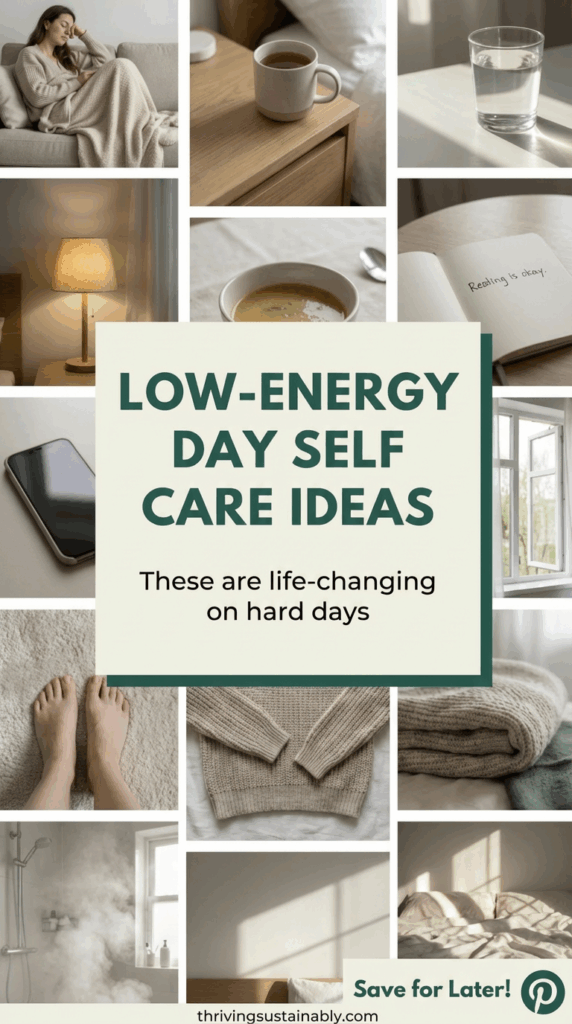
These ideas are meant to support you on days when your energy is limited and your capacity is low. Nothing here is a rule or a checklist. Think of this as a small menu you can come back to when you need something gentle.
You don’t need to do all of these, or even many of them. One small act of care is enough. On low-energy days, the most helpful self-care is the kind that feels doable, comforting, and kind to your nervous system.
🚿 Body-Based Care
When energy is low, your body often needs grounding more than stimulation. These ideas focus on basic physical support without requiring momentum, motivation, or effort.
- Drink a full glass of water while sitting down. No multitasking. Just hydrate and pause for a moment.
- Lie down flat for five minutes with no phone. Let your body fully rest without input or distraction.
- Take a warm shower and change into fresh clothes. Warmth and clean clothes can gently reset how you feel without draining energy.
- Do one slow stretch in bed or on the floor. One stretch is enough, and hold it. There’s no need to turn it into a routine.
- Step outside briefly for fresh air or daylight. Even a minute or two can help your body feel more regulated.
These are the kinds of small, supportive actions that work well as self-care inspo on low-energy days because they help you feel steadier without asking more than you can give.
🛋️ Sensory Comfort
On low-energy days, sensory input can either calm your system or overwhelm it. Gentle self-care often starts with making your surroundings feel softer, quieter, and easier to be in.
- Turn on a soft lamp instead of overhead lighting. Lower light can help reduce stimulation and ease tension.
- Play a familiar, comforting show or playlist. Choose something predictable and soothing, not something that requires focus.
- Wrap up in a blanket and simply rest. Warmth and pressure can feel grounding when energy is low.
- Use a calming scent you already own. A familiar smell can signal comfort without adding another task.
🧠 Mental & Emotional Support
Low-energy days can come with a lot of self-talk. This kind of care focuses on easing pressure and offering yourself a little more kindness.
- Cancel or postpone one non-essential task: Giving yourself permission to delay something can immediately lower stress.
- Write down one thing you did today, no matter how small: Acknowledging any effort helps counter the feeling of doing “nothing.”
- Replace self-criticism with permission to rest: Rest is a supportive response to low capacity, not something to earn.
- Choose a bare-minimum version of the day: Focus only on what truly needs to happen and release the rest.
🥣 Gentle Nourishment
Eat something simple and easy to digest. Soft, familiar foods can help stabilize energy without stressing your system.
Examples that often feel gentle include soup, toast, oatmeal, rice, yogurt, eggs, or a banana. These foods are easy on digestion and don’t require much prep or effort, which matters on low-energy days.
Make a warm drink and sit while you drink it. Tea, warm water, or broth can be soothing and grounding. Taking a few minutes to sit and sip can help your body shift into a calmer state instead of staying in “rush” mode.
The goal here isn’t a perfect meal. It’s giving your body steady, supportive nourishment that feels doable.
How to Choose Self-Care on Low-Energy Days

On low-energy days, more isn’t better. Having too many options can feel just as draining as having none.
Try choosing one to three ideas that feel supportive in the moment and letting that be enough. You don’t need to turn the day around or feel noticeably better for it to count. The goal is to reduce strain and offer your system a little care.
If something starts to feel like effort or obligation, it’s okay to skip it. The most helpful self-care on low-energy days is whatever feels easiest to say yes to.
✨ Tip
Low-Energy List
Keep a short “low-energy list” saved on your phone or written on a sticky note. When a drained day hits, you won’t have to think or decide. Just pick one thing from the list and let that be enough.
What to Skip on Low-Energy Days
On days when your energy is low, some things can quietly make everything feel harder. Skipping them is a form of self-care, too.
- Overloaded to-do lists that assume full energy
- Comparing your output to other days or other people
- Pushing through exhaustion instead of responding to it
Letting these go, even temporarily, helps protect your energy and prevents low-energy days from turning into more extended periods of burnout.
Health professionals are clear that constantly pushing through exhaustion can backfire. The World Health Organization defines burnout as the result of chronic stress that hasn’t been successfully managed, and mental health experts consistently note that ignoring early signs like fatigue, detachment, and overwhelm can increase the risk of longer-term burnout.
In other words, low-energy days aren’t something to fight through. They’re often an early signal to slow down and protect your well-being before more profound exhaustion sets in.
FAQ About Self-Care Inspiration
The most helpful thing is choosing one action that feels supportive and stopping there. That might be drinking a glass of water, lying down for a few minutes, or making something warm to eat or drink. On low-energy days, simple self-care works best when it reduces pressure rather than trying to fix how you feel. One small act of care is often enough to help your system feel a little steadier.
It’s common to feel guilt or pressure when your energy is low. Many people on Reddit describe feeling worn down by the pressure to “do more,” even when rest is what they need most. Reframing rest as adaptive and valid care helps reduce this internal pressure.
Feeling tired occasionally is common, but consistent low energy could be linked to sleep quality, stress, nutritional patterns, or emotional fatigue. If fatigue persists despite rest and uncomplicated self-care, it can help to talk with a health professional.
Final Thoughts On Self-Care Inspiration
Low-energy days are part of being human, not a failure to manage your time or your life. When your capacity is low, the most supportive form of self-care is often the simplest one. Small moments of rest, comfort, and nourishment can help you feel steadier without asking you to push or perform.
You don’t need a perfect routine or a long list of habits to feel supported. One small choice that feels kind to your body or mind is enough. These self-care ideas are here for the days when doing less is precisely what you need.
Come back to this list whenever you need a reminder that caring for yourself can be gentle, flexible, and shaped around how you actually feel.
💡More Self-Care Ideas
Self-Care Routines for Better Sleep: 14 Night Rituals That Actually Work
11 Spa-Inspired Homemade Soap Recipes with Salt & Clay
📚 References
- World Health Organization. (n.d.). Self-care health interventions. https://www.who.int/news-room/fact-sheets/detail/self-care-health-interventions