
COLETTI Bozeman Stainless Steel Percolator, 9 Cup
COLETTI
Bozeman Percolator, 9 Cup
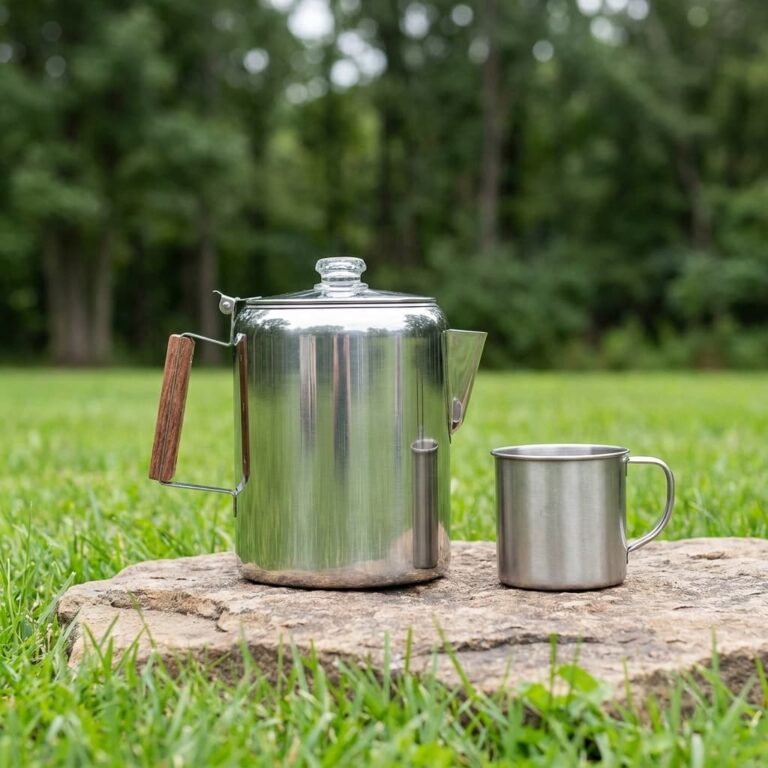
The most rugged fully plastic free brewer in this roundup. Steel, glass, and wood, disclosed down to the millimeter, from a company that says exactly where it manufactures. Works on a stove or a campfire and can be rebuilt with spare parts.
A camp style stovetop percolator in 1mm thick 18/8 stainless steel with a rosewood handle and an annealed glass sight knob. COLETTI states there is no plastic and no aluminum in any component that contacts the coffee.
How this score breaks down
Strengths
- Every part that touches coffee is 18/8 stainless steel or annealed glass
- Brand discloses steel grade, thickness, and factory city, which is rare at this price
- No electronics and no gasket to age; nothing to leach or shed
- Veteran owned company with a plain, checkable no plastic claim
Trade-offs
- Percolator brewing boils coffee over the grounds, which some coffee drinkers find harsh
- The included paper disc filters are a consumable, though optional
- Metal parts get hot; the rosewood handle is flame resistant, not flame proof
- Made in China, which the brand states openly
Scored on our durable-goods method (durables-v1, 2026-08-16). How we rank →
What's inside
Pot body, lid, filter basket, and perk tube in 1mm 304 (18/8) stainless steel. The viewing knob is annealed glass and the handle is natural rosewood. The brand states no plastic and no aluminum anywhere in the coffee path.
| Part | Material |
|---|---|
| Pot body, lid, basket, perk tube | 304 (18/8) stainless steel, 1mm |
| Viewing knob | Annealed glass |
| Handle | Natural rosewood |
| Optional filters | Paper discs, included, not required |
Free of Plastic, aluminum, PFAS, PTFE, BPA
- Packaging
- Not stated; ships with a bonus pack of paper disc filters.
- Microplastics
- None; steel, glass, and wood do not shed microplastics
Attributes
What this product is, at a glance.
Certifications
None listed. We only show independent third-party certifications we can verify with the issuing body, and this product does not currently hold any.
About COLETTI
COLETTI was founded in 2015 by Josh Gilliam, then an active duty US Army chaplain and West Point graduate, who retired as a lieutenant colonel after five deployments. The veteran owned company is based in Sutter Creek, California, where Josh and his wife Katie are raising ten children on a 40 acre homestead. It makes stainless steel percolators and camp coffee gear built around one rule: coffee should only ever touch glass and steel. The Bozeman is 18/8 stainless with a natural rosewood handle and an annealed glass top, made in Jiangmen City, China to the company's designs. The company states 10% of profits go to Christian ministry work abroad. There are no third party certifications here; the case rests on disclosed materials and plain construction.
Categories: