Plum Deluxe Loose-Leaf Tea
Plum Deluxe
Hand-Blended Loose-Leaf Tea
Loose-leaf tea in a glass jar is about as low-plastic as tea gets: no bag steeping in your cup and an inert, reusable container. It sits at 1, with the only caveats being that the organic claim is ingredient-level rather than certified, and you supply your own infuser.
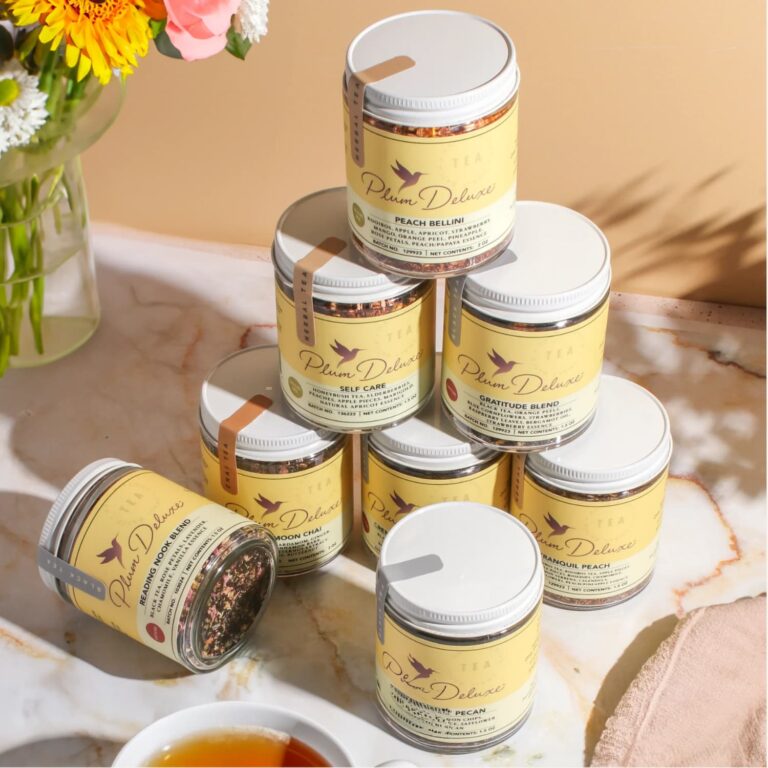
Hand-blended loose-leaf tea sold in a reusable glass jar, an inert container with no plastic. Because it is loose leaf there is no tea bag, mesh, or heat-seal, so nothing plastic steeps into your cup. The brand states nearly all ingredients carry USDA-compliant organic certifications, though the finished tea is not marketed as certified organic.
How this score breaks down
Strengths
- Loose leaf, so there is no tea bag, mesh, or heat-seal to shed into your cup
- Packaged in a reusable, inert glass jar instead of plastic
- Hand-blended in small batches in the United States
- Sold with a reusable steel tin option and unbleached paper filter bags for brewing
Scored on our consumables method (consumables-v1, 2026-08-15). How we rank →
What's inside
Whole loose-leaf tea, hand-blended, with no tea bag, mesh, string, or heat-seal. It is packaged in a reusable glass jar, an inert material that does not leach or shed.
| Part | Material |
|---|---|
| Tea format | Whole loose leaf, no bag |
| Packaging | Reusable glass jar |
| Filter (optional, sold separately) | Unbleached paper, no microplastics per brand |
Free of Tea bags, plastic mesh, plastic pouch, heat-seal
- Packaging
- A reusable glass jar, an inert and plastic-free container that can be refilled or recycled. Loose leaf means there is no individual wrapper or tea-bag material.
- Microplastics
- Nothing steeps into the cup: loose-leaf tea has no bag, mesh, or heat-seal. Brew it in a stainless or glass infuser to keep it fully plastic-free.
Attributes
What this product is, at a glance.
Certifications
None listed. We only show independent third-party certifications we can verify with the issuing body, and this product does not currently hold any.
About Plum Deluxe
Plum Deluxe is a small, Oregon-based tea company founded by Andy Hayes that hand-blends its own loose-leaf teas. It grew out of a lifestyle brand about savoring everyday moments, and Andy ties the teas to memories of his late mother, which gives the company a personal, homespun feel. It makes black, green, white, herbal, and oolong loose-leaf blends, sourcing from small artisan farms in the United States and growers around the world. The brand states that nearly all of its ingredients carry USDA-compliant organic certifications, though it does not market the finished tea as certified organic. Its tagline, crafted with passion and enjoyed with calm, describes a small-batch operation rather than a mass-market one, and the loose-leaf format means there is no tea bag to shed anything into your cup.
Categories: