
Friendship Organics Tea Sachets
Friendship Organics
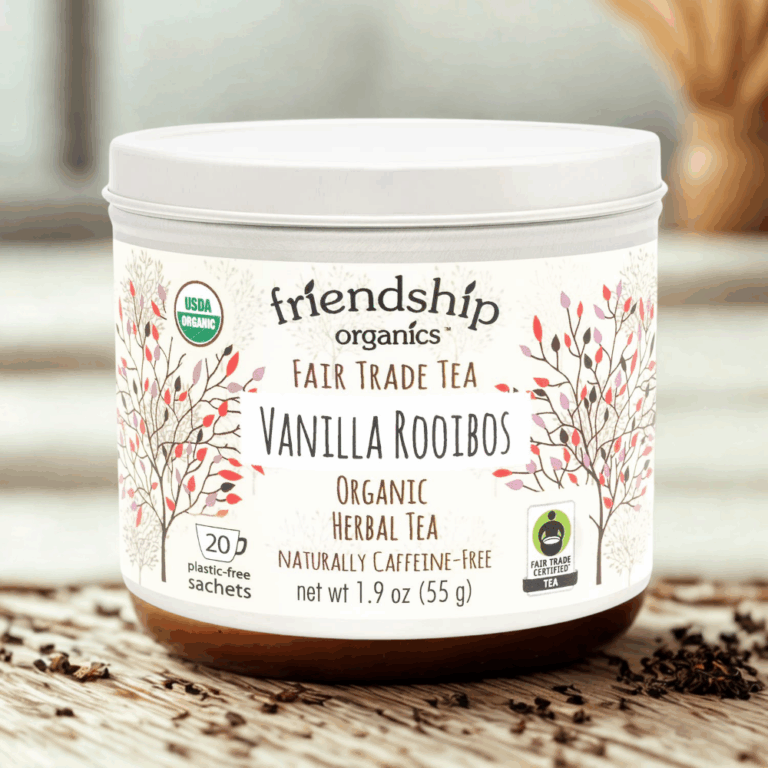
Organic Tea Sachets in a Steel Tin
One of the cleanest packaging formats in tea: abaca sachets with no strings or wrappers, a plant-based cellophane bag, and a reusable steel tin you keep. It sits at 1 rather than a flat plastic-free badge because the brand does not disclose how the sachet is sealed.
Abaca-fiber sachets the brand states are plastic-free, with no strings or tags and no individual wrappers, sealed in a plant-based cellophane bag inside a reusable, refillable steel tin. Organic certified by PRO-CERT.
How this score breaks down
Strengths
- Abaca-fiber sachets the brand states are plastic-free, with no plastic mesh in the cup
- No strings, tags, or individual plastic overwraps
- Plant-based cellophane inner bag plus a reusable, refillable steel tin
- Organic certified by PRO-CERT and sold as Fair Trade Certified blends
Trade-offs
- The exact method used to seal the sachet is not disclosed
- Certification ID numbers are not published on the brand site
- Priced above standard grocery tea
Scored on our consumables method (consumables-v1, 2026-08-15). How we rank →
What's inside
Tea sachets the brand states are made from natural abaca fiber and are plastic-free, with no strings or tags attached. They are kept fresh in a plastic-free, plant-based cellophane bag, and the outer tin is reusable, refillable, and recyclable steel.
| Part | Material |
|---|---|
| Sachet | Abaca (Manila hemp) fiber, brand-stated plastic-free |
| Strings and tags | None |
| Inner bag | Plant-based cellophane |
| Tin | Reusable, refillable steel |
Free of Plastic strings, plastic tags, individual plastic overwraps
- Packaging
- A plant-based cellophane inner bag, both plastic-free and compostable per the brand, inside a reusable steel tin that is refillable and recyclable. The sachets are not individually wrapped.
- Microplastics
- None steep into the cup: the sachet is abaca fiber the brand states is plastic-free, with no plastic mesh.
Attributes
What this product is, at a glance.
Certifications
Independent, third-party certifications only. Tap any badge to see what it verifies.
About Friendship Organics
Friendship Organics is a family-run Canadian tea company that has been blending organic, Fair Trade teas for more than a decade. It makes herbal, black, green, and rooibos teas sold as loose sachets in refillable steel tins, sourcing its tins and packaging in North America. The brand frames its mission as "clear conscience, high standards, delicious teas," using only organic ingredients with no artificial flavorings or preservatives. Its teas are independently certified organic by PRO-CERT, a USDA-accredited organic certifier, and it sells Fair Trade Certified blends, a scheme that sets minimum prices and social premiums for farming communities. The tin-and-sachet format is priced above grocery tea, and the brand does not publish the exact method used to seal its sachets, which is the one open question on this card.
Categories: