Key Takeaways
- Not everything organic belongs in your compost bin. Some items can attract pests, cause odors, or introduce toxins and diseases to your soil.
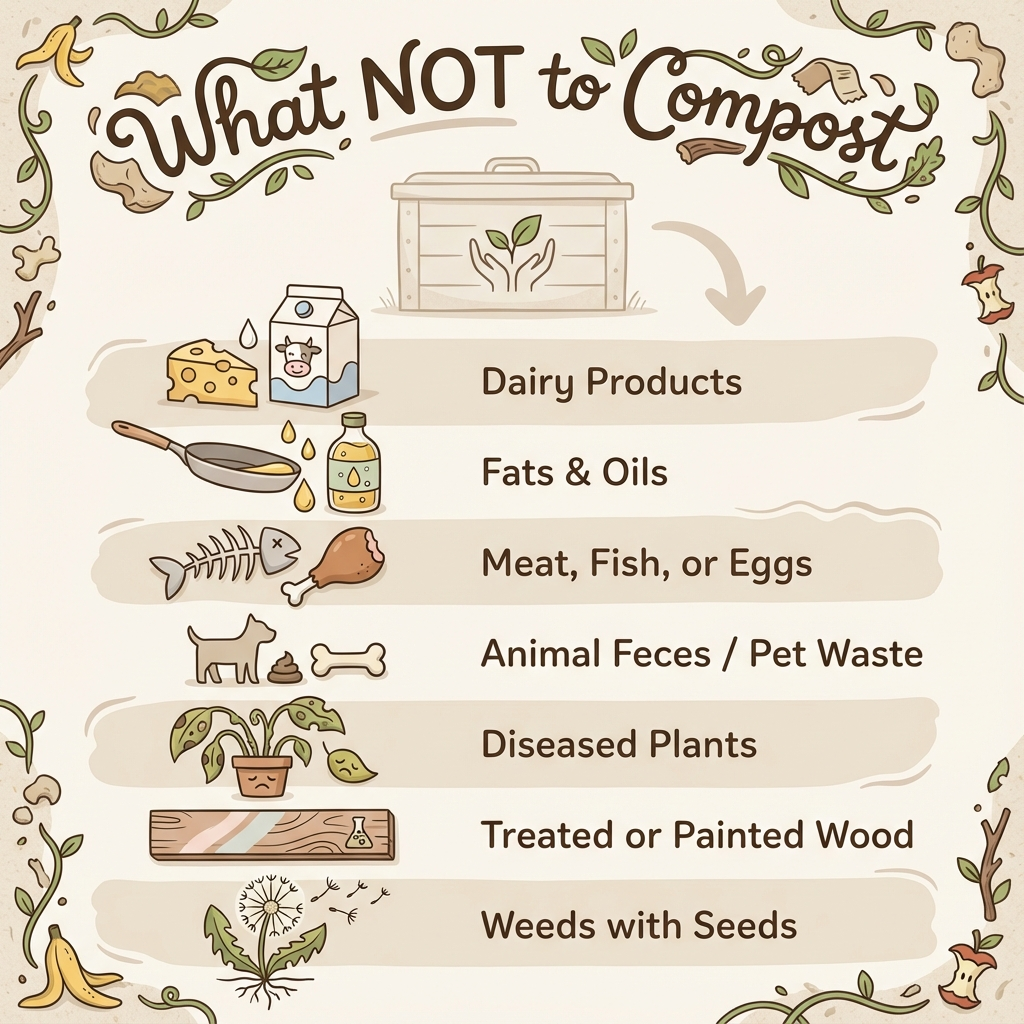
- Avoid composting meat, dairy, oily foods, pet waste, treated wood, and weeds with seeds to keep your compost safe and effective.
- Understanding what not to compost helps you create healthy, nutrient-rich compost that benefits your garden and the environment.
Composting is one of the easiest ways to turn everyday scraps into something useful for your garden. When you mix the right materials, you create rich, healthy compost that improves soil, boosts plant growth, and reduces household waste.
But even though composting is simple, not everything should go into a compost bin. Some items slow the process, attract pests, or leave behind chemicals and pathogens that can harm your soil. Knowing what to avoid helps your compost work the way it’s supposed to, so you end up with safe, nutrient-rich compost that actually helps your plants.
In this guide, you’ll learn what not to put in your compost bin and why it matters, along with safer ways to handle those tricky items.
Why Certain Items Should Not Go in Your Compost Bin
Compost works best when the materials inside break down at a similar pace and stay safe for your soil. When the wrong items end up in the bin, they can slow the whole process and create problems you may not see until much later.
Some materials attract rodents and insects. Others introduce strong odors that make outdoor compost bins unpleasant to be around. Certain items contain chemicals, pathogens, or seeds that survive the composting process and end up back in your garden, where they can cause damage.
Left unchecked, these issues can lead to contaminated compost that harms plants, reduces soil health, and disrupts the natural balance that makes composting so effective. Understanding the risks helps you keep your compost pile healthy and your garden thriving.
❌Common Items to Avoid in Your Compost Bin
Some items sit in a gray area when it comes to composting. They aren’t completely off-limits, but they need a little extra attention to avoid problems like odors, pests, or nutrient imbalances. When used carefully and in the right amounts, these materials can still work in a healthy compost system. Here’s how to handle them safely.
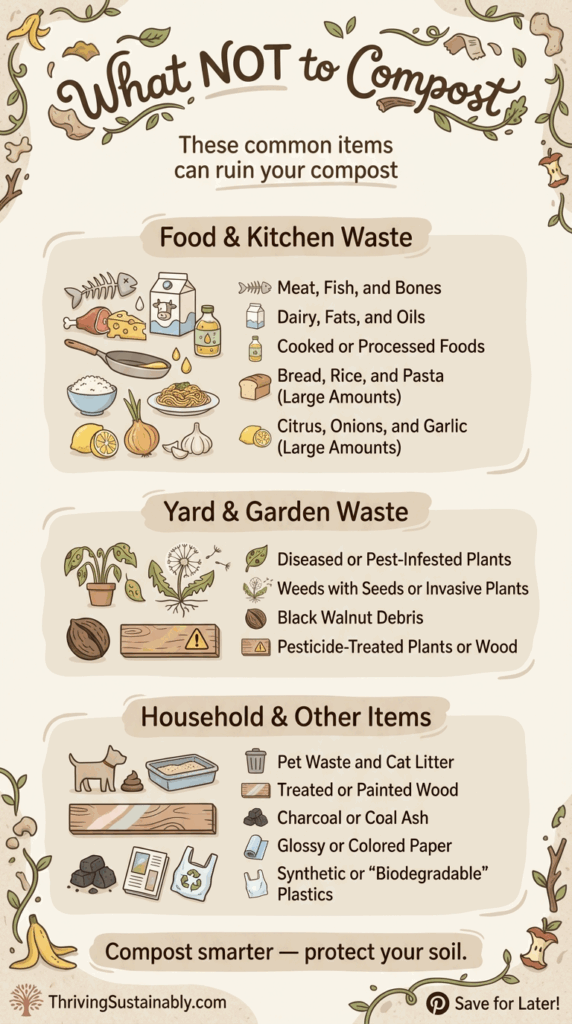
| Item | Why It Should Be Avoided | Potential Problems | Safer Alternatives |
|---|---|---|---|
| Meat, Fish, and Bones | Break down slowly and create strong odors. | Attract pests and may carry harmful bacteria. | Use municipal green-waste pickup or trash. |
| Dairy, Fats, and Oils | Do not break down well in home compost. | Cause odors and greasy textures. | Trash or food-waste collection programs. |
| Cooked or Processed Foods | Contain oils, salts, and preservatives. | Attract pests and mold. | Compost only raw fruit and vegetable scraps. |
| Pet Waste & Cat Litter | Contains parasites and harmful pathogens. | Can contaminate compost and soil. | Trash or special pet-waste composters. |
| Diseased or Pest-Infested Plants | Home piles rarely reach sterilizing temperatures. | Diseases can spread back into the garden. | Send to municipal yard-waste facilities. |
| Weeds With Seeds or Invasive Plants | Seeds and roots often survive composting. | Spread aggressively when compost is used. | Solarize or completely dry before disposal. |
| Treated or Painted Wood & Wood Ash | Often contains chemicals or heavy metals. | Can harm soil microbes and plants. | Avoid unless wood is untreated. |
| Glossy or Colored Paper | Coatings and inks break down poorly. | May leave chemical or microplastic residue. | Recycle; use plain cardboard or newspaper. |
| Charcoal or Coal Ash | Contains additives and lighter-fluid residue. | Toxic to plants and soil life. | Trash charcoal ash; use only small amounts of clean wood ash. |
| Citrus, Onions, Garlic (Large Amounts) | Can make compost too acidic. | Slows microbial activity and worm activity. | Add sparingly or chop finely. |
| Synthetic or “Biodegradable” Plastics | Need industrial composting conditions. | Break down into fragments or microplastics. | Use industrial composting programs. |
| Pesticide-Treated Plants or Wood | Chemical residues survive composting. | Can harm plants for multiple seasons. | Dispose through municipal programs when allowed. |
| Black Walnut Debris | Contains juglone, toxic to many plants. | Can stunt or kill sensitive plants. | Dispose separately or compost long-term. |
| Bread, Rice, Pasta (Large Amounts) | Clump together and break down unevenly. | Grow mold and attract pests. | Add only small amounts or discard. |
⚠️Items That Are Sometimes Okay (With Caution)
Some materials aren’t completely off-limits, but they can throw off the natural balance of your compost if you use too much or add them in the wrong form. These items break down at different rates, alter pH, or affect airflow and moisture. Used in small, thoughtful amounts, they can still support a healthy compost pile.
| Item | Why Use With Caution | Best Practice |
|---|---|---|
| Eggshells | Add calcium but break down very slowly when left whole. | Rinse, dry, and crush into small pieces before adding. |
| Wood Ash (Clean Fireplace Ash Only) | Raises pH and can slow microbial activity if overused. | Use sparingly and only from untreated, additive-free wood. |
| Citrus Peels | Natural oils and acids slow decomposition in large amounts. | Chop finely and mix in small quantities. |
| Bread, Rice, and Pasta | Clump together, attract pests, and reduce airflow. | Add only small, dry amounts and mix well with browns. |
| Compostable Packaging (Certified Only) | Many products require industrial composting conditions. | Use only items clearly labeled “home compostable” and tear into pieces. |
| Pine Needles | Slow to decompose and slightly acidic. | Balance with nitrogen-rich greens and mix thoroughly. |
| Thick, Waxy, or Large Leaves | Break down slowly and tend to mat together. | Shred before adding to improve airflow and decomposition. |
| Coffee Grounds | Can form dense layers that limit oxygen flow. | Mix with dry browns like leaves or shredded paper. |
| Shredded Paper | Can clump and block moisture when used in excess. | Combine with moist kitchen scraps and fluff regularly. |
| Old Potting Soil | May contain perlite, fertilizers, or peat that affect balance. | Add gradually and mix well with fresh compost materials. |
What Happens If You Compost the Wrong Things?
Adding the wrong items to your compost bin doesn’t just cause short-term issues like smells or pests. Over time, it can affect the quality and safety of the compost you’re working so hard to create.
Here’s what can happen when problem items slip into your pile:
🐀 Pests Become a Regular Problem
Meat, dairy, bread, and oily foods are irresistible to rodents, raccoons, flies, and ants. Once animals learn your compost is a food source, they tend to come back, dig through the pile, and scatter material around your yard.
👃 Odors Take Over
Strong smells are often a sign that your compost is out of balance. Foods high in fat, protein, or moisture break down anaerobically (without oxygen), producing sour or rotten odors rather than the earthy compost smell.
🌱 Weeds and Diseases Spread Back Into Your Garden
Weed seeds, invasive plants, and diseased plant material can survive in home compost piles that don’t reach high enough temperatures. When you use that compost later, you may unintentionally reintroduce the very problems you were trying to eliminate.
⚠️ Soil Contamination
Chemicals from treated wood, pesticide-sprayed plants, pet waste, or synthetic materials don’t always break down during composting. These residues can linger in finished compost and negatively affect soil health, beneficial microbes, and plant growth.
🪱 Slower, Less Effective Composting
Problem items often break down at different rates or compact the pile, reducing airflow. This slows decomposition, leaving you with half-finished compost that never fully matures.
When compost goes wrong, it’s usually not because of one mistake, but because of repeated small ones. Understanding the impact helps you make more intelligent choices from the start.
Don’t Miss: Composting 101 Want the complete guide to starting, maintaining, and troubleshooting your compost pile? This is your go-to resource. Read more →What to Do Instead of Composting These Items
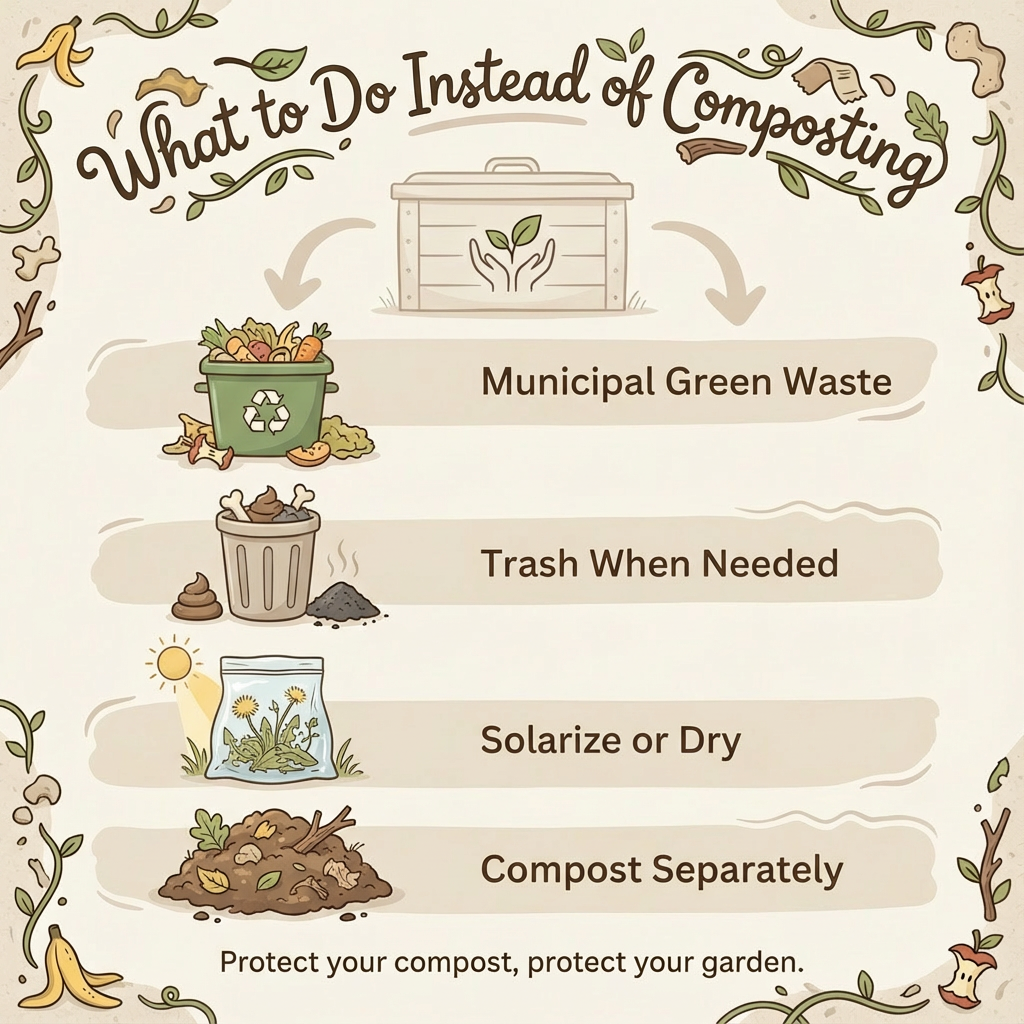
Just because something doesn’t belong in your compost bin doesn’t mean it has to go straight to the landfill. Many non-compostable materials have safer disposal options that help reduce waste while protecting your compost and soil. Knowing when to use municipal programs, trash, or alternative methods helps keep your compost healthy and ensures the finished material is safe for your garden.
Choosing the right path for each item may take an extra moment. Still, it prevents bigger problems later from pest infestations to contaminated soil and helps your composting efforts stay effective and sustainable.
FAQs on What Not to Put In a Compost Bin
Yes, small amounts of moldy bread, fruit, or vegetables can go into compost, especially hot compost. Mold spores usually break down during decomposition. However, large quantities of moldy food can attract pests and create odor issues, so it’s best to mix them well with dry “brown” materials.
Plain paper towels and napkins can be composted if they’re free from chemicals, cleaning products, or grease. Avoid composting towels used with harsh cleaners, oils, or pet waste.
If your compost pile consistently reaches high temperatures (130–160°F), many weed seeds can be destroyed. However, most backyard piles don’t maintain heat evenly. To be safe, avoid composting weeds with mature seeds unless you’re confident your pile stays hot throughout.
Most biodegradable or plant-based plastics still require industrial composting facilities. In-home compost bins often break into fragments rather than fully decomposing. Unless the product clearly states “home compostable,” it’s best to keep it out of the compost.
Don’t panic. If possible, remove the item and rebalance your pile with dry browns, such as leaves or cardboard. Turning the compost and improving airflow can also help reduce odors and attract fewer pests.
Final Thoughts on What Not to Put In a Compost Bin
Composting doesn’t have to be complicated to be effective. The key is understanding that not everything organic belongs in your compost bin, and that’s okay. Avoiding problem items protects the balance of your pile and helps you create compost that’s safe, nutrient-rich, and genuinely beneficial for your garden.
When you skip foods that attract pests, materials that carry chemicals, or plants that spread disease, you’re not doing composting “wrong.” You’re doing it responsibly. Composting less but smarter leads to healthier soil and better results in the long run.
If you’re ever unsure about an item, remember this simple rule: when in doubt, leave it out or look for a safer disposal option. Over time, these small choices add up to compost you can trust and a garden that thrives because of it.