Key Takeaways
- Consistent self care routines for better sleep help your nervous system relax before bedtime.
- Simple night rituals work best when they’re calming, repeatable, and easy to maintain.
- Better sleep often comes from removing stimulation, not adding more products or steps.
If you struggle with sleep, you’re not alone, and I say that from personal experience. I’ve had issues with sleeping for years. I’ve seen multiple doctors and even had a sleep study done. While those steps helped me learn more about my sleep, nothing fully fixed the problem on its own.
What started to make a real difference was creating a consistent self-care routine in the evening. Not anything extreme. Not a perfect checklist. Just simple habits that helped my body and mind slow down before bed.
That’s why this guide focuses on self-care routines for better sleep that actually work in real life. These are the small, repeatable night rituals that helped me feel calmer at night and more rested in the morning, and that you can adapt to fit your own evenings too.
Why Nighttime Self-Care Matters
Sleep doesn’t just depend on how tired you are. It depends on how relaxed your body feels before bed.
Throughout the day, your nervous system is constantly responding to noise, stress, screens, and responsibilities. If your evening stays busy or overstimulating, your body doesn’t get the signal that it’s time to rest — even if you’re exhausted.
Nighttime self-care routines help create that signal. They tell your brain and body that the day is winding down. When this happens consistently, several things improve over time:
- Lower stress levels: Calming activities reduce the stress hormones that interfere with sleep.
- Better mood: Quality sleep supports emotional balance and makes daily stress feel more manageable.
- Improved sleep quality: Falling asleep faster and staying asleep longer becomes easier when your body feels safe and relaxed.
Think of nighttime self-care as preparation, not performance. You’re not trying to “do sleep right.” You’re simply giving your body the conditions it needs to rest well.
Key Principles of an Effective Nighttime Routine
A nighttime routine doesn’t have to be long or complicated to work. What matters most is how it makes your body feel and how consistently you repeat it.
These core principles turn simple habits into effective self-care routines that improve sleep.
- Consistency builds trust with your body: When you repeat the same calming actions at roughly the same time each night, your body starts to recognize them as cues for sleep. Over time, this helps your internal clock settle into a natural rhythm.
- Winding down should be gradual: Sleep works best when the transition from day to night is slow. Jumping straight from busy tasks or bright screens into bed keeps your brain alert. Gentle steps help your system shift gears.
- Your routine should reduce stimulation, not add pressure: The goal is calm, not productivity. If a routine feels stressful or challenging to maintain, it’s not serving its purpose.
- Your environment matters: Lighting, noise, and comfort all affect how easily your body relaxes. A restful space supports sleep without extra effort.
When these principles guide your routine, even small habits can lead to noticeable improvements in how quickly you fall asleep and how rested you feel in the morning.
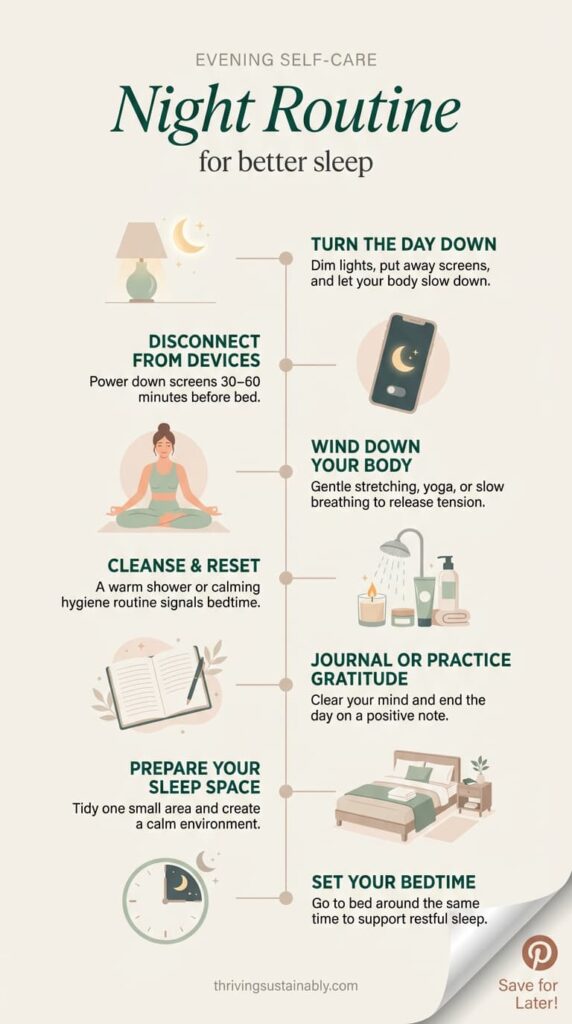
Step-by-Step Nighttime Self-Care Routine

This routine is designed to help your body and mind slowly transition from daytime alertness into rest. You don’t need to do every step perfectly. Even practicing a few of these consistently can improve sleep over time.
| Step | What to Do | Why It Helps Sleep | Quick Examples |
|---|---|---|---|
| Digital Detox | Power down screens before bed and keep your phone out of reach if you can. | Less stimulation makes it easier for your brain to slow down and settle. | Set a “phone bedtime,” switch to Do Not Disturb, charge across the room. |
| Bubble Bath | Take a warm bath or shower as a “day is done” signal. | Warm water relaxes muscles and helps your body shift into wind-down mode. | 10–15 minutes warm shower, bath soak, cozy robe after. |
| Journal | Get thoughts out of your head and onto paper before bed. | Reduces racing thoughts and “mental replay” that keeps you awake. | 2-minute brain dump, tomorrow list, one worry + one next step. |
| Practice Gratitude | Write down a few good moments from the day, even small ones. | Helps your mind shift away from stress and into a calmer, safer feeling. | List 1–3 gratitudes, “today I’m proud of…,” “one good thing was…” |
| Meditate | Do a short meditation to quiet your thoughts and slow your breathing. | Signals your nervous system to downshift and relax. | 3–5 minutes guided meditation, body scan, counting breaths. |
| Mindfulness | Pay attention to your breath and body sensations without judging them. | Helps stop mental spirals and brings your brain back to the present. | Relax jaw/shoulders, notice 5 slow breaths, quick body scan. |
| Listen to Music | Play calming music or soothing sounds while you wind down. | Creates a predictable wind-down cue and can cover distracting noise. | Soft playlist, nature sounds, white noise, sleep stories. |
| Read | Read something relaxing (paper book is best if screens wake you up). | Gives your brain a calm focus and helps you transition into rest. | 10 pages of a light novel, poetry, or a cozy comfort read. |
| Yoga | Do gentle yoga stretches to release tension from the day. | Relaxed muscles and slower breathing make it easier to fall asleep. | Child’s pose, forward fold, legs up the wall, slow neck rolls. |
| Walk | Take a short, easy walk to clear mental noise (keep it gentle). | Helps your body unwind and can reduce stress before bedtime. | 5–10 minute sunset stroll, slow pace, no intense workout. |
| Organize or Declutter | Do a quick 2-minute reset so your space feels calmer. | Less visual clutter can reduce “unfinished task” stress at night. | Clear nightstand, toss laundry in a basket, set out tomorrow’s outfit. |
| Eat Nourishing Food | If you’re hungry, choose a light snack and avoid heavy late-night meals. | Hunger or discomfort can keep you awake or wake you up. | Banana, oatmeal, yogurt, toast, small handful of nuts. |
| Take a Nap | If you nap, keep it short and earlier in the day (not late afternoon). | Late or long naps can make bedtime harder by reducing sleep pressure. | 10–30 minutes, ideally before mid-afternoon. |
| Get Restful Sleep | Make your room feel calm and consistent, then go to bed around the same time. | A stable environment + routine strengthens your body’s sleep cues. | Dim lights, cool room, comfy bedding, relaxing wind-down sequence. |
Quick takeaway: Start with 2–3 steps you’ll actually repeat (digital detox + journaling is a great combo), then add one new habit at a time.
Tips for Sticking to Your Nighttime Routine
The best nighttime routine is the one you can actually keep. If it feels too strict or time-consuming, it’s easy to fall off after a few days, especially when life gets busy. These tips help make your self-care routine feel realistic instead of overwhelming.
- Start small and build slowly: You don’t need to change your entire evening at once. Begin with one or two habits, like turning off screens earlier or journaling for two minutes. Once those feel natural, add another step.
- Treat self-care like a real appointment: Protect your wind-down time the same way you would a meeting or commitment. Even 15 minutes of intentional calm can make a difference.
- Tie new habits to things you already do: Link your routine to existing actions, such as journaling after brushing your teeth or stretching right before getting into bed. This makes the habit easier to remember.
- Give yourself flexibility: Some nights will be shorter than others. That’s okay. A simplified version of your routine is still better than skipping it entirely.
- Notice what actually helps you sleep: Pay attention to how you feel in the morning. Keep the habits that improve your sleep and let go of the ones that don’t.
When to Seek Additional Support
Nighttime self-care routines can make a big difference, but they’re not meant to replace professional help when sleep issues don’t improve. If you’ve tried building a consistent routine but still struggle with sleep most nights, it may be time to seek extra support.
Consider reaching out to a healthcare professional if:
- You have trouble falling asleep or staying asleep for several weeks in a row
- You feel exhausted during the day, even after a full night in bed
- Stress, anxiety, or racing thoughts are keeping you awake night after night
- Sleep problems are affecting your mood, focus, or daily life
A doctor, therapist, or sleep specialist can help identify what’s going on and suggest treatments that work alongside your self-care routine.
Getting support isn’t a failure — it’s another form of self-care. Better sleep is essential for both physical and mental health, and you deserve rest that actually restores you.
Don’t Miss Microplastics: Health Risks, Sources, and How to Reduce Exposure Night routines involve water, skincare, bedding, and indoor air—small choices that can affect what we’re exposed to while we rest. This guide breaks down where microplastics show up at home and explains how they show up in our lives, along with simple ways to reduce exposure. Read more →Final Thoughts on Self-Care Routines for Better Sleep
Better sleep isn’t about doing everything right. It’s about giving yourself a few quiet moments at the end of the day to slow down.
Your nighttime routine doesn’t have to be perfect or look the same every night. You can start with one small habit, see how it feels, and build from there. Some nights will go smoothly. Other nights won’t, and that’s okay.
Over time, these simple routines start to signal to your body that the day is ending. You’re done for now. You can rest. And when that signal becomes familiar, falling asleep often feels more manageable and less stressful.
Be gentle with yourself as you figure out what works for you. Rest isn’t something you force — it’s something you create space for