Zero Waste Outlet Dual-Sided Eco-Sponge 2-Pack
Zero Waste Outlet
Dual-Sided Eco-Sponge (Cellulose and Loofah) 2-Pack
One of the easiest plastic swaps in the kitchen, since a sponge is used every day and replaced often. It scores a 1 because there is no plastic in it, but it is not shed-free: the cellulose and loofah wear away as you scrub, just not as plastic. Soak it before the first use, since it ships dry and can tear, and compost it when it wears out.
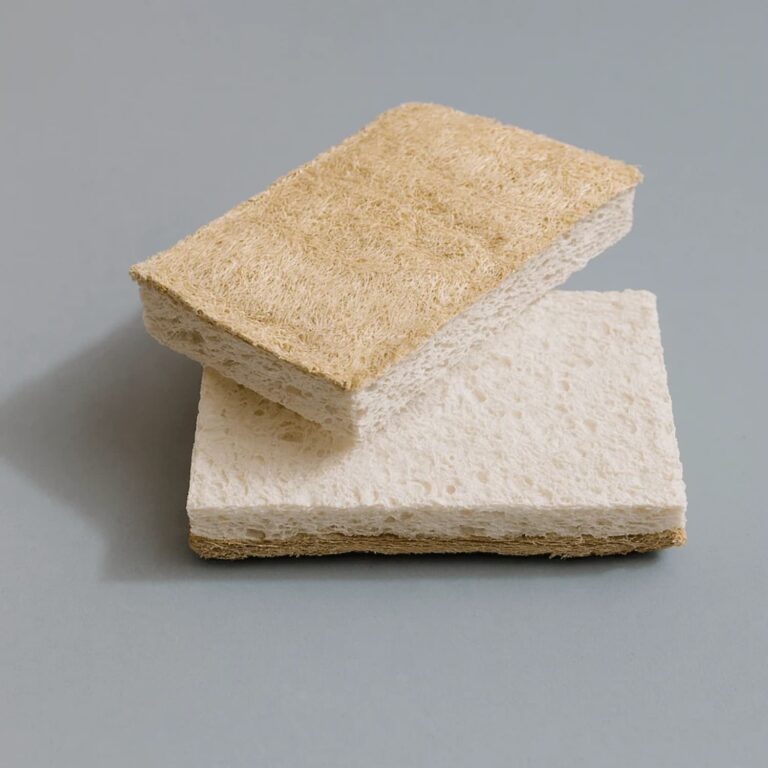
A two-pack of dual-sided kitchen sponges. One side is soft cellulose for washing dishes and wiping counters, and the other is coarse loofah for pots, pans and dried-on food. The layers are stitched together with cotton thread instead of glued, and Zero Waste Outlet states there is no plastic and no PLA in them. They replace the green-and-yellow foam sponge, which the brand points out is plastic foam that sheds as you scrub.
How this score breaks down
Strengths
- No plastic foam, no PLA and no glue, per the brand
- Two textures: soft for dishes and counters, coarse for pots and pans
- Stitched with cotton thread rather than glued
- Composts or can be buried in the garden when worn out
- Packed in a paper sleeve
Trade-offs
- Sheds cellulosic fiber as it wears, though not microplastic
- Ships dry and can tear if used before the first soak
- Needs to air-dry between uses to stay fresh
- No third-party testing or certification
Scored on our durable-goods method (durables-v1, 2026-09-16). How we rank →
What's inside
The soft side is cellulose, a wood-based sponge material, and the scrubbing side is loofah, a dried plant. Cotton thread holds the two layers together, with no glue. Zero Waste Outlet states the sponge contains no plastic and no PLA, a bioplastic some compostable sponges use. Cellulose sponges do shed fibers as they wear: these are man-made cellulosic fibers, not microplastic by regulatory definition, and they biodegrade, but the shedding is real. The loofah side sheds natural plant fiber. Each sponge measures about 4.25 by 2.75 inches and 1 inch thick.
| Part | Material |
|---|---|
| Soft side | Cellulose (wood-based) |
| Scrub side | Loofah |
| Stitching | Cotton thread |
| Sleeve (2-pack) | Recyclable paper |
Free of Plastic foam, PLA, glue (brand stated)
- Packaging
- 2-packs come in a recyclable paper sleeve
- Microplastics
- No plastic; sheds cellulosic and natural plant fiber as it wears
Attributes
What this product is, at a glance.
Certifications
None listed. We only show independent third-party certifications we can verify with the issuing body, and this product does not currently hold any.
About Zero Waste Outlet
Zero Waste Outlet is a family-owned shop in Washington state run by Brian and Beth. The idea started with an oversized delivery: a small item buried in a giant box, padded with plastic that did nothing useful. The company now sells its own line of plastic-free kitchen and bathroom basics, like coconut-fiber brushes, bamboo soap dishes and plant-fiber sponges, alongside products from other small brands. Its stated mission is to make zero-waste products available to American households at a reasonable cost, and it ships every order in plastic-free packaging. It does not list third-party certifications, and it says it sources overseas only when an affordable option is not available in the US.
Categories: