
Repurpose Compostable Trash Bags
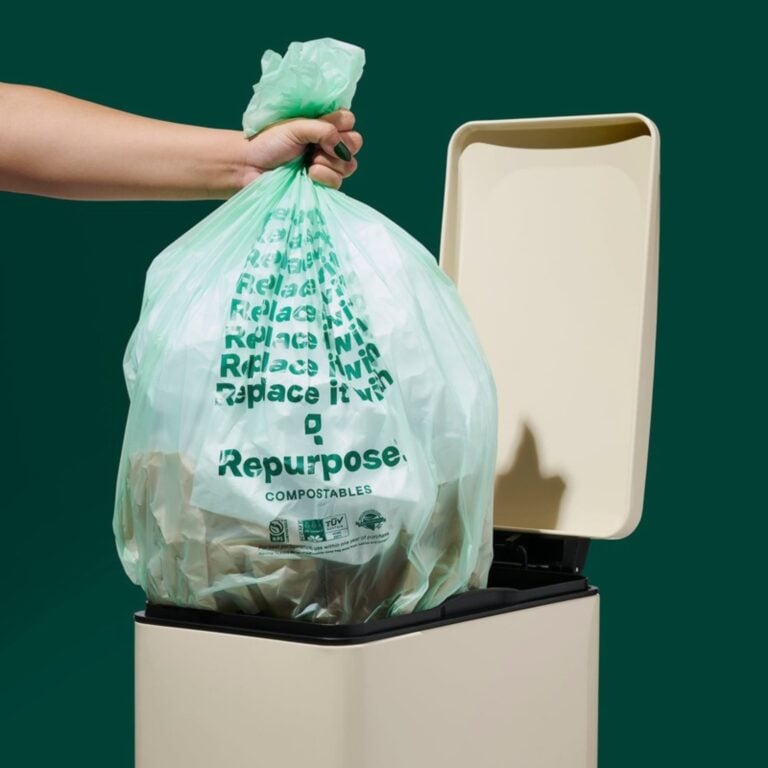
Repurpose
Compostable Trash Bags
Home compostable trash bags made from a cornstarch-based bioplastic, from a company that has been making plant-based swaps for plastic since 2010.
Repurpose makes these bags from PLA, a bioplastic made from cornstarch, blended with PBAT, and they are certified to break down in a backyard compost pile as well as commercial compost. They are still a plastic film, so they only break down the way they should when they are composted.
How this score breaks down
Strengths
- Made from cornstarch-based PLA instead of polyethylene
- Certified to break down in a backyard compost pile
- Fragrance-free
- Also sold in a small 3-gallon size
Trade-offs
- Still a plastic film, made partly from PBAT
- Only breaks down as designed when composted
- The brand suggests changing bags every 3 to 4 days
Scored on our durable-goods method (durables-v1, 2026-05-30). How we rank →
What's inside
A bioplastic film made from PLA, which comes from cornstarch, blended with PBAT, which the brand describes as a mix of PLA and other polymers.
| Part | Material |
|---|---|
| Bag film | PLA (from cornstarch) blended with PBAT |
Free of Polyethylene, added fragrance, BPA
- Packaging
- Recyclable box
- Microplastics
- The bags are a bioplastic film made to break down in compost. If they end up in a landfill or loose outdoors instead, they can break into small pieces.
Attributes
What this product is, at a glance.
Certifications
Certifications the brand lists on its own website. Tap any badge to see what it verifies.
About Repurpose
Repurpose began in 2010, when Lauren Gropper, who had spent years in sustainable design helping buildings and film and TV sets do less harm to the planet, kept seeing those spaces filled with throwaway plastic. She became set on finding a better answer, and she co-founded Repurpose with Jordan Silverman and Corey Scholibo to make sustainable choices easy for everyone.
The company makes compostable plates, cups, cutlery, straws and trash bags, along with bamboo toilet paper and paper towels, from plant-based and upcycled materials. Its small team says it believes climate justice is social justice, and most of its leadership team are women.
Repurpose's bags are BPI Certified Compostable, TUV OK compost HOME certified and CMA Composter Approved, so they have been tested to break down in both commercial and backyard compost. One thing to know: they are still a plastic film, so they only break down as designed when they end up in compost.
Categories: