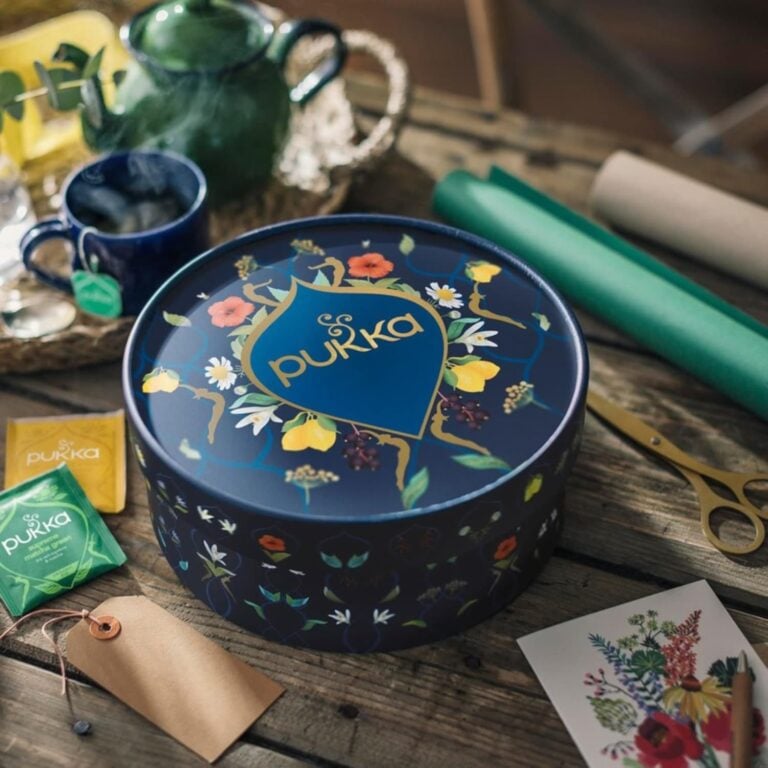
Pukka Herbs Organic Herbal Tea Bags
Pukka Herbs
Organic Herbal Tea Bags
Organic herbal tea in paper tea bags made from plant fibers and stitched with organic cotton instead of staples, each in a paper envelope with a thin plastic coating.
Pukka's tea bag paper is over 99% abaca, wood pulps and plant cellulose fibers, with less than 1% resin, and each bag is stitched together with 100% organic, non-GMO cotton. The brand says its tea bags are certified home compostable, so a used bag can go in your food waste bin. The score is a 2 because each tea bag's paper envelope has a thin plastic coating.
How this score breaks down
Strengths
- Certified organic herbs
- Paper tea bags stitched with organic cotton
- No staples
- Certified home compostable tea bags
Trade-offs
- Each paper envelope has a thin plastic coating, less than 5% of its weight
- The tea bag paper contains less than 1% resin
- Each tea bag is used once
Scored on our consumables method (consumables-v1, 2026-11-21). How we rank →
What's inside
Tea bag paper is over 99% abaca, wood pulps and plant cellulose fibers, with less than 1% resin, and is stitched with organic cotton.
| Part | Material |
|---|---|
| Tea bag paper | Abaca, wood pulps and plant cellulose fibers, with less than 1% resin |
| Stitching | Organic, non-GMO cotton |
| Tag | FSC certified card |
| Herbs | Certified organic |
Free of Staples
- Packaging
- Each tea bag comes in its own FSC certified paper envelope with a very thin plastic coating, free from BPA and PVC, that makes up less than 5% of the envelope's weight. Pukka says the envelope can go in your paper recycling. The outer box is FSC certified card printed with vegetable-based inks and can go in your paper recycling.
- Microplastics
- The tea bag is plant fibers and organic cotton, with a resin that makes up less than 1% of the paper.
Attributes
What this product is, at a glance.
Certifications
Certifications the brand lists on its own website. Tap any badge to see what it verifies.
About Pukka Herbs
Sebastian, who had long been fascinated with plants and herbalism, answered Tim's advert offering help to ethical start-ups, and the two built a business around the principles of Ayurveda. They named it Pukka Herbs toward the end of 2001, because pukka means real, authentic or genuine in Hindi. Every product Pukka makes is certified organic, and all of its teas are Fair for Life certified. One thing to know is that each tea bag comes in a paper envelope with a thin plastic coating, though Pukka says the envelope can go in your paper recycling.
Categories: