John Boos R01 Reversible Maple Cutting Board (18 x 12 in)
John Boos
R-Board Series Reversible Maple Cutting Board, 18 x 12 x 1.5 in (Model R01)
Solid maple in food contact instead of plastic; the open items are undisclosed glue, finish, and packaging details, not the wood.
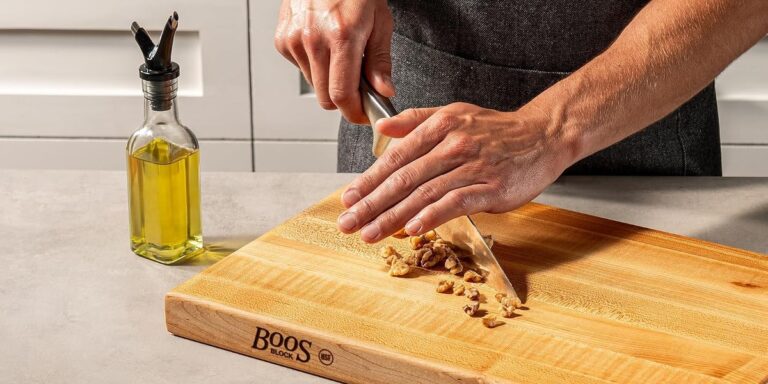
A solid maple cutting board from a company that has been making butcher blocks in Illinois since 1887. Edge grain construction, one and a half inches thick, reversible, with finger grips cut straight into the wood. The cutting surface a plastic board sheds microplastics into food from is replaced here by wood.
How this score breaks down
Strengths
- Solid maple cutting surface, no plastic in food contact
- NSF food equipment listing, verified in the NSF registry
- Reversible and re-sandable, a decades long service life
- Made in the USA with a zero waste woodworking program
Trade-offs
- Laminating glue and factory oil composition are not disclosed
- Packaging materials are not disclosed
- Needs regular oiling and hand washing, never the dishwasher
- Heavier and pricier than plastic boards
Scored on our durable-goods method (durables-v1, 2026-07-04). How we rank →
What's inside
Solid North American hard rock maple, edge grain, finished with the John Boos oil finish. No plastic parts, feet, or handles; the finger grips are cut into the wood itself.
| Part | Material |
|---|---|
| Board | Solid North American hard rock maple, edge grain laminate |
| Finish | John Boos oil finish, composition not disclosed |
| Adhesive | Laminating glue, composition not disclosed |
| Hardware | None, recessed finger grips cut into the wood |
Free of Plastic components (none in the brand materials list); no nonstick or PFAS type coating exists in this product category
- Packaging
- Not disclosed by John Boos. Scored conservatively until packaging is confirmed.
- Microplastics
- A wood cutting surface sheds wood fibers under the knife, not plastic. Plastic cutting boards are a documented source of microplastics in food; this board removes that pathway.
Attributes
What this product is, at a glance.
Certifications
None listed. We only show independent third-party certifications we can verify with the issuing body, and this product does not currently hold any.
About John Boos
John Boos is an American maker of wood cutting boards and butcher blocks founded in 1887 in Effingham, Illinois, where Conrad Boos forged the first block from local sycamore in his blacksmith shop. It still makes boards, butcher blocks, kitchen carts, countertops, and board-care oils from North American hardwoods at that same Illinois plant.
The company's pitch is durable, food-safe surfaces built to last for generations, and it burns wood byproduct to help power its factory. Its board oils and creams carry an NSF food-equipment listing, confirmed in the NSF registry, which certifies materials as safe for food contact, though that listing covers the care products rather than the boards themselves.
Categories: