Itza Wood Butcher Block Cutting Board
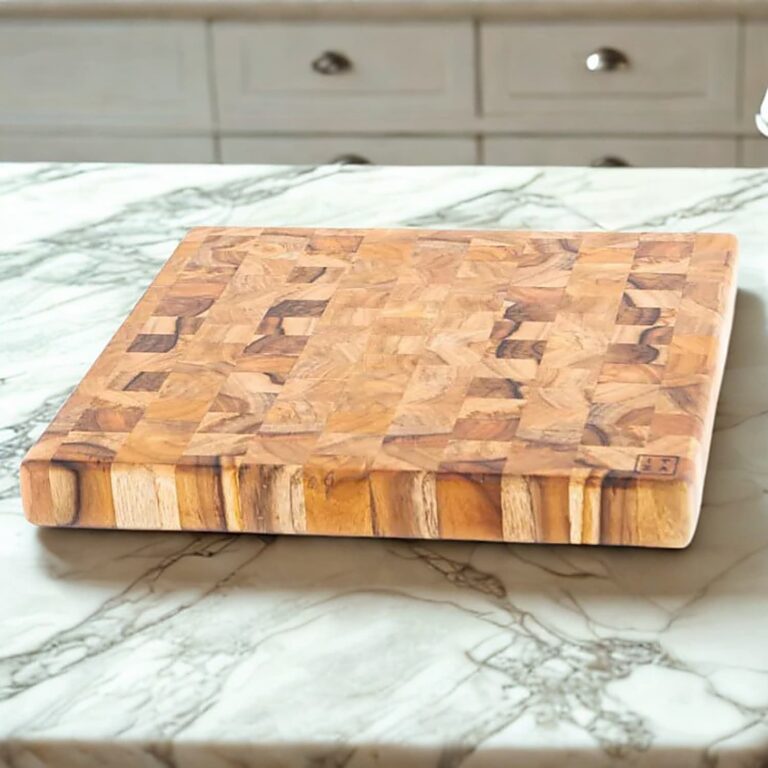
Itza Wood
Butcher Block Cutting Board
A solid teak or jobillo board handmade by a Guatemalan social enterprise that plants and reforests. We hold it at 2 with limited confidence because the wood and mission are clear but the adhesive and finish are not disclosed.
A solid teak or jobillo board handmade by a Guatemalan social enterprise that reforests as it harvests. The wood and mission are clear; the glue and finish are not disclosed.
How this score breaks down
Strengths
- Solid tropical hardwood, teak or jobillo, both dense and durable
- Made by a social enterprise that reforests and funds local schooling
- Species and origin are clearly disclosed
- The brand states it buys FSC-certified wood and actively replants
Trade-offs
- The adhesive used in the butcher-block construction is not stated
- No finish is named, so you cannot verify what is on the surface
- Species varies between teak and jobillo, so the look will vary
Scored on our durable-goods method (durables-v1, 2026-08-19). How we rank →
What's inside
Made from solid tropical hardwood, either teak or jobillo, handmade in Guatemala's Peten jungle. The wood is disclosed and the board is described as food safe, but the brand does not state the adhesive or any finish, so we score it conservatively on disclosure rather than on any known hazard.
| Part | Material |
|---|---|
| Board | Solid teak or jobillo hardwood |
| Adhesive | Not stated |
| Finish | Not stated |
Free of BPA, BPS, phthalates, PFAS, plastic coatings
- Packaging
- Not stated
- Microplastics
- None; solid hardwood sheds wood fibers, not microplastics
Attributes
What this product is, at a glance.
Certifications
None listed. We only show independent third-party certifications we can verify with the issuing body, and this product does not currently hold any.
About Itza Wood
Itza Wood is a social enterprise in the Peten region of Guatemala that handcrafts woodware from local tropical hardwoods, chiefly teak and jobillo, a striking grain sometimes called tigerwood. The company describes its wood as sustainably harvested and says it actively reforests and buys FSC-certified wood, and before it cut a single tree its reforestation project had already planted tens of thousands of trees.
It also invests in local employment and education, including a jungle school. The board itself is described as food safe, but Itza does not state the adhesive used in the butcher-block construction or any finish, which is the main gap here. The value is a solid tropical hardwood board tied to a real reforestation and community mission, bought with the understanding that the material disclosure is thin.
Categories: