Avocado Zero Waste Cutting Board
Avocado
Zero Waste Cutting Board
An upcycled-hardwood board finished with linseed oil and beeswax, made in the company's own US woodshop, from a rare triple-certified B Corp. The one gap is that the adhesive is not named.
A board made from upcycled hardwood offcuts in Avocado's own woodshop, finished with linseed oil and beeswax, from a company that is B Corp, Climate Neutral, and a 1% for the Planet member.
How this score breaks down
Strengths
- Made from upcycled hardwood offcuts, so it reuses wood that would otherwise be waste
- Finished with a linseed-oil-and-beeswax blend, fully named
- Backed by company-level B Corp, Climate Neutral, and 1% for the Planet certifications
- Made in the company's own Los Angeles woodshop
Trade-offs
- Avocado does not name the adhesive used to join the offcuts
- The certifications are company level, not specific to this board
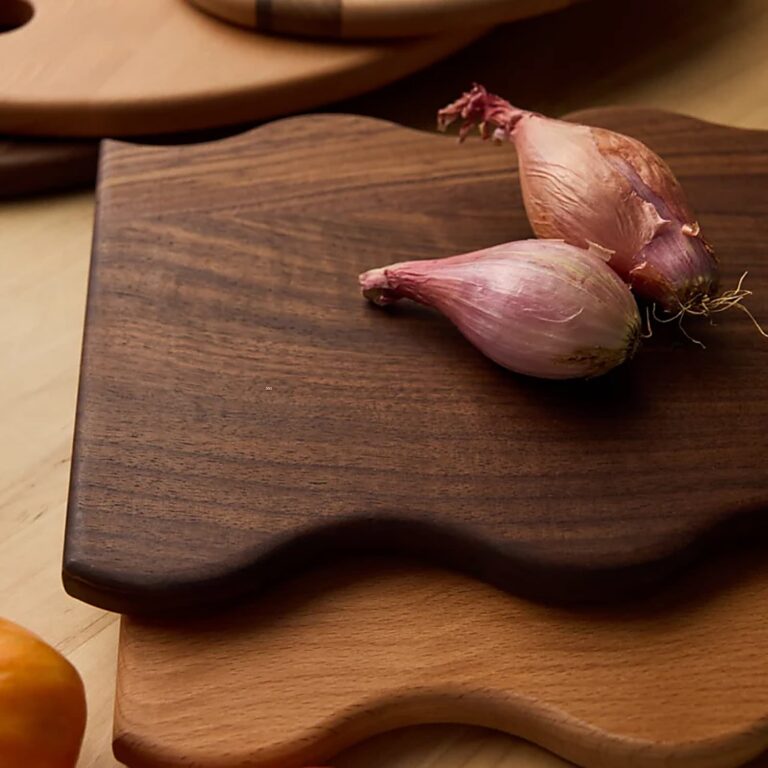
- One-of-a-kind boards vary in grain and color, so yours will differ from the photo
Scored on our durable-goods method (durables-v1, 2026-08-19). How we rank →
What's inside
Made from upcycled hardwood, beech, walnut, and maple, in Avocado's own Los Angeles woodshop, and finished with Tried & True Original, a blend of linseed oil and beeswax. Each board is one of a kind. There is no plastic in the wood or the finish, though Avocado does not name the adhesive used to join the offcuts.
| Part | Material |
|---|---|
| Board | Upcycled beech, walnut, and maple |
| Adhesive | Not stated |
| Finish | Tried & True Original, linseed oil and beeswax |
Free of BPA, BPS, phthalates, PFAS, plastic coatings
- Packaging
- Not stated
- Microplastics
- None; solid hardwood sheds wood fibers, not microplastics
Attributes
What this product is, at a glance.
Certifications
Independent, third-party certifications only. Tap any badge to see what it verifies.
About Avocado
Avocado Green Brands is best known for organic mattresses and is one of the most heavily certified companies in home goods: a Certified B Corp with a B Impact score of about 114, Climate Neutral certified since 2020, and a 1% for the Planet member since 2017. Its Zero Waste Cutting Boards are made in the company's own Los Angeles woodshop from upcycled hardwood, beech, walnut, and maple, so each board has its own grain and knots. They are finished with Tried & True Original, a blend of linseed oil derived from flax and beeswax, and the company reports an 85% landfill diversion rate verified by UL. The certifications sit at the company level rather than on the board, and Avocado names the wood and finish but not the adhesive used to join the pieces.
Categories: