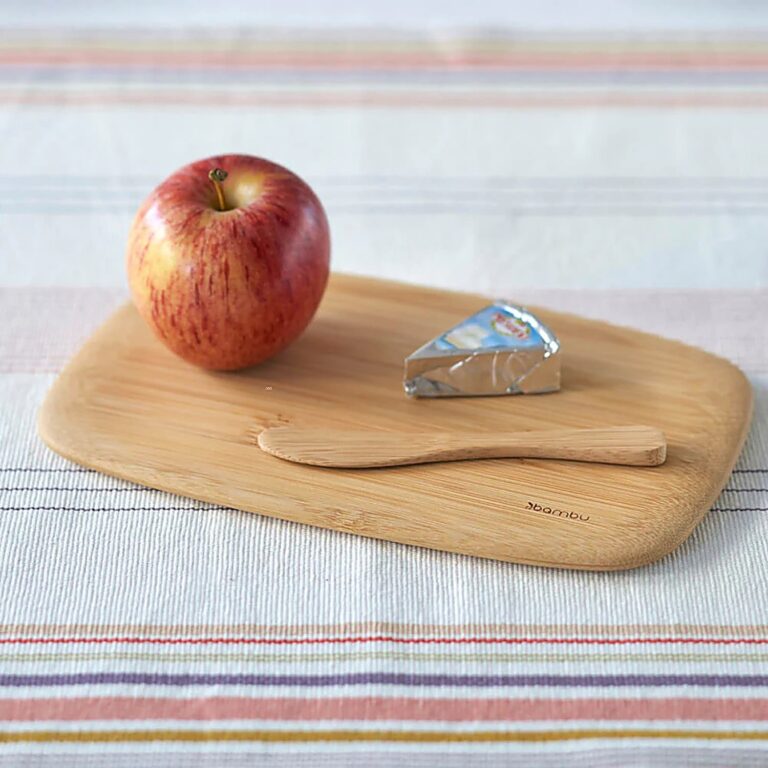
bambu Classic Bamboo Cutting & Serving Board
bambu
Classic Bamboo Cutting & Serving Board
A bamboo board that discloses the things that matter: FSC-certified bamboo, a water-based formaldehyde-free adhesive, and a food-safe oil finish, from one of the oldest B Corps in the category.
A pioneering B Corp's bamboo board that discloses what most do not: FSC-certified bamboo, a water-based formaldehyde-free adhesive, and a food-safe oil finish.
How this score breaks down
Strengths
- FSC-certified 100% bamboo from a founding-era B Corp
- Adhesive disclosed as water-based and formaldehyde-free
- Finished with a food-safe wood oil, no plastic lacquer
- Company-level B Corp, 1% for the Planet, and Climate Neutral credentials
Trade-offs
- Laminated bamboo, so low-plastic rather than a single solid piece
- Made in China, so there is shipping distance, though bambu runs its own production sustainability program
- The certifications are company and material level, not a board-specific seal
Scored on our durable-goods method (durables-v1, 2026-08-19). How we rank →
What's inside
Made from FSC-certified 100% bamboo, laminated with a water-based adhesive the brand states is formaldehyde-free and imported from Europe, then hand-finished with a food-safe wood oil. Bamboo is a fast-regrowing grass, and there is no plastic coating or liner on the board.
| Part | Material |
|---|---|
| Board | FSC-certified 100% bamboo |
| Adhesive | Water-based, formaldehyde-free (brand-stated) |
| Finish | Food-safe wood oil |
Free of BPA, BPS, phthalates, PFAS, plastic coatings
- Packaging
- FSC-certified packaging (per the Grove listing)
- Microplastics
- None; bamboo sheds plant fibers, not microplastics, and the adhesive sits inside the glue lines
Attributes
What this product is, at a glance.
Certifications
Independent, third-party certifications only. Tap any badge to see what it verifies.
About bambu
bambu was founded in 2003 by Rachel Speth and Jeff Delkin and is one of the earliest Certified B Corporations in housewares, certified since 2018 with a B Impact score of 111. It makes kitchen and tableware from FSC-certified bamboo, working with the same family-run workshops in eastern China for over a decade and running a program that filters and reuses production water and burns bamboo offcuts for fuel. The brand states its boards are laminated with a water-based, formaldehyde-free adhesive and finished with a food-safe wood oil. bambu is also a 1% for the Planet member, Climate Neutral certified, and woman-owned through WBENC. Worth correcting one common claim: bambu's bamboo is USDA certified biobased, not USDA Organic.
Categories: