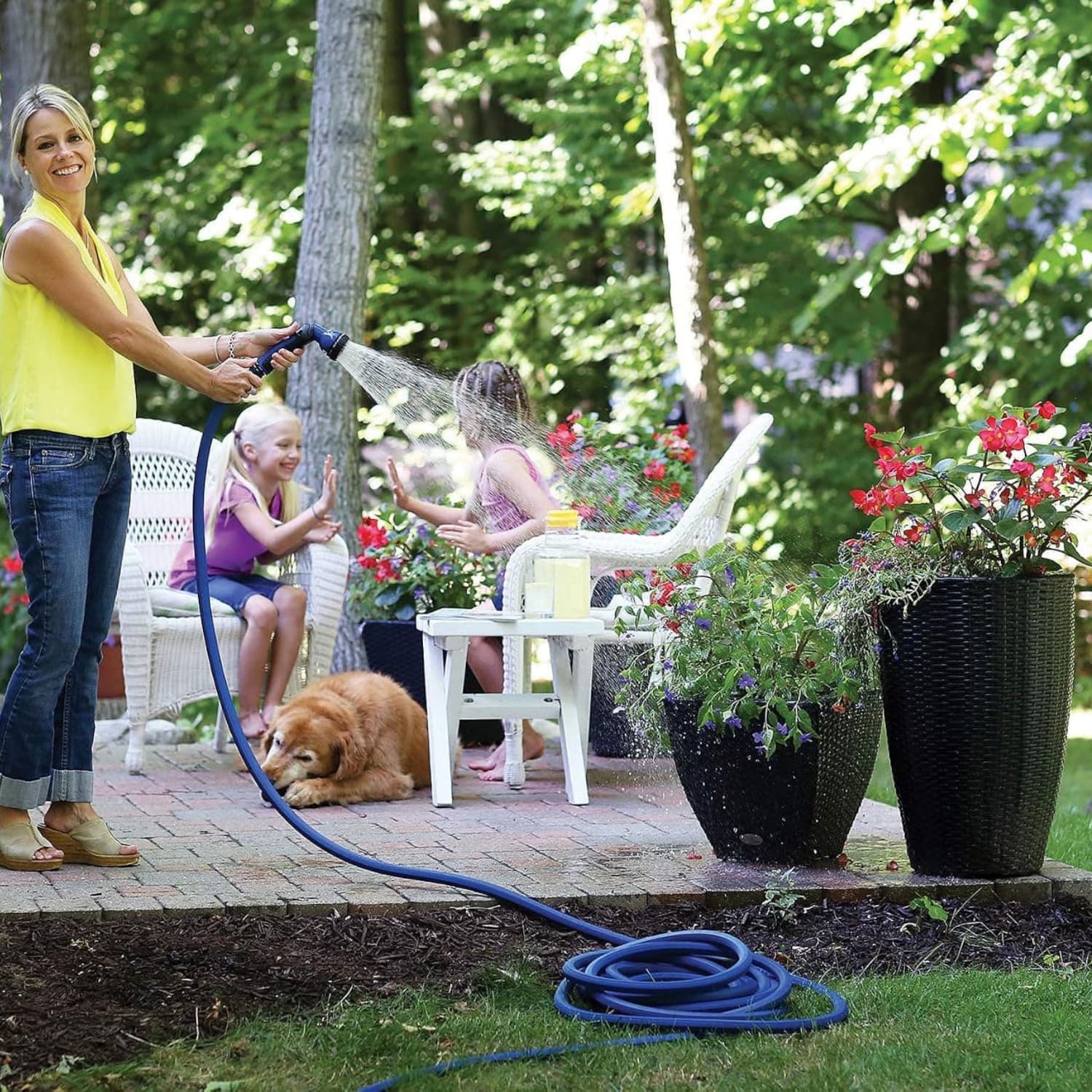
Dramm ColorStorm Premium Rubber Hose
Dramm
ColorStorm Premium Rubber Hose 5/8 in x 50 ft
The strongest garden hose swap available at a sane price. It is rubber, not plastic, with metal fittings and a lifetime guarantee. Honest limit: synthetic rubber still sheds wear particles, and it is not rated for drinking water, so fill your watering can, not your water bottle.
A US-made EPDM rubber hose with nickel plated brass fittings and a lifetime guarantee. A lower-plastic swap for vinyl hoses: disclosed material, no vinyl chemistry in the water path, and a wall built to outlast several plastic hoses.
How this score breaks down
Strengths
- Material fully disclosed: EPDM rubber body, brass fittings
- No vinyl compound or undisclosed plasticizers in the water path
- Made in USA with a lifetime consumer guarantee
- Abrasion resistant wall the brand warrants against cracking, checking and separating
Trade-offs
- EPDM is a petroleum-derived synthetic rubber and sheds wear particles with abrasion, so lower-plastic, not plastic-free
- Not rated for drinking water
- Heavier than a vinyl hose
- Thermoset rubber is not curbside recyclable at end of life
Scored on our durable-goods method (durables-v1, 2026-07-18). How we rank →
What's inside
The hose body is EPDM rubber, a synthetic elastomer, molded in a hexagonal profile with crush proof nickel plated brass fittings. Hot water rated to 160 degrees F, 130 psi working pressure, 518 psi burst.
| Part | Material |
|---|---|
| Hose body | EPDM rubber (synthetic elastomer) |
| Fittings | Nickel plated machined brass |
Free of PVC, vinyl plasticizers
- Packaging
- Not stated. The brand does not disclose retail packaging materials.
- Microplastics
- EPDM rubber is a synthetic polymer and rubber surfaces do abrade with use; rubber wear particles are counted as microplastics in most research. The thick abrasion resistant wall, which Dramm warrants against cracking, checking and separating, avoids the crack and fragment failure mode of aging plastic hose jackets.
Attributes
What this product is, at a glance.
Certifications
None listed. We only show independent third-party certifications we can verify with the issuing body, and this product does not currently hold any.
About Dramm
Dramm is a family-owned Wisconsin company making professional watering tools for greenhouses and growers since 1941; the ColorStorm hose is its flagship consumer garden hose.
Categories: